

Knowing Aquamarine vs. Blue Topaz: What is the Difference? helps every crystal collector choose the right blue stone with complete confidence. At Aura & Luck, we often meet jewelry lovers who want to know why two gems that look so similar can feel and cost so differently. This guide explores their geological roots, daily durability, price points, and spiritual meanings to help you pick the stone that matches your life.
Quick Takeaways:
- 💎 Mineral Family: Aquamarine belongs to the beryl family, while blue topaz is an aluminum silicate.
- 💎 Color Profile: Natural aquamarine shows gentle pastel cyan and seafoam tones, whereas blue topaz displays vivid sky to deep inky blues.
- 💎 Daily Wear: Blue topaz rates 8 on the Mohs scale but can split on impact due to perfect cleavage, while aquamarine resists internal splitting.
- 💎 Market Price: Untreated natural aquamarine is far rarer and commands a much higher price per carat than treated blue topaz.
- 💎 Spiritual Energy: Both stones open the throat chakra, with aquamarine offering soothing calm and blue topaz boosting mental clarity.
What Is the Difference Between Aquamarine and Blue Topaz?
Telling these two famous blue stones apart is easy once you understand how they form and look. While both stones shine with cool blue shades, their mineral families, color origins, and crystalline structures are completely unique. In our gemstone studio, we inspect both crystals regularly to help buyers appreciate their distinct physical traits.
Definition and Geological Origins
Aquamarine is a blue-to-green variety of the beryl mineral family, sharing its geological bloodline with emerald and morganite. It forms inside coarse-grained granite rocks known as pegmatites deep inside the earth over millions of years. Most natural aquamarine comes from trusted mines in Brazil, Madagascar, Nigeria, and Pakistan, where pegmatite veins produce large, clean hexagonal crystals according to Mineral Reference Data.
Blue topaz, on the other hand, belongs to the silicate mineral group and contains aluminum and fluorine. Natural blue topaz is exceptionally scarce in the wild, so nearly all commercial blue topaz begins as abundant colorless or pale yellow topaz rough. These raw crystals form within igneous rocks like rhyolite and granite before undergoing specialized laboratory treatments to bring out their blue color.

Visual Appearance and Color Profiles
The visual distinction between these two gems comes down to color saturation and tone. Natural aquamarine color saturation is soft, airy, and watery, often showing faint hints of seafoam green or translucent ocean mist. It rarely displays loud or electric shades in standard jewelry sizes.
By contrast, blue topaz offers bright, uniform, and saturated colors across three primary trade varieties. Sky blue topaz looks like a crisp afternoon sky, Swiss blue topaz displays a bright neon azure, and London blue topaz carries an inky, deep teal tone. When comparing london blue topaz vs aquamarine, London blue is far darker and moodier than any natural beryl you will encounter.
Aquamarine also exhibits a special visual property called pleochroism. When you rotate a fine aquamarine crystal under soft natural daylight, you can often see two subtle shades shifting between near-colorless and pale greenish-blue. Blue topaz does not show noticeable pleochroism, keeping the same uniform blue hue from every viewing angle.
Hardness, Cleavage, and Durability
Both gemstones make durable jewelry, but their internal atomic structures handle daily impact differently. On the Mohs hardness scale, aquamarine mohs hardness rates between 7.5 and 8, which easily resists daily scratches from dust and ambient surfaces. More importantly, aquamarine has poor or indistinct cleavage, meaning it does not readily split apart along flat planes when accidentally bumped.
Meanwhile, blue topaz mohs hardness sits at an impressive 8, making it slightly harder on the surface than aquamarine. However, topaz possesses what gemologists call perfect basal cleavage along its base. A direct, sharp strike against a hard kitchen counter or doorway can cause a clean internal fracture across the crystal, so mindful wear is essential.
| Feature | Aquamarine | Blue Topaz |
|---|---|---|
| Mineral Species | Beryl (Beryllium aluminum cyclosilicate) | Topaz (Aluminum silicate fluoride hydroxide) |
| Mohs Hardness | 7.5 to 8 | 8 |
| Cleavage Resistance | Indistinct (Resistant to sudden splits) | Perfect basal (Can fracture upon direct impact) |
| Typical Color Range | Pastel sky blue, seafoam green, watery cyan | Sky blue, vivid Swiss blue, deep London blue |
| Common Treatment | Mild heat treatment (Permanent and stable) | Safe irradiation followed by heating (Permanent) |
| Relative Value | Moderate to high luxury investment | Accessible and budget-friendly fashion gem |
| Primary Chakra | Throat Chakra & Heart Chakra | Throat Chakra & Third Eye Chakra |
To see these visual differences in motion, watch this helpful gemological overview comparing both stones side by side:
Video source: YouTube
Author: Winston Gems and Jewellery
Original video link: https://www.youtube.com/watch?v=MueRBoniyIM
Color Enhancements and Gemological Treatments
Understanding gemstone treatments clarifies why these two stones hold completely different market values. Almost all commercial blue topaz on the global market is irradiated blue topaz. Laboratories safely expose natural colorless topaz to electron beams or neutrons, followed by controlled heating, to activate permanent, vivid blue color centers.
In contrast, natural aquamarine owes its delicate blue color to trace amounts of ferrous iron locked inside its crystal lattice. Jewelers often apply gentle, low-temperature heat to rough aquamarine to remove greenish yellow overtones and leave a pure watery blue. This mild heat treatment is completely accepted in the fine jewelry trade and does not alter the stone's natural crystal integrity.
When we examine vintage jewelry for our clients, uniform and saturated color usually points to treated topaz. Natural aquamarine will almost always display subtle organic growth zones, soft color variations, or minute liquid inclusions under a jeweler's loupe. These natural markers celebrate the organic formation of earth-mined beryl.
Gemstone Valuation and Rarity
When comparing aquamarine value vs topaz price, aquamarine commands a substantial market premium. Natural blue beryl yields from pegmatite mines are limited, especially for specimens that combine high clarity with rich natural saturation. A fine one-carat aquamarine of vivid blue can easily cost hundreds of dollars, with larger stones climbing exponentially in price.
Blue topaz remains one of the most accessible fine gemstones in modern jewelry design. Because raw colorless topaz is abundant worldwide and irradiation technology is efficient, blue topaz prices stay remarkably stable across all carat sizes. You can often purchase a five-carat Swiss blue topaz ring for a fraction of the cost of a similar-sized aquamarine.
This price gap explains why inherited family rings thought to be valuable aquamarines often turn out to be lovely blue topaz upon gemological testing. Both gems provide brilliant beauty, but aquamarine represents a rare collector treasure while blue topaz offers affordable luxury for everyday wear.
Spiritual Meaning & Symbolism of Aquamarine and Blue Topaz
Beyond their gemological differences, both crystals carry rich metaphysical histories that inspire modern mindfulness. In holistic traditions, blue crystals evoke open skies, flowing rivers, and refreshing coastal breezes. Choosing between them often comes down to the subtle vibrational energy you wish to welcome into your daily life.

Traditional Symbolism and Ancient Lore
The name aquamarine comes from the Latin words for water and sea, capturing its historic connection to ancient maritime lore. Early Roman and Greek sailors carried aquamarine amulets carved with the image of Neptune to ensure safe passage across stormy oceans. Ancient healers regarded the stone as a talisman of youthful hope, emotional reconciliation, and enduring marital happiness.
Topaz holds an equally storied place in ancient cultures, originally revered as a stone of solar vitality and protective strength. Ancient Egyptians believed topaz absorbed the golden radiance of the sun god Ra, while ancient Greeks believed it bestowed spiritual strength and invisibility in times of danger. Over time, as blue varieties entered spiritual practice, blue topaz became honored as a cooling crystal that tempers fiery emotions and welcomes wise discernment.
In classical Chinese philosophy, blue minerals harmonize Chi (气) by cooling excessive inner heat and supporting balanced life force energy. Whether set in gold or worn as raw crystal beads, these soothing blue treasures have long served as sacred mirrors of the heavens.
Energetic Frequencies and Vibrational Qualities
In our energy work at Aura & Luck, we notice clear differences in how these two gems interact with the human aura. Aquamarine holds a gentle, receptive yin energy that ebbs and flows like calming ocean tides. It is a stone of emotional surrender that encourages you to release rigid control and soften your inner dialogue.
Conversely, blue topaz energetic properties feel crisp, uplifting, and intellectually stimulating. Topaz operates with an organized, crystalline frequency that helps clear mental fog and align scattered intentions. When you feel overwhelmed by indecision, blue topaz acts like a cool gust of fresh air that restores rational focus and purposeful action.
Many people find that resting with an aquamarine crystal feels like relaxing by a quiet seaside lagoon. Meanwhile, working with blue topaz feels like standing on a crisp mountain peak looking out across a clear horizon. Both energies bring peace, but one cools the heart while the other sharpens the mind.
Chakra Resonance and Subtle Energy Centers
Both crystals serve as primary throat chakra blue gemstones, encouraging honest vocal expression, active listening, and peaceful dialogue. When the throat center is blocked, we may hesitate to speak our truth, fear judgment, or express thoughts through harsh words. Placing either gem near the throat area during quiet reflection helps restore effortless, compassionate communication.
Aquamarine also forms a strong secondary link with the heart chakra. By bridging the heart and throat, it allows you to speak from a place of deep emotional empathy and heal old relationship misunderstandings. It teaches us that true emotional strength lies in gentle vulnerability rather than defensive walls.
Blue topaz connects upward toward the third eye chakra, supporting higher contemplation and intuitive perception. This dual throat-and-third-eye alignment helps writers, teachers, and public speakers translate abstract spiritual concepts into clear, structured words. Exploring genuine Spiritual Crystal Jewelry crafted with intentional blue gemstones makes integrating these chakra centers a natural part of your morning routine.
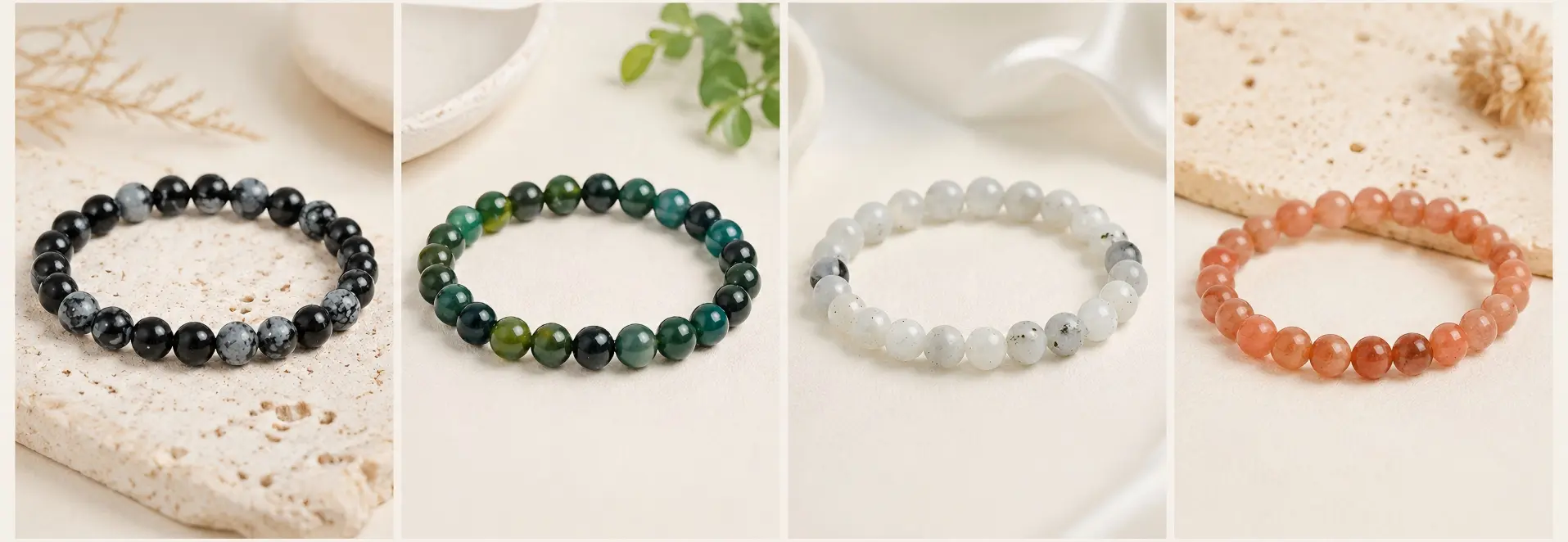
Benefits & Intentions Associated with Aquamarine and Blue Topaz
Working with intentional gemstones allows you to anchor positive habits, soothe daily worries, and celebrate personal growth. Whether you prefer the gentle softness of aquamarine or the vibrant spark of blue topaz, each stone supports distinct life intentions. Here is how our clients incorporate these blue gems into their daily mindfulness routines.
Mindful Living Intention: True inner peace arrives when we harmonize our emotional truth with clear, purposeful action. Choose aquamarine when your heart needs deep rest and quiet acceptance. Reach for blue topaz when your mind seeks confident focus and vocal courage.
Emotional Calming and Releasing Resistance
Aquamarine is renowned for soothing sudden emotional overwhelm, persistent grief, and sensory burnout. When life transitions feel unpredictable, holding a cool beryl crystal helps ground your breathing and dissolve fearful thought spirals. Its flowing water-element symbolism reminds us that resistance creates unnecessary friction while surrender brings relief.
Our clients often keep a tumbled aquamarine on their work desks during high-pressure career projects. Whenever tension mounts, taking three deep breaths while touching the stone's smooth surface serves as a grounding physical cue. The stone invites you to release perfectionism and trust your natural rhythm.
For those navigating sensitive family conversations, aquamarine softens reactive tempers. It encourages every participant to listen with genuine curiosity rather than building defensive counter-arguments. With its quiet sea-foam energy, tension gently washes away like foam retreating on warm sand.
Articulation, Truth, and Expressive Clarity
Working with sky blue topaz meaning helps dissolve throat tension and self-doubt before major presentations or tough conversations. If you tend to swallow your words to keep the peace, blue topaz provides the steady courage to set firm, respectful boundaries. It reminds you that your voice deserves to be heard without apology.
For students, authors, and researchers, blue topaz serves as an outstanding study and writing companion. Its focused vibrational frequency helps eliminate digital distractions and organizes complex ideas into tidy outlines. Placing a faceted topaz paperweight on your reading desk anchors mental stamina during prolonged study sessions.
Furthermore, blue topaz bridges the gap between what you believe internally and how you act externally. It encourages honest living, helping you make career and relationship choices that mirror your deepest core values. When you speak with authentic topaz clarity, people instinctively recognize your integrity.

Meditative Focus and Personal Mindfulness Practices
Both stones provide wonderful tactile anchors during silent meditation and intentional breathwork sessions. Aquamarine pairs naturally with ocean-breath pranayama techniques, where each smooth inhalation draws in cooling serenity and each exhalation releases stagnant fatigue. Visualizing clear sea water cleansing your energy field deepens this restful meditation.
Blue topaz excels when placed on your personal meditation altar as a focal point for concentration. Staring gently at its brilliant, crisp facets helps quiet the monkey mind and steadies racing thoughts. It brings an aura of sacred temple stillness to your sacred home space.
You can also hold both stones simultaneously during evening gratitude rituals to reflect on your daily interactions. Thank aquamarine for helping you respond to challenges with patience and grace. Thank blue topaz for giving you the clarity to solve complex problems with confidence.
How to Wear Aquamarine and Blue Topaz
Wearing gemstone jewelry keeps crystal frequencies close to your pulse points throughout busy days. However, getting the most out of your pieces requires thoughtful attention to energy flow and physical durability. Here are practical principles to help you wear both blue gems safely and effectively.
Left Hand vs. Right Hand (Energy Flow Logic)
In traditional energy practices, your hands govern two distinct energetic pathways: receiving and projecting. Your non-dominant hand (traditionally the left hand for right-handed individuals) is your receptive side, which draws energetic qualities inward into your subtle body. Wearing an aquamarine bracelet on the left wrist helps you absorb soothing emotional calm, patience, and internal reassurance.
Your dominant hand (traditionally the right hand) governs how you express yourself and project intentions outward into the world. Wearing a blue topaz ring on your right hand supports confident communication, decisive leadership, and articulate speech during negotiations or public speaking events. It helps ensure your spoken words match your authentic intentions.
Finger placement on your hands also carries traditional symbolic meaning in classical chi palmistry:
- 🌿 Index Finger: Wearing blue topaz here encourages leadership presence, self-confidence, and visionary focus.
- 🌿 Middle Finger: Adorning this finger with aquamarine balances personal responsibility with inner emotional peace.
- 🌿 Ring Finger: Wearing either stone here promotes harmonious relationships, creative truth, and loving authenticity.
- 🌿 Pinky Finger: Placing blue topaz on the little finger enhances interpersonal charm, quick wit, and diplomatic expression.
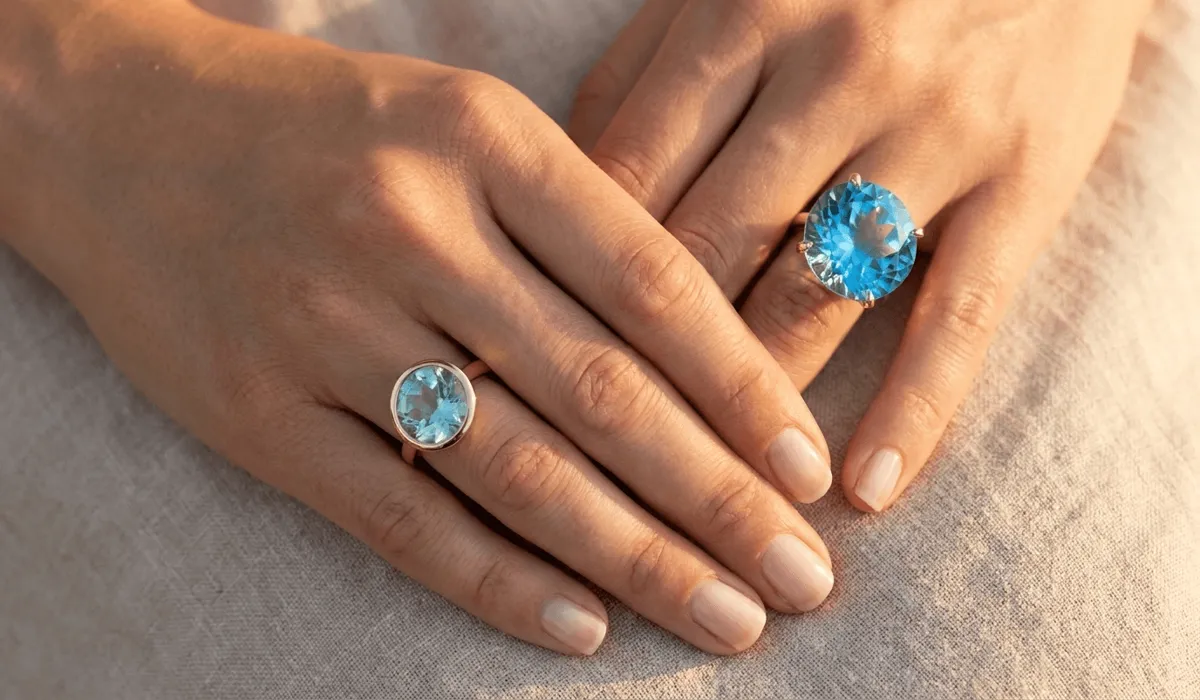
Daily Wear and Physical Considerations
When choosing between aquamarine vs blue topaz durability for daily jewelry, setting design matters immensely. Because blue topaz has perfect basal cleavage, we recommend protective bezel settings or low-profile prong settings for everyday rings. A solid gold or silver bezel wraps metal securely around the gem's girdle, shielding it from direct side impacts.
Aquamarine is tough enough for daily ring wear, but its light pastel color can show hand creams and dust quickly. Choosing an elevated pendant setting centered directly over your collarbone places both gems close to the physical throat chakra while keeping them completely safe from accidental surface collisions. Necklaces remain the most durable jewelry format for fine blue stones.
Always remove your gemstone rings before lifting weights at the gym, doing household gardening, or washing dishes. Avoiding sudden thermal shock and metal-on-stone contact preserves facet polish and prevents premature setting loosening over years of enjoyment.
Intention-Setting and Mindful Preparation
Before putting on your gemstone jewelry each morning, take thirty seconds to cleanse your mindset and set a focused intention. Hold your necklace or ring between your palms, close your eyes, and take a slow, grounding breath. Whisper a single guiding word into your hands, such as tranquility, presence, or clarity.
Pairing your jewelry with a daily affirmation reinforces your emotional focus throughout the day. When wearing aquamarine, you might affirm: "I move through changes with grace and speak my truth with kindness." When slipping on blue topaz, you might say: "My mind is clear, my focus is sharp, and my speech is authentic."
Throughout your workday, whenever you feel hurried or stressed, simply touch your jewelry piece with your fingertips. Let its cool, polished surface draw your attention back into the present moment. This simple tactile mindfulness ritual turns fine jewelry into an empowering daily companion.
Balancing Blue Energies with Complementary Stones
While throat chakra stones bring wonderful vocal freedom, wearing too many blue gems without grounding stones can leave you feeling airy or detached from physical reality. Pairing cooling blue stones with warm, earth-centered crystals balances your emotional expression with rooted physical stability. For instance, studying a detailed Tiger Eye Energy Guide reveals how contrasting energetic colors create harmonious daily equilibrium.
You can also layer blue stones alongside gentle white pearls, neutral smoky quartz, or raw black tourmaline beads. The grounding minerals anchor your root center while the blue stones open your expressive voice. This thoughtful balance allows you to stand firm in your body while speaking from your highest truth.
"True vocal power does not come from speaking loudly, but from anchoring your heart and mind in quiet, unshakable truth."
Aquamarine & Blue Topaz vs Similar Blue Stones
Shoppers often encounter other dazzling blue gemstones while exploring jewelry showcases. Comparing aquamarine and blue topaz against blue zircon and blue sapphire highlights why each crystal holds its own distinct place in gemology and jewelry design.
Aquamarine and Blue Topaz vs. Blue Zircon
Blue zircon is a natural mineral known for extraordinary optical fire, double refraction, and diamond-like sparkle. When light enters blue zircon, it splits into two rays, giving the stone an intense watery dazzle that makes aquamarine look soft and serene by comparison. Blue topaz has a crisp, glass-like luster, but blue zircon produces far more rainbow flash.
However, blue zircon rates between 6.5 and 7.5 on the Mohs scale and tends to be brittle along its facet edges according to gemological studies from the Gemological Institute of America. While aquamarine and blue topaz withstand daily ring settings with ease, blue zircon abrades quickly over time. Spiritually, blue zircon acts as a fiery catalyst for dramatic personal transformation, whereas aquamarine and topaz offer gentle, steady stability.
Aquamarine and Blue Topaz vs. Blue Sapphire
Blue sapphire belongs to the corundum mineral family and ranks among the most durable treasures on earth with a Mohs rating of 9. Unlike topaz, sapphire lacks cleavage planes, giving it unmatched structural toughness for lifelong heirloom engagement rings. Its color spectrum leans toward velvety royal blues and deep cornflower hues, contrasting sharply with the pale translucent mist of natural aquamarine.
From an energetic perspective, blue sapphire represents disciplined mental mastery, spiritual sovereignty, and unwavering willpower. While aquamarine teaches surrender and emotional flow, blue sapphire demands mental focus and ethical fortitude. Blue topaz sits gracefully between the two, offering intellectual clarity without the commanding weight or high price tag of fine sapphire.
Who Is Aquamarine & Blue Topaz Suitable For?
Choosing the best blue stone depends on your emotional needs, communication style, and everyday lifestyle. Neither gemstone is superior to the other; each serves different personality temperaments and energy centers. Here is how to find the gem that resonates most harmoniously with your life journey.
Energy Sensitivities and Chakra Alignment
Aquamarine is the ideal companion for highly sensitive individuals, empaths, and those recovering from chronic stress or emotional burnout. If you absorb the moods of others or struggle with emotional boundaries, aquamarine's soft, watery buffer offers gentle energetic protection. It cools turbulent reactions without forcing you to build rigid walls around your heart.
Blue topaz is wonderful for those who feel mentally scattered, creatively blocked, or hesitant to voice their legitimate boundaries. If you find yourself overthinking simple decisions or second-guessing your speech in meetings, topaz clears away self-doubt. It acts as an energizing vocal tonic that empowers clear, structured articulation.
For intuitive practitioners and breathwork facilitators, working with both gems together creates a complete communication bridge. Aquamarine opens compassionate listening channels, while blue topaz organizes thoughtful, inspiring responses. Exploring gentle Crystal Healing Practices can help you integrate both gems into your weekly self-care routine.
Zodiac and Astrological Affinities
Traditional birthstone systems celebrate both gemstones during important transition seasons throughout the astrological year:
- 🔮 March Birthstone (Aquamarine): Resonates deeply with the watery, compassionate, and intuitive nature of Pisces, grounding psychic sensitivity with emotional peace.
- 🔮 December Birthstone (Blue Topaz): Harmonizes with the honest, philosophical, and truth-seeking vitality of Sagittarius, channeling high enthusiasm into focused action.
- 🔮 Air and Water Signs: Gemini, Libra, and Aquarius benefit from the mental organization of topaz, while Cancer and Scorpio find serene emotional balance in aquamarine.
Remember that traditional birthstone associations are welcoming invitations rather than rigid restrictions. If your intuition is drawn to the seafoam glow of aquamarine or the electric flash of Swiss blue topaz, trust your instinct above any chart.
Creative and Lifestyle Alignments
Vocalists, actors, podcast hosts, teachers, and trial lawyers rely on their voices daily to inform and inspire audiences. Wearing blue topaz before taking the stage or stepping up to a lectern helps steady vocal pitch and sharpens rapid recall. It keeps your delivery calm, professional, and convincing under high scrutiny.
Meanwhile, aquamarine appeals deeply to artists, counselors, therapists, and anyone with a spiritual affinity for coastal landscapes or maritime careers. Its peaceful rhythm supports therapeutic listening, helping caregivers hold open space for others without draining their own emotional reserves. For those living by the ocean or sailing open waters, aquamarine remains a beloved symbol of safe passage and serenity.
How to Cleanse, Charge, and Care for Aquamarine and Blue Topaz
Proper physical maintenance and regular energetic clearing keep your fine gemstone jewelry sparkling with vibrant beauty. Because topaz and beryl possess different atomic structures, following safe care guidelines prevents accidental damage while preserving their metaphysical radiance.
Gentle Crystal Cleansing Guidelines
The safest way to clean both aquamarine and blue topaz jewelry is with lukewarm tap water, a drop of mild liquid soap, and a baby-soft toothbrush. Gently brush behind the gemstone setting where hand lotion and dust accumulate, then rinse thoroughly under room-temperature water. Pat your jewelry dry with a lint-free microfiber polishing cloth to restore brilliant facet sparkle.
Never use steam cleaners or boiling water on blue topaz, as rapid temperature shifts can trigger fractures along its cleavage planes. Avoid ultrasonic cleaning baths for aquamarines that contain delicate liquid inclusions, as high-frequency sound vibrations can widen internal fractures according to guidelines from the Gemmological Association Specialists.
For energetic clearing, pass your jewelry through the fragrant smoke of sustainably harvested cedar, lavender, or mild incense sticks. Smoke cleansing safely resets subtle vibrational patterns without subjecting precious gemstones to thermal shock or chemical corrosion.
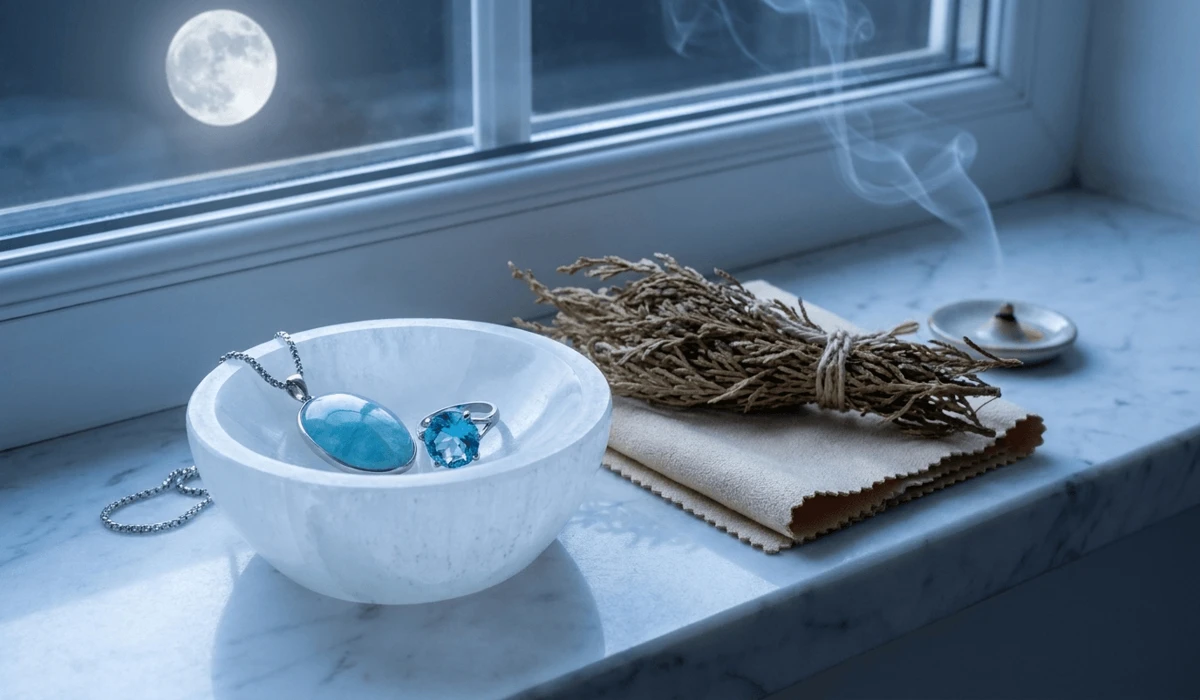
Charging and Mindful Re-Centering Practices
To recharge the receptive, cooling qualities of both stones, place them on a windowsill overnight beneath the gentle light of the full moon. Moonlight carries cool, reflective yin energy that rejuvenates subtle crystals without the fading risk associated with harsh daytime sun. Silver moonlight feels especially harmonious for the water-aligned vibration of aquamarine.
You can also rest your blue gemstone rings and pendants inside a carved translucent selenite bowl or on a raw clear quartz cluster. Selenite and quartz constantly amplify and clear ambient crystal frequencies without holding onto stagnant residue themselves. Leaving your jewelry on a selenite charging plate overnight ensures it feels fresh and ready each morning.
Alternatively, take your gemstones near a clean mountain stream or peaceful lake during quiet outdoor meditations. Visualizing pure flowing water rinsing away accumulated energetic fatigue refreshes the natural spirit of the stone.
Safe Storage and Physical Preservation
When you are not wearing your gemstones, store each piece in its own individual soft velvet pouch or fabric-lined compartment. Storing diamonds, sapphires, topaz, and aquamarine together in a loose jewelry tray can cause harder stones to scratch softer surfaces. Keeping rings separated preserves facet edges and prong integrity for decades.
Keep irradiated blue topaz away from prolonged, extreme heat sources, such as direct summer dashboard exposure or open fireplace mantels. While standard household wear and normal sun exposure will never fade blue topaz, intense heat can cause treated color centers to lighten. Finally, have a trusted local bench jeweler inspect your ring prongs once a year to ensure your precious blue gems remain safely secured.
Frequently Asked Questions
Q: Is blue topaz or aquamarine more valuable?
A: Aquamarine is significantly more valuable than blue topaz on the international gemstone market due to natural geological scarcity. While raw colorless topaz is abundant worldwide and transformed into blue shades through routine laboratory irradiation, fine natural aquamarine receives its gentle watery blue color organically inside the earth. In high-clarity specimens with intense natural color saturation, a fine aquamarine can command twenty to fifty times the price per carat of an equivalent blue topaz.
Q: How to tell the difference between aquamarine and blue topaz
A: You can tell them apart by examining their color saturation, pleochroism, and thermal properties under proper lighting. Natural aquamarine usually displays subtle seafoam green or watery pastel cyan undertones with gentle shifts between two shades as you rotate the stone under daylight. Blue topaz shows uniform, intense sky or teal blues without greenish undertones, feels slightly heavier in hand due to higher specific gravity, and disperses heat much faster on a jeweler's thermal tester.
Q: Blue topaz vs aquamarine for throat chakra alignment
A: Aquamarine balances the throat chakra through compassionate, heartfelt vulnerability and calm listening, making it ideal for healing relationship misunderstandings. Blue topaz stimulates the throat chakra by promoting direct truth, mental organization, and confident vocal delivery during presentations or structured debates. Choosing between them depends on whether your communication needs gentle emotional softening or sharp, decisive clarity.
Q: In which finger should blue topaz be worn?
A: Traditional palmistry and energetic practices recommend wearing a blue topaz ring on the index finger to strengthen leadership, personal authority, and purposeful vision. Alternatively, wearing blue topaz on the pinky finger stimulates mental sharpness, diplomatic negotiation, and articulate public expression. You can wear the ring on whichever finger feels physically comfortable and secure, as mindful intention remains the most powerful element.
Q: Can blue topaz and aquamarine be worn together
A: Yes, blue topaz and aquamarine complement each other wonderfully by uniting sharp mental focus with gentle emotional stillness. Layering both stones creates a balanced throat chakra harmony that blends intellectual confidence with heartfelt empathy. Just ensure that the metal settings do not rub directly against each other on the same finger to prevent accidental surface abrasions between stones of differing hardness.

Conclusion & Gentle Next Step
Choosing between aquamarine and blue topaz celebrates your unique aesthetic style and mindful intentions. Aquamarine invites the rare, organic magic of natural beryl into your life, offering gentle emotional solace and seafoam beauty. Blue topaz provides vibrant, electric sky tones, remarkable durability, and focused vocal clarity at an accessible price point.
Neither gemstone is spiritually or aesthetically superior to the other. Listen to your daily lifestyle needs, explore what colors uplift your mood, and trust your personal attraction. By welcoming these calming blue treasures into your jewelry collection, you carry a timeless symbol of peace, authentic expression, and serene clarity wherever life leads you.
Disclaimer: The crystal meanings, metaphysical insights, and holistic practices shared in this article are provided solely for cultural interest, personal reflection, and informational purposes. They do not constitute medical, psychological, legal, or financial advice. For physical or mental health concerns, always consult with a licensed healthcare professional.

Longyi Luck
Longyi Luck is a Feng Shui practitioner and spiritual researcher who blends traditional year-based wisdom with modern lifestyle insights, specializing in Feng Shui, spirituality, meditation, and mindfulness. With years of dedicated study and practice, Longyi explores cultural symbolism and the practical application of ancient wisdom to help individuals cultivate balance, clarity, and harmony in everyday life. Since 2020, Longyi has been committed to translating timeless traditions into accessible guidance for the modern world.
longyi@auraandluck.com