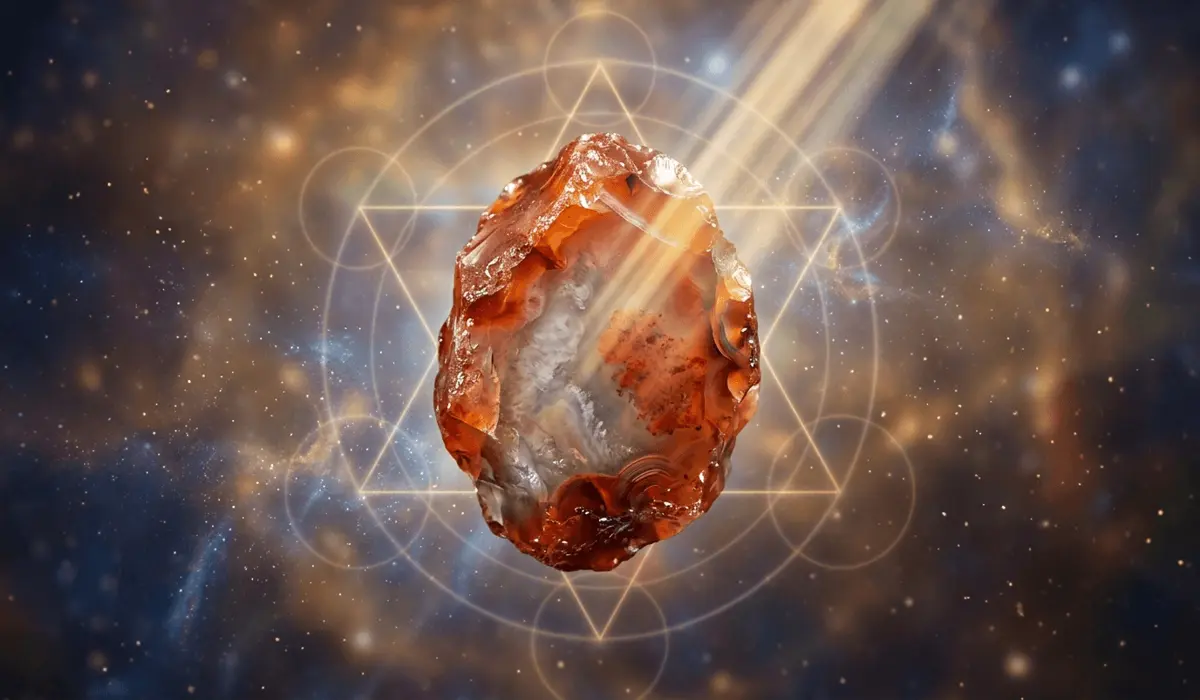
Real vs. Fake Carnelian: How to Spot Dyed Agate is an essential guide for anyone who wants to ensure their fiery gemstones are completely authentic and naturally formed. Collectors and spiritual seekers often search for this comparison because the gemstone marketplace is flooded with inexpensive dyed agates and heat-treated chalcedony stones disguised as genuine gems. By understanding subtle crystal structures, cloud inclusions, and dye marks, you can easily protect your investment and build a meaningful gemstone collection with complete peace of mind.
Quick Summary:
- Authentic carnelian features warm, cloudy color transitions caused by natural iron oxide rather than sharp, neon stripes.
- Most fake carnelians on the commercial market are ordinary grey agates soaked in chemical dyes or cheap glass imitations.
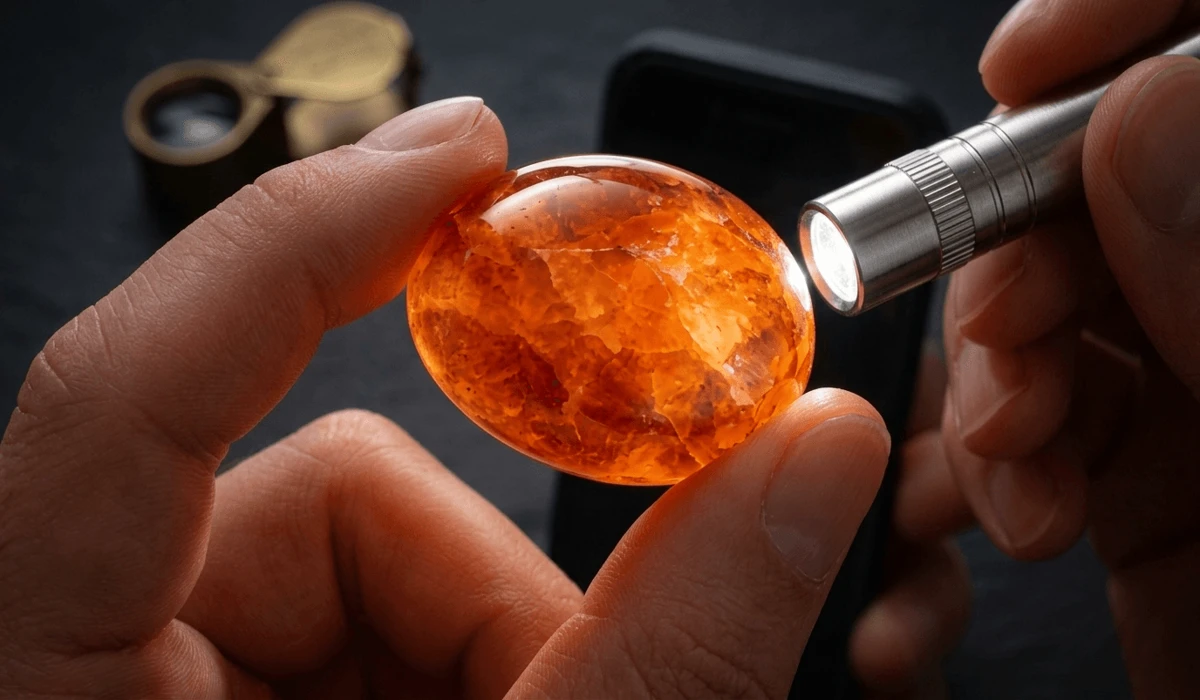
- A quick backlit penlight test reveals soft, cloudy chalcedony textures in genuine stones while exposing dye pooling in cracks of fake pieces.
- Real carnelian feels cool against the skin and registers between 6.5 and 7 on the mineral hardness scale.
- Knowing how to spot treatments ensures you select genuine stones that align with your mindful lifestyle and personal intentions.
What Is Real vs. Fake Carnelian: How to Spot Dyed Agate?
Definition of Natural Carnelian
Natural carnelian is an amber-red to warm reddish-orange variety of chalcedony that belongs to the microcrystalline quartz family. Its captivating color originates from natural iron oxide particles distributed evenly through microscopic silica crystals over geological ages. For accurate gemological background, researchers often consult the Gemological Institute of America.
In contrast, fake carnelian typically refers to common grey chalcedony stones that have been artificially treated with chemical pigments. These altered stones undergo chemical soaking to create an intense, uniform reddish color that mimics premium specimens. Molded glass and plastic imitations also appear online, though dyed agates remain the most prevalent deceptive items in modern bead markets.
Origin and Raw Materials
Genuine carnelian forms primarily in ancient volcanic cavities where thermal waters rich in silica and dissolved iron seep into porous lava pockets. Major commercial deposits of genuine rough carnelian are found in India, Madagascar, Brazil, and Uruguay. When our artisan team inspects authentic rough carnelian from these regions, we observe rich color variations reflecting natural geothermal history.
Treated specimens, on the other hand, usually begin life as low-cost Brazilian or Chinese banded agates with pale grey or chalky brown coloring. Commercial factories submerge these porous agates in iron nitrate solutions before baking them in industrial furnaces. This chemical process locks synthetic red tones deep into surface layers, producing brilliant but artificial hues that fool unsuspecting buyers.
Basic Physical Characteristics
A natural carnelian specimen features a dependable hardness rating of 6.5 to 7 on the Mohs scale, meaning steel blades cannot scratch its surface easily. It possesses a distinct mineral heft and dense structure that immediately feels cool when pressed against the cheek. The stone displays a smooth, waxy to vitreous luster that softens harsh reflections into a deep, gentle glow.
When subjected to backlighting, authentic carnelian presents soft, cloudy variations with drifting milky textures inside the gemstone matrix. Synthetic glass imitations feel light, warm up quickly in human hands, and often display sharp edges rather than a smooth, silky finish. Recognizing these tangible mineral attributes gives every collector reliable confidence when browsing marketplace stalls or online crystal boutiques.
Spiritual Meaning and Historical Symbolism
Traditional Spiritual Symbolism
Across centuries of folklore, natural carnelian has symbolized physical vitality, fearless courage, and the spark of creative inspiration. Ancient healers regarded the stone as a warm hearth for the human spirit, dispelling apathy and replacing self-doubt with steady inner endurance. In our daily studio work, we find that people naturally reach for carnelian when they want an empowering talisman during major life shifts.
While artificially dyed agate still carries the gentle grounding properties common to the broader chalcedony family, traditional practitioners prefer unenhanced stones. Natural earth-born gems retain an undisturbed structural resonance formed through millions of years of natural heat and pressure. Holding an authentic specimen connects modern mindfulness practitioners directly to the raw, patient forces of the natural world.
Chakra Associations and Energy Centers
Carnelian is universally celebrated as the primary mineral ally for the Sacral Chakra (Svadhisthana), located just below the navel. This vital energy center governs passion, artistic flow, emotional warmth, and our relationship with personal pleasure and playful joy. Placing a genuine polished carnelian stone upon the lower abdomen during breathing exercises encourages a balanced flow of life force Chi (气).
The deep terracotta and mahogany undertones of darker carnelian also establish a harmonious bond with the Root Chakra (Muladhara). This foundational anchor supports mental resilience, personal safety, and practical decision-making during stressful circumstances. Many crystal enthusiasts explore specialized Crystal Healing Practices to combine Sacral Chakra activation with steady physical grounding routines.
Cultural and Historical Context
In ancient Egypt, carnelian was called the "setting sun" and represented the fertile, life-giving blood of the goddess Isis. Egyptian artisans carved the stone into protective amulets and sacred heart scarabs, pairing it with blue lapis lazuli on royal pectorals. For detailed historical accounts of ancient Egyptian mineral trade routes, collectors frequently explore the Online Mineral Encyclopedia.
Greek and Roman orators wore carved carnelian signet rings depicting protective deities because hot sealing wax never adhered to its polished, waxy surface. In ancient Asian civilizations, lapidary masters carved delicate pendants from glowing red chalcedony to bestow steady luck upon travelers. These diverse cultural traditions consistently celebrated carnelian as an emblem of enduring vitality, nobility, and unwavering personal truth.
Benefits and Intentions Associated with Real vs. Fake Carnelian
Working with natural gemstones provides a tangible anchor for personal mindfulness, daily goal-setting, and emotional clarity. Natural carnelian serves as an empowering visual touchstone for individuals committed to igniting their creative drive and completing meaningful personal projects. Based on our experience crafting intentional jewelry, pairing specific daily goals with genuine stones transforms routine moments into mindful rituals.
The following everyday intentions represent popular ways modern mindful individuals integrate carnelian into their lifestyle routines:
- 🌟 Igniting creative momentum and dissolving mental procrastination when initiating complex artistic or writing projects.
- 🌿 Reinforcing healthy personal boundaries with calm, grounded assertiveness during high-pressure professional interactions.
- 🔥 Awakening physical enthusiasm, emotional stamina, and joyful presence throughout demanding seasonal schedules.
- 🛡️ Cultivating stable self-worth and releasing lingering self-judgment during times of personal transformation.
- 🧘 Grounding scattered thoughts during morning meditation routines to foster calm, unwavering mental clarity.
These simple affirmations help align personal thoughts with steady, grounded focus throughout the day.
Mindfulness practices can also incorporate physical touchstones, such as rolling smooth carnelian beads between your fingers during quiet breathing exercises. Keeping an unenhanced palm stone on your creative desk provides a steady reminder of your natural creative stamina. When people engage mindfully with natural minerals, they build an intentional environment that quietly supports emotional balance and consistent focus.
How to Wear Real vs. Fake Carnelian
Understanding which wrist to adorn with a carnelian bracelet helps align the gemstone’s visual presence with your personal goals. In eastern energetic traditions, the human body balances receiving and releasing currents through opposing sides of the physical form. By thoughtfully choosing where to place your jewelry, you establish a deliberate rhythm between your internal intentions and outer actions.
Left Hand vs. Right Hand Energetic Principles
Wearing carnelian on your left wrist aligns with the receptive side of your body, inviting internal motivation, emotional courage, and creative inspiration inward. This placement is ideal when you need to recharge your inner confidence, overcome quiet burnout, or nurture artistic ideas in privacy. Our clients frequently select the left wrist when beginning personal mindfulness journeys or artistic exploration phases.
Conversely, wearing carnelian on your right wrist activates the projective, expressive current of your physical presence. This side empowers you to project bold leadership, communicate boundaries clearly, and manifest creative plans in collaborative environments. Alternating wrists based on your daily schedule allows you to adapt mindfully between deep inner reflection and decisive external leadership.
When and Where People Choose to Wear It
Carnelian jewelry is an exceptional accessory during demanding business presentations, creative brainstorming sessions, or public speaking engagements where poised enthusiasm is essential. Its warm, sunset hues add a vibrant splash of color to professional attire while serving as an anchor of calm composure. Many professionals wear carnelian during long afternoons to stay mentally alert without experiencing nervous overstimulation.
Social gatherings and celebratory events also provide ideal opportunities to wear polished carnelian bracelets or statement pendants. The welcoming, radiant warmth of the stone encourages approachable body language and spontaneous, honest conversations with new acquaintances. Whether attending a gallery opening or leading a strategy workshop, carnelian quietly reflects an aura of creative capability.
Intention-Setting Practices with Authentic Gemstones
Before wearing your carnelian jewelry each morning, take a brief moment to clear your mind through three slow, steady breaths. Hold the beads gently between your palms and whisper a simple, focused intention that reflects your hopes for the day ahead. You might dedicate the stone to steady patience, bold creative flow, or unwavering emotional presence.

Many gemstone enthusiasts enjoy pairing carnelian with an artisan carved Red Agate Collection piece to unite creative fire with protective grounding stability. Wearing these harmonious stones together establishes a complete sensory reminder to approach challenges with courage and grace. This daily mindful pause transforms your favorite jewelry pieces into treasured talismans of purpose.
Carnelian vs. Similar Stones
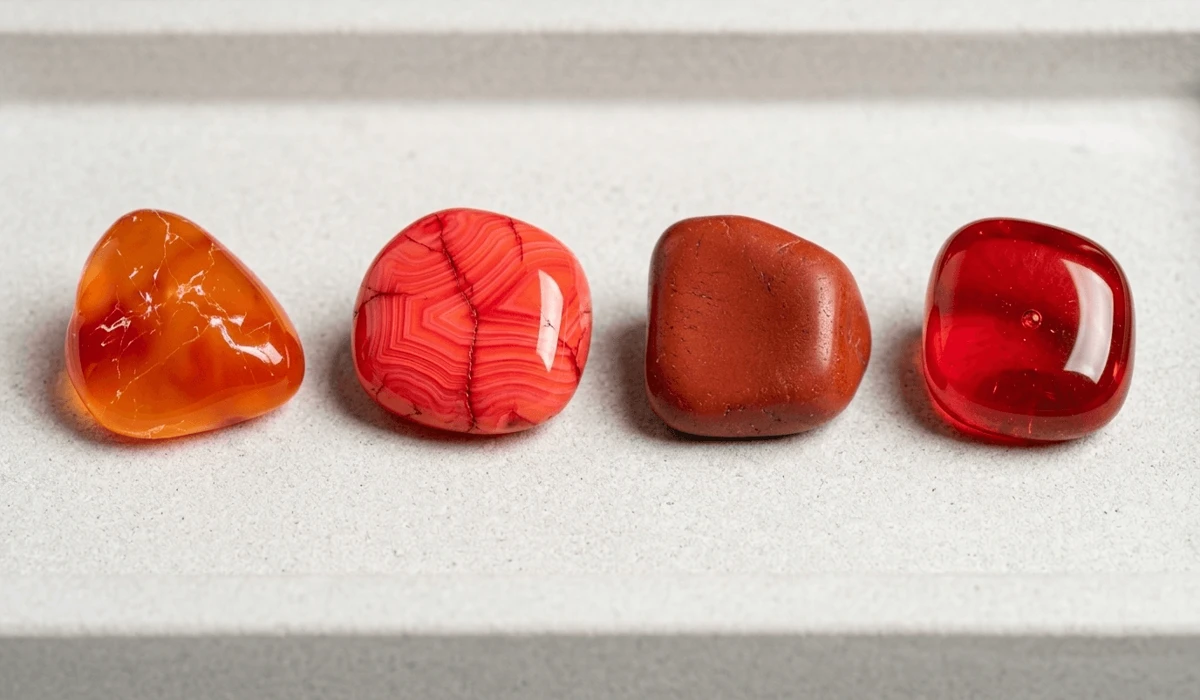
Distinguishing authentic carnelian from look-alikes requires observing physical traits under good lighting. Dyed agates, red jasper, and glass replicas frequently masquerade as genuine carnelian in commercial marketplaces. The comparative table below outlines the essential physical and visual differences among these common mineral specimens.
| Gemstone Material | Optical Translucency | Mohs Hardness | Internal Structural Pattern | Surface Luster |
|---|---|---|---|---|
| Natural Carnelian | Semi-translucent to translucent | 6.5 - 7.0 | Cloudy, milky, diffuse gradients | Smooth waxy to vitreous |
| Dyed Banded Agate | Translucent across light bands | 6.5 - 7.0 | Sharp, concentric stripes with dye pooling | Glossy vitreous polish |
| Natural Red Jasper | Completely opaque | 6.5 - 7.0 | Dense micro-grain with dark veins | Dull earthy to semi-waxy |
| Imitation Glass | Transparent to semi-translucent | 5.0 - 5.5 | Uniform color with round air bubbles | Mirror-like glassy shine |
Natural Carnelian vs. Dyed Agate
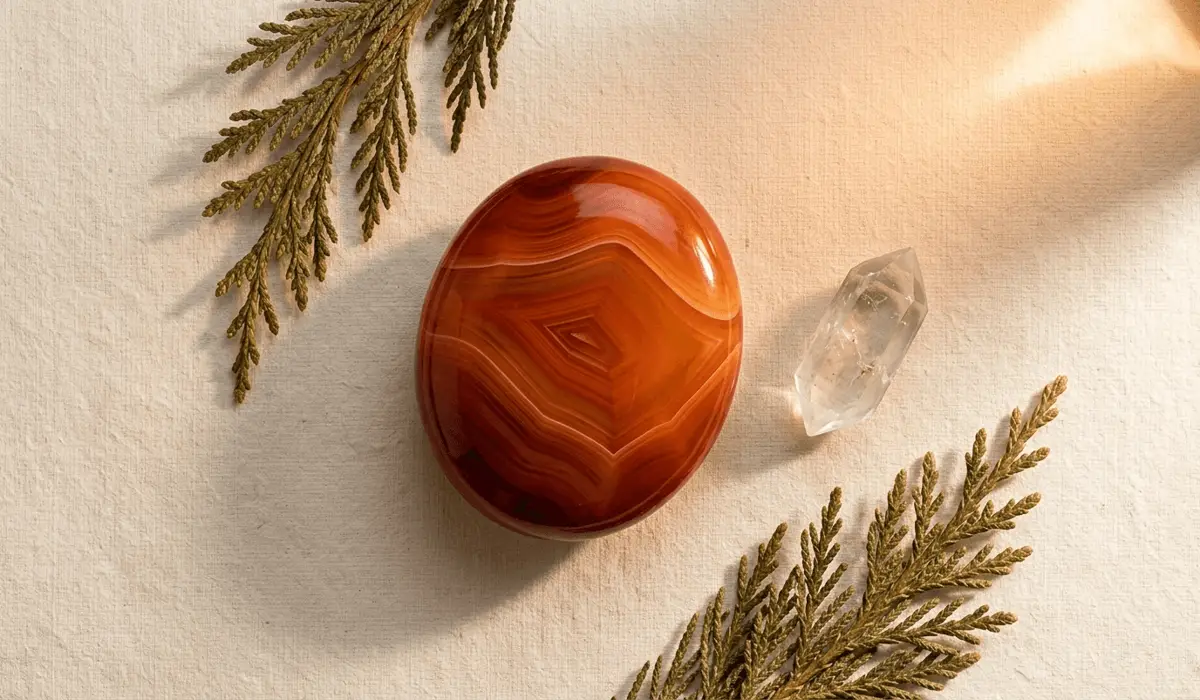
The primary telltale difference between natural carnelian and dyed agate lies in color distribution and banding sharpness. Genuine carnelian displays gentle, cloudy transitions of terracotta, apricot, and deep crimson with organic cloud-like formations floating beneath the surface. Dyed agates, however, showcase stark, neon-bright concentric bands where artificial dye has settled heavily into microscopic surface fissures.
Under a jeweler's loupe, dyed agates reveal intense color pooling within surface scratches, pits, and drill holes. Natural carnelian maintains a uniform mineral matrix where color shifts occur naturally without artificial dark lines. Observing this internal nuance allows you to identify dyed stones within seconds of inspection.
Video source: YouTube
Author: Mooney Fine Mineral
Original video link: https://www.youtube.com/watch?v=WADH1MGbd1U
Natural Carnelian vs. Red Jasper
While both carnelian and red jasper belong to the chalcedony mineral family, their optical behavior is completely different. Real carnelian allows ambient light to pass through its edges, producing an inner fiery glow when illuminated from behind. Red jasper contains high amounts of iron oxide minerals that make it entirely opaque to light.
Furthermore, red jasper displays a more matte, earthy texture with occasional brown, yellow, or black mineral veins winding through the stone. Carnelian exhibits a refined waxy surface sheen that feels distinctly silky under the fingers. If light cannot penetrate even the thinnest edge of your polished stone, you are holding red jasper rather than carnelian.
Natural Carnelian vs. Imitation Glass
Glass imitations are common in cheap costume jewelry but can be spotted through thermal and microscopic tests. Authentic carnelian has high thermal conductivity, meaning it stays cold against your skin and warms up slowly. Glass heats up almost instantly upon touch and quickly adjusts to surrounding room temperature.
Examining the piece closely under bright lighting also reveals internal structure clues. Glass replicas often contain tiny spherical air bubbles trapped during high-temperature manufacturing, a structural flaw never present in natural silica. Professional gemologists at the Gemmological Association of Great Britain regularly highlight these distinctive microscopic bubbles as conclusive proof of artificial glass.
Who Is Real vs. Fake Carnelian Suitable For?
Carnelian is an exceptionally versatile gemstone that brings warmth to anyone seeking to cultivate greater creative vitality and emotional resilience. Whether you are an experienced crystal practitioner or simply drawn to warm, earthy jewelry, this radiant mineral adapts effortlessly to your lifestyle. Understanding its unique resonance ensures you pick the right stone for your personal goals.
Chakra and Energetic Resonance
Carnelian is particularly beneficial for individuals working through periods of creative lethargy, emotional exhaustion, or artistic self-doubt. By invigorating the Sacral Chakra, it encourages a playful curiosity and helps you release fear around self-expression. It acts as an energetic spark, warming cold emotional patterns and inviting spontaneous joy into your daily routine.
For those who frequently feel disconnected, overwhelmed, or ungrounded by fast-paced digital environments, carnelian provides a welcoming physical anchor. Its earthy Root Chakra undertones steady scattered thoughts and reinforce practical focus. Adding carnelian to your meditation space brings balanced warmth to cooler stones like amethyst or clear quartz.
Astrological and Zodiac Alignments
In astrological traditions, carnelian resonates powerfully with fire and earth signs seeking emotional equilibrium. Aries individuals benefit from its balancing influence, which helps channel fiery passion into disciplined, productive outcomes rather than impulsive reactions. Leo natives find that carnelian amplifies their natural charismatic warmth while encouraging genuine humility and generosity.
Virgo individuals often appreciate carnelian for its ability to soften excessive self-criticism with gentle creative acceptance. The stone reminds analytical thinkers that progress is an organic journey rather than an exercise in flawless perfection. Collectors interested in exploring wider astrological mineral matches often explore our comprehensive Spiritual Crystal Collection for tailored guidance.
Lifestyle and Career Alignment
Carnelian is an exceptional companion for writers, graphic artists, performers, and entrepreneurs who rely on sustained creative innovation. Having a polished stone nearby serves as a tangible reminder to stay confident in your talents when navigating demanding client feedback. It promotes steady motivation without triggering anxiety or creative fatigue.
Public speakers, community organizers, and educators also benefit from carnelian’s empowering symbolism during presentations. Its historical association with eloquence and courage helps speakers share their message with poise and clarity. For mindful collectors, owning a verified, authentic specimen brings lasting pride in preserving genuine geological treasures.
How to Cleanse, Charge, and Care for Carnelian
Caring for your carnelian jewelry preserves its natural waxy polish and maintains its vibrant appearance for decades. Regular physical maintenance removes body oils and cosmetic buildup, while thoughtful energetic cleansing restores its mindful focus. Following simple care practices ensures your genuine carnelian continues to bring joy and beauty to your daily rituals.
Gentle Cleansing Methods
To physically clean your carnelian beads or rings, wipe them down gently using lukewarm water and a soft microfiber cloth. Avoid harsh commercial jewelry cleaners, ultrasonic steamers, or acidic solutions, as these chemicals can strip natural wax finishes or damage mounting settings. If your jewelry needs deeper cleaning, a drop of mild organic liquid soap in warm water is completely safe.
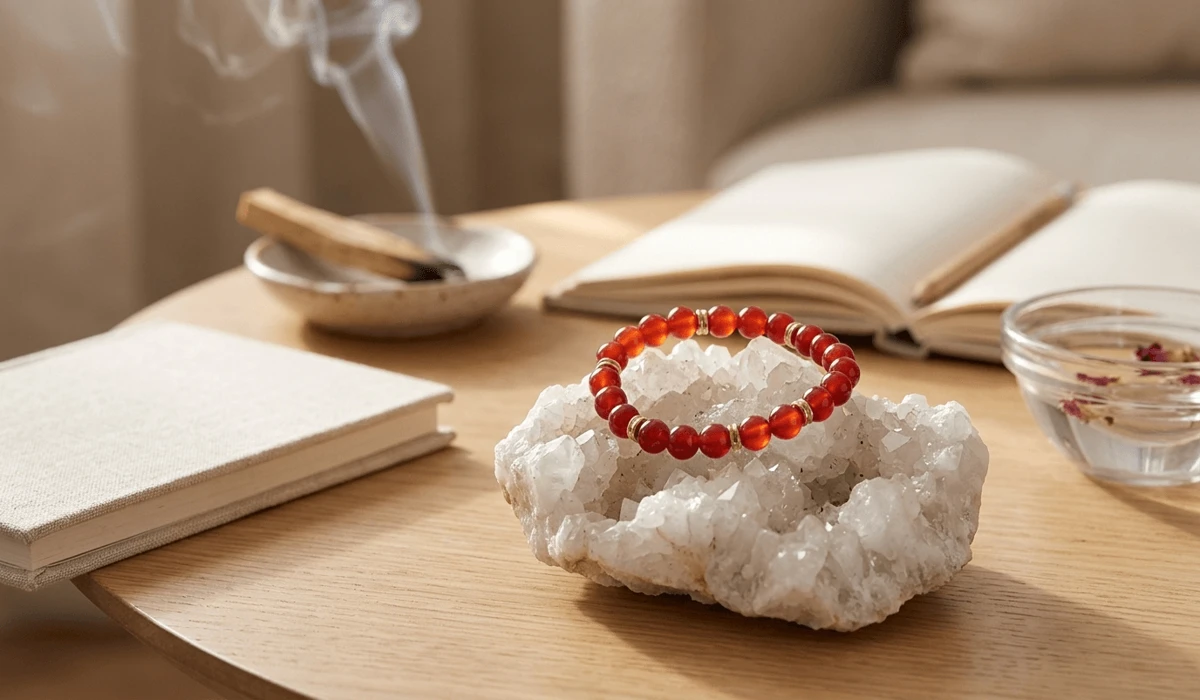
For energetic purification, bathe your stone in aromatic botanical smoke using ethical dried white sage, mountain cedar, or sweetgrass. You can also rest your jewelry next to a resonant brass singing bowl or clear quartz bell during quiet sound meditation sessions. Sound vibrations offer a safe, water-free way to reset your stone’s energetic atmosphere without risking surface abrasions.
Solar and Lunar Charging Practices
Carnelian possesses an innate affinity for warm solar rays, making morning sunlight its most invigorating charging companion. Place your stone on a windowsill for 20 to 30 minutes during sunrise to absorb gentle solar energy. Avoid leaving carnelian in harsh midday summer heat, as intense ultraviolet radiation can gradually alter iron oxidation and dull natural color tones.
If you prefer a softer, reflective energy, place your carnelian overnight upon a clean natural windowsill under the light of a full moon. You can also rest your bracelet directly atop a large raw clear quartz cluster or selenite charging plate. These gentle mineral companions ground and rejuvenate your carnelian without subjecting it to thermal fluctuations.
Daily Care, Storage, and Handling Guidelines
Store your carnelian jewelry in an individual velvet pouch or lined compartment to prevent harder gemstones like topaz or diamonds from scratching its smooth finish. Remove carnelian rings and bracelets before swimming in chlorinated pools, relaxing in hot tubs, or applying hand lotions. Protecting the stone from rapid temperature shifts prevents internal structural fractures within its microcrystalline silica matrix.
"True beauty in a gemstone lies not in artificial perfection, but in the gentle clouds, organic gradients, and enduring patience of natural geological creation."
With respectful daily handling and simple mindfulness routines, your authentic carnelian will remain a radiant companion throughout your life journey.
Frequently Asked Questions
Q: How to test if carnelian is real?
A: Hold your stone over a bright penlight flashlight to examine its interior transparency. Real carnelian shows an uneven, cloudy translucency with soft color gradients, whereas dyed agates reveal intense color pooling in microscopic cracks. Additionally, genuine carnelian feels naturally cold against your skin, possesses notable mineral heft, and cannot be scratched by a common copper penny.
Q: What does fake carnelian look like?
A: Fake carnelian made from dyed agate displays stark, unnatural concentric bands soaked in neon orange or hyper-saturated magenta-red pigment. Glass imitations look completely transparent, feel lightweight, and often reveal tiny spherical air bubbles trapped inside when viewed under magnification. Counterfeit stones also lack the soft, milky cloud patterns that define earth-mined chalcedony.
Q: What is the difference between red agate and carnelian?
A: Both minerals belong to the chalcedony family, but genuine carnelian features diffuse, cloud-like reddish-orange coloring without prominent structural stripes. Red agate is characterized by distinct, curved concentric or parallel bands running through its crystalline matrix. When grey banded agate is chemically dyed orange, commercial vendors often mislabel it as carnelian despite its obvious banding lines.
Q: Does dyed carnelian still have spiritual value?
A: Many crystal practitioners believe dyed agate still carries the foundational grounding frequency shared by all quartz-based chalcedony stones. Your conscious personal intentions and meditation focus remain the primary drivers of any spiritual practice. However, traditionalists prefer unheated, naturally formed carnelian because its fiery color stems from genuine geological iron rather than artificial chemical treatments.
Q: How can I cleanse and charge my carnelian crystal?
A: You can purify your carnelian by passing it through botanical smoke or playing a resonant Tibetan singing bowl near the stone. To charge its energy, rest the piece in soft morning sunlight for 20 minutes or leave it overnight upon a clear quartz cluster under the full moon. Avoid prolonged exposure to harsh midday summer sun to protect its natural coloration.
Summary & Gentle Next Step:
Spotting authentic carnelian is simple once you know how to look for soft, cloudy chalcedony formations, organic color depth, and the absence of heavy dye pooling in fractures. Cherishing genuine gemstones deepens your connection to the natural world while bringing steady, authentic vitality to your daily mindfulness practices.
Take your time exploring different specimens under natural lighting, trust your tactile senses, and seek out reputable lapidary sources that celebrate natural, untreated geological wonders.
This content is published strictly for educational, historical, and cultural appreciation purposes. Gemstone lore, chakra associations, and metaphysical practices discussed herein do not constitute medical, legal, psychological, or financial advice. Individuals experiencing health concerns should always consult a licensed medical professional.

Longyi Luck
Longyi Luck is a Feng Shui practitioner and spiritual researcher who blends traditional year-based wisdom with modern lifestyle insights, specializing in Feng Shui, spirituality, meditation, and mindfulness. With years of dedicated study and practice, Longyi explores cultural symbolism and the practical application of ancient wisdom to help individuals cultivate balance, clarity, and harmony in everyday life. Since 2020, Longyi has been committed to translating timeless traditions into accessible guidance for the modern world.
longyi@auraandluck.com