
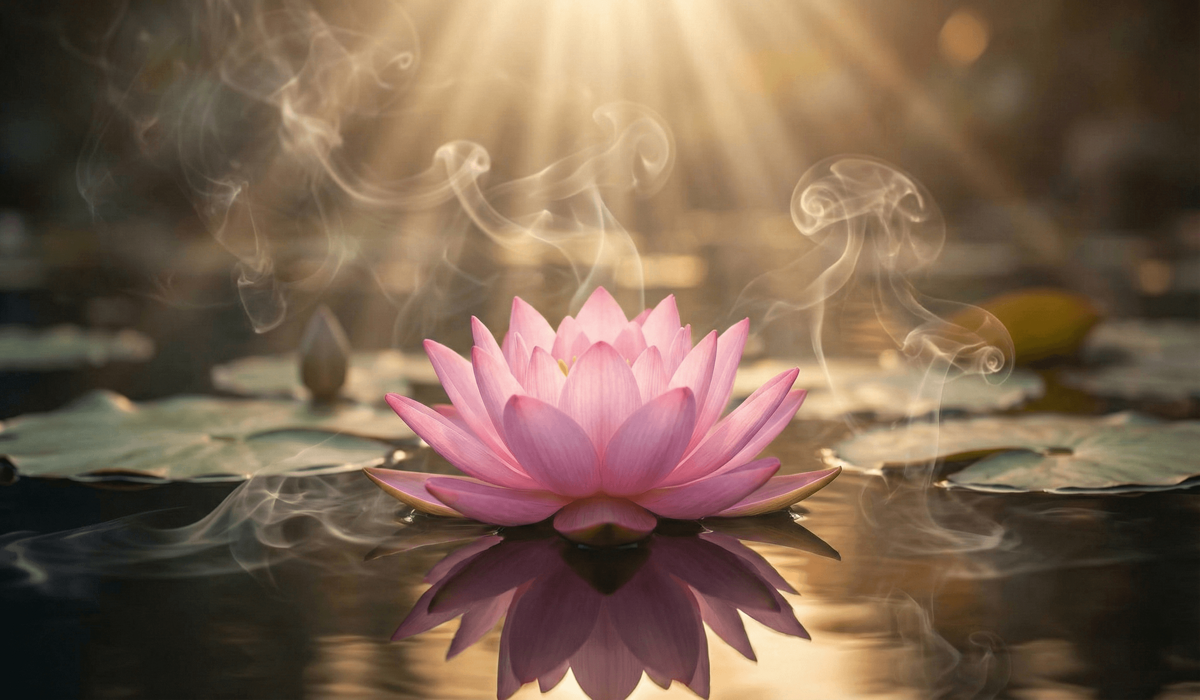
The lotus flower is far more than a beautiful plant floating on a quiet pond. We see it as a powerful mirror for the human soul and a universal symbol that has shaped civilizations for thousands of years. It represents a strange paradox where a physical flower becomes a bridge between our messy daily lives and a higher state of being.
The Mud and the Bloom: A Universal Metaphor for the Human Soul
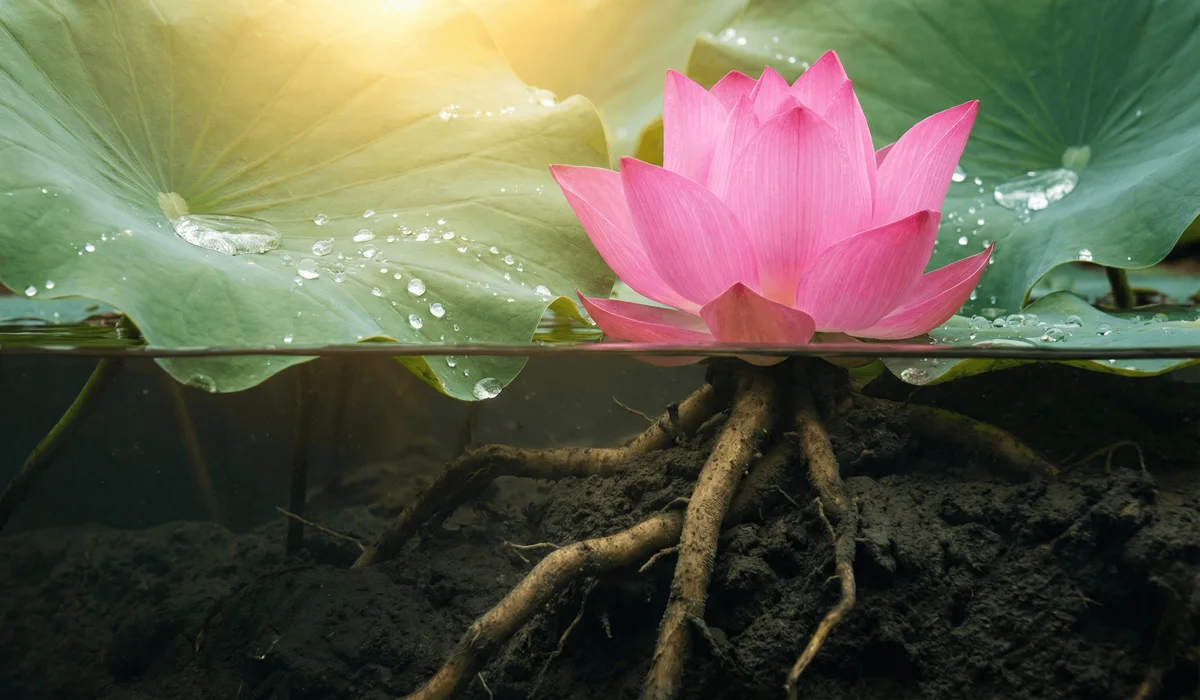
At its heart, the lotus tells a story of struggle and victory that every person can understand. It begins its life in dark, thick mud at the bottom of a pond, far away from the sunlight. Yet, it does not stay there; it pushes through the murky water to bloom on the surface, perfectly clean and untouched by its environment.
This growth represents the concept of Pratitya-samutpada (Dependent Origination), which means the bloom cannot exist without the mud. In our lives, the "mud" represents "Samsara" (轮回), the cycle of suffering and challenges we all face. The flower shows us that "Nirvana" (涅槃), or peace, can exist right in the middle of that suffering.
The way the lotus grows offers us three vital lessons for our spiritual journey:
- Resilience: The strength to grow even when conditions are difficult or dark.
- Non-attachment: The ability to be "in the world but not of it," just as water beads roll off the petals.
- Potential: Every muddy pond holds the hidden potential for a beautiful, sacred blossom.
By studying this plant, we learn that our own "muddy" experiences are actually the fuel we need to reach our highest self.
Ancient Roots: From Egyptian Sun Gods to the Navel of Vishnu
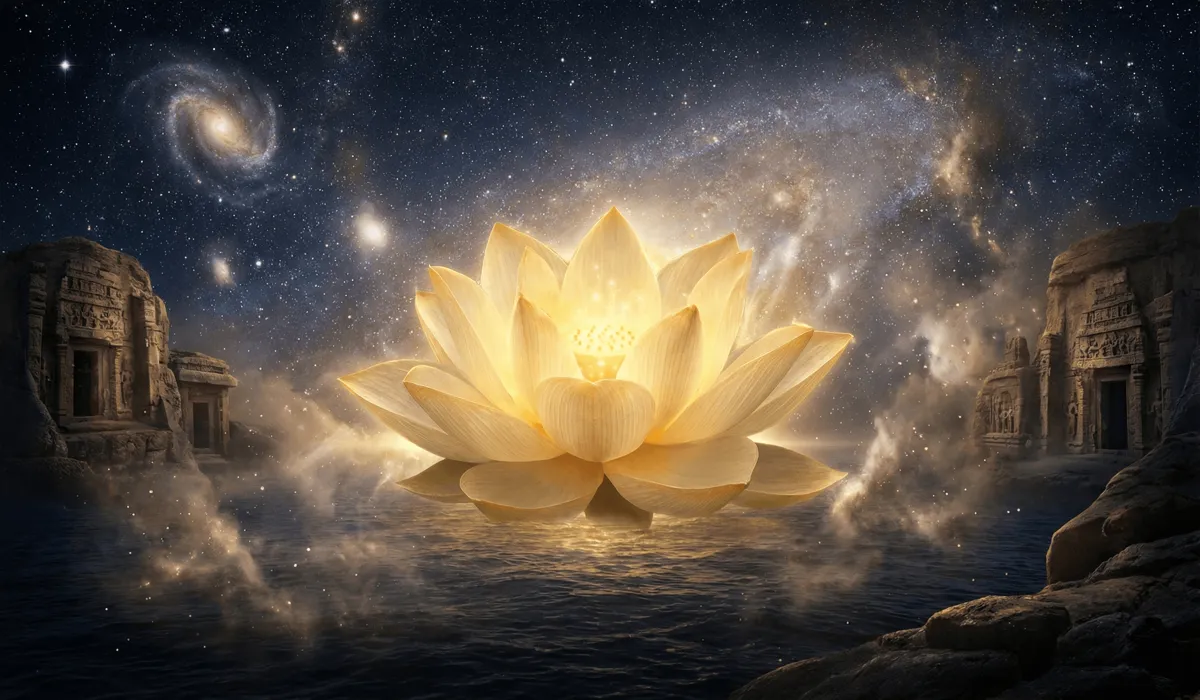
The history of the lotus is written in the oldest myths of humanity, stretching across different continents. In Vedic Hinduism, the lotus is known as the Padma and is linked to the very beginning of time. According to the ancient Brahmanas, a golden lotus emerged from the navel of Lord Vishnu while he slept on the cosmic ocean.
This "Golden Womb" served as a throne for Brahma, the creator, to begin building the universe. In a similar way, the people of ancient Egypt saw the Blue Lotus as a symbol of the sun and rebirth. They believed the sun god Ra emerged from a giant lotus at the start of creation, bringing light to the darkness.
For the Egyptians, the way the flower closed at night and opened at dawn was a metaphor for the afterlife. This cycle of "eternal return" made the lotus a central part of their spiritual art and funerary rites. Whether in India or Egypt, the flower was always seen as the birthplace of divine light.
The Buddhist Path: How the Lotus Became the Seat of the Buddha
In Mahayana and Vajrayana Buddhism, the lotus is perhaps the most important symbol of the Dharma. It represents the path toward enlightenment that every person is capable of following. The Lotus Sutra (法华经) teaches that we all have a "Buddha nature" waiting to bloom, no matter how much "mud" we are currently in.
You will often see statues of the Buddha or high-ranking deities sitting on a lotus throne. This represents their complete victory over the senses and the physical world. The "Thousand-Petaled Lotus," or Sahasrara (千瓣莲花), is used to describe the highest state of consciousness at the crown of the head.
The lotus is also a key part of the Eightfold Path, acting as a compass for moral and spiritual living. Just as the flower has a geometric perfection, the path offers a structured way to find "Zen Stillness". We can look to the Lotus Flower as a guide for our own mental and spiritual orientation.
To find balance in this busy year, many people appease Grand Duke by focusing on symbols of peace and protection.
Color Symbolism: White, Pink, Blue, and Red Lotus Meanings
Not every lotus carries the same message, as the color of the petals changes its spiritual "frequency." Throughout history, different cultures have assigned specific virtues to these various shades. Understanding these meanings helps us choose the right symbol for our current needs.
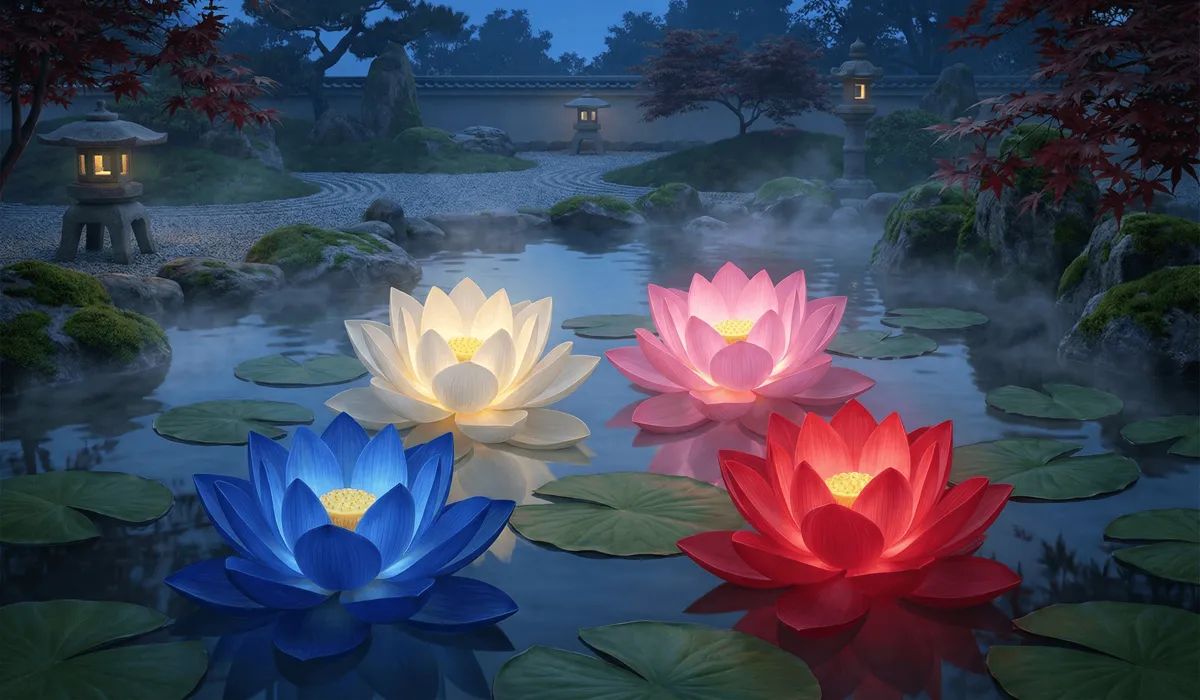
Here is a guide to the most common lotus colors and what they represent in sacred traditions:
- White Lotus: Represents purity of the mind and the "Bodhi" (菩提) state of spiritual perfection.
- Pink Lotus: Known as the "Supreme Lotus," this color is reserved for the Buddha and the highest deities.
- Blue Lotus: Symbolizes the victory of the spirit over the senses and the pursuit of wisdom.
- Red Lotus: The "Heart Lotus," representing love, compassion, and the original nature of the heart.
By choosing a specific color, we can focus our meditation on a particular area of our lives, such as emotional healing or mental clarity.
Ancient Traditions and Cultural Origins
| Culture | Core Meaning | Key Deity / Figure |
|---|---|---|
| Hinduism | Creation and Divinity | Vishnu & Brahma |
| Buddhism | Enlightenment and Purity | Guan Yin & Buddha |
| Ancient Egypt | Rebirth and Sun | Ra & Nefertem |
| Taoism | Virtue and Openness | He Xiangu |
The Unalome and the Lotus: A Journey of Spiritual Growth
In many modern spiritual designs, you will see the lotus paired with a spiral symbol called the Unalome. This visual journey represents the path to wisdom, starting with a spiral of chaos at the bottom. The path then straightens out as we gain experience and eventually ends with a lotus bud or blossom.
This tells us that our confusion and mistakes are not "wrong," but are actually the first steps toward clarity. The straight line represents the moment we stop being distracted by the world and focus on our inner truth. Finally, the lotus at the top shows that we have reached a state of "Inner Peace".
Understanding this symbol helps us be more patient with ourselves during hard times. We are simply in the "spiral" phase of our growth, and the lotus is waiting for us at the end. For more insights on upcoming trends, you can read our Feng Shui Blogs to see how these symbols interact with yearly energies.
Feng Shui & the Lotus: Harmonizing Energy and Attracting Wealth
In the practice of Feng Shui, the lotus is a powerful tool for shifting the energy, or "Chi" (气), in a home. It is often used to bring "Sheng Chi" (生气), or positive life force, into spaces that feel stuck or heavy. Because the lotus grows in water, it is naturally linked to the flow of abundance and emotional health.
We recommend placing lotus symbols in the "Wealth Corner" (the Southeast area) of your home to attract prosperity. The flower is also linked to Guan Yin (观音), the goddess of compassion, who is often shown holding a lotus vessel. This vessel is said to contain the infinite mercy needed to heal the world's suffering.
Using a lotus in the center of the home, or the "Tai Ji" (太极), can help stabilize the health of everyone in the household. It acts as a "Mindfulness Anchor" that reminds us to stay calm and pure even when the outside world is chaotic.
Why Wear a Lotus? Transforming a Symbol into a Personal Talisman
In our modern world, we face a new kind of mud: "digital mud." This includes the constant noise of social media, information overload, and "Digital Burnout". Wearing a lotus talisman can serve as a psychic shield that protects your personal energy from these external stresses.

When you wear a lotus pendant, it acts as a physical reminder to breathe and return to your center. It helps you adopt the "Silk Flower effect," where you allow negativity to slide off you without leaving a mark. This is especially helpful for those dealing with social anxiety or high-stress environments.
Many people find that these symbols help them stay grounded during major life changes. You can see how people are using these tools by visiting Wikipedia for historical context on sacred plants. For more professional advice on space clearing, the Feng Shui Society (UK) offers great resources.
The Shadow Side: The "Dark Meaning" of the Lotus
While we usually focus on the beauty of the lotus, there is also a "shadow side" to this symbol. One danger is "spiritual bypassing," where a person tries to reach the "bloom" without acknowledging the "mud." We must remember that the lotus is firmly rooted in the dark, messy earth.
If we try to be perfect all the time, we lose our connection to reality and our own humanity. The "Dark Meaning" of the lotus is a reminder that our flaws and pain are necessary for our growth. Without the weight of the mud, the flower would simply float away or wither without nutrients.
True spiritual practice involves honoring both the light and the dark. We should never be ashamed of our roots or the difficult places we have come from. For more information on the botanical history of these plants, you can check Encyclopaedia Britannica to see how they survive in nature.
Practical Ritual: Integrating the Lotus into Your Life
- Mindfulness Visualization: Spend five minutes each morning imagining your heart as a lotus bud opening to the sun.
- Set a Daily Intention: While putting on your jewelry, state an intention like "I will remain clear and calm in all situations."
- Lotus Breathwork: Use the "Lotus Mudra" by touching your pinkies and thumbs together while opening your other fingers like petals as you inhale.
- Space Cleansing: Place a lotus image or statue in your workspace to act as a shield against digital stress and negativity.
Frequently Asked Questions (FAQ)
Q: What is the spiritual meaning of the lotus flower rising from mud?
A: It represents the soul's journey of overcoming worldly suffering and challenges to reach a state of purity and enlightenment. It shows that beauty and wisdom can grow out of the most difficult circumstances.
Q: How does the lotus symbol help with modern digital burnout?
A: The lotus acts as a visual anchor that reminds us to practice non-attachment. It encourages us to let the "digital mud" of constant notifications and stress slide off our aura without affecting our inner peace.
Q: What is the difference between the pink lotus and the blue lotus meanings?
A: The pink lotus is the highest symbol, representing the Buddha himself and complete divine presence. The blue lotus focuses more on the victory of the mind over the physical body and the search for deep wisdom.
Q: What does the lotus flower symbolize in the context of overcoming trauma?
A: It is a symbol of resilience and rebirth. It teaches that our past "muddy" experiences do not define us but instead provide the nourishment we need to transform into a stronger, more beautiful version of ourselves.
Q: Why is the lotus used in Feng Shui to attract wealth and abundance?
A: Because it is a water plant, it represents the healthy flow of energy. Its association with purity and the goddess Guan Yin makes it a powerful magnet for positive opportunities and financial harmony.
Conclusion: Integrating the Wisdom of the Lotus
As we move through the challenges of our modern world, the ancient wisdom of the lotus remains more relevant than ever. It teaches us that our environment does not have to dictate our internal state. We have the power to rise, to bloom, and to remain pure despite the "mud" around us.
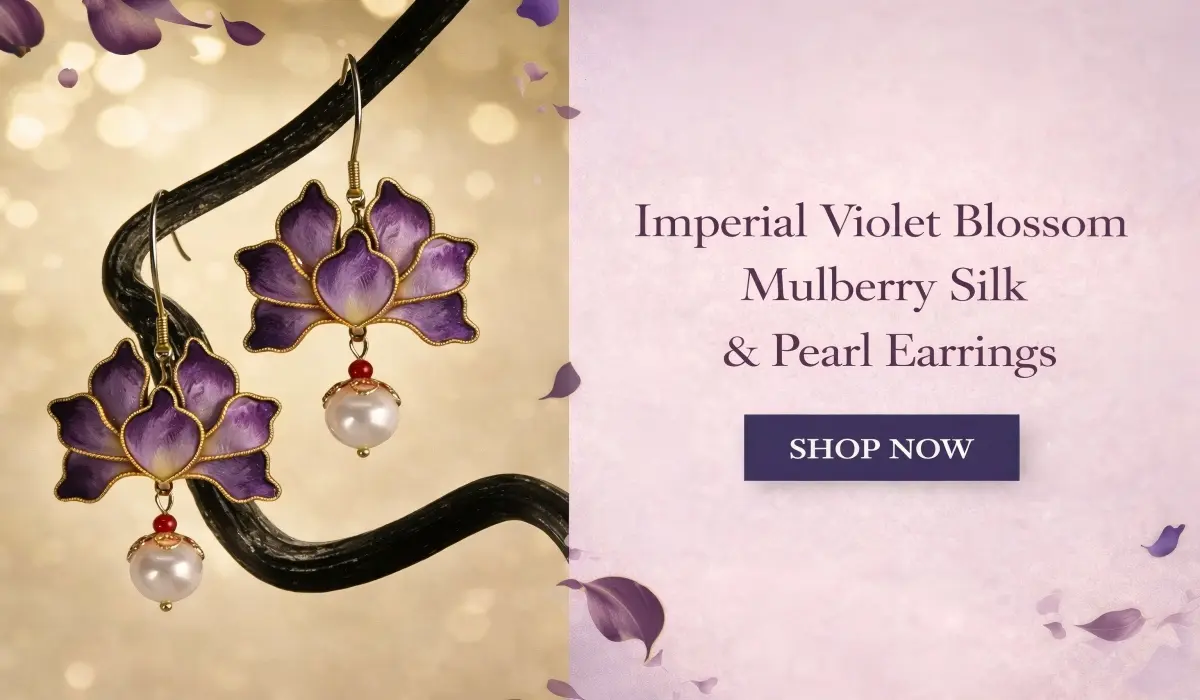
By embracing this symbol, we commit to a life of resilience, compassion, and continuous growth. We invite you to carry this energy with you every day. You can find your own meaningful piece in our Silk Flower collection to serve as your personal anchor.

Longyi Luck
Longyi Luck is a Feng Shui practitioner and spiritual researcher who blends traditional year-based wisdom with modern lifestyle insights, specializing inFeng Shui, spirituality, meditation, and mindfulness. With years of dedicated study and practice, Longyi explores cultural symbolism and the practical application of ancient wisdom to help individuals cultivate balance, clarity, and harmony in everyday life. Since 2020, Longyi has been committed to translating timeless traditions into accessible guidance for the modern world.
longyi@auraandluck.com

.webp?w=800&h=800)
.webp?w=800&h=800)
.webp?w=800&h=800)
.webp?w=800&h=800)
.webp?w=800&h=800)
.webp?w=800&h=800)