
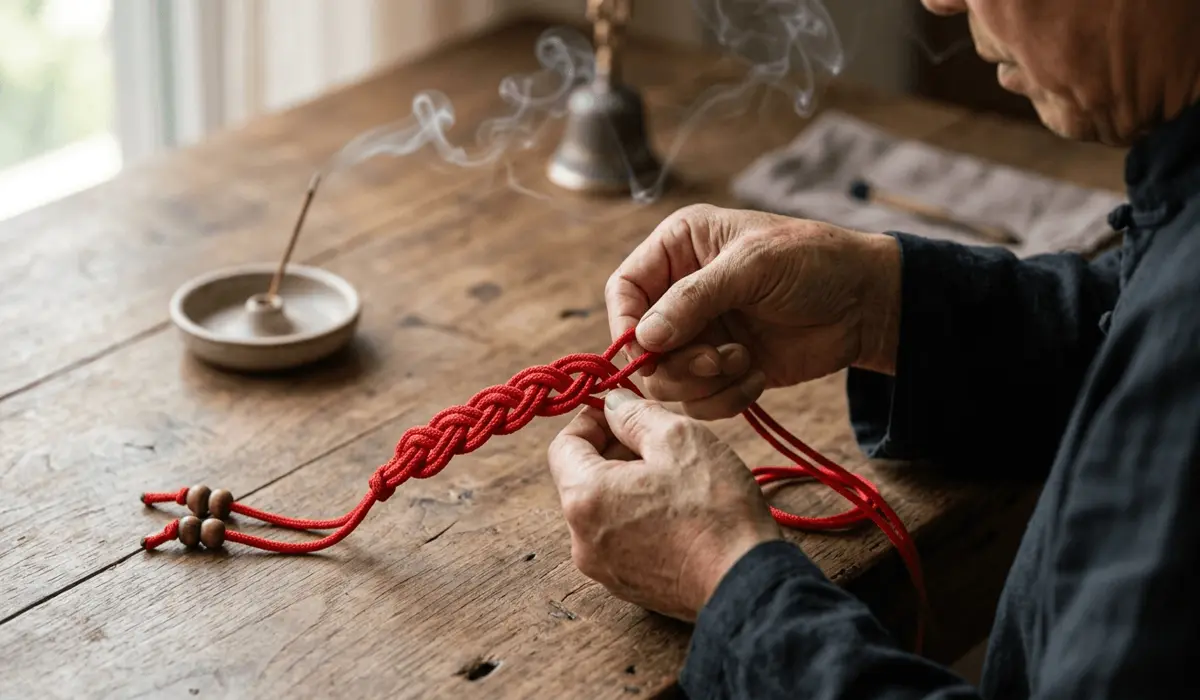
Tying a Tibetan knot involves weaving a traditional red cord into a series of interlocking square or "endless" knots while reciting sacred mantras to seal spiritual protection and personal intention into the weave. At Aura & Luck, we believe that crafting your own amulet creates a unique bond between the wearer and the energy it carries. This guide will teach you how to master this ancient art through a focused, meditative process.
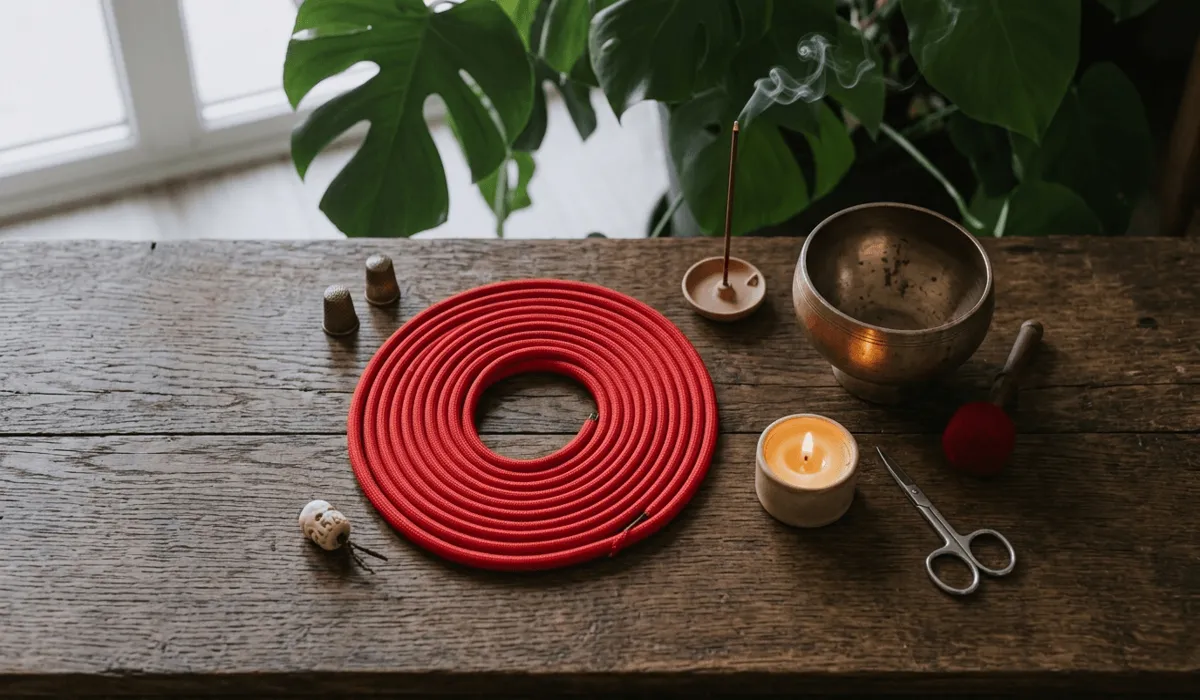
- ✨ Primary Materials: 1.0mm - 1.5mm Red Nylon or Silk Cord.
- 🕯️ Ritual Tools: Sandalwood Incense, Sharp Scissors, and a Candle.
- 🛡️ Space Setup: A clean, quiet workspace away from distractions and electronics.
- 🧼 Mental State: Deep breathing and a heart focused on positive intention.
The importance of correct execution cannot be overstated when dealing with sacred jewelry. A Tibetan knot is more than a decorative accessory; it is a spiritual vessel for your goals. Following the traditional ritual ensures the energetic seal remains untainted and potent for the wearer.
Preparing for the Ritual: Essential Materials and Sacred Space
Before you begin the physical act of tying, you must gather your ritual materials. In our studio, we always suggest choosing a red cord made of high-quality nylon or silk. Red is the color of the life force, or Chi (气), and represents powerful protection in Buddhist tradition.
Sourcing the Right Traditional Red Cord
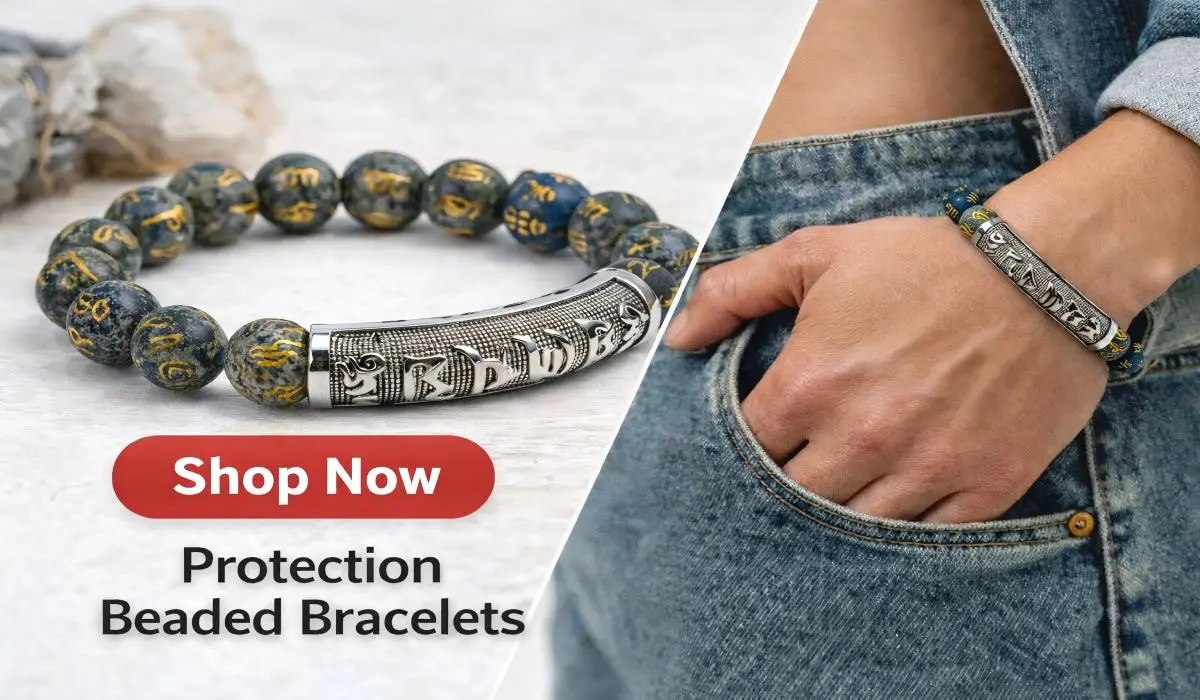
Use a cord that is typically 0.8mm to 1.5mm in diameter for the best knot definition. This thickness allows the interlocking patterns to show clearly while remaining comfortable on the wrist. You can find excellent options in our Protection Bracelet Collection if you prefer pre-made versions for inspiration.
Respecting the Buddhist Non-Harming Principle
A key part of Tibetan spirituality is the concept of Ahimsa, which means non-harming. Avoid using animal-derived leather or silk if you are following strict principles. Synthetic "vegan" cords are often preferred by modern spiritual practitioners to ensure no living beings were harmed.
By choosing ethical materials, you keep the vibration of your amulet high. This choice reflects your commitment to compassion and kindness. Many of our clients find that synthetic cords are also more durable for daily wear.
Cleansing Your Workspace and Mind
Before beginning, cleanse your workspace with sandalwood incense or a singing bowl. This removes any stagnant energy that might interfere with your ritual. For more context on yearly energy shifts, you can check this Zodiac Sign Guide to align your practice with the lunar calendar.
Mental alignment is just as important as the physical space. Ensure you are in a state of deep peace before you touch the cord. The ritual must never be performed while experiencing anger or resentment, as these emotions can be "trapped" within the knots.
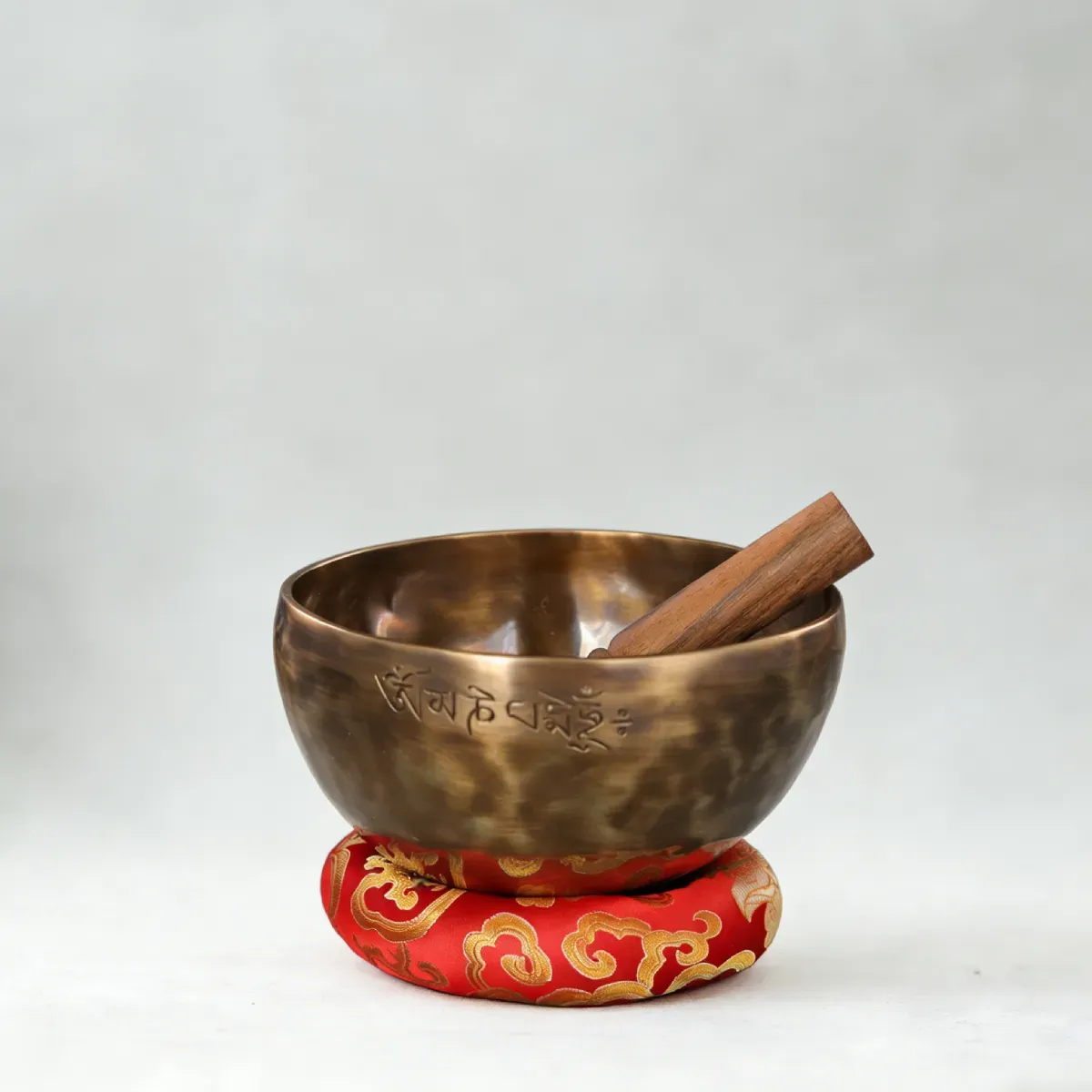
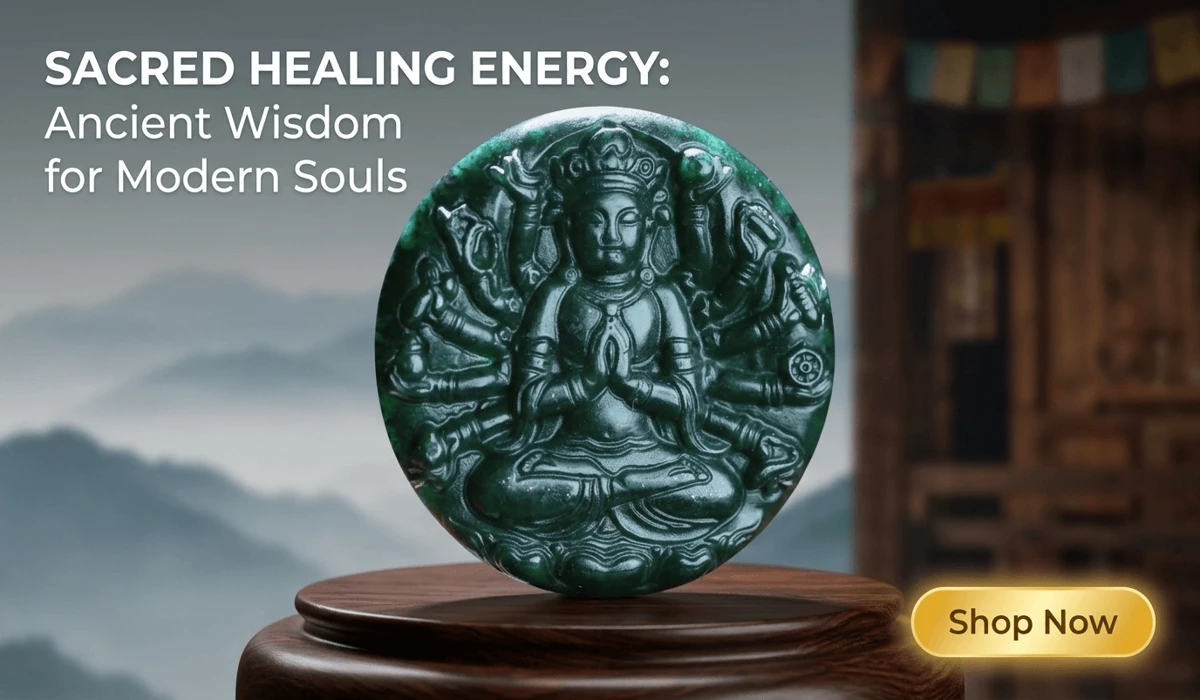
Handmade Nepalese Full Moon Singing Bowl for Sound Healing
A Full Moon Singing Bowl is a premium sound therapy instrument hand-forged in Nepal under the light of a full moon. Crafted from a traditional 7-metal alloy, it produces a rich, multi-layered frequency known as "The Voice of the Universe."
Shop NowStep-by-Step Guide: Weaving the Sacred Tibetan Knot
Now that your space is clean and your mind is ready, it is time to start. The process of making a DIY spiritual bracelet is a form of moving meditation. Each movement of your fingers should be slow and deliberate.
Cleansing the Materials and Setting a Sacred Space
Hold the red cord in the smoke of your incense to neutralize its previous energetic journey. This step clears the history of the material so it can receive your specific intention. We suggest visualizing a bright white light surrounding the cord during this process.
Set your primary intention, also known as a Sankalpa (桑卡尔帕), in your mind. Focus clearly on what you wish this Tibetan knot to protect or manifest in your life. Arrange your tools so the red cord never touches the ground, as this preserves its purity.
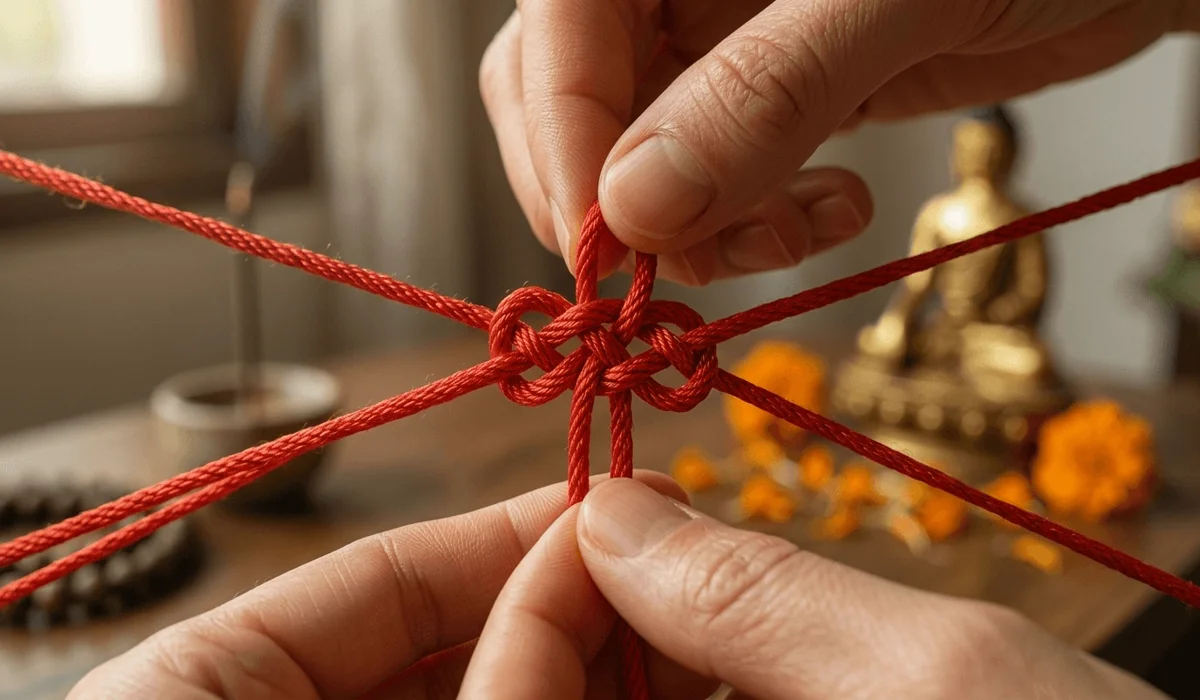
Measuring the Cord for the Foundation and Working Strands
Measure a base strand approximately twice the circumference of your wrist. This will act as the stationary center of your bracelet. It is important to leave enough extra length for the adjustable closure later on.
Cut a working strand that is at least five times the length of the base strand. This is the piece you will use to create the actual interlocking knots. Having extra length ensures you do not run out of material during the final stages of the weave.
Executing the Core Tibetan Square or Snake Knot Sequence
The snake knot, or Naga (纳迦) knot, is the foundation of Tibetan weaving. Create a loop with the left cord, passing it over the center foundation. This creates the first half of the protective seal.
Thread the right cord under the foundation and through the left loop, forming the first interlocking square. Pull both ends with equal tension to ensure symmetry. This balance symbolizes the Middle Way, a core teaching of Buddhist philosophy.
Video source:YouTube
Author:The Weavers of Eternity Paracord
Original video link:https://www.youtube.com/watch?v=IMTWJat8bPk
Repeat the interlocking sequence until you reach the desired length. Maintain a rhythmic pace that mirrors your breathing. This steady rhythm helps you stay in a meditative state throughout the entire creation process.
Constructing the Adjustable Sliding Closure Knot
Cross the two ends of the finished bracelet to form a circle. Use a separate 10-inch piece of cord to tie a series of 3–5 flat macrame knots over the crossed ends. This is often called a sliding knot or Shamballa closure.
Ensure the closure is tight enough to hold but loose enough to slide. This represents the fluidity of life and our ability to adapt. For those interested in deeper research, the Online Encyclopedia offers historical details on knot symbolism across cultures.
Sealing the Ritual Ends with Heat and Intention
Trim the excess cord from your knots, leaving approximately 2mm of material. Use a flame from a candle or lighter to carefully melt the tips. This part of the ritual requires absolute focus to avoid burning the main body of the knot.
Press the molten end against the knot to seal it permanently. As you do this, visualize the "locking" of your intention into the physical realm. You are turning a simple string into a spiritual amulet that will carry your energy for months to come.
Activating the Finished Bracelet through Mantra and Breath
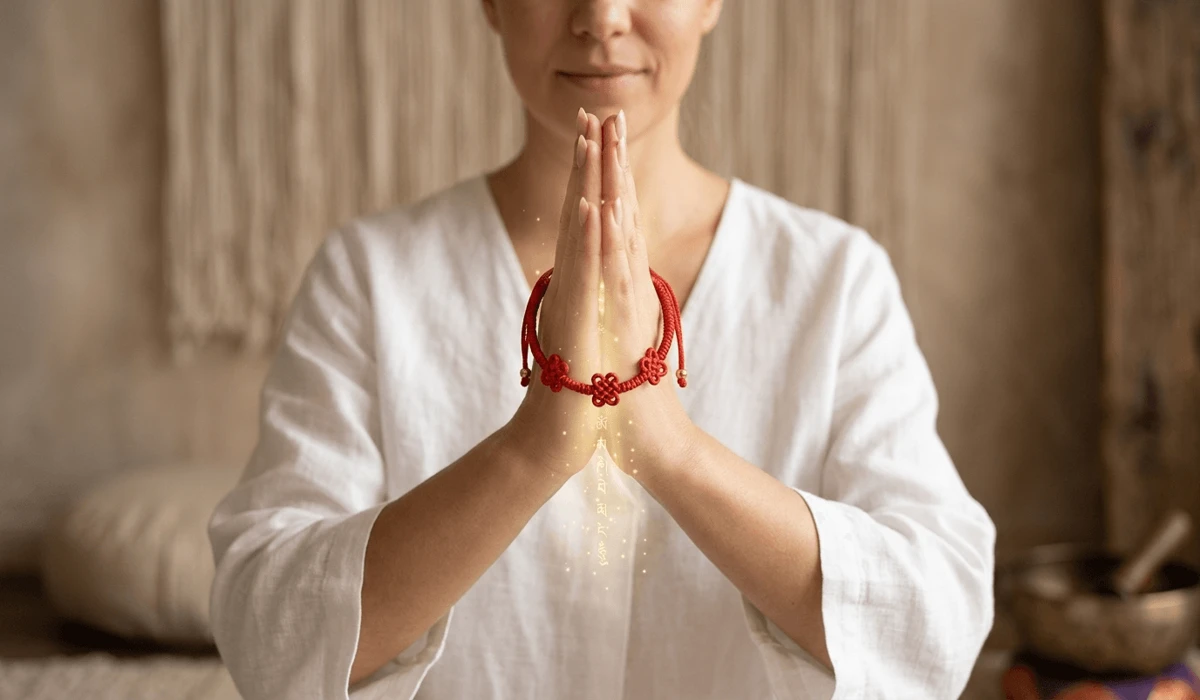
Hold the finished Tibetan knot between your palms in a prayer position, known as Anjali Mudra (合十礼). Close your eyes and feel the texture of the knots against your skin. This is the moment where the physical and spiritual worlds meet.
Recite the "Om Mani Padme Hum" (唵嘛呢叭咪吽) mantra seven times out loud or in your mind. This mantra invokes the blessing of compassion. Finally, blow a focused breath onto the knots to transfer your Prana (气), or life force, into the amulet.
The Logic of Wear: Left vs. Right Wrist for Spiritual Energy
Once your bracelet is activated, you must decide where to wear it. In Feng Shui and Tibetan tradition, the two sides of the body handle energy differently. Understanding this logic helps you maximize the benefits of your hand-tied knot.
The Left Wrist: The Receiving Side
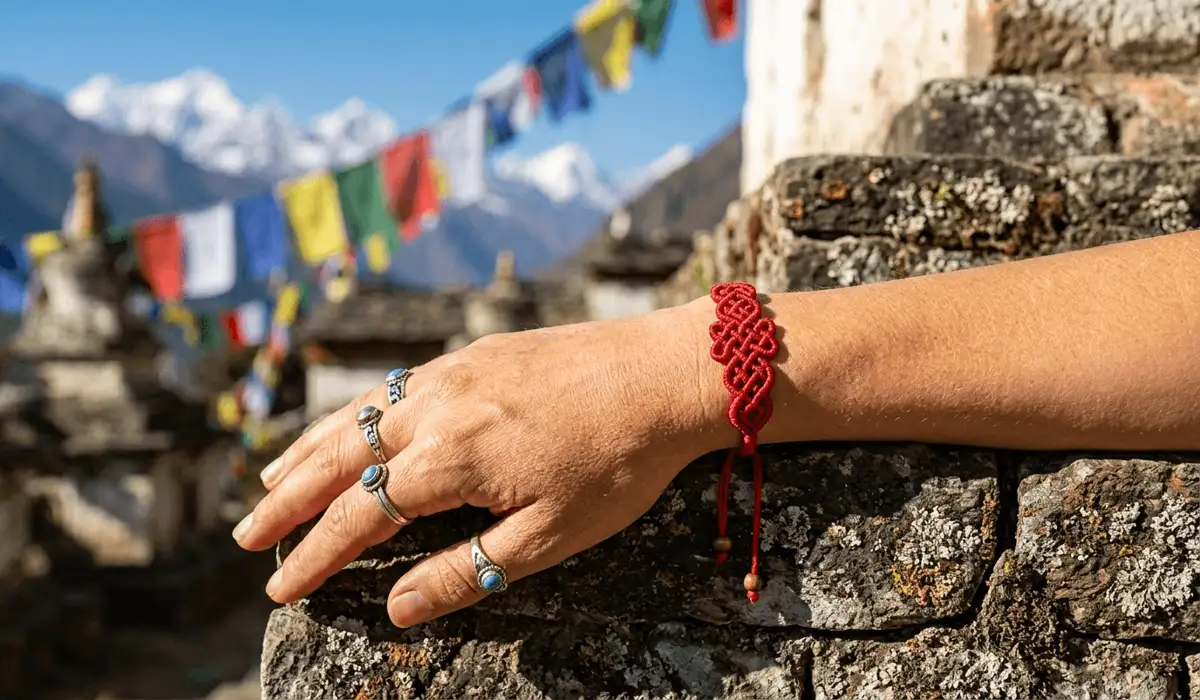
The left side of the body is traditionally considered the "gate" for receiving energy. Wear your Tibetan knot here if you want to receive protection, healing, or luck from the universe. Most people choose the left wrist to keep their internal energy shielded from outside negativity.
The Right Wrist: The Giving Side
The right wrist is known as the "giving" side of the body. Wear the knot here if your intention is to project energy outward to others. This is ideal if you are a teacher, a leader, or someone who wants to provide spiritual protection to their family.
The Symbolism of the Sacred Circle
The circular nature of the bracelet represents the cycle of Samsara (轮回). It reminds us of the infinite nature of the soul and the interconnectedness of all things. By wearing this circle, you stay connected to your highest self throughout the day.
Whether you choose the left or right side, ensure it feels comfortable. Consistent wear is the key to maintaining the bond with your intention. For more tips on maintaining your items, see our guide on Amulet Reuse Methods for long-term care.
Critical Taboos and Ritual Warnings
- ⚠️ Negative Emotions: Never tie the knot during an argument or while feeling resentment.
- ⚠️ Grounding: Do not let the sacred red cord touch the floor; if it does, it must be re-cleansed.
- ⚠️ Material Ethics: Avoid leather from harmed animals to prevent bringing negative energy into the knot.
- ⚠️ Disposal: Never throw a broken ritual knot in the trash; it must be burned or returned to nature.
Following these taboos protects both the creator and the wearer. Neglecting these rules can result in an amulet that feels "heavy" or brings unwanted stress. According to Chinese Metaphysics Research, the energetic state of the maker is the most important factor in any ritual.
Maintenance: When to Repeat the Ritual
Even the most powerful Tibetan knot will eventually need to be replaced. Physical wear and tear are natural parts of the object's life cycle. Knowing when to retire your bracelet is a sign of spiritual maturity.
The Meaning of the Shield Event
If the bracelet suddenly breaks or falls off, do not be alarmed. This is believed to be a "Shield Event," where the knot has absorbed a negative hit intended for you. In this case, do not repair it; instead, thank it and tie a new one.
Signs of Fading Energy and Wear
If the red color fades significantly or the cord becomes heavily frayed, the physical vessel is exhausted. The energy has been fully used up, and it is time for a fresh start. We suggest checking Chinese Astrology Insights to find an auspicious date for your next tying session.
Changing your intention is another reason to tie a new knot. As you move through different chapters of life, your needs for protection or abundance will change. Always align your DIY projects with your current life goals for the best results.
Frequently Asked Questions
Q: Can I tie a Tibetan knot for someone else?
A: Yes, you can certainly tie a knot for a friend or family member. Ensure your intention for them is purely selfless and that you are in a high-vibrational state. Giving a hand-tied Tibetan knot is considered a beautiful act of compassion and protection.
Q: How tight should the knots be?
A: The knots should be firm and consistent, but they should not distort the shape of the cord. Consistent tension represents a disciplined and balanced mind. If some knots are loose and others are tight, it might reflect an unsettled mental state during the ritual.
Q: Which mantra is best for protection?
A: The "Om Mani Padme Hum" is the most common and powerful mantra for general protection. However, you can also use "Om Tare Tuttare Ture Soha" for swift assistance and overcoming obstacles. Choose the one that resonates most deeply with your current heart's desire.
Q: Does the number of knots matter?
A: Yes, numbers hold great significance in Buddhist numerology. Many practitioners choose to tie 7, 9, or 21 knots. These numbers are considered auspicious and are often linked to spiritual completion or celestial cycles.
Conclusion and Final Mindful Intention
The power of the Tibetan knot lies 50% in the physical weave and 50% in the consciousness of the creator. By following this guide, you have learned more than just a craft; you have learned a way to anchor your spirit. We at Aura & Luck encourage you to approach this project as a sacred meditation rather than a simple task.
Carry your hand-tied amulet as a constant reminder of your inner strength and the spiritual lineage it represents. Each time you look at the red cord, remember the intention you set and the breath you blew into the knots. You are protected, balanced, and ready for your journey ahead.

Longyi Luck
Longyi Luck is a Feng Shui practitioner and spiritual researcher who blends traditional year-based wisdom with modern lifestyle insights, specializing in Feng Shui, spirituality, meditation, and mindfulness. With years of dedicated study and practice, Longyi explores cultural symbolism and the practical application of ancient wisdom to help individuals cultivate balance, clarity, and harmony in everyday life. Since 2020, Longyi has been committed to translating timeless traditions into accessible guidance for the modern world.
longyi@auraandluck.com

.webp?w=800&h=800)
.webp?w=800&h=800)