
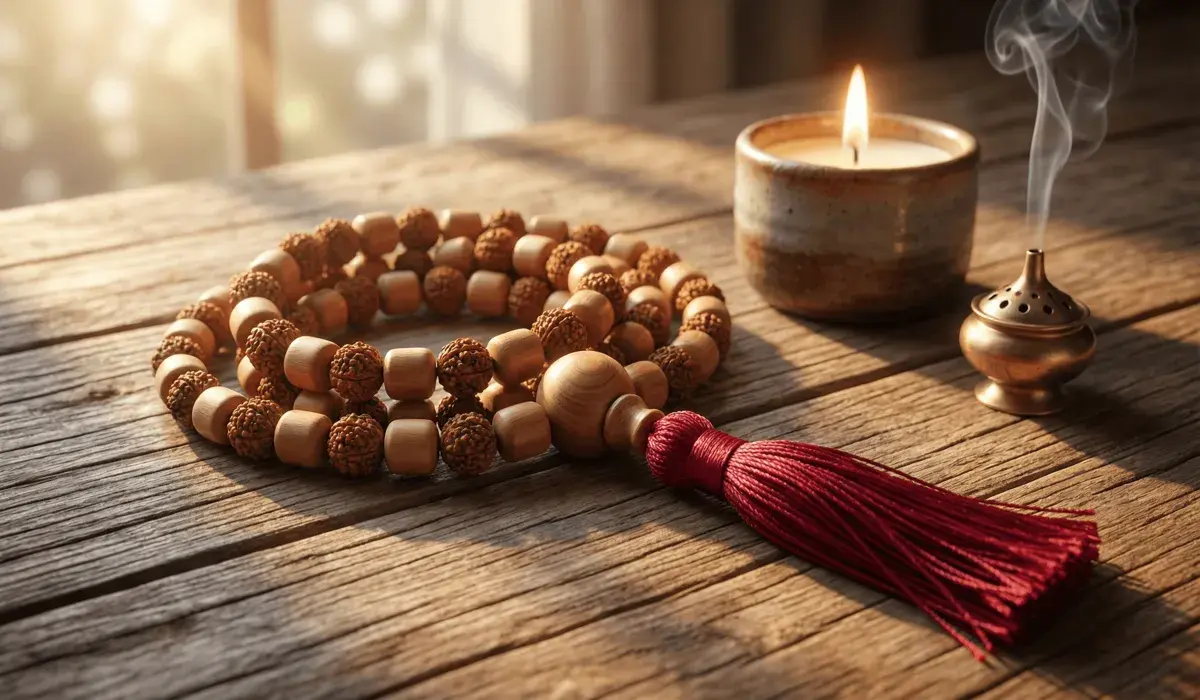
Learning how to use mala beads for meditation is a powerful way to ground your energy and find focus in a busy world. Mala beads are sacred tools that help you count breaths or prayers, allowing your mind to settle into a deep state of peace. In this guide, we will show you the traditional steps to master this ancient practice and enhance your spiritual journey.
1. Mala beads consist of 108 individual beads used to track mantra repetitions.
2. The large center bead, known as the guru bead, marks the start and end of a cycle.
3. Practitioners typically use the thumb and middle finger to move the beads.
4. Choosing the right gemstone can align your practice with specific energy centers.
5. Regular cleansing of your beads helps maintain their spiritual vibration.
What Is a Mala?
Definition
A mala is a traditional string of sacred prayer beads used for spiritual practice and mindfulness. It is commonly referred to as a "Japa mala," where the word "Japa" means to mutter or repeat a sacred sound. In our experience at Aura & Luck, these beads function as a physical anchor to help you stay present during Japa meditation.
Origin & Materials
Mala beads are deeply rooted in ancient Tibetan, Buddhist, and Hindu traditions that date back thousands of years. They are traditionally crafted from organic materials like sandalwood, rudraksha seeds, or various types of Gemstone Collections. Each full-sized mala includes 108 beads, a larger guru bead, and a decorative tassel that hangs at the bottom.
Basic Characteristics
The 108 beads significance relates to the 108 energy lines, or "nadis," that connect to the heart chakra. The guru bead represents the teacher or the divine and serves as a vital starting and ending point for your practice. The tassel represents the lotus flower and the unity of all beings, symbolizing the goal of enlightenment.
Spiritual Meaning & Symbolism
Traditional Symbolism
Malas are viewed as sacred prayer beads that absorb the personal vibration of the practitioner over time. The circular shape represents the infinite nature of the universe and the endless cycle of birth and rebirth. Moving through the beads symbolizes the spiritual journey toward self-realization and inner peace.
Chakra Associations
Different stones are often used to align with specific energy centers within the body. When we source these stones, we look for gemstone energy properties that support heart opening, grounding, or clear communication. You can learn more about how these stones interact with your body in our guide on Crystal Healing techniques.
Cultural or Historical Context
These tools have been used for centuries in Tibetan prayer beads traditions to keep track of prostrations and prayers. The construction involves hand-knotting between each bead to provide security and ease of use. This traditional knotting ensures that the beads do not clatter against each other, allowing for a quieter and more focused session.
Benefits & Intentions Associated with Mala Beads
Commonly Associated Intentions
Using a mala helps develop a deeper sense of focus and discipline through consistent mantra repetition. Many of our customers reflect that having a physical tool makes it much easier to keep the mind from wandering. It fosters a sense of tranquility that carries over from your meditation into your daily life activities.
Mindfulness & Personal Practices
Malas assist in breathwork meditation by syncing the movement of your fingers with each inhalation and exhalation. They are excellent mindfulness tools for creating a ritual for spiritual intention setting to manifest your personal goals. Some people even use them as "worry beads" to soothe the nervous system during high-stress moments.
How to Wear Mala Beads
Left Hand vs Right Hand (Feng Shui Logic)
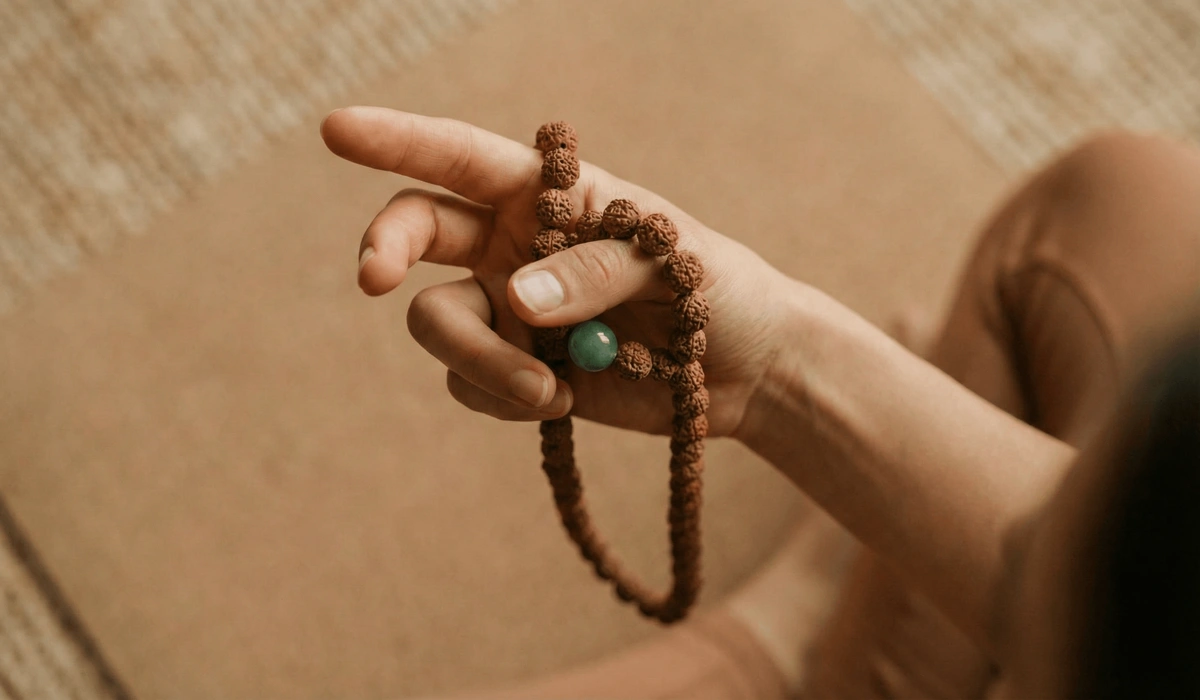
In Hindu practice, the mala is traditionally held in the right hand because the left hand is often considered impure. However, Tibetan traditions are often more flexible, focusing primarily on the practitioner's heart and pure intent. Whether you hold it or wear it, the goal is to maintain a connection to your spiritual center.
When People Choose to Wear It
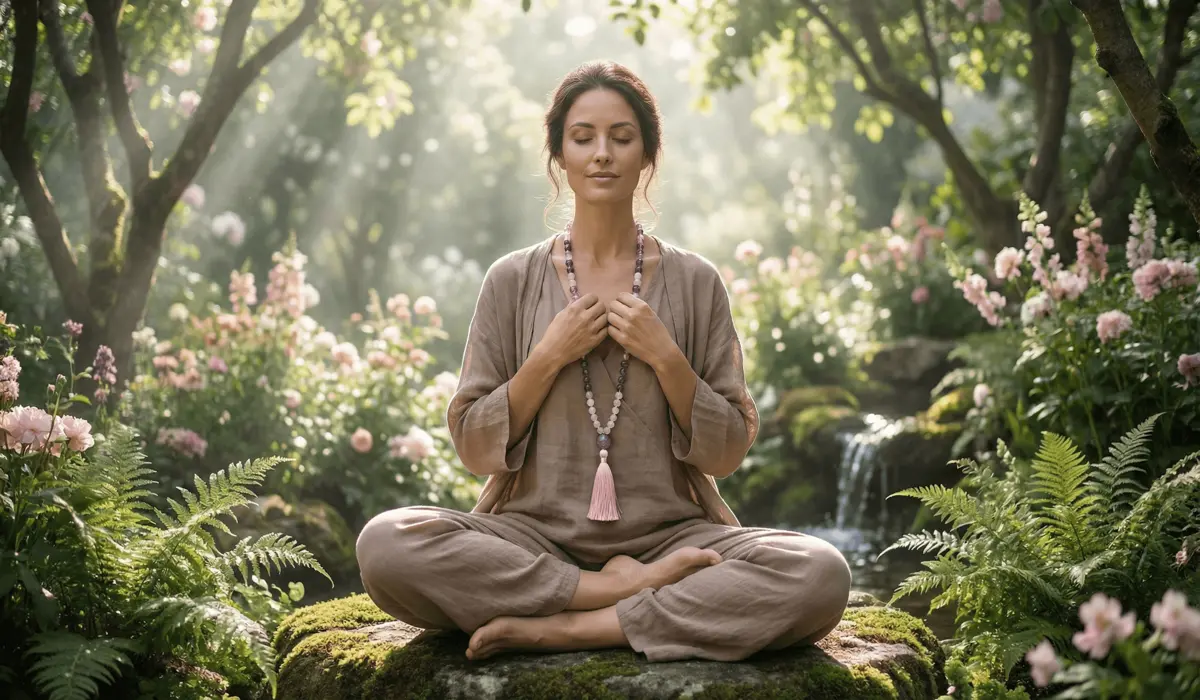
Many choose to wear their beads daily as spiritual jewelry to keep the energy of their practice close to their body. You can wrap a long mala around your wrist several times or wear it as a meditation necklace. To find a piece that matches your personal style, you might explore our Spiritual Necklace collection.
Intention-Setting Practices
Many practitioners choose to wear their mala for 40 consecutive days to bond with the energy of the stones. Specific hand placement for mala use involves resting the beads on the middle finger and using the thumb to move them. This method is believed to connect with a specific meridian point that enhances the meditation experience.
Mala Beads vs Similar Tools
While many cultures use beads for prayer, there are distinct differences between these various spiritual tools. The following table highlights the differences between a traditional mala and a standard rosary.
| Feature | Japa Mala Beads | Christian Rosary |
|---|---|---|
| Bead Count | Typically 108 beads | Typically 59 beads |
| Primary Use | Counting Mantras or Breaths | Praying the Hail Mary or Our Father |
| Materials | Gemstones, Wood, Seeds | Glass, Wood, Metal |
| Ending Symbol | Guru Bead and Tassel | Crucifix or Cross |
Necklace Mala vs Wrist Mala
The primary difference between wrist mala and necklace mala is the bead count and the intended length of the practice. A necklace mala contains the full 108 beads for long sessions, while a wrist mala might have 18, 21, or 27 beads. Wrist versions are perfect for "on-the-go" mindfulness or shorter meditations during a lunch break.
Who Is a Mala Suitable For?
Chakra or Energy Alignment
Mala beads are suitable for anyone seeking to balance their energy through specific gemstone energy properties. Beginners who struggle to sit still often find that the physical act of moving the beads provides a necessary anchor. For those interested in the technical details of stones, organizations like Gemological Institute provide extensive research on mineral compositions.
Zodiac or Astrological Associations
Practitioners often choose beads that connect with their birthstones or planetary rulers to enhance their meditation. According to traditional World History and Vedic astrology, certain stones can soften difficult astrological traits. This alignment helps the user feel more in harmony with the natural cycles of the universe.
Lifestyle & Personal Intentions
Yoga practitioners often integrate spiritual intention setting into their Savasana by placing their beads on their heart. It is a wonderful tool for anyone interested in the traditional way to use a mala for mantras to quiet a "monkey mind." Whether you are a busy professional or a dedicated yogi, these beads offer a path to stillness.
How to Cleanse, Prepare, and Care for Your Mala
Cleansing Methods
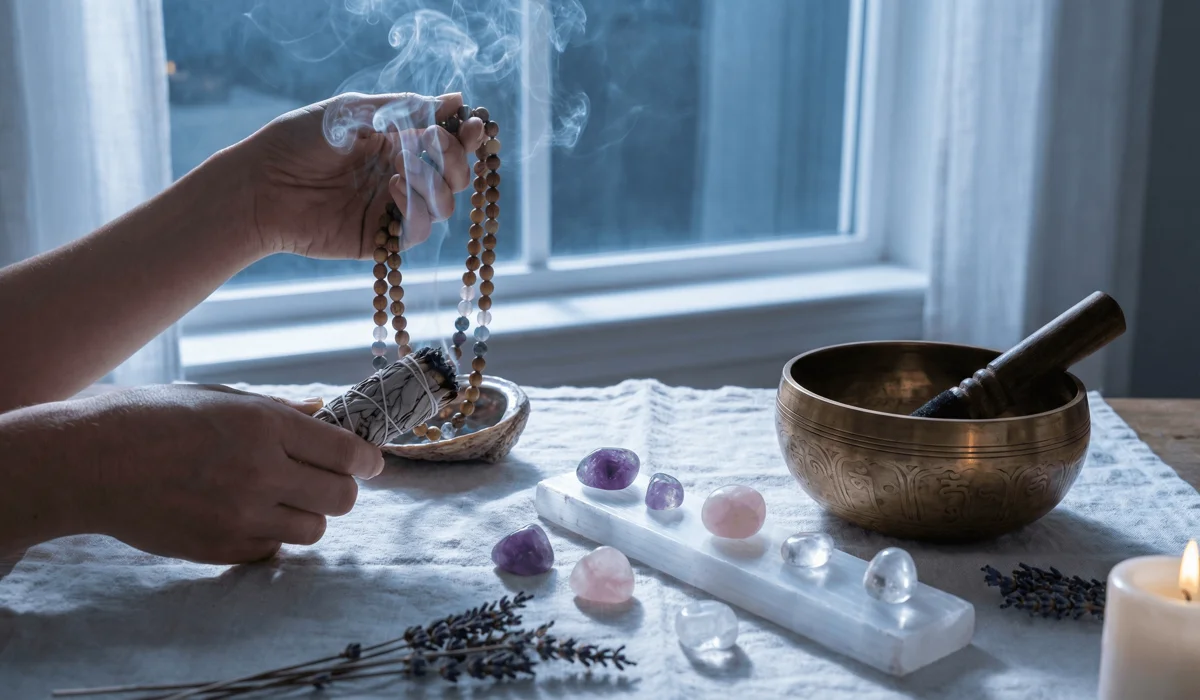
Cleansing your beads is an essential step in maintaining their spiritual clarity and power. You can use the smoke of sacred herbs like sage or incense to clear away any stagnant energy that has accumulated. Another popular method is placing the mala under the light of a full moon overnight to refresh its natural vibration.
Preparing and Intentions
Charging mala beads can be done by placing them on a selenite plate or a clear quartz cluster for several hours. To activate your new mala beads, hold them in stillness and state your purpose or intention clearly. Sealing this energy is often done by chanting your chosen mantra over the beads for several minutes before your first use.
Daily Care & Storage
Store your beads in a dedicated pouch or on a sacred altar when they are not being worn or used. It is best to wipe stones with a soft, damp cloth to maintain their natural luster over time. Avoid exposing wood or seed-based beads to water, as this can cause them to crack or degrade prematurely.
Frequently Asked Questions
Q: How do I use mala beads for the first time?
A: Begin by finding a quiet space and a comfortable seated position. Hold the mala in your right hand, draped over your middle finger, and use your thumb to pull the first bead toward you after reciting your mantra.
Q: Which hand should I hold my mala beads in?
A: In traditional Hindu practice, the right hand is used exclusively for meditation. The index finger is generally avoided as it represents the ego, so the thumb and middle finger perform the movement of the beads.
Q: Why are there exactly 108 beads in a mala?
A: This is a sacred number representing the 108 Upanishads or the 108 earthly desires humans must overcome. In Vedic astrology, it is also said to relate to the distance between the Earth, Sun, and Moon.
Q: What do I do when I reach the Guru bead?
A: The Guru bead signifies a moment of pause and gratitude for your teachers or your inner wisdom. Traditionally, you do not cross over the Guru bead; instead, you turn the mala around and continue in the opposite direction.
Q: How do I choose a mantra for my mala meditation?
A: You can choose a traditional Sanskrit mantra like Om or So Hum for a classic approach. Alternatively, you can use a personal English affirmation such as I am at peace or I am grounded to fit your needs.
Conclusion & Gentle Next Step
Mala beads are profound tools that bridge the gap between ancient tradition and modern mindfulness practice. By understanding the 108 beads significance and practicing consistent mantra repetition, you can deepen your daily meditation.
Remember to treat your beads with respect through regular cleansing crystals rituals and intentional care. This bond between you and your mala will grow stronger the more you use it for your spiritual growth. We invite you to explore our handcrafted collection to find the piece that truly resonates with your unique journey.
Ready to start your meditation practice? Explore our high-quality Spiritual Jewelry and find a mala that speaks to your heart today.

Longyi Luck
Longyi Luck is a Feng Shui practitioner and spiritual researcher who blends traditional year-based wisdom with modern lifestyle insights, specializing inFeng Shui, spirituality, meditation, and mindfulness. With years of dedicated study and practice, Longyi explores cultural symbolism and the practical application of ancient wisdom to help individuals cultivate balance, clarity, and harmony in everyday life. Since 2020, Longyi has been committed to translating timeless traditions into accessible guidance for the modern world.
longyi@auraandluck.com
.webp?w=800&h=800)
.webp?w=800&h=800)
.webp?w=800&h=800)
.webp?w=800&h=800)
.webp?w=800&h=800)
.webp?w=800&h=800)