
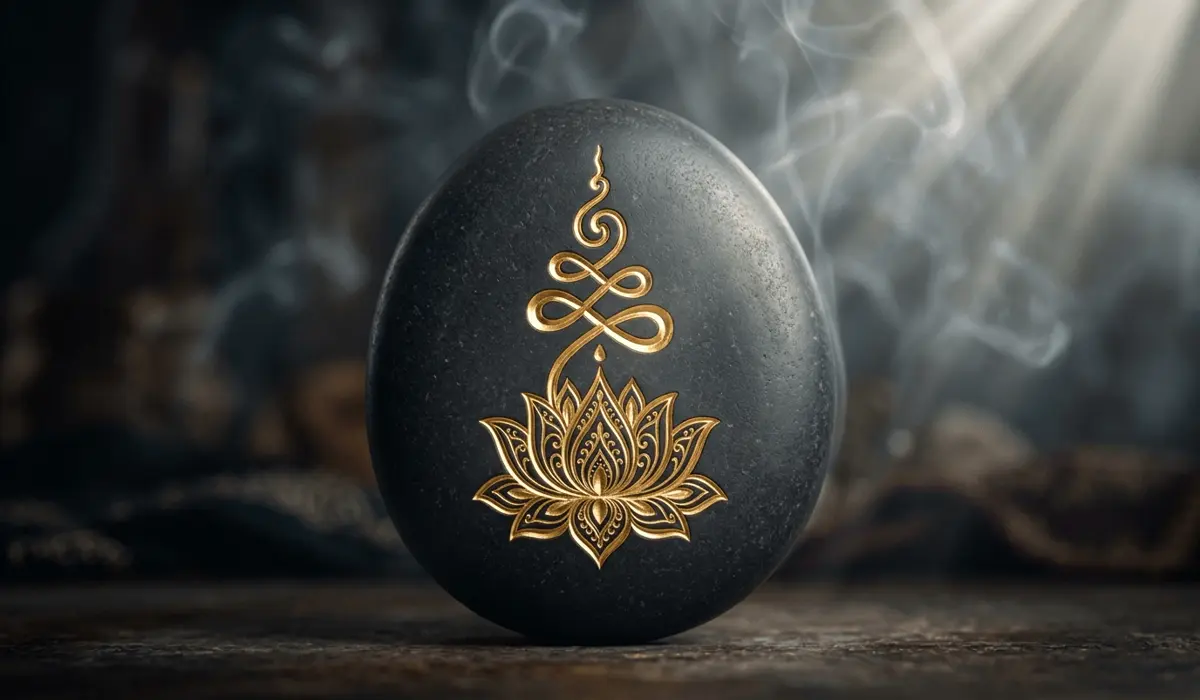
We see the Unalome and Lotus symbol everywhere today, from delicate tattoos to elegant jewelry. However, this beautiful design is much more than a visual trend or a simple decoration. For us at Aura & Luck, it serves as a profound metaphysical map of the human experience. It traces the difficult but rewarding transition from the chaos of our daily lives to a state of spiritual clarity. By understanding its deep roots, we can use this symbol as a guide for our own personal growth.
This ancient combination offers a visual story of the soul's evolution. We believe that by wearing or meditating on this symbol, you are acknowledging your own unique journey through life's many challenges. It reminds us that every struggle is a step toward peace. As we explore the history and philosophy of these sacred shapes, we find a timeless wisdom that still speaks to us in the modern world.
Ancient Origins and Sacred Lore: The Birth of a Vision
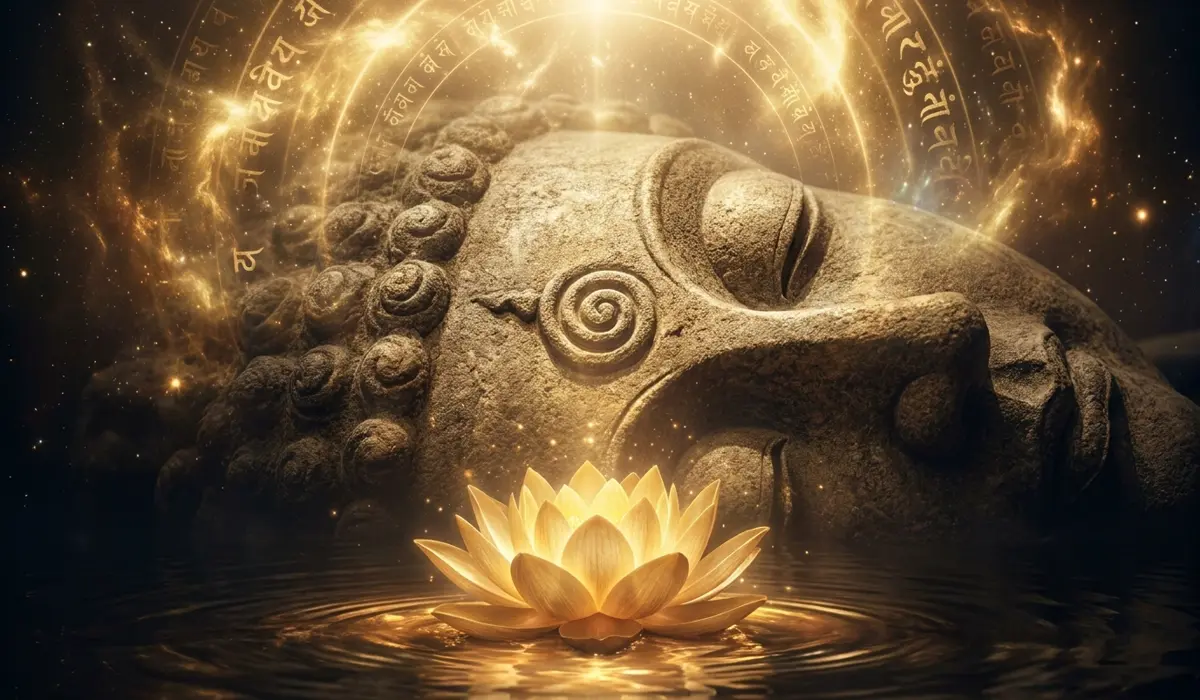
The history of the Unalome and Lotus begins in the deep spiritual traditions of the East. The Unalome itself traces its visual ancestry to the Urna(乌哩呐). This is the spiral mark found on the forehead of ancient Buddha statues, representing the "Third Eye" that sees beyond the physical world. In the Encyclopaedia Britannica, researchers often note how these physical markers on statues symbolize a higher level of spiritual perception and divine insight.
The Lotus flower, or Padma (钵昙摩), has even deeper roots in ancient cosmogony. In Vedic Hinduism and early Buddhist stories, the Lotus is the very first entity born from the cosmic waters of creation. It is viewed as the womb of the universe and the sacred seat of divine purity. Whether it is a deity sitting upon a bloom or the flower emerging from primordial depths, it represents the beginning of all life and consciousness.
In the Theravada Buddhism (上座部佛教) tradition of Southeast Asia, the Unalome became a primary "Yant" or sacred geometry. Monks used these symbols to help students understand the winding path toward Nirvana (涅槃). Meanwhile, Tibetan Buddhism added its own layers of meaning. They integrated the "Middle Way" philosophy, showing how we must balance the fierce energy of the mind with the gentle opening of the heart to find true balance.
Decoding the Visual Language: Spirals, Loops, and Lines
To truly understand the Unalome, we must break down its parts. The journey starts at the base with a tight spiral. This coil represents Samsara (轮回), the chaotic state of our unawakened minds. It is a time of worldly confusion, karmic patterns, and being stuck in the "muddy water" of earthly desires. We all begin here, feeling lost in the many distractions of life.
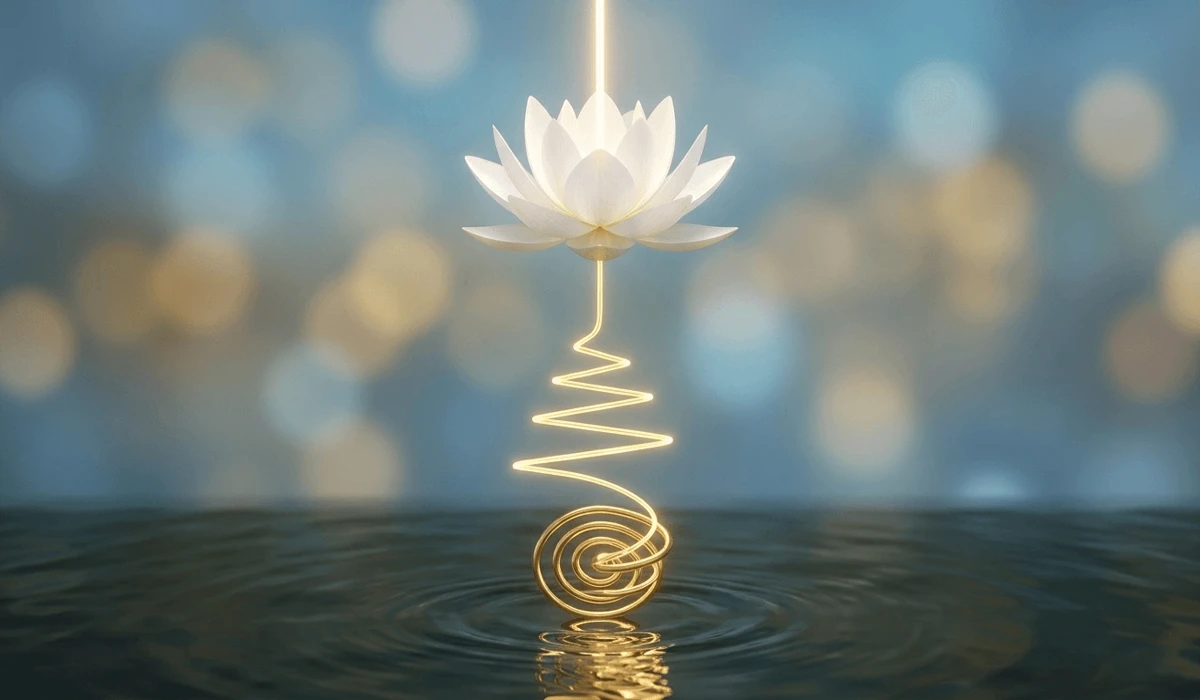
As the symbol moves upward, the line begins to zigzag or loop. These meandering curves signify that spiritual awakening is rarely a straight line. We experience setbacks, learn hard lessons, and must find the resilience to face life's obstacles. It is a reminder that being "off track" is actually part of the training. These loops help us build the strength needed for the next phase of our growth.
Finally, the line becomes perfectly straight. This vertical path represents the "Straight Way" or the realization of Dharma (达摩). At this point, the seeker has conquered the ego and moves with singular focus toward liberation. The line no longer wavers because the person has found their truth. This straight path leads directly to the Lotus, which represents the culmination of the journey—a state where the spirit remains untouched by the world's mud.
The Power of the Eight-Petaled Lotus
Many versions of this symbol feature a Lotus with exactly eight petals. This is not a random design choice. The eight petals mirror the Noble Eightfold Path, which is a core teaching in Buddhist practice. It provides a meditative focal point for moral and mental discipline, guiding us on how to act, speak, and think.
The Third Eye of Shiva
In Hindu interpretations, the Unalome is often linked to the Third Eye of Shiva. This connection represents the fire of wisdom that destroys ignorance. While the Buddhist view focuses on the path to peace, the Hindu perspective highlights the transformative power of divine energy and the opening of inner vision.
Connecting with Sacred Geometry
The Unalome and Lotus also function as tools of sacred geometry. These shapes are believed to resonate with the natural laws of the universe. When we look at the Sacred Lotus Symbolism, we see how the geometry of the petals creates a sense of harmony and balance that calms the human spirit instantly.
The Lotus Miracle: Why Purity Requires the Mud
The Lotus is a powerful metaphor because of how it grows. It starts in the dark, thick mud at the bottom of a pond. It must push through the murky water to reach the surface and find the sunlight. For us, the "mud" represents the hardships, suffering, and mistakes of life. Without the mud, the Lotus cannot grow, just as we cannot gain wisdom without facing our own challenges.
This transformation of suffering into wisdom is the heart of the symbol. It teaches us that our past mistakes are actually the fuel for our future enlightenment. Instead of being ashamed of our "muddy" beginnings, we should see them as necessary for our growth. When the Lotus finally blooms, it is perfectly clean and radiant, showing that our true nature is always pure, no matter what we have been through.
Wearing jewelry that features the Lotus can serve as a daily reminder of this resilience. We often recommend these pieces to those who are going through big life changes. They act as a spiritual anchor, helping you stay focused on your potential rather than your problems. It is a way to carry the energy of the "Arahant" path with you wherever you go.
Cultural Evolution: From Ancient Temples to Modern Talismans
In Southeast Asia, the Unalome is still a vital part of Sak Yant (萨央) traditional tattooing. In countries like Thailand and Cambodia, these markings are believed to offer spiritual protection and karmic merit. They are not just art; they are prayers etched into the skin. This tradition keeps the ancient spiritual connection alive in a very physical and personal way.
In the West, the symbol has moved toward a "Zen aesthetic." People value its minimalist lines and the sense of inner peace it brings. It has become a global spiritual talisman that bridges the gap between ancient ritual and modern soul evolution. Even if someone does not follow a specific religion, they often find that the Unalome speaks to their personal journey of finding meaning in a busy world.

As we move through the mid-year of 2024 and beyond, the symbol continues to evolve. It is now a sign of "conscious living." For many, wearing the Unalome is a commitment to the Bodhisattva (菩萨) path—living with the intent to benefit both oneself and others. It is a beautiful way to express your values without saying a word, connecting you to a global community of seekers.
Wearing the Talisman: Ancient Energy for the Digital Age
In our world of constant notifications and digital burnout, the Unalome is more important than ever. It serves as a "mindfulness anchor." When you feel overwhelmed by social media or work stress, looking at the straight line of the Unalome can help you return to your own center. It reminds you to ignore the "noise" and stay on your personal path.
Many practitioners believe that wearing the Unalome and Lotus near the heart or throat helps with chakra alignment. This facilitates the flow of Prana or life-force energy through the body. By keeping the symbol close to these energy centers, you can promote better communication and a more open heart. It is a simple way to bring a touch of the sacred into your daily routine.
The symbol also celebrates the beauty of resilience. It honors those who have recovered from trauma or are seeking major personal growth. By wearing it, you are telling the world—and yourself—that you have the power to transform. For a deeper look at how other symbols can help you, you might want to explore Chinese Zodiac Horse traits and how they represent freedom and success in a similar way.
Ritual and Practice: Meditating with the Unalome and Lotus
You can do more than just wear the symbol; you can practice with it. We suggest several ways to bring its energy into your meditation routine. These simple rituals can help you feel more grounded and focused on your goals. Here are a few ways to start:
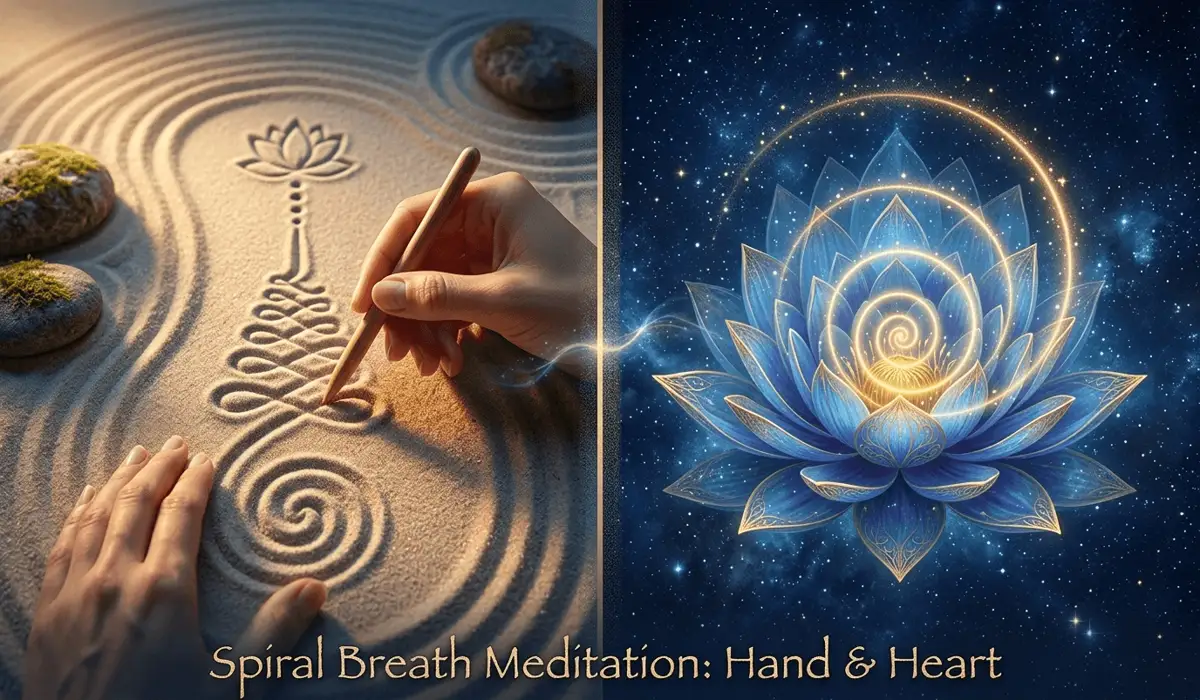
- The Spiral Breath: Visualize inhaling into the center of the Unalome spiral and exhaling slowly along the straight line toward the Lotus.
- Visualizing the Bloom: Focus on the Lotus at the top of the symbol to clear mental fog and invite light into your crown chakra.
- Tracing the Path: Use your finger to trace the shape of the Unalome on a piece of paper or jewelry while repeating a calming mantra.
- Daily Reflection: Ask yourself which "spirals" or distractions are currently blocking your "straight line" of purpose today.
By using these techniques, the symbol becomes a living part of your life. It is no longer just a design but a tool for transformation. For those interested in how timing and energy affect our lives, reading a Tai Sui Guide can offer more insights into staying balanced during different phases of the year.
Video source:YouTube
Author:SymbolSage
Original video link:https://www.youtube.com/watch?v=SdYR3_rZdhE
Cultural Etiquette and Sacred Respect
Because the Unalome and Lotus are sacred symbols, it is important to treat them with respect. In many Eastern cultures, there is a "Rule of Elevation." This means sacred symbols should be placed on the upper half of the body, such as the chest, back, or arms. Placing them on the feet or lower body is often seen as disrespectful because the feet are considered the lowest and "dirtiest" part of the body.
We also encourage "informed appreciation." This means taking the time to learn the history and meaning behind the symbol before wearing it. When you understand the Dharma behind the lines, the jewelry or tattoo carries more weight and power. It shows that you are not just following a trend, but are truly honoring a thousands-year-old tradition of wisdom.
Finally, consider the directional significance of the spiral. In some traditions, a spiral turning to the right represents masculine or active energy. A spiral turning to the left can represent feminine or receptive energy. Choosing the version that feels right for your current needs can help you better align with your own personal energy. To learn more about how to place objects for good energy, you can visit the Feng Shui Society website.
Integrating the Wisdom of the Path
The journey of the Unalome and Lotus is the journey of every human being. We all move from the tangled coils of our ego to the radiant bloom of our spirit. It is a reminder that no matter how messy or confusing our lives feel right now, we are all headed toward a place of peace and clarity. Every loop and turn in our path is preparing us for the straight line to come.
May this symbol serve as a permanent reminder that your current "spirals" are simply the preparation for your eventual "straight line" to peace. As you continue to grow and evolve, let the Unalome and Lotus be your guide. For more information on the history of these spiritual concepts, you can check Wikipedia for a broad overview of Buddhist and Hindu philosophy.
Frequently Asked Questions
Q: What is the deeper metaphysical meaning of the Unalome spiral?
A: The spiral represents the beginning of the spiritual journey. it symbolizes Samsara, or the state of worldly confusion and the chaotic patterns of the unawakened mind. It shows how we are often caught in loops of desire and attachment before we find the path of wisdom.
Q: How does the lotus flower symbolize the transformation of suffering into wisdom?
A: The lotus grows in muddy water but rises to the surface to bloom in pure beauty. This mirrors the human soul, which must experience the mud of life's hardships and suffering to gain the strength and wisdom needed for spiritual awakening.
Q: Why is the straight line at the end of the Unalome essential for spiritual seekers?
A: The straight line represents the moment of realization or Dharma. It shows that the seeker has found their focus and is no longer distracted by the zigzags of the ego. It is the path of direct truth that leads to final enlightenment.
Q: Is wearing a Lotus Unalome considered cultural appropriation or appreciation in 2026?
A: It is considered appreciation when the wearer takes the time to understand the symbol's roots in Buddhist and Hindu traditions. Respecting cultural rules, such as not placing the symbol on the feet, shows that you value the sacred history behind the design.
Q: How do the different colors of the lotus change the meaning of the Unalome?
A: Colors add specific meanings to the symbol. A white lotus represents purity of the mind and spirit. A red lotus focuses on the heart, love, and compassion. A blue lotus signifies the victory of the spirit over the physical senses and worldly knowledge.

Longyi Luck
Longyi Luck is a Feng Shui practitioner and spiritual researcher who blends traditional year-based wisdom with modern lifestyle insights, specializing in Feng Shui, spirituality, meditation, and mindfulness. With years of dedicated study and practice, Longyi explores cultural symbolism and the practical application of ancient wisdom to help individuals cultivate balance, clarity, and harmony in everyday life. Since 2020, Longyi has been committed to translating timeless traditions into accessible guidance for the modern world.
longyi@auraandluck.com


.webp?w=1280&h=1280)
.webp?w=800&h=800)