
The short answer to whether can turquoise go in water is an absolute and definitive no. Water poses a direct threat to genuine turquoise because of its delicate, absorbent mineral composition. In our studio work at Aura & Luck, we guide crystal lovers away from water immersion to preserve both the physical matrix and the energetic life of their cherished stones.
Key Takeaways at a Glance:
- 💎 High Porosity: Natural turquoise acts like a microcrystalline sponge that readily absorbs tap water, sweat, perfumes, and cleaning chemicals.
- 💎 Color Damage: Water reactions with internal copper and iron minerals cause brilliant blue stones to turn dull, murky green over time.
- 💎 Structural Risks: Liquid exposure weakens the host rock matrix, causing internal fractures, crumbling, and loose jewelry settings.
- 💎 Waterless Cleansing: Safe energetic clearing relies entirely on dry rituals such as sound frequencies, white sage smoke, and selenite plates.
- 💎 Mindful Storage: Daily care involves wiping your jewelry with a dry microfiber cloth and storing it flat inside a dry fabric pouch.
What Is Turquoise? Porosity and Mineral Structure
Turquoise is celebrated worldwide for its captivating sky-blue to blue-green color. Yet behind this vivid beauty lies a soft, hydrated mineral that requires gentle handling. To protect your stones, it helps to understand how this mineral forms beneath the earth.
Definition & Geological Composition
Geologically speaking, turquoise is a hydrated phosphate of copper and aluminum. It forms over millions of years through secondary weathering in arid, desert regions. In these dry environments, acidic groundwater trickles downward through rock layers, dissolving copper and aluminum to create mineral deposits.
On the Mohs hardness scale, turquoise registers at a modest 5 to 6. This moderate rating means it is far softer than quartz or sapphire. Authoritative gem references like the Gemological Institute of America classify turquoise as an aggregate of tiny microcrystals rather than a single solid crystal block.
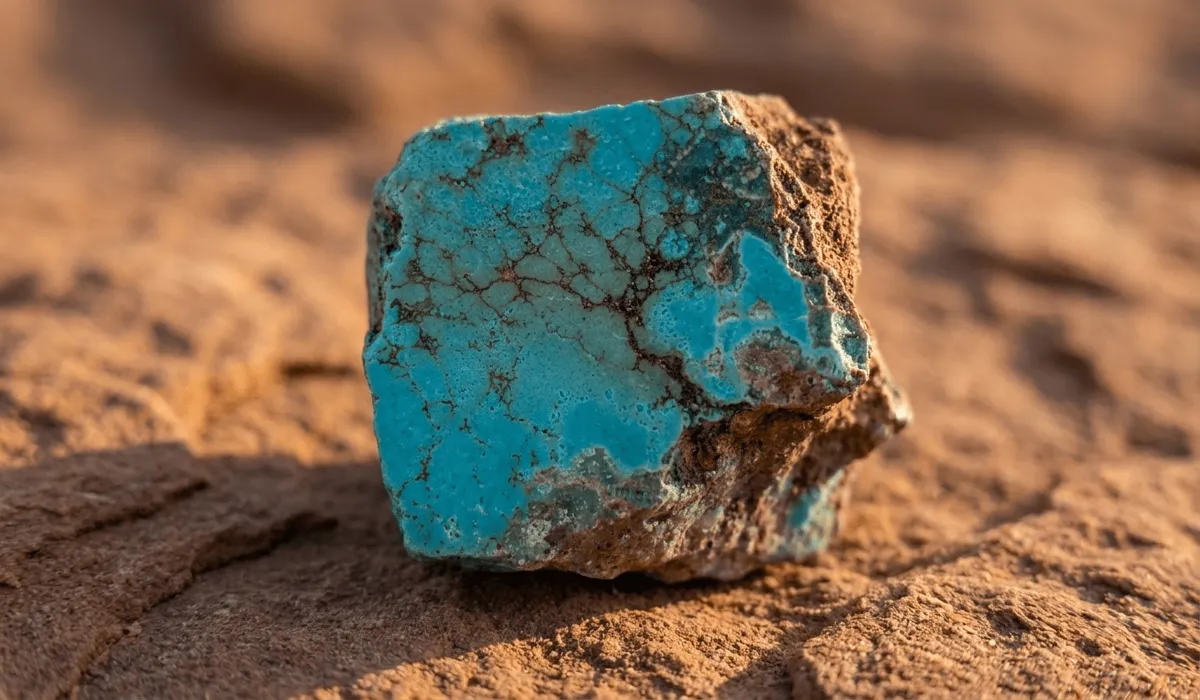
Because it grows as an interlocking network of microscopic crystals, tiny voids exist between each mineral grain. These microscopic openings give the stone its naturally absorbent character. When moisture contacts the surface, capillary action pulls the liquid inward.
Turquoise Porosity and Moisture Sensitivity
The defining physical trait of raw turquoise is its natural porosity. Because the mineral structure contains open voids, it behaves much like hardened chalk. It readily soaks up moisture, hand lotions, body oils, and environmental pollutants.
When tap water enters these microscopic pores, it brings dissolved minerals and chlorine with it. These chemicals react with the copper and iron elements that give turquoise its signature hue. Over time, this chemical reaction causes permanent turquoise discoloration, shifting prized robin’s-egg blue into an uneven, muddy green.
Furthermore, liquid penetration threatens the structural stability of the gemstone. Natural veining, known as the matrix, consists of host rock such as limonite, shale, or quartz. Water causes these matrix veins to swell, soften, and crack, resulting in irreparable structural damage.
Stabilized Turquoise vs Natural Turquoise
In our workshop, collectors frequently ask about the differences between natural and stabilized gemstones. Natural turquoise remains completely untreated after cutting and polishing, leaving every single microscopic pore open. This purity makes untreated stones highly collectible, but it also leaves them vulnerable to environmental humidity.
To solve durability challenges, jewelers developed stabilization treatments during the mid-twentieth century. Stabilized turquoise undergoes high-pressure infusion with clear acrylic resins or polymers. This process fills the porous gaps, darkens the color slightly, and seals the surface against everyday wear.
However, even stabilized specimens should never be submerged in liquid. Prolonged water exposure degrades surface sealants, weakens bonding resins, and loosens stones from metal settings. Treating all turquoise pieces with water-free care remains the golden standard for longevity.
Spiritual Meaning & Symbolism of Turquoise
Beyond its geological intrigue, turquoise holds an honored place in world history and metaphysical traditions. Many people treasure this blue talisman not merely as jewelry, but as an intimate companion for personal balance.
Traditional Symbolism
Throughout ancient civilizations, turquoise served as a revered emblem of sky energy, emotional equilibrium, and pure truth. Its vibrant blue hue reflects the open heavens, inspiring a tranquil state of mind. Wearing the stone encourages emotional stillness during stressful life transitions.
Traditional crystal workers view turquoise as an energetic mirror. Lore suggests that the stone attunes to the personal energy field of its wearer, absorbing discord and radiating calm. In this way, it serves as a protective guardian against heavy atmospheric vibes.
By cultivating inner stillness, turquoise helps quiet restless thought patterns. Many people turn to this mineral when navigating significant lifestyle changes, career shifts, or emotional healing. It gently anchors the spirit while encouraging an open, hopeful perspective.
Chakra Associations
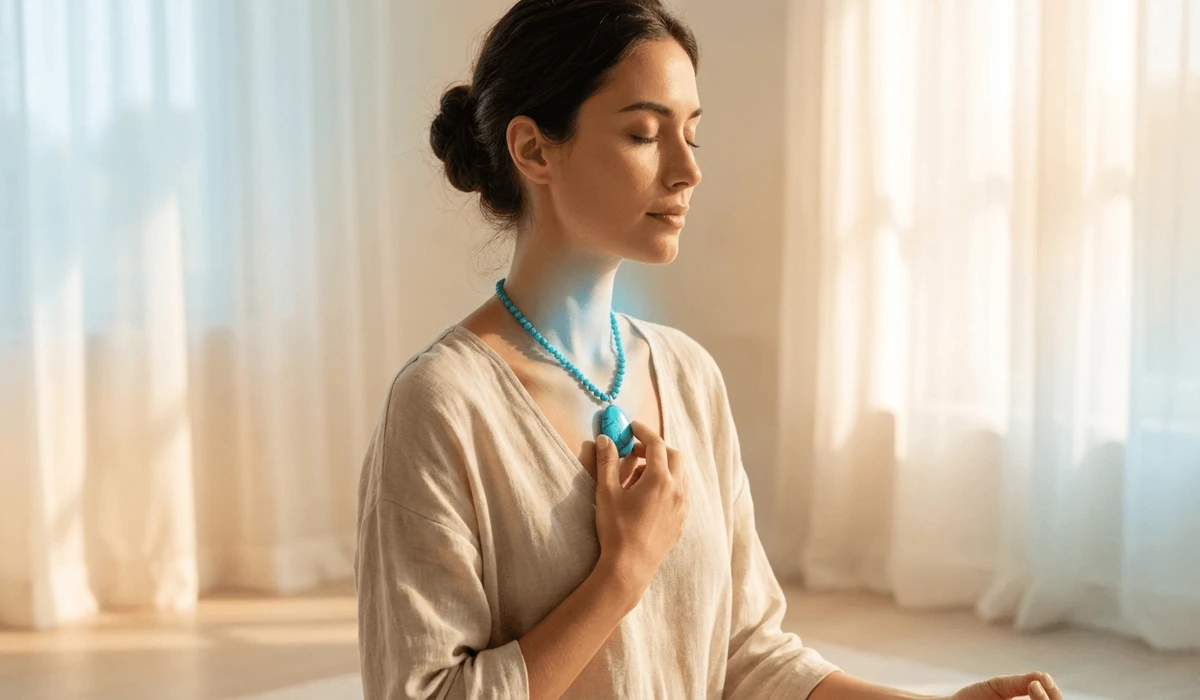
In holistic energy traditions, turquoise connects intimately with the Throat Chakra, known as Vishuddha. This energetic center governs spoken truth, vocal clarity, and authentic self-expression. When the throat center is clear, we share our thoughts with kindness and confidence.
Placing turquoise near the throat center softens harsh speech and dispels communication anxiety. It encourages you to express personal truths without anger or defensiveness. At the same time, it supports active, empathetic listening when communicating with others.
Turquoise also resonates with the Higher Heart center, situated between the heart and throat. This connection bridges intuitive feelings with verbal delivery, ensuring that words arise from empathy. Working with turquoise during quiet contemplation brings mental chatter into harmonious balance.
Cultural and Historical Context
Indigenous nations across the American Southwest revere natural turquoise as a sacred gift from the Earth. For Apache, Navajo, and Zuni artisans, the stone symbolizes rain, life-giving water, and heavenly protection. Native ceremonies often incorporate turquoise amulets to invite blessings and honor ancestral ties.
Ancient Persian rulers adorned their turbans, daggers, and palace halls with sky-blue turquoise. They believed the gemstone warned of impending danger by changing its hue. Egyptian pharaohs, including King Tutankhamun, wore intricate gold and turquoise collars to ensure safe passage through the afterlife.
In Himalayan spiritual culture, Tibetan practitioners incorporate turquoise into traditional prayer beads and amulets. They regard the stone as a conduit for Chi (气), channeling vital life force to support spiritual wisdom. Across continents, human cultures have honored this stone as a bridge between the physical and spiritual realms.
Benefits & Intentions Associated with Turquoise
Working with gemstones allows us to set conscious intentions in our daily routines. When mindfully integrated into your lifestyle, turquoise serves as an empowering anchor for intentional living.
Commonly Associated Intentions
Many of our clients select turquoise when working on interpersonal communication goals. Holding the stone before difficult meetings or personal conversations encourages calm phrasing and mutual respect. It helps soften emotional triggers, allowing productive dialogue to unfold naturally.
Another common practice involves setting energetic boundaries. Turquoise is traditionally held to prevent the absorption of external emotional residue. If you work in bustling, demanding environments, carrying the stone helps preserve your inner peace.
The stone also invites grounded patience during demanding personal circumstances. By reminding us of vast desert skies, turquoise inspires steady, unhurried persistence. It encourages trust in life’s natural timing.
Mindfulness & Personal Practices
Incorporating dry turquoise into daily mindfulness rituals is both rewarding and simple. You can explore foundational techniques in our comprehensive guide to Holistic Crystal Healing. Holding a smooth, dry stone during breathwork provides an enjoyable tactile anchor.
You can also position raw or carved turquoise on your desk or sacred altar. Resting in your visual field, it serves as a gentle reminder to breathe deeply and speak kindly throughout your workday. Its soothing color creates an atmosphere of mental clarity.
Before leaving home each morning, pause for a moment with your turquoise jewelry. Take three conscious breaths, visualising clear sky energy filling your mind. Affirm your commitment to truth, gentle patience, and serene focus.
How to Wear Turquoise Jewelry
Wearing gemstone jewelry combines aesthetic beauty with energetic mindfulness. By understanding placement and practical handling, you can enjoy your turquoise safely for many years.
Left Hand vs Right Hand (Feng Shui Logic)
In traditional Eastern philosophies and modern energetic practices, the body features receptive and expressive sides. The left hand serves as the receptive side, taking in universal energies and nurturing internal balance. Wearing a turquoise bracelet on your left wrist fosters inner peace, emotional balance, and quiet self-reflection.
Conversely, the right hand represents the expressive, giving side of your personal energy. Wearing turquoise on your right wrist aids outward communication, diplomatic negotiation, and professional speech. It helps project confidence, clarity, and compassionate truth during presentations or social gatherings.
Pendants and necklaces position the stone directly over the throat and upper chest. This placement provides direct support for vocal expression and heart-centered communication. Earrings also keep the soothing energy close to the ears, encouraging patient, non-judgmental listening.
Practical Wear Precautions
Because natural turquoise is sensitive, everyday mindfulness is essential. Always take off your rings and bracelets before washing your hands or washing dishes. Never wear your jewelry while bathing, swimming in chlorinated pools, or soaking in hot tubs.
Remember the classic beauty rule: your jewelry should be the absolute last thing you put on and the first thing you take off. Apply body lotions, hairsprays, hand sanitizers, and perfumes well before wearing your gemstones. These cosmetic products contain chemical solvents that penetrate open pores and cause surface staining.
According to practical recommendations published by the Gemmological Association Standards, avoiding chemical contact is the single most effective way to prevent porous stone degradation. Moisture traps inside jewelry settings can also loosen delicate prongs. Simple dry habits keep your jewelry radiant and intact.
Intention-Setting Practices
Before wearing a new piece of turquoise, take time to dedicate its purpose. Hold the piece between your palms and close your eyes in a quiet space. Breathe slowly, clearing your mind of daily concerns.
Focus on a concise personal affirmation, such as speaking with grace or maintaining inner calm. Visualize a calm blue light filling the gemstone, anchoring your intention within its matrix. This simple ritual creates a meaningful connection with your jewelry.
Take a few moments each week to reconnect with this intention. As you fasten your clasp each morning, silently repeat your affirmation. Over time, your jewelry becomes a tangible touchstone for personal balance.
Turquoise vs Similar Blue Gemstones
Many blue gemstones share visual similarities, yet their physical durability and care guidelines vary considerably. Understanding these contrasts ensures proper maintenance for each unique mineral in your collection.
To explore authentic, ethically sourced designs crafted for lasting wear, discover our handcrafted Natural Turquoise Jewelry pieces. Each design is created with careful attention to mineral preservation.

Turquoise vs Lapis Lazuli
Both turquoise and lapis lazuli are revered ancient ornamental stones, yet their compositions differ completely. Lapis lazuli is a metamorphic rock composed mainly of lazurite, white calcite, and shimmering golden pyrite flecks. Like turquoise, lapis lazuli is moderately soft (5 to 5.5 Mohs) and naturally porous.
Neither of these stones should ever be submerged in water or subjected to chemical cleansers. Water dissolves porous calcite veins in lapis lazuli, dulling its royal blue luster just as it discolors turquoise. Both gemstones require strict dry cleaning methods and soft cloth maintenance.
Energetically, lapis lazuli focuses on the Third Eye Chakra, unlocking higher intuition and intellectual vision. Turquoise works primarily through the throat and heart centers, emphasizing calm interpersonal communication. While lapis expands cosmic awareness, turquoise provides an earthy, sky-connected sense of emotional tranquility.
Turquoise vs Aquamarine
Aquamarine presents a fascinating structural contrast to turquoise. Belonging to the beryl family, aquamarine boasts a hard rating of 7.5 to 8 on the Mohs scale. It features a crystalline, non-porous structure that resists moisture penetration.
Because aquamarine is a water-safe gemstone, it easily tolerates brief washing in pure lukewarm water with mild, diluted dish soap. Turquoise, on the other hand, absorbs liquids like a sponge, making any water bath hazardous. The care methods required for these two blue stones could not be more different.
Energetically, aquamarine carries the cleansing, flowing motion of ocean tides, encouraging emotional release and clarity. Turquoise provides an opaque, grounded presence that unites earth and sky energies. Knowing these differences prevents well-meaning collectors from ruining soft turquoise with techniques suited only for hard beryls.
| Mineral Characteristic | Natural Turquoise | Lapis Lazuli | Aquamarine |
|---|---|---|---|
| Mohs Hardness | 5.0 – 6.0 (Soft to Moderate) | 5.0 – 5.5 (Soft) | 7.5 – 8.0 (Hard) |
| Mineral Structure | Hydrated copper-aluminum phosphate (Porous) | Metamorphic rock aggregate (Porous) | Crystalline cyclosilicate beryl (Non-Porous) |
| Water Safety Status | Never Safe in Water (Absorbs liquid) | Never Safe in Water (Calcite dissolves) | Safe in Water (Water-resistant beryl) |
| Primary Chakra | Throat & Higher Heart | Third Eye & Throat | Throat & Heart |
| Cleansing Method | Strictly Dry (Smoke, Sound, Selenite) | Strictly Dry (Sound, Selenite, Dry cloth) | Water Rinsing, Moonlight, Sunlight |
Who Is Turquoise Suitable For?
Turquoise is an adaptable mineral that resonates with a wide variety of personal journeys. Whether you seek emotional balance, creative expression, or a stylish daily accessory, this stone offers gentle support.
Chakra or Energy Alignment
Turquoise is especially helpful for individuals who struggle with vocal self-expression. If you frequently hold back your truth out of fear of judgment, this stone encourages honest, confident speech. It helps align inner thoughts with outward vocal expression.
It is equally beneficial for people experiencing sensory or emotional overstimulation. When external demands create mental fatigue, turquoise radiates a tranquil, grounding frequency. Holding the stone can help settle anxious nerves and restore inner equilibrium.
Professionals who rely on spoken communication benefit greatly from its presence. Teachers, writers, public speakers, mediators, and therapists find turquoise helpful for maintaining vocal stamina and composed empathy. It fosters clear dialogue during high-stress interactions.
Zodiac and Astrological Associations
Astrologically, turquoise is traditionally linked with the expansive sign of Sagittarius. Sagittarians value honest inquiry, adventurous exploration, and philosophical truth. Turquoise grounds their fiery enthusiasm into focused, articulate wisdom while offering travel protection.
The stone also harmonizes with intuitive water signs, particularly Pisces. For empathetic Pisces, turquoise provides healthy emotional boundaries, preventing them from soaking up external emotional fatigue. Air signs like Aquarius also enjoy its sky-aligned, forward-looking energy.
However, you do not need a specific astrological placement to connect with turquoise. Crystal affinities arise naturally from personal resonance and daily intentions. If you feel drawn to its vibrant blue presence, the stone can support your current path.
Lifestyle and Personal Intentions
Those who appreciate natural craftsmanship and organic textures will find genuine turquoise deeply satisfying. Because natural stones require mindful handling, they appeal to collectors who enjoy intentional care routines. Caring for your jewelry becomes a grounding practice in mindfulness.
If you lead an active, hands-on lifestyle with frequent water contact, consider choosing turquoise earrings, brooches, or necklaces rather than rings. Pendants rest safely against dry skin, protected from splashes, detergents, and physical impacts. This allows you to enjoy genuine stones without risking daily wear damage.
For those interested in exploring harmonizing companion stones, browse our Sacred Mineral Collection to find designs that elevate your daily space. Combining turquoise with grounded companion stones creates balanced personal energy.
How to Cleanse, Charge, and Care for Turquoise
Because water and chemical washes must be avoided, keeping your gemstones energetically clear requires specialized techniques. Fortunately, dry methods are effective, safe, and enjoyable to practice.
Safe Non-Water Cleansing Methods
Sacred smoke cleansing is one of the most gentle ways to reset the energy of porous stones. Simply light dried white sage, palo santo, or cedarwood, and gently wave the cool smoke around your turquoise. The fragrant smoke clears accumulated heaviness without leaving any harmful liquid residue.
Sound therapy provides another moisture-free cleansing technique. Ringing a Tibetan brass singing bowl, striking a tuning fork, or sounding tingsha bells washes the stone in sonic vibrations. These sound waves disperse stagnant frequencies and restore energetic vibrancy.
Video source: YouTube
Author: Spirit Magicka Rock'n Crystals
Original video link: https://www.youtube.com/watch?v=GMh2ojC5CZY
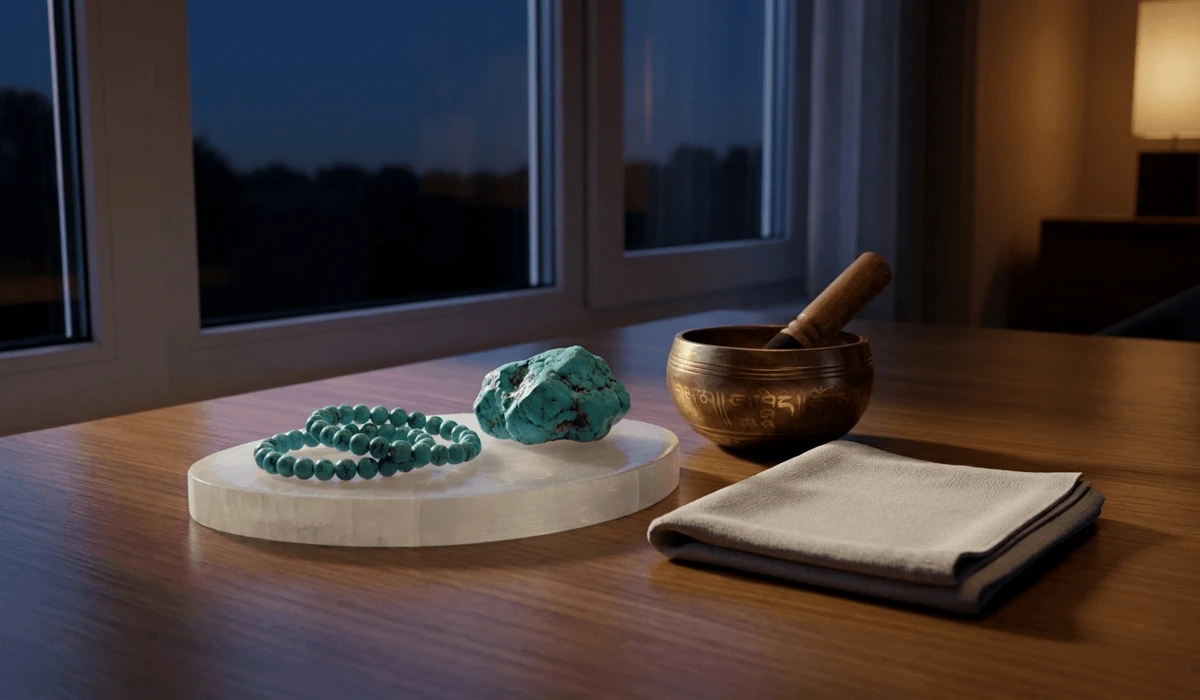
You can also place your jewelry directly onto a dry selenite charging slab or beside clear quartz points. Selenite constantly cleanses adjacent minerals without requiring water or physical friction. You can review detailed crystal clearing guides in the Metaphysical Crystal Resource for additional water-free rituals.
Charging Practices
To revitalize your turquoise energetically, let it rest under soft moonlight overnight. Place your pieces on a clean, dry interior windowsill during the waxing or full moon phases. Lunar rays infuse the stone with cool, restorative energy without causing thermal shock.
Gentle morning sunlight can also recharge turquoise, provided exposure remains under fifteen minutes. Avoid intense, direct midday sun, as prolonged heat can dry out the hydrated mineral bonds and fade vibrant sky hues. Early morning dawn light is gentle, safe, and invigorating.
If you prefer an earth-centered recharge, place your turquoise inside an airtight, moisture-proof glass jar. Bury the sealed container in dry garden soil or a potted plant overnight. This practice connects the stone with the earth while keeping it shielded from damp dirt.
Daily Care, Cleaning, and Storage
For daily physical cleaning, rely solely on a dry, lint-free microfiber cloth. After wearing your jewelry, wipe each bead or setting gently to remove accumulated skin oils, sweat, and environmental dust. This simple daily wipe maintains stone luster naturally.
Store your turquoise pieces flat inside individual fabric-lined jewelry pouches or separate compartments. Keeping stones separated prevents harder minerals, such as quartz, diamonds, and metal clasps, from scratching soft turquoise surfaces. Never store natural stones in humid bathroom cabinets.
Never clean turquoise using ultrasonic machines, steam devices, boiling water, or harsh jewelry dips. Ultrasonic vibrations can shatter delicate matrix veins instantly, while steam forces moisture deep into the pores. A gentle, waterless routine ensures that your turquoise stays vibrant for decades.
Frequently Asked Questions
Q: Can turquoise be submerged in water?
A: No, turquoise should never be submerged in water under any circumstances. Submersion allows liquid to seep deep into the stone's microscopic pores, which breaks down the internal matrix, causes discoloration, and weakens jewelry settings.
Q: Can you shower with turquoise on?
A: You should never shower, bathe, or visit a steam room wearing turquoise jewelry. Shower water contains harsh chemicals, chlorine, soaps, and body oils that quickly penetrate the gemstone's pores, dulling its polish and permanently altering its color.
Q: Is turquoise considered a porous stone?
A: Yes, turquoise is mineralogically classified as an inherently porous gemstone. It consists of an aggregate of microscopic crystals separated by tiny voids that actively pull in nearby liquids, sweat, and oils through capillary action.
Q: How to recharge turquoise?
A: Turquoise is best recharged using gentle, waterless energetic methods. You can leave it overnight on a dry windowsill under the light of a full moon, place it on a selenite charging plate, or use singing bowl sound vibrations.
Q: Does turquoise absorb negative energy?
A: In traditional crystal wisdom, turquoise is believed to absorb stagnant, heavy, or chaotic environmental energies. Because of this natural protective role, regular water-free cleansing with sacred smoke or sound is recommended to keep its energy clear.
Mindful Turquoise Care and Final Thoughts
Genuine turquoise remains one of the most expressive, culturally rich, and visually captivating treasures of the mineral kingdom. Its unique blend of open sky blue and grounded matrix veining invites a sense of tranquility and confident truth into our everyday lives.

By respecting its natural porosity and avoiding liquid immersion, you protect both the physical stone and its energetic vitality. Emphasizing dry microfiber wiping, sound clearing, and moonlight charging ensures your jewelry endures across a lifetime of mindful wear.
A Gentle Invitation from the Studio:
Every genuine gemstone carries its own unique story, mineral structure, and quiet rhythm. Take time to explore our thoughtfully handcrafted collections to discover a piece that resonates with your personal intentions.
Embrace the peace of mindful wear, honor the earth’s natural materials, and enjoy the serene beauty of authentic turquoise every day.
This content is shared purely for educational, cultural, and spiritual exploration. It does not constitute medical, legal, financial, or other professional advice. If you have medical concerns or need specialized guidance, please consult a qualified healthcare professional or certified specialist.

Longyi Luck
Longyi Luck is a Feng Shui practitioner and spiritual researcher who blends traditional year-based wisdom with modern lifestyle insights, specializing in Feng Shui, spirituality, meditation, and mindfulness. With years of dedicated study and practice, Longyi explores cultural symbolism and the practical application of ancient wisdom to help individuals cultivate balance, clarity, and harmony in everyday life. Since 2020, Longyi has been committed to translating timeless traditions into accessible guidance for the modern world.
longyi@auraandluck.com