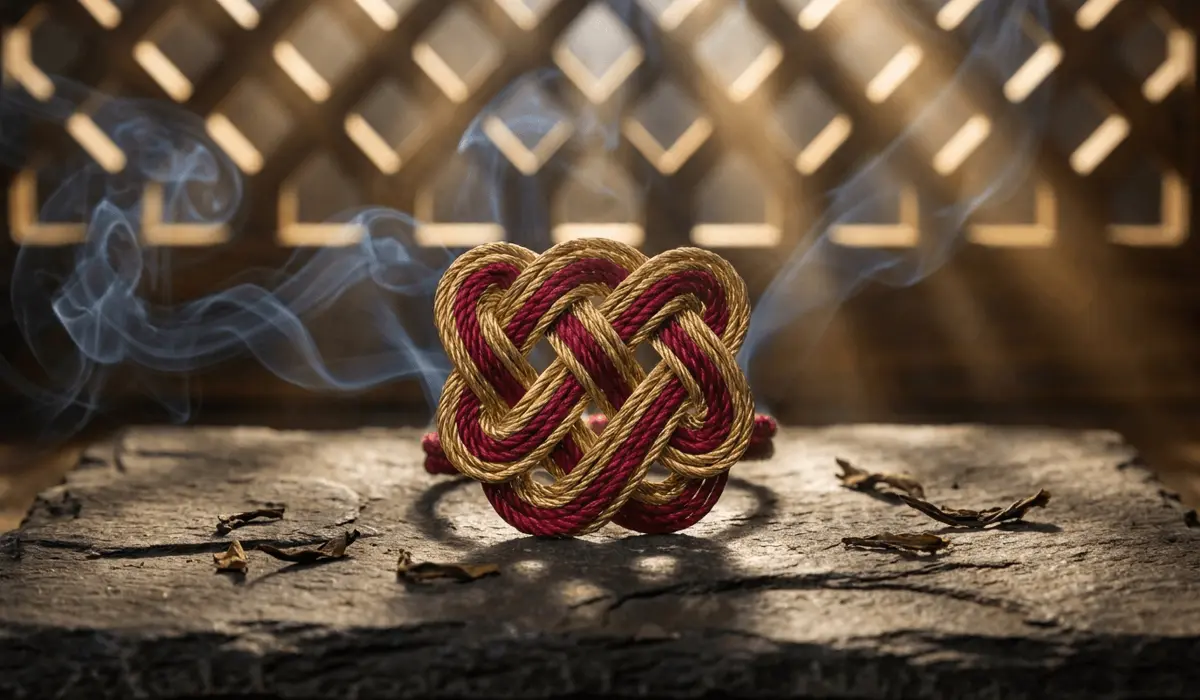
Tibetan braided cords carry an ancient spirit that connects directly to the heart. When we look at these woven strands, we feel a deep sense of peace that goes far beyond simple fashion. Many people across the world wear them today as silent reminders of love, unity, and mindful presence.
At their core, Tibetan braided lucky knots represent the sacred Endless Knot, known in ancient Sanskrit as the Shrivatsa. They show us that every life, thought, and event in this universe connects with everything else. Woven by dedicated Himalayan monks, these cords hold protective intentions that keep your personal energy calm and balanced.
We at Aura & Luck study these sacred symbols to uncover their true gifts for our modern lifestyle. In a busy world filled with digital noise, a simple cord on your wrist becomes an anchor of calm. It protects your spirit, attracts pure fortune, and gently grounds your daily steps.
Quick Summary: Tibetan braided lucky knots are ancient symbols of interconnected life, karmic harmony, and spiritual protection. Handcrafted during sacred chant cycles, each cord shields your subtle energy while aligning heart and mind. Wearing one honors timeless Himalayan wisdom and brings peaceful balance to everyday living.
Ancient Origins and Sacred Legends of Tibetan Braided Knots
The story of the sacred knot starts in the high mountain valleys of the Himalayas. Long before modern jewelry existed, mountain communities looked to sacred patterns to understand the mysteries of existence. These timeless cords grew out of deep contemplation and a loving desire to keep travelers safe from harm.
The Mythological Genesis and the Buddha's Radiant Mind
Sacred legend teaches that the Endless Knot emerged directly from the radiant mind of Shakyamuni Buddha. When he reached ultimate enlightenment under the Bodhi tree, the cosmos celebrated his supreme victory over spiritual confusion. Among the sacred treasures offered to him were the Eight Auspicious Signs, known as the Ashtamangala.
The Endless Knot was cherished as a supreme emblem of eternal insight and unconditional love. Historical archives documented in the World History Encyclopedia Archives trace how such sacred geometry influenced monastic art and everyday wear across Asia. Because the design has no beginning and no finish, it portrays the timeless mind of the awakened state.
When monks weave these cords today, they remember that initial moment of awakening. The woven lines remind us that enlightenment is not far away in the clouds. True peace lives directly inside the open, present moments of our ordinary lives.
Monastic Mantras and the Living Breath of Protection
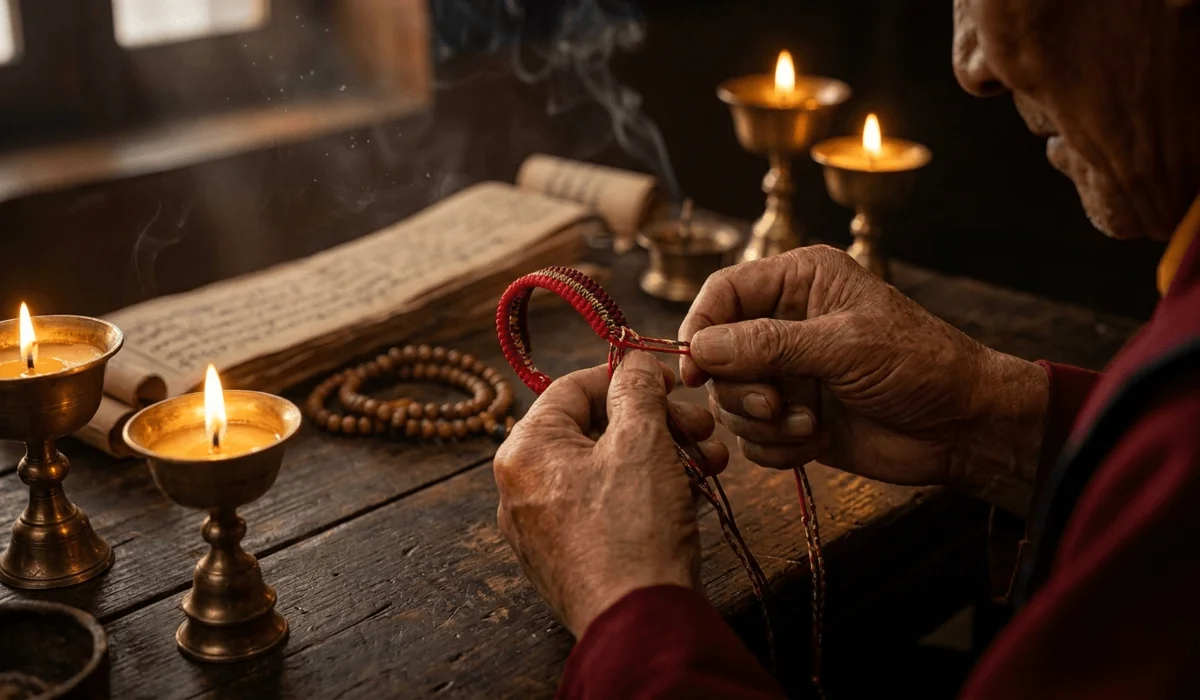
A true Tibetan knot is never merely a decorative accessory made in a rush. Each sacred cord comes to life through steady prayer, patient hands, and quiet meditation inside Himalayan temples. Monks sit together in great halls, chanting the sacred mantra Om Mani Padme Hum with every loop they tie.
As each loop closes, the monastic weaver releases a gentle breath of prayer directly onto the fibers. In the Himalayan tradition, this breath carries pure life force that binds the sacred chant into the material. The cord becomes a physical holder of sacred sound, radiant goodwill, and spiritual warmth.
This sacred breath turns simple thread into a protective shield for the wearer. When you wear one, you hold a tangible blessing made with pure focus and deep kindness. The fibers carry the calm heartbeat of monastic devotion wherever you travel.
Himalayan Folk Traditions and Ancient Bon Shamanism
Before Buddhism blossomed across Tibet, the native Bon tradition practiced sacred cord weaving. Ancient shamans tied specialized knots to bring good weather, protect crops, and soothe restless mountain spirits. They believed that tied cords could catch negative energy just like a net catches autumn leaves.
Over many centuries, early Himalayan folk spirituality blended naturally with Buddhist philosophy. The fears of the spirit world transformed into an elevated understanding of personal karma and inner peace. The humble protective thread evolved into a noble teaching tool for cultivating loving kindness.
Today, this rich synthesis gives the Tibetan knot its layered metaphysical power. It holds the grounded earthiness of ancient mountain roots alongside the lofty insights of Buddhist wisdom. It stands as an enduring gift from the roof of the world to our modern seeking hearts.
Key Insight: The Tibetan lucky knot is a living link to centuries of Himalayan practice. Every knot woven with prayer seals sacred intention into the physical thread. It acts as spiritual armor that reflects negative intentions while keeping your own mind kind, soft, and clear.
The Hidden Philosophy: Decoding the Sacred Geometry of the Knot
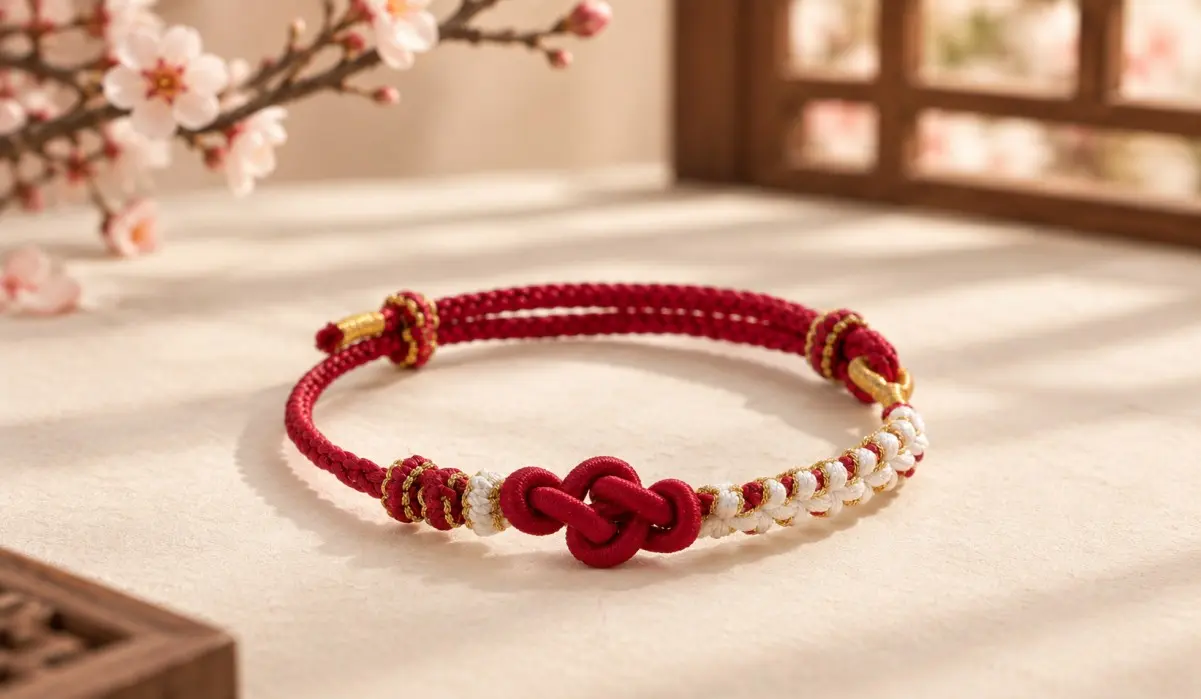
The visual structure of the Tibetan knot contains profound philosophical depth. At first glance, you see an eye-catching geometric maze with perfect symmetry and balance. Yet, when your eyes follow the cords, you uncover a lesson about how reality operates.
Pratityasamutpada and Interdependent Co-Arising
The central teaching behind the knot is interdependent co-arising, known historically as pratityasamutpada. This principle states that nothing in this universe exists alone or entirely on its own. Every creature, tree, rainfall, and quiet breath arises together in one vast web of existence.
The continuous line shows that our private choices touch the wider community in endless waves. Just as we explore in our guide on Koi Fish Spiritual Harmony, true peace comes from flowing with natural balance rather than resisting it. When you understand that you belong to everything, loneliness begins to soften and dissolve.
This sacred pattern also joins wisdom and compassion into one single thread. Wisdom without kindness can become cold and distant, while kindness without insight can make foolish mistakes. The knot binds both qualities together so they support your everyday growth.
The Sacred Seven Knots and Chakra Alignment
Many traditional Himalayan bracelets feature a distinct sequence of seven tight knots. This number carries immense symbolic weight in Eastern energy anatomy and meditation methods. Each knot matches one of the seven primary energy centers that run along the human spine.
These seven points also reflect the gradual clearing of emotional confusion like anger, pride, and greed. When monks braid seven knots, they offer prayers for the complete balancing of the wearer's inner vitality. The bracelet acts as a supportive energetic spine wrapped around your wrist.
Wearing seven knots can help you stay grounded through emotional storms. Whenever you feel thrown off center, the knots silently prompt you to take seven deep, restorative breaths. This simple physical interaction brings your scattered thoughts right back into your heart.
Five Elemental Colors of the Himalayan Spectrum
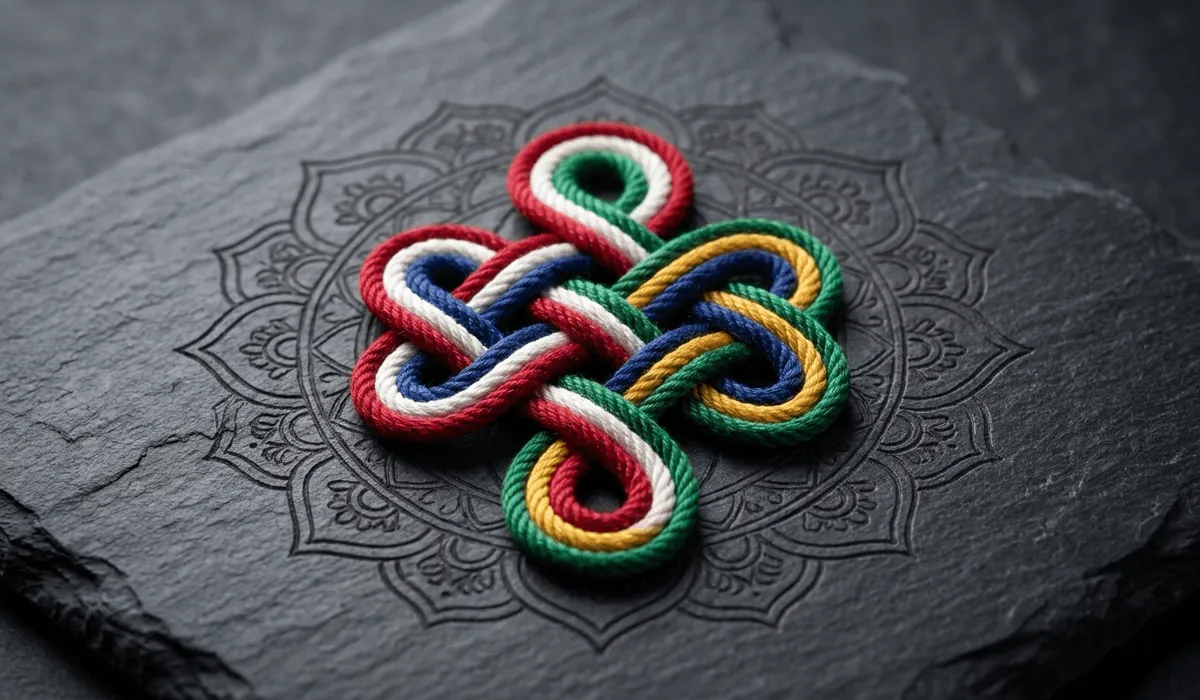
Color plays a vital role in Himalayan spiritual arts and ritual clothing. While crimson red remains the most famous hue, traditional cords frequently combine five sacred colors. Each color honors an essential element of nature and a specific direction of cosmic balance.
White reflects water, primordial purity, and the total clearing of confusing karma. Blue represents open space, sky-like clarity, and unshakable stillness of the wandering mind. Yellow honors the rich earth, fertile abundance, and the warmth of grounded patience.
Red radiates fire energy, vital passion, and active spiritual defense against bad luck. Green honors the playful wind, healthy expansion, and swift action that removes worldly roadblocks. Woven as one, these five colors create complete energetic harmony across your personal aura.
| Color | Element | Spiritual Meaning | Everyday Blessing |
|---|---|---|---|
| Red | Fire | Vital life force and bold courage | Protection from jealousy and burnout |
| White | Water | Primordial purity and fresh beginnings | Peaceful mind and emotional release |
| Blue | Space | Boundless insight and deep patience | Mental calm and clear communication |
| Yellow | Earth | Firm grounding and joyful abundance | Material stability and self-confidence |
| Green | Wind | Active compassion and rapid healing | Overcoming hurdles and creative drive |
Understanding these five shades helps you select a cord that matches your current personal intentions. When you wear all five together, you invite total elemental balance into your daily work and relationships.
Cultural Evolution: From Monastic Relic to Modern Talisman
The journey of the Tibetan knot spans thousands of miles and centuries of cultural growth. What began in isolated mountain hermitages now speaks to mindful people in modern cities everywhere. This evolution shows that universal human needs for safety and inner peace never change.
Ancient Himalayan Armour and Monastic Vows
In traditional Tibet, receiving a blessed cord was a milestone event in an individual's spiritual life. Pilgrims walked through freezing mountain passes to attend seasonal monastic ceremonies. At the end of these gatherings, high lamas tied red cords around pilgrims' necks as energetic armor.
These cords stood as physical proof of formal refuge in the sacred Dharma teachings. Wearers looked at their cords to remember their personal vows of harmlessness, truth, and generosity. The cord served as a visible connection to their teacher and the wider spiritual family.
Monks also gifted these cords to travelers undertaking dangerous trade journeys across high Himalayan mountain ridges. Caravans braved landslides, snowstorms, and wild bandits with blessed cords tied to their gear. People trusted the woven mantra to keep their minds calm in moments of crisis.
Global Parallels and Universal Protection Cords
Tying cords for protection is an ancient human instinct found across many distinct cultures. We can look to the classic red string of Kabbalah worn on the left wrist to ward off ill intentions. Similarly, Celtic sailors tied intricate knotwork charms to summon fair ocean breezes and guard their families.
As recorded in the Classical Philosophical Reference Library, human cultures have always used sacred geometry to express deep universal truths. Across different languages and geography, woven fibers remind us of our shared vulnerability and shared spiritual potential. The Tibetan knot shines within this global lineage as an exceptionally refined symbol of selfless love.
Today, modern psychology views these ancient practices through the lens of archetypes and somatic anchors. When you touch a physical symbol, your brain recalls the peaceful feelings linked with it. The ancient monastic talisman fits naturally into modern cognitive habits and mindful stress relief.
Video source:YouTube
Author:Tibet Relief Fund
Original video link:https://www.youtube.com/watch?v=CBmLIbXhR1Q
Watching the meditative formation of these sacred lines reinforces their quiet, balancing power. The unbroken loops provide a calm visual rhythm that slows rapid thoughts and centers your breathing.
Wearing the Talisman: Ancient Protection for the Modern Mind
Modern daily life brings a very different set of challenges than ancient mountain journeys. Instead of encountering wolves on cold trails, we face endless email notifications, heavy deadlines, and screen fatigue. The Tibetan lucky knot offers modern professionals an effective tool to stay serene and centered.
Shielding Against Digital Burnout and Energy Drain
Sitting in front of glowing computers for hours leaves our nervous system jumpy and overstimulated. We absorb emotional tension from fast headlines, urgent messages, and crowded subway cars. Without healthy boundaries, our sensitive energetic field can feel thin, scattered, and thoroughly drained.
A consecrated Tibetan braided talisman works like an energetic circuit breaker for your aura. Just as we study in our resource on Zodiac Constellation Energy Alignment, intentional jewelry creates a gentle boundary around your inner spirit. It deflects chaotic social energies so you can stay fully yourself in crowded rooms.
When coworkers or clients are upset, your bracelet reminds you not to take their anxiety personally. It holds space for your kindness without requiring you to carry other people's emotional baggage. You stay supportive while remaining deeply anchored in your own calm center.
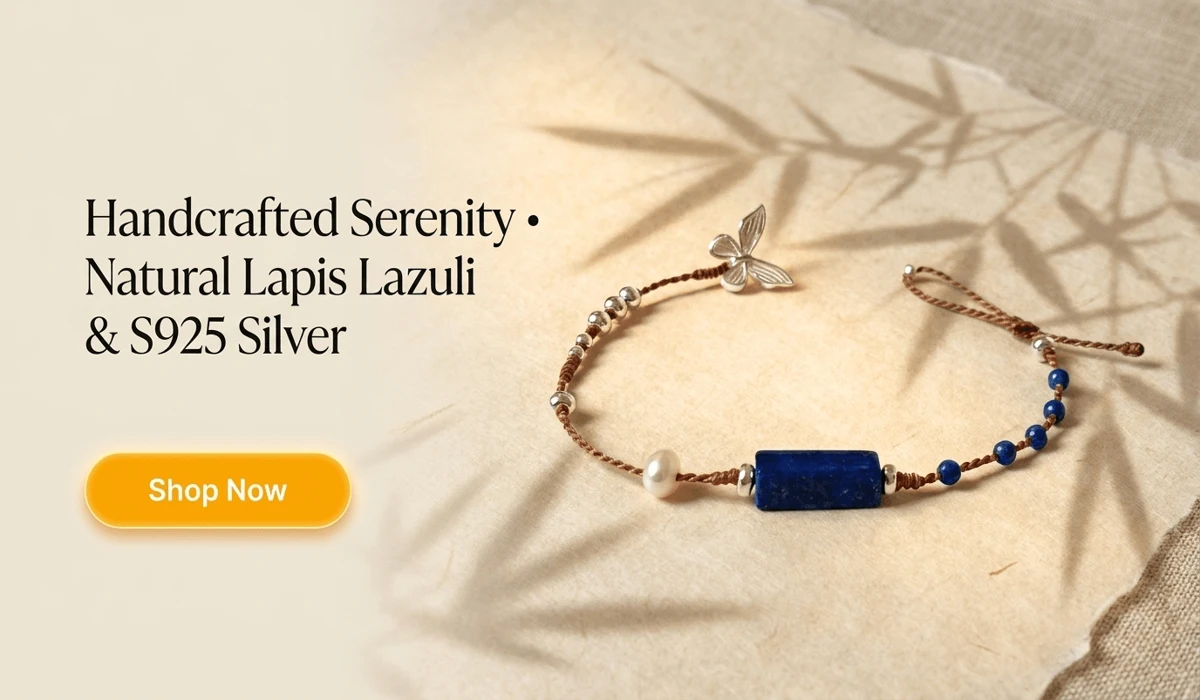
Artisan gemstone designs blend sacred cords with natural healing stones to support your inner balance. Choosing jewelry made with mindful care makes your daily routine feel like a meaningful personal ritual.
Somatic Grounding and the Tactile Anchor
Our thoughts often run away into imagined worries about the future or past mistakes. A physical talisman brings scattered attention straight back to your physical body. Whenever your mind begins to race, you can touch the ridges of your woven knot.
The tactile sensation of braided cord against your fingers gives your brain immediate sensory feedback. This gentle touch signals your nervous system that you are safe right now in this room. You can take one slow breath in, roll your shoulders down, and start fresh.
Many people touch their knot discreetly during difficult meetings or before speaking on stage. This quiet habit turns nervous fidgeting into an empowering moment of personal grounding. It transforms an unconscious reaction into a deliberate practice of calm strength.
Left Wrist vs Right Wrist Energy Dynamics
In Eastern energy arts, the two hands carry completely different directions of subtle current. Understanding these channels helps you decide which wrist should hold your lucky knot bracelet. Both placements are wonderful, depending on your primary spiritual intention.
The left wrist serves as your receiving gateway for internal transformation. Energy flows into your body through the left side, nourishing your heart, organs, and quiet mind. Wearing your cord on the left invites mantra blessings, peaceful sleep, emotional healing, and protective boundaries.
The right wrist serves as your projective gateway for outward action and generous giving. Wearing your cord on the right helps you radiate confidence, kindness, and productive focus into your projects. If you are launching a new career goal or speaking publicly, the right wrist supports your bold step forward.
Practical Tip: Wear your Tibetan knot on the left wrist when you need rest, emotional protection, and inner healing. Switch to the right wrist when you lead meetings, teach others, or build exciting creative endeavors.
Rituals and Sacred Practice: Deepening Your Connection to the Knot
A talisman works best when you build a loving, conscious relationship with it. When you treat your bracelet with respect, it becomes a devoted companion on your journey. Simple weekly rituals help clear absorbed tension and refresh the cord's vibrant spiritual energy.
Consecration Ritual and Breath Awakening
When you welcome a new braided bracelet home, take a few minutes to awaken its purpose. You do not need complex equipment to perform an honest consecration. All you need is a quiet corner, pure intention, and a moment of still breathing.
Begin by cleansing the cord using fragrant herbal smoke from natural juniper, cedar, or sandalwood. Pass the bracelet through the curling smoke three times while focusing on feelings of gratitude and joy. Explore our handcrafted pieces in the Tibetan Cord Bracelet Collection to find an authentic companion for your path.
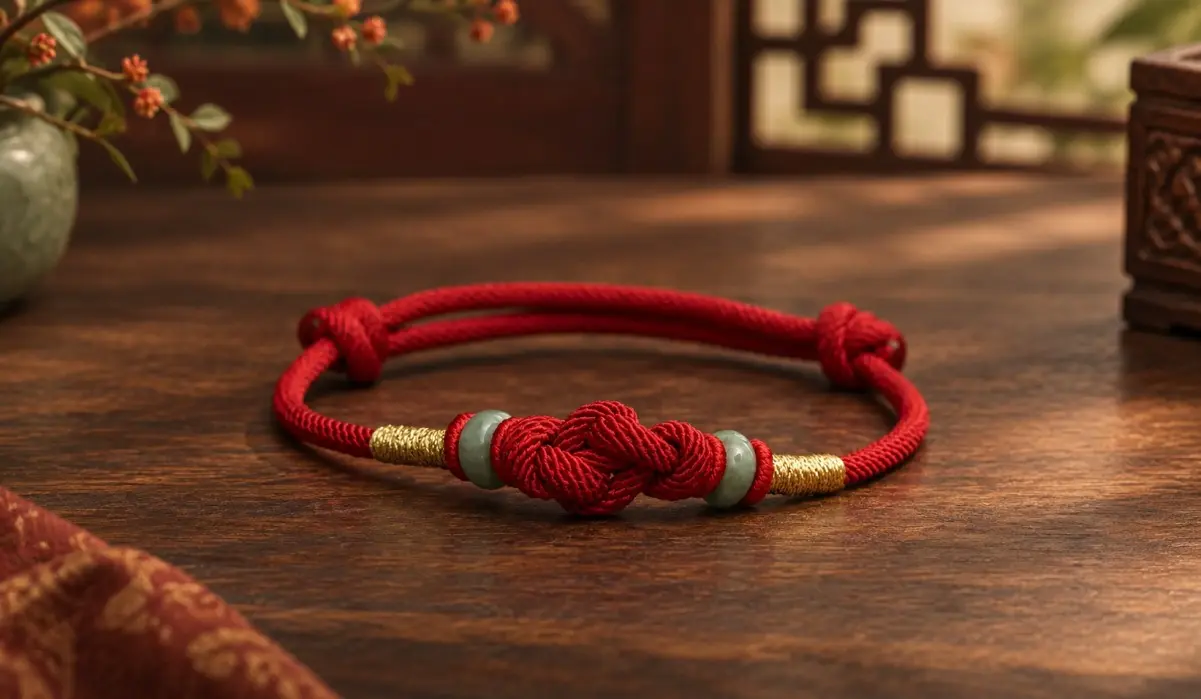
Next, bring the bracelet near your lips and whisper your personal intention into the weave. You may recite the compassion mantra Om Mani Padme Hum seven times with sincere feeling. Finish by blowing a warm, deliberate breath across the knots to seal your intention into the fibers.
Visualization Meditation with the Endless Knot
You can use the geometry of the knot as a focal point for daily meditation. Sit comfortably with your spine tall, resting the bracelet gently in your lap or between your palms. Look closely at the interlocking weave for one minute, letting your vision soften.
Close your eyes and visualize the continuous pattern glowing with warm golden light in your mind. Follow the line as it loops upward and downward without hitting a single barrier or dead end. Inhale as you imagine the upward path of wisdom, and exhale as you follow the downward path of love.
This visualization trains your mind to move smoothly past rigid, either-or thinking habits. It shows your subconscious that difficulties are simply bends in the road rather than final endings. Ten minutes of this practice leaves you feeling wonderfully refreshed and steady.
Natural Release and Mindful Disposal
People often wonder what it means when their beloved Tibetan bracelet suddenly breaks or unties. Because of superstitious stories, some worry that a broken cord signals approaching bad fortune. In authentic Himalayan philosophy, the reality is entirely the opposite.
When a consecrated cord falls away naturally, it has finished its spiritual assignment for you. It has absorbed a heavy karmic obstacle or shielded your field from an intense energetic blow. It is a moment for relief and quiet celebration rather than worry.
Never throw a broken spiritual cord into the household garbage like common rubbish. Instead, return the worn fibers gracefully back to the natural elements. You can bury it in garden soil under a healthy tree or burn it mindfully while offering thanks for its protection.
Sacred Etiquette, Cultural Honor, and Spiritual Taboos
Wearing spiritual symbols requires a balance of open-hearted joy and cultural reverence. The Tibetan lucky knot belongs to a living tradition of Himalayan practitioners who have preserved this wisdom through deep adversity. Approaching the symbol with respect keeps its energetic frequency pure and strong.
Mindful Reverence over Casual Appropriation
Cultural appropriation happens when sacred items are treated as cheap, disposable toys without knowing their origins. Cultural honor, on the other hand, means learning the history and appreciating the creators with a humble heart. Anyone from any culture or faith is welcome to wear the Endless Knot when wearing it with respect.
Support artisan creators and monastic communities who craft these items with authentic spiritual training. Avoid buying mass-produced, synthetic knockoffs stamped out carelessly in industrial factories. A genuine talisman carries the human care, time, and living prayers of its maker.
Take time to share the meaning of your bracelet when curious friends ask about it. Explaining the principles of interdependent harmony and kindness spreads real peace into the world. In this way, your jewelry becomes a gentle ambassador for universal love.
Daily Care, Water Safety, and Sleep Protocols
Caring for your bracelet keeps its threads strong and its appearance bright for many seasons. Modern cotton and nylon braided cords are quite durable, but simple habits extend their lifespan. Following basic guidelines helps maintain both physical structure and energetic clarity.
According to the holistic living guidelines of the Feng Shui Society Principles, our personal surroundings should always promote harmonious life flow. Applying this mindful care to your sacred talismans keeps your energy clear and supportive.
Consider these simple daily care habits to protect your sacred knot bracelet:
- ☸️ Remove your natural fiber cords before taking long showers or swimming in chlorinated pools.
- 🕉️ Store your talisman on a clean wooden tray or jewelry altar when you are not wearing it.
- 🧿 Cleanse the energy of your bracelet once a month during the bright light of the full moon.
- 🌸 Take the bracelet off before sleeping if you tend to toss, turn, or experience vivid dreams.
Giving your wrist and bracelet a rest overnight lets your skin breathe and prevents the cords from snagging on bed linens. When you put it back on each morning, take a brief moment to reaffirm your peaceful intentions.
The Universal Inclusivity of the Dharma Knot
One of the most comforting aspects of the Tibetan knot is its boundless, welcoming nature. You do not need to identify as a Buddhist to experience the grounding benefits of this sacred weave. The teachings of non-violence, kindness, and interconnected life belong to all humanity.
The knot does not judge where you come from, what language you speak, or your past mistakes. Its continuous loops embrace every human being who seeks to live with greater gentleness and honesty. It is a faithful companion for your personal path, no matter what you believe.
When you put on your cord, remember that you join hands with millions of mindful seekers through the ages. You become part of a living tapestry of people choosing awareness over fear. That shared connection gives you quiet courage every single day.
Four Simple Steps to Integrate the Sacred Knot Daily:
1. Morning Touchstone: Hold your knot for three conscious breaths right after waking, setting a clear intention for kindness.
2. Stress Reset: Touch the woven ridges during hectic work hours to ground your body and dissolve rising tension.
3. Evening Gratitude: Reflect on three interconnected blessings that helped you today before removing your bracelet.
4. Monthly Cleansing: Bathe the cord in herbal smoke or soft moonlight to clear absorbed energies and renew its vitality.
Frequently Asked Questions
Q: What is the spiritual meaning of Tibetan braided lucky knots?
A: Tibetan braided lucky knots represent the ancient Endless Knot, which stands for universal interconnection, wisdom, and boundless compassion. They symbolize that all lives and events are woven together in cosmic harmony. Wearing one brings spiritual grounding, protects your subtle energy field, and attracts joyful blessings.
Q: Why do Buddhist monks chant mantras while braiding lucky knot bracelets?
A: Monks chant sacred mantras like Om Mani Padme Hum to infuse the physical fibers with divine vibrations of kindness and peace. As they braid, they blow their prayer breath directly onto the weave to seal protective intentions into the cord. This sacred process turns a simple string into a living talisman of monastic shelter.
Q: Which wrist should you wear a Tibetan braided lucky knot bracelet on for protection?
A: You should wear your bracelet on the left wrist to receive gentle blessings, internal peace, and emotional shielding, as the left side is the receptive energetic gateway. Wear it on your right wrist when you want to project confidence, creative energy, and active compassion into outward projects and worldly leadership.
Q: What is the spiritual significance of the seven knots in Buddhist braided jewelry?
A: The seven knots correspond to the seven main energy centers or chakras along your spine, promoting total physical and energetic alignment. They also symbolize the gradual overcoming of seven mental poisons, such as anger and pride, turning inner confusion into clear spiritual wisdom.
Q: How can modern professionals use a Tibetan lucky knot bracelet to combat digital burnout?
A: Professionals can use the textured ridges of the woven knot as a physical grounding anchor during moments of screen fatigue or high stress. Touching the knots brings awareness away from racing thoughts and back to the physical body, interrupting unconscious anxiety and restoring steady breathing.
Q: What does it mean when a Tibetan lucky knot bracelet breaks or falls off?
A: When a consecrated lucky knot bracelet breaks or unties on its own, it means the talisman has absorbed a severe energetic obstacle or fulfilled its protective mission for you. It should be thanked with gratitude and reverently returned to nature through burial in clean earth or mindful burning.
Integrating the Wisdom of the Endless Knot
The Tibetan lucky knot offers far more than traditional protection; it presents a joyful way of viewing our place in the universe. When you realize that your life connects to every living being, daily worries begin to lose their harsh grip. You move through each day with greater patience, warm humor, and quiet courage.
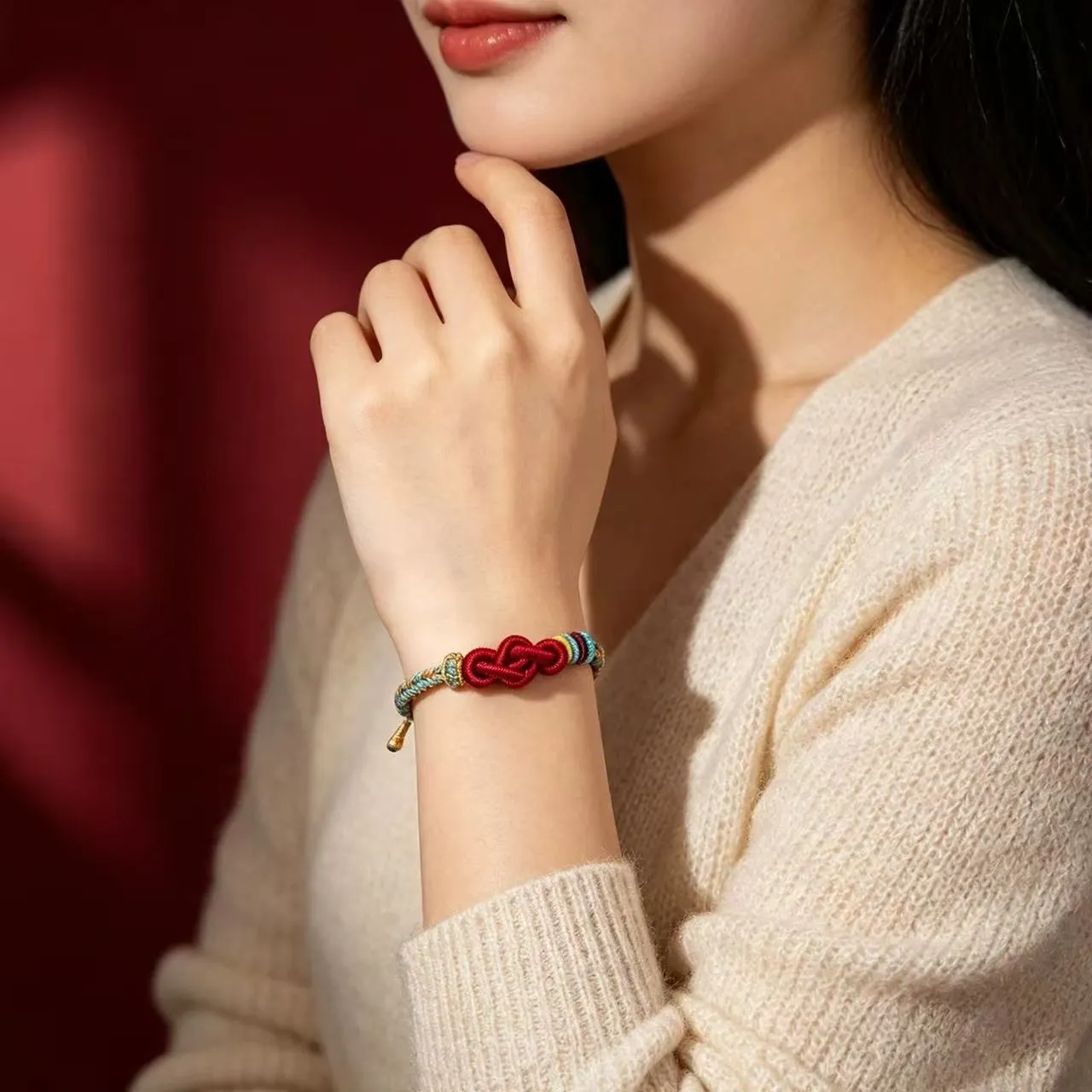
Handwoven Wenchang Knot Bracelet – Academic Success & Good Luck Chinese Cord Jewelry
Teal and gold-tone cords surround a striking red Wenchang knot in this handwoven Chinese bracelet. Its balanced color palette, decorative wrapped accents and adjustable cord construction create a meaningful accessory inspired by study, wisdom and steady progress.
Shop NowLet this sacred weave remind you to honor your relationships, speak truthfully, and forgive mistakes quickly. Just like the continuous loops of the cord, life moves in flowing cycles of learning, resting, and renewal. Embrace each chapter with an open, trusting heart.
May your sacred knot bring you lasting clarity, unshakable peace of mind, and harmonious pathways wherever your journey leads. Walk forward with calm steps, knowing you are always woven safely into the great, loving fabric of life.
This content is provided for informational, cultural, and spiritual exploration purposes only. It does not constitute medical, legal, financial, or other professional advice. Readers seeking guidance on personal health or professional matters should consult certified and qualified practitioners.

Longyi Luck
Longyi Luck is a Feng Shui practitioner and spiritual researcher who blends traditional year-based wisdom with modern lifestyle insights, specializing in Feng Shui, spirituality, meditation, and mindfulness. With years of dedicated study and practice, Longyi explores cultural symbolism and the practical application of ancient wisdom to help individuals cultivate balance, clarity, and harmony in everyday life. Since 2020, Longyi has been committed to translating timeless traditions into accessible guidance for the modern world.
longyi@auraandluck.com