Understanding Real vs. Fake Moonstone: How to Spot Opalite Glass helps every collector tell authentic natural feldspar apart from man-made synthetic glass simulants. Buyers often search for this guide because synthetic glass stones flooded the crystal market under confusing trade labels. This comprehensive guide gives you simple, non-destructive identification tests to protect your jewelry collection.
Natural moonstone holds a quiet, shifting inner light that humans have admired for thousands of years. Man-made glass stones can look pretty on a shelf, but they lack the genuine geological origin and physical depth of earth-born crystals. By learning a few simple visual checks, you can quickly spot the difference with confidence.
Key Highlights for Quick Identification:
- 💎 Natural Origin: Genuine moonstone is an orthoclase and albite feldspar mineral formed underground over millions of years.
- 💎 Synthetic Glass: Opalite is an engineered decorative glass product with no crystalline mineral structure.
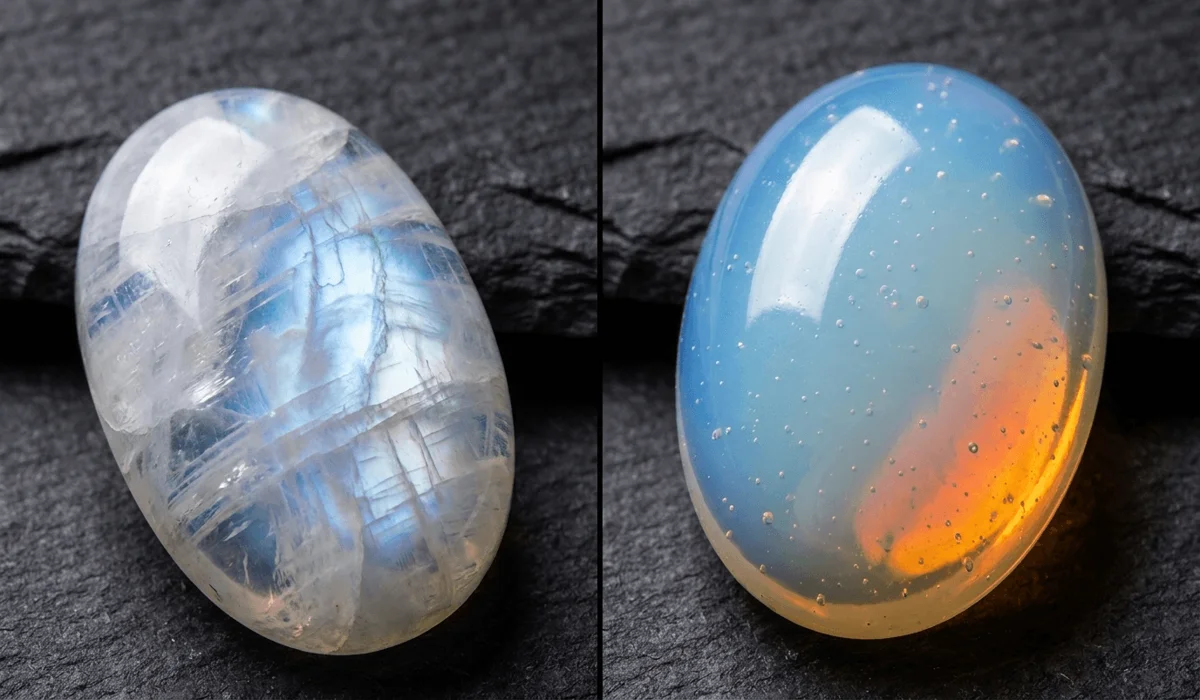
- 💎 Optical Play: Authentic moonstone displays adularescence, a moving silvery-blue light floating beneath its surface layers.
- 💎 Static Glow: Opalite displays uniform opalescence that scatters an even, hazy blue or warm amber glow throughout the entire body.
- 💎 Internal Structure: Real stones have natural cleavage planes and minor tension lines, while glass imitations often contain tiny round air bubbles.
Real vs. Fake Moonstone: How to Spot Opalite Glass?
Telling these two materials apart starts with a clear look at what each item actually is. In our Aura & Luck workshop, we inspect hundreds of mineral strands every week to guarantee authentic quality for our community. While both items look appealing, their internal composition and physical traits are completely different.
Definition and Mineral Composition
Natural moonstone is a silicate mineral belonging to the diverse feldspar family. It consists of alternating microscopic layers of orthoclase and albite. When light hits these microscopic layers, it scatters into a soft, billowy glow that gemologists call adularescence.
You can read more about these layered silicate structures through Gemological Research Standards. These mineral intergrowths take immense subterranean heat and pressure to develop. Synthetic glass substitutes cannot replicate this complex crystalline architecture.
Opalite, on the other hand, is a man-made silica-dolomite glass formulation. Manufacturers melt basic glass components with fluorine compounds to create a milky, semi-translucent appearance. Unscrupulous sellers often market this decorative glass under deceptive names like opalite moonstone, sea opal, or opal glass.
Origin and Formation
Genuine moonstone forms deep within igneous pegmatites and complex metamorphic rock formations over vast geological epochs. As molten rock cools slowly underground, orthoclase and albite naturally unmix into delicate, stacked mineral lamellae. Major global mining sources for fine natural moonstone include Sri Lanka, southern India, Madagascar, and Tanzania.
Each natural deposit yields subtle mineral variations that make every single raw cabochon or polished bead unique. When we source these gemstones directly from ethical mining partners, we celebrate these natural earthly variations. The stone carries an authentic geological record written inside its crystal lattice.
Opalite has zero geological history because industrial factories manufacture it in commercial smelting furnaces. Liquid molten glass is cast into molds, cooled rapidly, and tumbled into smooth shapes or drilled beads. Because it comes from an industrial mold, synthetic moonstone lacks any natural earth matrix or geological growth zoning.
Core Visual and Optical Distinctions
The easiest way to identify authentic feldspar is to understand the difference between adularescence and ordinary opalescence. In genuine moonstone, light glides gracefully beneath the polished dome as you rotate the stone under a steady light beam. The floating sheen appears localized and directional rather than covering the whole stone at once.
Opalite produces a generalized surface scatter known as glass opalescence. Instead of a floating internal light beam, opalite glows uniformly across its entire body from all viewing angles. Against a dark background, opalite looks distinctly sky blue, but when held against a bright backlight, it immediately shifts to a warm, milky amber-orange.
Magnification gives you another foolproof clue for spotting synthetic glass. Under a simple 10x jeweler loupe, genuine moonstone shows step-like natural cleavage planes and microscopic internal cracks. In contrast, opalite glass is completely homogenous inside, frequently revealing tiny trapped spherical air bubbles created during factory melting.
Video source: YouTube
Author: Chrisy Bossie
Original video link: https://www.youtube.com/watch?v=A1gGGdn3phU
Spiritual Meaning & Symbolism
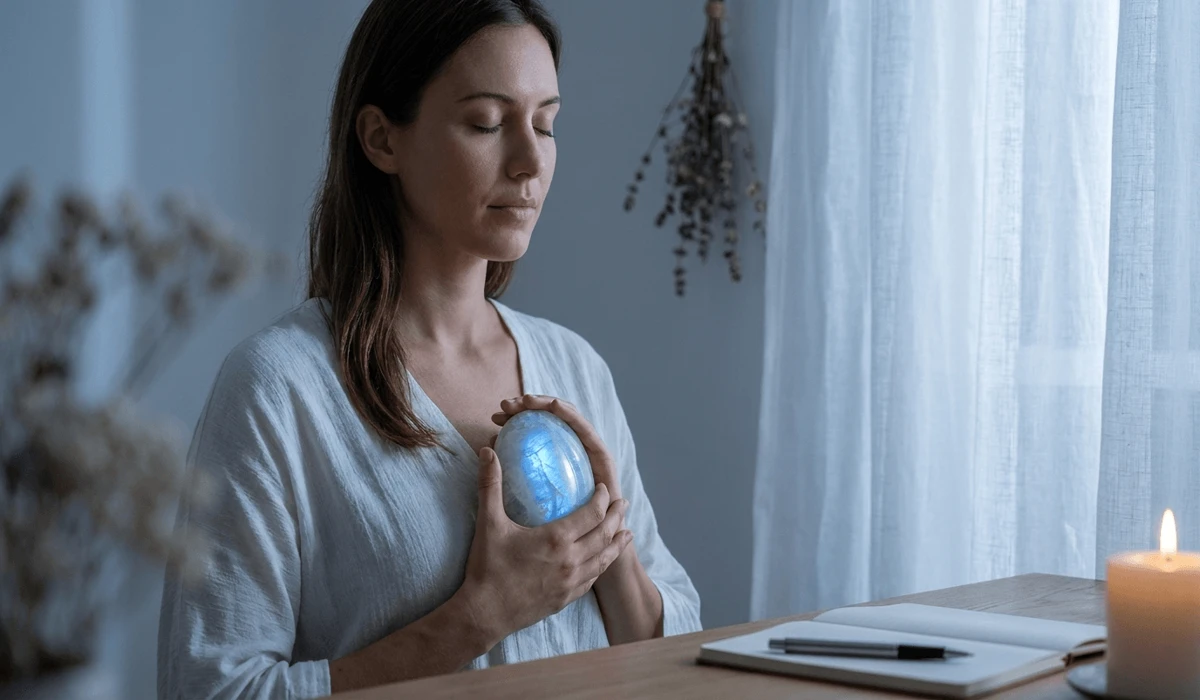
Cultures around the globe have cherished natural moonstone for centuries as a physical embodiment of gentle lunar radiance. Many crystal lovers appreciate these historical traditions when building mindful jewelry rituals into daily life. Understanding these cultural roots enriches your connection with the mineral world.
Traditional Moonstone Symbolism
Ancient travelers revered moonstone as a reliable talisman for safe nighttime journeys and emotional guidance. Because its sheen mimics the changing phases of the night sky, people naturally associated it with personal renewal and cycles of life. It stands as a timeless symbol of fresh starts, quiet intuition, and serene emotional balance.
Many holistic traditions connect this gemstone with gentle water energy and receptive Yin qualities. Practitioners use it to honor natural life transitions rather than resisting sudden changes in fortune. Its cool sheen serves as a visual reminder that periods of darkness are always followed by renewed inner light.
You can explore more foundational traditions through our guide to Crystal Healing Practices. People often find that working with natural earth minerals helps them cultivate personal stillness. Moonstone remains one of the most beloved stones for encouraging self-compassion and gentle reflection.
Chakra Associations
In modern crystal traditions, practitioners associate genuine moonstone primarily with the upper subtle energy centers. Connecting with these energy points allows individuals to introduce grounding focal objects into seated contemplation. Here are the primary energy centers aligned with natural feldspar:
- 🔮 Third Eye Chakra (Ajna): Natural moonstone supports inner stillness, intuitive awareness, and mindful discernment during moments of mental clutter.
- 🔮 Crown Chakra (Sahasrara): The cool white and silvery shimmer encourages a quiet connection to spacious awareness and peaceful contemplation.
- 🌿 Heart Chakra (Anahata): Peach and warm pastel varieties provide a calming anchor for cultivating gentle self-acceptance and emotional kindness.
When incorporating minerals into mindfulness routines, selecting genuine crystals ensures an authentic connection to natural earth structures. While glass has a pleasant decorative glow, it lacks the ancient mineral lattice that traditional practitioners favor.
Cultural and Historical Context
Ancient Roman lore claimed that moonstone was created from solidified drops of concentrated moonlight captured inside the earth. Roman jewelers set raw feldspar into fine rings and pendants to invite prosperity, affectionate harmony, and divine feminine protection. In ancient Greece, artisans merged the names of moon goddesses Selene and Aphrodite to describe its enchanting beauty.
In classical Indian heritage, moonstone holds an honored place as a sacred dream stone. Traditional folklore held that gifting moonstone jewelry to newlyweds during a waxing moon fostered lifelong companionship and emotional harmony. Sacred statues were frequently adorned with polished moonstone cabochons at the forehead to represent spiritual sight.
During the Art Nouveau era of the late nineteenth century, legendary jewelers like René Lalique elevated natural moonstone into high art. Master jewelers preferred its subtle, moody adularescence over flamboyant faceted gems like diamonds or rubies. This historical appreciation continues today among collectors who value authentic craftsmanship and natural beauty.
Benefits & Intentions Associated with Real Moonstone
People across various walks of life select authentic moonstone to represent calm intentions and mindful daily focus. While gemstones are never a replacement for professional healthcare or mental therapy, they serve as wonderful tactile anchors. Wearing a smooth natural crystal keeps your personal goals top of mind throughout a frantic workday.
Natural stones serve as physical mirrors for inner stillness, reminding us to pause, breathe, and trust our personal life journey.
Commonly Associated Intentions
Many of our clients share how holding genuine moonstone provides a comforting tactile pause during stressful moments. When you touch a naturally cool feldspar stone, its organic texture gently pulls your awareness back into the present moment. Collectors often choose moonstone when setting the following supportive intentions:
- 🌿 Emotional Balance: Anchoring calm breathing and steady composure when facing unpredictable emotional shifts or demanding situations.
- 🌿 Intuitive Confidence: Honoring your natural inner wisdom instead of making rushed, reactive decisions under external pressure.
- 🌿 Embracing Transitions: Welcoming new career paths, personal relationships, or relocation with grace and open-hearted curiosity.
- 🌿 Mindful Communication: Speaking from a place of centered empathy, avoiding defensive speech during complex interpersonal discussions.
Integrating meaningful stones from our curated Spiritual Crystal Collection provides a grounded way to support these quiet daily practices. Authentic minerals act as enduring touchstones for steady personal growth.
Mindfulness & Personal Practices
You can seamlessly weave genuine moonstone into your existing daily wellness habits without complicated ceremonies. A simple practice is keeping a smooth palm stone on your nightstand as a cue for an evening digital detox. Holding the cool stone while taking five deep, slow breaths signals your nervous system that it is time to unwind.
Writers, artists, and creators often place natural moonstone cabochons beside their creative workspaces. The shifting, organic blue glow inspires curiosity and helps dismantle rigid creative blocks. It encourages an open, exploratory mindset where ideas can develop at their natural pace.
Tracking personal habits alongside the lunar cycle offers another rewarding way to engage with your stone. Setting focused intentions during the new moon and reviewing your progress during the full moon creates a grounded life rhythm. The stone becomes a meaningful symbolic marker for your personal milestones over time.
How to Wear Real Moonstone
Wearing natural gemstone jewelry allows you to carry calming energetic reminders wherever your busy schedule takes you. However, many people wonder which wrist offers the best placement for their daily routine. Understanding basic energy flow concepts helps you select the right styling choice for your lifestyle.
Left Hand vs Right Hand (Energy Flow Logic)
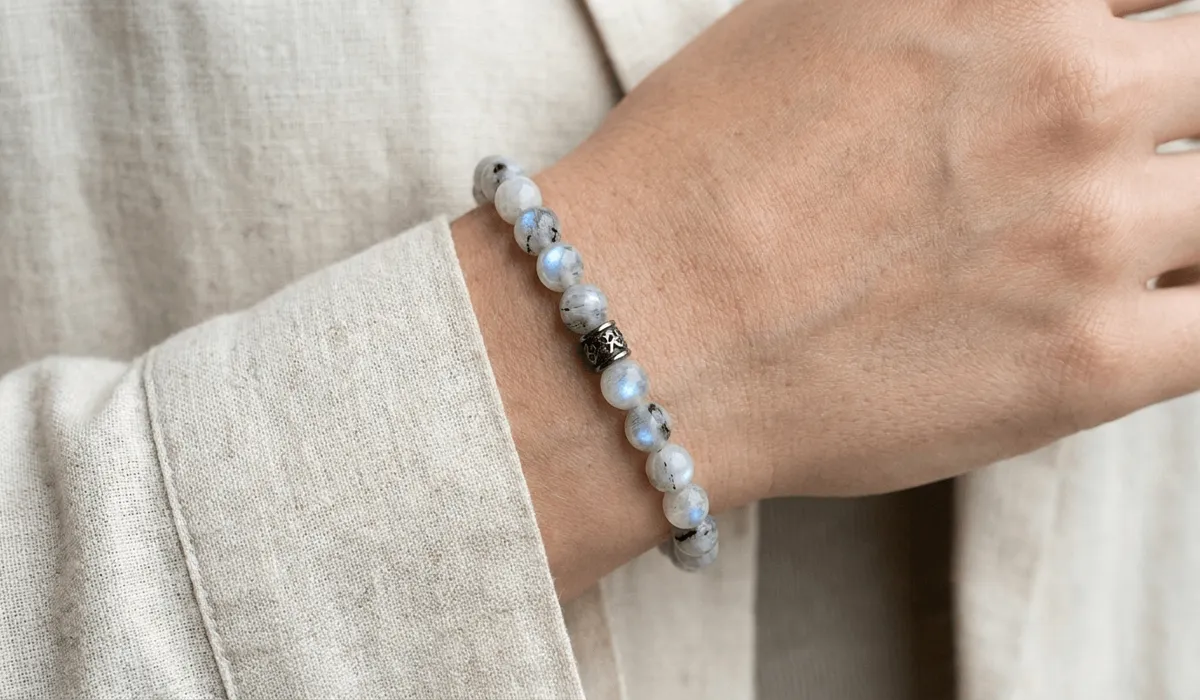
In holistic energy philosophy, the left side of the human body represents the receptive channel. Wearing a moonstone bracelet on your receptive left wrist invites internal calm, soothing Chi(气), and gentle emotional replenishment. It is the ideal placement for restorative days, private journaling, or quiet meditation.
The right wrist represents your expressive, outward-giving channel in traditional practice. Wearing your bracelet on the right side helps you project serene communication, empathetic listening, and balanced personal boundaries toward others. It is an excellent choice when leading important meetings, attending social gatherings, or resolving difficult family disputes.
When People Choose to Wear It
You can wear natural feldspar whenever you feel called to bring more softness and composure into your day. Many people particularly enjoy wearing their pieces during key moments of mindful restoration:
- 💎 Lunar Phases: Celebrating new moon beginnings and full moon completions with dedicated intention-setting rituals.
- 💎 Restorative Movement: Wearing your beads during relaxing yin yoga sessions, breathwork workshops, or sound bath meditations.
- 💎 Everyday Work: Keeping a tactile anchor on your wrist to diffuse workday tension and avoid mental burnout in fast-paced offices.
- 💎 Travel Days: Honoring traditional historical lore by wearing moonstone as a protective traveler amulet during long transit.
According to our experience crafting these bracelets, choosing authentic pieces from our mindful Moonstone Jewelry Collection elevates both personal style and mindful intention. Natural gemstones offer a timeless, organic look that synthetic glass simply cannot match.

Intention-Setting Practices
Before putting on your jewelry in the morning, take thirty seconds to hold the beads in both hands. Close your eyes, inhale deeply through your nose, and slowly exhale any lingering morning tension. State a simple, grounding affirmation such as, "I move through today with steady grace and clear intuition."
Setting intentions is never about demanding rigid outcomes or expecting magical fixes. Instead, it is a healthy psychological practice that directs your attention toward patience, clarity, and kindness. Whenever your bracelet catches your eye during the day, remember that quiet morning commitment to yourself.
Real Moonstone vs Similar Stones
The marketplace contains several minerals and synthetic imitations that can confuse beginners. Knowing the exact gemological differences protects you from paying premium prices for mass-produced glass or mislabeled mineral cousins. Let us examine how real moonstone compares directly against its most common look-alikes.
Real Moonstone vs Fake Opalite Glass
The primary battle in gemstone identification is natural orthoclase-albite feldspar versus industrial man-made glass. Conducting an authentic moonstone test begins with testing thermal conductivity and tactile sensation. Real feldspar stays noticeably cool to the touch for several seconds when pressed against your cheek, while glass warms up almost instantly.
Next, observe how the stone transmits and reflects ambient light. Real moonstone demonstrates directional adularescence, meaning the blue sheen glides gracefully across specific internal crystal planes. Opalite glass glows uniformly like an electric lightbulb, projecting a static milky blue body color regardless of how you angle it.
The backlight reaction offers definitive proof for any collector. When you hold an opalite bead directly over a bright phone flashlight, it transmits a vibrant, fiery orange-amber glow. Real moonstone never turns fiery orange when backlit; it consistently maintains a soft white, cool cream, or pale silvery-blue undertone.
Rainbow Moonstone Authenticity vs Labradorite
A frequent point of confusion among crystal enthusiasts is the true identity of rainbow moonstone. Gemologically speaking, rainbow moonstone is not classical orthoclase adularia moonstone; it is actually a transparent, gem-grade variety of white labradorite. Both stones belong to the broader feldspar group, but their optical displays are noticeably different.
Educational publications from Gemmological Association Studies detail how plagioclase feldspar produces multi-colored labradorescence rather than single-toned adularescence. Genuine rainbow moonstone flashes vibrant peacock greens, vivid blues, bright golds, and occasional pink streaks. Classical moonstone, by contrast, exhibits a solitary, billowy blue or silvery-white sheen.
Importantly, genuine rainbow moonstone is still an authentic, earth-born mineral filled with natural cleavage lines and organic black tourmaline inclusions. Synthetic opalite glass is sometimes marketed deceptively as "rainbow moonstone glass" by careless sellers. Checking for natural black specks, layered interior planes, and directional flash will instantly confirm authentic white labradorite.
| Diagnostic Property | Natural Moonstone (Feldspar) | Opalite Glass (Synthetic) | Rainbow Moonstone (White Labradorite) |
|---|---|---|---|
| Mineral Classification | Potassium Feldspar (Orthoclase / Albite) | Man-Made Silica Glass (Amorphous) | Plagioclase Feldspar (Labradorite) |
| Mohs Hardness | 6.0 to 6.5 | 5.0 to 5.5 | 6.0 to 6.5 |
| Optical Effect | Adularescence (billowy, floating blue/white) | Opalescence (diffuse, static, surface glow) | Labradorescence (multi-colored spectral flash) |
| Backlight Color Shift | Cool white, pale grey, or soft silvery-blue | Warm fiery amber, peach, or bright orange | Translucent cream, soft grey, or light beige |
| Internal Inclusions | Cleavage planes, centipede fissures, layered lines | Spherical gas bubbles, flawless glass matrix | Black tourmaline needles, internal fracture veining |
| Thermal Feel | Stays cold against the cheek for several seconds | Warms up rapidly to ambient body temperature | Stays cold against the cheek for several seconds |
Who Is Real Moonstone Suitable For?
Natural moonstone is a versatile, welcoming gemstone that suits nearly anyone seeking calm awareness and organic beauty. Because its energy is gentle and nurturing, it does not overwhelm sensitive individuals who find stronger grounding stones too heavy. Let us look at who tends to resonate most with this remarkable feldspar mineral.
Chakra and Energetic Alignment
People working to soften rigid mental patterns often find moonstone exceptionally comforting. If you spend your workdays analyzing endless data, balancing spreadsheets, or managing intense conflicts, your logical mind can easily become exhausted. Moonstone offers an energetic cue to pause, breathe, and reconnect with your emotional intuition.
It is equally wonderful for meditators who wish to balance their upper chakras without losing physical presence. Its calming light encourages inner stillness while its cool earthly weight keeps your senses gently anchored. It bridges the gap between active mental focus and quiet spiritual contemplation.
Zodiac and Astrological Associations
Astrologically, natural moonstone shares an enduring kinship with water signs like Cancer, Scorpio, and Pisces. Because the moon rules the sign of Cancer, this gemstone represents deep emotional comfort and intuitive insight for Cancerians. It helps water signs navigate intense emotional tides with composure and grounded confidence.
Air signs such as Gemini and Libra also benefit greatly from moonstone's peaceful presence. When racing thoughts create restless evenings or decision fatigue, the stone encourages a soothing mental pause. Earth and fire signs can wear it as a balancing piece to soften stubborn stances or cool sudden hot tempers.
You never need a specific astrological chart placement to enjoy genuine moonstone. Anyone who feels naturally drawn to its soft adularescent flash can welcome this stone into their daily jewelry rotation. Personal attraction to a gemstone is always the most dependable indicator of compatibility.
Lifestyle & Daily Intentions
Holistic health practitioners, counselors, nurses, and creative artists frequently choose moonstone bracelets for their daily work. These professions require immense daily empathy, emotional resilience, and patient listening skills. Wearing a natural stone serves as a personal boundary marker to prevent energetic exhaustion.
It is also a perfect companion for anyone building relaxing evening bedtime habits or mindfulness rituals. Swapping late-night smartphone scrolling for ten minutes of reflective gratitude journaling with a palm stone creates restful evenings. It helps you honor your body's natural circadian rhythms with peaceful intentionality.
How to Cleanse, Charge, and Care for Real Moonstone
Because genuine feldspar has an organic crystalline structure, it deserves gentle, respectful daily care. Proper maintenance keeps your jewelry looking luminous and physically sound for decades to come. Follow these safe, non-destructive cleaning and charging methods to protect your pieces.
Cleansing Methods
Gentle energetic cleansing clears accumulated daily stress from your jewelry pieces without causing physical wear. We always recommend non-abrasive, dry methods to ensure the delicate structural planes of feldspar remain unharmed. Here are three dependable ways to cleanse your stones:
- 🌿 Botanical Smoke: Pass your jewelry through soothing smoke from dried cedar, mountain sage, or aromatic sweetgrass for thirty seconds.
- 🌿 Acoustic Vibration: Ring a Tibetan singing bowl, crystal chime, or tuning fork near your gemstone to refresh its space with clear sound frequencies.
- 🌿 Brown Rice Bed: Place your bracelet on a dry bowl of uncooked brown rice for several hours, discarding the rice afterward.
Never soak natural moonstone in harsh saltwater solutions or abrasive household cleansers. Salt crystals can lodge in micro-cleavage fissures and weaken the stone over time.
Charging Practices
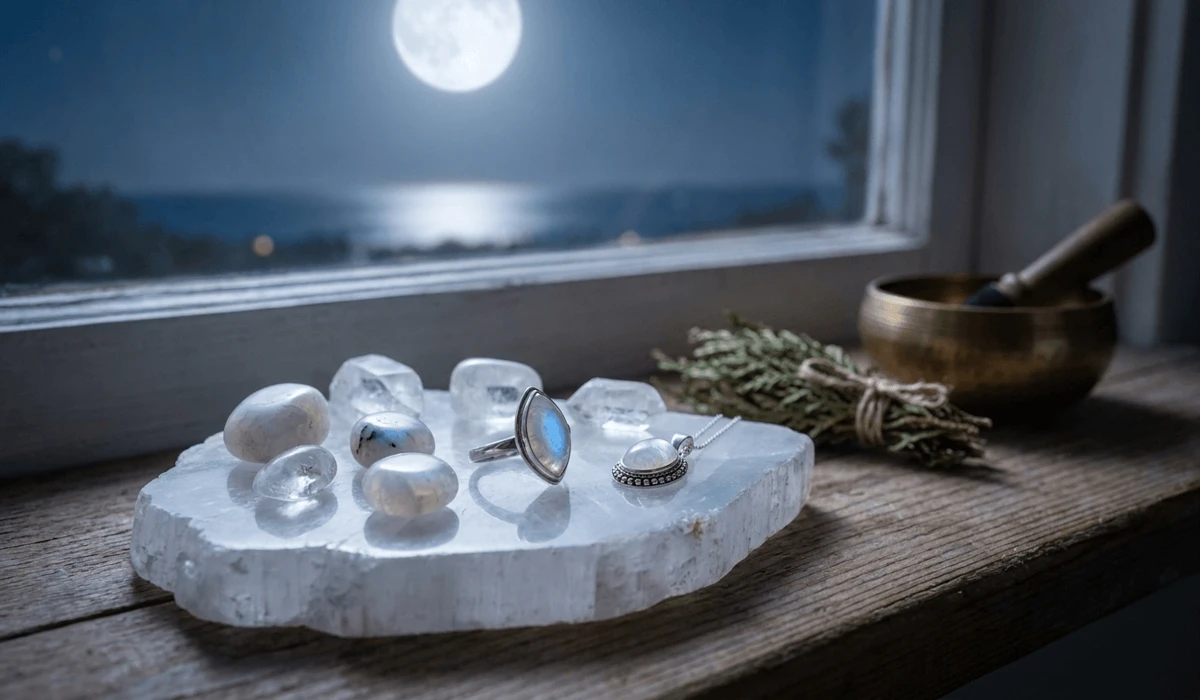
Charging your moonstone allows you to reaffirm your personal intentions under optimal peaceful settings. The most intuitive method is resting your gemstone on a clean windowsill under the light of a waxing or full moon. Soft nocturnal moonlight naturally mirrors the stone's symbolic history without exposing it to harsh environmental heat.
Another popular technique is nestling your jewelry on a selenite charging plate or alongside a raw clear quartz cluster overnight. Selenite is renowned in crystal traditions for maintaining a pristine, radiant surrounding environment. In the morning, pick up your piece and take one mindful breath to renew your daily intentions.
Daily Care & Storage
Natural feldspar rates between 6.0 and 6.5 on the Mohs hardness scale according to the Online Mineral Encyclopedia. This means it is durable enough for everyday jewelry wear, but it can scratch if rubbed against harder stones like quartz, topaz, or diamonds. It also has perfect internal cleavage, meaning a sharp blow can cause it to split along its natural structural planes.
Always take off your moonstone rings and bracelets before doing heavy yard work, lifting weights, or cleaning house. Never clean genuine feldspar with commercial steam sanitizers or ultrasonic jewelry machines, as high frequencies can shatter internal cleavage layers. Simply wipe your stone with a soft, damp microfiber cloth and mild soapy water when needed.
Store your moonstone pieces individually in soft cotton drawstring pouches or lined jewelry compartments. Keeping them separated prevents harder gemstones and metal clasps from rubbing against their polished adularescent domes. Treat your natural gemstone with gentle respect, and its ethereal glow will remain radiant for generations.
Ready to Experience Authentic Moonstone?
Explore our carefully curated collection of genuine, ethically sourced feldspar bracelets and meditation palm stones. Each piece is hand-selected by our studio team to ensure genuine adularescent flash and natural geological beauty.
Frequently Asked Questions
Q: How to test if moonstone is real?
A: Test your moonstone by checking its light movement, temperature, and internal inclusions. Authentic moonstone stays cool against your skin and displays a localized, floating blue sheen that glides across internal layers as you turn it. When held against a bright backlight, real moonstone remains soft white or silvery-blue, whereas fake opalite glass immediately turns a warm amber-orange.
Q: What does real natural moonstone look like inside?
A: Real natural moonstone contains visible internal structures including microscopic cleavage lines, layered growth planes, and tiny stress fissures known as centipedes. It rarely looks 100 percent flawless or glassy clear under bright light. If your stone is completely transparent with zero internal lines, or if you spot tiny round air bubbles inside, it is synthetic glass or poured resin.
Q: Is rainbow moonstone real or synthetic glass?
A: Genuine rainbow moonstone is a natural, authentic earth mineral belonging to the feldspar family, classified gemologically as white labradorite. It features dynamic multi-colored flashes of blue, green, and gold across natural cleavage cracks and black tourmaline inclusions. However, some dishonest sellers sell synthetic milky opalite glass under the false name rainbow moonstone glass, so always inspect the stone for natural mineral inclusions.
Q: How to tell fake moonstone beads from authentic feldspar?
A: Examine the drill holes and check bead-to-bead consistency across the entire bracelet strand. Fake glass beads show perfectly identical color, uniform cloudiness, and sharp or chipped drill hole edges that sometimes expose microscopic air bubbles. Authentic moonstone strands showcase natural variations, with each bead displaying unique internal textures, differing inclusion lines, and individualized flashes of adularescent light.
Q: How do I recharge a moonstone?
A: Recharge your moonstone by placing it on a dry windowsill overnight during the soft light of a full moon or waxing moon. You can also rest it directly on a clean selenite charging slab or next to natural clear quartz crystals for several hours. When you retrieve the stone, hold it mindfully in your hands for a few slow breaths to anchor your personal intentions for the week ahead.

Conclusion & Gentle Next Step
Distinguishing genuine moonstone from synthetic opalite glass is an empowering skill that enriches your gemstone journey. Real moonstone connects you directly with the ancient beauty of natural feldspar, defined by floating adularescent light, natural cleavage planes, and millions of years of subterranean geological history. Opalite offers decorative charm, but it remains a man-made factory glass without crystalline depth.
By checking temperature responsiveness, watching for floating directional sheen, and using a backlight test, you can quickly spot imitations. Honoring the genuine imperfections of earth-mined crystals ensures that your jewelry carries authentic meaning and mindful presence. We invite you to explore our handcrafted collections, celebrate the organic wonders of natural minerals, and wear your authentic gemstones with joyful confidence every day.
Disclaimer: The information provided in this article is published strictly for educational, historical, and cultural interest. Crystal traditions and metaphysical descriptions reflect traditional beliefs and should never replace qualified professional medical, legal, or financial advice. If you are experiencing physical or mental health challenges, please consult a licensed healthcare professional.

Longyi Luck
Longyi Luck is a Feng Shui practitioner and spiritual researcher who blends traditional year-based wisdom with modern lifestyle insights, specializing in Feng Shui, spirituality, meditation, and mindfulness. With years of dedicated study and practice, Longyi explores cultural symbolism and the practical application of ancient wisdom to help individuals cultivate balance, clarity, and harmony in everyday life. Since 2020, Longyi has been committed to translating timeless traditions into accessible guidance for the modern world.
longyi@auraandluck.com