

Red sandalwood, as a precious organic gem-grade wood carrying millennia of cultural heritage and spiritual energy, requires care that goes far beyond simple "waterproofing." Many enthusiasts acquire a beloved red sandalwood bracelet but, due to a lack of systematic maintenance knowledge, inadvertently cause their cherished beads to lose luster or even crack. This article will provide an in-depth analysis of the core characteristics of red sandalwood, correct wearing and maintenance methods, and clarify common misconceptions about water exposure risks. Whether you are holding your very first red sandalwood mala or seeking to deepen your knowledge of wooden prayer bead care, this guide will offer you comprehensive support—from scientific principles to spiritual practice.
Wearing Red Sandalwood in the shower is generally not recommended due to the organic and porous nature of the wood. Frequent exposure to water, soap, and heat can lead to wood swelling and cracking, stripping the beads of their natural red luster. Moisture can permanently diminish the therapeutic scent and compromise the structural integrity of your jewelry.
- Red Sandalwood is a porous organic material that absorbs moisture and chemicals.
- Shower water and soaps can cause the wood to swell, crack, or lose its color.
- Proper care involves keeping the wood dry and using natural oils for maintenance.
- This sacred wood is highly valued for grounding rituals and Root Chakra balance.
What Is Red Sandalwood?
Definition
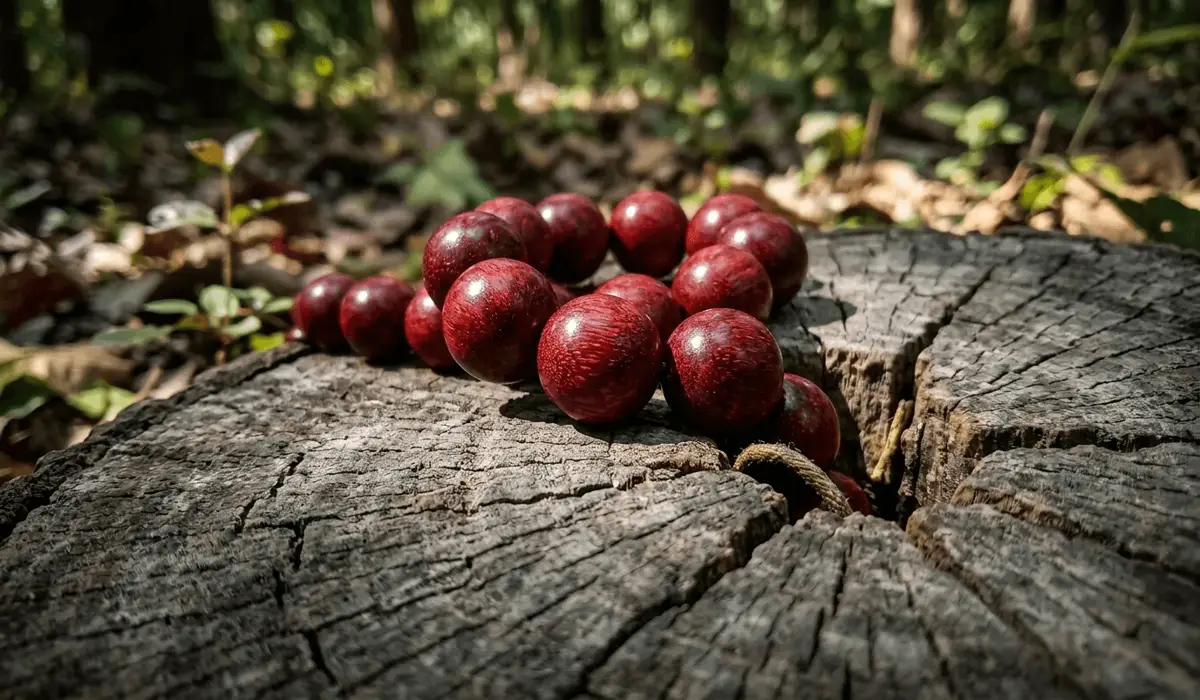
Scientifically known as Pterocarpus Santalinus, Red Sandalwood is a prized timber famous for its deep crimson hue. Unlike white sandalwood, people value it more for its dense grain and vibrant color than its intense aroma. We have observed that the rich pigments within the wood are what make it truly stand out in jewelry making.
In fact, the name "red sandalwood" can sometimes be confused in the marketplace. Strictly speaking, authentic red sandalwood refers specifically to Pterocarpus santalinus sourced from particular regions in southern India. The heartwood displays a rich, deep blood-red hue—a color that is not surface-dyed but rather the result of the natural pigment "santalin" deposited within the wood cell walls. For this reason, each bead exhibits subtle, natural variations in color, which are part of its unique charm. Some commercially available "red sandalwood" products that appear overly uniform or excessively bright may actually be artificially dyed or made from similar-looking woods, so buyers should exercise extra caution when making a selection.
Origin & Materials
This wood is primarily sourced from the Eastern Ghats mountain range in South India. It is often called Small Leaf Red Sandalwood, which is the highest quality available for fine jewelry and carvings. According to our experience sourcing these materials, the authentic wood has a unique weight that sets it apart from common timber.
The unique climatic conditions of the Eastern Ghats—with distinct dry and wet seasons and mineral-rich soil—endow the red sandalwood produced there with exceptional density and coloration. Due to its slow growth, the wood is extremely compact, with grain patterns as fine as silk. In India, this timber is regarded as a national treasure, and its harvesting and export are subject to strict legal regulations. This is one of the reasons why genuine red sandalwood products command a significant price. For collectors, understanding the geographical origin of the wood is the first step in assessing its quality and value.
Basic Characteristics
Red Sandalwood is a naturally heavy and dense wood that actually sinks in water. It contains a unique compound called santalin, which provides the natural red luster that practitioners love. Its porous nature allows it to absorb liquids and oils, making it sensitive to environmental changes like humidity.
One seemingly contradictory yet crucial characteristic deserves special emphasis here: although red sandalwood is extremely dense and sinks in water, it is simultaneously porous. This means that while it can resist moderate moisture in static conditions, prolonged exposure to water (such as hot water in the shower) or abrupt alternations between wet and dry conditions (such as moving from a steamy bathroom into an air-conditioned room) can cause the wood fibers to generate internal stress due to rapid absorption or loss of moisture. When this stress accumulates to a certain point, it manifests as what we commonly call "wind cracks"—microscopic hairline fractures on the bead surface. This is a common physical property shared by all high-density woods and is the fundamental reason why we must pay special attention to moisture in our care routines.
Video source:YouTube
Author:Dilip's passion for trees, shrubs and herbs
Original video link:https://www.youtube.com/watch?v=ADhJYH5v71s
Spiritual Meaning & Symbolism
Traditional Symbolism
Historically, Eastern cultures associated this wood with royalty, dignity, and inner strength. It is considered a sacred wood used to ground energy and provide stability during chaotic times. Many of our clients find that holding the smooth beads helps them feel more centered during a busy day.
In ancient Sanskrit texts, red sandalwood is often referred to as "Rakta Chandana," where "Rakta" means "red" or "blood," symbolizing vitality and life force. It is regarded not merely as a decorative material but as a spiritual medium connecting the material and spiritual worlds. In traditional Indian wedding ceremonies, a paste made from red sandalwood is sometimes used to bless newlyweds, signifying the granting of a stable marital foundation and enduring vitality. This profound cultural heritage means that every piece of red sandalwood jewelry is more than just an object—it is a portable piece of cultural memory.
Chakra Associations
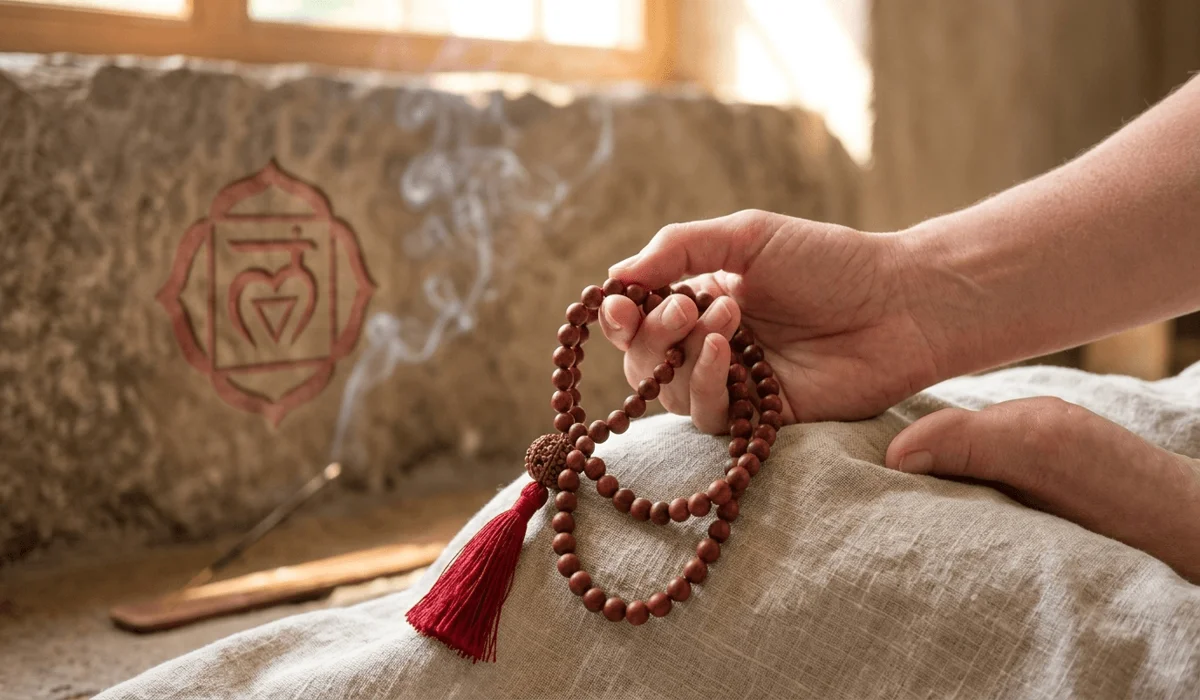
This material is strongly linked to the Root Chakra (Muladhara) due to its earthy origin and deep red color. It is often used in spiritual practices intended to enhance feelings of security, belonging, and physical vitality. To learn more about how stones and woods affect your energy, you can read about Crystal Healing on our blog.
From the perspective of energy healing, the Root Chakra is the most foundational of the seven primary chakras. Located at the base of the spine, it represents our connection to the earth, our trust in survival, and our sense of security in the material world. When the Root Chakra is imbalanced, a person may experience anxiety, restlessness, scattered attention, or a lack of direction. The deep red vibrational frequency of red sandalwood is believed to resonate with the Root Chakra, helping to stabilize and strengthen this energy center. In daily wear, consciously focusing on the sensation of the beads against the skin serves as a simple yet effective mindfulness practice, helping us bring scattered thoughts back to the present moment and re-establish inner stability.
Cultural or Historical Context
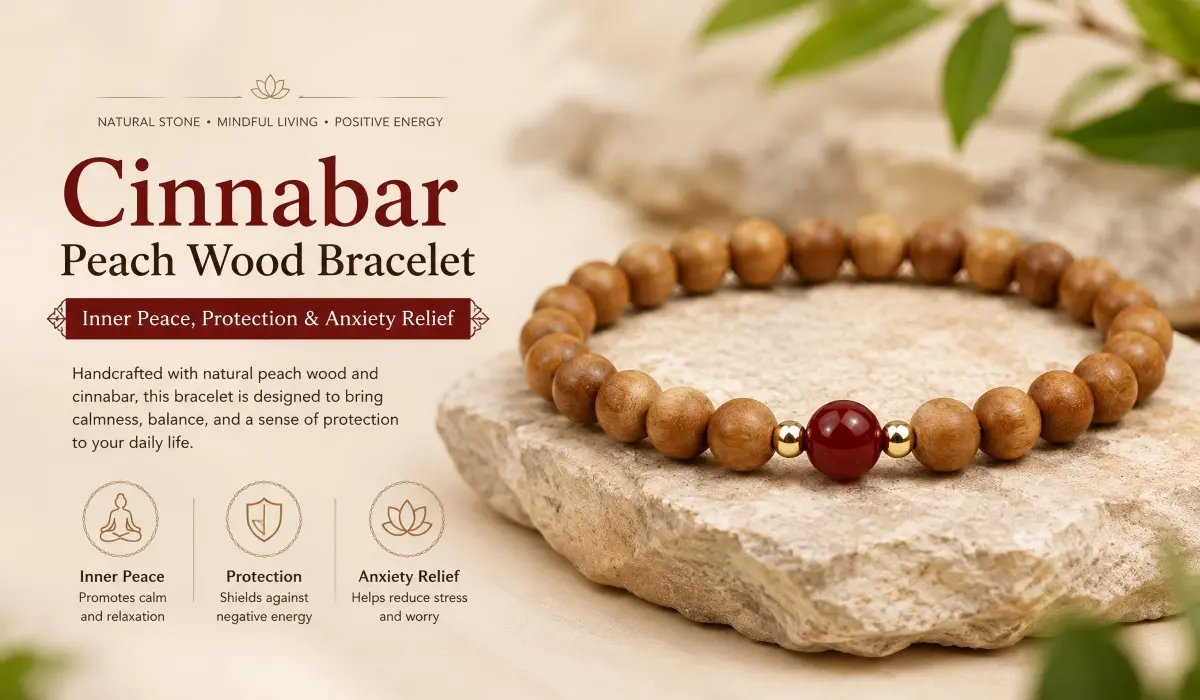
Buddhist and Hindu traditions frequently use this wood to craft mala beads for meditation. It is believed to help cool the mind and focus the spirit during repetitive mantra chanting. For those interested in the historical use of organic materials, Wikipedia provides extensive background on cultural timber usage.
In Tibetan Buddhism, red sandalwood malas are regarded as one of the superior materials for making prayer beads, particularly favored by practitioners devoted to serious practice. Traditionally, the cooling properties of red sandalwood are believed to help calm the heat and restlessness that may arise during intensive meditation, allowing for more sustained concentration during mantra recitation. Many veteran practitioners' red sandalwood malas, after decades or even longer of devoted use and handling, develop a warm, amber-like patina, with the color gradually deepening from bright red to a profound purplish-black. This transformation records not only the passage of time but also the sedimentation of the practitioner's mind. For collectors, a well-patinaed old mala often holds spiritual value far exceeding the original material cost.
| Culture / System | Core Symbolic Meaning | Typical Applications |
|---|---|---|
| Traditional Chinese Feng Shui | Yang energy, protective presence, attracting wealth and blessings | Bracelets, ornamental carvings, or placed in studies to stabilize the aura |
| Indian Vedic Tradition | Sacredness, purity, connection to Mother Earth | Japa Mala (prayer beads) for meditation and chanting |
| Tibetan Buddhism | Cooling, mind-calming, symbolizing compassion and wisdom | Counting tool for mantra recitation, aiding in focus and mental discipline |
| Western Esotericism | Grounding, protection, life force | Used in grounding rituals or placed in spaces as an energetic barrier |
Benefits & Intentions Associated with Red Sandalwood
Commonly Associated Intentions
Many practitioners use the wood to set intentions for emotional balance and patience. It is also associated with manifesting abundance and keeping protective energy in one's personal space. Based on our team's daily practice, the wood acts as a physical reminder to stay calm under pressure.
It should be clarified that the "benefits" of red sandalwood are not some kind of magical substitute for concrete action. More accurately, it serves as a supportive tool and symbolic anchor. Its value lies in helping us focus our attention and reinforce our inner beliefs. For example, when you wear a red sandalwood bracelet with the intention of "staying patient," every time you see or touch the beads on your wrist, it becomes a gentle reminder—a pause that allows you to take a deep breath and make a conscious choice before losing your composure. This self-suggestion mechanism is known in psychology as the "anchoring effect," and red sandalwood serves as an effective physical anchor carrying positive meaning.
Mindfulness & Personal Practices
The tactile sensation of the sandalwood maintenance process serves as a grounding ritual. Observing the aging process of the beads is often a metaphor for personal growth and maturity. As the wood darkens and develops a patina, it reflects the time you have spent on your spiritual journey.
Caring for red sandalwood is, in itself, a form of mind-training. When you gently wipe each bead with a soft, dry cloth, this repetitive and focused action shares a common essence with breath-watching meditation. You need to put down your phone, set aside distractions, and direct your full attention to the sensation beneath your fingertips and the texture of the beads. This process itself is a form of moving meditation. Many long-time red sandalwood wearers have told us that what they cherish most is not how bright or red the beads were initially, but rather the warm, understated, and uniquely individual texture that emerges after years of companionship—marks carved by time and intention together.
How to Wear Red Sandalwood
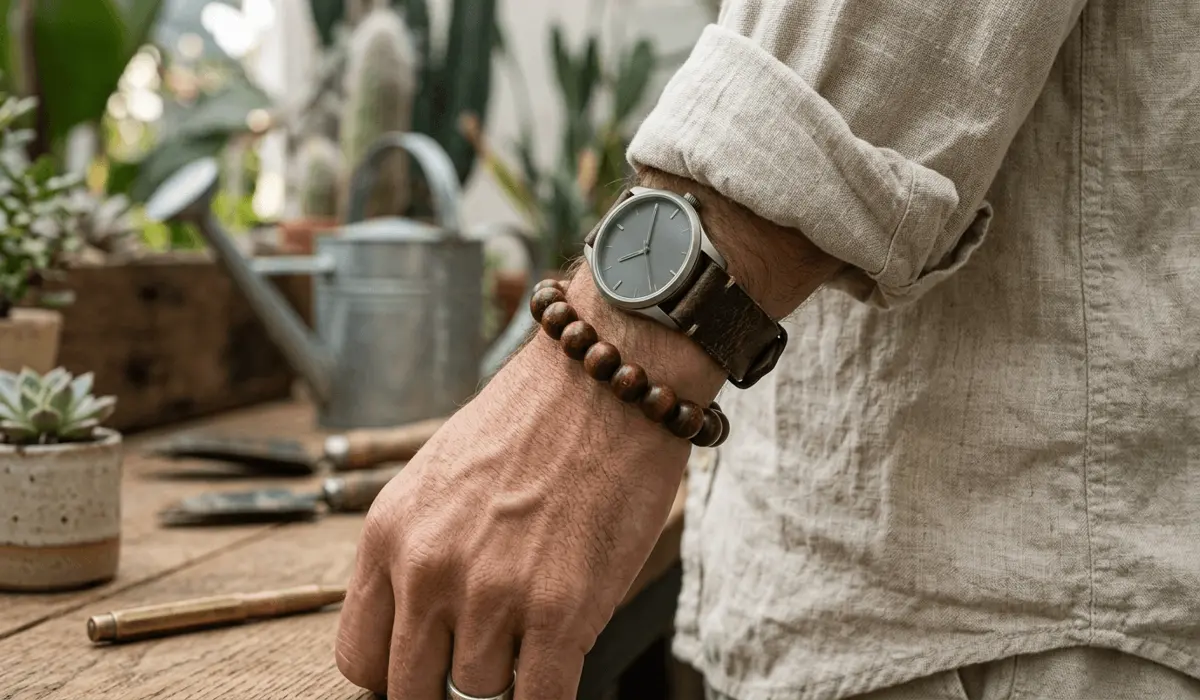
Left Hand vs Right Hand (Feng Shui Logic)
In Feng Shui, wearing the bracelet on the left hand helps you receive the wood's grounding and calming energy. If you intend to project protection and strength to the world, you should wear it on your right hand. We recommend choosing the side that aligns best with your goals for the day.
There is a more nuanced perspective regarding the choice between left and right hands. In traditional Chinese medicine and meridian theory, the left hand is considered the "receiving" hand, connected to the Pericardium meridian and more closely associated with internal emotions and spiritual aspects; the right hand, by contrast, is the "projecting" hand, linked to action and external expression. Therefore, if you wish to use red sandalwood to calm inner turmoil and strengthen self-identity, wearing it on the left may be more appropriate. If you aim to project stronger decisiveness and protective energy in your work, or if you are facing challenging social situations, wearing it on the right may provide greater psychological support. Of course, these are not absolute rules—you can always adjust flexibly based on your intuition and feelings.
When People Choose to Wear It
People commonly wear these beads during meditation, yoga, or in high-stress work environments. Many of our customers wear them daily to benefit from constant contact with the wood's natural vibrations. You can browse our Gemstone Collections to find pieces that complement your sandalwood jewelry.
Beyond the scenarios mentioned above, we have also observed that many people specifically choose to wear their red sandalwood bracelet during long travels, important meetings, or exams. They report that the steady red hue on their wrist provides a sense of "comforting companionship" in unfamiliar or high-pressure environments. This may well be the wood's inherent "grounding" energy at work—no matter how the external environment changes, a single glance at the bracelet helps them instantly reconnect with their own inner rhythm and sense of order. For those who frequently travel or operate in ever-changing environments, red sandalwood acts like a portable "energy recharging station."
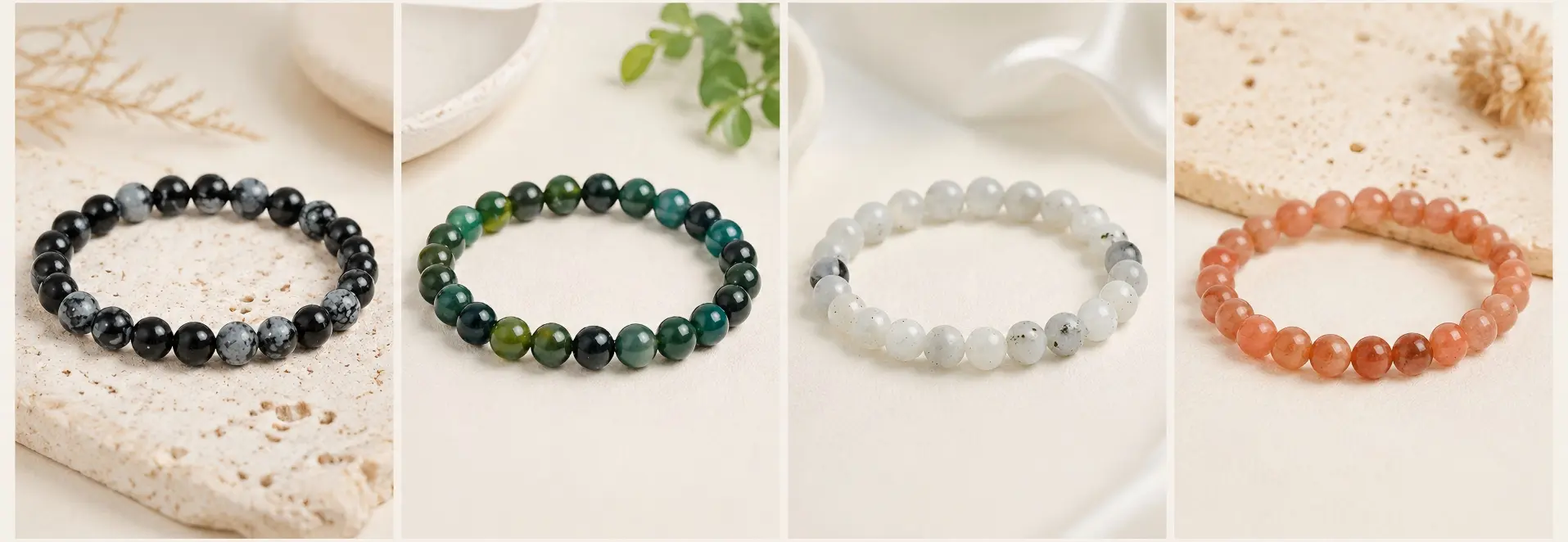
Intention-Setting Practices
Hold the beads in your palm and visualize a grounding cord connecting you to the earth before starting your day. This simple ritual helps program the material with your specific energy and needs. Our Featured Products offer many options that work perfectly for these morning mindfulness sessions.
For this intention-setting practice, we recommend doing it each morning immediately after waking up, before getting out of bed. Even just one or two minutes can help you start your day with greater clarity and stability. The specific steps are: first, hold the bracelet in both palms, close your eyes, and take three deep, full breaths. Then, silently recite your core intention for the day—it could be a simple phrase like "calm," "focus," "strength," or "gratitude." As you recite, visualize a warm red light rising from your palms, spreading up your arms throughout your body, and finally extending downward from the base of your spine, like a tree root, deeply anchoring into the earth. After completing this visualization, put on the bracelet. Though simple, with consistent practice, this ritual will help establish a deeper energetic connection between you and your bracelet.
Red Sandalwood vs Similar Materials
| Feature | Red Sandalwood | Rosewood | White Sandalwood |
|---|---|---|---|
| Primary Color | Deep Crimson | Brownish Red | Pale Yellow |
| Fragrance | Subtle / Earthy | Sweet / Floral | Very Intense |
| Main Use | Energy Grounding | Furniture / Decor | Oils / Incense |
| Density | High (sinks in water) | Medium-High | Medium |
| Price Level | Higher | Moderate | High (due to essential oils) |
Red Sandalwood vs Rosewood
While both are reddish, Red Sandalwood is typically denser and has a finer grain than most Rosewood varieties. Red Sandalwood is more prized in traditional Feng Shui for its specific energetic frequency. Experts at Gemmological Association often highlight the importance of identifying organic materials correctly to ensure value.
From a visual identification standpoint, red sandalwood displays a purer, richer color—resembling "chicken blood red" or "deep burgundy"—and under adequate lighting, one can often discern faint black striations (commonly known as "ox-hair grain") within the wood, which are unique growth markings. Most rosewood, in contrast, leans more toward yellowish-brown or reddish-brown tones, with coarser grain patterns that lack the delicate oiliness and translucency of red sandalwood. In terms of weight, a bracelet of the same bead size made from red sandalwood will feel noticeably heavier in the hand than rosewood, providing a solid, substantial sensation—another practical tip for authentication.
Red Sandalwood vs White Sandalwood
White Sandalwood is primarily utilized for its high essential oil content and famous fragrance. In contrast, Red Sandalwood is preferred for its jewelry durability and iconic deep blood red color. Both have significant roles in spiritual history, but they serve different aesthetic and energetic purposes.
A common misconception is that red sandalwood's fragrance should be as rich and intense as white sandalwood's. In reality, red sandalwood's aroma is extremely subtle and restrained—a slightly sweet, woody scent that can only be faintly detected when brought close to the nose. This understated aromatic quality perfectly aligns with the Eastern aesthetic philosophy of "great sound has the faintest notes, great form has no shape"—unassuming yet enduring, never overpowering yet deeply resonant. If you have a strong preference for intense fragrances, white sandalwood products or essential oils may suit you better. However, if you seek visual stability, tactile warmth, and a quiet, understated spiritual companion, red sandalwood is an unmatched choice.
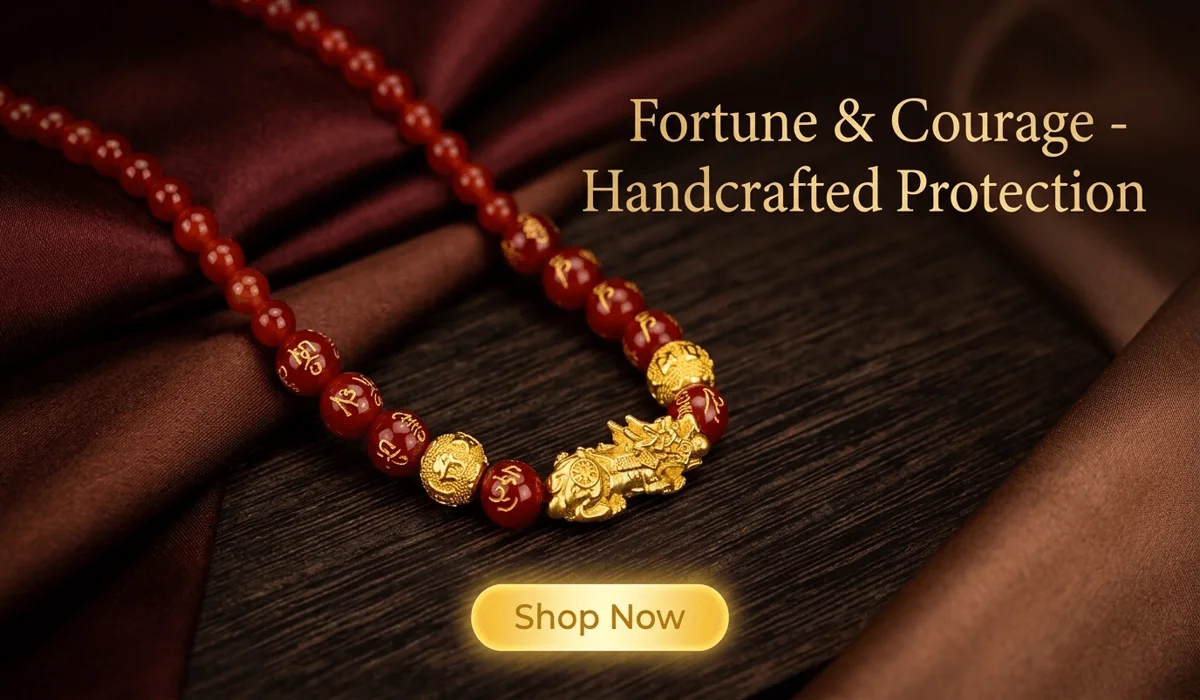
Who Is Red Sandalwood Suitable For?
Chakra or Energy Alignment
This wood is ideal for individuals who feel spacey or disconnected and require Root Chakra alignment. It is also suitable for those seeking to balance an overactive fire element within their body. If you are unsure about material authenticity, the Gemological Institute offers resources on verifying precious organic materials.
Zodiac or Astrological Associations
Aries and Scorpio often use this wood due to the resonance with the planet Mars. It is also beneficial for Earth signs like Taurus, Virgo, and Capricorn who want to amplify their natural grounding. We have seen many Earth signs feel a deep, immediate connection to the wood's steady energy.
From an astrological perspective, Mars represents action, courage, and raw life energy. Aries and Scorpio, as signs ruled by Mars, tend to possess intense and impulsive inner energies. Red sandalwood's grounding properties can help channel this powerful energy into more stable and constructive directions. For Earth signs, who already share a natural affinity with the earth element, wearing red sandalwood can further reinforce their rootedness, allowing them to maintain inner composure and confidence while pursuing material goals and realizing their ambitions. Of course, astrology offers guidance rather than fixed conclusions—anyone, regardless of zodiac sign, can draw nourishment from red sandalwood if it resonates with their inner being.
Lifestyle & Personal Intentions
This material is great for people who appreciate the wabi-sabi aesthetic of natural materials that change over time. It is perfect for those dedicated to a long-term spiritual practice involving meditation beads. The way the wood responds to your skin oils makes every piece unique to the wearer.
The essence of wabi-sabi lies in embracing imperfection and appreciating the marks of impermanence and time. Red sandalwood is an excellent embodiment of this aesthetic. Your beads may become increasingly lustrous as they absorb the natural oils from your skin, or they may acquire unique markings from occasional moisture exposure. These are not "flaws"—they are the life stories you and your piece have written together. When you stop insisting that it remains as pristine as the day it left the workshop and instead begin to appreciate every subtle change it undergoes over time, you establish a deeper, more authentic emotional connection with your red sandalwood.
Quick Self-Check: Is Red Sandalwood Right for You?
-
Do you often feel mentally scattered and find it hard to concentrate?
-
Are you looking for a daily-wear accessory that combines cultural depth with spiritual meaning?
-
Do you prefer natural materials and enjoy observing their subtle changes over time?
-
Do you have a meditation, yoga, or mindfulness practice?
-
Are you interested in Feng Shui, chakras, or energy healing?
How to Cleanse, Charge, and Care for Red Sandalwood
Cleansing Methods
Use smoke cleansing with sage or palo santo to clear stagnant energy without using any liquids. You can also place the beads on a selenite charging plate to refresh the wood's vibration safely. We avoid water cleansing entirely to prevent any structural damage to the beads.
Smoke cleansing is one of the most traditionally revered methods, as it uses the "air" of the smoke rather than the "wetness" of water, posing no adverse effect on the wood itself. To perform it, light a sage stick or palo santo, blow out the flame to produce fragrant smoke, and pass the bracelet slowly through the smoke for about 30 seconds to a minute, holding an intention of gratitude or purification. If smoke cleansing is not practical, a selenite charging plate is an excellent alternative. Selenite possesses a natural "self-cleansing" property—simply placing the red sandalwood on it for several hours will gently and effectively reset the wood's energy field, restoring its purity.
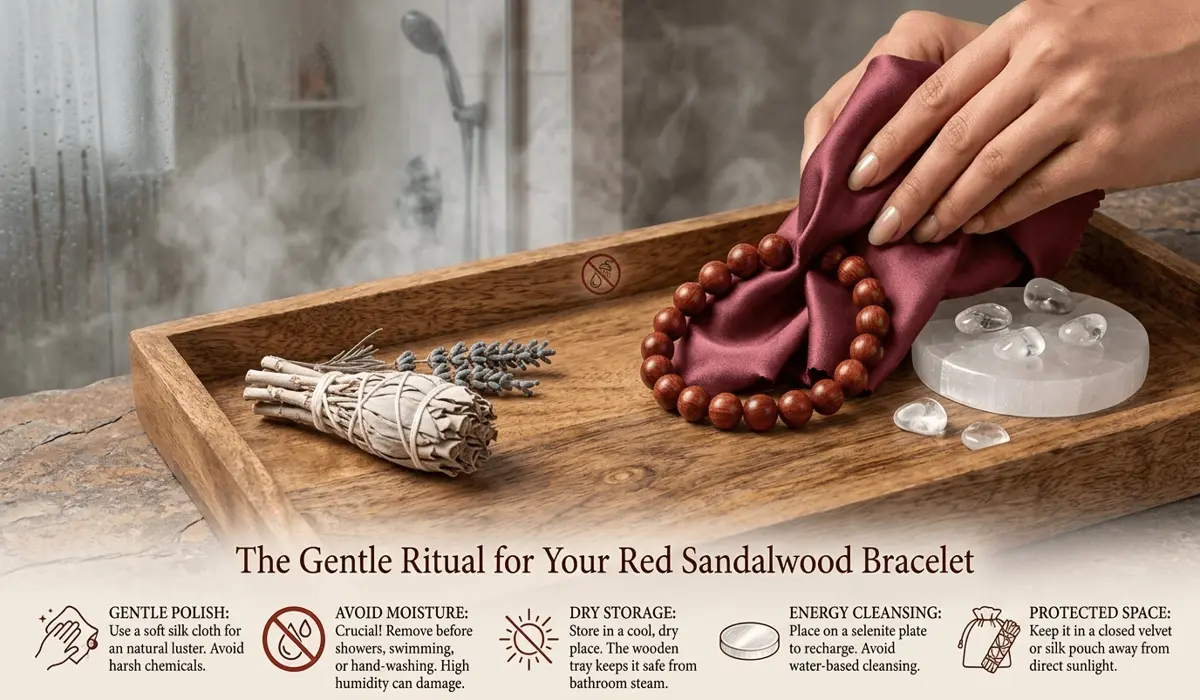
Charging Practices
Expose the wood to indirect moonlight to recharge its spiritual properties overnight. Another great method is to set the beads near a healthy plant to reconnect the material with the element of Wood. These natural methods keep the energy fresh without risking moisture damage.
Daily Care & Storage
Avoid wood jewelry moisture damage by removing bracelets before exercise or heavy chores. We recommend following these steps to keep your sandalwood in top condition:
- Store the beads in a soft cloth pouch to prevent scratches.
- Regularly buff the beads with a dry silk cloth to maintain the luster.
- Apply a tiny drop of natural oil if the wood looks very dry.
- Keep the jewelry away from direct sunlight for extended periods.
The video below explains why avoiding water is so important for organic materials like these.
Video source:YouTube
Author:CrazyIndianHacker
Original video link:https://www.youtube.com/watch?v=KEhMmizt39A
Frequently Asked Questions
Q: Does water damage red sandalwood?
A: Yes, excessive water exposure can cause the wood fibers to swell and eventually crack as they dry. Water can also leach the natural pigments out, leading to a faded or ashy appearance.
Q: Is it safe to wear red sandalwood in high humidity?
A: While better than direct submersion, high humidity can still cause the wood to expand and potentially lose its scent. In very humid climates, it is essential to store the jewelry in a dry, ventilated area when not in use.
Q: Why did my red sandalwood beads lose their scent?
A: The scent is held in the wood's natural oils; these oils can dry out over time or be stripped away by soaps and chemicals. Accumulation of skin oils and dust can also clog the pores, masking the natural fragrance.
Q: How do I keep my red sandalwood looking shiny and red?
A: Regularly buffing the beads with a soft, dry silk or cotton cloth helps maintain the natural red luster. Avoid contact with lotions, perfumes, and hairsprays which can chemically dull the surface.
Q: Can red sandalwood beads grow mold if they get wet?
A: If the beads are saturated and not allowed to dry properly in a well-ventilated area, mold can develop in the pores. Always pat the beads dry immediately if they accidentally come into contact with moisture.
Conclusion & Gentle Next Step
Red Sandalwood is a beautiful and sacred material that requires mindful care to prevent water-related damage. By avoiding the shower and practicing proper maintenance, you ensure your jewelry remains a vibrant spiritual companion for years. We invite you to explore our Featured Products to find your next authentic piece.

Protecting your sandalwood from water is the best way to preserve its energy and beauty. Remember to remove your jewelry before any water-related activities to keep it looking its best!

Longyi Luck
Longyi Luck is a Feng Shui practitioner and spiritual researcher who blends traditional year-based wisdom with modern lifestyle insights, specializing in Feng Shui, spirituality, meditation, and mindfulness. With years of dedicated study and practice, Longyi explores cultural symbolism and the practical application of ancient wisdom to help individuals cultivate balance, clarity, and harmony in everyday life. Since 2020, Longyi has been committed to translating timeless traditions into accessible guidance for the modern world.
longyi@auraandluck.com


.webp?w=800&h=800)
.webp?w=800&h=800)