
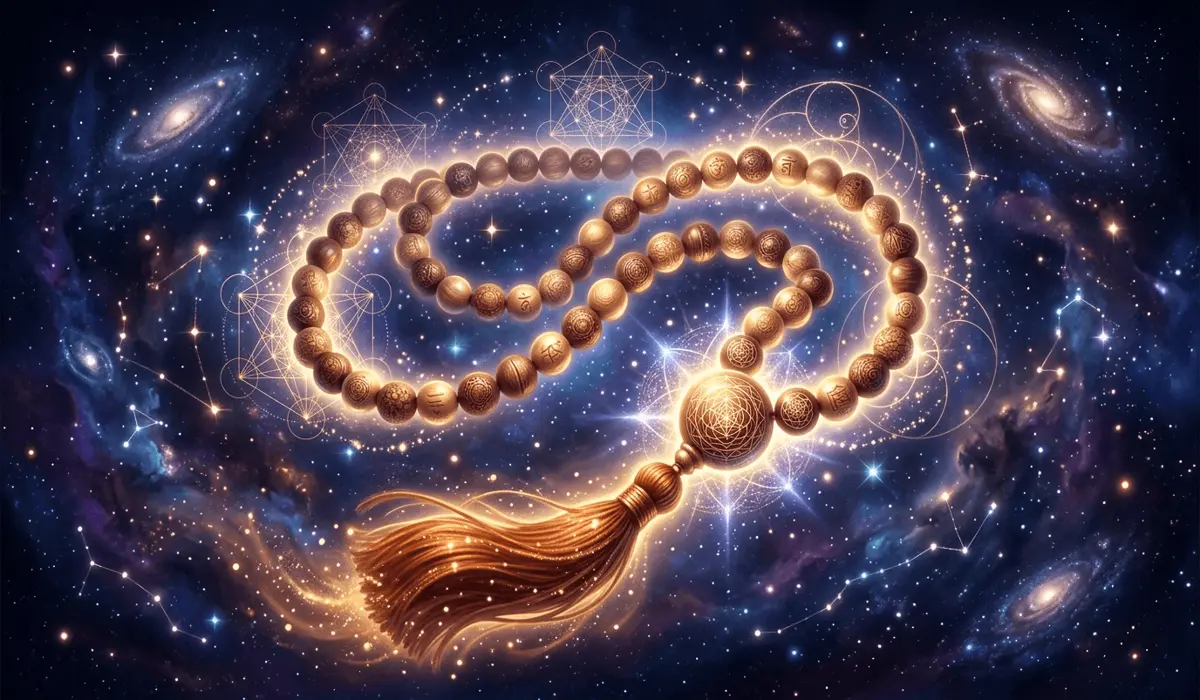
Non-Buddhists and non-Hindus can wear and use mala beads provided they do so with sacred intention, cultural respect, and mindfulness. At Aura & Luck, our team regularly speaks with seekers who wonder if using these traditional prayer strands is appropriate for their path. Understanding how to wear these sacred tools respectfully allows anyone to enjoy their grounding benefits without causing offense.
Quick Summary: Essential Guidelines
- Non-Buddhists can wear mala beads when guided by sincere mindfulness and quiet reverence.
- Traditional malas consist of 108 counter beads plus one foundational guru bead for meditation focus.
- Wearing a mala strand on the left wrist helps absorb peace, while the right wrist project active energy.
- Respectful handling involves keeping sacred beads elevated and stored away from dirty places.
- Avoid treating prayer beads as casual fashion items, party costumes, or disposable trends.
What Are Mala Beads? Origins, Meaning, and Sacred Characteristics
Definition & Cultural Roots
Mala beads originated thousands of years ago in India as sacred counting instruments for prayer and meditation. Both Hindu and Buddhist traditions rely on these strands to track recited mantras, sacred intentions, and conscious breaths. The term mala comes from Sanskrit, translating to garland used for spiritual focus.
Understanding the Hindu mala necklace meaning helps practitioners appreciate how ancient spiritual teachers used strung seeds and woods to anchor sacred sound vibrations during japa meditation. These strands were never crafted as simple wrist decorations, but rather as energetic bridges between earthly life and quiet contemplation.
Learning fundamental Buddhist prayer beads etiquette highlights how Tibetan and Asian traditions view malas as holy practice items that accumulate spiritual energy over time. Regular practice imbues each bead with peaceful vibrations, turning the strand into a personal spiritual shield.
Anatomy & Sacred Structure
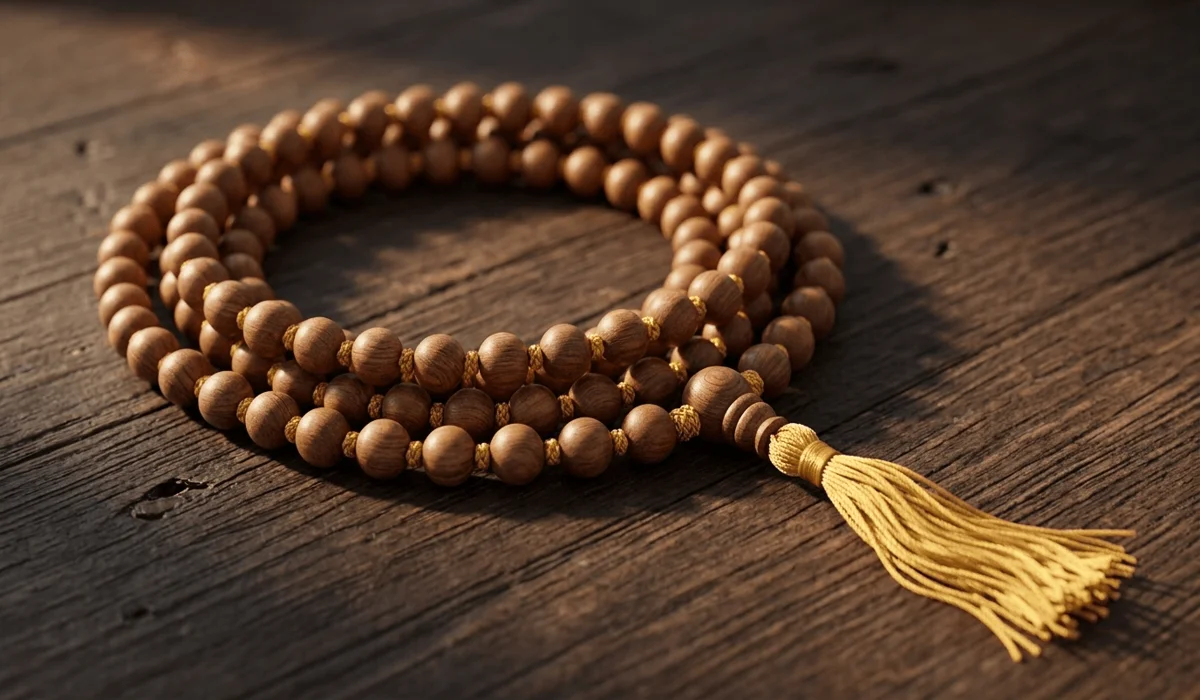
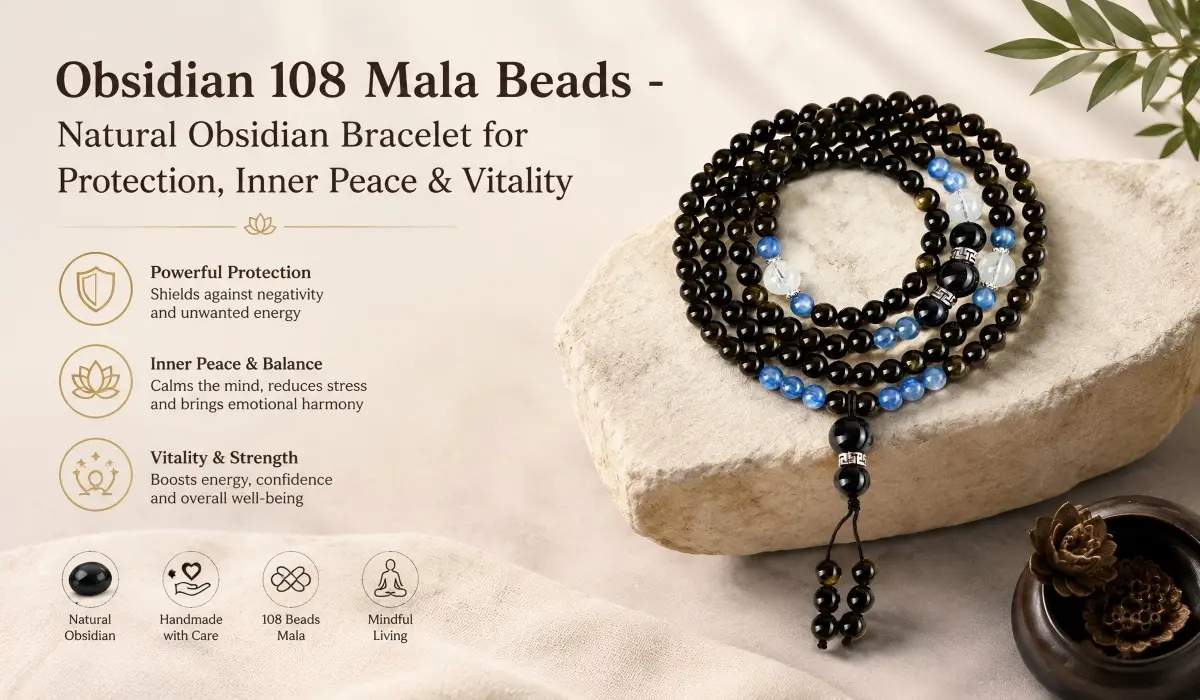
Traditional full-length malas consist of 108 counter beads, marker beads, a soft tassel, and one foundational starting bead. Every single structural detail serves a precise purpose during daily breathwork or silent meditation sessions.
Grasping the guru bead meaning and etiquette is crucial, as this 109th bead symbolizes the ultimate teacher, divine wisdom, and the completion of a meditative cycle. When counting mantras, practitioners never step over the guru bead; instead, they pause, turn the strand around, and count in reverse.
Recognizing the spiritual significance of 108 mala beads connects wearers to ancient cosmological beliefs regarding the relationship between breath, energy channels, and universal order. Ancient Vedic texts suggest that human beings take 10800 conscious breaths daily, making the 108 count a sacred micro-reflection of human life.
Distinctive Features of Sacred Beads
Authentic malas are crafted from symbolic organic materials such as aromatic sandalwood, lotus seeds, rudraksha seeds, or natural polished crystals. Each organic material holds specific energetic qualities that interact directly with the human energy field.
When selecting natural gemstone materials for our workshop designs, our team consults global standards like Gemological Research Standards to verify material purity and natural origin. Natural minerals carry subtle grounding frequencies that synthetic glass or plastic imitations cannot recreate.
Treating mala beads as sacred jewelry means recognizing that every knot hand-tied between the beads represents a moment of conscious breath and protection. These secure knots prevent beads from rubbing against each other and keep them intact if the main cord ever snaps.
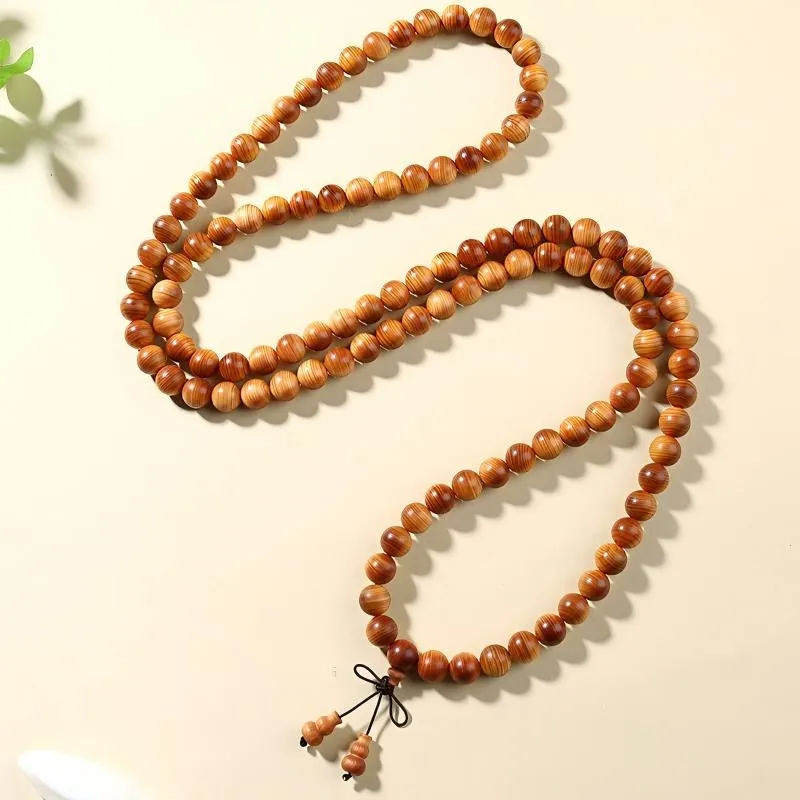
Natural Thuja Wood 108 Bead Mala with Gourd Tassel – Meditation Prayer Beads and Wrap Bracelet
Warm wood tones, flowing natural grain and a traditional 108-bead design come together in this Thuja wood mala. Each round bead is polished to highlight the material’s layered reddish-brown pattern, while the paired gourd-shaped dangles add a distinctive Chinese-inspired finishing detail.
Shop NowSpiritual Meaning & Symbolism of Mala Beads
Traditional Eastern Symbolism
In Eastern spiritual traditions, mala beads represent the inner journey toward self-awareness, personal peace, and spiritual discipline. Moving from one bead to the next represents taking steady steps along the path of emotional growth.
A mala acts as a tactile anchor that keeps the mind grounded in the present moment during meditation or throughout a busy work day. Touching smooth beads offers immediate physical grounding when modern life feels fast and chaotic.
Chakra & Material Associations
Sandalwood and rosewood represent grounding, patience, and connection to the Earth element and Root Chakra. These natural woods produce gentle natural aromas that calm the nervous system during quiet reflection.
Gemstone beads align with specific energetic centers across the physical body, such as purple amethyst for crown clarity or rose quartz for heart compassion. You can discover deeper energetic stone principles through Holistic Crystal Healing to support your personal growth journey.
The subtle process of choosing mala beads respectfully involves selecting materials based on personal energetic alignment rather than superficial visual trends. Choosing beads with intuitive care establishes a deeper connection between you and your spiritual tool.
Navigating Cultural Appreciation vs. Appropriation
Avoiding mala beads cultural appropriation requires moving away from treating sacred tools as disposable fashion costumes or commercialized party wear. Wearing holy symbols without understanding their history can feel insensitive to practitioners who view them as sacred objects.
Cultural appreciation manifests when non-Buddhists acknowledge the sacred roots of the tool and adopt mindful handling habits. Approaching Eastern traditions with genuine humility creates cross-cultural harmony and mutual respect.
Video source: YouTube
Author: TashiTangka
Original video link: https://www.youtube.com/watch?v=dwcJv-njqQ0
Benefits & Intentions Associated with Mala Beads
Mindful & Experiential Observations
In our experience crafting spiritual gemstone pieces, we observe that physical touch plays a central role in sensory grounding. Holding polished beads gives restless fingers a healthy focus during moments of high daily stress.
Mala beads support rhythmic breathing exercises by offering a physical count for inhalations and exhalations. Moving your fingers along the strand creates a steady pattern that naturally slows down erratic breathing.
A sacred strand serves as a quiet, physical reminder of personal values, peaceful conduct, and emotional balance throughout daily life. Glancing at your beads reminds you to respond thoughtfully rather than react impulsively.
Integrating Secular & Modern Intentions
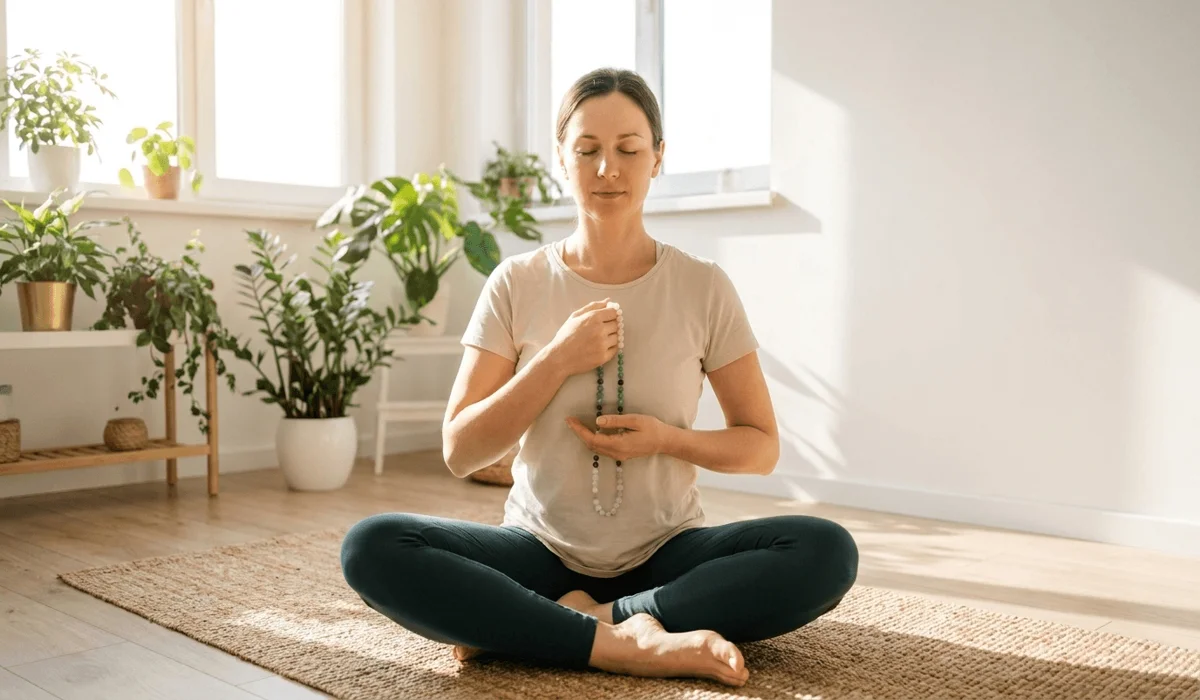
Utilizing a secular mindfulness meditation mala allows individuals outside formal religious structures to build consistent focus and breath control. You do not need to follow specific religious dogmas to benefit from structured bead counting.
Engaging in deliberate intention setting with mala beads transforms everyday routines into quiet moments of personal reflection. Pairing each bead with a positive daily affirmation helps condition your mind toward emotional resilience and inner peace.
How to Wear Mala Beads Respectfully
Left Wrist vs Right Wrist Etiquette
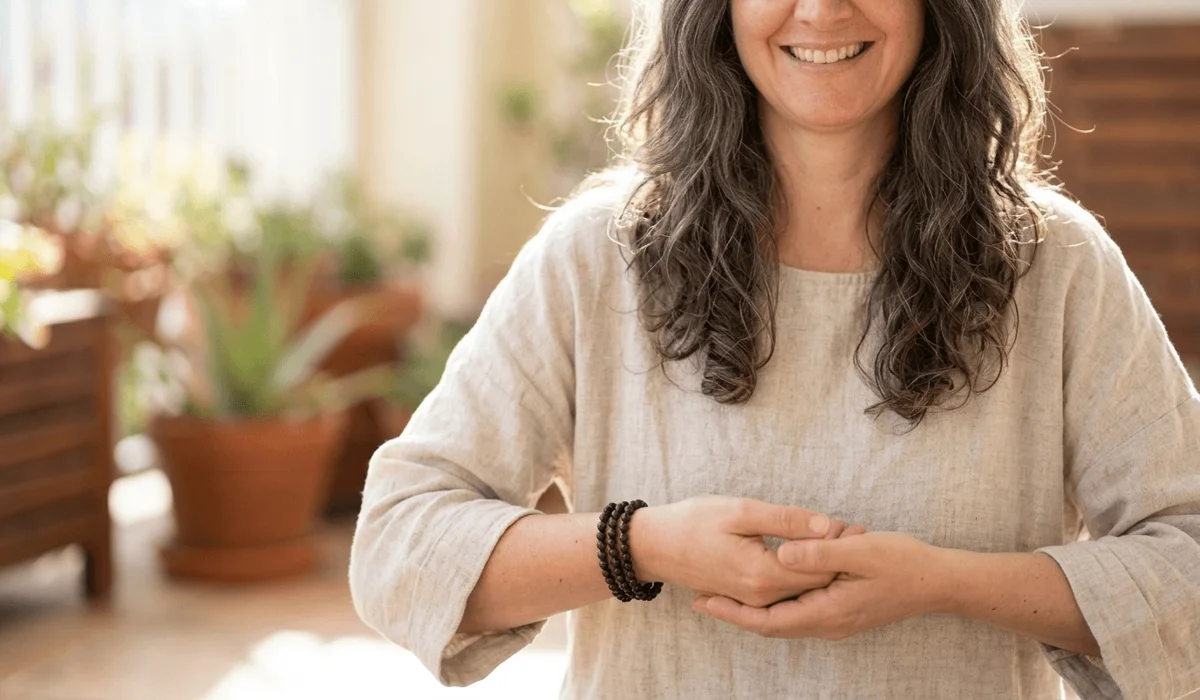
Traditional energetic customs suggest that wearing mala beads on the left wrist helps absorb and receive inner peace and protective energy. The left side of the human body is traditionally considered the receptive doorway for spiritual vibrations.
Wearing mala beads on the right wrist aligns with releasing intentions, taking conscious action, and projecting outward grounding energy. The right side is seen as the active hand that projects energy out into the surrounding environment.
Deciding on mala beads left wrist vs right wrist depends on whether your personal daily intention focuses on inward reflection or outward practice. You can easily switch wrists depending on your spiritual needs throughout the week.
Daily Wear Etiquette & Mindful Guidelines
Following established wearing mala beads etiquette includes keeping the mala off the floor and placing it in an elevated position when not in use. Sacred objects should never be tossed onto bathroom floors or left near dirty surfaces.
Maintaining a thoughtful non-Buddhist mala beads practice means wearing the beads close to the heart or wrist while maintaining humble, unassuming behavior. Keeping your beads hidden beneath clothing is often recommended to foster internal focus over external display.
Avoid wearing mala beads during intense physical exercise, bathing, sleeping, or environments where sacred items might be compromised. Explore detailed guidance on navigating traditional customs and intentions at Mindful Etiquette Insights to deepen your everyday awareness.
Mala Beads vs Similar Sacred Beads and Fashion Jewelry
Traditional Mala Beads vs. Commercial Fashion Necklaces
Traditional malas strictly observe structural rules, including the 108-bead ratio, hand-knotted spacers, and the sacred guru bead. Every element is crafted intentionally to support long-term spiritual use and energetic purity.
Fashion jewelry replicates visual aesthetics without sacred material choices, spiritual history, or structural intention. Synthetic mass-produced necklaces lack the grounding natural energy found in authentic organic seeds and polished crystals.
Mala Beads vs. Standard Gemstone Bracelets
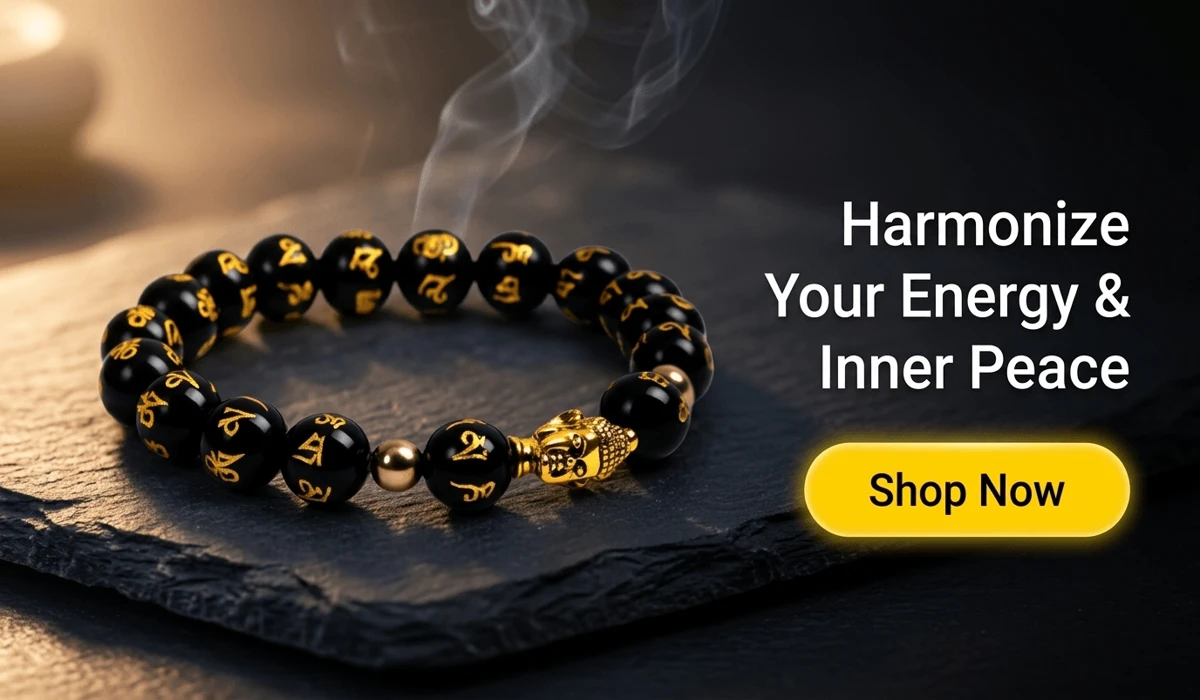
Mala bracelets feature specific bead counts—such as 18, 27, or 54—that cleanly divide into 108 for portable meditation practice. These compact strands allow practitioners to maintain breath awareness while traveling or working.
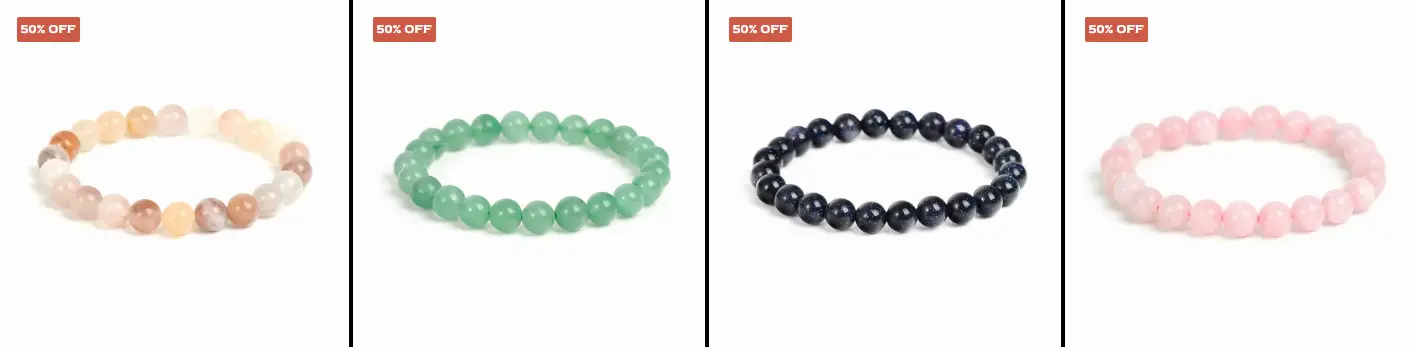
Standard gemstone bracelets prioritize aesthetic embellishment and general crystal layering rather than counted breath or mantra repetition. To learn more about authentic gemstone classifications, practitioners consult educational materials from Gemmological Association Science for expert verification.
The detailed comparison table below outlines fundamental structural and functional differences between traditional sacred malas and decorative accessories.
| Feature | Traditional Mala Beads | Standard Fashion Jewelry |
|---|---|---|
| Primary Function | Mantra counting, breathwork, and mindfulness focus | Visual adornment and personal fashion style |
| Structural Geometry | 108 counter beads, guru bead, and individual knots | Arbitrary bead counts strung on basic elastic wire |
| Care & Storage | Elevated storage, clean handling, and smoke cleansing | Standard jewelry box storage with casual handling |
| Material Origin | Natural sandalwood, rudraksha seeds, and natural crystals | Synthetic glass, dyed plastic, or standard base metals |
Who Are Mala Beads Suitable For?
Inclusive Practice for All Backgrounds
Anyone who approaches Eastern spiritual tools with sincerity, humility, and awareness can wear and use mala beads. Spiritual wisdom tools belong to all of humanity when used to cultivate peace, compassion, and mental discipline.
Practitioners across yoga spaces, meditation groups, and contemplative lifestyle paths welcome the grounding benefits of bead work. These practical strands help bridge diverse cultures through shared focus on mindfulness.
Historical records documented in Universal Historical Records show that prayer bead strands developed independently across ancient civilizations worldwide. Using tactile counting tools is a universal human tradition that spans multiple continents.
Personal Alignment & Intentions
Individuals seeking quiet anchors for stress management and mental discipline will find mala beads exceptionally supportive. Holding physical beads helps soothe an overactive nervous system during busy work days.
Seekers looking to establish consistency in daily meditation, affirmation practice, or breath control routines gain clear structure from bead counting. You can browse our Spiritual Gemstone Collection to find natural stones that match your personal daily intentions.
How to Cleanse, Charge, and Care for Mala Beads
Cleansing Methods
Engage in cleansing mala beads spiritually using natural botanical smoke such as sage, white copal, or palo santo to refresh energy. Passing your strand through gentle smoke clears lingering heavy energies accumulated during daily interactions.
Place mala beads near high-vibrational sound instruments, such as Tibetan singing bowls or bells, to clear stagnant energetic patterns. Clean sound frequencies reset crystal vibrations without subjecting delicate cords to moisture damage.
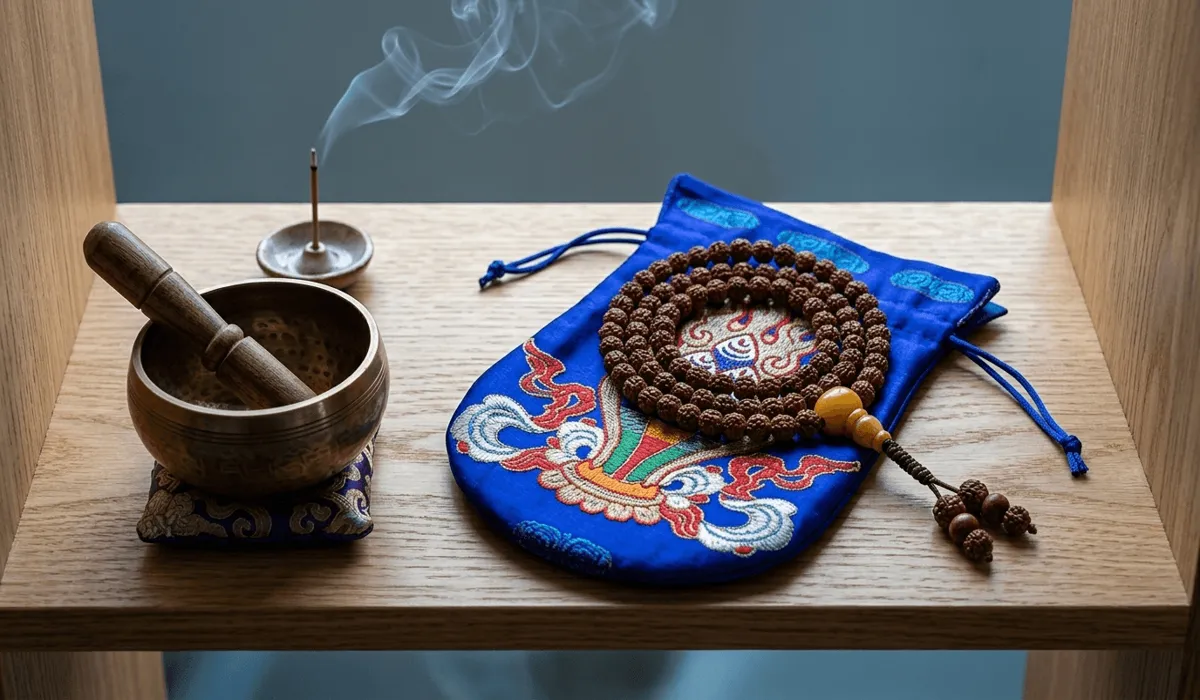
Setting Intentions & Preparation
Prepare new mala beads by sitting in quiet meditation, holding the beads at heart level, and breathing calm focus into the strand. Speak your core personal intention clearly into the beads before wearing them for the first time.
Refrain from letting strangers handle your mala, preserving the clear spiritual vibration you have cultivated. Keeping your strand private helps protect its energetic clarity over long periods of practice.
Proper Storage & Practical Maintenance
Learn how to store mala beads respectfully by placing them in an elevated position on a clean altar, wooden shelf, or dedicated silk pouch. Elevating sacred objects off the ground shows honors their spiritual role in your daily life.
Avoid exposing organic seeds or gemstone beads to harsh chemicals, excessive moisture, or direct bathwater to maintain structural authenticity. Gentle care preserves both the physical string and the natural beauty of your beads.
Frequently Asked Questions
Q: Is it disrespectful to wear mala beads if you are not Buddhist or Hindu?
A: It is not disrespectful if worn with genuine reverence, spiritual awareness, and an understanding of their sacred heritage. Respect is maintained when non-practitioners avoid treating malas as superficial costumes, trends, or disposable accessories.
Q: Can anyone wear a mala necklace for daily mindfulness?
A: Yes, anyone can wear a mala necklace as long as it is done with clean intentions, emotional sincerity, and cultural sensitivity. Wearing a mala close to the heart helps maintain an ongoing physical touchpoint for presence and inner peace.
Q: Which wrist should non-Buddhists wear mala beads on?
A: Wear mala beads on the left wrist to receive calm, grounding energetic vibrations and personal protection. Wear them on the right wrist when actively working on projecting intentions, focus, and outward strength into daily activities.
Q: What are the key etiquette rules for storing mala beads?
A: Store mala beads in an elevated, clean place such as a dedicated altar space, fabric pouch, or wooden box. Never place sacred mala beads directly on the floor, near dirty areas, or face-down in cluttered spaces.
Q: Can Christians or non-religious people use mala beads for meditation?
A: Yes, Christians, secular practitioners, and non-religious individuals can utilize mala beads for breath counting, stress reduction, and non-dogmatic reflection. The bead strand functions effectively as a tactile instrument for any silent focus practice or grounding affirmation sequence.
Conclusion & Gentle Next Step
Wearing mala beads as a non-Buddhist is welcomed when done with reverence, proper etiquette, and intentional practice. Respecting the anatomy, guru bead, and 108-bead structure honors the long cultural traditions that preserved these wisdom tools.
Mindful wearing, elevated storage, and regular energetic cleansing maintain the sacred nature of your beads over time. Treating your strand with subtle care transforms simple jewelry into a lifelong spiritual companion.
Take time to select materials that resonate with your personal energetic path and support your daily mindfulness practice. Honor your personal growth journey by treating your sacred beads with quiet respect every single day.
Disclaimer: The content provided on this website is for informational and cultural exchange purposes only. It does not constitute medical, legal, financial, or professional advice. Readers should consult qualified professionals for specific guidance regarding health or spiritual practices.

Longyi Luck
Longyi Luck is a Feng Shui practitioner and spiritual researcher who blends traditional year-based wisdom with modern lifestyle insights, specializing in Feng Shui, spirituality, meditation, and mindfulness. With years of dedicated study and practice, Longyi explores cultural symbolism and the practical application of ancient wisdom to help individuals cultivate balance, clarity, and harmony in everyday life. Since 2020, Longyi has been committed to translating timeless traditions into accessible guidance for the modern world.
longyi@auraandluck.com
.webp?w=800&h=800)
.webp?w=800&h=800)