
No, you should never wear a wooden hairpin in the shower under any circumstances. Hot water, steamy air, and chemical soaps will quickly ruin the delicate wood fibers. In our workshop, we always advise clients to take off wooden hairpins before turning on the tap.
Natural wood is porous, which means it drinks up liquid like a dry sponge. Exposure to shower moisture leads to swelling, splitting, and permanent warping of your favorite piece. Protecting your piece keeps its natural grain smooth and guards its subtle spiritual energy.
Many of our clients ask how to rescue an item that accidentally got wet during bath time. Following clear steps for drying and oiling is the best way to prevent lasting structural harm. Consistent daily care protects both the physical durability and the sacred balance of your accessory.
Quick Care Summary: Remove your hairpin before entering any wet space. If water splashes onto it, blot the item dry immediately with a clean, lint-free cloth. Allow the wood to air-dry completely at room temperature, and seal it with light botanical oil.

Essential Preparation and Emergency Rescue Tools
Restoring a water-exposed hairpin requires a few gentle, non-abrasive tools to preserve the carved details. Gathering these simple items beforehand ensures you can act swiftly whenever accidents happen.
We recommend keeping these essential restoration supplies ready on a clean dressing table:
- 🧼 Ultra-absorbent microfiber cloth: A soft cloth that lifts away moisture without scratching polished surfaces.
- 💧 Pure botanical conditioning oil: Cold-pressed camellia seed oil or golden jojoba oil to nourish dry timber cells.
- 🧭 Breathable drying base: A natural bamboo mat or untreated linen towel placed in a dry room.
- ✨ Fine buffing cloth: A scrap of smooth silk or dense velvet to restore radiant luster.
- 🛡️ Dry staging zone: A well-ventilated space located far away from steamy, humid bathrooms.
Never rush the drying phase by placing delicate pieces near direct heaters or sunny window sills. Gentle air movement in a shaded space remains the safest method for natural grain recovery.
Step-by-Step Emergency Water Rescue and Reconditioning Protocol
When dampness strikes fine wood, every minute counts toward preserving its balanced shape and smooth finish. Through years of guiding rituals, we found that disciplined handling prevents costly grain fractures.
- Step 1: Immediate Removal and Gentle Moisture Blotting
Remove the hairpin as soon as you notice fine mist or water drops. Press your lint-free microfiber cloth firmly against the surface without rubbing roughly across delicate carved tips. Use the soft dry corners of the cloth to lift droplets out of detailed carved grooves. - Step 2: Controlled Room-Temperature Drying Away from Heat
Lay the damp hairpin completely flat on a breathable bamboo surface to stop gravity from bending the damp wood. Let pure ambient air circulate around the pin for twenty-four to forty-eight hours. Maintain an even room climate away from kitchen stoves, sunlit ledges, or heating registers. - Step 3: Grain Inspection for Surface Roughness or Warping
Sight along the pin from end to end to check for axial bends or curves. Glide clean fingertips over the wood to feel for raised fibers, rough spots, or microscopic cracks. Confirm all decorative crevices are totally dry before applying protective sealants. - Step 4: Reconditioning with Pure Botanical Oil
Drop one or two drops of pure camellia seed oil onto clean fingertips. Stroke the oil along the natural wood grain from the sharp point up to the carved finial. Let the accessory rest quietly for several hours so the porous wood can soak up the nourishing lipids. - Step 5: High-Sheen Buffing and Protective Seal Restoration
Use a clean piece of silk to wipe away excess unabsorbed surface oil. Rub the wood briskly with light strokes until natural friction creates a subtle soothing warmth. This step builds a protective shield that defends against stray room humidity.

Understanding Material Resilience Across Wood Types
Different timber species react in distinct ways when exposed to unexpected water splashes. Knowing your wood type helps you choose the right drying pace and long-term care strategy.
| Wood Species | Pore Density | Water Sensitivity | Rescue Priority |
|---|---|---|---|
| Green Sandalwood | High (Resinous) | Moderate | Slow air-dry to keep essential oils intact |
| Black Ebony | Very High (Dense) | High Splitting Risk | Shield from quick temperature shifts |
| Rosewood | Medium-High | Moderate | Blot quickly and recondition grain |
| Peach Wood | Medium | High Warping Risk | Dry flat under light fabric wraps |
To deepen your knowledge of natural wood maintenance, consult the Wood Drying Guide for scientific insights on moisture content. Taking time to dry your pins slowly helps retain their shape for generations.
The Elemental and Feng Shui Logic of Wood and Water
In traditional Chinese thought, natural materials carry subtle life force known as Chi (氣). The interaction between natural elements dictates whether energy flows smoothly or clashes chaotically. You can discover more energetic teachings within the study of Traditional Feng Shui.
According to Five Element theory, gentle Water nourishes Wood, which practitioners call Shui Sheng Mu (水生木). However, hot and soapy bathroom water acts as a destructive flood that weakens organic timber. Boiling steam drowns the peaceful energy of the accessory and strips away its grounding natural vitality.

Energy Protection at the Baihui Crown Point
Hairpins rest directly over the Baihui (百會) acupuncture point, located at the very crown of the human skull. This sacred gate connects your personal thoughts with uplifting celestial forces. Wearing water-damaged, rotting, or chemically stained ornaments atop this gate disrupts your energetic harmony.
Renowned masters at Chinese Metaphysics Consulting emphasize keeping objects placed near the crown clear of environmental rot. A clean, smooth hairpin functions like a grounding antenna for your spirit. Treating your adornments with dignity preserves their quiet power throughout busy workdays.
Video source: YouTube
Author: Dr. Aanchal MD
Original video link: https://www.youtube.com/watch?v=z1nk6ZYQ7X4
Critical Care Taboos and Costly Mistakes to Avoid
Protecting organic jewelry demands avoiding common shortcuts that ruin timber fibers. Many well-meaning people cause severe harm simply by trying to dry their favorite items too fast.
Here are the crucial physical mistakes you must avoid whenever caring for fine carved hair sticks:
- 🚫 High-heat drying: Never use hot hair dryers or radiator shelves, as fast drying causes deep splits.
- 🚫 Soaking in soapy cleansers: Keep pins away from commercial shampoos that strip natural protective resins.
- 🚫 Enclosed humid storage: Never stash damp accessories inside dark bathroom drawers where mold grows quickly.
- 🚫 Applying heavy kitchen oils: Avoid pantry oils like olive or canola, which spoil, rot, and smell terrible.

Warning: High heat pulls moisture out of timber cells far too quickly. This sudden shrinkage causes internal tension that snaps delicate prongs beyond repair. Always rely on unheated, circulating air inside a living area to dry your hairpins safely.
Preserving Protective Surface Finishes
Natural wax finishes cannot tolerate bath salts, body washes, or synthetic perfumes. These harsh substances dissolve the handcrafted wax layer and open the grain to deeper water damage. Once these chemicals sink in, the wood loses its warm color and takes on an ash-gray tone.
For deeper historical insights on personal ornamentation, check our guide on Heritage Hairpin Meanings. Honoring ancient craftsmanship keeps these wonderful artifacts bright and strong for many joyful years.

Ongoing Maintenance: When and How Often to Recondition Your Wood Hairpin
Caring for natural items should feel like a calming pause in your daily schedule rather than a difficult chore. Regular conditioning feeds the grain, keeping it silky smooth so it slips easily into thick hair without snagging.
We advise checking your hair collection at least once each season or whenever outdoor weather shifts dramatically:
- 🕯️ Faded surface appearance: Rub a single drop of oil over the surface if the wood looks pale or feels chalky.
- 🕯️ Seasonal climate shifts: Apply botanical oil monthly during cold winter weeks when home heaters dry the air.
- 🕯️ After heavy workouts: Clean and polish the wood whenever it comes into contact with sweaty hair during exercise.
- 🕯️ Humid summer months: Buff the shaft with a dry silk cloth to stop atmospheric stickiness.
Seasonal Rule: Winter radiators pull moisture from natural timber just as easily as desert winds do. Make time to feed your accessories with pure camellia oil whenever cold weather arrives. This quick step stops sudden structural splits before they start.
Astrological wisdom also reminds us that elemental balances shift as the seasons turn. Readers curious about energetic calendars can explore the Seasonal Element Calendar for mindful living tips. Aligning practical object care with natural cycles ensures peaceful stability throughout your living environment.
When you are ready to expand your collection with new grounding tools, explore our Curated Hairpin Collection. Choosing well-made pieces brings serene harmony into your everyday personal routine.
Frequently Asked Questions
Q: Can I safely insert a wooden hairpin into damp or towel-dried hair?
A: Your hair should be at least ninety percent dry before styling with wood. Damp hair pressed against unsealed timber causes local swelling, creates gray water stains, and softens natural fibers over time.
Q: What is the functional difference between water-resistant and waterproof wooden hairpins?
A: Waxed or oiled hairpins are water-resistant against tiny stray drops, but no raw timber hairpin is waterproof. Natural wood remains an organic breathing substance that always reacts to moisture in the surrounding air.
Q: How can I correct a wooden hairpin that has already warped from water exposure?
A: You can gently wrap the bent pin in a slightly damp cloth and place it under heavy flat books for two days. However, severe twists caused by hot shower water often remain permanent structural flaws.
Q: Why is camellia oil specifically recommended over other natural oils?
A: Camellia seed oil has a very light texture that sinks into deep wood pores without leaving sticky residue behind. It will never turn rancid, emit sour smells, or darken the pale hues of fine boxwood.
Conclusion and Mindful Intention Setting
Caring for handcrafted hair jewelry is a wonderful opportunity to slow down and practice daily mindfulness. Natural timber rewards patient attention with a deep, radiant glow that synthetic plastics can never match. When you honor your personal belongings, you bring calm presence into every corner of your home.
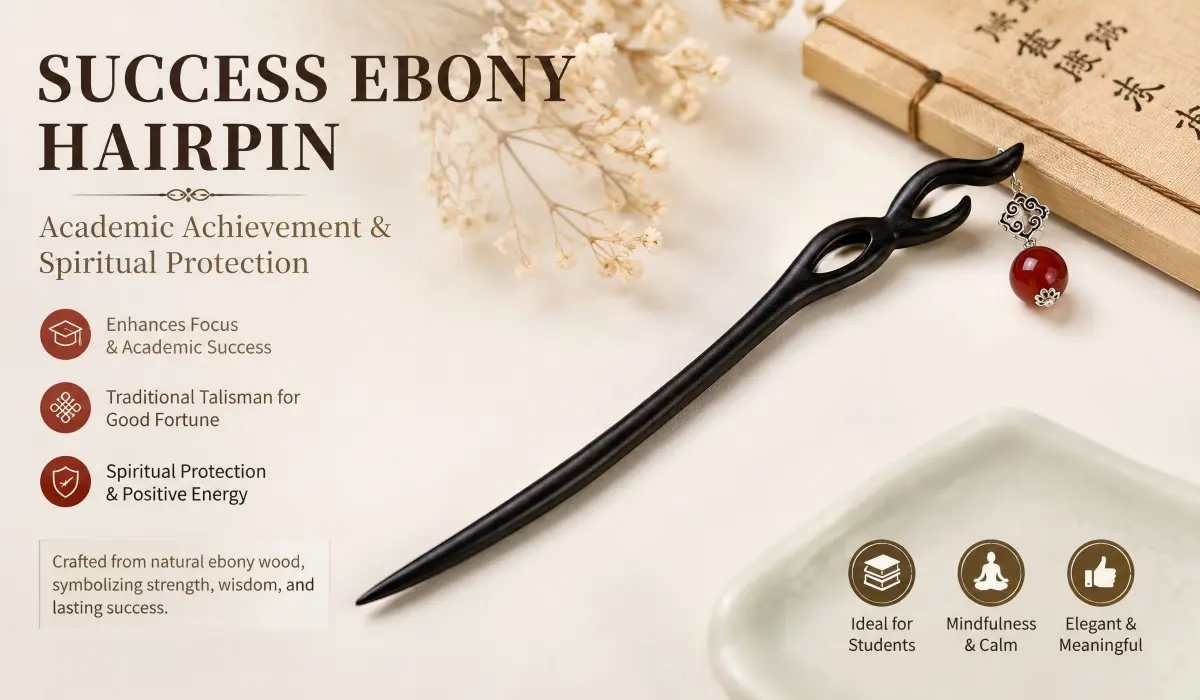
Keeping moisture away from your pins protects your crown point and preserves your energetic boundaries. A well-loved hair stick becomes a trusty talisman that journeys safely beside you through every season. Treat your wooden treasures with kindness, and their quiet beauty will enrich your daily ritual for years to come.

Longyi Luck
Longyi Luck is a Feng Shui practitioner and spiritual researcher who blends traditional year-based wisdom with modern lifestyle insights, specializing in Feng Shui, spirituality, meditation, and mindfulness. With years of dedicated study and practice, Longyi explores cultural symbolism and the practical application of ancient wisdom to help individuals cultivate balance, clarity, and harmony in everyday life. Since 2020, Longyi has been committed to translating timeless traditions into accessible guidance for the modern world.
longyi@auraandluck.com