

Real vs. Fake Citrine: Heat-Treated Amethyst vs. Natural stones are a hot topic for anyone starting a crystal collection. We know how confusing it feels when you see bright orange stones labeled as citrine in every shop. Most people look for this gem to bring abundance and joy into their daily lives.
In this guide, we will help you spot the difference between rare, earth-grown honey quartz and common lab-heated alternatives. Our team at Aura & Luck has spent years sourcing genuine gems to ensure our community gets the best quality. Understanding these markers will help you choose a stone that truly resonates with your goals.
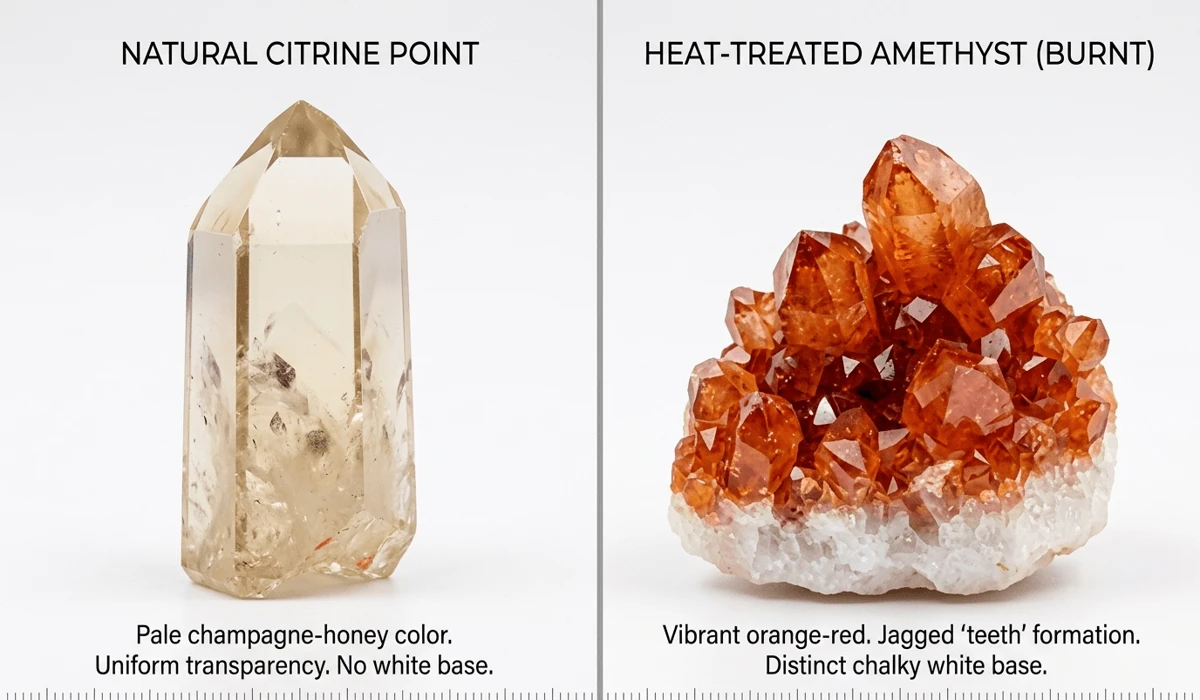
- Natural citrine has a pale, uniform champagne or honey-yellow color.
- Heat-treated amethyst often shows a bright, burnt orange hue with a white base.
- Genuine stones usually grow as individual points rather than large geode clusters.
- Natural varieties are rare and often more expensive than commercial treated stones.
- Identifying citrine color zoning is a key way to prove a stone is real.
What Is Real Citrine: Heat-Treated Amethyst vs. Natural?
Definition and Material Origin
Natural citrine is a rare form of quartz that gets its color from natural heat inside the Earth. Over millions of years, geothermal energy acts on iron impurities in quartz to create a golden glow. This process is very slow and happens deep underground under specific pressure levels.
On the other hand, heat-treated amethyst is technically a real crystal, but its color is man-made. It starts as purple amethyst that is placed in industrial ovens at very high temperatures. This rapid heating turns the purple color into a bright, "toasted" orange or reddish-brown.
While both stones share the same chemical formula of silicon dioxide, their energy and rarity are quite different. Natural stones are considered a luxury in the gem world due to their scarcity. You can learn more about these chemical structures from a Earth Science Reference.
Basic Characteristics of Authentic Stones
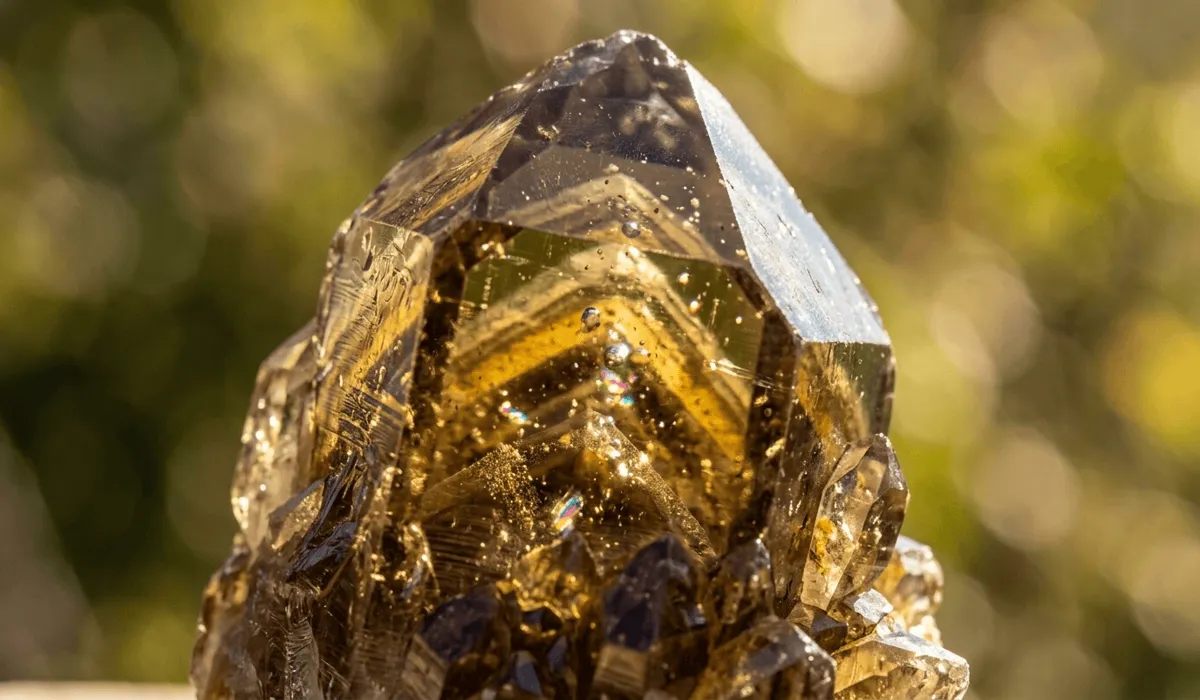
When you hold genuine citrine crystals, you will notice they feel very smooth and clear. They rarely have a "burnt" look or dark red tips. Instead, the color is often described as "lemonade" or "white wine" because it is so soft and light.
Natural specimens often form in a structure known as kundalini quartz. These look like one main crystal point surrounded by smaller crystals at the base. They do not have the crumbly, jagged "teeth" look that you see in amethyst cathedrals or geodes.
Transparency is another huge factor in citrine clarity base checks. Real citrine is usually transparent from top to bottom without a chalky white section. If the bottom of the crystal looks like a piece of white popcorn, it is likely a treated amethyst.
Common Market Terminology
You might see the term Brazilian citrine used in many online stores. While Brazil does produce real citrine, this name is often used to sell massive amounts of vibrant orange amethyst. It is important to ask the seller if the stone has been "enhanced" by heat.
Another common term is lemon quartz vs citrine, which can be very confusing for beginners. Lemon quartz is usually clear quartz that has been irradiated and heated to create a neon greenish-yellow. This color does not exist in natural citrine and looks very artificial.
We also encounter smoky citrine, which is a beautiful natural combination. This happens when the stone is exposed to both iron and natural radiation in the earth. These stones have a darker, earthier tone that many collectors love for grounding.
Knowing what to look for makes choosing genuine citrine much easier. Explore our Citrine Radiance Necklace—crafted with natural citrine and designed to bring timeless elegance, positive symbolism, and everyday versatility to your jewelry collection.
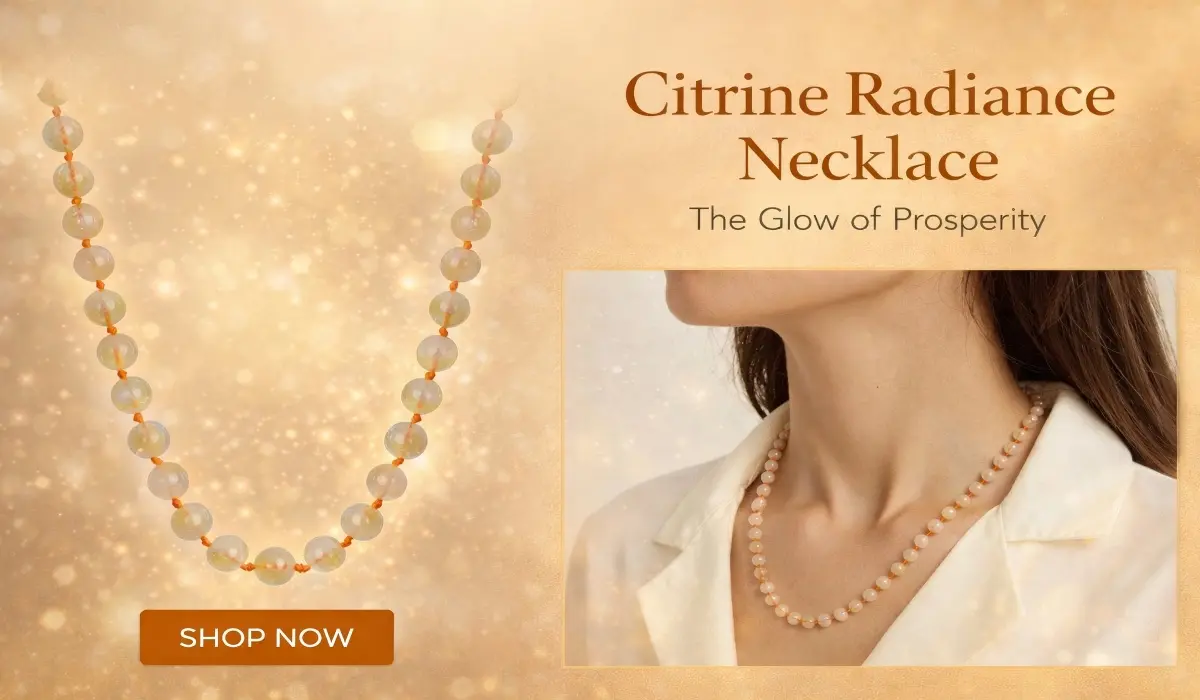
Citrine Radiance Necklace - The Glow of Prosperity
Crafted with natural citrine, this elegant necklace celebrates optimism, success, and personal growth.
View product →Authenticity Tips: Identifying Natural Citrine and Heat-Treated Amethyst
Visual Indicators of Authentic Citrine Clusters
The best way to start your raw citrine identification is to look at the color distribution. In a real stone, the yellow color is spread evenly or appears in subtle layers. These layers are called citrine color zoning and look like "ghost" shapes inside the crystal.
Real clusters are very hard to find and are usually quite small. If you see a massive cluster that is 10 inches tall and bright orange, it is almost certainly burnt amethyst. True citrine clusters often have a smoky or pale yellow tint that is consistent throughout the piece.
We recommend looking at the stone under natural sunlight. Genuine gems will glow with a soft, honey-like light. For professional verification, many experts refer to the Gemstone Research Institute to understand these optical properties better.
Video source: YouTube
Author: Wealthy Gems
Original video link: https://www.youtube.com/watch?v=y2jW3FNWTko
How to Spot Burnt Amethyst
Burnt amethyst has a very specific "cooked" look that is easy to identify once you know what to look for. The color is often concentrated at the tips of the crystals, making them look dark orange or brown. The middle and bottom parts of the crystal usually remain white or clear.
The base of these stones is a major giveaway. Since amethyst grows on a rocky matrix in geodes, the bottom of the cluster is often opaque, white, and crumbly. Natural citrine does not grow in this specific geode environment, so it lacks that chalky white root.
Heating amethyst also makes the crystal more brittle. If you notice small bits of the crystal flaking off or if the points look very shattered inside, it could be a sign of heat shock. This happens when the temperature in the oven is raised too quickly during the "faking" process.
Identifying Glass and Man-Made Fakes
Sometimes, people try to sell colored glass as citrine. One of the best how to spot glass fake citrine bubbles tips is to look for tiny circles inside. Natural quartz may have cracks or "veils," but it will never have perfectly round air bubbles.
You can also use the temperature test to check for glass. Real gemstones feel very cold when you first touch them because they conduct heat away from your skin. Glass will feel closer to room temperature and will warm up almost instantly in your hand.
Be careful of "aura" coatings or stones that have perfect rainbows on the surface. While real citrine can have internal rainbows from small fractures, they should be deep inside the stone. If the rainbow looks like an oil slick on the outside, it is a man-made coating.
| Feature | Natural Citrine | Heat-Treated Amethyst |
|---|---|---|
| Primary Color | Pale Yellow / Champagne | Bright Orange / Burnt Red |
| Crystal Base | Clear or Translucent | Opaque Chalky White |
| Formation | Single Points / Kundalini | Geode Clusters / "Teeth" |
| Color Zoning | Present (Subtle Phantoms) | Concentrated at Tips |
Spiritual Meaning & Symbolism
Historically, this golden quartz has been loved for its connection to the sun. It is often called the "Merchant's Stone" because ancient traders believed it helped them keep their wealth. Many cultures see it as a symbol of light that never fades, even in dark times.
We find that many people use citrine to boost their optimism. Its bright color is a reminder of warm summer days and positive energy. It is one of the few stones that people say can clear itself of negative energy without needing much help.
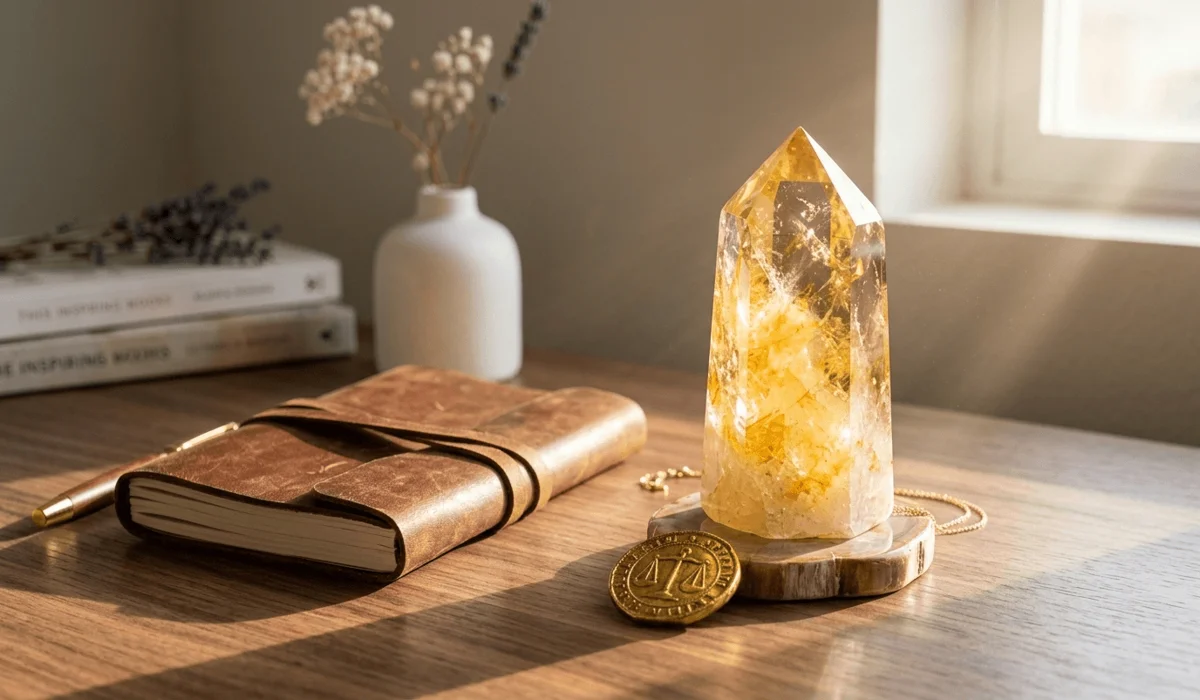
In modern times, we use it as a tool for manifestation. By keeping a piece in your workspace, you are setting an intention for growth and success. You can find more about these practices in our Healing Stone Knowledge articles.
Chakra Associations
Citrine is most famous for its link to the Solar Plexus chakra. This is the energy center located near your stomach that controls your confidence and willpower. When this chakra is balanced, you feel like you can achieve anything you set your mind to.
Some practitioners also link it to the Sacral chakra. This area is all about creativity and your emotional connections with others. Using yellow quartz properties in this way can help you feel more inspired and ready to start new projects.
Natural citrine is said to have a very gentle and steady vibration. In contrast, treated stones are often described as having a "fire" energy because of the intense heat used to create them. Both have their place depending on what kind of shift you want to feel.
Cultural or Historical Context
Ancient Romans were known to use citrine for beautiful jewelry pieces called intaglios. They carved symbols into the stones and wore them as rings. During the Victorian era, it became very popular again because Queen Victoria loved colorful gemstones.
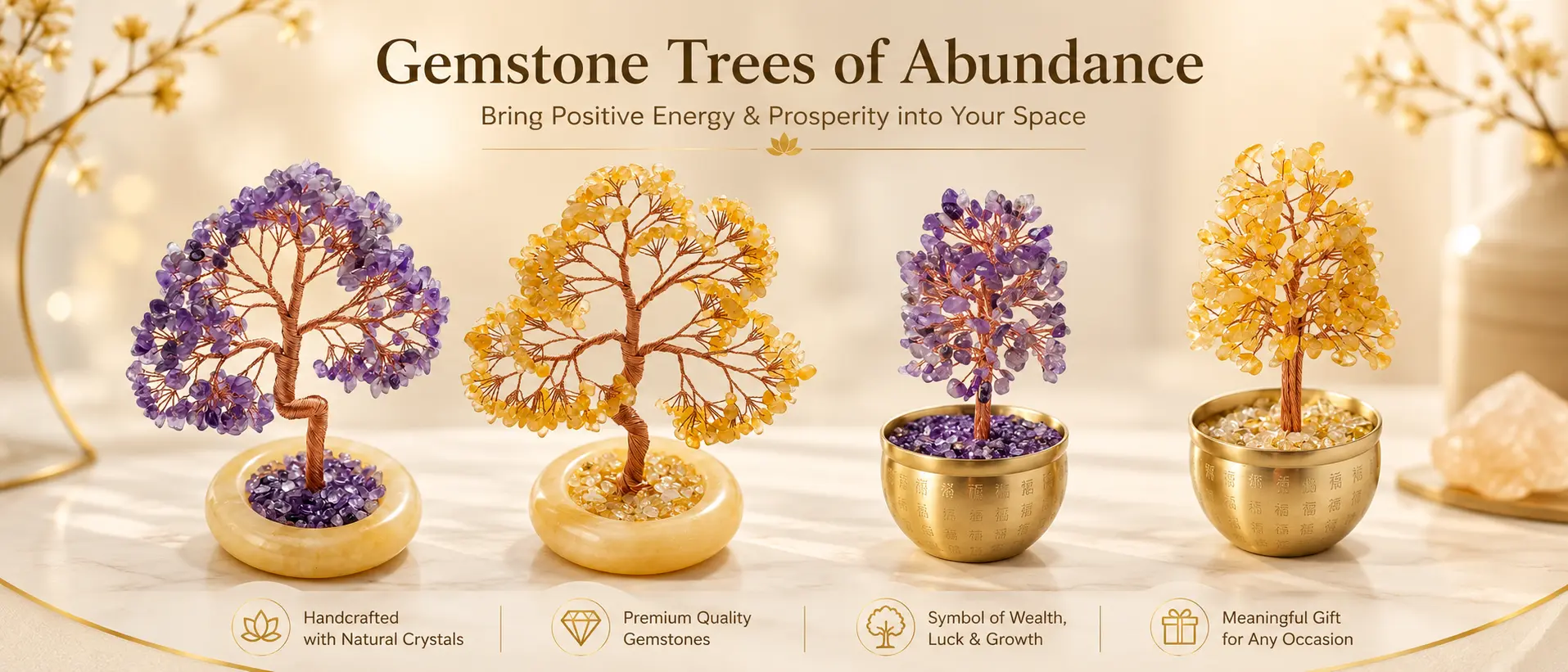
In Feng Shui, citrine is a powerful tool for the "Wealth Corner" of your home. This is usually the far left corner from your front door. Placing a natural citrine point here is a traditional way to invite prosperity into the household.
Even 17th-century weapon makers in Scotland used this stone. They often set large citrine crystals into the handles of daggers and swords. They believed the stone would protect them and bring them victory in battle.
Benefits & Intentions Associated with Citrine
Manifestation is the biggest reason our customers look for this stone. It serves as a physical reminder of your goals. When you look at its golden sparkle, it helps you stay focused on the "abundance" mindset rather than a "lack" mindset.
We often recommend it for people who are starting a new business or career. It is a great stone for boosting self-esteem. If you struggle with feeling "good enough," the sunny energy of citrine can help quiet those negative thoughts.
It is also useful for group environments. If you work in an office where people often disagree, a large citrine piece can help keep the mood light. It encourages everyone to communicate with more joy and less ego. You can explore our Spiritual Crystal Gems for more ideas on office decor.
Mindfulness & Personal Practices
One of our favorite ways to use citrine is during morning meditation. Hold the stone and imagine the sun's light filling your body. This is a quick way to "wake up" your energy and start the day with a positive outlook.
You can also keep a small piece in your wallet or purse. This is a classic "Merchant's Stone" trick to symbolize that your money is always growing. It is a simple ritual that helps you feel more secure about your finances.
For students, keeping citrine on a study desk can help with mental clarity. It is said to help with "brain fog" and keep you alert during long hours of reading. The bright color simply makes the workspace feel more inviting and less stressful.
How to Wear Citrine Jewelry
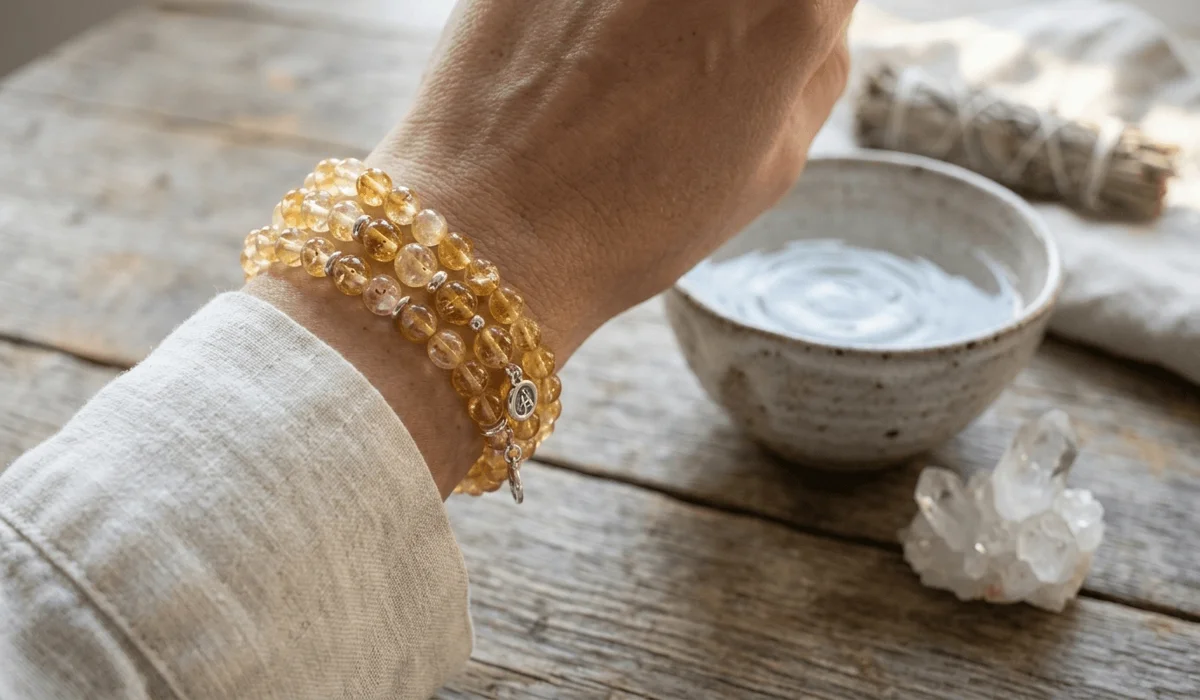
Wearing citrine is the easiest way to keep its energy with you all day long. When the stone touches your skin, it creates a constant connection to its frequency. Many people prefer bracelets or rings so they can see the golden sparkle throughout the day.
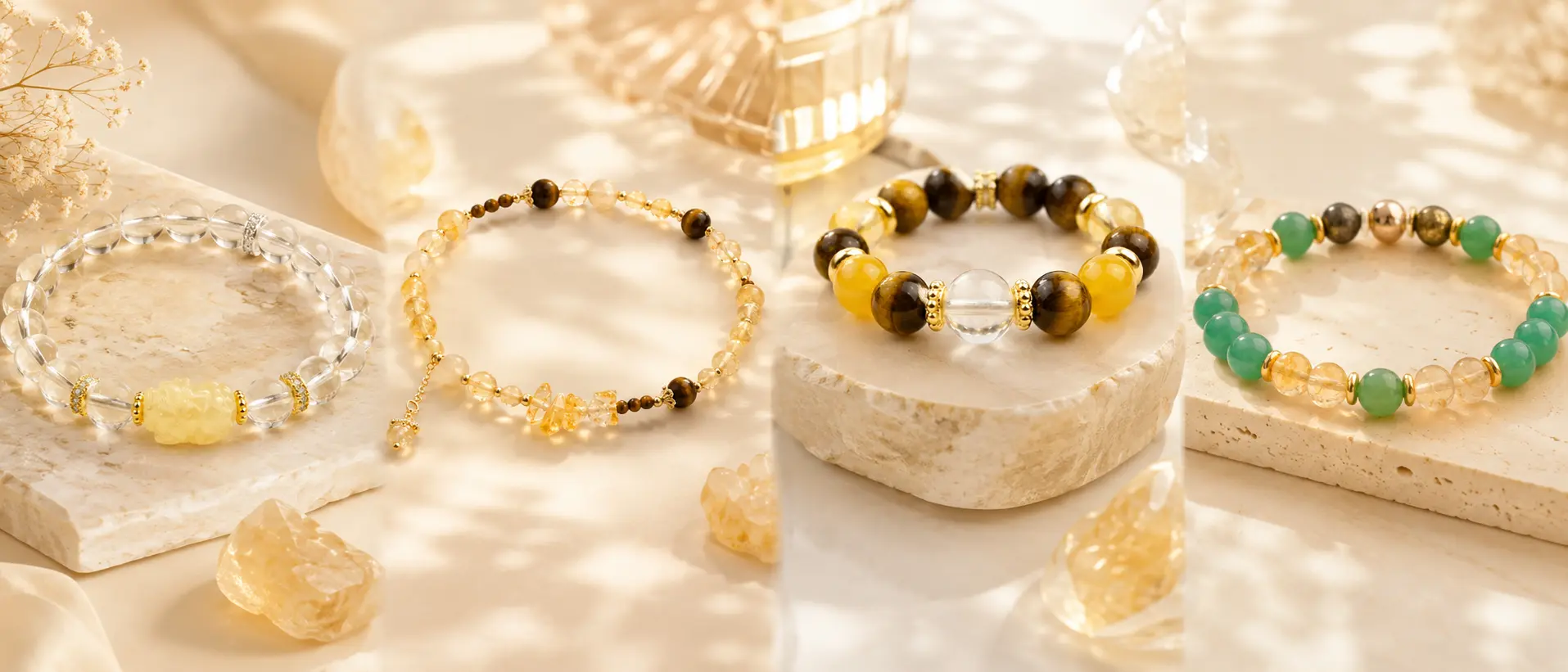
Jewelry also makes a great gift for someone who needs a little more sunshine in their life. Whether it is a necklace or a simple bead bracelet, the meaning remains the same. It is a gift of confidence and well-being. Check out our Citrine Jewelry Collection to see some beautiful examples.

When choosing jewelry, look for stones that have a high level of transparency. This allows the light to pass through the crystal and show off its natural beauty. Natural citrine bead jewelry often shows a lovely range of shades from light yellow to deep honey.
Left Hand vs. Right Hand (Feng Shui Logic)
In the world of crystal healing, the hand you choose to wear your jewelry on matters. The left hand is known as the "receiving" hand. Wearing a citrine bracelet here helps you take in the stone's energy to build your own internal confidence.
The right hand is known as the "giving" or "manifesting" hand. If you are going into a business meeting or a job interview, you might wear it on the right side. This helps you project your power and success out into the world.
Of course, there is no wrong way to wear your crystals. We always tell our clients to go with what feels most comfortable. If your intuition tells you to wear it on a specific finger or wrist, you should follow that feeling.
Intention-Setting Practices
Before you wear your new jewelry, it is a good idea to set an intention. Hold the piece in your hands and close your eyes. Take a few deep breaths and think about one thing you want to achieve today.
You can say a simple word like "Success" or "Joy" out loud. This helps "program" the stone with your specific goal. It makes the jewelry more than just an accessory; it becomes a personal tool for your growth.
Regular cleansing is also important for keeping your jewelry bright. Over time, skin oils can make the stones look dull. A quick wipe with a soft cloth will keep the natural citrine sparkling like new.
Citrine vs. Similar Stones
Citrine vs. Lemon Quartz
As we mentioned before, lemon quartz is often much more vibrant than natural citrine. It has a greenish tint that looks a bit like a neon highlighter. While it is very pretty, it does not have the same earthy feel as genuine honey-colored quartz.
Lemon quartz is almost always treated with radiation and heat to get that specific color. Citrine lovers usually prefer the more "organic" look of natural citrine. It feels more connected to the earth's natural cycles.
In terms of value, citrine is usually the more sought-after stone. Collectors appreciate the rare geothermal process that creates it. If you want to learn about professional grading, you can visit the Professional Gemmological Association website.
Citrine vs. Yellow Jasper
Yellow Jasper is another stone that people sometimes confuse with citrine, but they look very different. Jasper is opaque, which means you cannot see through it at all. It has a matte, earthy finish that looks more like clay or stone.
Citrine is a transparent quartz, so light can shine right through it. This gives it a "glow" that Jasper does not have. Practitioners use Jasper for "grounding" and citrine for "envisioning."
While both stones are beautiful, they serve different purposes in a collection. Jasper feels solid and nurturing, like the earth. Citrine feels light and expansive, like the sun. Having both in your collection can provide a nice balance of energies.
Who Is Citrine Suitable For?
Citrine is perfect for anyone who feels like they are in a "slump." If you are feeling tired or uninspired, this stone is like a shot of energy. It is especially good for people who work in creative fields like art, writing, or design.
It is also a great choice for entrepreneurs. If you are taking risks and building something new, you need a stone that supports a growth mindset. Citrine is the ultimate "can-do" stone for the modern world.
Finally, it is perfect for anyone who loves the aesthetic of gold but wants something more natural. The warm tones of natural citrine look beautiful with any outfit. It brings a touch of elegance and warmth to your personal style.
Zodiac or Astrological Associations
Leo is the zodiac sign most closely linked to citrine. Since Leos are ruled by the sun, the "solar" energy of this stone is a perfect match for them. It helps highlight their natural confidence and leadership skills.
Aries and Gemini also benefit greatly from this stone. Aries can use it to focus their fiery energy into productive projects. Geminis, who often have many ideas at once, can use citrine to find mental clarity and choose the best path forward.
It is also the traditional birthstone for November. For those born in the late autumn, citrine provides a warm contrast to the cooling weather. It is a beautiful way to carry the light of summer into the darker months of the year.
How to Cleanse, Prepare, and Care for Citrine
Cleansing Methods
Even though citrine is known for being self-cleansing, we still like to give it a little refresh now and then. The easiest way is to use cool running water. Just hold your stone under the tap for a minute and dry it with a soft towel.
You can also use sound to cleanse your crystals. Using a singing bowl or a small bell creates vibrations that "shake off" any stagnant energy. This is a very gentle method that is safe for all types of jewelry.
Smoke cleansing is another popular choice. You can use dried herbs like sage or lavender to envelope the stone in smoke. This is a beautiful ritual that helps you feel more connected to your crystals.
Daily Care & Storage
Natural citrine can be sensitive to very long periods of direct sunlight. If you leave it on a windowsill for months, the color might start to fade. It is best to keep it in a spot that gets bright light but not "scorching" afternoon sun.
When you are not wearing your jewelry, store it in a soft pouch. Quartz is a hard stone, but it can still be scratched by diamonds or other harder gems. Keeping it separate ensures that the surface remains smooth and shiny.
Avoid using harsh chemicals like bleach or hairspray while wearing your citrine. These can dull the surface of the stone or damage the metal in your jewelry. Simply putting your jewelry on last, after you have finished your beauty routine, is the best way to protect it.
Frequently Asked Questions
Q: How can you tell if a citrine is natural or heat-treated?
A: Natural citrine is usually a very pale yellow or smoky champagne color that is uniform throughout the stone. Heat-treated amethyst is often a very bright orange or reddish-brown with a white, opaque base at the bottom of the crystal.
Q: Why does some citrine have a white base?
A: A white base is a major sign that the stone was originally a purple amethyst crystal growing in a geode. When these amethyst clusters are heated in an oven, the purple turns orange, but the white rocky base stays the same.
Q: Does natural citrine ever look bright orange?
A: It is very rare for natural citrine to be bright orange. Most genuine stones are much lighter and more earthy in tone. If a stone looks "neon" or "burnt," it is almost always a treated amethyst or a piece of colored glass.
Q: Can real citrine be clear?
A: Yes, real citrine is a variety of quartz and can be very clear and transparent. However, it will always have a slight yellow or golden tint. If the stone is completely colorless and has no yellow at all, it is just clear quartz.
Q: Is heat-treated amethyst still a real crystal?
A: Yes, it is still a real crystal that came from the earth, but its color has been changed by humans. While it is not "fake" in the sense of being plastic, it is not a "natural citrine" because its color did not come from the earth's natural heat.
Conclusion & Gentle Next Step
Choosing between natural citrine and its heat-treated version is all about what you value most. Some people love the deep orange color of brazilian citrine, while others prefer the rare, pale glow of the natural stone. Both are beautiful pieces of earth history that can bring joy to your home.
By using this crystal authenticity guide, you are now an expert at spotting the difference. Remember to look for citrine color zoning and avoid stones with a "toasted" white base if you want the real thing. Your intention is what truly matters when working with these stones.
We invite you to look through our collection and find a piece that speaks to you. Whether you want a bracelet for daily wear or a cluster for your desk, we are here to help. Explore our Citrine Jewelry Collection today to find your perfect match.

Longyi Luck
Longyi Luck is a Feng Shui practitioner and spiritual researcher who blends traditional year-based wisdom with modern lifestyle insights, specializing inFeng Shui, spirituality, meditation, and mindfulness. With years of dedicated study and practice, Longyi explores cultural symbolism and the practical application of ancient wisdom to help individuals cultivate balance, clarity, and harmony in everyday life. Since 2020, Longyi has been committed to translating timeless traditions into accessible guidance for the modern world.
longyi@auraandluck.com



.webp?w=800&h=800)
.webp?w=800&h=800)