
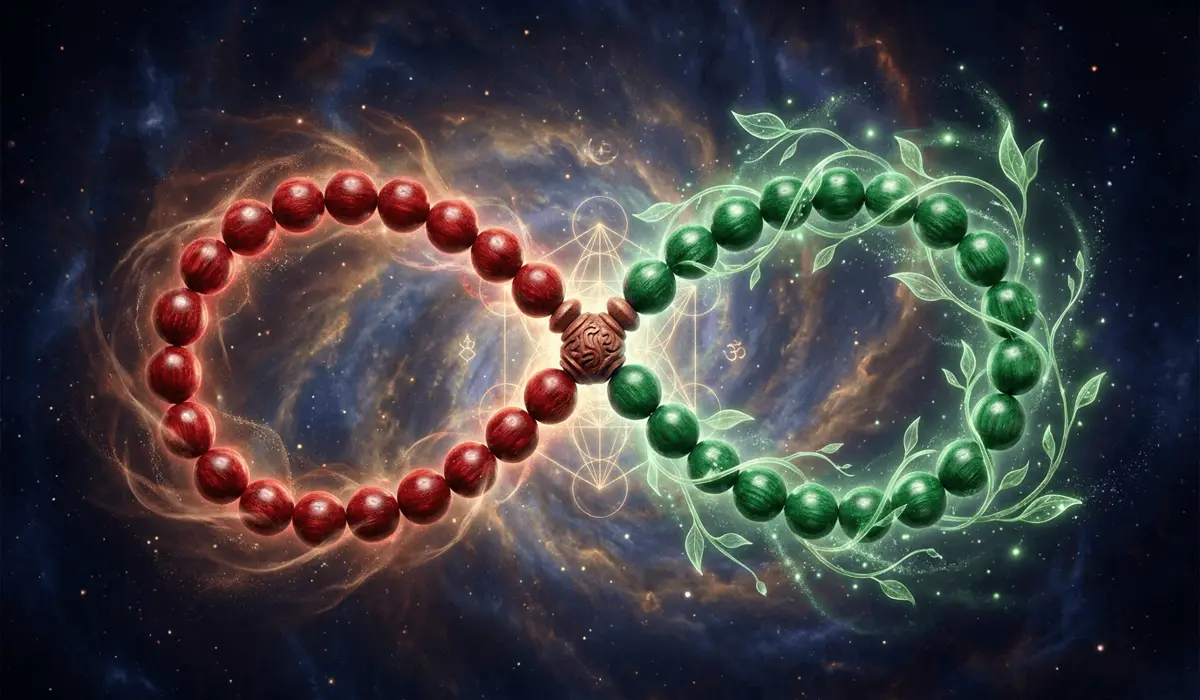
When comparing Red Sandalwood vs. Green Sandalwood: Key Differences, the primary distinction lies in their botanical origins, physical color shifts, distinct aroma profiles, and specific chakra resonance. At Aura & Luck, our team crafts organic ritual jewelry to help spiritual seekers align their daily energy with natural woods and gemstone beads. Understanding these two sacred woods allows you to pick the ideal companion for grounding, emotional release, and mindful breathwork.
Quick Summary:
- 💎 Red Sandalwood: Dense crimson timber (Pterocarpus santalinus) without strong scent, focused on Root Chakra grounding and energetic stamina.
- 🌿 Green Sandalwood: Aromatic Verawood (Bulnesia sarmientoi) with natural balsam scent, light-induced color transformation, and Heart Chakra alignment.
- 🔮 Spiritual Resonance: Red sandalwood protects personal Chi (气) boundaries, while green sandalwood soothes stress and promotes inner peace.
- ✨ Feng Shui Wear: Receptive left hand absorbs internal calm, while projective right hand releases grounding energy into your environment.
- 🛡️ Care & Longevity: Keep both organic woods dry, polish with soft cotton cloths, and charge gently under moonlight or selenite slabs.
 Red Sandalwood vs. Green Sandalwood: What’s the Difference?
Exploring Red Sandalwood vs. Green Sandalwood: Key Differences begins with understanding their botanical lineages and natural properties. Although both are treasured in spiritual traditions across the globe, they originate from entirely different tree families and continents.
Definition and Botanical Lineage
Red sandalwood traditionally refers to Red Sanders (*Pterocarpus santalinus*), a slow-growing tree indigenous to southern India. This timber is renowned for its intense red heartwood, incredible density, and lack of strong volatile oils. You can read more about various natural timber species across an Online Knowledge Encyclopedia to learn about global forestry histories.
Green sandalwood is the trade and spiritual name for Verawood (*Bulnesia sarmientoi*), native to South America. It earned its spiritual moniker because of its soothing, sandalwood-like aroma and rich organic resin content. While not part of the genus *Santalum*, its aromatic presence makes it a beloved spiritual tool.
Origin, Material Density, and Resins
Red sandalwood grows in rugged, dry hill climates, developing an extremely dense structural matrix that sinks in water. The heartwood accumulates deep red pigments over decades without producing perfumed volatile oils. Our artisans admire its solid, protective physical weight during bead carving.
Green sandalwood flourishes in warm South American forest belts, accumulating rich natural balsam resins throughout its life cycle. These organic resins give the wood a smooth, silky feel and a natural luster. As the resin reacts with air and sunlight, the wood develops its legendary greenish cast.
Basic Characteristics and Color Transformation
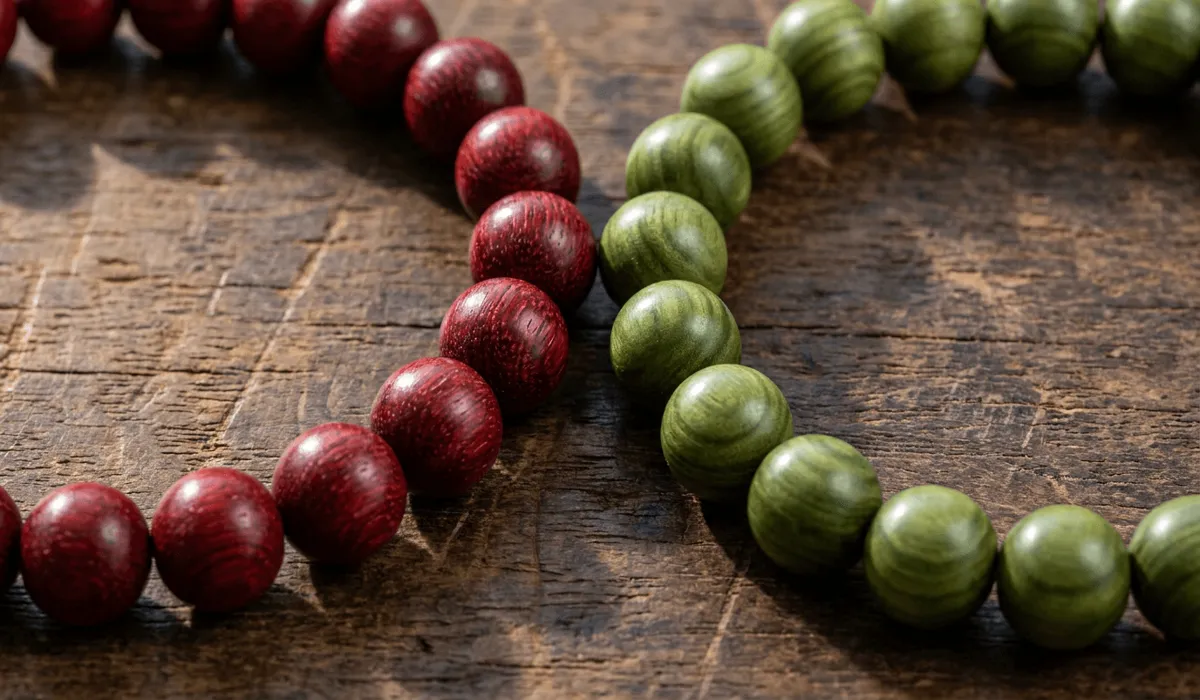
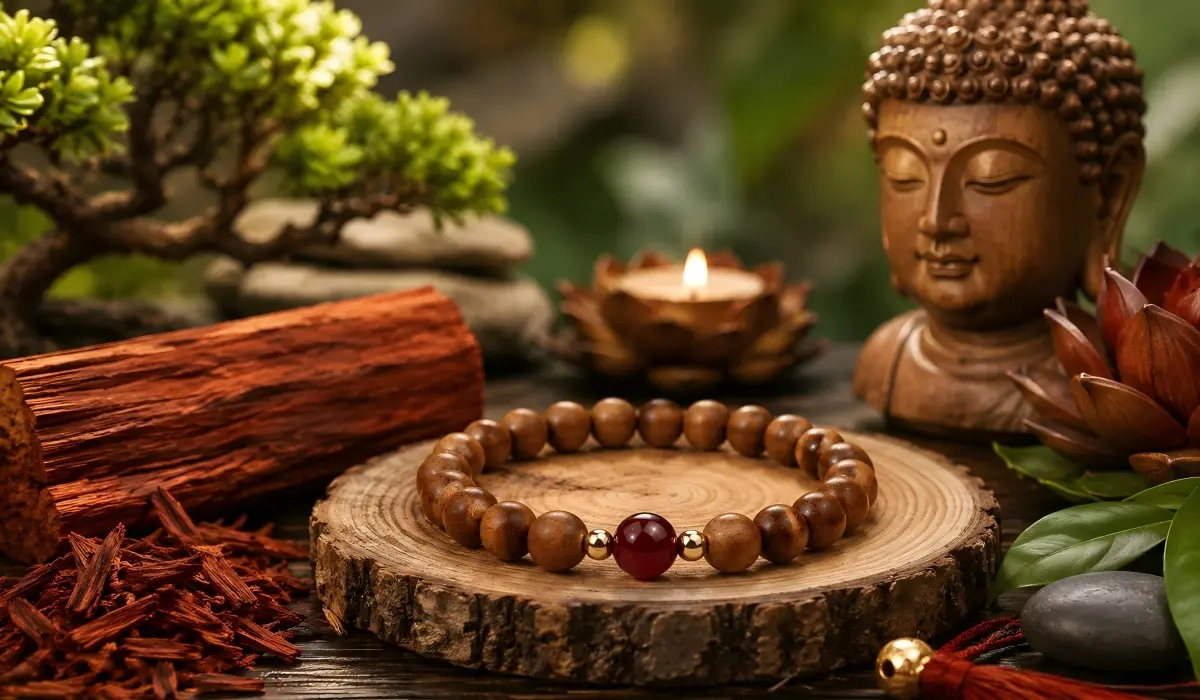
Red sandalwood displays fine, tight grain lines ranging from bright ruby red to dark crimson and deep violet-brown. It remains virtually odorless in raw form, offering steady visual beauty without interfering with natural oils or incense. Its physical appearance stays consistent over years of wear.
Green sandalwood exhibits feathered, wavy grain lines with soft olive hue variations. Upon exposure to ambient air and ultraviolet light, freshly carved tan wood undergoes a natural oxidation process, deepening into vibrant emerald green. It continually releases a warm, woody, sweet organic scent that relaxes the nervous system.
| Feature Property | Red Sandalwood (*Pterocarpus santalinus*) | Green Sandalwood (*Bulnesia sarmientoi*) |
|---|---|---|
| Botanical Family | Fabaceae (Legume family) | Zygophyllaceae (Caltrop family) |
| Native Region | Southern India | South America (Gran Chaco) |
| Aroma Profile | Nearly odorless / subtle woody note | Sweet, balsamic, long-lasting wood scent |
| Primary Hue | Crimson, ruby red to deep purple-brown | Olive green to emerald green ( oxidizes in light ) |
| Chakra Alignment | Root Chakra (Muladhara) | Heart Chakra (Anahata) |
| Core Intention | Grounding, strength, energetic protection | Emotional renewal, calm, heart balance |
Spiritual Meaning & Sacred Symbolism
In holistic energy work, both materials serve as powerful grounding tools that hold distinct energetic frequencies. Choosing between Red Sandalwood & Green Sandalwood depends heavily on which spiritual center requires alignment in your life.
Traditional Eastern Symbolism
Red sandalwood represents physical endurance, fire energy, vitality, and spiritual protection across ancient Asian cultures. It has long been carved into temple statues, protective amulets, and sacred mala beads. The deep red shade connects directly with earthly life force and steady physical courage.
Green sandalwood symbolizes emotional rebirth, peace, harmony with nature, and gentle spiritual transformation. Ancient practitioners valued its natural perfume for clearing stagnant emotional energy from spaces and aura fields. Its green tones reflect the vibrant energy of growing forests and spring renewal.
Chakra Associations and Energy Alignment
Red sandalwood resonates with the Root Chakra (Muladhara), located at the base of the spine. When your root center feels balanced, you feel anchored, safe, and confident in your daily path. Incorporating red sandalwood into meditation helps stabilize scattered thoughts and erratic nervous energy. You can discover more holistic balance methods through our Crystal Healing Blog section.
Green sandalwood connects directly with the Heart Chakra (Anahata), located at the center of the chest. This chakra governs love, compassion, forgiveness, and emotional clarity. Wearing green sandalwood beads invites a soft, open energy that encourages peaceful communication and emotional soothing.
Cultural and Historical Context
Historically, red sandalwood held high status in royal courts and sacred ceremonies across India and China. Its rich crimson wood was reserved for sacred altars, high-ranking official rosaries, and artistic carvings. Its durability symbolized unfading loyalty and eternal spiritual truth.
Green sandalwood gained reverence among monks and healers for crafting fragrant prayer beads and grooming tools like spiritual hair combs. The warm friction generated during use releases therapeutic aromatic compounds. These sacred items were passed down through generations as cherished family heirlooms.
Physical Properties and Craftsmanship
Our studio team closely examines the physical qualities of organic timbers before crafting ritual bracelets. Comparing Red Sandalwood & Green Sandalwood requires inspecting grain structures, weight, and acoustic resonance during mindfulness practice.
Red sandalwood is exceptionally heavy and dense, with fine pores that take a high natural polish without glossy chemical lacquers. The beads feel substantial on the wrist, offering a solid tactile reminder to stay present during busy work hours. Its uniform red grain pairs beautifully with warm gold spacers or dark gemstone accents.
Green sandalwood features an oily, self-lubricating surface due to high resin concentration. When held in warm hands, the beads release a subtle balsam scent that lingers gently around your personal space. Over time, friction against skin creates a glossy organic patina unique to each wearer.
Below is a short demonstration highlighting authentic green sandalwood craftsmanship and its natural texture in daily accessories:
Video source: YouTube
Author: TanmuCare
Original video link: https://www.youtube.com/watch?v=4FEioOktzgM
Benefits and Intentions for Everyday Wear
Integrating sacred wooden jewelry into your routine provides both emotional and energetic support. Understanding Red Sandalwood vs. Green Sandalwood: Key Differences helps you select the correct tool for your current spiritual intentions.
Boosting Physical Energy and Protection
We recommend wearing a red sandalwood bracelet when undertaking demanding physical tasks, starting new projects, or navigating stressful life transitions. The solid weight and root energy help reinforce personal boundaries, preventing energetic exhaustion from surrounding chaos. It acts as an energetic shield that keeps your internal fire burning steadily.
- 💎 Enhances physical vitality and personal stamina during intense daily schedules.
- 💎 Strengthens Root Chakra grounding during deep mantra chanting sessions.
- 💎 Protects personal energy fields from external emotional stress.
- 💎 Provides tactile weight to keep scattered thoughts centered in the present moment.
Many of our clients report feeling more steady, practical, and focused when wearing red sandalwood during stressful business meetings. Its heavy presence anchors erratic thoughts, allowing clear decision-making rooted in calm logic.
Cultivating Peace and Emotional Balance
Green sandalwood is ideal for individuals seeking emotional healing, stress reduction, and heart-centered meditation. The continuous subtle fragrance serves as an instant sensory cue to take slow, conscious breaths throughout the day. It creates an aura of peaceful stillness around your chest center.
- 🌿 Releases a natural soothing fragrance that eases mental chatter and anxiety.
- 🌿 Balances the Heart Chakra to encourage compassion and self-acceptance.
- 🌿 Evolves visually over time as sunlight transforms its hue to deep green.
- 🌿 Promotes gentle emotional release during breathwork and yoga practices.
To further enrich your knowledge on sacred woods, review our comparative guide on Sacred Wood Meditation Guide options for holistic spiritual practices.
Practical Wearing Guidelines in Feng Shui
In classical Feng Shui and energy mechanics, which side of the body carries your wooden mala bracelet impacts how its energy interacts with your field. Applying these wearing principles unlocks maximum benefit from both red and green sandalwood.
Receptive Left Hand vs Projective Right Hand
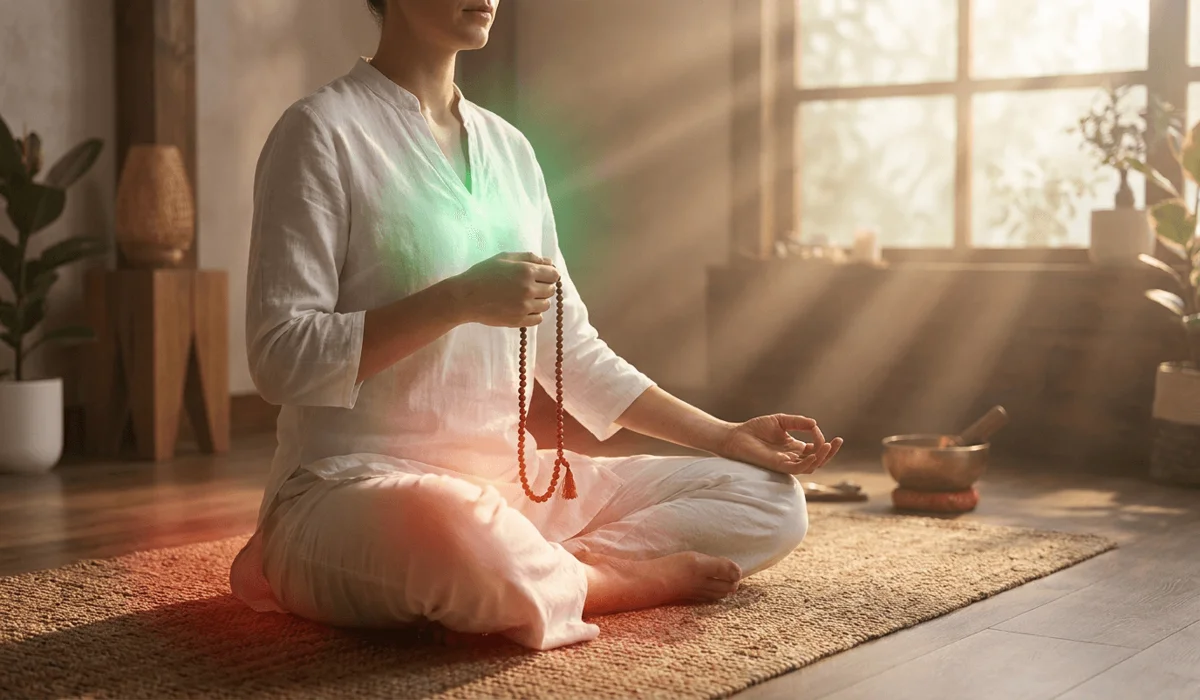
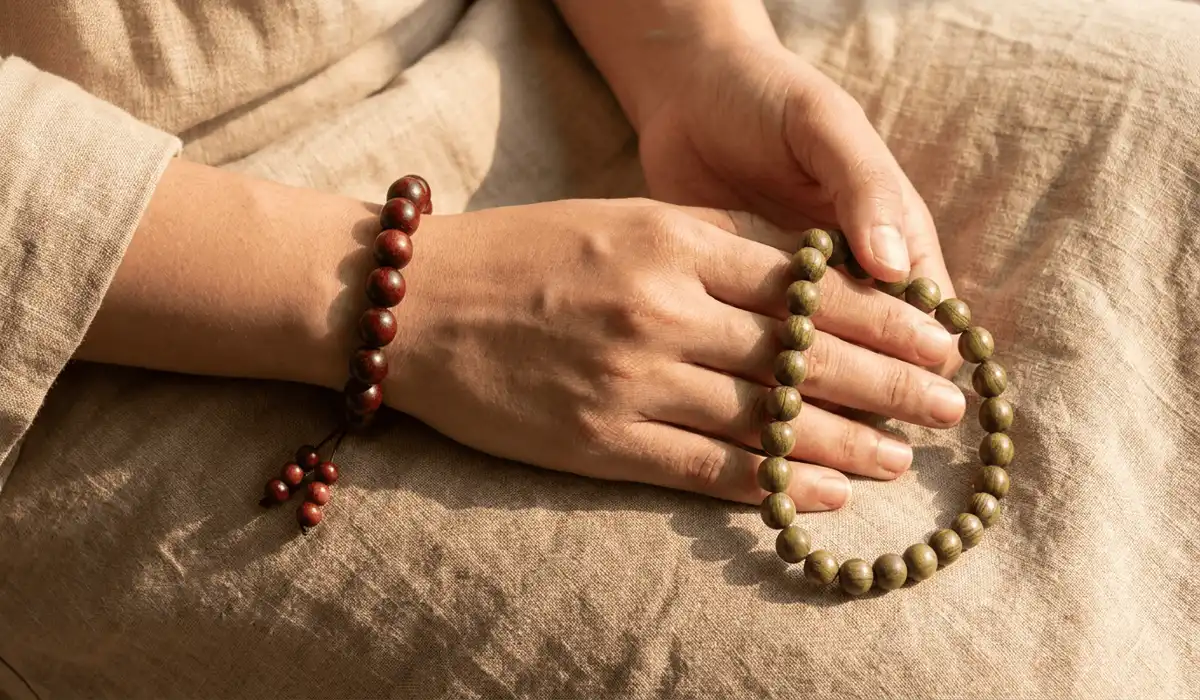
The left hand is recognized across Eastern traditions as the receptive hand, drawing energy inward toward your core aura. Wear your green sandalwood bracelet on the left wrist when you wish to internalize peaceful vibes, heal emotional wounds, or soothe stress. Similarly, wear red sandalwood on the left wrist to absorb stabilizing root energy directly into your physical frame.
The right hand is the projective hand, sending energy outward into your external environment. Wear red sandalwood on your right wrist when you need to project strong boundaries, command authority, or share protective strength with others. Wear green sandalwood on the right hand to radiate soft compassion, peace, and welcoming warmth to those around you.
Choosing the Right Wood for Specific Situations
Select red sandalwood during physical training, travel, heavy workload periods, or root balancing meditation. Its firm, solid vibration maintains focus and deters mental fatigue. It is a wonderful partner when you must stay unshakeable during challenging conversations.
Choose green sandalwood during personal journaling, sound healing sessions, quiet walks in nature, or bedtime reflection. Its relaxing aroma works harmoniously with deep diaphragmatic breathing to quiet a hyperactive mind. Wearing it during yoga helps open the thoracic cavity for fuller breath expansion.
Red Sandalwood vs. Other Sacred Woods
To fully grasp Red Sandalwood vs. Green Sandalwood: Key Differences, it helps to compare them against other popular sacred timbers like white sandalwood and rosewood. Each material possesses unique visual traits and vibrational profiles.
Red Sandalwood vs. White Sandalwood (*Santalum album*)
True white sandalwood (*Santalum album*), often called Indian sandalwood, is famous for its rich, creamy, buttery fragrance that lasts for decades. In contrast, red sandalwood contains very little volatile aromatic oil and relies on its visual crimson richness and root grounding frequency. To explore mineral and gem grading standards across global research bodies, consult the Gemological Institute Information resource center.
Visually, white sandalwood presents soft yellowish-tan hues, whereas red sandalwood showcases rich, deep crimson or burgundy shades. White sandalwood works primarily on the Crown and Third Eye Chakras for spiritual expansion, while red sandalwood operates at the Root Chakra for physical stability.
Red Sandalwood vs. Rosewood
Rosewood features bold dark grain striping with sweet, floral-woody undertones. While rosewood is often associated with warm heart energy and gentle emotional balance, red sandalwood is heavier, denser, and strictly focused on raw vitality and root stability.
Both woods exhibit striking red tone variations, but red sandalwood exhibits finer grain structures and higher density. Rosewood tends to display broader grain swirls and carries a light natural scent, whereas red sandalwood maintains a quieter, highly concentrated physical presence.
Who Should Choose Red Sandalwood or Green Sandalwood?
Selecting between these two sacred woods comes down to your personal energy needs, zodiac alignments, and lifestyle preferences. Both materials bring distinct benefits to different personality types.
Zodiac Sign and Elemental Associations
Red sandalwood carries strong Fire and Earth element energy, making it exceptional for Fire signs (Aries, Leo, Sagittarius) needing grounded direction for their passion. It also supports Earth signs (Taurus, Virgo, Capricorn) who wish to reinforce their physical endurance and structural focus.
Green sandalwood connects with Wood and Water element energies, aligning effortlessly with Water signs (Cancer, Scorpio, Pisces) needing gentle emotional grounding. Air signs (Gemini, Libra, Aquarius) also benefit from its soothing scent, which helps anchor overactive mental processes into soft heart awareness.
Personal Mindfulness Practices
If your daily practice revolves around fast-paced physical movement, martial arts, heavy breathwork, or grounding body scans, red sandalwood is your ideal match. Its robust density withstands daily wear while keeping your attention anchored in physical reality.
If your daily ritual involves silent seated meditation, restorative yin yoga, vocal chanting, or aromatherapy practice, green sandalwood will elevate your experience. Its evolving color and continuous fragrance create a rich multisensory focal point during quiet contemplation.
How to Cleanse, Charge, and Maintain Sacred Wooden Beads
Unlike mineral gemstones, natural wooden beads are porous organic materials that require gentle, conscious care. Protecting your beads ensures their structural integrity and keeps their spiritual frequency vibrant.
Safe Cleansing Techniques
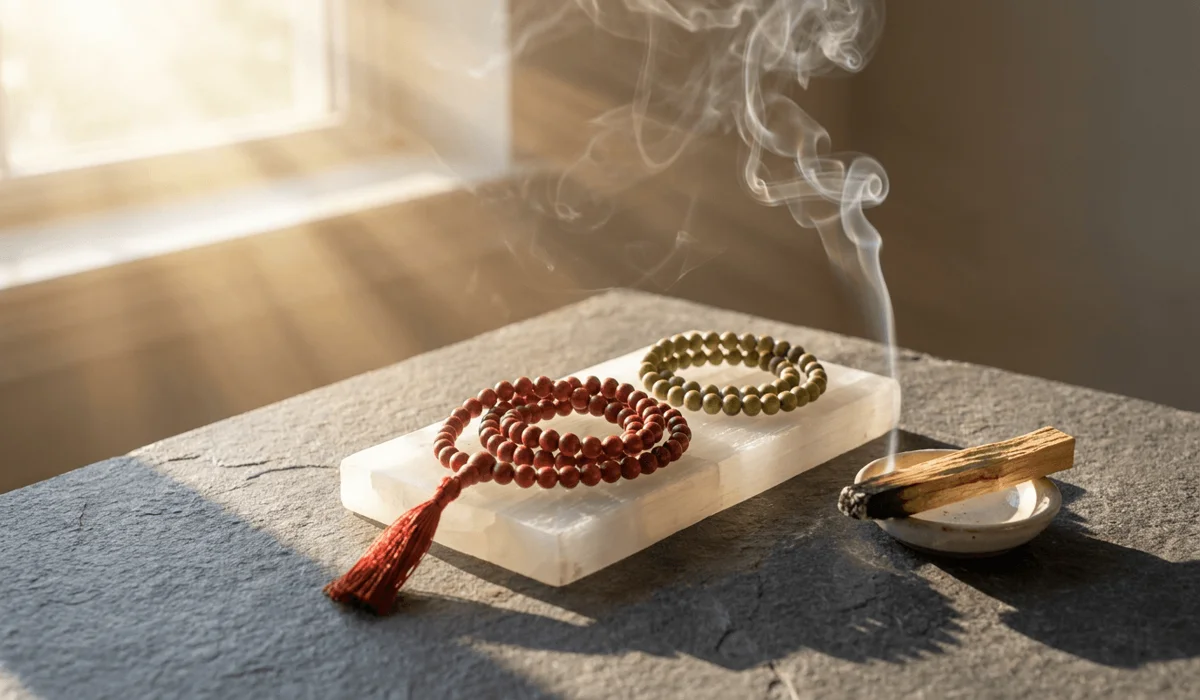
Pass your wooden beads through the aromatic smoke of burning Palo Santo, white sage, or natural incense sticks for one to two minutes. Smoke cleansing effectively clears accumulated personal or environmental energies without damaging organic fibers. To review gemstone and mineral conservation guidelines, check out Gemmological Association Research insights.
Sound cleansing is another fantastic method for purifying wooden mala beads. Place your bracelet near a Nepalese singing bowl or brass bell while sounding a clear, resonant tone. The vibrational sound waves clear subtle blockages gently without touching the delicate wood surface.
Never submerge organic wooden beads in water, swim with them, or wear them in hot showers. Excess moisture causes natural wood fibers to swell, crack, warp, or lose their polished surface finish over time.
Energetic Charging Methods
Place your red sandalwood beads on a selenite charging plate or near clear quartz crystals overnight under full moonlight. Moonlight infuses gentle, restorative energy into the red timber without subjecting it to harsh thermal expansion.
Give green sandalwood brief exposure to gentle morning sunlight for fifteen to thirty minutes. Sunbeams activate the natural organic resins inside Verawood, triggering its signature green oxidation process while refreshing its uplifting aroma.
Long-Term Maintenance and Storage
After wearing your wooden bracelet, wipe the beads gently with a clean, dry cotton cloth to remove skin oils and dust. This simple habit keeps the natural wood grain clear and prevents surface dullness over months of continuous wear.
Store your wooden malas in a breathable fabric pouch away from direct household heaters, air conditioners, or direct sunlight. If the wood appears dry after years of use, apply a single drop of organic jojoba oil to your palms and lightly massage the beads to restore their rich luster.
Frequently Asked Questions
Q: What is the main difference between red sandalwood and green sandalwood?
A: The primary difference lies in their botanical origin, aroma profile, color change, and chakra alignment. Red sandalwood (*Pterocarpus santalinus*) is an unscented, dense crimson wood from India focused on Root Chakra grounding. Green sandalwood (Verawood) is a sweet-smelling, resinous wood from South America that turns emerald green in sunlight and aligns with the Heart Chakra.
Q: Is green sandalwood real sandalwood?
A: Botanically, green sandalwood is Verawood (*Bulnesia sarmientoi*), which belongs to a different plant family than true Indian sandalwood (*Santalum album*). However, in spiritual traditions and artisan craft, it is widely called green sandalwood because of its similar warm balsamic fragrance, dense wood structure, and traditional use as sacred prayer beads.
Q: Why does green sandalwood change color when exposed to light?
A: Green sandalwood contains rich organic resins that react naturally to ultraviolet light and oxygen. Freshly carved beads often start as light tan or olive-yellow, but exposure to sunlight or ambient air triggers a harmless oxidation process that deepens the wood into a rich emerald green color.
Q: Which hand should I wear my red sandalwood bracelet on?
A: Wear your red sandalwood bracelet on your left wrist if your goal is to absorb grounding energy, internal calm, and Root Chakra stability into your body. Wear it on your right wrist if you wish to project protective boundaries, strength, and confidence outward into your environment.
Q: How do the spiritual energy profiles of red and green sandalwood compare?
A: Red sandalwood carries a heavy, solid, stabilizing energy centered on physical endurance and root grounding. Green sandalwood offers a light, soothing, heart-centered frequency that promotes emotional healing, stress release, and peaceful mindfulness during daily life.
Conclusion & Gentle Next Step
In evaluating Red Sandalwood vs. Green Sandalwood: Key Differences, both sacred timbers provide exceptional spiritual benefits for modern mindful living. Red sandalwood anchors your physical presence with deep Root Chakra stability and protective strength, while green sandalwood opens the heart with its uplifting aroma and soothing emerald transformation. Choosing between them depends entirely on whether your current path calls for solid grounding or gentle emotional renewal.
By treating your organic wooden beads with care, avoiding moisture, and setting clear daily intentions, your mala will remain a powerful spiritual ally for years to come. We invite you to explore our handcrafted Spiritual Gemstone Collection at Aura & Luck Studio to find the perfect wooden wrist companion for your daily meditation practice.
Disclaimer: The spiritual and energetic information provided in this guide is intended for cultural exchange, educational exploration, and personal mindfulness practices. Sacred wooden beads and gemstone jewelry are spiritual tools and do not constitute medical, legal, or financial advice. Readers experiencing health concerns or emotional distress should consult qualified professional healthcare providers.

Longyi Luck
Longyi Luck is a Feng Shui practitioner and spiritual researcher who blends traditional year-based wisdom with modern lifestyle insights, specializing in Feng Shui, spirituality, meditation, and mindfulness. With years of dedicated study and practice, Longyi explores cultural symbolism and the practical application of ancient wisdom to help individuals cultivate balance, clarity, and harmony in everyday life. Since 2020, Longyi has been committed to translating timeless traditions into accessible guidance for the modern world.
longyi@auraandluck.com

.webp?w=800&h=800)
.webp?w=800&h=800)