
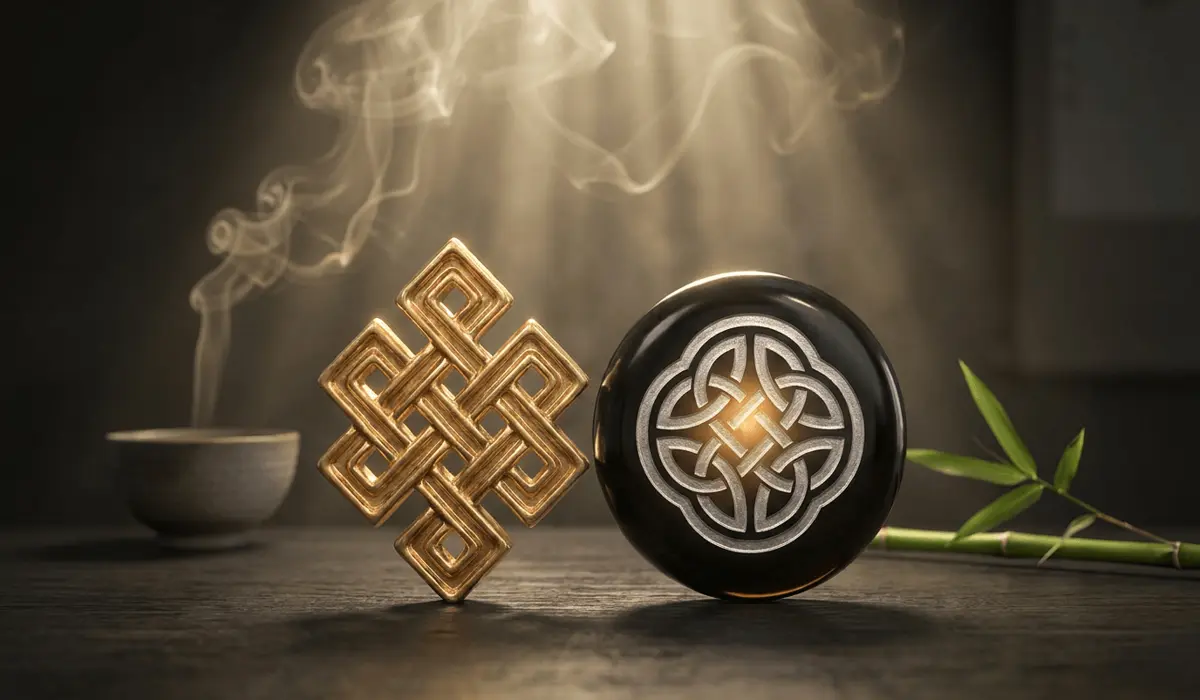
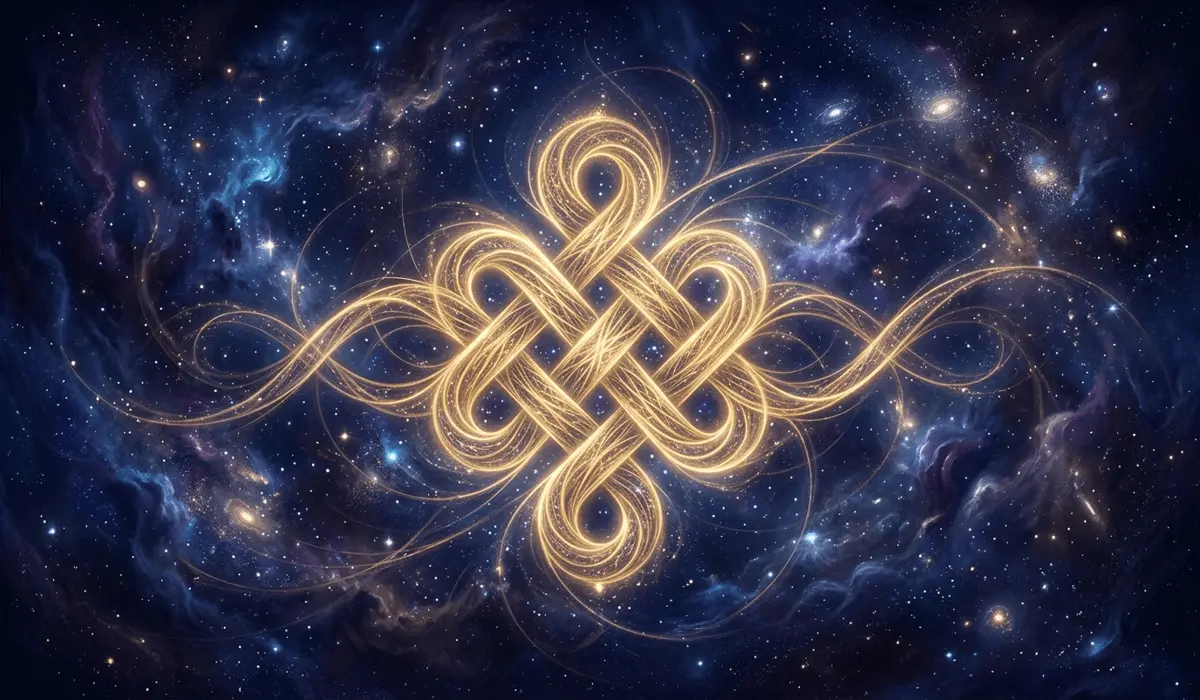
Humanity has always searched for shapes that express the mystery of living. Long before written records, early civilizations created repeating visual patterns to explain the passage of time, the mystery of breath, and the endless cycles of nature. Sacred geometry acts as a quiet, universal language of the subconscious mind that speaks across vast distances and different eras without needing translated words.
When we trace continuous lines, our awareness slows down and moves away from linear worry. Ancient cultures knew that a line without a beginning or an end mirrors the hidden structure of the universe itself. By creating endless paths in stone, silk, and precious metal, ancient craftspeople turned abstract cosmological ideas into physical anchors for meditation and daily spiritual alignment.
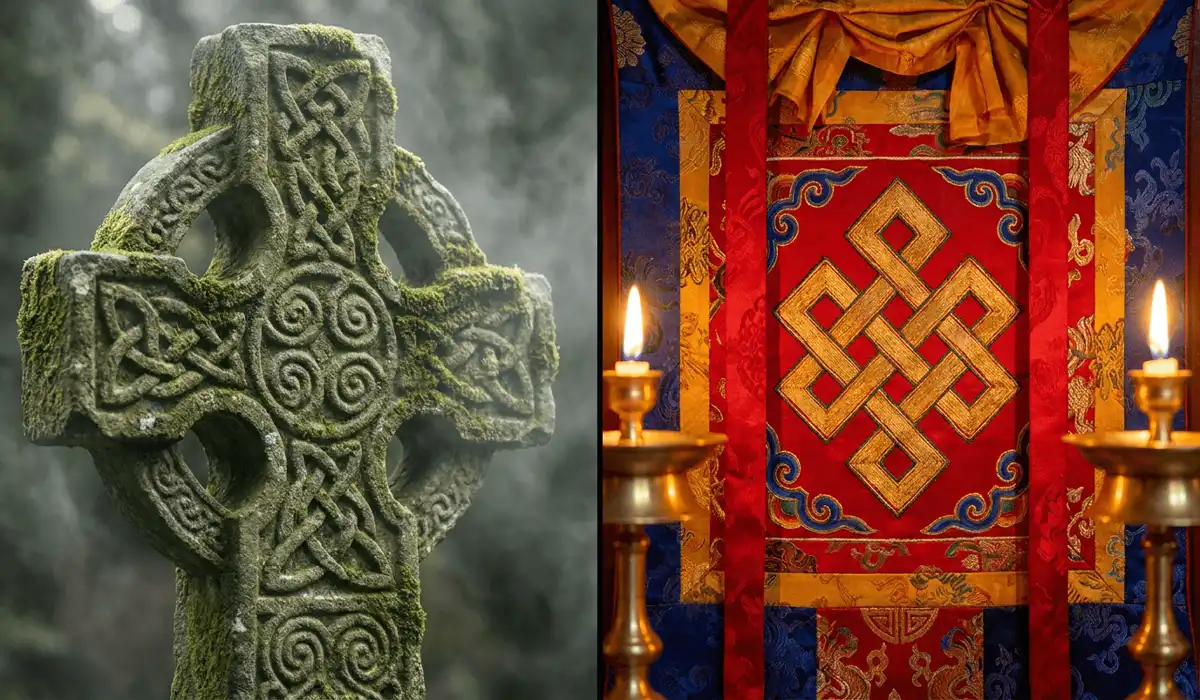
Today, these continuous loops carry deep symbolic weight in our modern world. From weathered Irish stone crosses to hand-woven Tibetan thangkas, sacred knotwork offers a timeless reminder of human connection. At Aura & Luck, our research team explores these sacred motifs to help modern seekers reconnect with ancient wisdom and inner harmony.
Quick Answer: While both traditions use continuous geometric loops to represent eternity, the Buddhist Endless Knot (Shrivatsa) emerged in ancient Indian iconography to symbolize dependent origination (Pratītyasamutpāda) and infinite wisdom. Conversely, the Celtic Knot developed in medieval Insular art to represent elemental balance, natural cycles, and the unbroken relationship between physical and spiritual realms.
Ancient Origins and Sacred Legends: Unveiling the Genesis of Eternity
The Buddhist Endless Knot: From Vedic Roots to Vajrayana Enlightenment
The sacred story of the Buddhist Endless Knot begins long before the birth of historic Tibetan traditions. In ancient Vedic culture, the motif emerged as the Shrivatsa, a sacred mark carved upon the chest of the deity Vishnu. This divine mark symbolized the presence of Lakshmi, representing auspicious energy, abundance, and heavenly grace.
As spiritual traditions evolved across the Indian subcontinent, early Jain iconography integrated the emblem as one of the sacred Ashtamangala. In Jain philosophy, the mark represented pure consciousness and the soul's liberation from earthly burdens. Researchers studying historical development across Historical Reference Databases note how this geometric emblem naturally migrated across early Asian spiritual traditions.
When Siddhartha Gautama attained enlightenment under the Bodhi tree, ancient legends tell us that divine beings offered him eight sacred gifts. Among these gifts was the Endless Knot, presenting a visual map of the Buddha's boundless wisdom and infinite compassion. Within Vajrayana Tibetan Buddhism, this symbol became known as the Pata, serving as an active cosmological chart for walking the spiritual path.
The Celtic Knot: Insular Art and the Eternal Weave of Nature
Across the western edge of Europe, a distinct yet striking geometric tradition took shape within the Insular Celtic culture. Between the 5th and 6th centuries, skilled craftspeople across Ireland, Scotland, and Northumbria developed intricate interlace patterns. These flowing designs drew inspiration from earlier Roman mosaic floors and Germanic animal carvings, refining them into continuous spiritual loops.
Celtic artisans carved these infinite threads into stone high crosses and drew them across sacred illuminated manuscripts. Masterpieces like the Book of Kells feature endless ribbons of ink that wrap around holy words and protective borders. These complex lines were not merely decorative fillers for empty parchment space; they functioned as active visual guardians meant to hold sacred wisdom safe from negative influences.
The underlying philosophy of the Celtic knot grew directly out of Druidic animism and deep earth worship. To the ancient Celts, the physical landscape was alive with unseen spiritual forces. The unbroken lines reflected an ecosystem where land, sea, sky, and spirit woven together in a endless tapestry without absolute beginnings or ends.
Comparative Origin Dynamics: Cultural Divergence and Geometric Parallelism
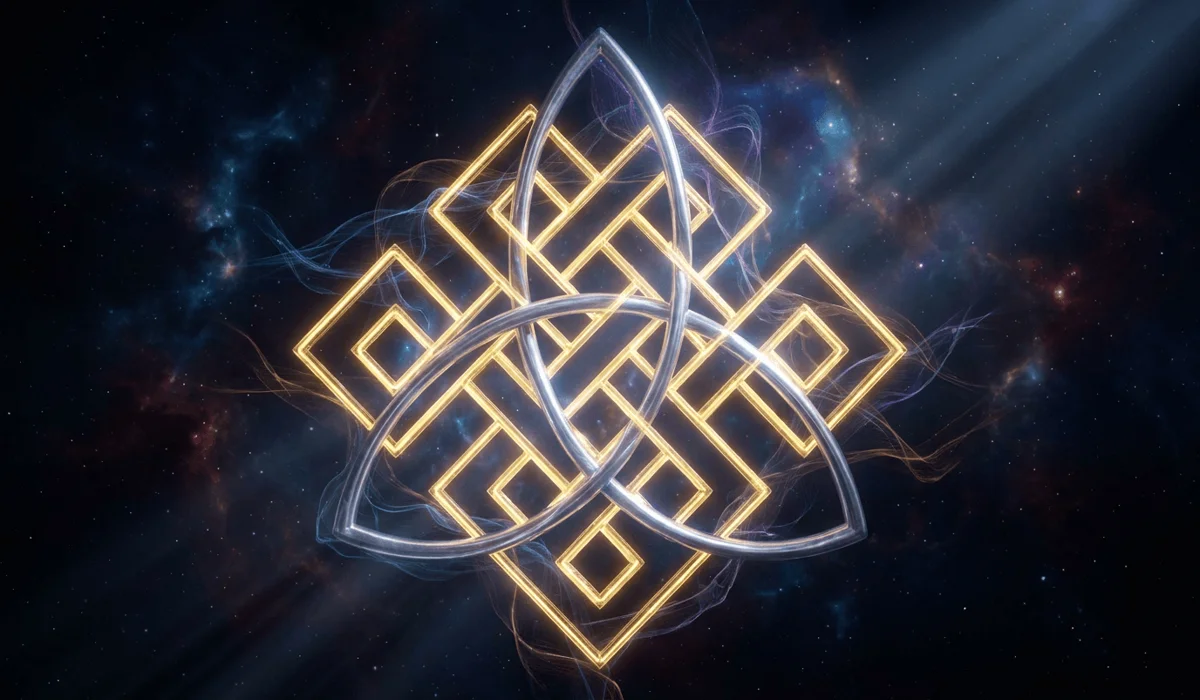
When we examine both traditions side by side, fascinating structural differences emerge immediately. The Buddhist Endless Knot relies heavily on a precise grid-based design made of sharp right angles and rectangular loops. This balanced, square-like structure reflects foundational stability, order, and the absolute laws of spiritual truth.
In contrast, Insular Celtic knotwork favors fluid curves, organic spirals, and tri-fold patterns. Celtic lines roll like ocean waves, vine tendrils, and shifting winds through natural seasonal transitions. While Asian monks mapped precise cosmological balance through geometric symmetry, Celtic scribes mapped the untamed movements of physical nature and cosmic balance.
Despite these visual differences, both cultures shared a profound spiritual discipline. Scribes in Irish monasteries and monks in Himalayan temples treated the creation of knots as a form of active prayer. Tracing every line required deep focus, transforming artistic labor into a profound act of divine meditation.
The Hidden Philosophy: Decoding Sacred Knot Geometry
Pratītyasamutpāda and Samsara: The Buddhist Knot of Interdependence
At the heart of Buddhist philosophy lies the concept of Pratītyasamutpāda, or dependent origination. This doctrine teaches that no event, person, or object exists completely on its own. Every phenomenon arises in direct dependence upon surrounding conditions, forming an endless web of cause and effect across time and space.
The Buddhist Endless Knot gives physical form to this abstract truth through its crossing lines. Every square loop feeds directly into the next, demonstrating how past intentions shape present realities and future outcomes. If you tug gently on one corner of the knot, the tension shifts across the entire structure, perfectly illustrating the nature of karmic cause and effect.
Furthermore, this sacred geometry represents the perfect union of ultimate wisdom and active compassion. In Tibetan teachings, method and wisdom must work together like two threads woven into a single rope. To explore these deeper spiritual layers further, you can read our detailed study on Endless Knot Symbolism.
Cosmic Balance and Sacred Weave: The Celtic Knot of Realm Convergence
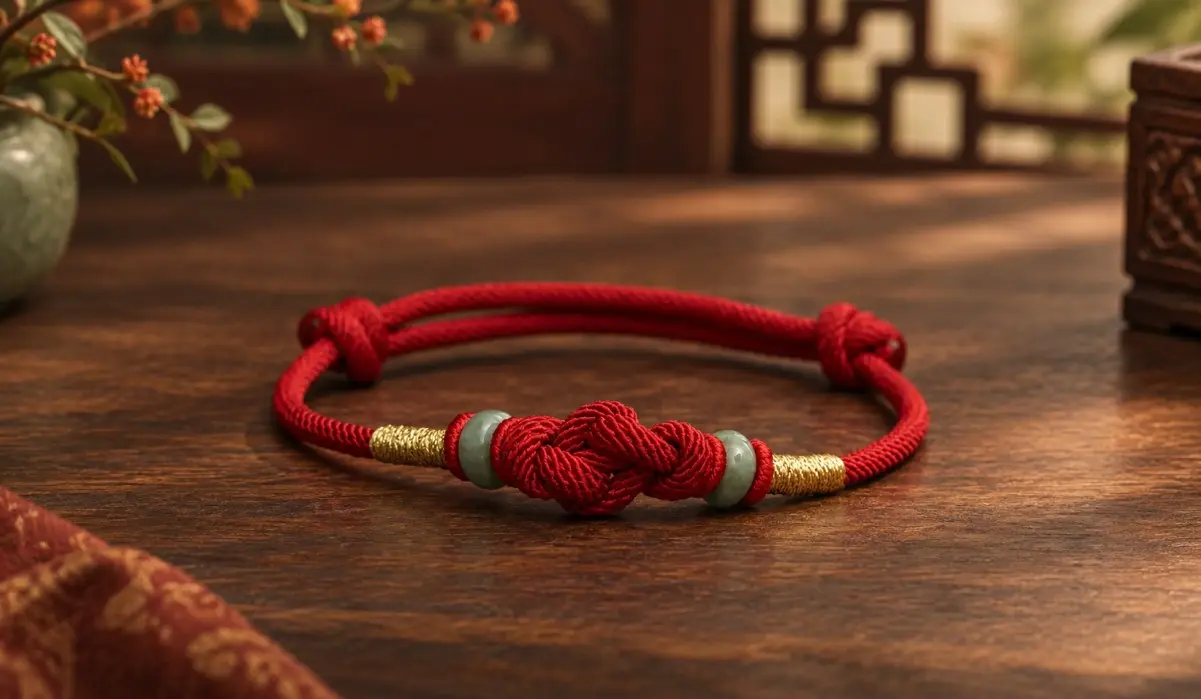
In the Western Celtic worldview, sacred geometry centered around the powerful dynamics of the number three. The famous Triquetra, or Trinity Knot, uses three interconnected arcs to represent the fundamental divisions of existence. Celts viewed reality as three intertwined realms: the Earth beneath our feet, the Sea surrounding our shores, and the Sky stretching overhead.
This triadic balance extended deep into human experience, connecting the past, present, and future into one unified thread. The infinite Celtic weave also represented the ongoing dialogue between our mortal physical world and the mystical Otherworld. Boundaries between seen and unseen worlds were viewed as porous, allowing energy to move naturally through continuous lines.
Ancient Celtic communities also relied on continuous line geometry as a form of energetic protection. Craftspeople created intricate closed patterns around doorways, shields, and personal amulets to trap disharmonious energies within endless loops. This traditional practice, known as sacred weave protection, created an unbroken shield of spiritual safety around the wearer.
Structural Symbolic Breakdown: Angles, Loops, and Spatial Dynamics
Analyzing the exact visual mechanics of these motifs helps us understand their unique energetic qualities. The right angles of the Tibetan knot create four outer loops surrounding a central core. These four corners reflect the Four Noble Truths, establishing a grounded mental anchor that restores balance during periods of emotional disturbance.
Celtic knotwork, however, relies on flowing circular motions and triquetra curves that encourage movement. The absence of straight lines and sharp corners allows visual focus to flow smoothly across the pattern without interruption. This curved geometry encourages natural intuitive movement, making it an excellent symbol for inner emotional healing.
Key Insight: The Buddhist Endless Knot uses right-angled geometric stability to structure mind, karma, and cosmic law. The Celtic Knot uses organic, sweeping curves to reflect the flowing energy of nature, spiritual realms, and cyclical life forces.
Comparative Structural Analysis
To help visualize how these two iconic traditions compare across historical, visual, and philosophical dimensions, our research team created this detailed reference breakdown:
| Symbolic Dimension | Buddhist Endless Knot (Shrivatsa) | Celtic Knot (Insular Interlace) |
|---|---|---|
| Primary Cultural Origin | Vedic India & Tibetan Vajrayana Buddhism | Medieval Insular Celtic Art (Ireland/Scotland) |
| Core Geometry | Rectilinear grids, right angles, squared loops | Curvilinear ribbons, spirals, triadic curves |
| Primary Philosophy | Dependent origination (Pratītyasamutpāda) | Cosmic balance, elemental realms, nature animism |
| Key Symbolic Focus | Karmic cause and effect, infinite wisdom | Eternal love, realm convergence, protective weave |
| Primary Media | Silk thangkas, temple carvings, brass talismans | Stone high crosses, illuminated codices, metalwork |
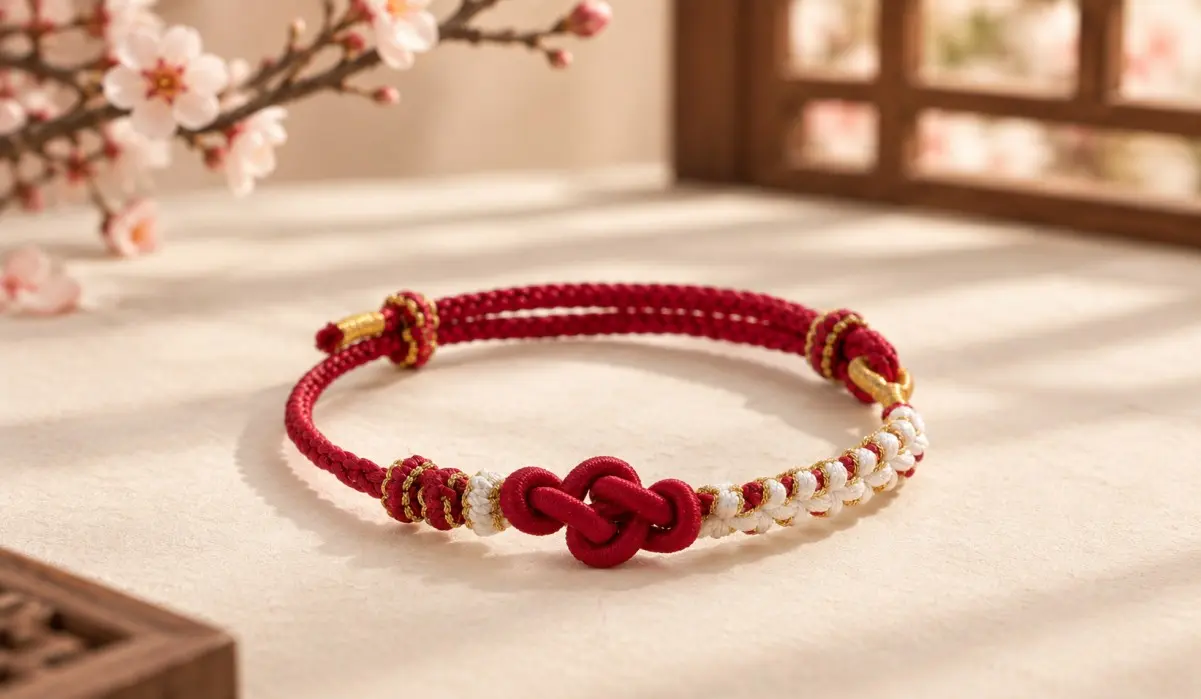
Eastern vs. Western Perspectives on Sacred Knotwork
The Eastern Mindset: Karmic Cycles, Ashtamangala, and Feng Shui Adaptations
In Eastern traditions, the Endless Knot continues to play a vibrant role in daily spiritual practices. As one of the eight sacred emblems, it decorates Tibetan monasteries, temple doors, and ceremonial scarves. Every presence of the symbol acts as a gentle reminder of cosmic harmony, encouraging viewers to act with mindfulness and kindness.
As Buddhist teachings spread across East Asia, the symbol adapted into regional cultural traditions. In Chinese tradition, it evolved into the beloved Mystic Knot, or Pan Chang. Practitioners following recognized Feng Shui Society Standards utilize this pattern to encourage continuous prosperity, good health, and stable home energy.
By removing sharp ends, the motif ensures that positive energy flows smoothly without stagnating in dark corners. It anchors the wandering mind back to the present moment, transforming abstract philosophy into practical daily living.
The Western Insular Tradition: Triquetra, Eternal Loops, and Nature-Spirit Harmony
In the West, the tradition underwent a transformation as early Christianity integrated indigenous Celtic symbolism. Monks adapted older pagan interlace into early Christian art, using triadic loops to illustrate the Holy Trinity while honoring the local respect for nature's eternal cycles.
The Celtic Loop of Eternity remained a deeply meaningful symbol of life's resilience. Without a visible starting point or ending boundary, it mirrored the rhythmic return of spring after cold winters, the movement of ocean tides, and the generational continuity of family lines. To explore how historical patterns enrich modern spiritual practices, feel free to visit our dedicated Culture and Symbolism Heritage library.
Modern revivals have reclaimed these ancient patterns for contemporary spiritual growth. Neo-pagan and earth-centered practices wear Celtic knots to honor ancestral roots, connect with seasonal shifts, and ground personal energy in the healing rhythms of nature.
The Universal Convergence: Non-Linear Time and Spiritual Unity
The most fascinating revelation in symbolic anthropology is how distant cultures independently arrived at identical geometric patterns. Neither medieval Irish monks nor ancient Himalayan sages required direct contact to discover the power of continuous line geometry. Both traditions recognized that linear views of time fail to capture the true depth of existence.
By rejecting straight lines with definite ends, both cultures embraced a cyclical model of time. Life, death, rebirth, cause, effect, and spiritual growth were viewed as continuous loops within a grand cosmic tapestry. This universal convergence shows that human consciousness shares a deep, innate understanding of cosmic order.
Wearing the Sacred Amulet: Why Sacred Knot Jewelry Matters Today
Translating Ancient Geometry into Modern Spiritual Anchors
In our modern fast-paced world, worn symbols serve a much greater purpose than simple aesthetic fashion. Wearing a sacred knot pendant or bracelet transforms ancient geometry into a personal visual and physical anchor throughout busy workdays. When stress builds up, touching the continuous lines of a worn talisman offers immediate comfort.
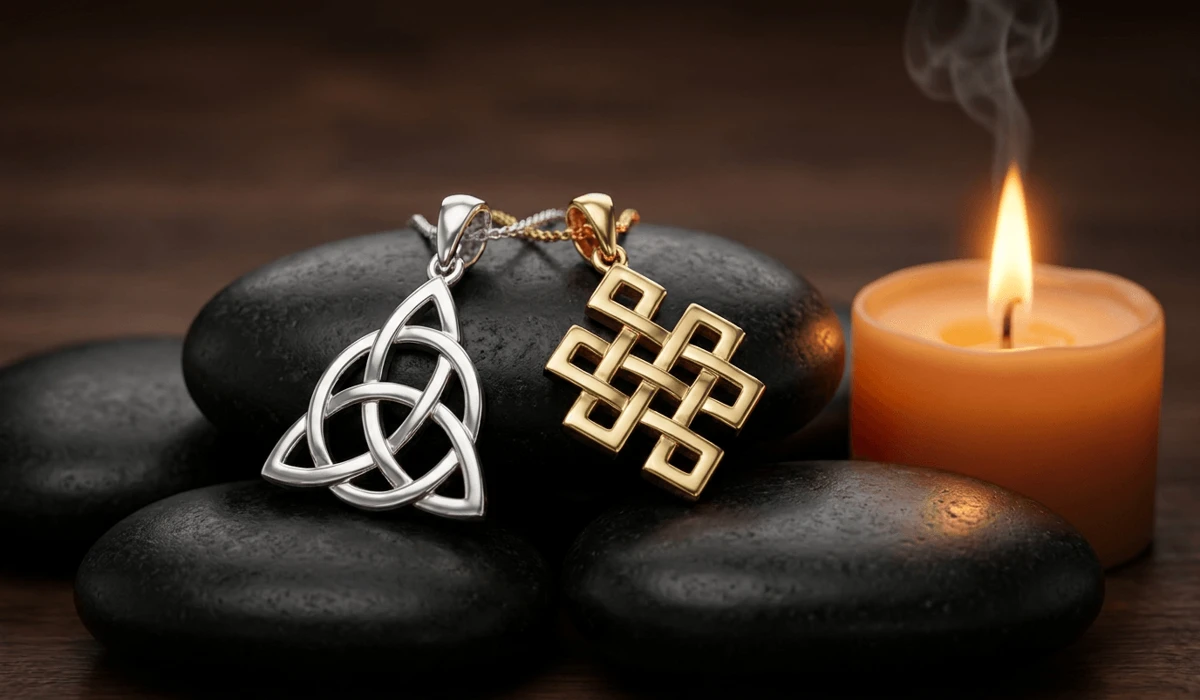
The tactile experience of running your thumb across polished metal loops helps soothe an overstimulated nervous system. It gently interrupts anxious thought patterns, refocusing your attention on the present moment. Choosing carefully crafted holistic balance jewelry helps align your personal inner energy with steady cosmic rhythms.
Overcoming Modern Digital Burnout through Sacred Geometric Focus
Many people today suffer from constant digital fatigue due to hours spent looking at flat, rectangular screens. Rapid streams of notifications shatter our attention spans, leaving us feeling scattered and drained. Linear digital feeds force our brains to process information in fragmented, unnatural bursts.
Looking at sacred knot geometry offers a soothing visual rest for exhausted eyes and minds. The balanced, unbroken lines encourage your gaze to move softly across harmonious paths. This gentle visual engagement calms busy brainwave patterns, lowering stress levels and restoring intuitive clarity after long hours of screen work.
Energy Protection vs. Spiritual Awakening: Selecting Your Intention
Choosing between these two sacred symbols comes down to identifying your personal spiritual goals and daily life needs. While both motifs promote harmony and balance, their underlying energies serve slightly different purposes:
Select a Celtic Knot talisman when you seek elemental grounding, emotional resilience, and personal protection. It is ideal for honoring long-standing relationships, celebrating family ties, and building a secure energetic boundary against negative environmental influences. If you are interested in spatial harmony, explore our guide on the Feng Shui Mystic Knot for practical placement ideas.
Choose a Buddhist Endless Knot talisman when your primary goal is spiritual growth, cultivating mindfulness, and balancing personal karma. It serves as an ideal meditation aid for developing patience, attracting harmonious opportunities, and reminding yourself of your interconnectedness with all living beings.
Rituals and Practice: How to Meditate Using Sacred Knot Geometry
Visual Tracing Meditation: Unraveling Illusion through Non-Linear Paths
You can transform any sacred knot talisman or visual image into an effective tool for deep meditation. Begin by setting up a quiet space, lighting natural incense like sandalwood or cedar, and positioning your knot emblem comfortably at eye level. Sit with a straight, relaxed posture and allow your breathing to become slow and rhythmic.
Softly rest your eyes on the center of the knot without straining to analyze its construction. Slowly follow a single thread with your eyes as it travels through overlapping crossings, under intersecting ribbons, and around outer curves. Continue tracing the line continuously without stopping at any junction point.
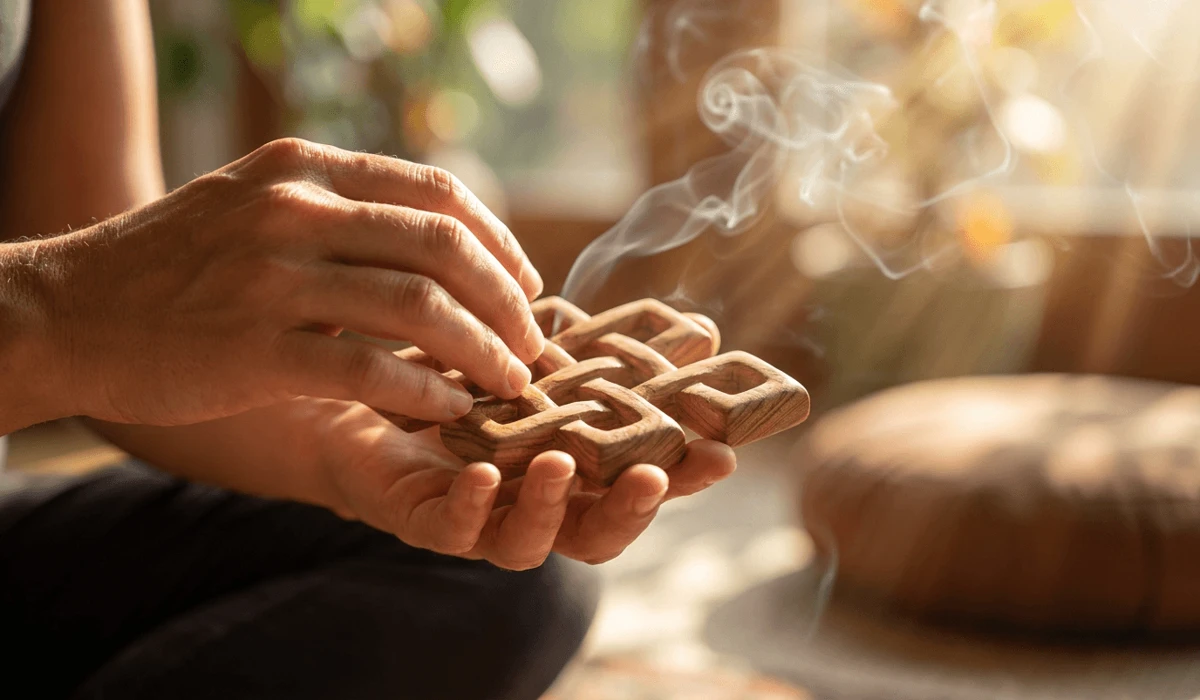
As you trace the non-ending path, notice how quickly your analytical thoughts quiet down. With no final destination or fixed ending point, your mind learns to drop the need for constant control. This simple practice helps dissolve feelings of isolation, gently reminding you that you are an integral part of an endless universe.
Sacred Breathwork and Geometric Alignment
Combine your visual focus with balanced breathwork to deepen your meditation experience. As you trace an outer loop, inhale smoothly for a count of four, drawing clean, vibrant energy into your body. When your eyes reach an inner intersection point, pause your breath gently for four counts, feeling steady and grounded.
Exhale slowly for four counts as your eyes move along the next returning loop, releasing tension, mental fatigue, and linear worry back into the universe. Repeat this rhythmic cycle for ten to fifteen minutes every morning to set a peaceful, balanced tone for your day ahead.
Video source: YouTube
Author: Spiritual Echo
Original video link: https://www.youtube.com/watch?v=flQDO05GaTk
Cultural Etiquette and Taboos: Honoring Sacred Knotwork
Sacred Respect: Guidelines for Wearing Cultural Symbols
Wearing sacred cultural symbols carries a meaningful responsibility to honor their rich traditions. Sacred knotwork should never be treated as cheap, disposable fashion, but rather as an active spiritual commitment. Take time to learn the cultural history behind the sacred geometry you wear every day.
Eastern traditions maintain specific guidelines regarding how sacred emblems like the Buddhist Endless Knot are handled. Respectful placement requires keeping sacred emblems elevated on the upper body, such as pendants, brooches, or earrings. Avoid placing holy symbols on footwear, ankles, or lower body garments that touch the floor.
When consulting historical records like those archived in Britannica Encyclopedia Resources, we learn how sacred art demands intentional care. Showing thoughtful respect preserves the living lineage of these emblems, ensuring they remain strong sources of blessing and protection.
Intentionality and Care: Preserving the Sacred Energy of Knot Jewelry
Regular energetic maintenance keeps your symbolic jewelry clear, vibrant, and aligned with your personal intentions. Cleanse your talismans periodically using smudging smoke from white sage or palo santo wood, or bathe them in soft moonlight overnight. Sound vibration from a Tibetan singing bowl also clears accumulated heavy energies from metal surfaces.
Before wearing a new knot amulet for the first time, hold it gently between your palms during quiet meditation. Set a clear, positive intention—such as emotional peace, physical resilience, or wise decision-making—into the metal loops. This simple blessing locks your unique energetic focus directly into the continuous weave.
Cultural Care Essential: Keep sacred symbols clean, treat them with spiritual respect, and elevate them on the upper body. Approaching sacred geometry with clear intention transforms an accessory into a protective daily talisman.
Actionable Rituals for Daily Alignment
Here are four practical steps to integrate the wisdom of sacred knots into your everyday routine:
- ☸️ Morning Intention Setting: Hold your knot talisman each morning, trace one loop with your finger, and speak a single unifying intention for your day.
- 🕉️ Screen Break Grounding: Place a sacred knot emblem near your workspace. Every hour, pause for 30 seconds to follow its continuous lines and rest your eyes from digital screens.
- 🧿 Tactile Stress Relief: When facing challenging conversations or anxious moments, touch your knot necklace or bracelet to restore calm emotional boundaries.
- 🌸 Evening Gratitude Weave: Before sleeping, trace the knot mentally while reviewing your day, recognizing how every experience connected naturally into the next.
Practicing these simple steps every day helps bridge ancient sacred geometry with modern life, helping you maintain clarity, grace, and inner strength.
Frequently Asked Questions
Q: What is the key difference between a Celtic knot and a Buddhist endless knot?
A: The key differences lie in their geographical origins, visual structures, and underlying philosophies. The Buddhist Endless Knot originated in ancient Asian traditions using right-angled, squared geometry to symbolize dependent origination, karmic cause and effect, and the Buddha's infinite wisdom. The Celtic Knot emerged in medieval Insular European art using organic, fluid curves and triadic shapes to represent elemental balance, natural seasonal cycles, and the unbroken connection between mortal and spiritual realms.
Q: How do Celtic knots and Buddhist endless knots symbolize eternity differently?
A: Celtic knots express eternity through the continuous flow of physical nature, seasonal renewal, and the cyclical movement of life, death, and rebirth. The Buddhist Endless Knot expresses eternity through the infinite web of karmic cause and effect and the timeless, uncreated nature of the enlightened mind, showing that all phenomena are permanently interconnected without beginning or end.
Q: What does the Buddhist endless knot represent regarding karma and cause and effect?
A: The interwoven, unbroken paths of the Buddhist Endless Knot visually demonstrate that no action occurs in isolation. Every thought, word, and intention ripples through the infinite crossing paths of the cosmic weave, ultimately looping back to its source. It serves as a visual reminder to act with mindfulness, kindness, and ethical awareness in every moment.
Q: Can you wear both a Celtic knot and a Buddhist endless knot together?
A: Yes, you can wear both symbols together harmoniously. Combining both traditions creates a balanced spiritual synergy, pairing Western elemental grounding and nature protection with Eastern transcendent wisdom and karmic awareness. When worn together with clear, respectful intent, they reinforce the universal truth that all sacred paths ultimately lead to unity.
Q: How can meditating on endless knot geometry help reduce digital burnout in 2026?
A: Modern digital screens force our minds to process rapid, fragmented streams of linear information, causing mental fatigue and stress. Meditating on the continuous, non-linear paths of an endless knot gives your eyes a restful visual anchor. Following the non-ending lines slows brainwave activity, interrupts anxious thought patterns, and resets overstimulated cognitive systems.
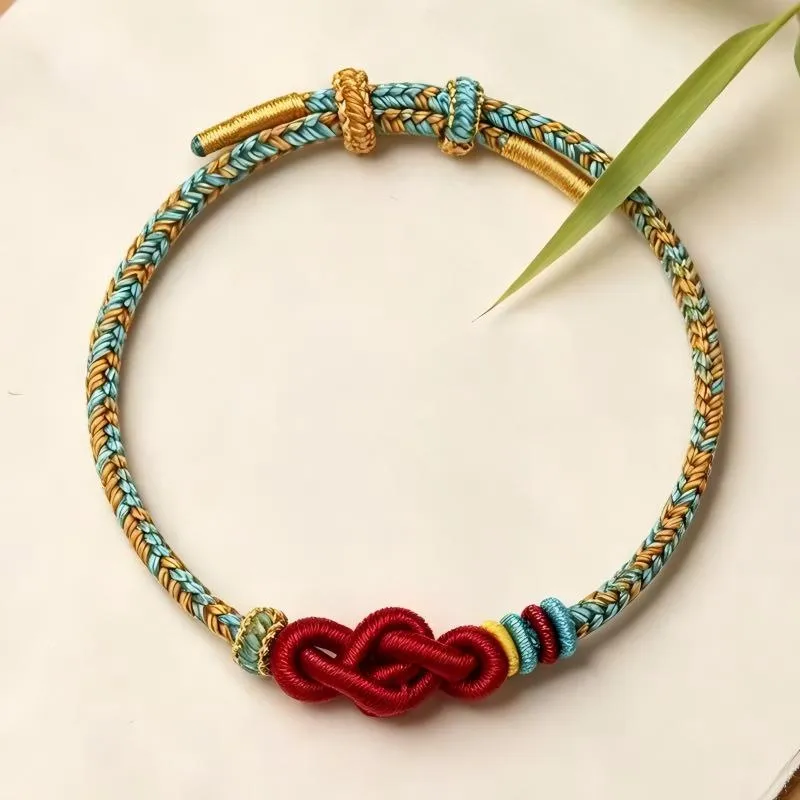
Handwoven Wenchang Knot Bracelet – Academic Success & Good Luck Chinese Cord Jewelry
Teal and gold-tone cords surround a striking red Wenchang knot in this handwoven Chinese bracelet. Its balanced color palette, decorative wrapped accents and adjustable cord construction create a meaningful accessory inspired by study, wisdom and steady progress.
Shop NowConclusion: Integrating the Wisdom of Sacred Knots
Embracing Universal Harmony Through Eternal Geometry
Despite being separated by vast continents, high mountain ranges, and different eras, ancient Celtic mystics and Eastern Buddhist sages unlocked the exact same visual language. Both traditions recognized that straight, linear lines are insufficient for capturing the true beauty and complexity of human existence. By honoring the continuous loop, both cultures left behind timeless visual keys for personal alignment.
Living with sacred knot geometry reminds us that we are never truly isolated or lost. Every challenge we meet and every joy we experience is an interwoven thread within a grand cosmic tapestry. Embracing this timeless perspective helps us navigate modern life with calm confidence, patience, and profound peace.
Final Blessing and Journey Deeper
May the continuous lines of sacred knotwork remind you that you are forever connected to the infinite fabric of life, spirit, and wisdom. May your personal journey remain balanced, protected, and filled with deep harmony across every turn of the path.
Disclaimer: The information provided in this article is intended strictly for educational, cultural, and informational purposes. It does not constitute medical, legal, financial, or professional health advice. Readers seeking guidance regarding health conditions, psychological well-being, or legal matters should consult with appropriately qualified and licensed professionals.

Longyi Luck
Longyi Luck is a Feng Shui practitioner and spiritual researcher who blends traditional year-based wisdom with modern lifestyle insights, specializing in Feng Shui, spirituality, meditation, and mindfulness. With years of dedicated study and practice, Longyi explores cultural symbolism and the practical application of ancient wisdom to help individuals cultivate balance, clarity, and harmony in everyday life. Since 2020, Longyi has been committed to translating timeless traditions into accessible guidance for the modern world.
longyi@auraandluck.com
.webp?w=800&h=800)
.webp?w=800&h=800)