
Introduction
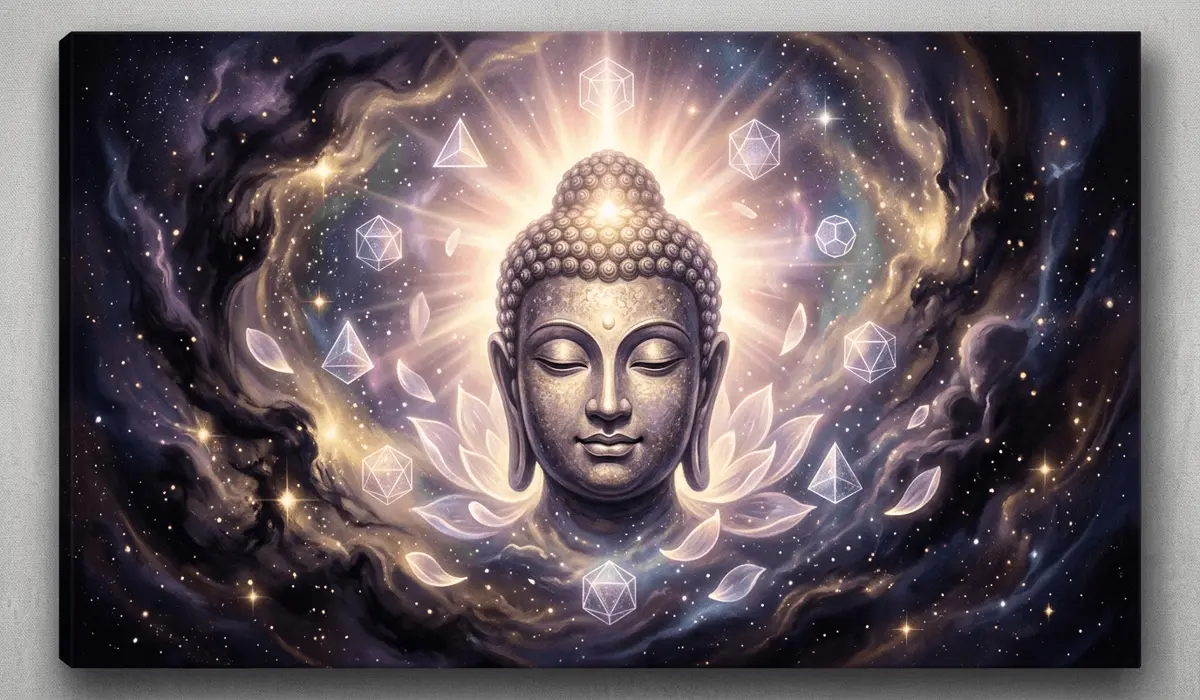
The question of whether it is disrespectful to wear a Buddha head pendant is common for many spiritual seekers today. We find that most people wear these items to show love for Buddhist tradition and respect for the path of peace. However, the answer depends on your location, your mindfulness and intention, and how you treat the piece of jewelry. Many Western practitioners view it as a symbol of inner peace, while some Eastern cultures see the image of a head alone as a sign of a broken statue, which involves deep religious and cultural sensitivity.
-
Wearing a Buddha pendant is usually seen as a sign of reverence if kept high on the body.
-
Cultural views differ between Western spiritual circles and traditional Southeast Asian communities.
-
The head is the most sacred part of the body in many Eastern philosophies.
-
Proper care involves removing the jewelry during sleep, bathing, or exercise.
-
Intention matters most when using these spiritual protection amulets for daily focus.
Why Is This Topic So Important Today?
With the deepening of globalization and East-West cultural exchange, Buddhist elements have gradually integrated into fashion trends. From celebrity outfits to street style, Buddha images now appear on T-shirts, bags, and jewelry. However, this cultural fusion has also sparked discussions about the boundary between cultural appropriation and cultural appreciation. Understanding the etiquette of wearing Buddha jewelry is not only a sign of respect for religious beliefs but also a manifestation of cross-cultural competence.
A Thought-Provoking Phenomenon
Interestingly, in India—one of the birthplaces of Buddhism—the large-scale popularity of Buddha jewelry actually began with the "reverse input" from Western tourists. Many Southeast Asian scholars point out that in the era of globalization, the dissemination path of religious symbols is no longer a one-way street "from East to West," but a complex two-way cultural exchange. This means that wearers, regardless of where they are, bear the cultural responsibility of conveying the true meaning of this symbol. For this reason, learning how to wear and care for it properly is far more important than simply answering "yes" or "no."
What Is a Buddha Head Pendant?
Definition and Purpose
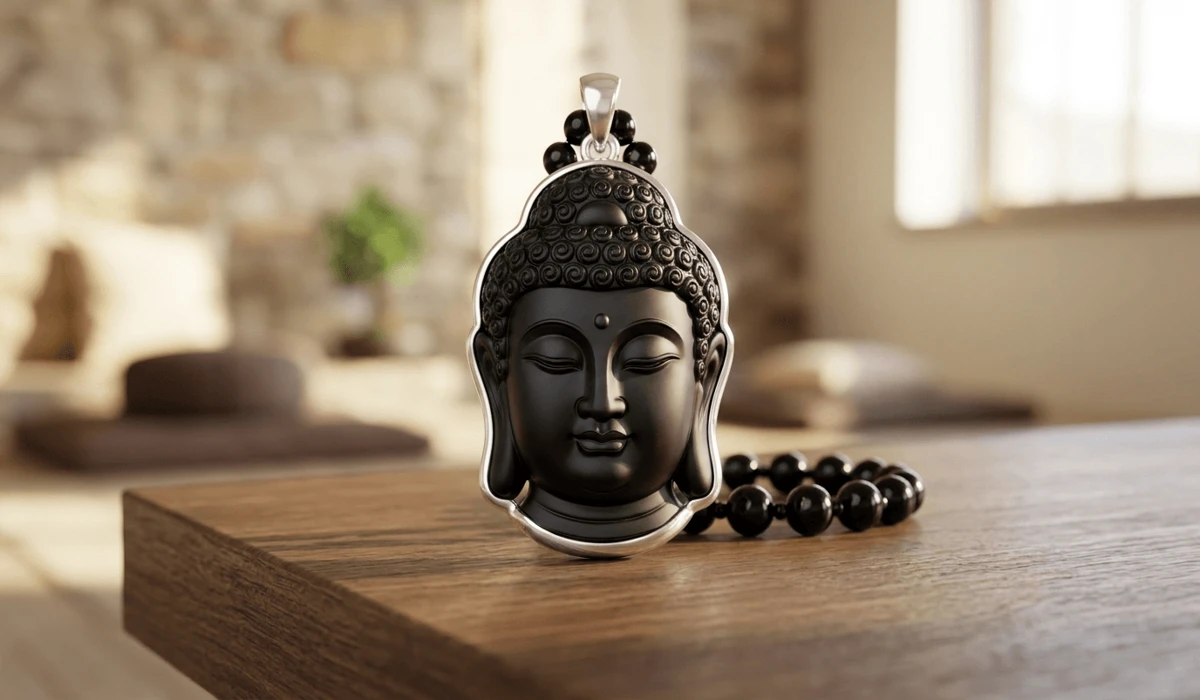
A Buddha head pendant is a spiritual item that shows the face of Siddhartha Gautama, the historical Buddha. We see these pieces as more than just fashion; they are visual anchors for a personal meditation practice. People often use these Buddhist symbols in fashion to remind themselves of their own spiritual goals. For many, it serves as a quiet reminder to stay calm in a busy world.
From a psychological perspective, the Buddha head pendant actually functions as an external memory trigger. When you wear it on your body, each time you inadvertently see or touch it, your brain instantly activates neural pathways associated with calmness and compassion. Over time, this conditioned response can effectively lower cortisol levels and alleviate anxiety symptoms. Therefore, it is not merely an ornament, but a portable mindfulness training tool.
Origin and Sacred Materials
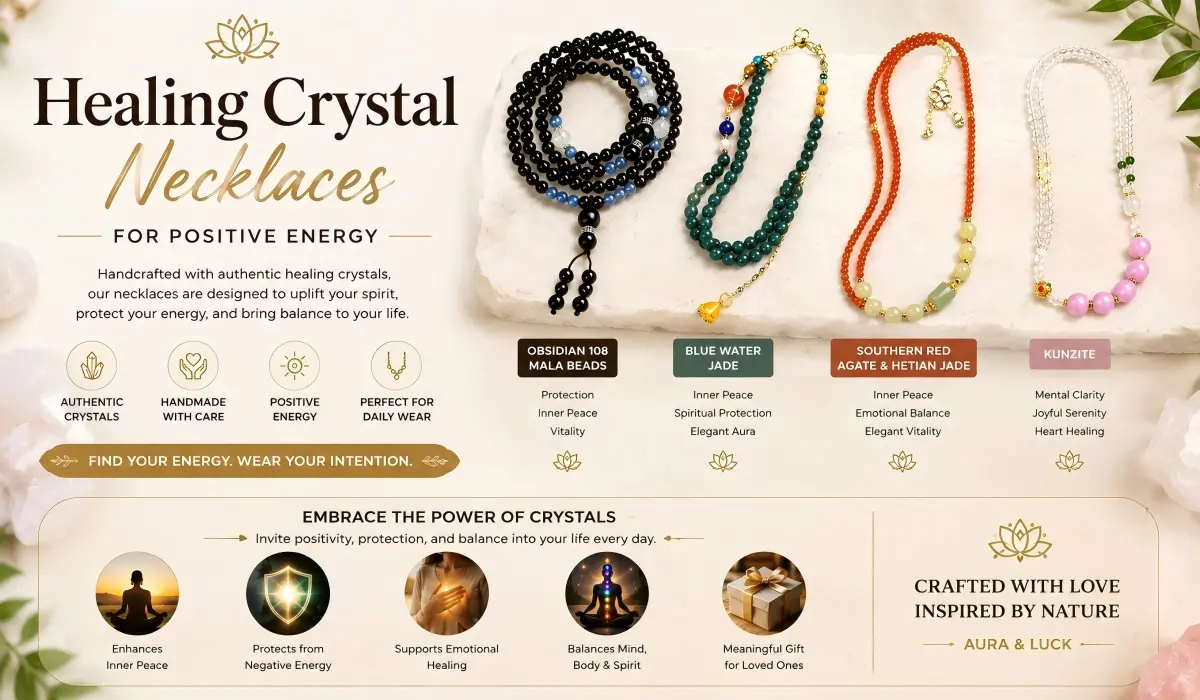
The art style of these pendants comes from ancient Gandhara and Mathura traditions that started long after the Buddha lived. In our workshop, we often use natural stones like obsidian, jade, or tiger's eye to make these pieces. These spiritual crystal materials are chosen because they help ground the energy of the wearer. Many pieces also feature sterling silver or gold to show the precious nature of the teachings.
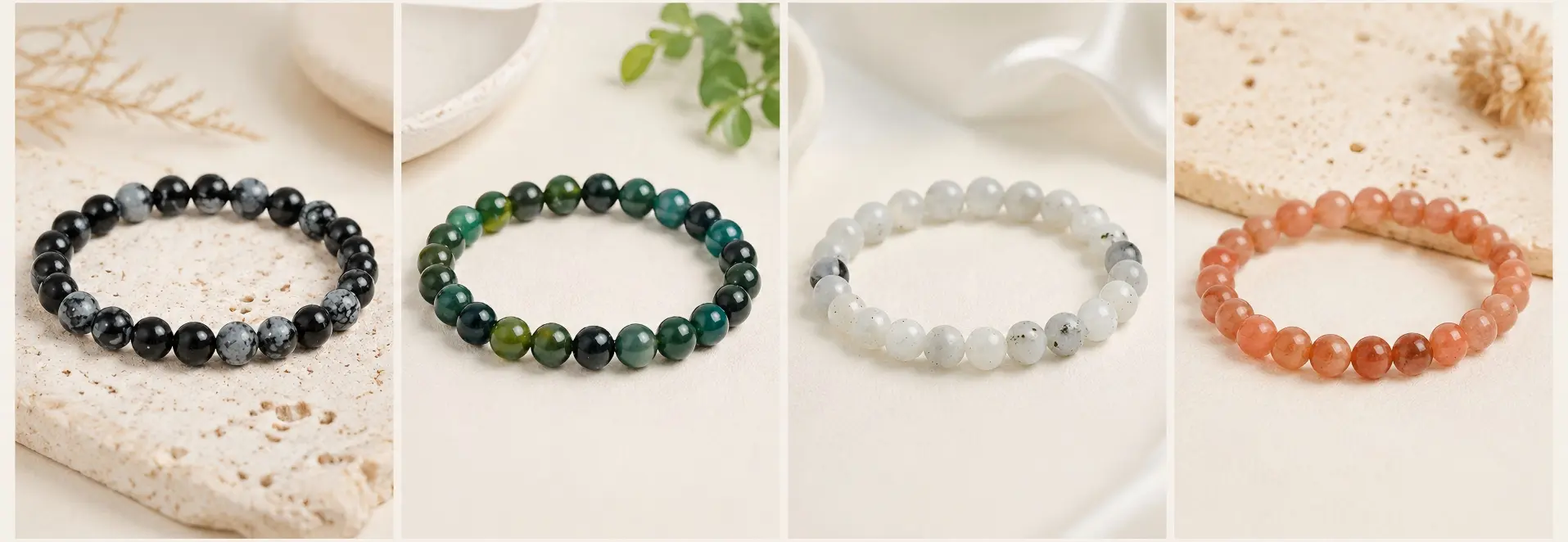
Different materials affect not only aesthetics but also energy conduction. For example, obsidian is a volcanic glass formed when lava cools rapidly, so it is believed to possess a powerful "absorption and transformation" ability, quickly absorbing low-frequency vibrations from the wearer's surroundings. Jade, on the other hand, is regarded in Chinese culture as "yu" (jade), and its warm, smooth texture symbolizes gentlemanly virtue, helping to cultivate a peaceful and tolerant mindset. Understanding these material properties can help you make a more precise choice based on your emotional needs.
Traditional Characteristics
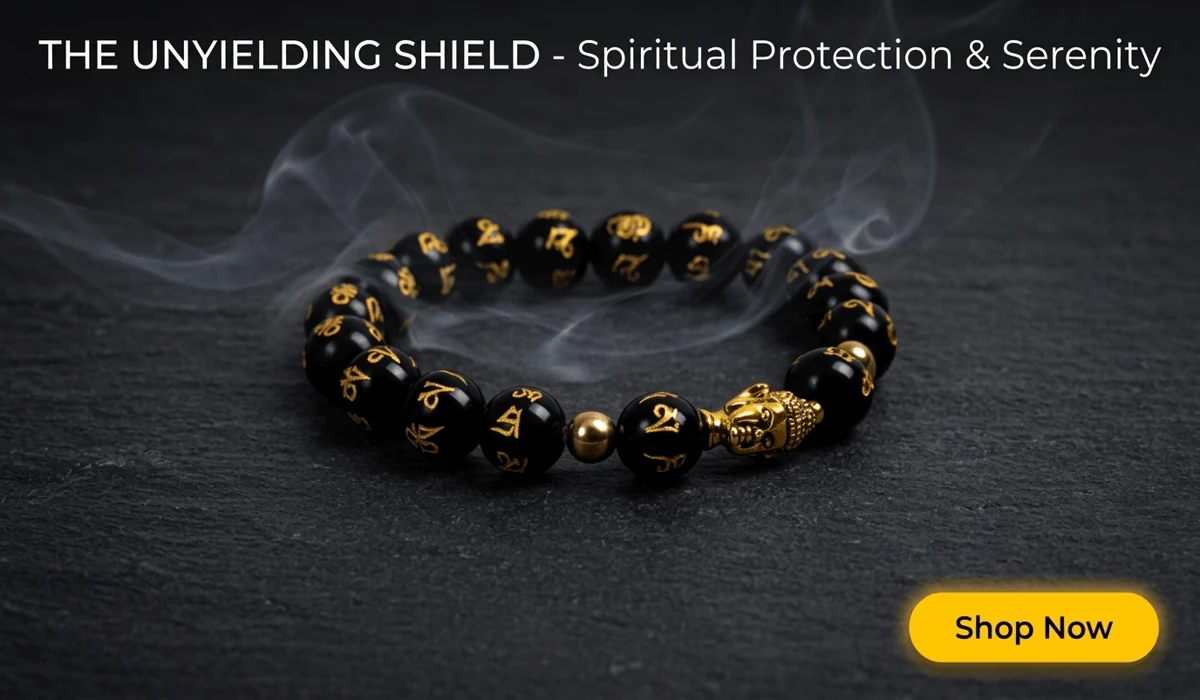
A true Buddha pendant shows specific marks of enlightenment, such as the Ushnisha, which is the bump on the head. The eyes are usually closed or half-closed to show a state of deep meditation and inner peace. You will also notice long earlobes, which remind us of the Buddha’s past as a prince who once wore heavy jewelry. These details make the spiritual meaning of Buddha necklace wear much deeper than a simple accessory.
-
Ushnisha (cranial protuberance): Represents the perfection of the Buddha's supreme wisdom, one of the sacred marks naturally formed after enlightenment.
-
Urna (white curl between the eyebrows): Symbolizes the Dharma eye that can see the true nature of all things in the universe.
-
Half-closed eyes: Neither fully closed (not indulging in inner trance) nor fully open (not clinging to external illusions), embodying the Middle Way attitude toward life.
-
Long earlobes: A remnant from his princely days when he wore heavy earrings, reminding us to let go of attachments, even to former status and wealth.
| Material | Energy Property | Corresponding Chakra | Suitable For |
|---|---|---|---|
| Obsidian | Strong protection, absorbs negative energy | Root Chakra | Those needing emotional protection, easily affected by external influences |
| Jade | Peace, compassion, attracts good fortune | Heart Chakra | Those wishing to cultivate love and compassion, seeking inner peace |
| Tiger's Eye | Courage, confidence, balances emotions | Solar Plexus | Those needing enhanced decisiveness, overcoming fear |
| Amethyst | Spiritual awakening, purifies the mind | Crown / Third Eye | Deep meditation practitioners, those pursuing wisdom |
| Clear Quartz | Energy amplification, clarifies thinking | All Chakras | Beginners, those seeking comprehensive energy balance |
Spiritual Meaning and Symbolism
Traditional Wisdom
The image of the Buddha’s head represents the massive wisdom and the "Great Awakening" of an enlightened being. The cultural significance of Buddha head symbols lies in the reminder to follow the Middle Way. This path helps us find balance in everything we do in our daily lives. It is often linked to the Dharma wheel meaning, which shows the path to ending suffering for all people.
In contemporary society, people often oscillate between overwork and complete burnout, material pursuit and spiritual emptiness. The "Middle Way" taught by the Buddha is not simple compromise, but a dynamic balance wisdom. Wearing a Buddha pendant reminds you to examine at every moment: Am I falling into some extremes? Can I find that just-right point between action and rest, giving and receiving? This is one of the most valuable contributions of Buddhist philosophy to modern people.
Chakra Connections
In our experience, the Buddha head is strongly linked to the Crown Chakra at the top of the head. This energy center is responsible for our connection to a higher purpose and spiritual growth. The pendant also helps the Third Eye Chakra, which is about clear vision and deep intuition. Using sacred geometry in spiritual wear can help align your body with frequencies of compassion and love.
Why do we emphasize wearing the pendant above the heart? Beyond cultural etiquette, from an energy medicine perspective, the Crown Chakra (top of the head) and Third Eye (between the eyebrows) are the main gateways for receiving universal energy. When the pendant hangs above the chest, its energy field can continuously stimulate these two chakras, promoting the transition of brainwaves from tense Beta waves to relaxed Alpha and Theta waves, helping you enter a deep meditative state.
Cultural and Historical Context
In many parts of the world, Eastern philosophy jewelry is preferred as a full body image to show wholeness. Historically, these images were only for temples or home altars, so wearing them as jewelry is a new global trend. This shift shows a growing interest in mindfulness, but it requires us to understand the roots of the symbols. According to BuddhaNet, treating these icons with care is the best way to honor the tradition.
In ancient times, the main functions of Buddha images were teaching and worship. Devotees would gaze upon the Buddha image to recollect the Buddha's qualities and inspire their own diligence. When the Buddha image was miniaturized and worn on the body, its function shifted from "public veneration" to "personal practice." This transformation is not a disrespect to tradition, but a natural evolution of Buddhism adapting to modern society. The key is that regardless of form, inner reverence must not be lost.
Benefits and Intentions Associated with Buddha Head Pendants
Daily Focus and Calm
A pendant acts as a constant symbol of inner peace for the person wearing it. When you feel stressed at work, touching the cool stone of the pendant can bring you back to the present moment. Many of our clients say it helps them stay grounded during hard conversations. It works as a spiritual mirror that reflects your own potential for kindness and patience.
Neuroscience research shows that tactile stimulation (such as stroking smooth stones or metal) can activate the parasympathetic nervous system, thereby lowering heart rate and blood pressure. This explains why touching the pendant can quickly calm a person down. Therefore, wearing a Buddha pendant is not only a spiritual practice but also a scientifically supported emotional regulation strategy.
Mindfulness Practices
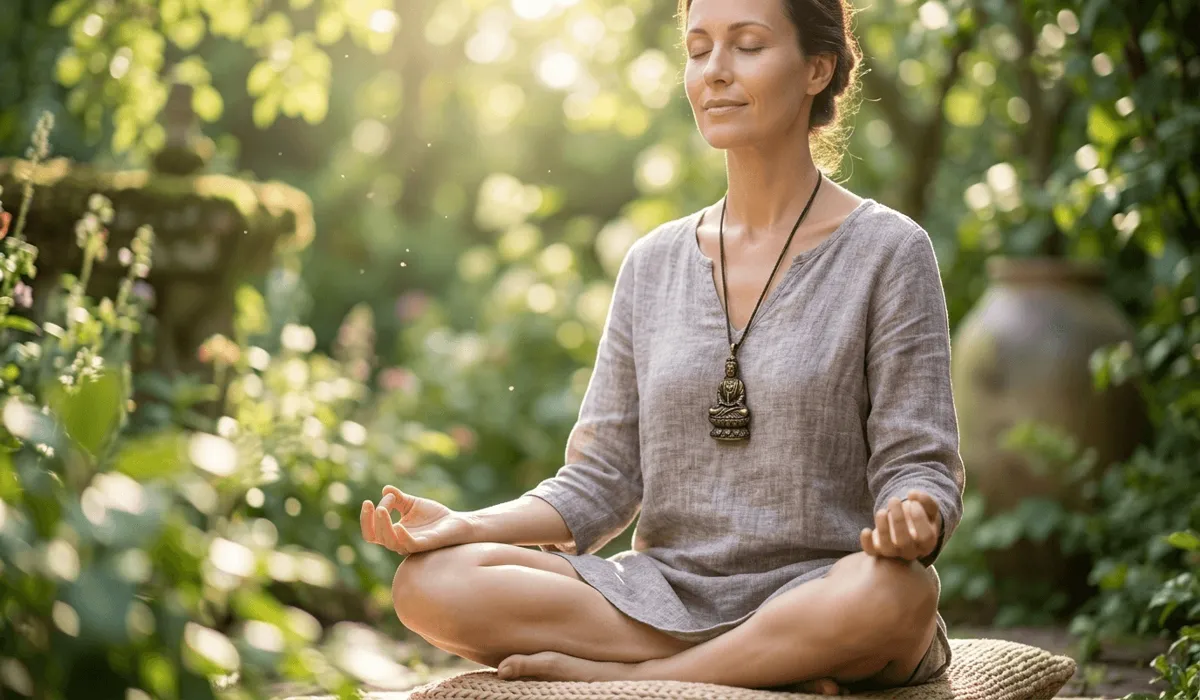
You can use the jewelry as a focal point during your morning meditation or a walking meditation. It helps you set a daily intention to be kind to others and yourself. These enlightenment symbols are perfect for clearing mental clutter and finding a focused mindset. They serve as physical reminders to practice "Right Speech" throughout your busy day.
A Simple "Pendant Mindfulness Practice" Routine
-
Morning Intention: When putting on the pendant each morning, hold it for 10 seconds and silently recite a positive affirmation, such as "Today I choose peace."
-
Daytime Anchoring: Whenever you feel distracted or anxious, gently touch the pendant three times and take one deep breath.
-
Evening Reflection: When taking it off at night, ask yourself: "Did I practice compassion today? What could I have done better?"
This simple three-step practice transforms a passively worn piece of jewelry into an active spiritual tool.
| Feature | Buddha Head Pendant | Full Buddha Pendant |
|---|---|---|
| Spiritual Focus | Wisdom and Mental Clarity | Wholeness and Protection |
| Traditional View | Modern and Artistic | Highly Sacred and Complete |
| Body Chakra | Crown and Third Eye | All Seven Chakras |
| Energy Feel | Light and Focused | Grounded and Solid |
How to Wear a Buddha Head Pendant Respectfully
Proper Placement Rules
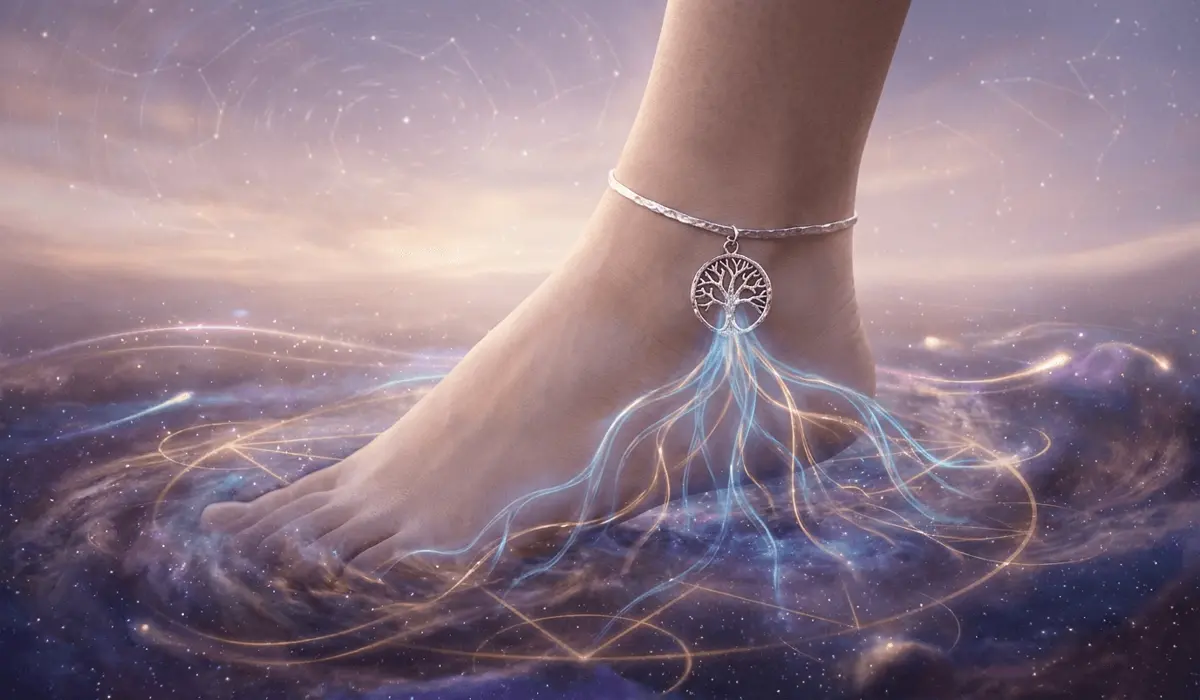
The most important rule is proper placement for Buddha pendants on the body. You should always wear the necklace on a chain that keeps it above your heart. Never wear a Buddha image as an anklet or a charm that hangs below the waist. In many cultures, the lower part of the body is seen as less clean, so the pendant must stay high.
We recommend storing the jewelry in a clean, elevated spot when you are not wearing it. A dedicated box or a high shelf is better than leaving it on a table or in the bathroom. This shows that you treat the item as a sacred object rather than a common toy. For those looking to start a collection, you can explore our Necklace collection for high-quality designs.
In Theravada Buddhist countries (such as Thailand and Sri Lanka), the head is considered the abode of the soul and the purest part, while the feet are associated with dust and impurity. Therefore, placing a Buddha image at a low position (such as below the waist) is regarded as great disrespect to the Buddha. Even if you personally do not subscribe to this view, when you are in these cultural environments, respecting local customs is a basic quality of a global citizen. Additionally, wearing it high also protects the pendant from friction with tabletops, floors, and other rough surfaces, providing physical protection.
When to Wear the Pendant
Many people wear their pendants during yoga classes or retreats to feel more connected. It is also a good choice during times of major life changes, as it symbolizes a new, mindful path. However, you should remove it before you go to sleep or when you go swimming. Keeping the symbol away from sweat and dirty water is part of wearing Buddha jewelry etiquette.
Special Occasion Wearing Guide
-
Office/Workplace: Suitable to wear, but avoid playing with the pendant in meeting rooms or business negotiations to prevent distraction or appearing unprofessional.
-
Hospital/Sick Visit: Suitable to wear; many cultures believe Buddha images have protective functions and can bring comfort to patients.
-
Restaurant/Dining: Suitable to wear, but maintain mindfulness while eating to avoid food splashing onto the pendant.
-
Gym/Pool: Not recommended; sweat and chlorine can corrode metals and gemstones, and intense exercise may cause the pendant to swing and injure someone.
Setting Your Intention
Before you put the necklace on each morning, take a few seconds to be quiet. Hold the pendant in your hands and think about being patient or kind that day. This simple ritual prepares the piece and your mind for the hours ahead. This practice helps ensure you are using the symbol for mindfulness and intention rather than just for looks.
Intention setting is widely studied in positive psychology and is known as "implementation intention." When you explicitly state, "Today I will remain calm when encountering conflict," your brain pre-encodes this behavioral instruction. When an actual conflict occurs, the pendant acts as a visual cue, quickly activating this instruction, making your response more aligned with the preset goal. This is why wearing a spiritually significant accessory is more conducive to behavioral change than ordinary accessories.
Wearing Taboos Quick Reference Chart
| Behavior | Appropriate? | Reason / Alternative Suggestion |
|---|---|---|
| Wearing below the waist (e.g., anklet) | ❌ Inappropriate | Lower body considered unclean; should maintain high placement |
| Wearing while bathing or swimming | ❌ Inappropriate | Water and detergents may desecrate the holy image; should remove |
| Wearing while sleeping | ⚠️ Not recommended | May damage the accessory; subconscious lacks mindfulness |
| Wearing while exercising | ⚠️ Not recommended | Sweat erodes materials; intense movements may lose reverence |
| Placing on a high bedside table | ✅ Appropriate | Just maintain a clean and tidy environment |
| Placing on an altar or shrine | ✅ Very appropriate | Reflects the highest level of respect |
Buddha Head Pendants vs Full Buddha Pendants
The Wholeness Debate
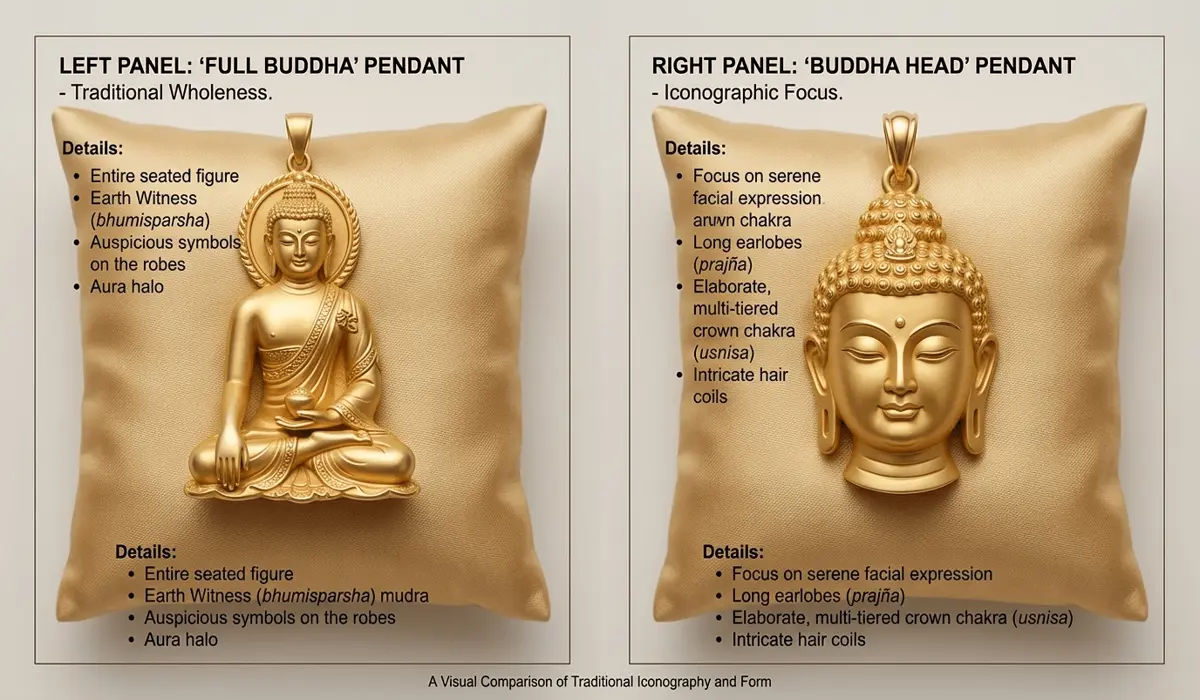
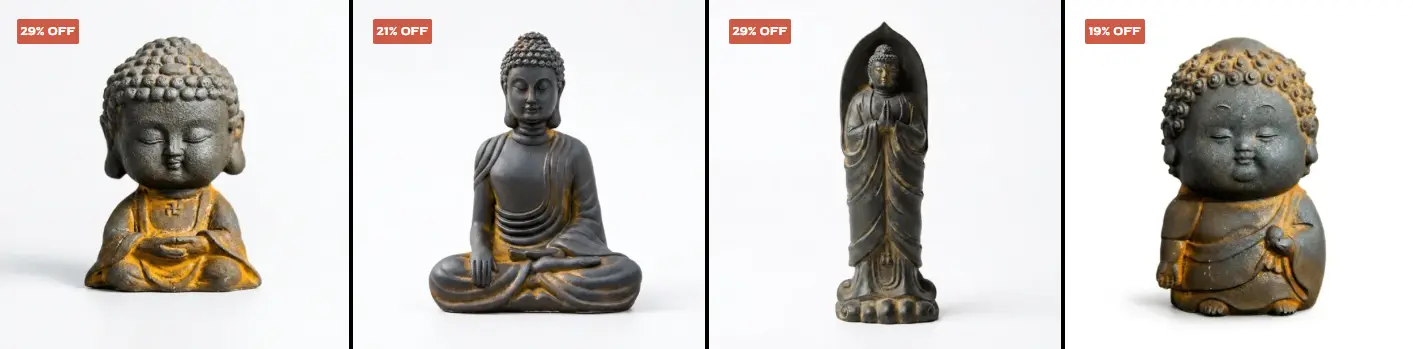
The difference between full Buddha and Buddha head pendants is quite big in traditional circles. A full figure shows the Buddha sitting or standing, which is often seen as more respectful in Southeast Asia. Some traditionalists feel that a head by itself represents a severed statue, which can feel jarring. If you plan to travel to Thailand and Southeast Asia, a full figure might be the safer choice to avoid any cultural tension.
Why do "severed Buddha heads" make people uncomfortable? In Buddhist art history, Buddha images have always appeared in complete form in temples and grottoes, representing the Buddha's perfection of merit. In traditional contexts, the appearance of a head alone is often associated with war destruction, artifact theft, or natural erosion—a symbol of "incompleteness." Therefore, when older generations of devotees see head pendants, they subconsciously associate them with incompleteness and loss. Understanding this historical sentiment helps us view this debate with more empathy.
Mudras and Meanings
A full Buddha figure often includes Mudras, which are special hand gestures. These gestures can mean "protection" or "calling the earth to witness," giving the piece more layers of meaning. While a head focuses mostly on wisdom, a full body piece tells a larger story of the Buddha’s life. You can learn more about these symbols by looking into Crystal Healing traditions.
Five Common Mudras and Their Symbolic Meanings
-
Bhumisparsha Mudra (Earth-Touching): Right hand hanging over the knee, fingers touching the earth, symbolizing the Buddha subduing inner demons and attaining enlightenment.
-
Abhaya Mudra (Fearlessness): Right hand raised, palm facing outward, symbolizing granting fearlessness and dispelling fear.
-
Varada Mudra (Gift-Giving): Right hand hanging down, palm facing outward, symbolizing fulfilling the wishes of all beings.
-
Dhyana Mudra (Meditation): Hands stacked on the lap, palms facing upward, symbolizing deep meditation and inner stillness.
-
Dharmachakra Mudra (Teaching): Thumb and index finger forming a circle, symbolizing turning the Dharma wheel and transmitting the teachings.
Laughing Buddha Differences
It is important to know that a Buddha head pendant is different from the "Laughing Buddha." The Laughing Buddha is actually a Chinese monk named Budai who lived much later. He represents good luck, wealth, and joy rather than deep meditation. Choosing between them depends on if you want internal peace or external happiness and abundance.
How to Choose Based on Personal Needs?
-
Choose a Buddha Head Pendant if you are undergoing spiritual exploration, inner confusion, or wish to cultivate deep awareness.
-
Choose a Laughing Buddha Pendant if you wish to attract positive energy, improve relationships, or enhance life enjoyment.
-
Choose a Full Buddha Pendant if you live in an area with strong Buddhist culture, or wish to obtain the most traditional and complete symbolic meaning.
Who Is a Buddha Head Pendant Suitable For?
Energy and Stars
These pendants are perfect for anyone seeking mental clarity or a quieter mind. They often resonate with the sign of Pisces because of their natural spiritual depth. However, Virgos and Capricorns also benefit from the grounding energy of these spiritual protection amulets. Since the teachings are universal, anyone can wear them if they have a sincere heart.
| Zodiac Sign | Suitability | Recommended Material | Reason |
|---|---|---|---|
| Aries | ⭐⭐⭐ | Tiger's Eye | Balances impulsiveness, enhances patience |
| Taurus | ⭐⭐⭐⭐ | Jade | Stabilizes temperament, enhances tolerance |
| Gemini | ⭐⭐⭐ | Amethyst | Calms thoughts, enhances focus |
| Cancer | ⭐⭐⭐⭐⭐ | Moonstone | Soothes emotions, enhances intuition |
| Leo | ⭐⭐⭐ | Clear Quartz | Balances ego, cultivates humility |
| Virgo | ⭐⭐⭐⭐ | Obsidian | Releases anxiety, protects energy |
| Libra | ⭐⭐⭐⭐ | Rose Quartz | Promotes harmony, balances relationships |
| Scorpio | ⭐⭐⭐⭐⭐ | Obsidian | Deep transformation, strong protection |
| Sagittarius | ⭐⭐⭐ | Tiger's Eye | Grounds execution, focuses goals |
| Capricorn | ⭐⭐⭐⭐ | Jade | Softens rigidity, cultivates warmth |
| Aquarius | ⭐⭐⭐ | Amethyst | Enhances spirituality, connects to wisdom |
| Pisces | ⭐⭐⭐⭐⭐ | Amethyst/Moonstone | Strengthens intuition, protects sensitivity |
Lifestyle Choices
If you value mindfulness and intention in your life, this jewelry is a great fit. It is perfect for non-Buddhists who admire the philosophy of non-harming and universal kindness. You don't have to be a religious person to wear a symbol of peace. You can browse our Gemstone Jewelry Collection to find a stone that matches your specific energy needs.
For those with no religious affiliation or with other religious beliefs, wearing a Buddha pendant requires extra attention to boundaries. It is suggested to:
-
Clarify Personal Stance: You may view the pendant as a cultural symbol or philosophical reminder rather than a deity itself.
-
Avoid Blending Rituals: If you practice another religion, it is not recommended to wear the Buddha image mixed with your religious sacred objects or place them on the same altar.
-
Maintain an Open Attitude: When asked, honestly express your appreciation for its spiritual value rather than claiming to be a Buddhist.
How to Determine If You Are Suitable to Wear a Buddha Head Pendant?
-
Inner Motivation: Are you wearing it out of respect and appreciation for Buddhist philosophy, or simply to follow fashion trends? The former is appropriate; the latter requires reflection.
-
Usage Scenario: Do you plan to use it in meditation, yoga, and other spiritual practices, or as part of your daily outfit? Both are acceptable, but the former requires more focus and reverence.
-
Psychological Readiness: Are you prepared to accept others' curious questions or even criticism? Wearing a religious symbol means you may become a window for others to understand Buddhist culture.
-
Maintenance Willingness: Are you willing to spend time cleaning, charging, and properly storing it? This reflects your level of respect for the holy image.
Video source: YouTube
Author: Serene Teachings
Original video link: https://www.youtube.com/watch?v=j1meOICBkkA
How to Cleanse, Charge, and Care for a Buddha Pendant
Methods of Cleansing
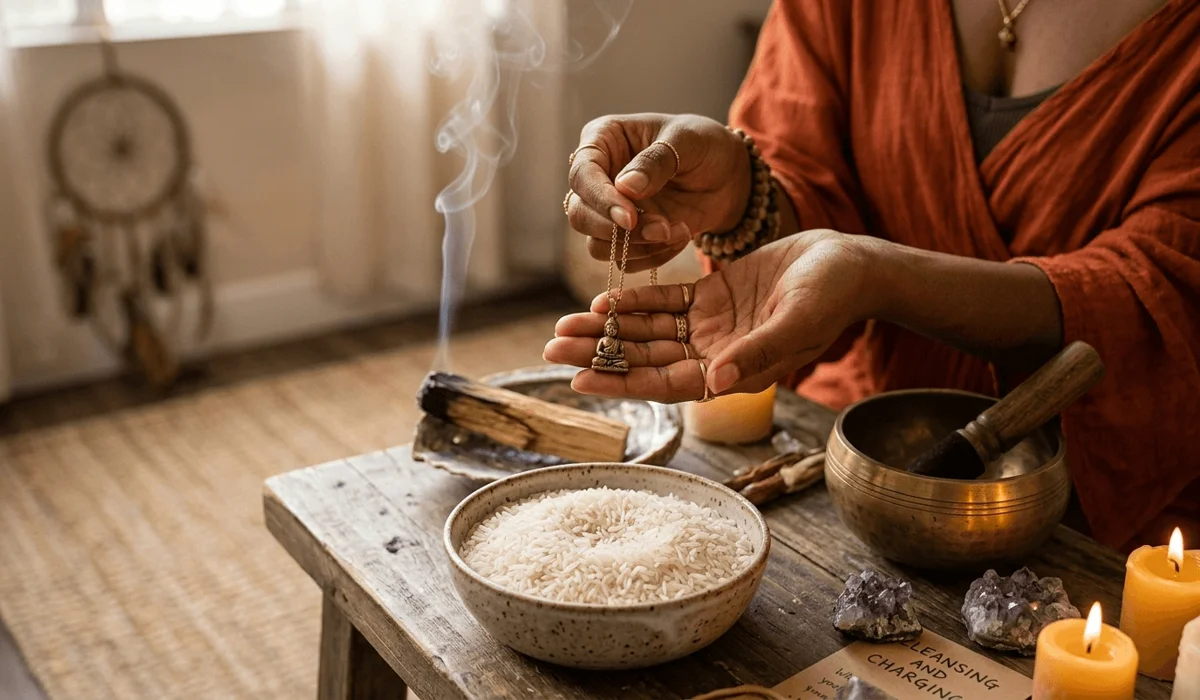
To keep your pendant fresh, use a soft, dry cloth to wipe away dust and oils. You can also cleanse the energy by passing the piece through the smoke of sage or palo santo. Sound cleansing with a metal singing bowl is another great way to refresh the energy. According to the Gemological Institute of America, keeping your gemstones clean also helps maintain their physical beauty.
From an energy medicine perspective, pendants come into contact with various people and environments during daily wear—crowded subways, intense arguments, oppressive offices—where low-frequency emotional energies may be absorbed by the porous surface of the gemstone. Over time, the pendant's vibrational frequency becomes heavy and loses its original spiritual effectiveness. Regular cleansing "resets" its energy state, restoring it to freshness.
Charging Rituals
We suggest placing your pendant in a bowl of raw white rice overnight to ground its energy. Let the piece sit in the light of the full moon once a month to recharge its spiritual power. This is a sacred time in many traditions, often called Uposatha. Setting a fresh intention while holding the piece during meditation will keep its vibration high.
Rice is not only a staple food in Asian cultures but is also regarded as a symbol of life energy and abundance. In Japanese Shinto and Southeast Asian Buddhism, rice grains are often used in purification rituals. Burying the pendant in raw rice overnight allows the rice to act like activated charcoal, absorbing residual energy from the surrounding environment. Meanwhile, rice's natural grounding properties help restore the pendant's energy field to stability and harmony.
Ongoing Maintenance
Be careful not to let other people touch your pendant too often, as it holds your personal energy. Always handle it with clean hands and avoid dropping it on hard floors. If the stone is obsidian or jade, check with the British Gemmological Association for specific stone care tips. Store it away from the floor or the bathroom to keep the respect for the symbol intact.
Maintenance Tips by Material
-
Obsidian: Hard but brittle; avoid dropping; can be rinsed with warm water, but avoid ultrasonic cleaners as they may cause cracking.
-
Jade: Avoid contact with chemicals (such as perfume, dish soap); gently wipe with baby oil periodically to maintain moisture and luster.
-
Amethyst: Sensitive to heat; prolonged sun exposure may cause fading; store away from hard objects to prevent scratches.
-
Silver Chain: Silver oxidizes and tarnishes easily; can be polished with a silver cloth; remove before bathing to avoid contact with sulfur soap.
Frequently Asked Questions
Q: Is it okay to wear a Buddha pendant if you aren't Buddhist?
A: Yes, it is generally acceptable as long as you wear it with a sincere heart and follow basic rules of etiquette, such as keeping it high on the body. Many practitioners believe the Buddha's message of peace is for everyone, regardless of their specific religious label.
Q: Is it disrespectful to touch the head of a Buddha image?
A: In many Buddhist cultures, the head is the most sacred part of the body, and touching the head of a statue or even a person is considered a significant breach of respect. When wearing a pendant, try to handle it with care and avoid letting it be handled casually by others.
Q: Can Christians wear a Buddha pendant?
A: This depends on personal faith; many Christians wear it as a symbol of peace or a philosophy of life rather than a religious icon. It is important to check your own intentions and ensure the symbol aligns with your personal spiritual boundaries.
Q: Is it bad luck to wear a Buddha necklace?
A: Traditional belief suggests that as long as the symbol is treated with respect, it brings positive energy and protection. Bad luck is usually associated with using the symbol in a mocking, degraded, or highly commercialized and disrespectful manner.
Q: What does the Buddha head necklace mean?
A: It symbolizes the profound wisdom, mental stillness, and the enlightened state of the historical Buddha. It serves as a visual reminder of the wearer's own journey toward inner peace and mindfulness.
Conclusion and Final Thoughts
Wearing a Buddha head pendant is a meaningful way to bring mindfulness and intention into your every day. The key to avoiding any feeling of disrespect is learning about the cultural significance of Buddha head symbols. By keeping your jewelry clean and wearing it high on your body, you honor a path that has helped people for thousands of years. We believe that a respectful heart is the best way to carry this sacred image with you. If you are ready to find your own symbol of peace, we invite you to browse our latest designs.
Honoring ancient wisdom starts with small, daily actions. Wearing a symbol of the Buddha is a commitment to your own path of enlightenment. Treat your jewelry with love, and it will reflect that peace back into your life every single day.

Longyi Luck
Longyi Luck is a Feng Shui practitioner and spiritual researcher who blends traditional year-based wisdom with modern lifestyle insights, specializing in Feng Shui, spirituality, meditation, and mindfulness. With years of dedicated study and practice, Longyi explores cultural symbolism and the practical application of ancient wisdom to help individuals cultivate balance, clarity, and harmony in everyday life. Since 2020, Longyi has been committed to translating timeless traditions into accessible guidance for the modern world.
longyi@auraandluck.com
.webp?w=800&h=800)
.webp?w=800&h=800)