
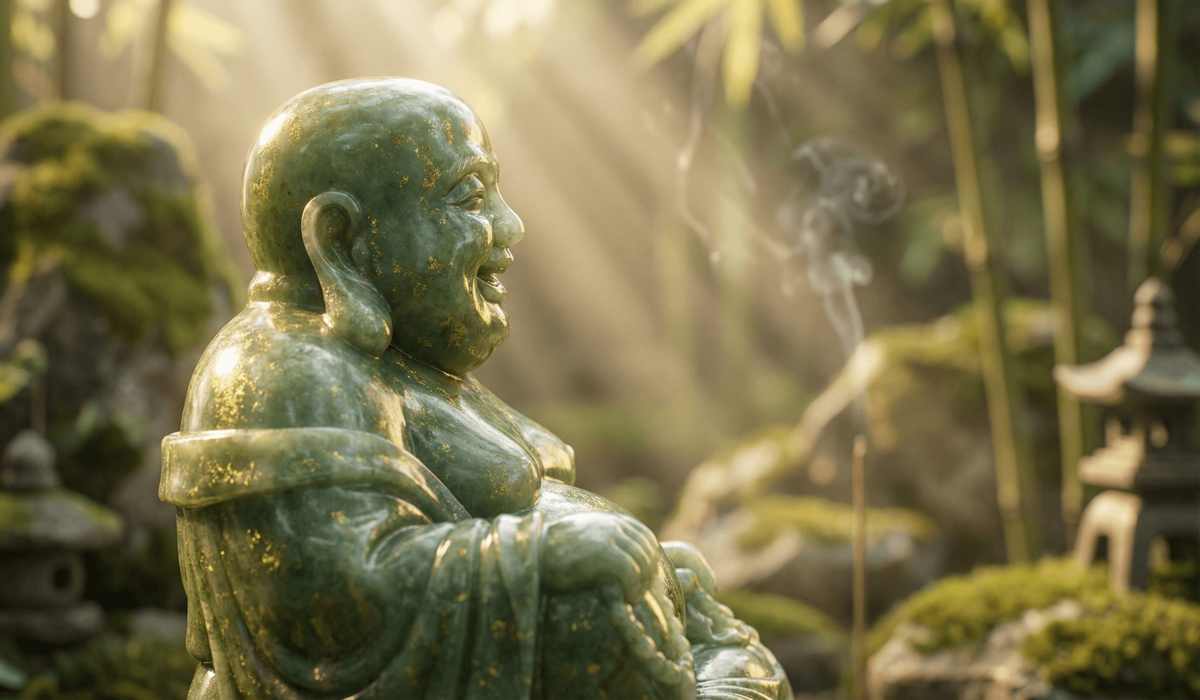
The Laughing Buddha is more than a decorative figurine; it is a profound spiritual anchor representing the triumph of the human spirit over earthly suffering. By embodying enlightened laughter, this symbol serves as a bridge between material prosperity and spiritual contentment. Its enduring popularity stems from a universal human desire for a life filled with unconditioned joy—a state where happiness is not dependent on external circumstances.
Ancient Origins and Sacred Legends
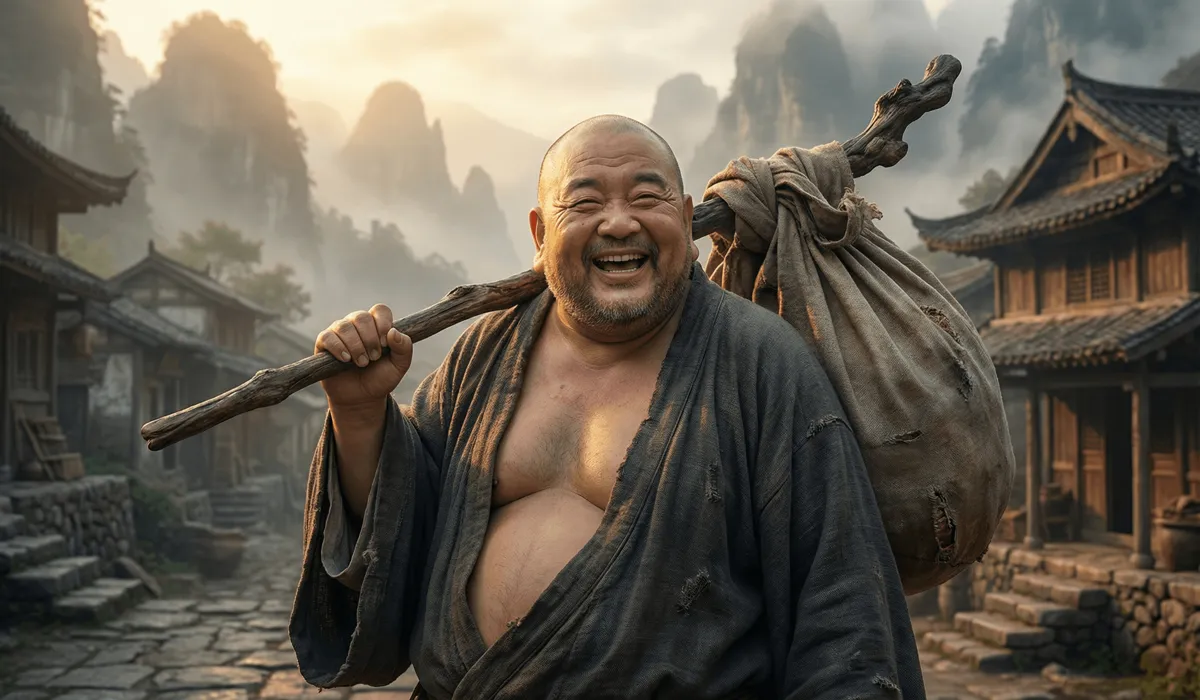
Originating in 10th-century China, the Laughing Buddha is based on a historical Chan monk named Qieci (契此). Known for his eccentric nature and nomadic lifestyle, he wandered through villages carrying a large cloth sack. Legend states he attained enlightenment not through silent austerity, but through laughter, famously claiming he could carry away the world's sorrows in his bag.
He was celebrated for his selfless joy, often handing out sweets and gifts from his never-ending sack to children and the poor. His deathbed poem revealed his true identity as an incarnation of the Maitreya Buddha, the Buddha of the future. This shifted his image from a local monk to a celestial being representing the next era of spiritual awakening.
We see the roots of this figure across many traditions including Chinese Buddhism, Taoism, and Zen Buddhism (Hotei). In Japan, he is honored as one of the Seven Lucky Gods, representing the Zen ideal of mindful contentment. These diverse roots show how the symbol integrates different paths to peace and prosperity.
Hidden Philosophy: Decoding the Symbolism
The Cloth Sack is the most potent symbol of this figure. It represents the transmutation of negative karma and sadness into spiritual gifts and wealth. Philosophically, it teaches that the universe is infinitely abundant for those who approach it with an open heart.
The Anatomy of Joy
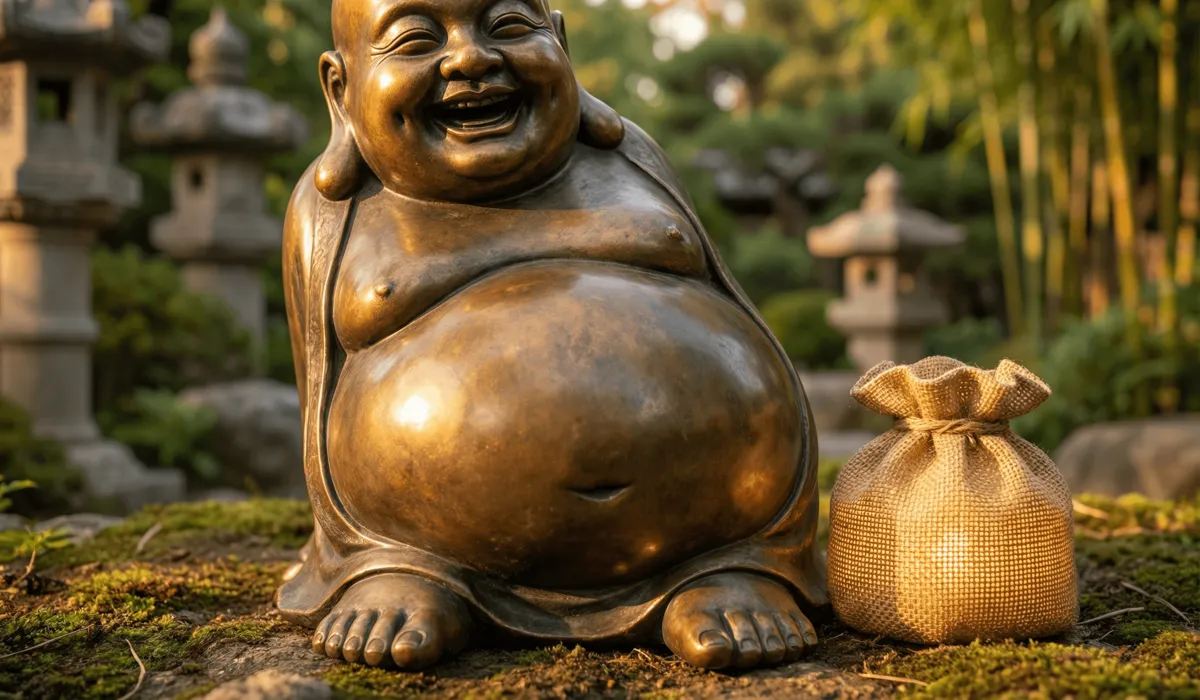
The large belly symbolizes a heart large enough to stomach the troubles of the world without losing its smile. It is a reservoir of positive Chi (Energy) that absorbs negativity and converts it into happiness. The enlightened laughter represents the realization of non-duality—the understanding that joy and sorrow are two sides of the same coin.
Maitreya and the Future of Consciousness
As the Future Buddha, the Laughing Buddha represents a shift in human consciousness from scarcity to an abundance mindset. He embodies the promise that enlightenment is accessible to all through the simple practice of kindness and joy. This perspective helps us view our daily struggles as opportunities for spiritual growth.
The Barefoot Stance
His bare feet connect the deity to the Earth, symbolizing grounding and the rejection of ego-driven status. This teaches us to remain humble even when we achieve great success. It is a reminder that our connection to nature is a vital source of luck and stability.
Cultural Evolution: East vs. West Perspectives
In the East, he is a serious object of devotion, seen as a protector of the weak and a patron of children. Temples often place his statue at the entrance to remind practitioners to leave their worries outside and enter with a light heart. Many people follow the Feng Shui advice to use his image as a guardian of the household.
In the West, he is frequently viewed as a good luck charm and a symbol of financial success. While sometimes criticized as a commercialized Fat Buddha, this interpretation still honors his role as a bringer of prosperity. We believe both perspectives offer value in the modern world.
Across all cultures, the Laughing Buddha serves as a celestial ambassador of peace. He breaks down religious barriers with a simple smile. To learn more about how these symbols align with your path, you might check the Fire Horse Feng Shui for the coming year.
Wearing the Talisman: Why Laughing Buddha Jewelry Matters Today
In a 2026 landscape dominated by digital stress, wearing a Laughing Buddha pendant serves as a tactile mindfulness anchor. Touching the symbol during moments of anxiety helps recalibrate the wearer’s emotional frequency to a state of mindful joy. It provides a physical reminder to breathe and find a reason to smile.
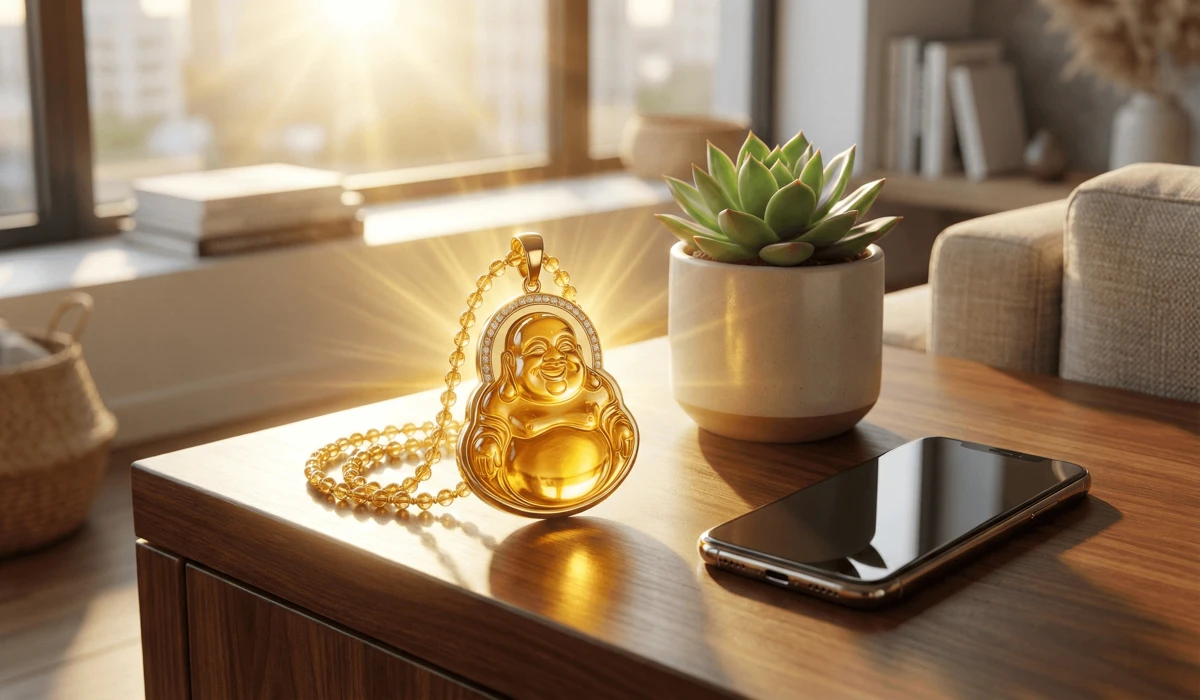
Combining the Laughing Buddha with Citrine (Success Stone) enhances the wealth frequency. Citrine is known as the merchant's stone and mirrors the solar energy of the Buddha’s smile. You can see various Citrine Jewelry Options that create a powerful synergy for attracting career growth.
Acting as an amulet of luck, the jewelry is believed to repel negative Chi and create a protective field. This positive energy flow helps the wearer navigate social and professional challenges with ease. It is a tool for maintaining a high vibration throughout the day.
Laughing Buddha in Feng Shui: Placement and Comparison
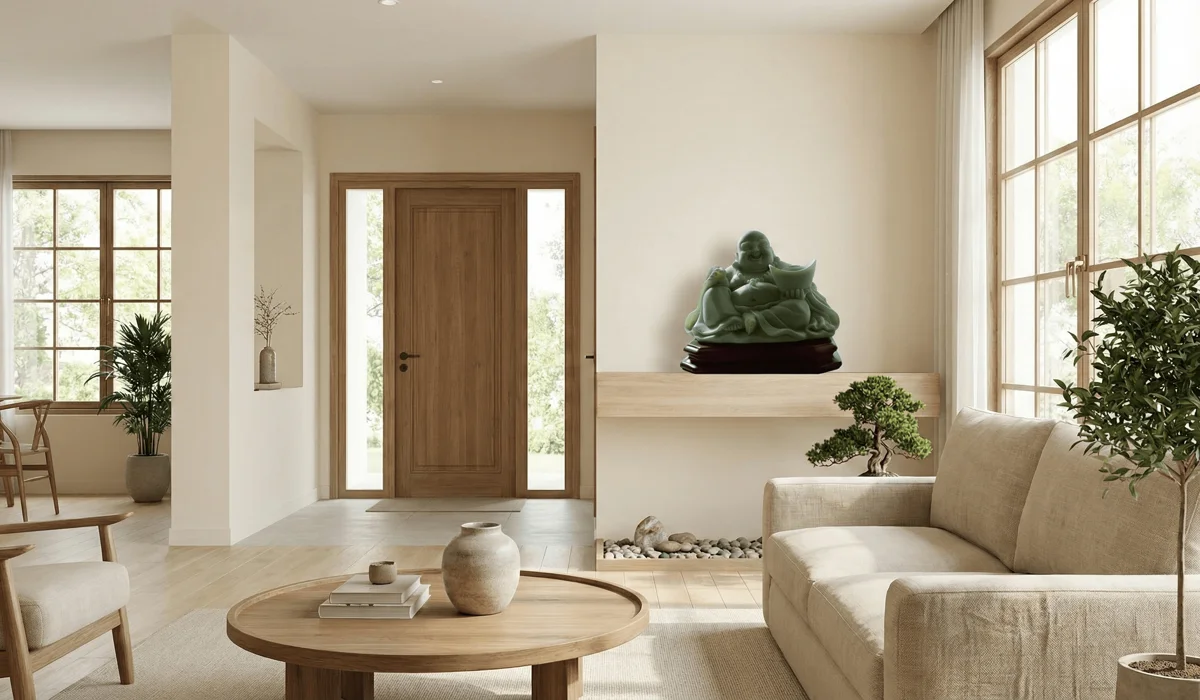
Proper placement is essential for maximizing the benefits of this symbol. According to the Feng Shui Society, the statue should be placed at eye level or higher. It is most effective when it faces the main entrance to greet incoming energy.
The following table illustrates the different meanings associated with various poses and attributes of the Laughing Buddha.
| Pose or Attribute | Primary Meaning | Ideal Placement |
|---|---|---|
| Sitting Buddha | Harmony and Balance | Living Room |
| Standing Buddha | Wealth and Celebration | Office or Store |
| Buddha with Children | Fertility and Family | East Sector of Home |
| Buddha with Gold Ingot | Financial Abundance | Wealth Corner (Southeast) |
We recommend choosing a pose that aligns with your current life goals. Each variation serves as a specific filter for the universal energy you wish to attract. For those interested in yearly cycles, it is helpful to look at the Tiger Horoscope Predictions for additional context.
Cultural Etiquette and Taboos
Never place a Laughing Buddha statue on the floor, in a bathroom, or in a kitchen. He should be elevated on a pedestal or shelf to show proper respect. Ideally, he should face the main entrance of the home to greet incoming energy with joy.
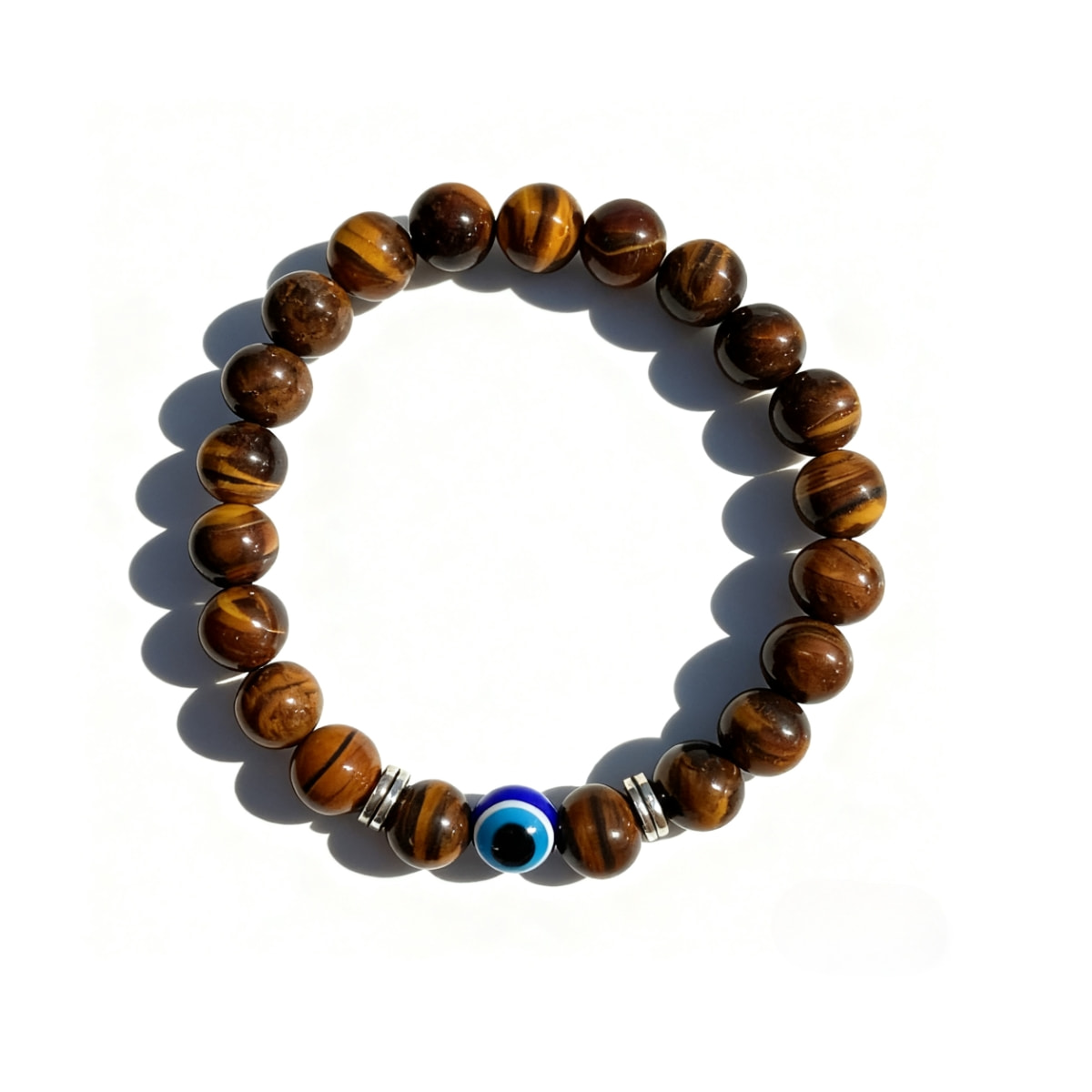
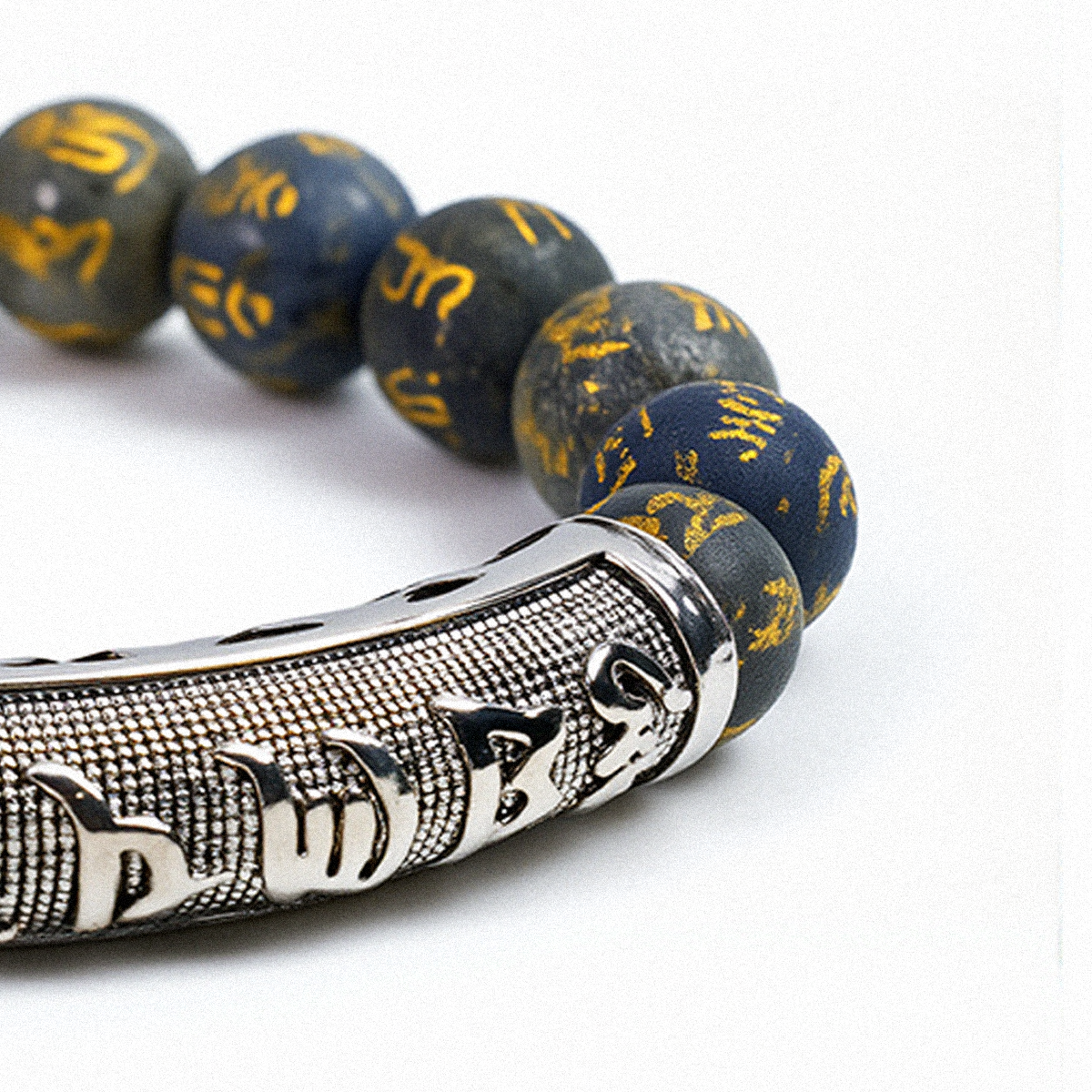
When wearing the symbol as jewelry, treat it with the reverence of a sacred entity rather than a mere fashion accessory. Avoid wearing it while sleeping or showering to maintain its energetic purity. Many people refer to Wikipedia Information to learn more about the historical context of these traditions.
Rituals and Practices: How to Use the Symbol for Meditation
The rubbing the belly meditation is a modern practice rooted in intention. Rub the belly of a statue or pendant while visualizing your worries being absorbed into the Buddha's sack. Pair this with a positive affirmation to seal the energy.
We suggest the following daily steps to integrate this wisdom into your life:
- 🌸 Morning Intentions: Touch your Buddha symbol and state one thing you are grateful for today.
- ☸️ Belly Rubbing Ritual: Spend 30 seconds rubbing the belly while breathing deeply to release stress.
- 🕉️ Generosity Practice: Perform one small act of kindness to mirror the monk Qieci’s spirit.
- 🧿 Evening Reflection: Visualize the sack closing for the night, keeping your home safe and peaceful.
These simple rituals help build a consistent connection with the energy of abundance. Over time, these actions transform your mindset and attract better opportunities. Consistently practicing these steps creates a ripple effect of positivity in your environment.
Karmic Merit Practice
Use the symbol as a reminder to perform a daily act of generosity. This practice mirrors the historical monk's kindness to others and helps build positive karma. It is the most direct way to embody the frequency of the Buddha.
Frequently Asked Questions (FAQ)
Q: What is the deeper spiritual meaning of the Laughing Buddha's sack?
A: It represents the universal void that can hold all the world's problems while simultaneously containing an infinite supply of treasures such as wisdom, food, and wealth.
Q: Why is rubbing the Laughing Buddha's belly considered lucky?
A: It is a folk tradition symbolizing the activation of his positive Chi and the intention to manifest abundance through physical connection with the divine.
Q: What are the specific meanings of the different Laughing Buddha poses?
A: The standing Buddha attracts wealth and celebration, while the sitting Buddha symbolizes love and domestic harmony. The Buddha with children represents fertility and family protection.
Q: How does the Laughing Buddha help combat 2026 digital burnout?
A: He serves as a visual off-switch for the ego, encouraging the wearer to find inner peace and joy in the present moment away from digital noise.
Q: Is it culturally respectful to buy a Laughing Buddha for yourself?
A: Yes, it is an act of mindful intention to invite his energy into your life, provided the symbol is treated with the dignity it deserves.
Conclusion: Integrating the Wisdom of the Laughing Buddha
May the Laughing Buddha remind you that the heaviest burdens are lightened by a joyful heart. Let his presence be a constant nudge to practice enlightened laughter even amidst the complexities of modern life. By embracing this frequency, you invite a lasting sense of prosperity and peace into your world. We hope this guide empowers you to use this ancient symbol as a tool for modern happiness.

Longyi Luck
Longyi Luck is a Feng Shui practitioner and spiritual researcher who blends traditional year-based wisdom with modern lifestyle insights, specializing inFeng Shui, spirituality, meditation, and mindfulness. With years of dedicated study and practice, Longyi explores cultural symbolism and the practical application of ancient wisdom to help individuals cultivate balance, clarity, and harmony in everyday life. Since 2020, Longyi has been committed to translating timeless traditions into accessible guidance for the modern world.
longyi@auraandluck.com

.webp?w=800&h=800)
.webp?w=800&h=800)