
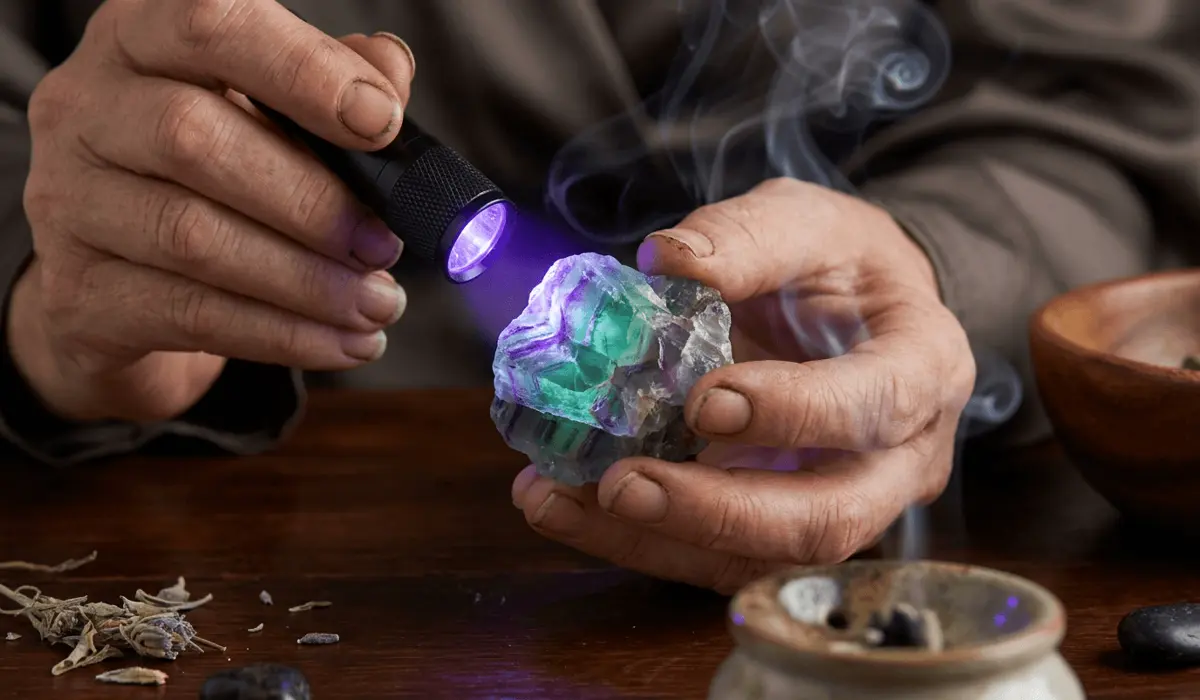
To identify authentic fluorite crystals from fake glass or resin imitations, check for a cool surface temperature, internal cleavage planes, a soft Mohs hardness rating of 4, and bright violet fluorescence under 365nm UV light. Fake glass stones feel warm quickly, contain spherical trapped air bubbles under magnification, and easily scratch real mineral specimens. Performing a simple series of physical, thermal, and visual tests at home will immediately confirm whether your crystal holds real natural energy.
Introduction: Quick Answer & Sacred Importance
Authentic fluorite is a soft calcium fluoride mineral prized for its stunning color zoning and crystalline clarity. Genuine specimens feature natural internal cleavage planes, a cool thermal contact feel, and a low Mohs hardness rating of 4. Synthetic glass and liquid resin counterfeits lack these physical qualities and often contain tiny round air bubbles trapped during artificial factory molding.
In energetic practice and spatial balancing, working with natural earth minerals is vital for spiritual grounding. Amorphous materials like plastic or glass lack the ordered atomic structure needed to harmonize chaotic spatial energy and clear mental fog. At our studio, we always encourage practitioners to verify their stones to ensure their spiritual routines remain deeply connected to genuine Earth frequencies.
Using synthetic crystal lookalikes can stall your energy work and disrupt personal focus. Real fluorite forms over millions of years under high pressure, soaking up mineral elements that help block electromagnetic stress and purify subtle Chi (气). You can learn more about mineral classifications in this comprehensive Geological Mineral Reference.
Preparation and Essential Inspection Tools
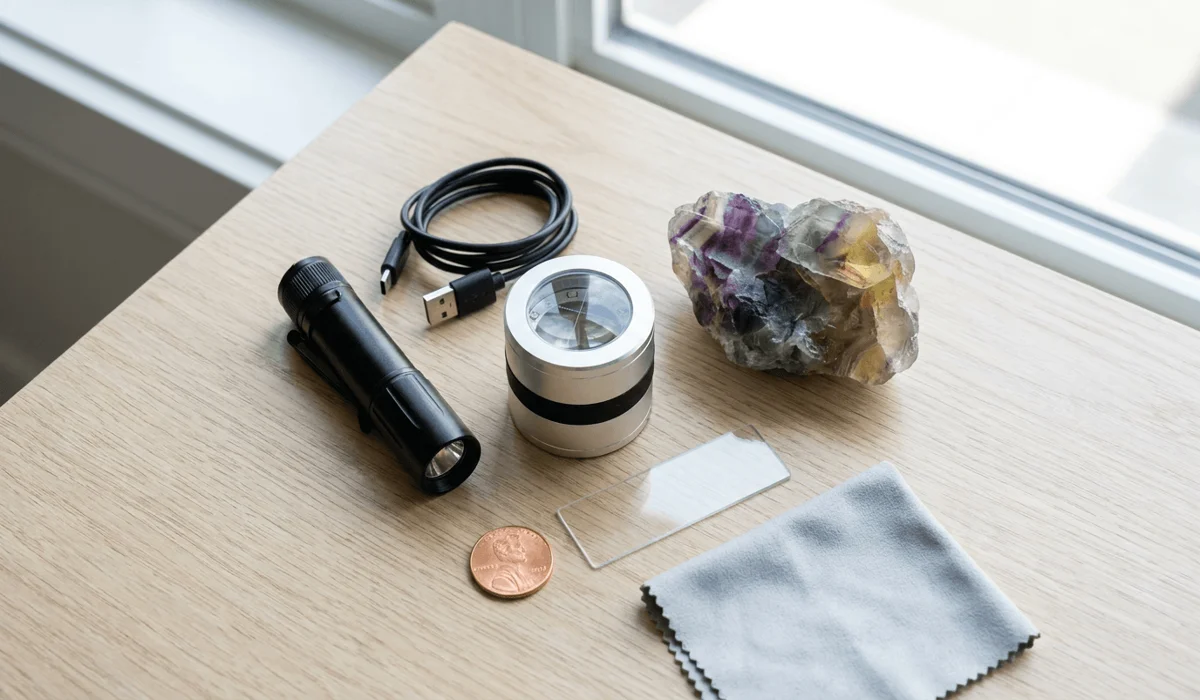
Before testing your crystals, gather the right inspection tools on a flat desk. Having proper tools prevents accidental damage to high-value specimens and ensures accurate testing results. We recommend working under bright, direct natural daylight alongside a focused lamp for close inspection.
Prepare the following inspection items on your workspace:
- 10x Jeweler's Loupe: Used to inspect internal inclusions, growth lines, and trapped air pockets.
- 365nm UV Blacklight Flashlight: Essential for triggering authentic ultraviolet fluorescence inside the mineral matrix.
- Copper Coin and Glass Slide: Simple items with known Mohs hardness values (copper ~3.5, glass ~5.5) for scratch checks.
- Precision Digital Scale: Measures exact mass in grams for accurate specific gravity calculations.
- Soft Microfiber Cloth: Cleans surface oil, fingerprints, and dust before visual testing begins.
Taking a moment to calm your workspace creates a clean physical environment for examination. Cleanse your inspection area using a singing bowl or incense smoke to remove static energy and clear dust. You can explore our verified Natural Fluorite Collections to compare authentic mineral structures against raw market samples.
Step-by-Step Guide: Authenticating Fluorite Crystals
Milestone 1: Visual Inspection under Magnification (Bubbles vs. Inclusions)
Hold your crystal under a strong light source and examine its internal structure using a 10x jeweler's loupe. Natural fluorite forms cubic lattices that naturally split along four distinct directions, creating crisp internal cleavage lines. Look for straight geometric growth lines, faint color banding, and tiny natural mineral specks inside the stone.
Artificial glass and poured resin display very different internal features. Glass mold cooling produces perfectly round air spheres and smooth, wavy color swirls inside the body. If you spot tiny spherical bubbles floating inside a perfectly clear stone, your item is almost certainly synthetic colored glass.
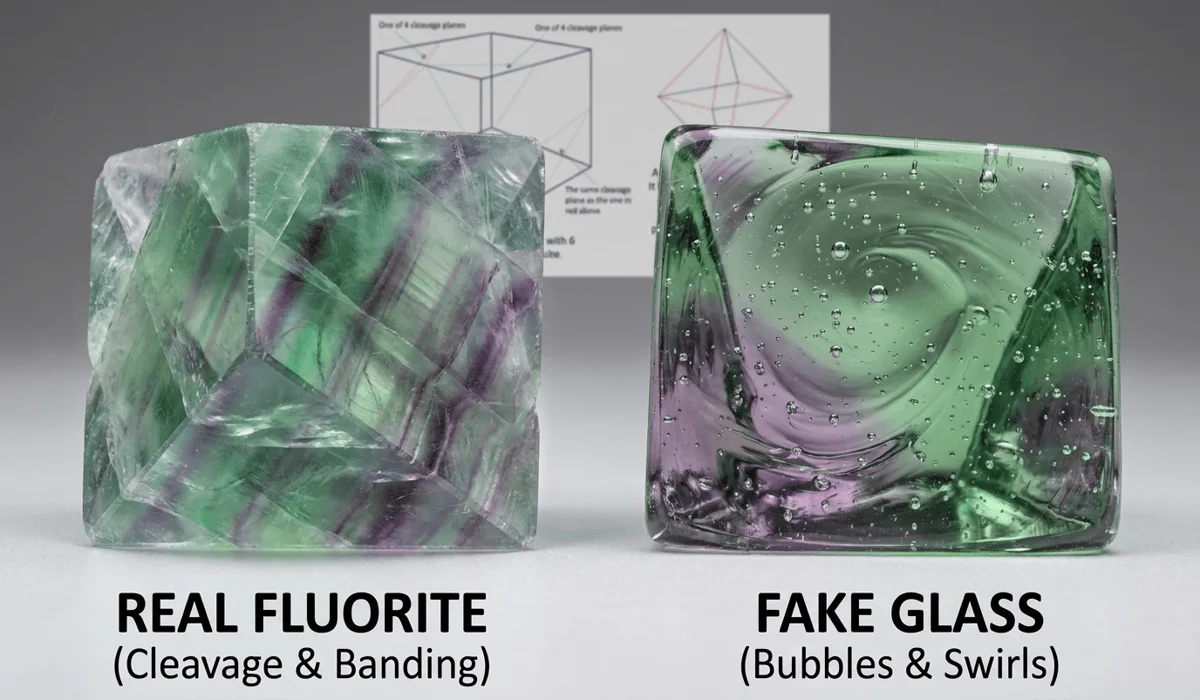
Examine the color transition areas inside multi-colored rainbow stones carefully. Natural fluorite shows sharp, straight bands of purple, green, white, and blue following its internal growth plane. Synthetic imitations usually show soft, muddy color gradients where liquid dyes mixed together during manufacturing.
Milestone 2: Temperature and Tactile Response Test
Natural minerals possess distinct thermal conductivity traits that set them apart from synthetic imitations. Place the stone directly against a temperature-sensitive spot like your cheek or inner wrist. Real fluorite immediately feels icy cold against the skin because natural stone draws warmth away from human tissue.
Pay close attention to how quickly the stone warms up while holding it in your palm. Genuine fluorite absorbs heat very slowly and stays cool for several moments during handling. Glass and plastic counterfeits heat up almost instantly, matching your exact body temperature within seconds.
Repeat this temperature check after leaving the specimen in a cool room for ten minutes. Authentic stone retains its cool surface feel regardless of ambient room heat shifts. Synthetic materials adapt quickly to environmental temperatures and feel noticeably lighter and warmer in the hand.
Milestone 3: Controlled Mohs Hardness & Scratch Testing
Understanding hardness values is one of the most reliable ways to separate real minerals from glass replicas. On the Mohs hardness scale, natural fluorite holds a soft rating of 4. This means fluorite is harder than a copper penny (hardness 3.5), but significantly softer than standard window glass (hardness 5.5).
To run a safe hardness check, select an unexposed spot on the bottom or unpolished edge of your stone. Gently drag the corner of a clean glass slide across this hidden spot using light pressure. If the item is authentic fluorite, the glass will leave a distinct scratch on the stone surface without damaging the glass slide.
Conversely, if your stone easily scratches a glass slide without suffering a mark, it is not fluorite. Harder materials like quartz or hard glass imitations will scratch window glass easily. Always perform scratch testing gently to avoid causing unnecessary damage to polished decorative pieces.
Milestone 4: UV Light Fluorescence Verification
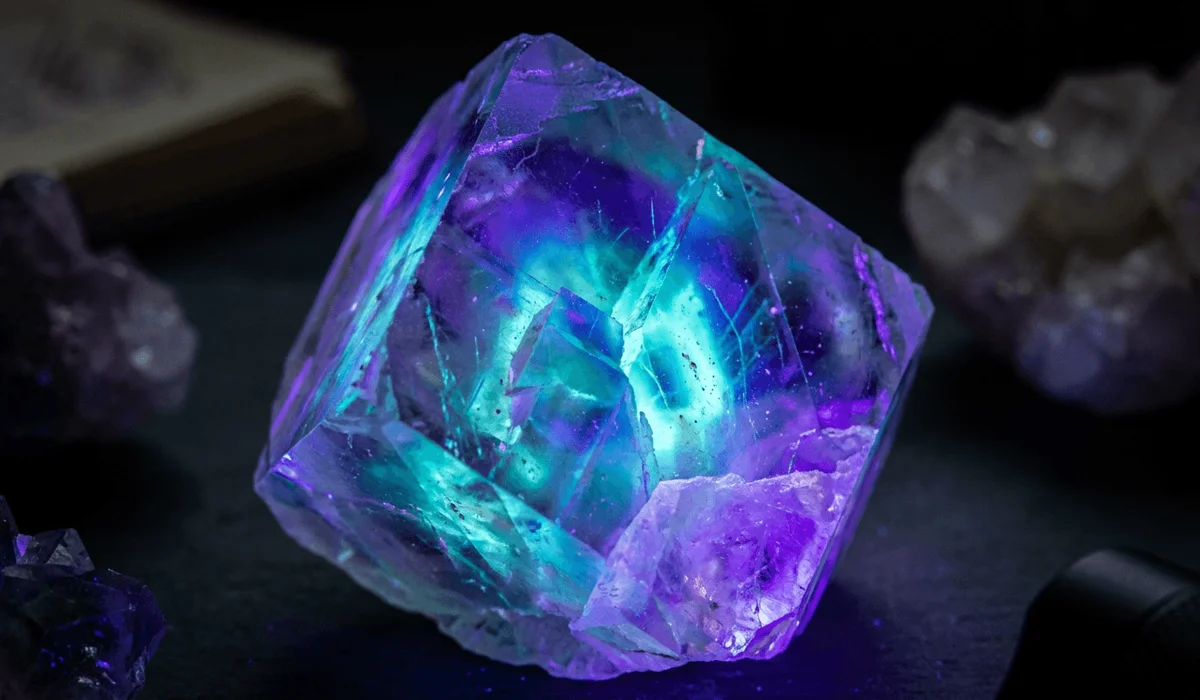
The term fluorescence originates from fluorite because of its intense reaction under ultraviolet light. Darken your room and illuminate the specimen using a focused 365nm UV blacklight flashlight. Natural fluorite frequently reacts with a vibrant violet, electric blue, or rich purple glow due to europium trace elements in its matrix.
Observe the glow distribution across the entire stone under blacklight illumination. Genuine fluorite exhibits a deep, uniform internal luminescence that originates from within the mineral crystal lattice. Synthetic pieces glued together from smaller fragments usually show fluorescent glue lines along external surface seams.
Be aware that a lack of glow does not automatically mean a stone is fake. Specific fluorite varieties from geographic locations lacking activator trace elements may remain inert under blacklight. Always combine UV light testing with thermal checks and visual magnification before drawing a final conclusion.
Video source: YouTube
Author: Hot Reviews
Original video link: https://www.youtube.com/watch?v=6HP7N3Bc510
Milestone 5: Density and Specific Gravity Evaluation
Specific gravity measures the density of a mineral relative to water. Authentic fluorite has a high density rating ranging between 3.00 and 3.25. Glass counterfeits generally possess a lower density between 2.2 and 2.5, feeling noticeably lighter when tossed gently in your hand.
You can calculate specific gravity at home using a digital scale and a water container. Weigh the dry crystal first to record its mass in grams. Next, submerge the stone in water on a fine thread, tare the displacement weight, and divide the dry mass by the displaced water weight.
If your calculation yields a density value near 3.10, your specimen aligns with natural calcium fluoride. A result below 2.6 indicates glass or lightweight plastic casting resin. Extremely dense results above 3.5 often reveal heavy leaded crystal designed to imitate natural stone weight.

The Feng Shui and Metaphysical Logic of Authentic Fluorite
Authentic fluorite features an ordered cubic crystal lattice that acts as a natural stabilizer for chaotic spatial energy. Amorphous glass lacks an internal crystalline blueprint, meaning it cannot absorb, transform, or project subtle environmental frequencies. Placing genuine earth minerals in your room establishes a strong anchor for peaceful focus and clear mental processing.
Wearing fluorite jewelry on different hands creates distinct energetic results based on body polarity principles. Wearing a genuine fluorite bracelet on your left wrist helps draw in calming energy, clear internal chatter, and sharpen mental focus during quiet meditation. Wearing it on your right wrist projects decisive energy outward, protecting your personal boundary from toxic workplace interactions.
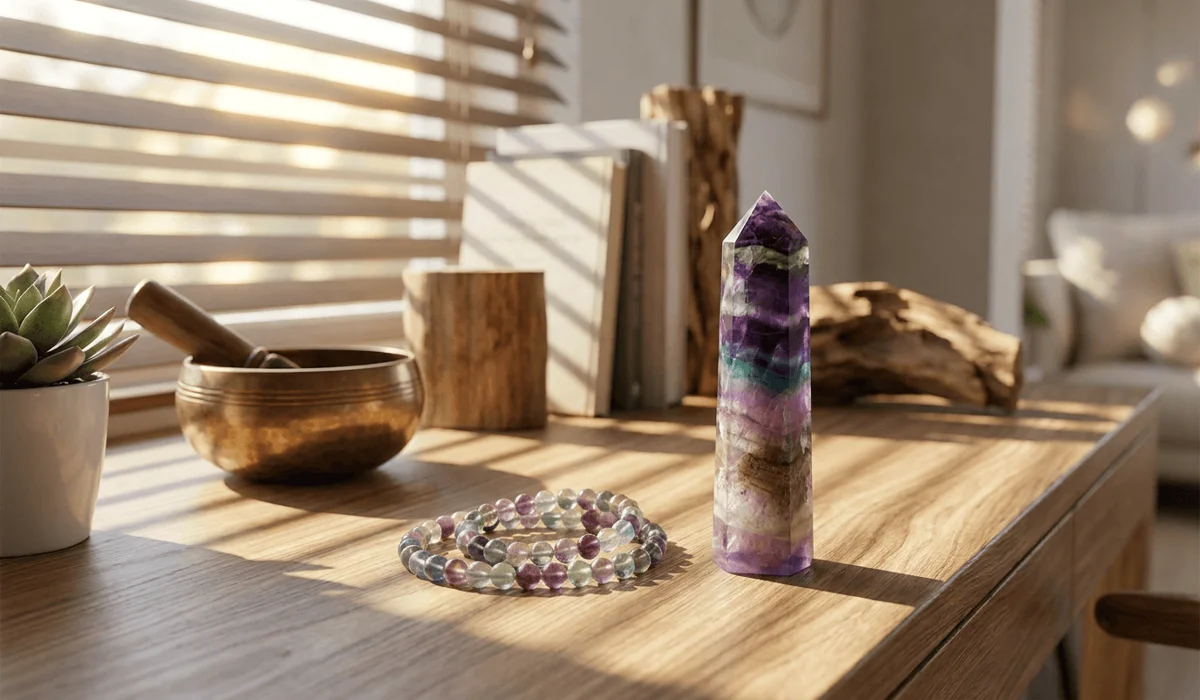
Positioning fluorite in strategic Bagua areas optimizes personal balance across your living space. Placing green or purple fluorite towers in the Northeast sector enhances academic success, wisdom, and personal growth. Setting blue fluorite in the North sector clears communication blockages in your career path, an approach detailed in traditional studies on Traditional Energy Mastery. You can also integrate Sacred Feng Shui Amulets nearby to protect your workspace from conflicting seasonal influences.
Critical Taboos and Common Mistakes to Avoid
When authenticating fluorite crystals, practitioners frequently make critical errors during physical testing:
- Relying Only on Bright Colors: Natural fluorite produces some of the most vibrant purple and green tones in the mineral kingdom, so bright color alone does not indicate a fake stone.
- Assuming Non-Fluorescent Stones Are Fake: Certain natural fluorite deposits lack europium impurities and will not glow under blacklight despite being 100% genuine.
- Using Fire or Flame Tests: Subjecting delicate soft crystals to open lighter flames causes thermal shock, permanent discoloration, and toxic fumes from polished wax coatings.
- Ignoring Surface Coatings: Synthetic stone treatments sometimes coat real low-grade fluorite in clear hard resin, masking its natural Mohs hardness during quick checks.
Avoid placing soft minerals in direct sunlight for long periods, as strong UV radiation causes vibrant natural colors to fade. Taking proper care of your sacred items preserves both their physical beauty and subtle vitality. Aligning your mineral care with Grand Duke Protection Methods ensures your surrounding space stays balanced and calm year-round.
Maintenance and Recalibration: When to Re-Test or Re-Purify
Over time, fluorite crystals collect environmental dust and absorb heavy ambient tension from surrounding rooms. You may notice your crystal feels heavy, warm, or strangely dull to the touch after intense stressful work. These physical changes indicate it is time to purify and recalibrate your mineral piece.
Safely cleanse and recalibrate your genuine fluorite using gentle, water-free methods:
- Selenite Charging Plate: Place your stone on a selenite slab overnight to clear static energy charges.
- Soft Moonlight Exposure: Leave your crystal near a window during a full moon to refresh its subtle frequency.
- Sound Wave Vibration: Pass sound waves from a singing bowl over the mineral to reset its atomic resonance.
- Smudging Ceremony: Wave sacred sage or cedar smoke around the specimen to release clinging ambient tension.
Re-examine your stone's structural integrity whenever you relocate it to a new room or Bagua sector. Regular physical checks and gentle energetic cleansing ensure your mineral maintains its natural stabilizing properties. Following insights from Astrological Alignment Studies helps you synchronize crystal maintenance with natural seasonal cycles.
Frequently Asked Questions About Real vs. Fake Fluorite
Q: Can fake glass or resin fluorite still hold Feng Shui energy?
A: Fake glass and synthetic resin materials lack the structured atomic lattice created by natural earth pressure over time. Because glass is amorphous and resin is synthetic plastic, these materials cannot hold, transform, or balance spatial energy in Feng Shui practice.
Q: Why do certain genuine fluorite specimens fail to fluoresce under a UV light?
A: Fluorite fluorescence relies on trace rare-earth element impurities like europium or yttrium inside the crystal matrix. If a natural fluorite specimen grew in a mineral deposit free from these specific activator elements, it will remain inert under UV light despite being completely real.
Q: How can I spot a resin fake fluorite without performing a destructive scratch test?
A: You can spot resin counterfeits by checking thermal response, weight, and surface seams. Resin warms up instantly upon touch, feels unnaturally light compared to dense real stone, and often shows faint molding seams or tiny surface air pockets under magnification.
Q: Is multi-colored rainbow fluorite faked more often than single-color specimens?
A: Yes, multi-colored rainbow fluorite commands higher market prices, making it a frequent target for synthetic glass manufacturing. Counterfeiters pour colored glass in layers to imitate rainbow banding, but these imitations always lack natural geometric cleavage lines under a magnifying lens.
Q: How does natural fluorite react when exposed to water during cleaning rituals?
A: Natural fluorite can handle brief rinses in cool distilled water, but prolonged soaking weakens its internal structure. Water seeps into micro-cleavage cracks, while minerals dissolved in hard tap water dull the soft surface luster of polished specimens over time.
Conclusion and Mindful Intentionality
Authenticating your fluorite crystals connects physical science with energetic awareness in your daily practice. By mastering simple visual, thermal, hardness, and UV light tests, you can confidently identify fake glass pieces and surround yourself with authentic Earth minerals. Taking time to verify your stones ensures your physical space and spiritual routines rest on genuine, grounded foundations.
Approach crystal testing as a grounding ritual of mindfulness and careful observation. Learning to read internal cleavage planes, feel thermal conductivity, and observe structural density deepens your connection with natural minerals. When you treat your stones with respect and discernment, they serve as reliable anchors for mental clarity and peaceful living.
We invite you to explore certified, ethically sourced fluorite offerings at Aura & Luck to support your journey. Bringing authentic mineral towers, spheres, and wearbar bracelets into your home provides pure, stabilizing energy that enriches your daily mindfulness practice and spatial harmony.

Longyi Luck
Longyi Luck is a Feng Shui practitioner and spiritual researcher who blends traditional year-based wisdom with modern lifestyle insights, specializing in Feng Shui, spirituality, meditation, and mindfulness. With years of dedicated study and practice, Longyi explores cultural symbolism and the practical application of ancient wisdom to help individuals cultivate balance, clarity, and harmony in everyday life. Since 2020, Longyi has been committed to translating timeless traditions into accessible guidance for the modern world.
longyi@auraandluck.com
.webp?w=800&h=800)
.webp?w=800&h=800)