
To learn how to tell if your jade pendant is real, you can use quick at-home physical tests like checking surface temperature, inspecting internal light reflection, and feeling weight density before seeking professional lab verification. Genuine jade is a high-density natural stone that feels cool against the skin and shows an interlocking fibrous structure under concentrated light. At Aura & Luck, our studio team relies on these time-tested physical tests to help crystal lovers verify their cherished jewelry pieces with confidence.
Understanding natural gemstone traits helps you protect your financial investment and ensures your piece carries authentic Earth energy. Whether you are inspecting a vintage family piece or shopping for new crystal pendants, knowing key authenticity markers brings true peace of mind.
Quick Summary: Key Jade Authenticity Indicators
- 💎 Temperature Test: Authentic jade feels distinctly cold to the touch and warms up very slowly.
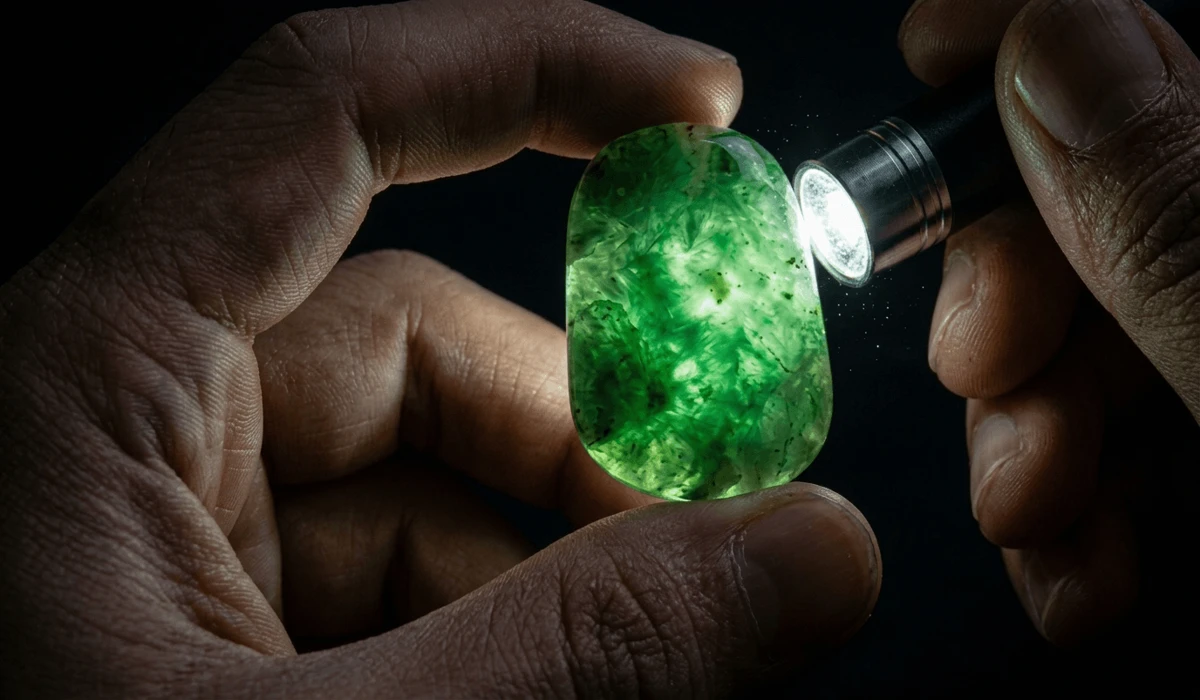
- 💎 Light Inspection: Shining a flashlight through genuine stone reveals granular, fibrous inner textures.
- 💎 Weight Feeling: Natural jade has high specific gravity and feels noticeably heavy in your palm.
- 💎 Acoustic Resonance: Gentle taps between real stones produce a high-pitched, musical chime.
- 💎 Surface Polish: Microscopic inspection shows a characteristic "orange peel" texture rather than melted resin.
What Is Real Jade?
Definition & Mineralogy
Real jade is not a single mineral, but rather an overarching term for two distinct silicate rocks: Jadeite and Nephrite. In traditional crystal practices, both minerals are recognized for conducting natural life force or Chi (气). Identifying natural jade stone characteristics requires understanding that true jade consists of tightly interlocking micro-crystalline fibers rather than individual mineral grains.
Establishing Nephrite jade authenticity involves recognizing its soft, oily luster and extreme physical toughness. Nephrite is a calcium magnesium silicate that has been carved for thousands of years across ancient Asia and New Zealand. It commonly occurs in deep forest greens, creamy whites, and dark mutton-fat shades.
Jadeite is significantly rarer, denser, and displays a brighter glass-like polish. As a sodium aluminum silicate, Jadeite occurs in vibrant emerald greens, lavenders, icy whites, and fiery oranges. Highly prized imperial green Jadeite remains one of the world's most valuable natural gemstones.
Jade Classification: Grade A, B, and C
Understanding Grade A jadeite vs Grade B and C is essential when evaluating any jade pendant's true market value and structural health. In our jewelry studio, we work exclusively with untreated stones to ensure long-lasting energetic and physical beauty.
Grade A jadeite represents completely natural stone that has undergone no chemical alterations. The only accepted finishing process for Grade A is a traditional wax dip using plum wax to protect the polished surface. The internal stone structure remains 100% natural and structurally sound.
Grade B jadeite is natural stone that has been soaked in strong chemical acids to leach out yellowish iron staining. Because acid bathing leaves tiny voids, high-pressure polymer resin is injected into the stone. Over time, Grade B jade can turn yellow, lose its surface shine, and become brittle.
Grade C jadeite refers to stone that has undergone artificial color dying. The stone is heated and submerged in green or purple chemical dyes to boost color saturation. Grade C jade usually fades under sunlight exposure and can trigger sensitive skin reactions.
| Mineral / Stone Property | Jadeite Jade | Nephrite Jade | Glass / Quartz Imitation |
|---|---|---|---|
| Chemical Composition | Sodium Aluminum Silicate | Calcium Magnesium Silicate | Silicon Dioxide / Silica Glass |
| Mohs Hardness | 6.5 to 7.0 | 6.0 to 6.5 | 5.5 to 7.0 |
| Density (Specific Gravity) | 3.30 to 3.38 (Very Heavy) | 2.90 to 3.03 (Heavy) | 2.40 to 2.65 (Light) |
| Internal Structure | Granular / Interlocking Fibers | Matted Fibrous Micro-crystals | Uniform / Round Air Bubbles |
| Surface Luster | Vitreous (Glassy) Polish | Greasy / Greased Luster | Glassy or Plastic Polish |
Non-Destructive At-Home Testing Methods
Performing a cold touch test for jade stone offers a fast preliminary check. Real jade is an excellent thermal conductor, meaning it absorbs body heat slowly and feels ice-cold when placed against your cheek. Even in warm weather, genuine jade takes several minutes to warm up and cools down almost immediately when set aside.
Using a flashlight light translucency test jade method provides visual evidence of natural crystal growth. Hold a high-lumen LED flashlight directly against the back of your pendant in a darkened room. Genuine jade reveals cloudy, irregular, woven threads or small color variations rather than perfect crystal clarity.
Conducting a density and weight test jade pendant inspection helps rule out light plastic or resin fakes. Real jade has a high specific gravity, making it feel surprisingly heavy when bounced gently in your palm. If a large pendant feels light like plastic, it is certainly an imitation.
The clink sound assessment tests internal mineral resonance. When you gently tap a genuine jade pendant against another real jade stone or hard gemstone, it produces a clear, ringing chime. Plastic, glass, or treated resin produce a soft, dull thud due to broken mineral bonds.
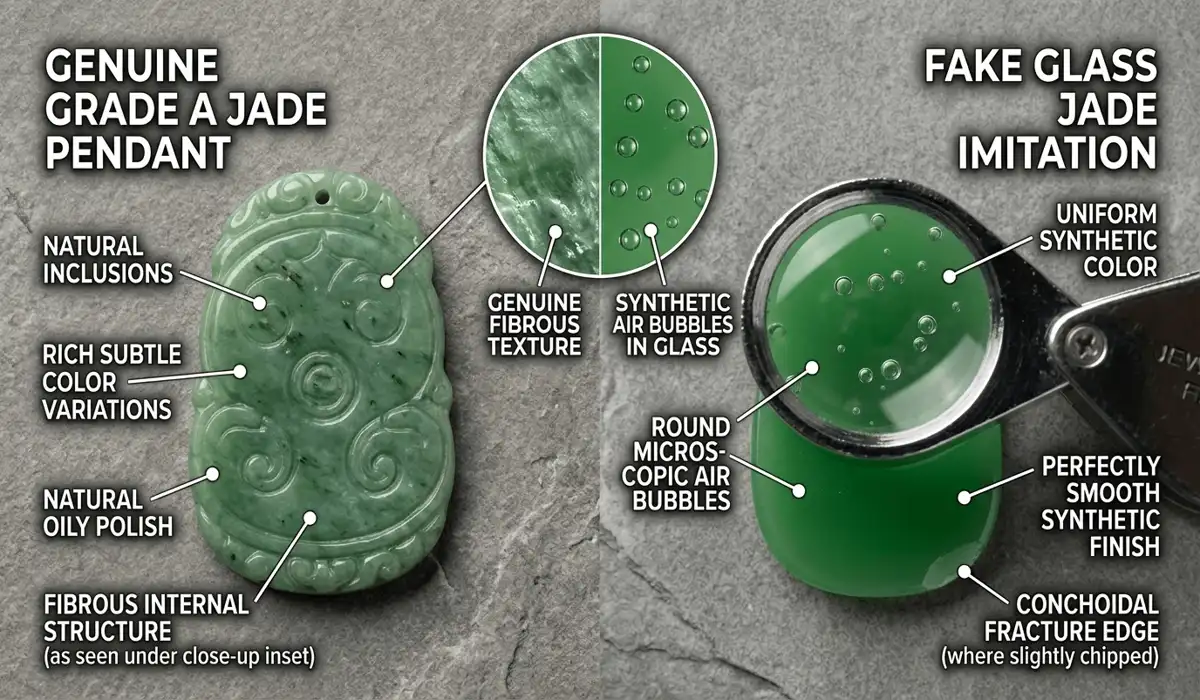
Examining the surface polish and fibrous texture jade with a 10x jeweler's loupe reveals crucial microscopic clues. Authentic Grade A jade displays subtle surface tiny depressions, often called "orange peel" effect, caused by varying mineral hardness. Resin-bleached fake jade shows unnatural smoothness, microscopic acid cracks, or tiny surface dimples.
Professional Gemological Verification
When dealing with high-value antique carved pendants, seeking professional lab authentication is always recommended. Certified gemologists utilize specialized equipment like refractometers, infrared spectroscopy (FTIR), and specific gravity liquid sets to verify authenticity. You can review official testing protocols through the Gemological Institute of America to learn more about laboratory gemstone standards.
Lab testing is the single safest method to determine if a piece has undergone hidden acid bleaching or dye injection. Professional reports confirm exact mineral species, treatment history, and natural color status without risking any damage to your jewelry.
Video source: YouTube
Author: Baikalla Jewelry
Original video link: https://www.youtube.com/watch?v=5VnKH7kqGcI
Spiritual Meaning & Symbolism
Traditional Symbolism
For thousands of years, real jade has been revered across Eastern cultures as a sacred stone of purity, wisdom, and peaceful balance. It symbolizes the harmonious connection between mind and physical reality, helping quiet chaotic thought patterns. When worn over time, jade is believed to absorb the wearer's personal energy, growing richer and more lustrous.
In classical Feng Shui traditions, green jade is a prime stone for attracting steady financial prosperity and supportive luck. Rather than offering erratic spikes of fortune, jade encourages patient growth, grounded decision-making, and long-term emotional stability. It reminds us that true wealth stems from inner contentment and practical wisdom.
Chakra Associations
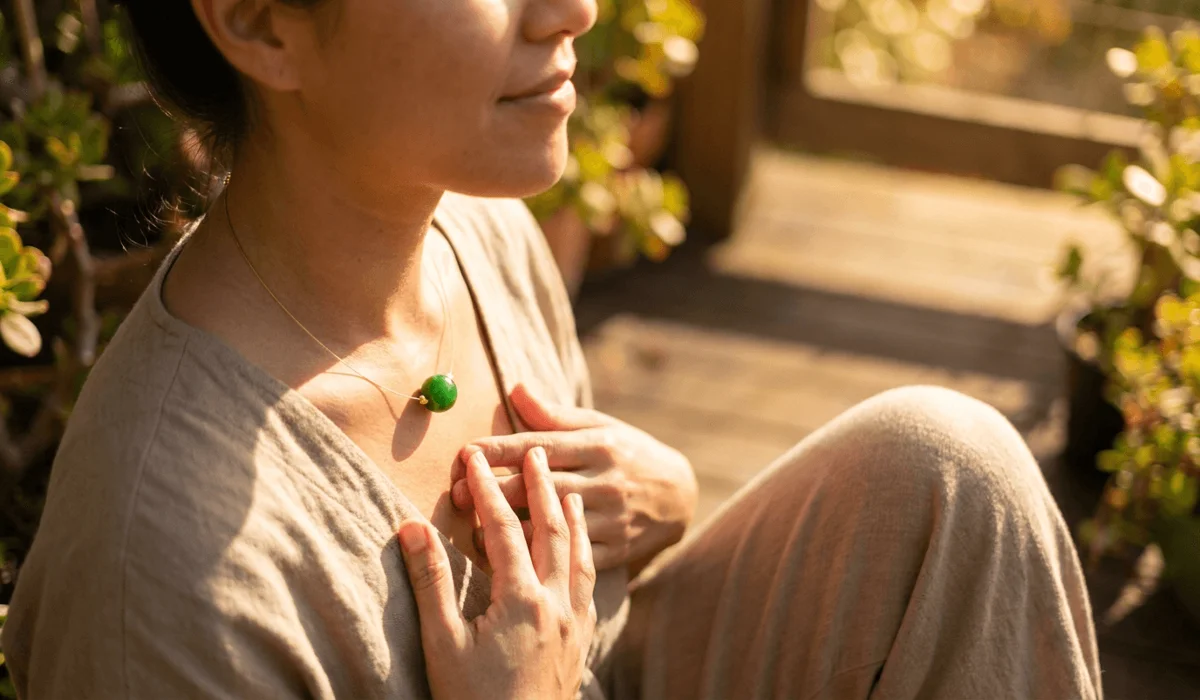
Jade connects deeply with the Heart Chakra (Anahata), located in the center of the chest. It helps disperse stagnant emotional blockages, encouraging self-love, forgiveness, and gentle compassion in personal relationships. Working with genuine stones enhances your subtle energy practices, which you can explore deeper in our guide on Spiritual Crystal Healing.
By soothing anger and nervous tension, a real jade pendant acts as a comforting anchor near your heart center. It bridges earth-grounding energy with quiet spiritual awareness, allowing you to react to life stressors with graceful composure.
Cultural & Historical Context
In ancient Chinese tradition, jade was held in higher esteem than gold or silver, earning the honorable title "Stone of Heaven." Emperors were buried in intricate suits crafted from carved jade tiles to preserve their spiritual spirit and moral dignity. It was believed that jade possessed five primary virtues: benevolence, integrity, wisdom, courage, and modesty.
Across Mesoamerican civilizations like the Maya and Aztecs, jade was prized above all other natural minerals for ritual ornaments and sacred talismans. Maori traditions in New Zealand similarly carved local Nephrite, known as Pounamu, into sacred family heirlooms passed down through generations to carry ancestral authority.
Benefits & Intentions Associated with Real Jade Pendants
Commonly Associated Intentions
Wearing an authentic jade pendant helps attract peaceful, supportive relationships into your daily environment. Many of our studio clients choose green jade when navigating major life transitions, career upgrades, or emotional recovery. The subtle steady frequency of natural jade promotes a calm mind and clear focus.
Jade also serves as a strong talisman for practical self-reliance and emotional independence. It dissolves subconscious patterns of self-limitation, replacing self-doubt with quiet confidence and realistic optimism.
Mindfulness & Personal Practices
You can use the tactile sensation of a real jade pendant during daily mindfulness meditations. Holding the cool, polished surface between your fingers offers an immediate physical anchor when feeling overwhelmed or distracted. The natural weight of genuine stone helps bring scattered thoughts back into the physical present moment.
Combining your physical jade pendant with positive daily affirmations strengthens your mental clarity. As you touch the smooth gemstone surface, repeat statements focused on balance, health, and peaceful abundance to set a clear daily intention.
How to Wear a Real Jade Pendant
Left Hand vs Right Hand (Feng Shui Logic)
In traditional energy logic, the left side of the human body is considered the receiving side, while the right side is the giving or projecting side. Wearing a jade pendant resting on the left side of your chest allows your energetic system to receive calming vibrations, heart healing, and protective luck directly into your aura.
Conversely, choosing to wear or hold jade on the right side is helpful when you are actively projecting calm balance, leadership, and emotional stability outward to others. This makes right-side placement effective during public speaking, negotiations, or family conflict resolution.
When People Choose to Wear It
Many individuals wear their jade pendants continuously throughout the workday as an energetic protective shield against chaotic public environments. Its soothing touch helps prevent emotional burnout and reduces subtle stress during fast-paced office schedules.
Others prefer wearing jade specifically during yoga, silent meditation, or evening walks in nature. The gemstone enhances quiet introspection and deepens breathwork exercises by maintaining a settled heart rhythm.
Intention-Setting Practices
To set a clear purpose for your piece, hold your jade pendant quietly between both hands while sitting in a comfortable position. Take three slow, deep breaths, visualizing bright green light enveloping the gemstone while stating your intention clearly. Browse our curated Jade Necklace Collection to find handcrafted pieces crafted specifically for intention work.
Resting your cleansed jade piece near your heart center throughout the day serves as an energetic touchstone. Every time you touch the cold gemstone, remember the quiet peace and emotional clarity you intended for your life.
Real Jade Pendants vs Similar Stones
Real Jade vs Glass and Resin Jade Imitations
Conducting a real jade vs fake jade pendant comparison reveals clear differences under direct magnification and light inspection. Green glass imitations contain tiny spherical air bubbles created during factory melting processes, whereas natural jade displays irregular woven micro-fibers. Glass also lacks jade's dense heft, feeling lighter and warming up rapidly in your hand.
Resin or plastic pendants are very easy to spot because they are significantly lighter than natural stone and scratch easily under slight pressure. Resin also leaves a melted chemical smell if exposed to mild friction heat. For further details on gemstone testing standards, you can consult the educational materials provided by the Gemmological Association of Great Britain.
Real Jade vs Dyed Quartz & Serpentine
Dyed quartz is frequently sold under deceptive trade names like "Malay jade" or "Australian jade." Under light, dyed quartz shows dark concentration lines where green dye has collected inside fractures. Natural jade distributes its color in organic clouds or soft patches rather than sharp dyed hairline cracks.
Mastering serpentine fake jade identification requires evaluating surface scratch resistance and density. Serpentine is much softer than genuine jade, with a Mohs hardness of only 2.5 to 5.0, meaning a common steel nail will easily leave a scratch on serpentine, whereas genuine jade resists steel scratches effortlessly.
Aventurine quartz is another common natural stone mistaken for green jade due to its attractive shade. However, aventurine contains tiny metallic mica flakes that glisten under light, a shiny phenomenon known as aventurescence that is completely absent in true jadeite and nephrite.
Who Is a Real Jade Pendant Suitable For?
Chakra & Energy Alignment
A genuine jade pendant is perfect for anyone seeking to soothe, open, or restore balance to their Heart Chakra center. If you carry old emotional burdens, relationship stress, or grief, jade's nurturing green vibration gently releases tension and promotes deep emotional healing.
It is equally beneficial for caregivers, healers, and empathetic individuals who frequently absorb energy from their environments. Jade strengthens subtle personal boundaries, keeping your emotional core grounded and peaceful.
Zodiac & Astrological Associations
Jade shares strong cosmic resonance with Taurus and Libra placements, both ruled by the planet Venus. For Taurus, jade enhances grounded abundance while softening stubborn habits with flexible grace. For Libra, the stone nurtures natural diplomacy, artistic sense, and inner emotional balance.
Gemini and Virgo placements ruled by Mercury also benefit immensely from wearing real jade. Jade calms Gemini's racing thoughts and quells Virgo's tendency toward over-critical perfectionism, replacing anxiety with quiet mental tranquility.
Lifestyle & Personal Intentions
Whether you are a seasoned gemstone collector, a Feng Shui practitioner, or simply someone looking for daily emotional balance, jade fits seamlessly into modern life. Its timeless elegance complements formal wear while providing continuous grounding support. You can explore our Natural Gemstone Collection to discover authentic pieces tailored to your personal aesthetic and spiritual path.
Jade pendants make deeply meaningful gifts for cherished family members, symbolizing wishes for long life, robust health, and peaceful fortune. Giving authentic stone honors both traditional heritage and heartfelt personal connection.
How to Cleanse, Charge, and Care for Real Jade Pendants
Cleansing Methods
To maintain your gemstone's luminous luster and gentle subtle vibration, regular cleansing is essential. To safely cleanse and care for your real jade pendant, follow these simple guidelines:
- 🌿 Gently wipe the stone using a soft micro-fiber cloth dampened with clean, lukewarm water.
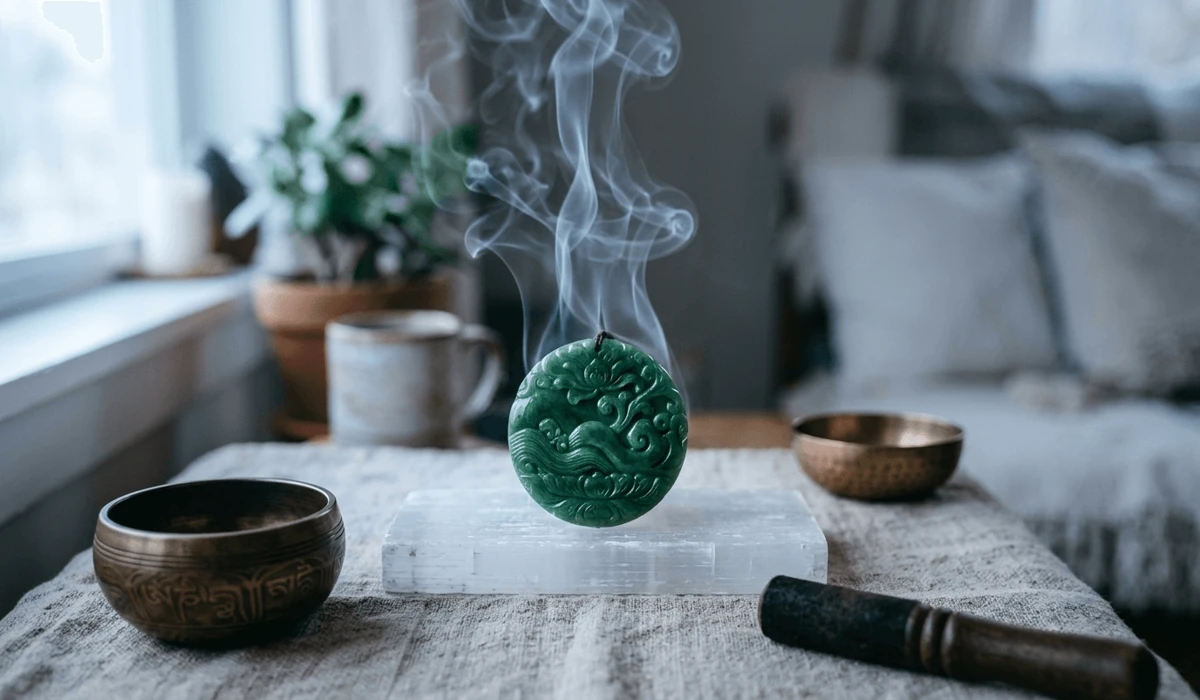
- 🌿 Pass your pendant through natural sage, sweetgrass, or palo santo smoke to clear accumulated energetic residue.
- 🌿 Place the gemstone near a sound bowl or brass chime, allowing harmonic sound vibrations to reset its frequency.
- 🌿 Avoid using harsh chemical detergents, jewelry steam cleaners, or acidic solutions that can damage natural polish.
Cleanse your jade pendant once every few weeks, or whenever it feels heavy after stressful events.
Charging Practices
Charging refreshes your pendant's natural energy field, keeping its peaceful vibrations vibrant. Placing your jade piece outdoors under gentle moonlight—especially during a full moon phase—infuses the stone with calm, reflective energy.
You can also rest your jade pendant directly on a natural Selenite charging plate or inside a bowl of clear quartz tumbled stones overnight. The high-frequency resonance of selenite quickly purifies and recharges jade without any risk of physical surface damage.
Daily Care & Storage
Although authentic jade is extremely tough and resists chipping, keeping its polished surface pristine requires simple common sense care. Store your pendant inside a soft velvet pouch separate from metallic jewelry or diamonds that could scratch the polish. For more background on stone hardness scales, consult the Online Mineralogy Database.
Remove your jade jewelry prior to swimming in chlorinated pools, applying heavy cosmetics, or doing heavy household chores. Avoid leaving your jade pendant on hot windowsills in direct sunlight for long periods to preserve its natural inner moisture and color vibrancy.
Frequently Asked Questions
Q: Is real jade always cold to the touch?
A: Yes, natural jade is a dense thermal conductor that feels notably cold against your skin upon initial touch. While real jade will gradually warm up after prolonged wear, it rapidly cools down once set aside, unlike plastic or glass imitations that retain heat.
Q: How can you test if a jade pendant is real using a flashlight?
A: Hold a bright LED flashlight behind the pendant in a dim room to observe its inner composition. Genuine jade reveals cloudy, fibrous, or granular mineral textures, whereas glass shows uniform clarity or tiny round air bubbles.
Q: What is the main difference between Jadeite and Nephrite?
A: Jadeite is a rarer sodium aluminum silicate displaying vitreous shine, intense vibrant colors, and higher density. Nephrite is a calcium magnesium silicate featuring a greasy luster, smooth fibrous toughness, and traditional presence in classic ancient carvings.
Q: What are Grade A, B, and C jade classifications?
A: Grade A denotes completely natural, untreated jade coated only with traditional wax. Grade B identifies jade that has been acid-bleached and polymer-infused to hide natural flaws. Grade C refers to jade that has been chemically dyed to alter or boost its color.
Q: What stones are commonly used as fake jade imitations?
A: Green glass, resin polymers, dyed quartz, serpentine, aventurine, and prehnite are frequently mislabeled as real jade. Most imitations can be identified by low weight density, soft surface hardness, air bubbles, or unnatural uniform coloration under illumination.
Conclusion & Gentle Next Step
Verifying your jade pendant involves checking key physical traits like surface coldness, density weight, acoustic resonance, and fibrous translucency under light illumination. By learning to distinguish untreated Grade A jade from bleached, resin-filled, or dyed imitations, you protect both your emotional investment and crystal practice. Authentic gemstones serve as beautiful grounding tools, supporting steady personal growth, emotional harmony, and everyday energetic balance. Explore our studio's curated gemstone offerings to discover genuine pieces crafted to accompany your personal mindfulness journey.
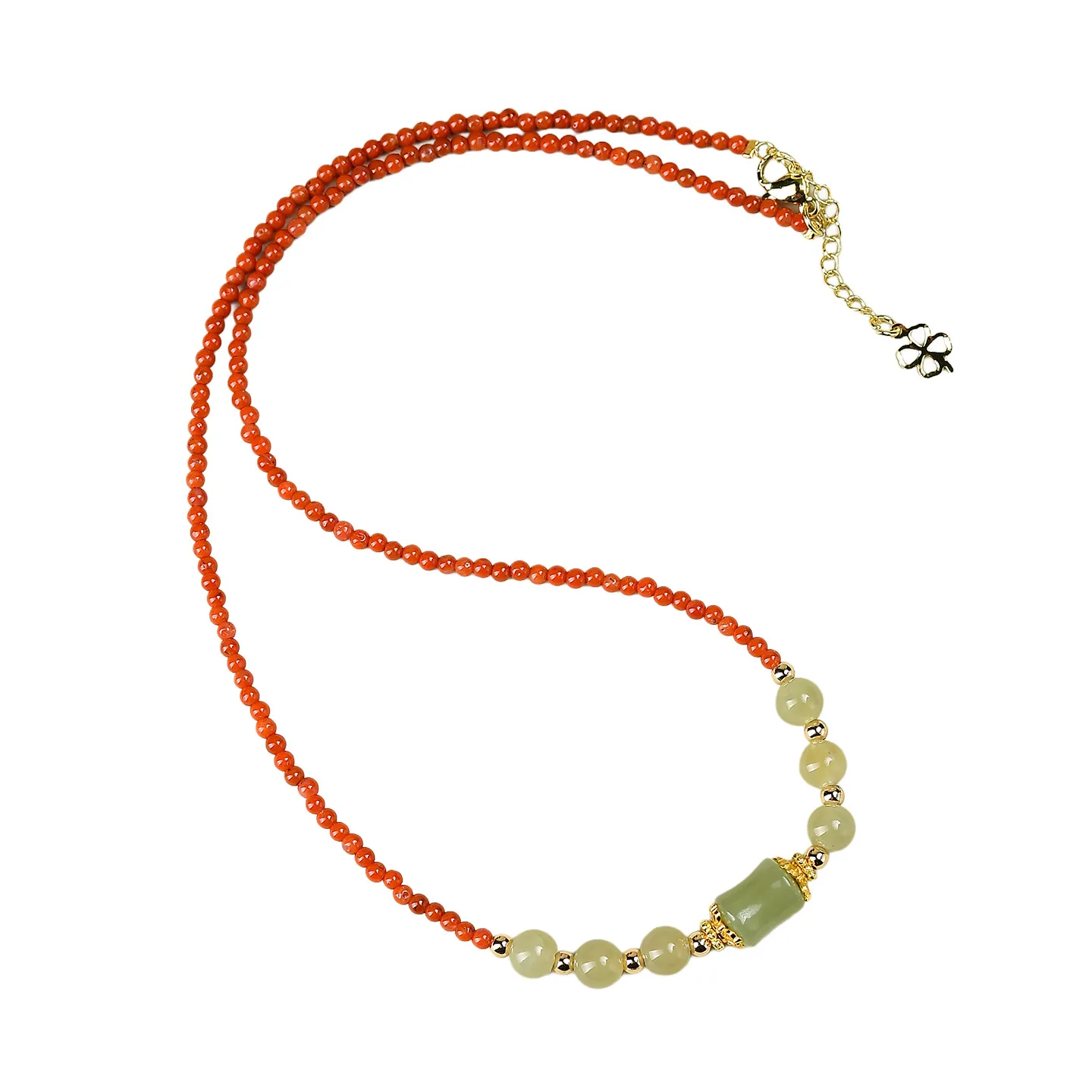
Southern Red Agate & Hetian Jade Necklace for Inner Peace & Elegant Vitality
Elevate your spiritual journey with the Southern Red Agate & Hetian Jade Necklace, a masterpiece of Bohemian Zen design. This exquisite piece harmonizes the fiery, grounding essence of Southern Red Agate with the ethereal, cooling wisdom of Hetian Jade.
Shop Now
Longyi Luck
Longyi Luck is a Feng Shui practitioner and spiritual researcher who blends traditional year-based wisdom with modern lifestyle insights, specializing in Feng Shui, spirituality, meditation, and mindfulness. With years of dedicated study and practice, Longyi explores cultural symbolism and the practical application of ancient wisdom to help individuals cultivate balance, clarity, and harmony in everyday life. Since 2020, Longyi has been committed to translating timeless traditions into accessible guidance for the modern world.
longyi@auraandluck.com

.webp?w=800&h=800)
.webp?w=800&h=800)