

Learning Real vs. Fake Labradorite: How to Spot Painted Stones protects crystal lovers from paying premium prices for cheap coated glass or dyed resin. Natural labradorite reveals a breathtaking optical phenomenon called labradorescence optical flash, where radiant blues, fiery golds, and vivid greens shift beneath the dark mineral matrix as light catches the stone. In this guide, our Aura & Luck team shares hands-on testing methods, mineral signs, and care rituals to help you evaluate your gemstones with total confidence.
Authentic labradorite brings a deep sense of wonder and grounded energy to your daily crystal practice. When you understand how this natural plagioclase mineral forms, spotting synthetic copies and treated surface paints becomes fast and straightforward.
Quick Summary: Authenticity at a Glance
- 💎 Dynamic Light Play: Authentic labradorescence glows from within the stone's crystalline layers and vanishes when viewed straight on or tilted away from light.
- 💎 Earthy Base Matrix: Natural specimens show an organic charcoal, slate gray, or pale olive body color filled with microscopic cleavage planes.
- 💎 Painted Imitation Warning: Artificial stones show flat surface paint that stays bright from every angle, displays chipping edges, or pools inside bead holes.
- 💎 Natural Temperature: Genuine feldspar feels naturally cold to the touch and warms slowly, while plastic or resin beads warm up almost instantly.
- 💎 Gentle Cleansing: Always refresh your real gemstone using soft moonlight, sound vibrations, or herbal smoke rather than corrosive salt water.
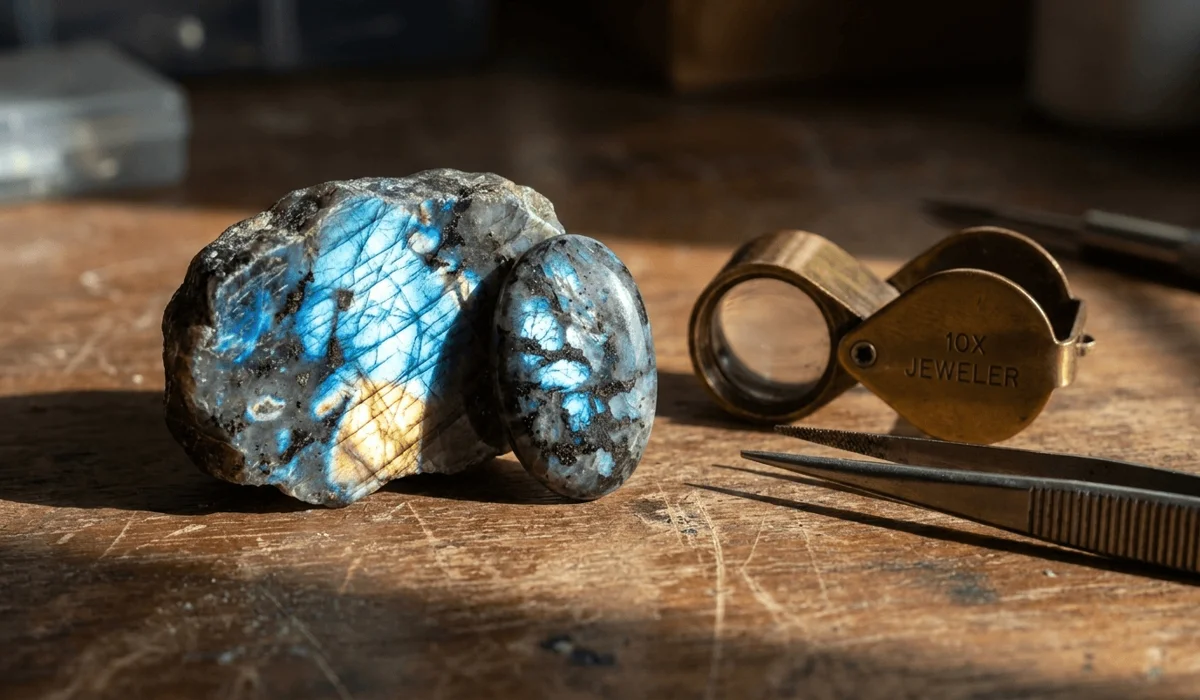
What Is Real vs. Fake Labradorite: How to Spot Painted Stones?
Distinguishing authentic mineral specimens from treated imitations requires an eye for light, structure, and physical composition. In our studio, we carefully inspect every raw slab and polished bead under calibrated full-spectrum lighting before designing our jewelry.
Definition & The Science of Labradorescence
Natural labradorite belongs to the plagioclase feldspar mineral group, characterized by an intermediate-to-calcic chemical balance. It creates a stunning feldspar mineral optical effect known worldwide as labradorescence.
This signature optical flash, widely studied under schiller effect labradorite, does not originate from surface sparkle or glitter. Instead, it forms deep within the rock as alternating microscopic lamellae cool and separate over millions of years. Authoritative publications from Gemological Institute Findings document how these thin submicroscopic layers scatter light rays, producing brilliant blue, turquoise, bronze, and green interference colors.
Because this light interference occurs internally, the color appears to float inside the stone rather than resting on the polished outer surface.
Visual Markers: Genuine Base Color and Inclusions
When you hold an unpolished or polished piece without direct light, notice its foundation tone. The true genuine labradorite base color is generally an unassuming dark slate, smoky gray, brownish-black, or pale olive.
Authentic stones are rarely flawless or completely transparent. You will observe organic natural mineral inclusions such as tiny black specks of magnetite, ilmenite ribbons, or delicate rutile needles scattered throughout the matrix. In addition, visible internal cleavage fractures run along natural crystalline planes beneath the polished exterior.
These micro-fractures reflect the gemstone's authentic growth history. If a bead looks like clear colored glass with uniform foil backing, it is almost certainly a synthetic imitation.
Painted Labradorite Identification & Imitation Hallmarks
Due to high demand, unethical manufacturers produce dyed items and spray-coated rocks to mimic premium specimens. Accurate painted labradorite identification begins by examining the crevices, carved recesses, and bead drill channels.
When low-grade quartz, dull basalt, or molded glass is painted, topical pigments pool heavily in small hollows and drill holes. Typical synthetic labradorite imitations also utilize molded acrylic beads, dyed epoxy resin, or standard glass cabochons backed with metallic iridescent foil. Everyday wear causes these surface coated gemstones to scratch, peel, bubble, or fade rapidly around the edges.
Furthermore, painted stones fail the natural gemstone flash angle test. Because artificial paint sits directly on the exterior, its vivid color remains visible from all viewing angles without disappearing when the stone is turned.
Video source: YouTube
Author: Karen Hui
Original video link: https://www.youtube.com/watch?v=sjfkk5PdTho
Simple Non-Destructive Authenticity Tests
You do not need an advanced gem laboratory to verify your crystals at home. Our team recommends simple, harmless tests you can conduct in a few minutes:
- 💎 The 360-Degree Sheen Test: Conduct a slow labradorite sheen test by rotating your stone beneath indirect natural daylight. Real stones flash intensely at a specific optical angle and then drop back to a moody gray or dark charcoal as you turn them.
- 💎 The Thermal Touch Test: Press the stone against the sensitive skin of your cheek or wrist. Natural feldspar conducts heat away rapidly and feels cool, whereas plastic or resin warms up immediately against your skin.
- 💎 The Loupe Inspection: Use standard procedures for identifying treated gemstones by examining the piece with a 10x jeweler's loupe. Check drill holes for crusty dye deposits, uneven painted rims, or chemical residues.
- 💎 Weight and Density Check: Real labradorite has a specific gravity of roughly 2.68 to 2.72. It feels pleasantly dense in your palm, unlike lightweight acrylic imitations.
These simple tactile observations give collectors dependable peace of mind before buying new pieces.
Spiritual Meaning & Symbolism
Beyond its mineralogical fascination, labradorite holds a treasured place in metaphysical traditions. Many people revere it as an inspiring companion for personal growth and inner awareness.
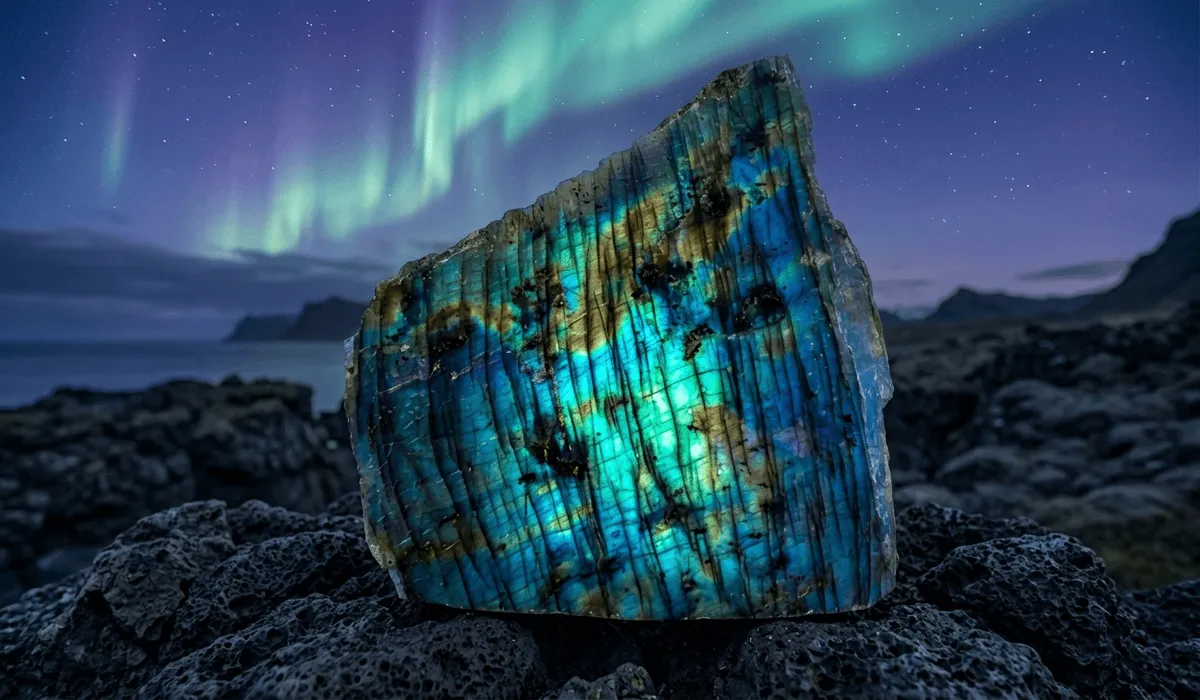
Traditional Symbolism
Across modern energetic philosophies, labradorite is honored as the stone of transformation and awakening. Practitioners associate its shifting light with personal adaptability, helping people navigate major lifestyle changes with quiet confidence.
Many practitioners treat the stone as a spiritual shield. Its dark base matrix combined with colorful light is thought to create an energetic barrier that guards your natural Chi(气) from outside emotional drain. We often recommend it to clients who work in busy, demanding office settings.
Its luminous sheen symbolizes the hidden light that lives inside every person, waiting to be uncovered through self-reflection.
Chakra Associations
Labradorite resonates primarily with the upper energy centers while remaining safely anchored to the earth. It is deeply connected to the Third Eye (Ajna) chakra, which encourages intuitive perception, imaginative clarity, and deep meditation.
It also harmonizes with the Throat (Vishuddha) chakra through its bright teal and turquoise color flashes. This energetic link helps individuals voice their authentic thoughts with calm self-assurance and emotional honesty. Collectors curious about holistic mineral traditions can read more about balancing subtle energy through our Holistic Crystal Healing Tradition resources.
The dark charcoal base of the mineral simultaneously grounds your physical Root chakra, ensuring your intuitive insights stay practical and balanced.
Cultural & Historical Context
Labradorite owes its official name to the rocky coast of Paul's Island near Nain in Labrador, Canada. Moravian missionaries formally cataloged the stone there in the early 1770s, introducing it to European jewelry workshops.
Long before European mineralogists arrived, native Inuit peoples passed down poetic oral legends about the stone. According to ancient lore, an Inuit warrior saw the Northern Lights trapped within the coastal rocks along the shoreline. He struck the stones with his spear, freeing the luminous Aurora Borealis into the sky, while a fraction of the celestial fire remained forever locked inside the crystals.
During the 18th and 19th centuries, the gemstone became a favored talisman across Europe, prized for ornate rings, carved snuffboxes, and royal brooches.
Benefits & Intentions Associated with Labradorite
Working with authentic stones brings mindful intention into daily routines. Many crystal enthusiasts select labradorite to inspire greater personal courage and peaceful clarity.
Commonly Associated Intentions
People turn to natural labradorite when they wish to cultivate emotional resilience during unexpected transitions. Its dynamic colors remind us that changes in perspective often reveal unexpected solutions to complex problems.
The stone is also popular among writers, artists, and innovators who wish to break through mental fatigue. Setting an intention with this stone encourages creative inspiration and lateral thinking during demanding creative projects. If you enjoy building a mindful environment, consider exploring our Spiritual Gemstone Collection to find companion stones that match your personal goals.
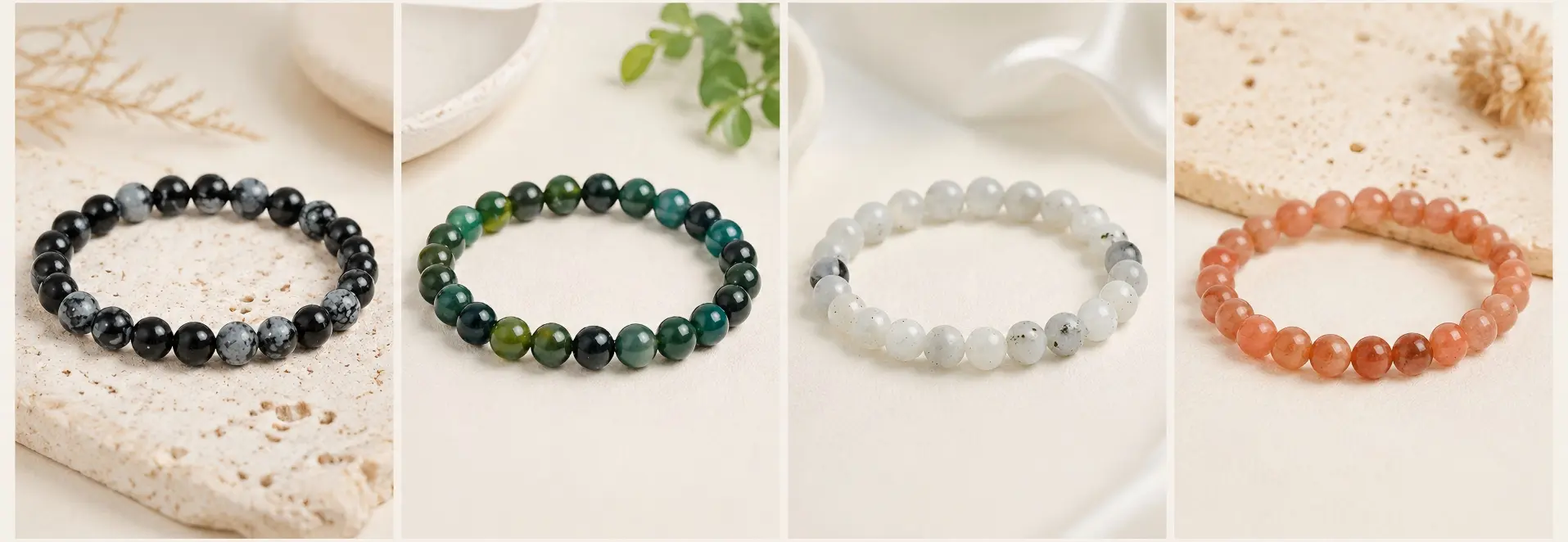
Many people find that holding the stone during stressful moments helps quiet mental chatter and restores a sense of steady composure.
Mindfulness & Personal Practices
Integrating crystals into daily life does not require complex ceremonies. Simple, grounded mindfulness techniques allow you to pause, breathe, and reset your thoughts during hectic days:
- 🌿 Tactile Breathwork: Hold a smooth cabochon or palm stone in your dominant hand during five minutes of conscious diaphragmatic breathing. Focus on the cold surface warming against your palm.
- 🌿 Desk Sanctuary: Place a raw or polished specimen beside your computer monitor to serve as a visual reminder to breathe deeply and release physical shoulder tension.
- 🌿 Reflective Evening Journaling: Rest your gemstone beside your personal journal while writing down thoughts from the day to encourage honest emotional processing.
- 🌿 Intention Reset: Touch your beads before entering a challenging meeting, using the stone's solid weight to stay grounded in the present moment.
These tactile habits build emotional grounding throughout ordinary everyday tasks.
How to Wear Authentic Labradorite Jewelry
Wearing gemstone jewelry keeps crystal energy physically close to your pulse points throughout the day. Selecting how and where you wear your pieces adds thoughtful purpose to your personal style.
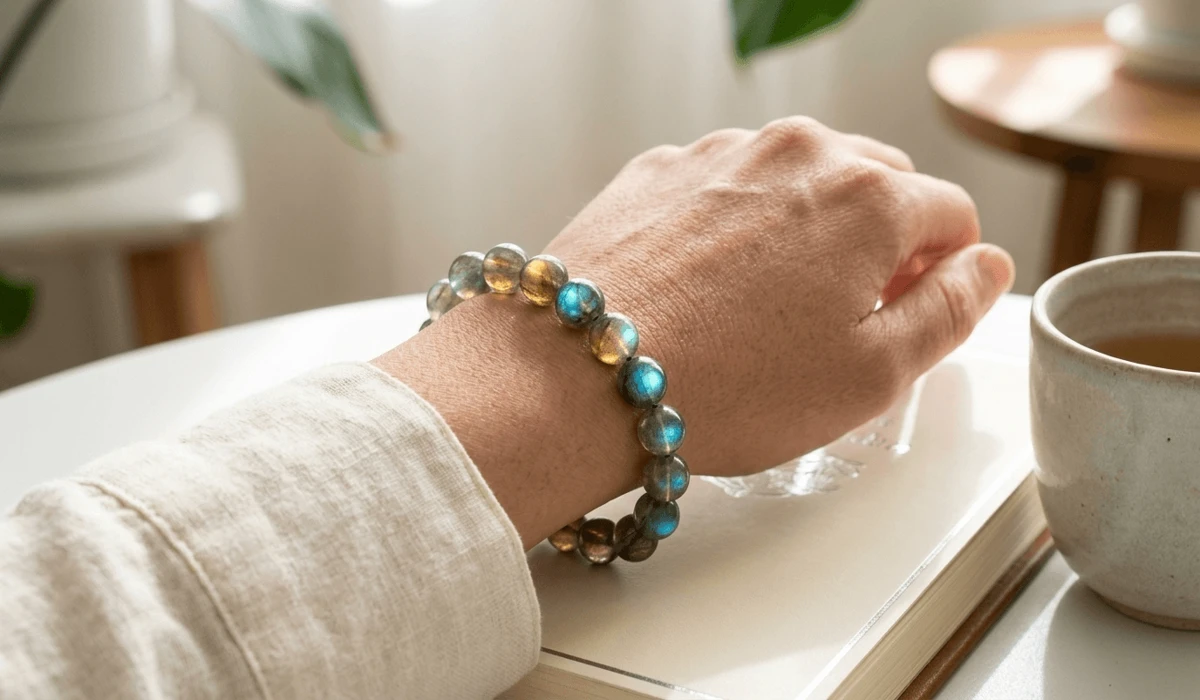
Left Hand vs Right Hand (Feng Shui Logic)
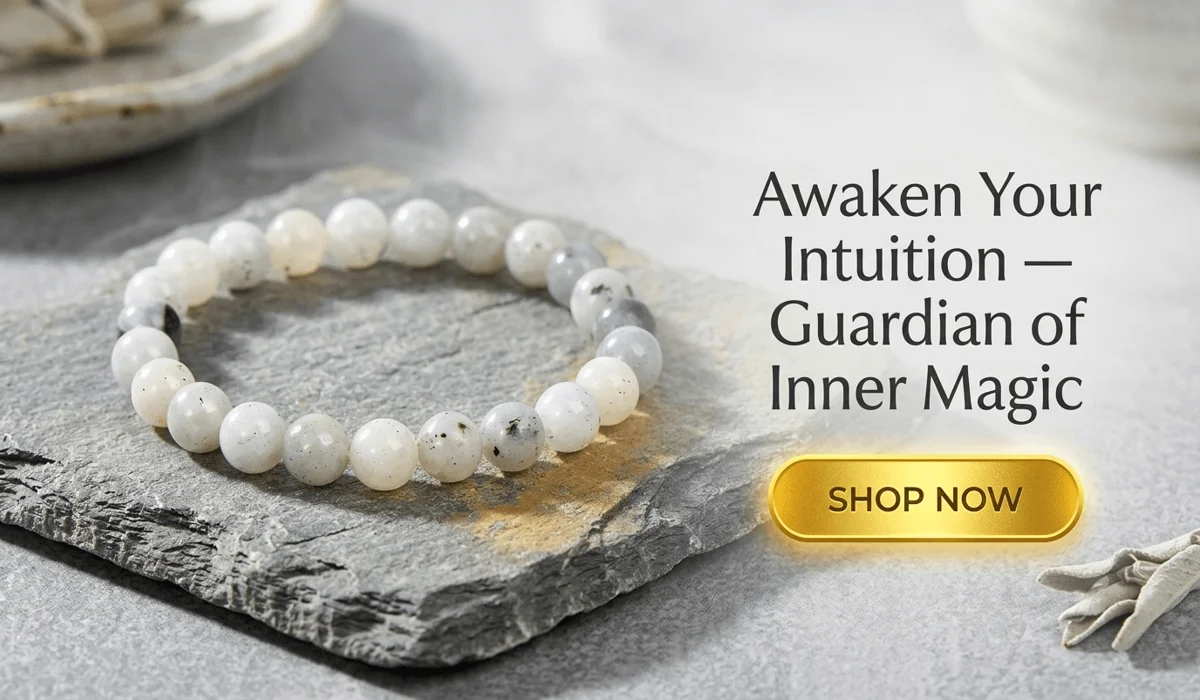
In traditional Eastern philosophy and Feng Shui principles, your body's hands manage the flow of subtle energy in distinct ways. Wearing authentic labradorite jewelry on your left wrist engages the receptive side of your body.
The receptive left side absorbs calming frequencies, deepens intuitive insight, and protects your personal aura from negative social energy. In contrast, wearing your bracelet on your projective right wrist helps you release internal self-doubt, assert healthy boundaries, and communicate your intentions with confidence.
Choosing which wrist to adorn simply depends on whether you seek internal peace or outward courage on any given day.
When People Choose to Wear It
Our studio clients frequently wear labradorite when embarking on new life chapters, such as starting a new career, moving cities, or beginning an intensive study program. The stone serves as an anchor during unfamiliar routines.
It is also a popular accessory for public speakers, teachers, and healthcare providers who regularly interact with crowded environments. Wearing the stone provides a subtle psychological reminder to maintain healthy emotional boundaries with others.
Many jewelry wearers also pair their bracelets with other authentic minerals; to learn how to identify other frequently imitated gems, browse our Authentic Citrine Identification Guide for expert verification tips.
Intention-Setting Practices
Before putting on your jewelry in the morning, take thirty seconds to hold the beads between both hands. Close your eyes, inhale slowly through your nose, and visualize your focus for the day ahead.
You might mentally state an intention such as: "I navigate today's changes with balance, clarity, and steady courage." This quick mindfulness ritual transforms a pretty piece of jewelry into a meaningful personal touchstone.
At the end of the day, take off your jewelry mindfully and rest it on a dedicated tray to preserve both the stone and its elastic cord.
Labradorite vs Similar Stones
Because labradorite shares the plagioclase feldspar family with several other iridescent gems, beginners often confuse it with moonstone or high-grade spectrolite. Understanding their distinct physical traits prevents confusion when shopping.
Labradorite vs Rainbow Moonstone
While trade vendors frequently classify rainbow moonstone as a unique moonstone, gemological analysis proves it is actually a transparent, white variety of labradorite. Despite sharing similar chemistry, their appearances differ dramatically.
Rainbow moonstone exhibits a pale milky-white or translucent body with delicate, floating blue adularescence. Standard labradorite features an opaque, dark charcoal or greenish-gray base with wide-spectrum multicolored labradorescence spanning blue, gold, and copper.
In mindful meditation, moonstone is favored for gentle emotional balance, while dark labradorite is preferred for energetic protection and personal transformation.
Labradorite vs Spectrolite
Spectrolite represents a rare, premium trade variety of labradorite quarried exclusively in southeastern Finland. It was discovered during fortification construction in the 1940s and remains highly coveted by serious gem collectors.
Standard commercial labradorite displays flashes primarily focused in blue, teal, and soft golden-yellow. Spectrolite displays an intense, complete rainbow spectrum that includes brilliant purples, magentas, crimson reds, and bright oranges across an intensely dark, pitch-black mineral base. Independent scientific studies cataloged by Gemmological Association Research highlight how this dense, opaque background makes spectrolite's vibrant light display exceptionally rich and saturated.
Because Finnish spectrolite is mined in limited quantities, it commands significantly higher prices than standard commercial grades.
| Mineral Variety | Base Color | Optical Flash Colors | Mohs Hardness | Primary Geographic Origins |
|---|---|---|---|---|
| Natural Labradorite | Dark smoky gray, charcoal, olive | Peacock blue, gold, electric green, bronze | 6.0 - 6.5 | Madagascar, Canada, Russia |
| Rainbow Moonstone | Translucent milky-white to colorless | Soft sky blue, pale violet, faint gold | 6.0 - 6.5 | India, Sri Lanka |
| Finnish Spectrolite | Deep pitch-black, fully opaque | Vivid purple, crimson red, orange, green, blue | 6.0 - 6.5 | Ylämaa (Finland) |
Who Is Labradorite Suitable For?
Thanks to its balanced blend of grounding matrix and soaring optical fire, labradorite suits a wide variety of personal profiles, astrological signs, and daily lifestyles.
Chakra or Energy Alignment
This mineral is ideal for individuals seeking to harmonize mental inspiration with practical, everyday action. If you often feel overwhelmed by creative ideas without knowing how to execute them, labradorite provides steady, calming focus.
It is especially supportive for people working through throat chakra blockages. If public speaking, presenting ideas, or setting boundaries causes you hesitation, the stone encourages calm self-expression.
Furthermore, anyone practicing meditation, yoga, or visualization exercises will appreciate its ability to quiet distracting inner dialogue.
Zodiac & Astrological Associations
While anyone can benefit from labradorite regardless of their birth chart, certain zodiac signs share an organic affinity with its energetic frequencies:
- 🔮 Scorpio: Resonates with Scorpio's transformative nature and emotional depth, helping them channel intense feelings into constructive personal growth.
- 🔮 Sagittarius: Complements Sagittarius' philosophical curiosity, keeping their adventurous spirit grounded while they explore new ideas.
- 🔮 Pisces: Provides intuitive Pisces with a supportive energy shield, preventing them from absorbing emotional fatigue from people around them.
- 🔮 Leo: Balances Leo's bold creative energy, encouraging quiet inner introspection alongside external self-expression.
Regardless of your sign, choosing a stone should always come down to your personal intuitive connection with its appearance.
Lifestyle & Personal Intentions
In our studio experience, certain professionals gravitate toward labradorite more than any other mineral. Empaths, counselors, social workers, and nurses value the stone for maintaining healthy energetic separation from clients.
Similarly, graphic designers, software architects, and entrepreneurs appreciate how its shifting colors stimulate innovative perspectives. It serves as a visual catalyst for out-of-the-box thinking during creative brainstorming.
Finally, anyone undergoing a substantial life transition—such as a career pivot, graduation, or divorce—will find comforting reassurance in its symbolic connection to resilience.
How to Cleanse, Charge, and Care for Labradorite
Proper mineral care protects both the physical polish of your gemstone and its subtle energetic vibration. Because labradorite possesses specific cleavage properties, caring for it requires gentle, mindful techniques.
Cleansing Methods
Cleansing clears accumulated daily impressions from your crystal. Because natural labradorite has microscopic structural cleavage planes, you should avoid aggressive cleaning chemicals or soaking.
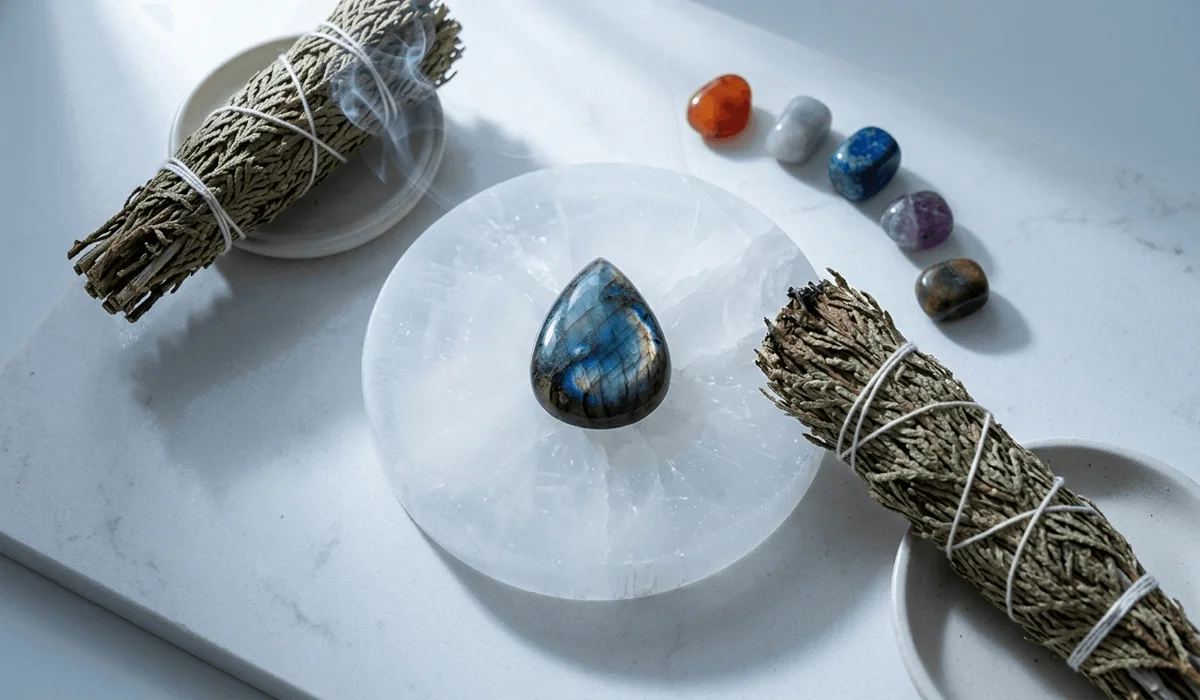
Instead, use dry, non-invasive cleansing methods like sacred herb smoke. Wafting dried white sage, sweetgrass, or cedar smoke across the stone gently resets its energetic ambiance without harming the polished surface. Sound cleansing with Tibetan singing bowls, brass chimes, or 432 Hz tuning forks also clears dense energy effectively through sound wave vibration.
Never use ultrasonic cleaners, steam cleaners, or harsh acid solutions. These methods can force liquid into microscopic lamellar fissures, causing permanent cloudiness or internal fractures.
Charging Practices
Charging refreshes the stone's natural luster and vitality. Moonlight is by far the safest and most harmonious method for energizing all feldspar minerals.
Lay your labradorite on a clean windowsill or outdoor patio during the waxing moon or full moon overnight. The gentle lunar rays nourish the stone's reflective schiller without exposing it to heat damage. Alternatively, you can rest your jewelry atop a natural selenite charging slab or clear quartz cluster for several hours.
If you prefer using sunlight, limit exposure to early morning dawn light for no more than fifteen minutes. Extended exposure to intense midday ultraviolet rays can gradually degrade the stone's natural sheen.
Daily Care & Storage
Labradorite registers between 6.0 and 6.5 on the Mohs hardness scale. While it is durable enough for daily jewelry, it can be scratched by harder gemstones such as quartz, beryl, corundum, and diamonds.
Always store your labradorite bracelets and pendants in individual soft cotton or velvet pouches. Keep them separate from mixed jewelry boxes where metal clasps or sharp stones could strike against the mineral surface. After wearing your jewelry, wipe it gently with a dry, clean microfiber cloth to remove skin oils and perspiration.
Remove your bracelets before washing dishes, exercising vigorously, or applying perfume and hand sanitizer to preserve the stone's radiant luster.
Frequently Asked Questions
Q: How can I tell the difference between real and fake labradorite?
A: Genuine labradorite looks dark gray or smoky olive when viewed straight on, revealing an internal color flash only when rotated toward light. Fake or painted stones display a static surface color that remains visible from every viewing angle without shifting. Authentic stones also contain natural internal cleavage lines, slight matrix variations, and dark mineral specks beneath the polish.
Q: What is the rarest color of labradorite?
A: Purple, violet, and deep magenta flashes are the rarest and most valuable colors found in natural labradorite. Warm copper-red and pure pink flashes are also exceptionally uncommon compared to standard blue and golden-green displays. Specimens showing a full rainbow spectrum across a dark background are typically Finnish spectrolite, which commands premium collector prices.
Q: Should I wear labradorite on my right or left?
A: Wear labradorite on your left wrist when your goal is to absorb calm energy, protect your personal aura, and deepen intuitive reflection. Wear it on your right wrist when you want to project inner courage, release self-doubt, and establish clear boundaries in social or work settings. Choosing your wrist based on your daily intention aligns with traditional energy principles.
Q: How to cleanse and charge labradorite?
A: Cleanse labradorite using dry, non-invasive methods such as cedar smoke, sound vibrations from a singing bowl, or resting beside selenite. Charge the mineral overnight under the soft light of the full moon to honor its reflective nature. Avoid prolonged water soaks or salt baths, as moisture can seep into natural cleavage fractures and dull the polish.
Q: How to identify high quality labradorite?
A: High-grade labradorite exhibits intense, vibrant labradorescence across more than seventy percent of its surface area. Premium pieces have a clean, dark background matrix free from muddy brown discoloration or rough surface pitting. The finest stones display multiple color shifts, such as turquoise blending into gold and violet, rather than a faint, single-angle sheen.
Conclusion & Gentle Next Step
Distinguishing genuine labradorite from painted imitations comes down to understanding the magic of internal light. Authentic gemstones showcase an angle-dependent optical flash born from ancient cooling processes, paired with natural internal cleavage lines and an earthy base matrix.
In contrast, synthetic or painted imitations rely on superficial surface coatings that look flat, peel under pressure, and remain visible from every angle. Detailed geological research documented in the Mineral Science Encyclopedia confirms that true labradorescence cannot be replicated by simple surface lacquers.
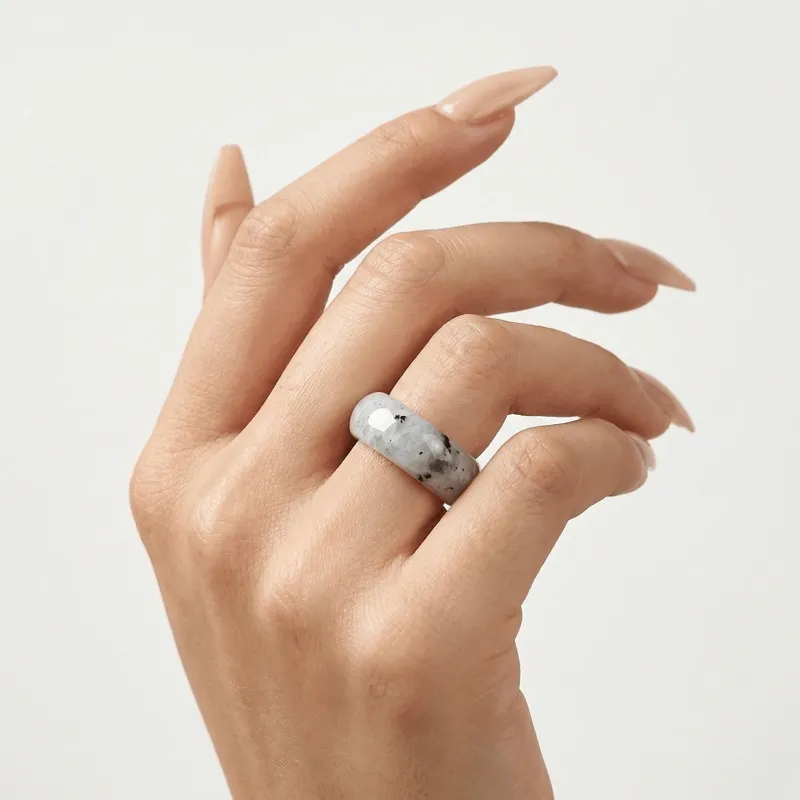
Glitter Stone - Labradorite Ring for Energy Revitalization & Spiritual Insight
This exquisite Labradorite Ring, often referred to as the 'Glitter Stone,' is a vessel of celestial energy designed to revitalize your physical being and sharpen your spiritual sight.
Shop Now"Natural crystals carry the quiet patience of the earth within their layers. When you hold an authentic stone to the light, its true inner fire reveals itself without pretense."
Curate Your Crystal Sanctuary with Confidence
Take a quiet moment to examine the gemstones in your current collection under natural window daylight. Rotate each piece slowly, observe how the light interacts with its internal planes, and celebrate the authentic beauty of genuine mineral craftsmanship.
Disclaimer: The information provided in this article is published strictly for educational, historical, and cultural appreciation purposes. Crystal practices and metaphysical concepts reflect traditional folklore and should never replace qualified medical, legal, or psychological healthcare advice. If you have concerns regarding your physical or mental health, please consult a licensed medical professional.

Longyi Luck
Longyi Luck is a Feng Shui practitioner and spiritual researcher who blends traditional year-based wisdom with modern lifestyle insights, specializing in Feng Shui, spirituality, meditation, and mindfulness. With years of dedicated study and practice, Longyi explores cultural symbolism and the practical application of ancient wisdom to help individuals cultivate balance, clarity, and harmony in everyday life. Since 2020, Longyi has been committed to translating timeless traditions into accessible guidance for the modern world.
longyi@auraandluck.com
.webp?w=1200&h=700)

.webp?w=800&h=800)
.webp?w=800&h=800)
.webp?w=800&h=800)
.webp?w=800&h=800)