
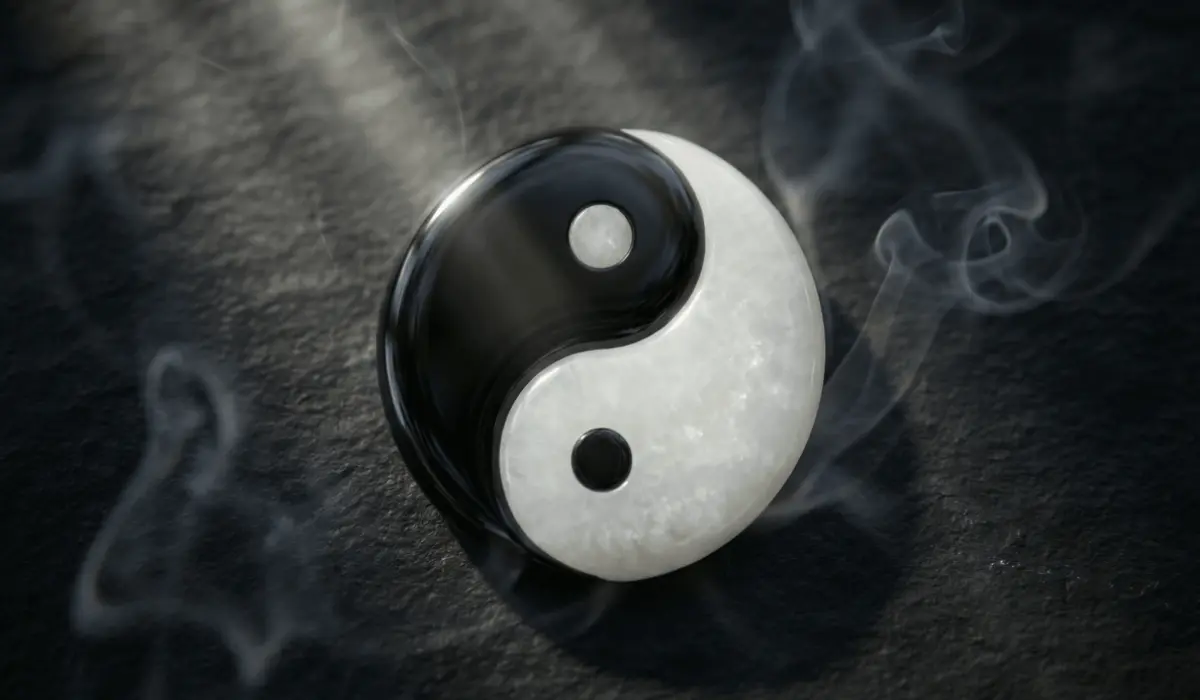
Beyond being a popular design, the Yin Yang symbol is a profound map of the human experience and the laws of the universe. We recognize it as a visual representation of Dualistic Monism, the belief that all things are one yet expressed through two opposing forces. This ancient emblem remains a global talisman of truth for those seeking balance in a world that often feels divided.

The Yin Yang, also known as the Taiji (Taijitu) symbol, is an ancient Taoist emblem representing the harmony of opposing yet complementary cosmic forces. It illustrates that all universal phenomena are created by the cyclic movement of light (Yang) and dark (Yin), each containing the seed of the other, maintaining a state of dynamic equilibrium and eternal change.
Ancient Origins and Sacred Lore: The Shadow on the Mountain
The roots of this symbol reach back thousands of years to the earliest observations of nature in ancient China. We find its origins in the "I Ching" (Book of Changes), where scholars tracked the movement of the sun across the landscape. The literal translation of "Yin" refers to the shaded side of a mountain, while "Yang" represents the sunny side.
As the sun moves through the sky, the shadows shift, showing that light and dark are not static but are always in motion. This simple observation of solar cycles inspired the first understanding of cyclical time and transition. It taught ancient people that day always turns to night, and summer always fades into winter.
The Taoist Cosmological Foundation
In Taoist philosophy, the universe began as "Wuji" (the limitlessness or void), a state of nothingness. From this void emerged "Taiji" (the supreme ultimate), which is the first movement of energy. This movement created the two poles of Yin and Yang, which interact to form "Qi" (Chi), the life force flowing through everything.
The friction and embrace of these two energies gave birth to the "Ten Thousand Things," a term used to describe all existing things in the physical world. This philosophy suggests that nothing can exist in total isolation. Every object, person, and idea requires its opposite to be defined and understood.
Deciphering the Geometry: What the Dots and Curves Actually Mean
The anatomy of the Taijitu is a masterclass in sacred geometry and spiritual symbolism. The outer circle represents the "Tao" or the totality of the universe, acting as a boundary that contains all possibilities. It reminds us that despite the appearance of conflict, everything is part of a single, unified whole.

The central S-curve is perhaps the most important part of the design because it represents fluid motion. It is not a straight line because nature does not work in rigid divisions. Instead, the curve shows how Yang peaks and then inevitably begins its descent into Yin, creating a rhythm of perpetual motion.
The Seed of the Opposite
Inside each swirl, there is a small dot of the contrasting color, often called the "eyes" of the symbol. These dots represent the principle of interdependence, showing that nothing is ever absolute. Even in the depths of darkness (Yin), there is a spark of light (Yang), and within the brightest light, a shadow is born.
In the realm of internal alchemy, these dots suggest that we must find the light within our own shadows and the stillness within our activity. This perspective encourages us to look deeper than surface appearances. By recognizing the seed of the opposite, we can find balance even during the most extreme times of our lives.
The 4 Principles of Yin-Yang: Opposition, Interdependence, Consumption, and Transformation
To truly understand the Taiji meaning, we must look at the four ways these forces interact with one another. These principles explain how energy moves through our bodies, our homes, and the stars above. They provide a framework for understanding why change is the only constant in our lives.
We can summarize these interactions through the following points:
- Opposition: Yin and Yang are contrary qualities, like hot and cold or male and female, that create the tension necessary for life.
- Interdependence: One cannot exist without the other; there is no concept of "high" without "low," and no "action" without "rest."
- Mutual Consumption: They are constantly adjusting to one another; when Yang increases, Yin decreases to maintain a relative balance.
- Inter-transformation: At their extremes, they turn into each other, much like how the peak of a wave is the beginning of its fall.
These four pillars are central to Chinese philosophy and remain the foundation of ancient wisdom. They remind us that balance is a verb, not a noun—it is something we must constantly practice.
East vs. West: The Evolution of Yin-Yang in Global Culture
In classical Eastern applications, Yin and Yang are practical tools used in daily life and health. Traditional Chinese Medicine uses these concepts to diagnose organ health and restore energy flow. Similarly, the art of Feng Shui involves arranging environments to allow harmonious "Qi" to support the people living within a space.
Martial arts like Tai Chi physicalize the symbol through circular movements. A practitioner learns to balance "hard" power with "soft" receptivity, using the opponent's energy against them. This physical practice turns the philosophy into a living experience of strength and grace.
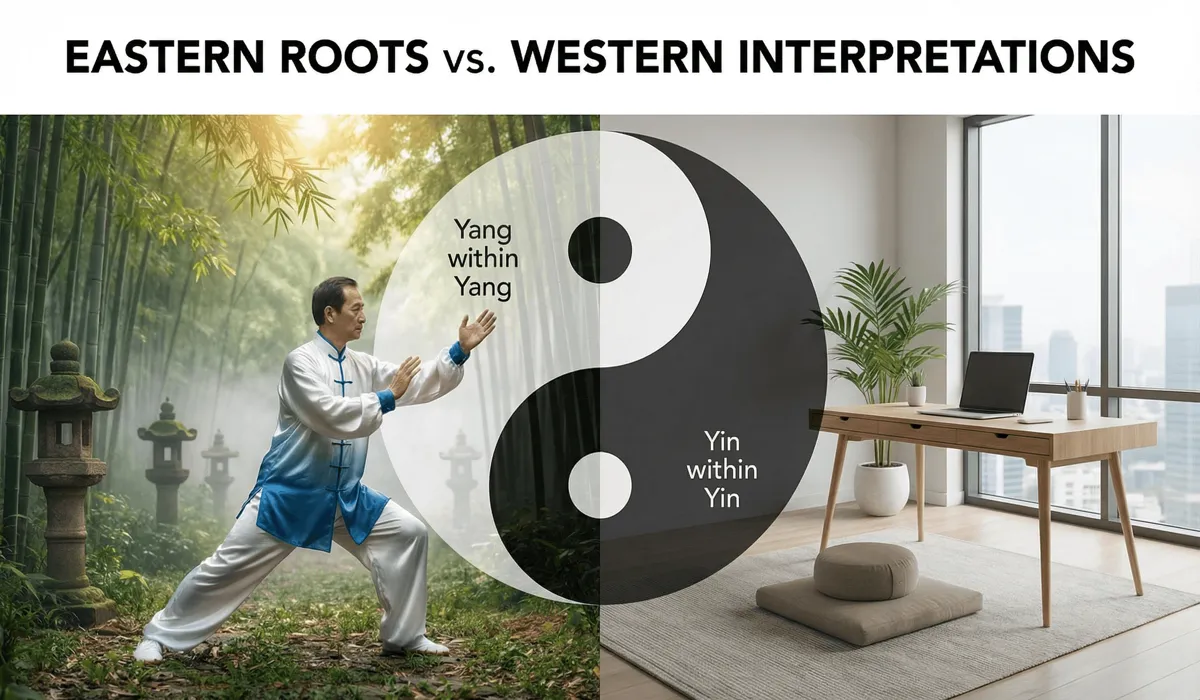
Modern Western perspectives have adopted the symbol through the lens of psychology and wellness. Many people associate Yin with the "Divine Feminine" and the reclamation of intuition and rest. It has become a symbol for those who wish to move away from a purely achievement-oriented lifestyle toward one of wholeness.
The symbol also appears in modern science, particularly in the laws of thermodynamics. The way energy is conserved and moves between states mirrors the ancient Taoist descriptions of energy flow. This cross-cultural bridge shows that the Taiji is a universal truth recognized by both mystics and scientists.
Modern Relevance: Using Taoist Balance to Combat 2026 Digital Burnout
In our modern world, we are often pushed toward an excess of Yang energy, which is characterized by constant action, noise, and digital stimulation. This "always-on" culture leads to burnout and a sense of disconnection. Applying Yin Yang philosophy is a powerful way to reclaim our mental health.
We believe that incorporating more Yin—such as silence, meditation, and deep rest—is the only way to fuel productive Yang. The symbol serves as a visual reminder to disconnect from screens and seek non-dual awareness. By respecting the cycle of activity and rest, we can find a sustainable pace for our lives.
The most important lesson of the Taiji is that "this too shall pass." Whether you are in a period of great success or deep struggle, the law of cyclical change ensures that the energy will eventually shift. Embracing this truth helps us develop emotional resilience and a calm heart.
This perspective is especially helpful for those navigating the Fire Horse Predictions for the coming years. Understanding energy cycles allows us to prepare for shifts in luck and social atmosphere. It turns fear of the unknown into a strategic dance with the universe.
Why Wear a Yin Yang? The Talisman as a Reminder of Center
Wearing a Yin Yang talisman acts as a "mindfulness anchor" in a chaotic landscape. It is a physical object that pulls your attention back to your center whenever you feel overwhelmed. This is why many people choose to wear the symbol as jewelry during times of transition.
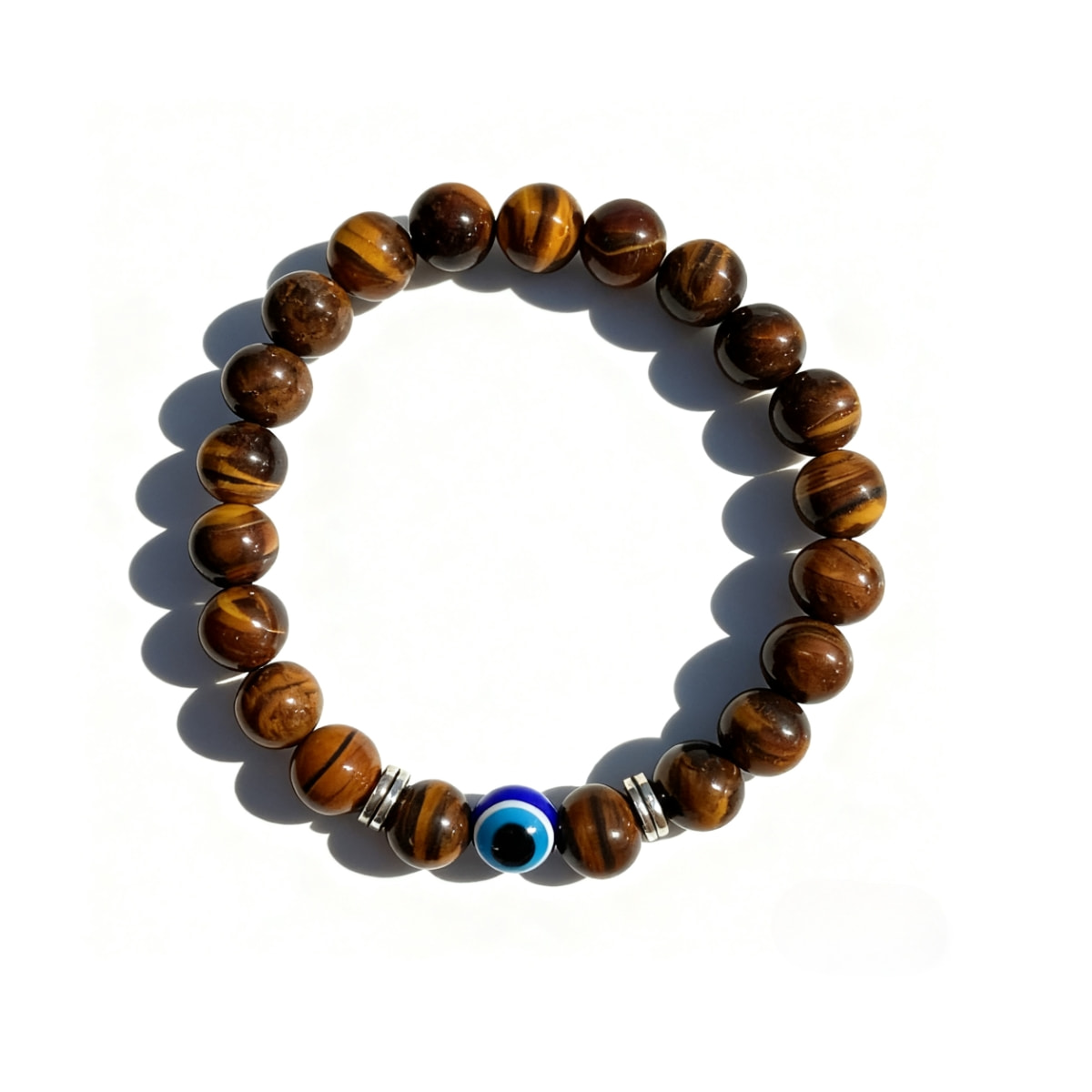
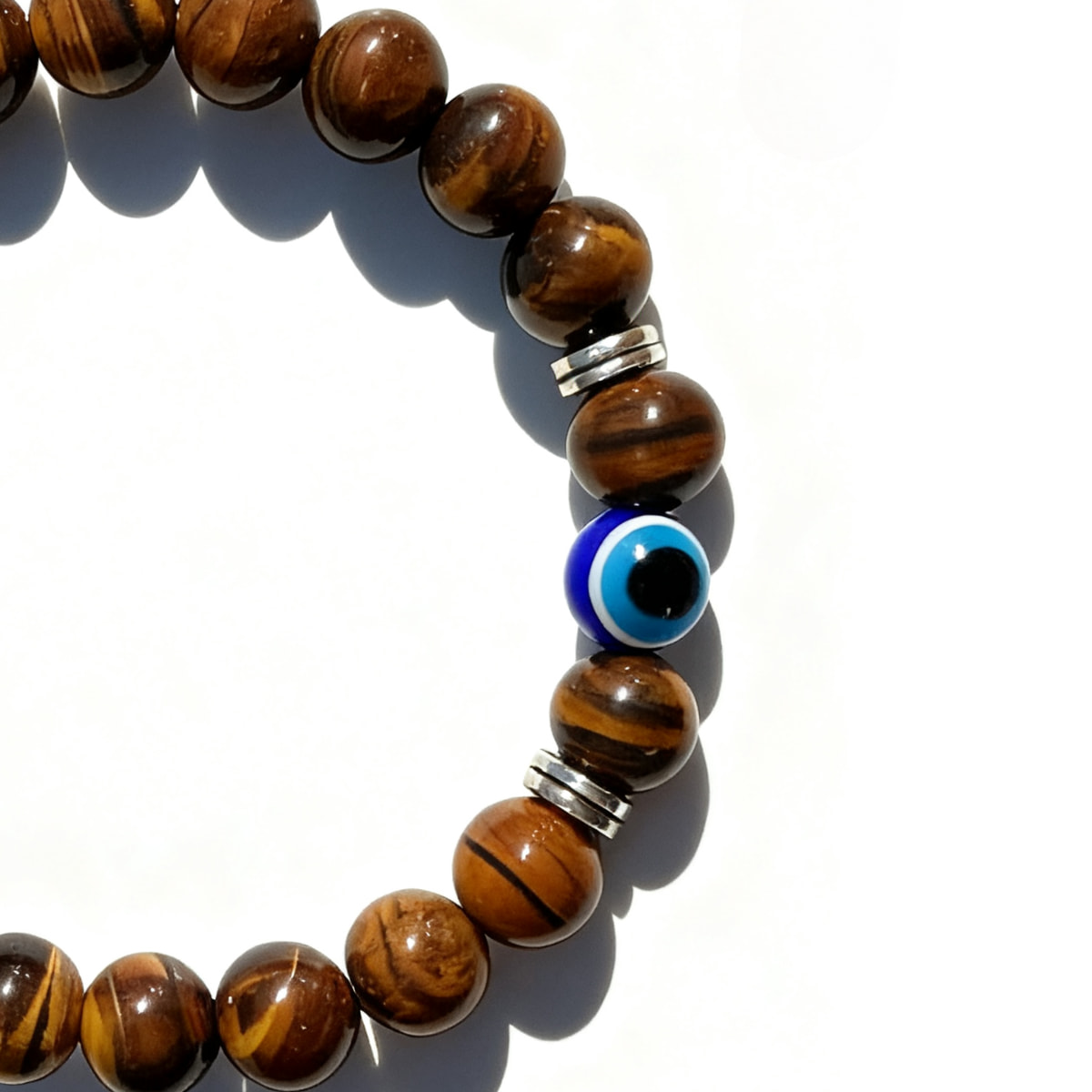
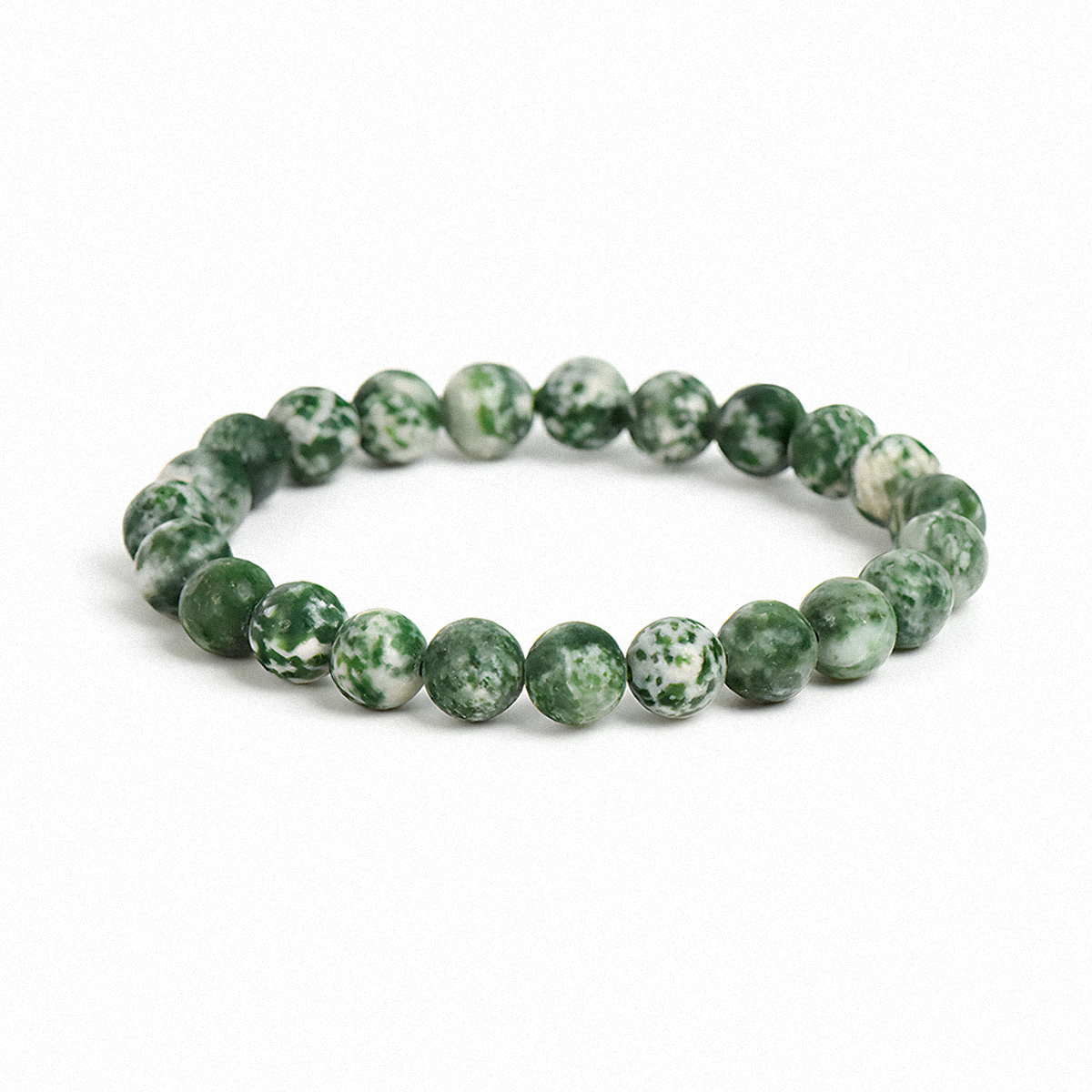
We can amplify the balancing effects of the symbol by pairing it with specific natural stones. For example, Black Obsidian or Tourmaline can represent the Yin aspect, providing grounding and protection. White Quartz or Moonstone can represent the Yang aspect, offering clarity and intuition.

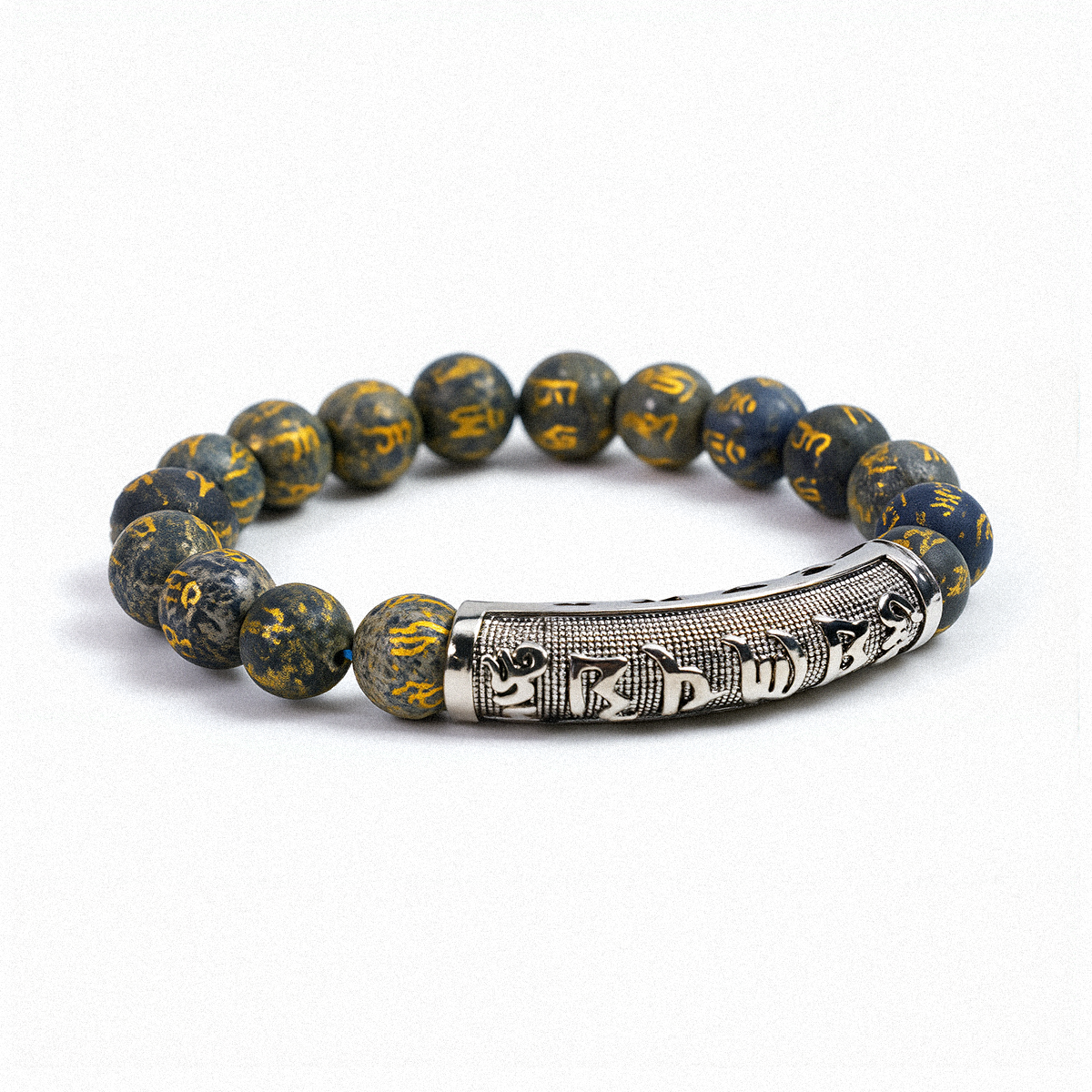
When you wear a piece of Protection Talismans, you are not just wearing a decoration. You are making a statement about your commitment to personal harmony. It serves as a reminder to balance your digital life with your spiritual well-being.
Cultural Etiquette and Sacred Respect
It is important to remember that the Yin Yang is a sacred philosophical map, not just a retro fashion icon. Using the symbol with intentionality shows respect for the thousands of years of culture it represents. It is a universal symbol that belongs to everyone because it describes the laws of nature itself.
Before you display or wear the symbol, take a moment to reflect on what it means to you. Those who wear the Taiji have a spiritual responsibility to try and embody the balance they display. This means seeking the middle path and avoiding extremes in thought or behavior.
For those looking to deepen their understanding of cultural timing, you might want to Tai Sui Guide to see how these energies interact with yearly cycles. Combining symbol awareness with seasonal wisdom creates a powerful foundation for a harmonious life.
A Comparative View of Yin and Yang Characteristics
The following table illustrates how the dual forces of Yin and Yang manifest in different aspects of our world and our bodies. This comparison helps in identifying which energy might be lacking in your current environment.
| Category | Yin (Black/Shadow) | Yang (White/Sun) |
|---|---|---|
| Nature | Moon, Earth, Night, Winter | Sun, Heaven, Day, Summer |
| Energy Type | Receptive, Cooling, Soft | Active, Heating, Hard |
| Human State | Rest, Intuition, Completion | Action, Logic, Initiation |
| Feng Shui | Bedroom, Quiet, Stillness | Office, Light, Movement |
This table acts as a quick reference for those working with Feng Shui Society principles in their homes. By identifying where your space feels too "Yin" or too "Yang," you can make small changes to restore peace.
Actionable Steps for Personal Transformation
To move from theory to practice, we suggest integrating the Taiji philosophy into your daily routine. These simple rituals help you ground the ancient wisdom into your modern lifestyle.
- ☸️ Taiji Breath Visualization: Inhale slowly and imagine breathing in white light (Yang). Exhale and visualize sinking into a deep, cool stillness (Yin).
- 🕉️ Setting Daily Intentions: Each morning, ask yourself if you need more "Action" (Yang) or "Rest" (Yin) for the day ahead.
- 🧿 Space Harmonization: Place a Yin Yang symbol in a room that feels unbalanced, such as a high-stress office or a cluttered living area.
- 🌸 Digital Detox Ritual: Balance your digital "Yang" time with at least 30 minutes of screen-free "Yin" activities like reading or gardening.
The goal is not to be perfect, but to be aware of your own energy shifts. Even small changes can lead to a significant increase in your overall sense of well-being.
Frequently Asked Questions (FAQ)
Q: What is the hidden meaning of the small dots inside the Yin Yang?
A: The small dots represent the "seed" of the opposite. They serve as a reminder that no state is ever permanent or absolute. Even in the height of one energy, the beginning of its opposite is already present, ensuring that the cycle of change continues forever.
Q: Why is Yin often associated with the 'Divine Feminine' in modern spirituality?
A: Modern spirituality has seen a shift toward valuing receptivity, intuition, and the "shadow" as sources of power. Since Yin represents these softer, internal qualities, it has become a symbol for those looking to balance the traditionally masculine "action-at-all-costs" mindset found in modern society.
Q: What does the S-curve in the center symbolize regarding movement?
A: The S-curve represents the fluid transition of energy. It shows that life does not move in rigid, straight lines or stop at hard boundaries. Instead, it flows smoothly from one state to another, rejecting stagnation and embracing the constant movement of the universe.
Q: How can Yin Yang philosophy solve modern digital burnout?
A: Burnout is often caused by an excess of Yang energy—too much noise, speed, and information. By intentionally seeking Yin activities like silence, solitude, and rest, you can restore your internal balance. The philosophy teaches that we must have "empty" time to remain productive and creative.
Q: Why does Yang represent the start of action and Yin the completion?
A: In the philosophical cycle, Yang is the spark of initiation and the heat of creation. Yin is the cooling down, the integration of the experience, and the state of completion and rest. Every project or creative endeavor follows this natural path from start to finish.
Conclusion: Integrating the Wisdom of the Taiji
The Yin Yang is more than a symbol; it is a lifelong guide for achieving spiritual harmony and resilience. By looking beyond the two halves, we can see the "Whole" of the Tao and understand our place in the cosmic flow. For more detailed definitions of these terms, you can consult Encyclopaedia Britannica for historical context.
We invite you to carry this wisdom with you, whether through meditation or by wearing a physical reminder of balance. As you align your personal energy with the rhythms of nature, you will find a sense of peace that transcends the noise of the modern world. May your journey always be one of dynamic equilibrium and deep clarity.

Longyi Luck
Longyi Luck is a Feng Shui practitioner and spiritual researcher who blends traditional year-based wisdom with modern lifestyle insights, specializing inFeng Shui, spirituality, meditation, and mindfulness. With years of dedicated study and practice, Longyi explores cultural symbolism and the practical application of ancient wisdom to help individuals cultivate balance, clarity, and harmony in everyday life. Since 2020, Longyi has been committed to translating timeless traditions into accessible guidance for the modern world.
longyi@auraandluck.com

.webp?w=800&h=800)
.webp?w=800&h=800)