
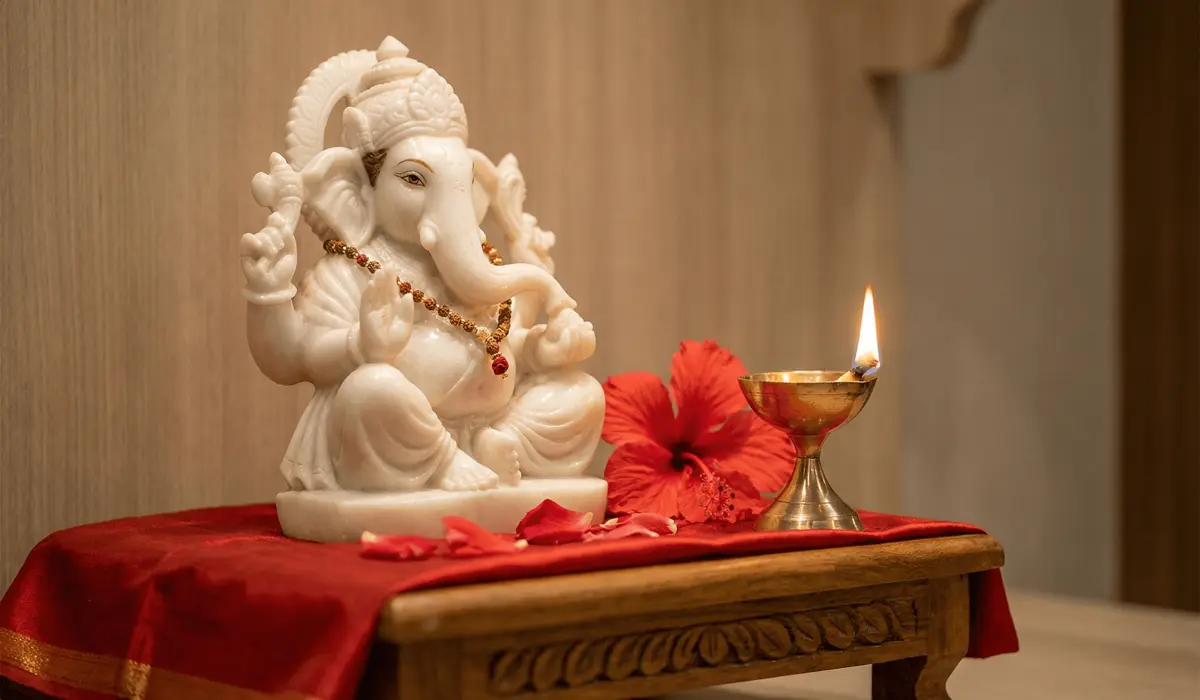
Correctly positioning a Lord Ganesha statue involves placing it in the North, Northeast, or West direction on a raised platform to invite auspicious energy. We recommend ensuring the trunk curves toward the left side to promote peace and remove obstacles from your daily life. At Aura & Luck, our many clients often ask for the best way to harmonize their living space using these sacred symbols.
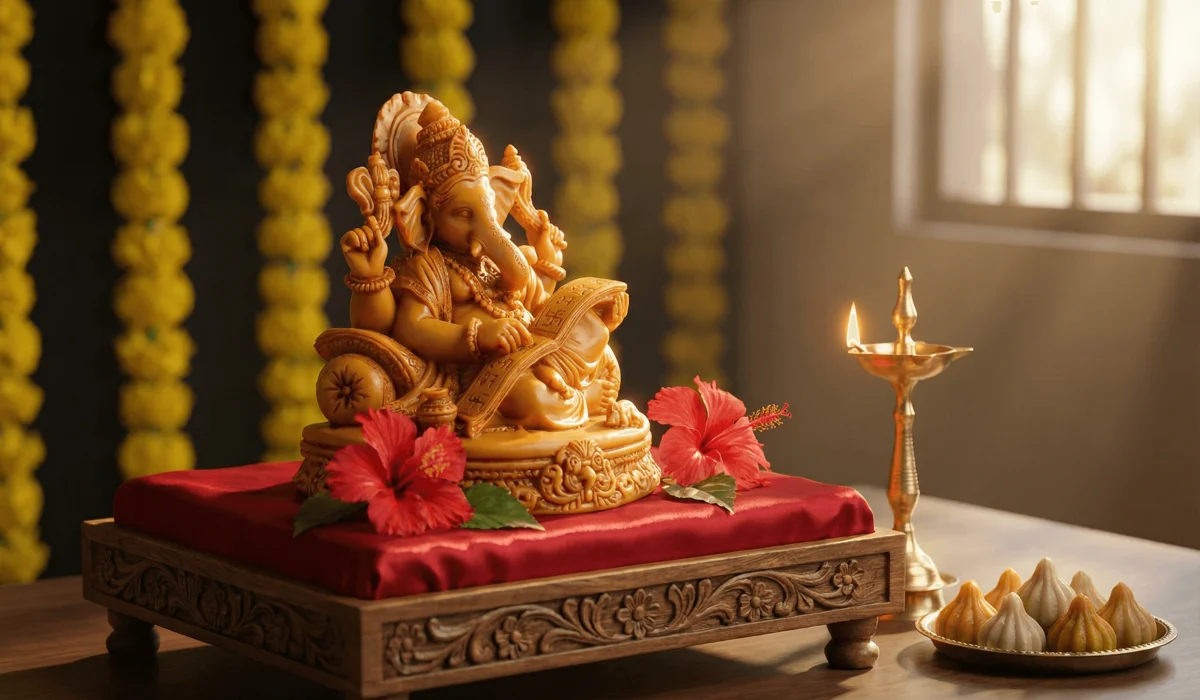
- Raised Platform: Use a wooden pedestal or clean marble shelf.
- Sacred Cloth: Choose red or yellow silk to cover the base.
- Traditional Offerings: Prepare red hibiscus flowers and Modaks.
- Cleansing Tools: Use purified water and incense sticks for energy clearing.
- Compass: Ensure accurate direction for the Northeast placement.
Introduction
The placement of Lord Ganesha is not merely decorative but a powerful spiritual alignment that dictates the flow of Prana (life force) into your home. In our studio, we have found that a mindful setup creates a protective shield against negative influences. Understanding the basic rules of Vastu (Vāstu Śāstra) ensures that your home remains a sanctuary of wealth and happiness.
For maximum luck, place your Ganesha statue in the North, Northeast, or West direction while ensuring he sits on a raised platform. The trunk should curve toward the left to maintain a peaceful household vibration. We always suggest choosing a quiet spot where the energy can settle without being disturbed by heavy foot traffic.
Preparation and Essential Tools for Placement
Before beginning the ritual, you must gather specific items to create a proper altar for the deity. A raised platform like a wooden Chowki (pedestal) is essential to show respect and keep the idol away from the floor. We suggest using a clean yellow or red silk cloth to represent purity and energy activation.
Physical cleanliness is the first step toward spiritual readiness in any home ceremony. You should declutter the designated area to remove stagnant Chi (气) before placing any sacred object. Many families find that burning incense or spraying holy water helps clear the air of previous stresses.
The tools required for a successful placement include:
- A sturdy wooden or stone pedestal to elevate the idol.
- Fresh red hibiscus flowers which are Ganesha's favorite offering.
- A brass Diya (oil lamp) to bring the fire element into the space.
- Small bowls of sweets like Modaks to symbolize the sweetness of life.
- A handheld compass to verify the exact Northeast or North coordinates.
This preparation phase sets the intention for the entire household's prosperity journey.
Step-by-Step Guide: How to Properly Install Your Ganesha Statue
Selecting the Right Ganesha: Trunk Direction and Posture
Choose a Vamamukhi (left-turned trunk) idol because it represents the cooling Ida Nadi (lunar energy) suitable for householders. We recommend a Lalitasana (sitting) posture for home use as it symbolizes stability and the permanent presence of good fortune. If you are exploring symbolic trunk positions for your décor, you may find our guide, Elephant Statue Trunk Up vs. Down: Meaning, Placement, and Feng Shui Significance, helpful for understanding their deeper spiritual implications in your living room.
Cleansing the Space and the Idol for Consecration
Begin by wiping the idol with a clean, damp cloth to remove any physical dust or residue. You can perform a simple Abhishek (ritual bath) by symbolically sprinkling purified water over the statue while focusing on your goals. Our team suggests doing this during the early morning hours when the natural energy is most vibrant.
Aligning the Statue with Vastu Compass Directions
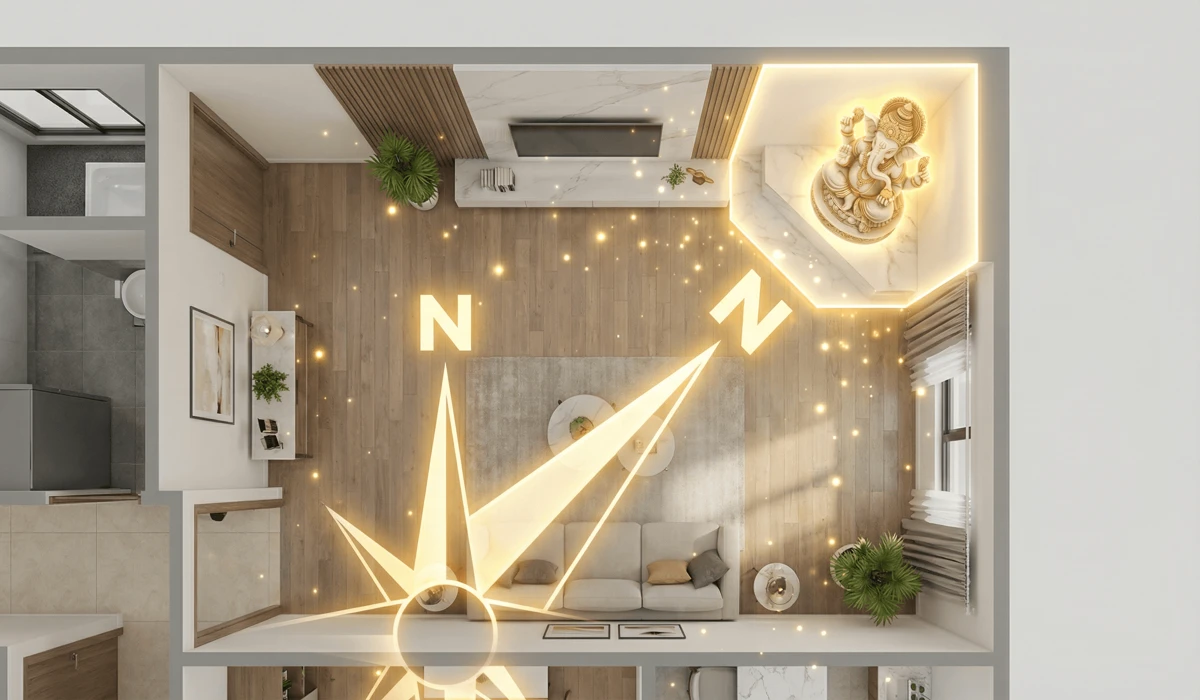
Use a compass to find the Ishanya (Northeast) corner, which is considered the most sacred zone in any floor plan. If this area is blocked, the North or West directions are excellent secondary choices for attracting success. In the context of Fire Horse 2026 preparations, keeping these zones clean is vital for future harmony.
Activating the Energy through Mantra and Offerings
Light the Diya to invoke the fire element and begin chanting the Ganesha Mool Mantra one hundred and eight times. The vibration of the sound helps to breathe life into the idol and connects your heart to the divine. Place the Modaks and flowers at the feet of the statue to finalize the invitation of abundance.
Establishing a Daily Maintenance and Cleaning Routine
Dust the idol daily with a dedicated soft brush to prevent the buildup of dull energy. You should replace wilted flowers every morning to keep the altar looking fresh and full of life. This simple act of devotion ensures that the spiritual connection remains strong and active throughout the year.
Observing Necessary Taboos to Prevent Negative Energy
Strictly follow the placement rules to ensure the energy remains protective rather than disruptive or stagnant. Always keep the area well-lit and avoid placing the statue near trash cans or clutter. For those tracking yearly changes, a Tai Sui Plaque can be used alongside Ganesha for extra protection.

The Logic of Vastu and Spiritual Positioning
The Northeast corner is often called the God's Corner because it allows high-frequency solar energy to enter the home. By placing Ganesha here, you align your family with the natural rhythm of the universe. We have observed that homes with clear Northeast sectors often experience fewer obstacles in their career paths.
The left-turned trunk is specifically chosen for homes because it relates to nurturing and peaceful vibes. Unlike the right-turned trunk which requires strict monastic discipline, the left version is forgiving and brings gentle joy. You can find more details about these cultural variations on Wikipedia for historical context.
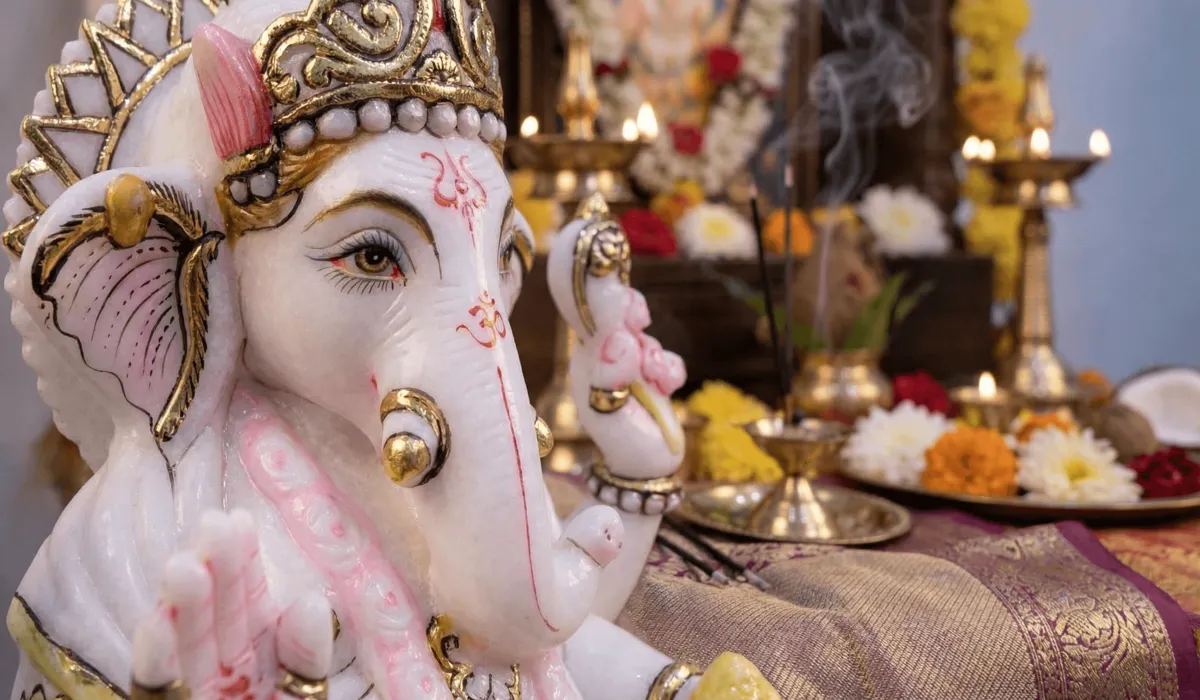
Elevation is a critical factor because it places the deity at the same level as your heart or chest. This physical height fosters a relationship of respect and allows the energy to radiate outward effectively. We always advise against placing sacred items on the ground where they can be accidentally stepped over.
Key Taboos and Critical Placement Warnings
- 🚫 Under Stairs: Never place an idol here as the walking energy above is very heavy and disrespectful.
- 🚫 Bathroom Walls: Avoid sharing a wall with a toilet to prevent the drainage of your good luck.
- 🚫 Floor Placement: Keeping the idol on the ground disrespects the deity and grounds the energy too quickly.
- 🚫 Bedroom Use: Deities should not be in the bedroom to maintain the sanctity of the sleeping space.
- 🚫 Facing Each Other: Do not place two Ganesha idols facing one another as it causes energetic conflict.
Another important rule is the Back-to-Room conflict where the back of the statue should never face the interior of your house. The back of the deity is said to represent poverty, so it must always face an exterior wall. For more advice on home alignment, check the resources at Joey Yap Research for modern insights.
Limiting the number of idols in one room is also vital for mental clarity and focus. Having more than two Ganesha statues in a single space can lead to "energy confusion" for the residents. It is better to have one well-placed, respected idol than many neglected ones scattered around the house.
Maintenance: When to Re-energize Your Sacred Space
If you feel a sudden dip in household harmony, it may be time to deep-clean your spiritual corner. Dust and old offerings can create a layer of "dead" energy that blocks the flow of new opportunities. We suggest a thorough cleaning during the new moon to reset the vibrations of your altar.
The lunar cycle plays a significant role in when you should refresh the consecration of your space. Using a calendar from Your Chinese Astrology can help you find auspicious dates for these rituals. Special days like Ganesh Chaturthi are perfect for a full re-energizing ceremony with fresh incense and prayers.
| Feature | Ideal Placement | Placement to Avoid |
|---|---|---|
| Direction | North, Northeast, West | South, Southwest |
| Height | Raised Shelf or Table | Directly on the Floor |
| Surroundings | Solid Wall, Clean Area | Under Stairs, Near Toilets |
| Quantity | One per Room | Three or more in one spot |
If the idol becomes chipped or physically damaged, it is widely believed that it has absorbed a hit of negativity for the family. In such cases, you should respectfully immerse the idol in flowing water and replace it with a new one. This ensures that the protective cycle of the deity continues without interruption.
Frequently Asked Questions About Ganesha Placement
Q: Can I place a Ganesha statue in my bedroom?
A: No, Vastu advises against placing deities in bedrooms to maintain the sanctity of the energy; use the living room or a dedicated puja room instead.
Q: Which color Ganesha is best for home?
A: A white Ganesha is ideal for those seeking peace and prosperity, while a vermillion Ganesha is best for spiritual growth.
Q: Should Ganesha face the entrance door?
A: Yes, placing a Ganesha facing the entrance but inside the house is believed to protect the home from evil eyes and invite luck.
Q: Can I keep Ganesha in the kitchen?
A: It is generally discouraged unless it is the only clean space available; even then, it must not be near the stove or sink.
Conclusion: Inviting Abundance into Your Sacred Space
Intentional placement of Lord Ganesha is a transformative practice that brings balance and success to your doorstep. By following these Vastu principles, you create an environment where prosperity can grow and obstacles are easily overcome. We believe that a well-respected altar serves as a constant reminder of your spiritual journey and your commitment to a harmonious life.
Remember that while the technical placement is the foundation, your personal devotion is the ultimate activator. Approach your daily rituals with a sincere heart and a clear mind to maximize the benefits of this ancient wisdom. We invite you to stay consistent with your maintenance routine to keep the energy of your home vibrant and welcoming.

Longyi Luck
Longyi Luck is a Feng Shui practitioner and spiritual researcher who blends traditional year-based wisdom with modern lifestyle insights, specializing inFeng Shui, spirituality, meditation, and mindfulness. With years of dedicated study and practice, Longyi explores cultural symbolism and the practical application of ancient wisdom to help individuals cultivate balance, clarity, and harmony in everyday life. Since 2020, Longyi has been committed to translating timeless traditions into accessible guidance for the modern world.
longyi@auraandluck.com





.webp?w=800&h=800)
.webp?w=800&h=800)