
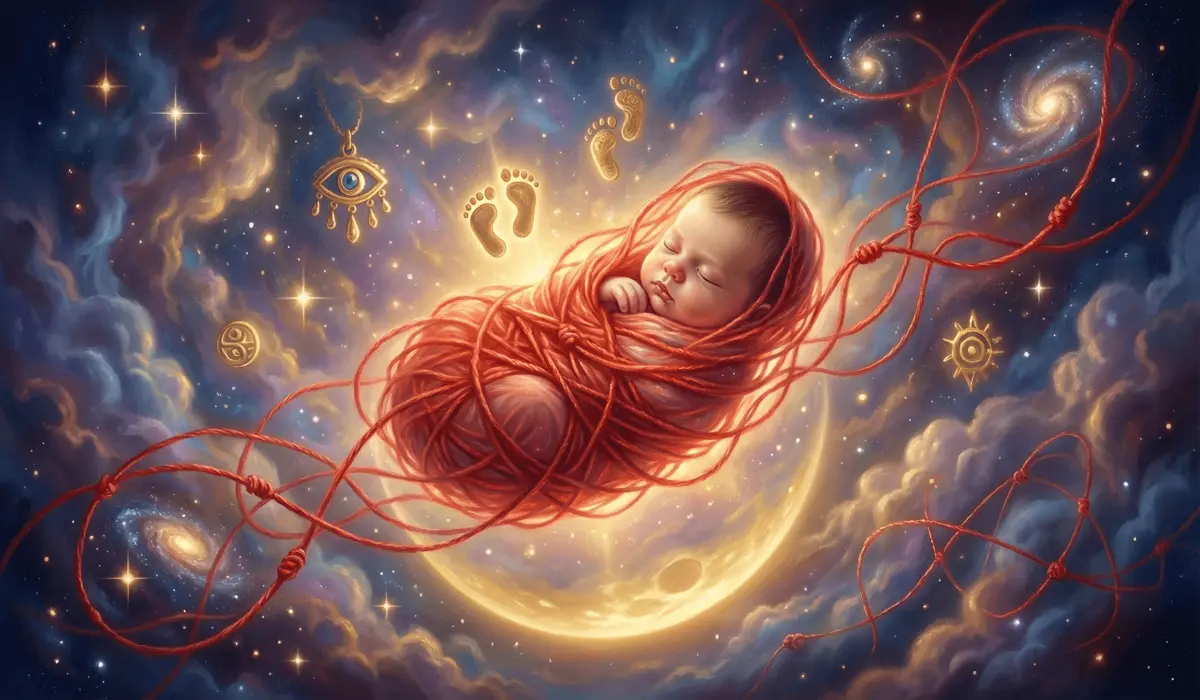
From the ancient East to the Western world, a simple red thread has transcended the boundaries of religion, geography, and ethnicity, becoming a shared choice for countless parents seeking blessings for their newborns. The red string baby bracelet is more than just an accessory; it is a spiritual shield, carrying the deepest love and blessings from elders to the youngest generation. It requires no expensive materials or intricate craftsmanship—merely a red thread, a few knots, and a heartfelt intention can build a bridge of protection between the physical and spiritual realms. This article will comprehensively explore the meaning of red string bracelets for babies, covering traditional customs, spiritual symbolism, proper wearing methods, and daily care, guiding you through the wisdom and warmth behind this ancient practice. Whether you are a new mother, a grandparent seeking blessings for your grandchildren, or a reader interested in global folk traditions, this article will open a door to millennia of wisdom.
What Is a Red String Baby Bracelet?
Definition: A Talisman Beyond Decoration
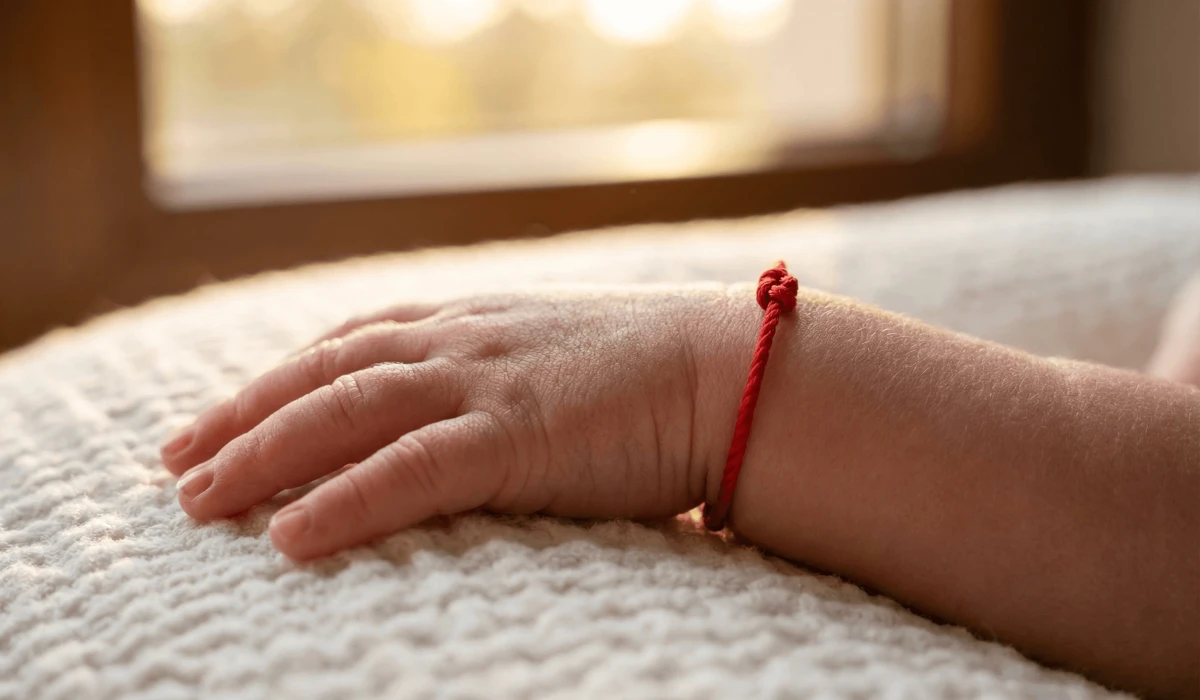
A red string baby bracelet is a traditional amulet made from red silk thread, cotton cord, or wool yarn, worn around an infant's wrist. It is not merely a decorative item but is endowed with the spiritual function of warding off evil, averting misfortune, and bestowing peace. This seemingly simple red cord acts as the "first line of defense" between the child and external negative energies, offering immense psychological comfort to parents. In many cultures, the red string is regarded as a "living talisman"—it not only physically accompanies the child but also continuously exerts its protective effect on an energetic level. The moment a parent ties the red string on their baby, they are performing a silent blessing ritual, transmitting love and protective intentions through the thread to their most precious life.
Origins: The Shared Wisdom of Multiple Civilizations
The origins of the red string can be traced back to several ancient civilizations—a remarkable cultural phenomenon in itself, considering that in ancient times, when transportation and communication were severely limited, different continents independently arrived at similar methods of protection:
-
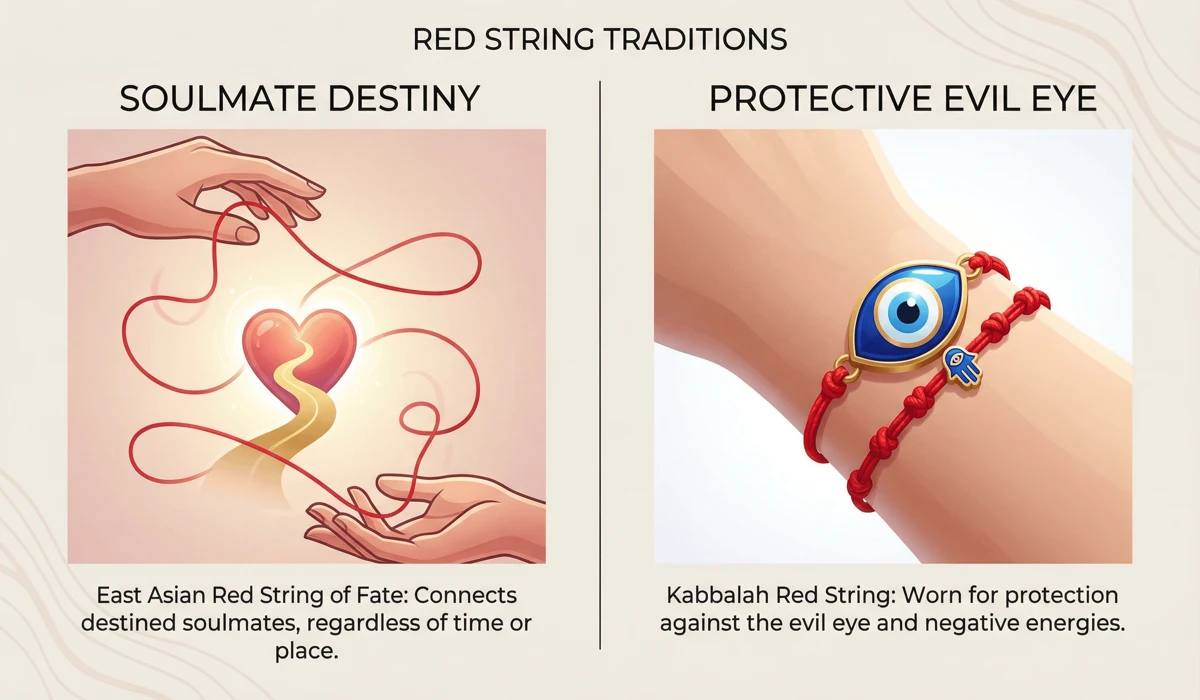
Jewish Kabbalistic Tradition: The color red is believed to represent the vitality of the sun and divine protection. The red string is used to ward off the "Evil Eye." According to legend, Rachel—the most beloved wife of the biblical Jacob—is regarded as a maternal symbol of compassion and protection. Red strings are often blessed at her tomb before being given to followers to receive her blessings and protection.
-
Chinese Traditional Culture: Red symbolizes auspiciousness, joy, and vitality. Newborns wearing red strings signify wishes for long life and protection from disasters. During traditional festivals like the Dragon Boat Festival, elders weave five-colored silk threads into "long-life cords" (长寿绳) to tie around children's wrists, symbolizing the warding off of evil spirits and diseases. This custom is recorded in ancient texts such as Fengsu Tongyi (Comprehensive Meaning of Customs) and has been practiced for over two thousand years.
-
Hindu Tradition: Known as "Kautuka" or "Raksha Sutra" (protection thread), this cord is tied around the wrist by priests during religious ceremonies, symbolizing divine protection and blessings. In India, the red string is also seen as a protective symbol of the goddess Durga, possessing strong power to ward off evil.
-
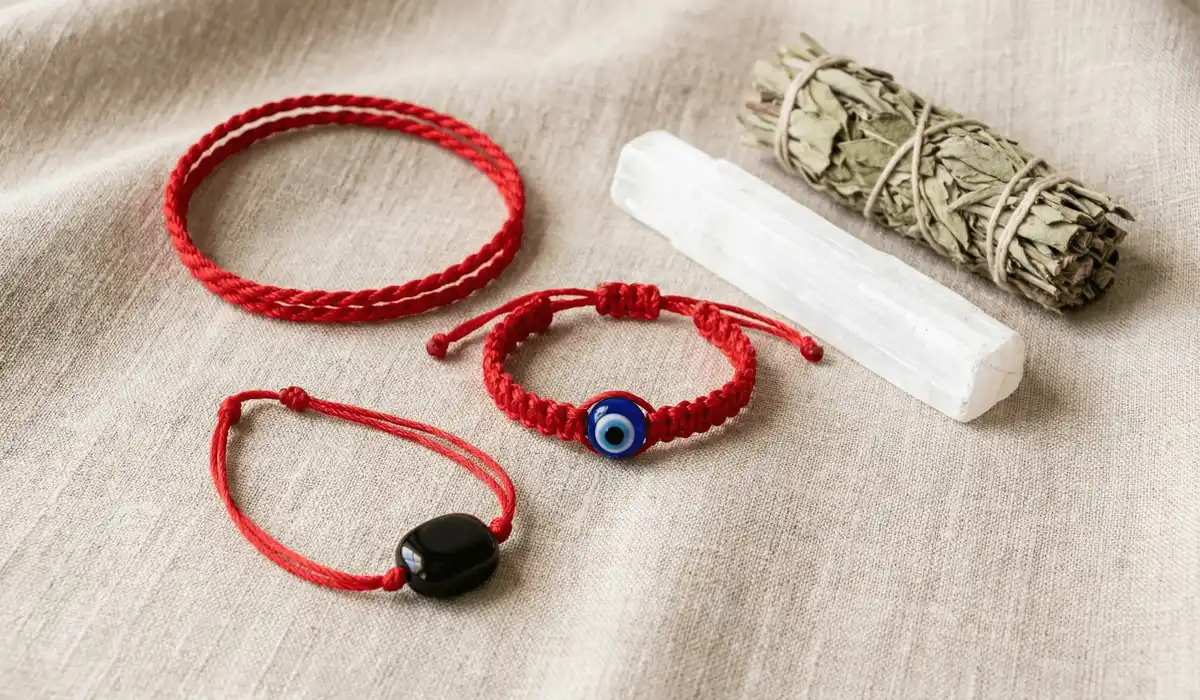
Latin American Culture: Called "Mal de Ojo" bracelets, these are used to protect infants from envious or malicious gazes. Many Latin American families add an Azabache (black jet) bead—a black gemstone believed to have powerful negative-energy-absorbing properties—to the red string, forming a dual-layer protection of red plus black.
-
Buddhism and Thai Culture: Monks bless "Sai Sin" (sacred threads) through chanting, and devotees tie them around their wrists for good luck and safety. The red thread is considered the most potent for protection.
These different civilizations, without prior communication, all chose the combination of red and thread, which perfectly illustrates that humanity shares a transcultural understanding of color energy and spiritual connection. Red is the color of blood, fire, and the rising sun—naturally evoking reverence for and attraction to life force. The thread, meanwhile, symbolizes connection, wrapping, and encircling, implying that good fortune and protection are "tied" to the body, never to be separated.
Basic Characteristics
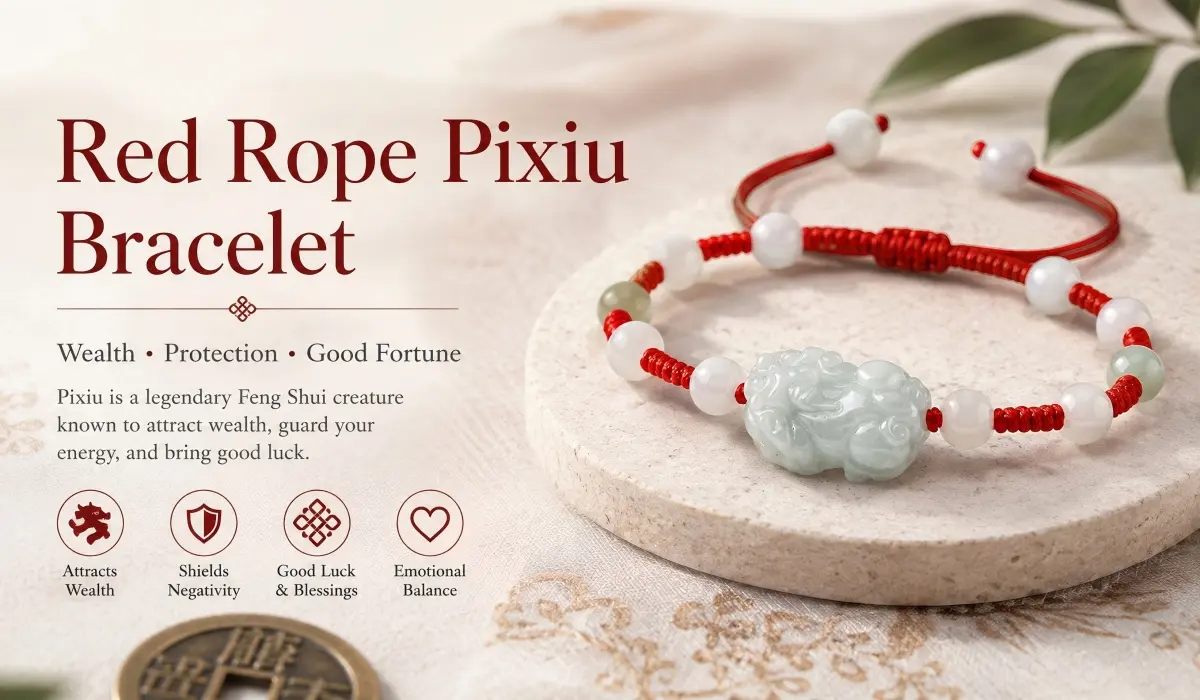
A typical red string baby bracelet is defined by four core characteristics: color, material, structure, and wearing position. Different materials not only affect wearing comfort but also carry different symbolic meanings:
| Feature Dimension | Specific Description | Material Symbolism |
|---|---|---|
| Core Color | Red (symbolizing vitality, good fortune, passion, fire energy) | Confronts negative energy, ignites courage |
| Common Materials | Natural silk, pure cotton thread, soft wool, hemp rope, velvet | Silk represents purity; cotton symbolizes earthly simplicity; wool signifies warm protection |
| Knotting Method | Usually flat knots, seven knots, or nine knots | Each knot represents a blessing or a layer of protection |
| Wearing Position | Primarily the left wrist (receiving positive energy) | Left side is the "spiritual receiving side," connected to the subconscious |
| Additional Elements | Hamsa hand, obsidian beads, silver bells, Azabache, Chinese coins | Adds multiple layers of protection or auspicious meanings |
| Target Audience | Newborns to toddlers, especially sensitive or easily startled babies | Infants are most in need of protection due to their open energy fields |
When choosing a red string, parents should prioritize natural materials, non-toxic chemical-free dyes, and products with no small detachable parts. Silk is slightly more expensive but is the softest, making it suitable for a newborn's delicate skin; pure cotton cord is breathable and cost-effective, making it the most common choice; wool is warm and skin-friendly, ideal for babies born in colder seasons.
The Spiritual Meaning and Deeper Symbolism of the Red String
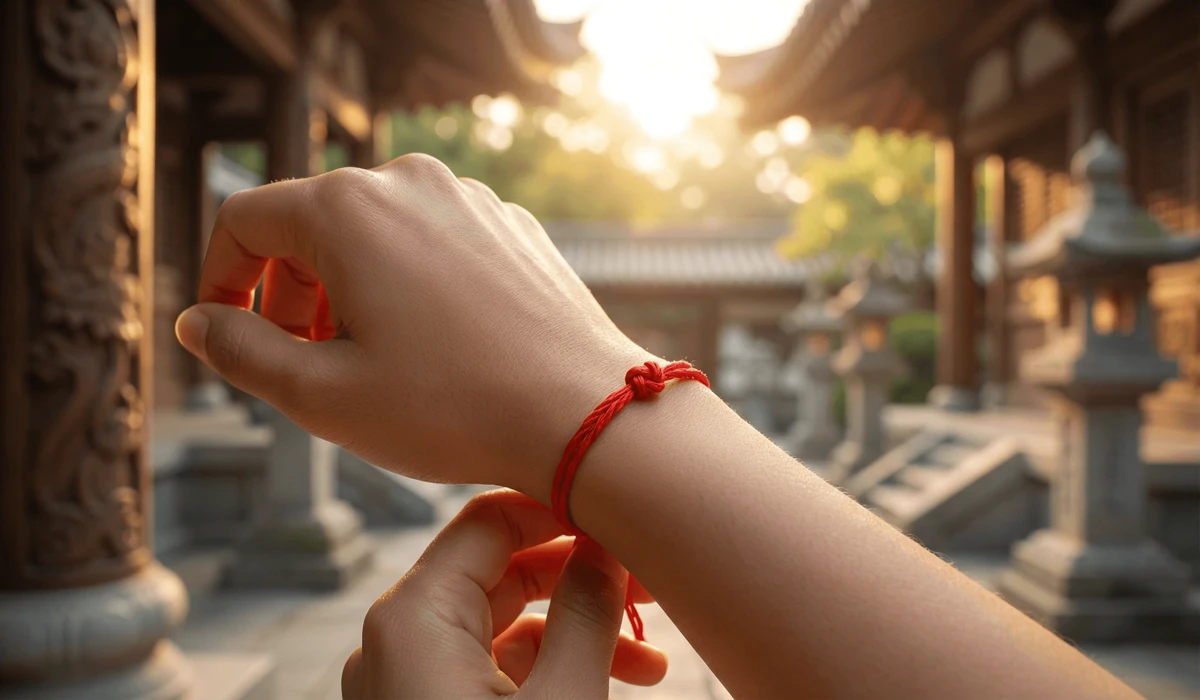
In many cultures, the primary function of the red string is to ward off the "Evil Eye" (Mal de Ojo)—an invisible harm believed to be caused by envious, jealous, or malicious stares. This belief is not unique to any single ethnic group; from the Mediterranean coast to East Asia, from the Latin American rainforests to the African savannah, fear of the "Evil Eye" is nearly universal.
Newborn babies, due to their pure and innocent nature, are considered the most susceptible to external energetic interference. Infants have not yet fully developed their self-awareness boundaries; their energy field is like a very thin "eggshell," through which strong external emotional impacts can easily penetrate. When too many strangers gaze at or praise a baby, even though the words are kind, the intensity of attention and emotion itself can cause "information overload" to the baby's sensitive energy system. The protective mechanism of the red string lies in the fact that red is a high-vibration color capable of reflecting or neutralizing low-frequency negative emotional energies, forming an invisible energy barrier around the infant.
From a quantum physics perspective, colors are essentially light waves of different wavelengths, and light itself is a carrier of energy. Red light has a longer wavelength and lower frequency, but it is the most eye-catching in the visible spectrum, making it the first to be detected by the visual system, thereby serving a "warning" and "reflecting" function. When this color energy is worn closely on the body in the form of a thread, it is equivalent to embedding a continuous "signal generator" into the baby's bio-energy field.
The Red Thread of Fate: A Bond Between Family and Destiny
Beyond its protective function, the red string also symbolizes the "Thread of Fate" . In Chinese folklore, the Old Man of the Moon (Yue Lao 月老) uses an invisible red thread to bind together two people destined to marry. Similarly, in Japanese culture, the concept of "akai ito" (red thread) holds that the fates connecting people are linked by a red cord.
For a baby, this red thread represents the inseparable bond of connection between the child and their parents, family, and even significant people they will meet later in life. When a grandmother ties a red string on her grandchild, she is not merely performing a custom; she is "weaving" a connection that transcends time and space—transmitting the family's memory, wisdom, and love energy to the new life through this red thread. It reminds every family member that this child is surrounded by love and blessed by destiny—a new branch on the family tree, both independent and intimately connected.
In some traditions, the red string is also used to "anchor" the child's soul, preventing infants from losing their spirit due to fright. Although this explanation carries strong mystical overtones, its essence is the parents' wish for the child to feel secure, settled, and firmly rooted in their body, establishing a strong sense of connection with this world.

Chakra Associations
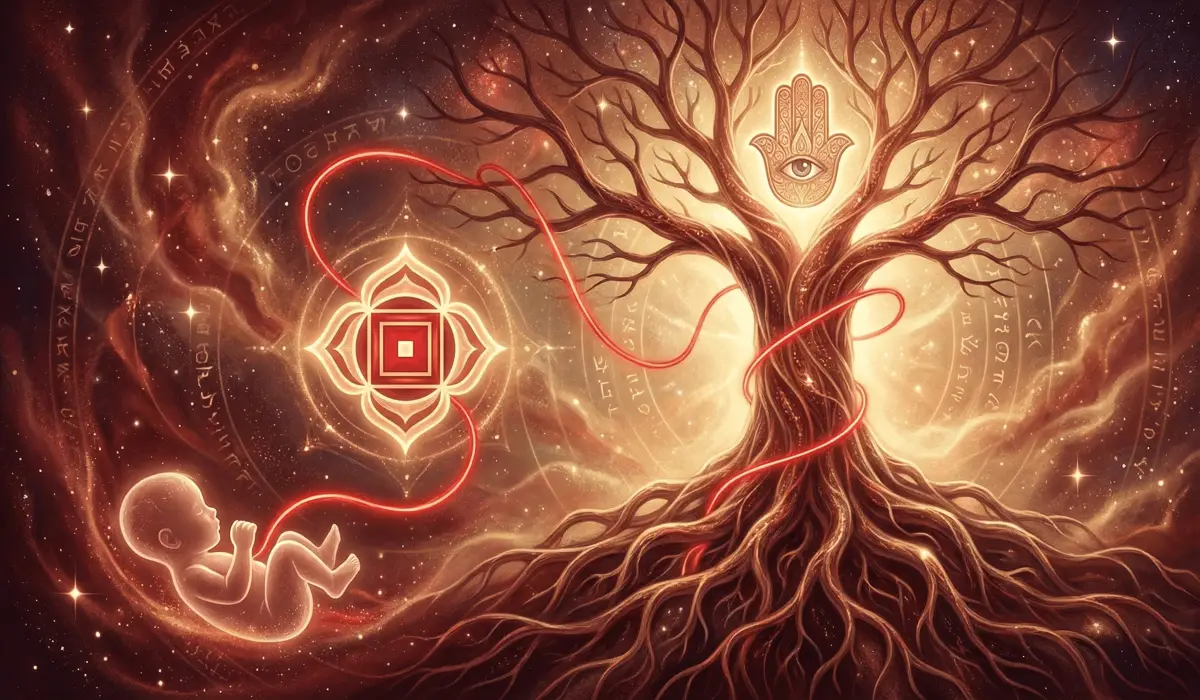
From the perspective of energy medicine and chakra theory, red directly corresponds to the Root Chakra (Muladhara) . Located at the base of the spine, the Root Chakra is the first of the seven major chakras in the human body, governing a sense of security, survival instincts, and physical grounding. It functions like the root system of a tree, anchoring our energetic body firmly to the earth.
After birth, the infant is separated from the mother's body and enters the physical world; the Root Chakra is in an active stage of development. The birthing process itself is a massive energetic impact for the baby—transitioning abruptly from the warm, dark, temperature-constant uterine environment to a bright, noisy, temperature-fluctuating outside world, this "uprooting" experience leaves an imprint on the subconscious level. Wearing a red string helps to:
-
Enhance the baby's sense of security and belonging, helping them smoothly navigate the "birth trauma period"
-
Reduce nighttime crying and unexplained fussiness, promoting deeper and more stable sleep
-
Promote harmonious connection between the baby's energy and the Earth's energy, enabling faster adaptation to gravity and physical laws
-
Support the healthy development of the immune system, as Root Chakra energy is closely related to adrenal function
When parents observe their baby's nervousness or crying in unfamiliar environments, the red string acts as an "energy anchor," helping the baby maintain inner stability amidst the chaotic external information. This effect certainly cannot replace medical intervention, but as a gentle form of spiritual support, it has provided tangible comfort to countless families.
Cross-Cultural Comparison — Red String Customs Across Civilizations
While the use of the red string varies in form across the globe, the core essence is highly consistent—providing the strongest protection for the most vulnerable lives. The following detailed comparison showcases the unique wisdom and shared sentiments of different civilizations:
| Cultural Tradition | Specific Name | Primary Meaning | Special Ritual | Common Add-ons |
|---|---|---|---|---|
| Jewish Kabbalah | Red String / Bendel | Warding off the Evil Eye, attracting good fortune and spiritual awakening | Wound seven times, accompanied by prayer recitation, often blessed at Rachel's tomb | None, pure red string primarily |
| Chinese Feng Shui/Folk | Red String / Long-Life Cord / Five-Colored Cord | Warding off evil, longevity, auspiciousness, dispelling evil spirits | Worn during Dragon Boat Festival or Full Moon ceremony; each knot tied with auspicious words | Jade, Chinese coins, silver bells, zodiac pendants |
| Latin American | Mal de Ojo Pulsera | Preventing harm from envious gazes | Tied by godparents or elders after baptism, often accompanied by prayers | Azabache (black jet) , red coral beads |
| Hindu | Raksha Sutra / Kautuka | Divine protection, blessing ceremonies, health and safety | Tied by priests after fire rituals; commonly seen during Raksha Bandhan (Brother's Day) | Yellow or red, often dipped in turmeric paste, sometimes with rice grains |
| Thai/Southeast Asian | Sai Sin (Sacred Thread) | Good luck, safety, health, dispelling evil spirits | Blessed by monks through chanting; given at temples or during important festivals | Often multi-colored, not exclusively red, sometimes mixed with gold leaf |
| Ancient Greek/Balkan | Red Thread (Mati) | Protection from the "Evil Eye," safeguarding newborns | Tied by the mother or grandmother on the third day after birth | Often paired with a blue glass bead "mati" |
Through this comparison, we see that although the symbolism of the red string varies in detail across cultures, the core consistently revolves around protection, blessings, and the transmission of love. The enduring nature of these customs itself is a living cultural testimony: no matter how advanced technology becomes, humanity's protective instinct toward newborns remains unchanged. The red string tradition has survived for thousands of years precisely because it fulfills a universal emotional need—parents want to give their children the best possible protection, even if that protection originates from an invisible dimension.
Benefits and Psychological Value of the Red String Baby Bracelet
Spiritual Level: Establishing an Invisible "Safety Zone" for the Baby
Many parents report that after their baby wears the red string, they appear calmer in unfamiliar environments or when meeting relatives and friends. This is not superstition—when parents are inwardly calm and filled with positive beliefs, their emotions are directly transmitted to the child through the parent-child energy field. Babies are far more sensitive to their parents' emotional changes than adults realize; they can perceive parental states through changes in heart rate, body temperature, breathing rhythm, and even subtle skin electrical currents.
The red string serves as a "focus anchor," reminding parents to maintain a peaceful and loving mindset, indirectly influencing the baby's emotional state. When parents tie the red string, they naturally slow their breathing, concentrate their attention, and pour tenderness into the moment—these physiological signal changes are quickly detected and reciprocated by the baby. The red string thus establishes a "focused connection" between parent and child; each glimpse of the red on the baby's wrist evokes the original blessing and promise made by the parents.
Furthermore, the red string helps the baby develop a sense of "boundary." As the baby begins to develop self-awareness, the red string becomes a marked part of their body, symbolizing the boundary between "me" and the outside world. This understanding of boundaries is an essential foundation for healthy psychological development.

Psychological Level: Strengthening Parental Confidence in Child-rearing
New parents often face various anxieties: Is the baby healthy? Will they be frightened? Are they adequately protected? The red string custom provides a ritualized outlet for these anxieties. By personally tying the string and silently reciting blessings, parents materialize their love and hopes into a visible thread. This tangible blessing significantly alleviates feelings of helplessness in the parenting journey.
In psychology, there is a concept called "embodied cognition," which suggests that physical actions can influence mental states. The simple act of tying the red string actually activates parents' "protective instinct" and "nurturing behavior patterns," making them more composed and confident when facing parenting challenges. Particularly on those nights when the baby cries incessantly for unknown reasons, the presence of the red string allows parents to feel that "I have done everything I can"—a psychological support that plays a crucial role in preventing postpartum depression and parenting burnout.
Social Level: Transmitting Family Affection and Goodwill
The red string bracelet is often given as a full-month gift or 100-day celebration gift by grandparents, godparents, or close friends. This gift carries not only protective blessings but also symbolizes the special emotional bond between the giver and the child. In many cultures, a child who receives a red string is considered "a child blessed by many," and this social support system itself is an essential nutrient for the child's healthy growth.
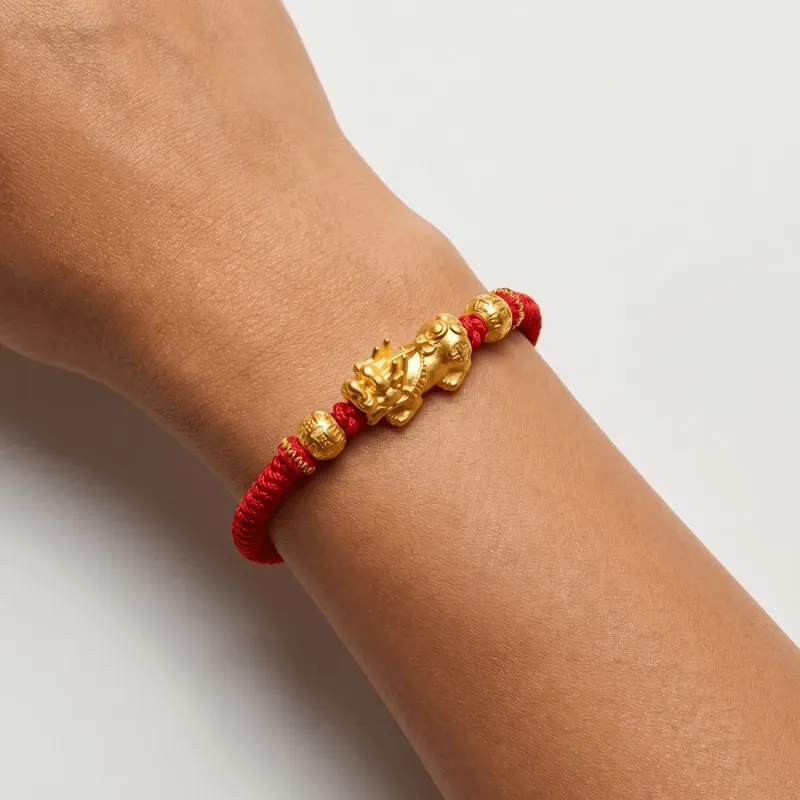
Red Rope Gold Pixiu Woven Bracelet for Wealth & Protection
This Red Rope Gold Pixiu Woven Bracelet is a powerful talisman designed to align your physical journey with the vibrations of prosperity. Handcrafted with the sacred Vajra knot (金刚结), the vibrant red cord serves as a protective conduit, grounding your energy while inviting auspicious opportunities into your field.
Shop NowWhen a family member or friend ties the red string on the baby, this action itself is a public commitment—"I will watch over you, I will support you on your life journey." This collective care, known in psychology as "perceived social support," not only relieves parental stress but also creates an environment of kindness and connection for the child's development.
How to Wear the Red String Correctly — Timing, Technique, and Precautions
Wearing Timing: When Is the Best Time to Tie It?
According to traditional customs, the best times for wearing include:
-
The seventh day after birth (in some Asian traditions): After one week of adaptation, the baby's physical condition is basically stable; tying the red string symbolizes the official welcoming of the baby into the world
-
The Full Moon ceremony or 100-day celebration (Chinese customs): Both the full month and 100 days are important life milestones in Chinese tradition; wearing the red string at these times signifies "the journey of life has begun, accompanied by safety"
-
After baptism or naming ceremonies (Western and Middle Eastern traditions): Wearing the red string after a spiritual ceremony signifies that the baby has received divine protection
-
Before the first outing to meet relatives and friends (to prevent the Evil Eye): Many families put on the red string before the baby's first trip outside, to handle the concentrated gazes of strangers
Some traditions also recommend replacing or re-tying the red string on important solar terms (such as the Beginning of Spring or Dragon Boat Festival) or after the baby recovers from an illness, to refresh the protective energy.
Wearing Technique: Who Should Tie It and How?
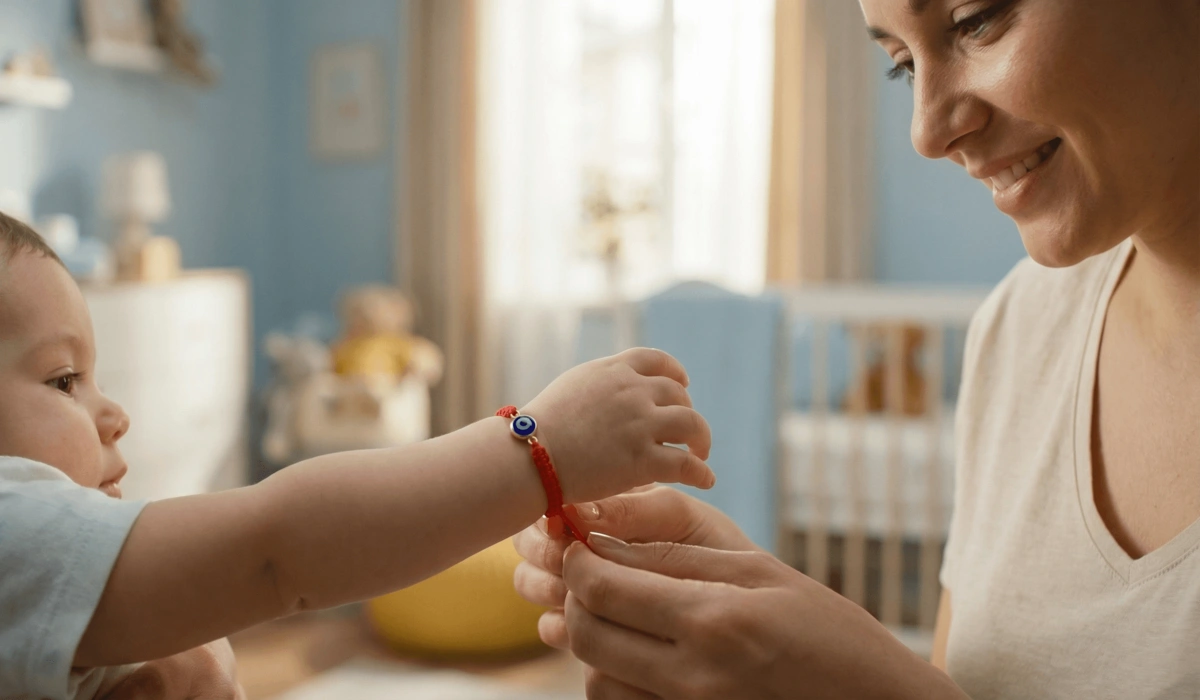
Traditionally, the red string should be tied by an elder who holds pure love for the baby—such as the mother, grandmother, or godparent. The key criterion is not blood relation but "genuine love"—because the intent energy at the moment of tying is "sealed" into the red string along with the knots. Anyone harboring jealousy, negativity, or insincerity is unsuitable for this role.
The tying process should follow these steps:
-
Maintain inner peace, clearing away distractions—take three deep breaths before tying to enter a focused state
-
Silently recite a blessing or short prayer (e.g., "May you be safe and healthy, may your life be smooth"; "Expel all evil, welcome all good fortune")
-
Number of knots: Typically tie three knots (symbolizing Heaven, Earth, and Humanity) or seven knots (symbolizing the seven heavens, seven layers of protection), making a wish with each knot
-
Appropriate tightness: Ensure that an adult's pinky finger can be easily inserted between the string and the wrist, preventing constriction and ensuring proper blood circulation
In some traditions, parents are advised to "speak" the baby's name, birthdate, or family blessings into each knot, making the red string a completely "personalized" talisman. This incorporation of personalized information greatly enhances the energetic resonance between the red string and the baby.
Left or Right Hand? — The Law of Energy Reception
Most traditions recommend wearing it on the left wrist. The reasons are:
-
In energy theory, the left hand is the "receiving hand," connected to the subconscious and external energies; it is the "energy inlet"
-
The right hand is considered the "projecting hand," primarily responsible for sending energy outward, more suitable for expressive jewelry
-
Wearing the red string on the left sets up a filter at the energy inlet, intercepting external negative energy before it enters the body's main energy pathways
-
The left wrist is closer to the heart, symbolizing "where the heart is directed, where love resides," making the red string's protection more closely tied to emotional wellbeing
Of course, some minority traditions (such as certain Hindu sects) recommend wearing it on the right hand; the specific choice should follow the cultural tradition the family practices. If the baby cannot wear it on the wrist for some reason (such as skin sensitivity), tying the red string around the ankle or hanging it at the head of the crib still provides protective effects.
Red String vs. Other Protective Jewelry
To better help parents choose suitable protective items for their babies, here is a systematic comparison of the red string with other common infant protective jewelry:
| Type | Main Material | Protection Mechanism | Suitable Age | Comfort | Safety |
|---|---|---|---|---|---|
| Red String Bracelet | Cotton/Silk/Wool | Color energy + wearer's intention | 0-3 years | ★★★★★ | ★★★★★ (when no small parts) |
| Obsidian Bracelet | Natural obsidian | Absorbs negative energy, grounding | 3+ years | ★★★ (harder, heavier) | ★★★ (beads may loosen) |
| Silver Bell Anklet | Sterling silver + bells | Sound wards off evil, draws attention | 0-2 years | ★★★★ (bells may ring frequently) | ★★★ (small bells are choking hazards) |
| Hamsa Amulet | Metal/Ceramic | Symbolic protection, pattern blessings | All ages | ★★★ (has edges) | ★★★ (scratch risk) |
| Amber Teething Necklace | Baltic amber | Physical gum relief + energy | Teething stage (4+ months) | ★★★ (hard) | ★★ (string breakage poses choking risk, caution needed) |
| Azabache Bracelet | Black jet + red string | Black jet absorbs + red string defends | 0-3 years | ★★★★ | ★★★★ (ensure beads are securely fixed) |
As seen in the table, the red string baby bracelet has clear advantages in comfort, safety, and cost-effectiveness, making it especially suitable for 0-3 year old infants for 24/7 wear. It is important to note that any jewelry with small beads, pendants, bells, or other accessories poses potential choking or swallowing hazards. A plain red string (without any attachments) is the safest choice for infants. If additional protective functions are desired, attachments can be sewn onto the baby's clothing rather than strung on the red string itself.
How to Cleanse, Charge, and Care for Baby Red String Bracelets
Why Purify Regularly?
During its "work," the red string continuously absorbs external negative energies; over time, its energy field becomes "saturated." If the red string is compared to a sponge, each contact with a negative environment is like the sponge absorbing water. Once saturated, the red string loses its ability to absorb further and may even slowly release the stored chaotic energy back to the wearer. Regular purification of the red string removes accumulated attachments, restoring its pure protective power.
It is recommended to purify once a month, or perform special purification after the following events:
-
After the baby recovers from an illness
-
After a major emotional conflict in the family
-
After the baby visits special places like hospitals or cemeteries
-
After the red string accidentally comes into contact with dirt or others' bodily fluids
-
When the baby exhibits persistent unexplained restlessness or crying
Purification Methods
| Method | Operation Instructions | Precautions |
|---|---|---|
| Smudging | Gently pass the red string through the smoke of white sage or palo santo for about 30 seconds | Keep the baby in a separate, well-ventilated room; ensure fire safety |
| Sound Purification | Use singing bowls or crystal bowls to vibrate sound near the red string for 2-3 minutes | Safe and smoke-free, suitable for baby families; can also use a phone app playing purification audio |
| Moonlight Bath | Place the red string on a windowsill on a full moon night to absorb overnight moonlight energy | Protect from dew; retrieve in the morning; new moon is not suitable |
| Crystal Charging | Place the red string next to selenite or clear quartz cluster overnight (6-8 hours) | Ensure crystals are clean and have no sharp edges; keep out of baby's reach |
| Sea Salt Burial | Bury the red string in a bowl of natural sea salt overnight | Use coarse salt, not iodized; discard the salt afterward (do not consume) |
| Running Water Rinse | Gently rinse the red string under running purified or spring water for 1 minute while silently reciting the intention of purification | Ensure water is clean; do not use dirty water; air dry naturally afterward |
Daily Inspection and Safety Precautions
For the baby's wearing safety, please ensure the following "Daily Three Checks":
-
Daily Inspection: Check for wear, fraying, fading, or fuzziness; gently pull on all parts to test strength
-
Tightness Test: Check the tightness weekly, adjusting as the baby grows—wrist circumference increases rapidly from newborn to six months
-
Remove for Bathing: Take off the red string for baths and swimming to keep it dry and prevent chemical bath products from corroding the thread
-
Night Observation: If the baby frequently scratches their wrist, it may indicate tightness or skin sensitivity; suspend wearing temporarily
-
Thread End Management: If fraying is found, quickly singe the end with a lighter (not for cotton) or reinforce with needle and thread
-
Backup Plan: Prepare a spare red string to ensure timely replacement in case of accidental damage, maintaining uninterrupted protection
Frequently Asked Questions
Q: What does a red bracelet on a baby mean?
A: It serves as a cultural and spiritual symbol of protection, primarily intended to ward off the "Evil Eye" or negative energy from envious glares.
Q: Why do people put red bracelets on newborns?
A: Newborns are believed to be particularly vulnerable to spiritual disturbances; the red string acts as a protective talisman to ensure the child grows up healthy and safe.
Q: Is the red string bracelet worn on the left or right hand?
A: In most traditions, including Kabbalah and Feng Shui, it is worn on the left wrist because the left side is considered the receiving side of the soul.
Q: Is it safe for my baby to wear a red string bracelet?
A: Yes, provided it is made from soft, non-toxic materials, is not too tight, and does not have small parts that could pose a choking hazard.
Q: What should I do if my baby's red string bracelet breaks?
A: Tradition suggests that when the bracelet breaks or falls off, it has absorbed all the negative energy it can hold or your intention has been fulfilled; it should be replaced with a new one.
Conclusion: One Red Thread, A Lifetime of Love
The value of the red string baby bracelet has never depended on the preciousness of materials or the complexity of craftsmanship, but rather on the pure love and profound protective intention behind it. When you tie this red string for your baby, you are not only continuing a cultural tradition that spans millennia, but also telling your child in the most humble way:
"You are loved, you are protected, and your arrival in this world is itself the greatest blessing."
The magic of the red string does not lie in the string itself, but in the tenderness in all the eyes that look upon it, the warmth in all the fingers that touch it, and the devotion in all the hearts that silently recite blessings over it. Every time we see that touch of vivid red on our baby's wrist, it is an awakening of love—reminding us that beyond the material world, an invisible layer of protection accompanies them always.
Whether you choose a simple plain cord or a charm-enhanced piece with the Hamsa or Azabache, the most important element is always the intention you put into tying it. In this world full of uncertainties, the red string offers parents a "ritualistic certainty"—at least one thing we can do for our baby in the most traditional and reverent way, with utmost perfection.
May every baby who wears a red string grow up safely, joyfully, and freely, surrounded by love and protection. And may every red thread become an eternal bridge connecting life to life, past to future, and blessings to hopes.
The information provided in this article is for educational and cultural purposes only. It does not constitute medical, legal, or professional advice. Spiritual practices should not be used as a replacement for professional medical care. If you have concerns about your child's health or safety, please consult a qualified pediatrician or professional advisor.

Longyi Luck
Longyi Luck is a Feng Shui practitioner and spiritual researcher who blends traditional year-based wisdom with modern lifestyle insights, specializing inFeng Shui, spirituality, meditation, and mindfulness. With years of dedicated study and practice, Longyi explores cultural symbolism and the practical application of ancient wisdom to help individuals cultivate balance, clarity, and harmony in everyday life. Since 2020, Longyi has been committed to translating timeless traditions into accessible guidance for the modern world.
longyi@auraandluck.com

.webp?w=800&h=800)
.webp?w=800&h=800)