
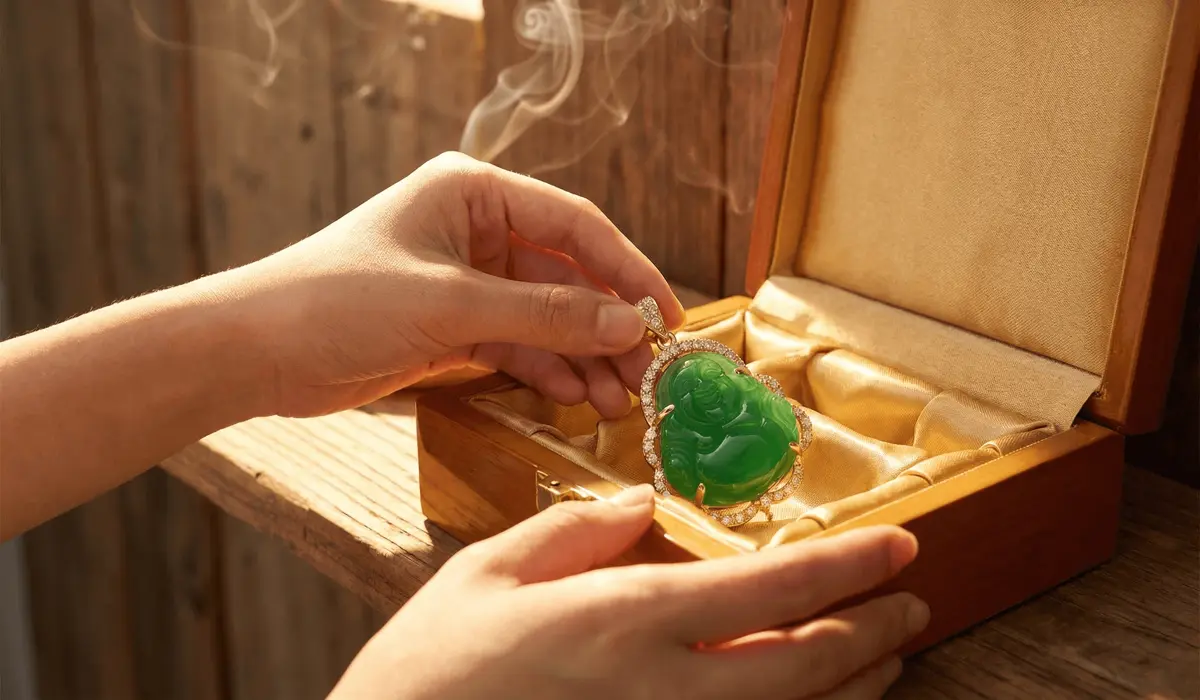
To respect Buddhist tradition and maintain spiritual purity, we recommend you remove your Buddha necklace before sleep and place it in a high, clean location. Wearing sacred imagery in bed is often considered disrespectful in many Eastern cultural traditions as well as Theravada Buddhist and Tibetan Buddhist practices.
The reason is that sleep is a worldly state where the body is prone to unconscious movements, sweating, and accidentally pressing or tangling the necklace – actions that may damage the necklace material and create an energetic "disturbance field" of disrespect. By following these simple rules, you ensure that the protective vibrations of your amulet remain potent and your spiritual connection stays clear.
Preparation Summary
| Category | Recommended Items |
|---|---|
| Storage Tools | Silk pouch, velvet-lined jewelry box, clean porcelain plate, or wooden tray |
| Placement Height | Above waist level, such as a high bookshelf, Buddhist altar, or bedside tall cabinet |
| Purification Tools | Sandalwood incense, sage, Tibetan singing bowl, selenite plate, or crystal cluster |
| Environmental Requirements | Dry, dust-free, away from direct sunlight, away from bathrooms and kitchens |
| Mindset Preparation | Clean hands, calm mind, can silently recite gratitude mantras or the Six True Words |
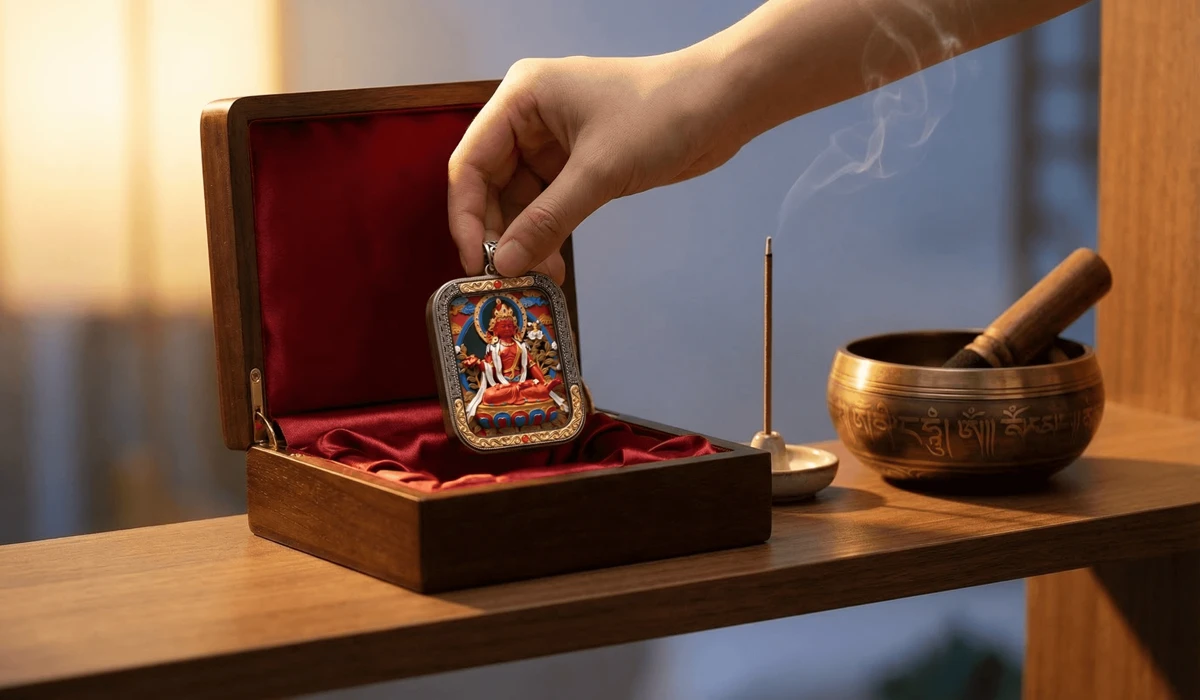
Introduction
Proper handling of sacred jewelry ensures that the protective vibrations remain potent and that your connection to the divine remains respectful. Many of our clients at Aura & Luck ask whether they can keep their pendants on throughout the night, but traditional wisdom suggests a more mindful approach.
In Taoist health preservation and Traditional Chinese Medicine's meridian clock theory, nighttime is a period when Yin energy dominates and qi and blood move inward. During this time, the human energy field (biofield) is in a vulnerable state of repair and reorganization. In our experience, creating a boundary between your active day and your resting state helps preserve the energy of the piece.
When you wear a Buddha necklace, you are carrying a symbol of enlightenment and compassion that interacts with your own "Chi" (气). Treating the item with specific care isn't just about tradition; it is about maintaining a high-vibration frequency in your personal space. Taking the necklace off at night is a beautiful way to show gratitude for the protection it provided during the day.
Removing the necklace also prevents physical damage to the intricate carvings or the delicate chain while you toss and turn. This small act of discipline transforms a simple accessory into a powerful tool for spiritual growth. By choosing a dedicated spot for your necklace, you anchor your home with a sense of peace and order.
💡 Deeper Insight: In Buddhist practice, "letting go" itself is an important discipline. The act of removing the necklace each night is precisely a gentle release of daytime attachments and identity identifications, allowing the mind to return to emptiness and stillness. This seemingly minor gesture is actually a key step in elevating a daily accessory into a spiritual cultivation tool.
Preparation Tools: Creating Your "Evening Sacred Object Care Corner"
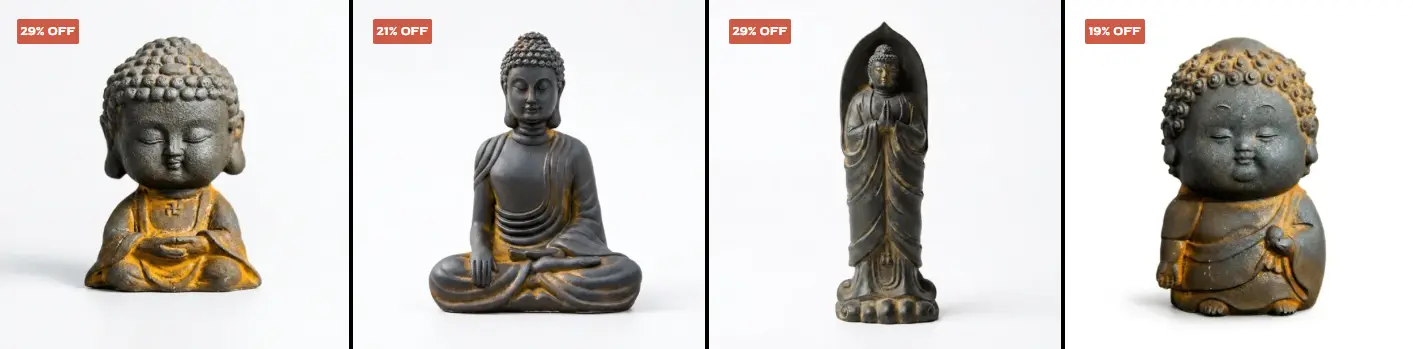
Before you begin your evening ritual, it is helpful to have a few essential tools ready to honor your necklace. We suggest using a dedicated storage vessel such as a silk pouch, a lined jewelry box, or a clean porcelain tray. These materials provide a soft, protective environment that prevents scratches and keeps the energy contained.
Your storage space should be a high-vibration area, such as an altar or a nightstand that sits well above waist level. In many cultures (such as Chinese Feng Shui and Japanese Shinto), height is a direct reflection of the respect you hold for the deity or teacher represented. Storing your Necklace Picks in an elevated position keeps them away from the mundane energy of the floor.
We also recommend keeping purification elements like sandalwood incense or a Tibetan singing bowl on hand for periodic clearing. These tools help remove any heavy energy the pendant may have absorbed from the environment or stressful interactions. A quick wipe with a clean cloth before storage ensures that physical oils do not dull the finish of the material.
Evening Ritual: Step-by-Step Guide
Step 1: Understanding the Symbolism and Sanctity of the Buddha Image
Recognize the pendant as more than a simple accessory; it is a physical manifestation of enlightened energy that serves as a mirror for your own soul. When we hold the image of the Buddha, we are reminded of the potential for peace and clarity within ourselves. Approaching the necklace with a "Beginner's Mind" allows you to stay present and humble during your daily interactions.
In Mahayana Buddhism and Vajrayana traditions, Buddha images or amulets are regarded as symbolic extensions of the "Dharmakaya" , carrying the blessings of precepts, concentration, and wisdom (Śīla, Samādhi, Prajñā). Therefore, every contact should be made with mindfulness and reverence.
Step 2: Physical and Mental Preparation – Hand Washing and Centering
First, always wash your hands before touching the pendant to ensure both physical and energetic cleanliness. This simple step separates your mundane chores from the sacred act of handling your amulet.
Optional practice: While washing your hands, silently recite "Om Ah Hum" three times (representing the purification of body, speech, and mind), or softly chant "Namo Shakyamuni Buddha" three times to reinforce a respectful mindset.
Step 3: Gently Unfastening with Gratitude
Unfasten the clasp gently with slow, steady, mindful movements. As you untie or unclip the necklace, we suggest reciting a short internal prayer or a mantra of gratitude for the protection you received throughout the day, for example:
"I am grateful for the protection this sacred object has provided me today. May I part with it with a pure heart and renew our connection tomorrow."
This small heart-to-heart communication helps keep the necklace's energetic imprint in harmonious resonance with your personal frequency, while expressing gratitude for the protection it provided during the day.
Step 4: Holding with Both Hands and Energetic Detachment
Hold the pendant in both hands for a moment of silence to "detach" your active energy from the piece. This step allows your "active" energy to gently separate from the necklace's "static" energy. You can visualize a soft white light returning from the pendant to your heart chakra, while the pendant itself gradually enters a peaceful resting state.
Step 5: Gently Placing into Storage
Place the necklace gently into its designated storage container, making sure it is placed without folding or tangling. Do not let the chain become knotted, and avoid stacking multiple pendants together to prevent energetic interference.
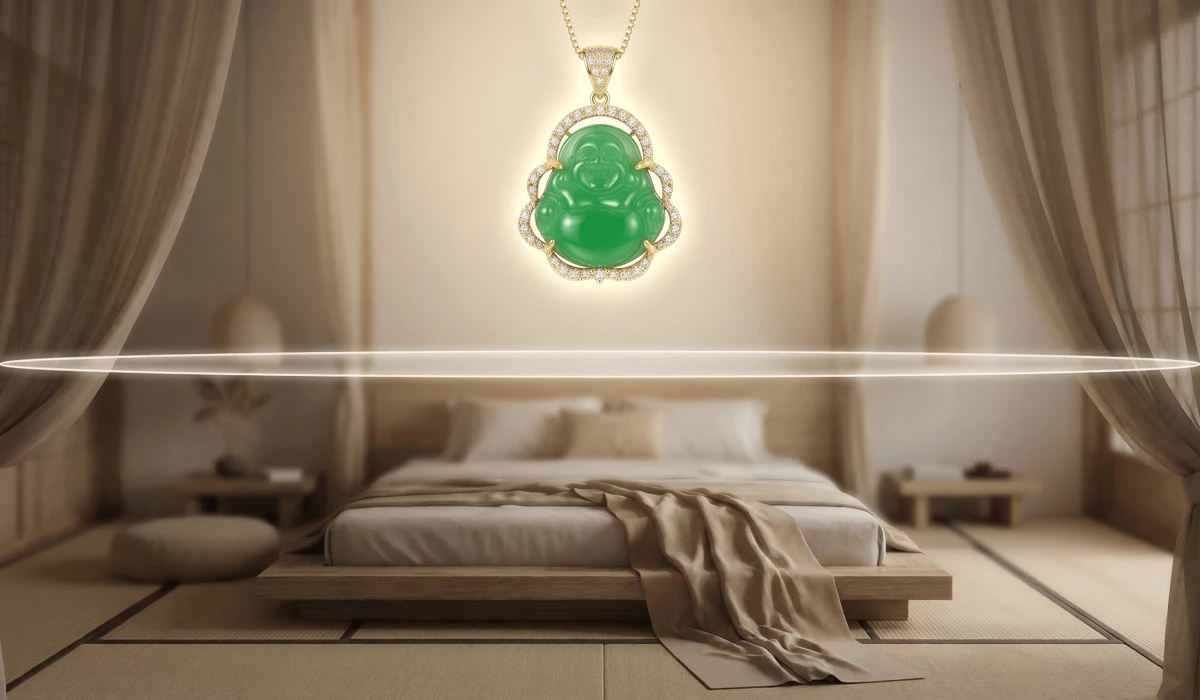
Storage Location Selection
The Deep Logic Behind the "Above Waist Level Rule"
"Storing the necklace above waist level" is a core principle in the Eastern energy system. In the Indian chakra system, the area below the waist corresponds to the Root Chakra (Muladhara) and Sacral Chakra (Svadhisthana) , governing survival instincts and desires; the area above the waist corresponds to the Heart Chakra (Anahata), Throat Chakra (Vishuddha), Third Eye Chakra (Ajna), and Crown Chakra (Sahasrara) , governing love, expression, and wisdom. Placing the Buddha necklace at a high location allows its energy to naturally flow toward your higher chakras, subtly nourishing your spiritual dimension during sleep.
In many cultural traditions, height is a direct reflection of the respect you hold for the deity or teacher represented. Storing your Necklace Picks in an elevated position keeps them away from the mundane energy of the floor.
Directional Selection Suggestions
| Direction | Energy Attribute | Suitable for Storing Buddha Necklace? |
|---|---|---|
| East | Health, Family | ✅ Suitable, benefits body and mind |
| Southeast | Wealth, Prosperity | ✅ Suitable, increases blessings |
| South | Reputation, Career | ✅ Suitable, supports right mindfulness |
| Southwest | Love, Partnership | ⚠️ Neutral, depends on personal needs |
| West | Creativity, Children | ✅ Suitable |
| Northwest | Mentors, Benefactors | ✅ Very suitable (position of respect) |
| North | Career, Inner Self | ⚠️ Suitable for meditation-style pendants |
| Northeast | Wisdom, Spirituality | ✅ Extremely suitable |
Important Taboo: Direction of the Feet
In Southeast Asian Buddhist countries (such as Thailand, Myanmar, and Sri Lanka) as well as Tibetan Buddhist traditions, pointing the soles of your feet toward a Buddha image or scripture is considered extremely disrespectful.
Therefore, while you are sleeping, please ensure that the placement of the necklace is not in the straight-line direction where your feet are pointing. If the foot of your bed directly faces the shelf where you store the necklace, it is recommended to readjust the shelf position or add a fabric screen at the foot of the bed.
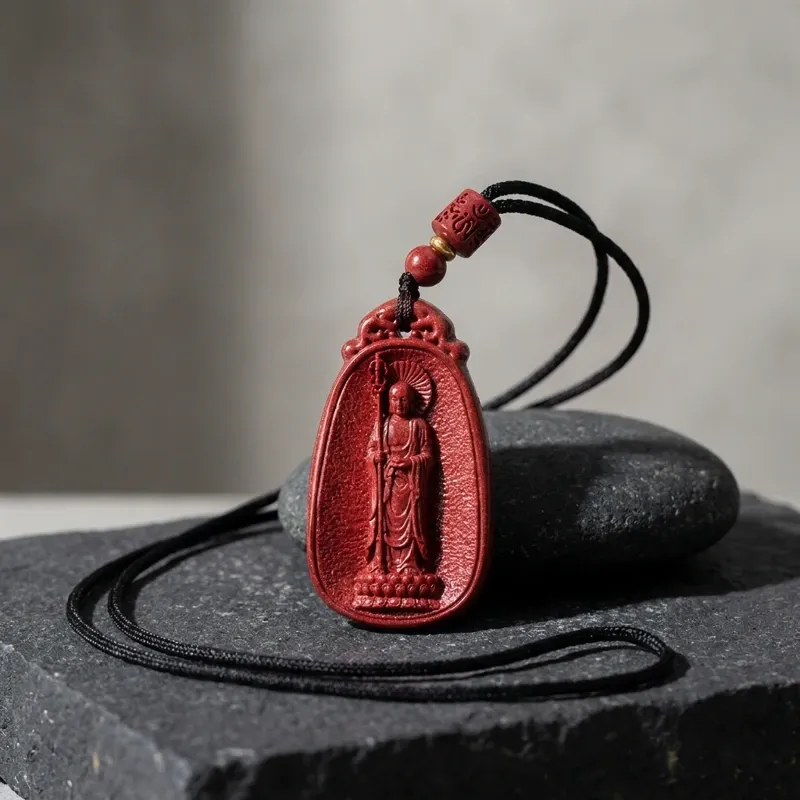
Purple Gold Sand Cinnabar Bodhisattva Necklace – Spiritual Protection, Prosperity & Inner Peace
Crafted from high-content Purple Gold Sand Cinnabar, this sacred necklace serves as a potent bridge between the earthly realm and spiritual fortitude. Cinnabar, known historically as the "Merchant's Stone," is revered for its ability to transmute negative vibrations into positive flow.
Shop NowSeven Major Taboos Quick Reference Chart
| No. | Taboo Behavior | Reason Explained |
|---|---|---|
| ❌ 1 | Placing on the floor, low stool, or sofa | Low positions attract turbid energy and dust, weakening spiritual power |
| ❌ 2 | Wearing into the bathroom or toilet | Bathrooms are "places of waste transit" where energy is literally "flushed away" |
| ❌ 3 | Wearing during exercise, sexual activity, or bathing | Sweat, bodily fluids, and chemicals can corrode the material and pollute the energy field |
| ❌ 4 | Touching the Buddha image with unwashed hands | Hands retain food oils or negative energy, damaging sanctity |
| ❌ 5 | Pointing feet toward the Buddha storage location | Feet are the "lowest" part of the body; pointing them at sacred objects equals disrespect |
| ❌ 6 | Storing with miscellaneous items, underwear, or shoes | Mixed energies lead to unstable protective effects |
| ❌ 7 | Casually lending to others for handling or trying on | External energies interfere with the original binding frequency, requiring re-purification |
These taboos are not meant to be scary, but rather to serve as a guide for maintaining a high level of intentionality. For example, bathrooms are considered areas of "waste transit" where energy is literally flushed away. Storing a sacred item there can dampen its spiritual potency and invite chaotic vibrations into your life.
Similarly, worldly activities like bathing or exercise introduce physical impurities like soap scum and sweat. These substances can build up on the material of the necklace, creating a physical and energetic "cloud" over the Buddha image. By removing the piece during these times, you keep both the material and the aura of the pendant sparkling and clear.
In our workshop, we always emphasize that the way you treat your sacred items reflects how you treat your own inner peace. Following these warnings creates a protective boundary around your spiritual practice. It helps you stay mindful of which wrist or hand to wear your other spiritual tools on as well.
Periodic Purification – When and How to Do It
Daily Cleaning (Every Day)
After removing the necklace each night, gently wipe the surface of the pendant with a clean, lint-free cloth to remove sweat stains, skin oils, and dust.
This seemingly simple action effectively extends the physical lifespan of the necklace while maintaining its luster and energetic permeability.
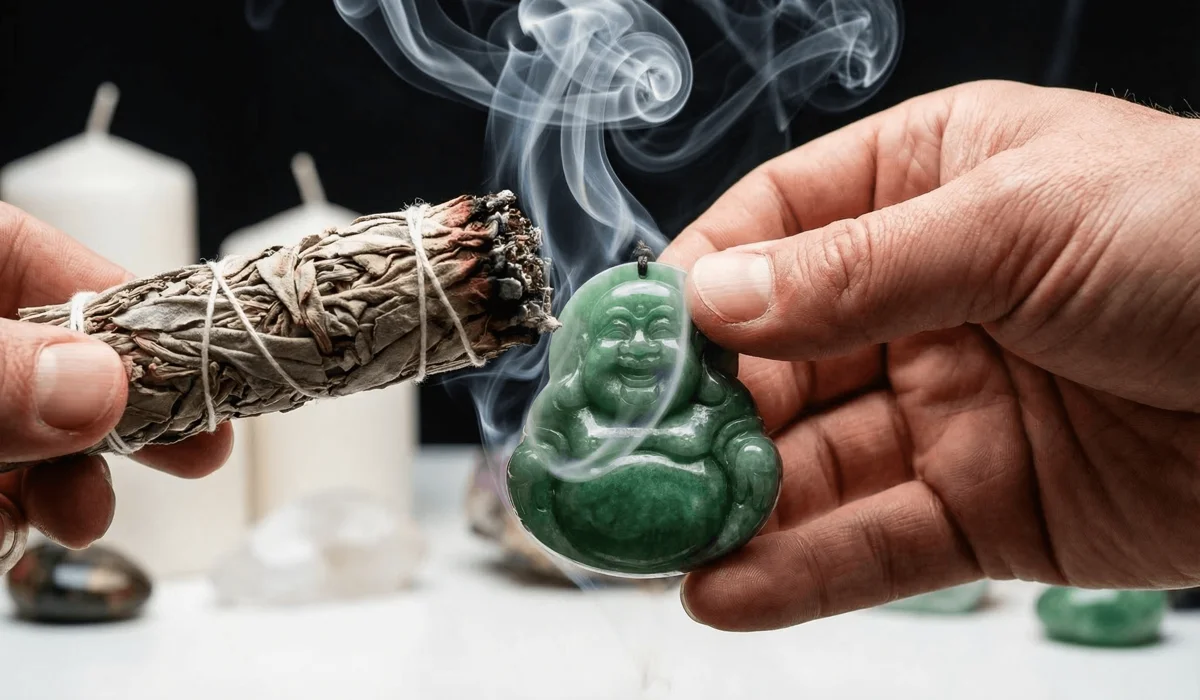
Smoke Purification (Weekly)
We recommend performing a smoke-cleansing ritual at least once a week to remove environmental stress and negative "smog" from the pendant.
Specific Operation:
-
Light sandalwood incense or a sage stick and wait for it to produce stable smoke.
-
Hold the necklace safely and allow the smoke from sandalwood or sage to swirl around the carvings.
-
This process resets the energy of the piece, making it feel lighter and more vibrant for the week ahead.
Smoke purification is especially recommended after the following situations:
-
Attending a funeral or hospital visit
-
Experiencing intense arguments or emotional fluctuations
-
Being in your Ben Ming Nian (Zodiac Year of Birth) or a conflict year
-
Feeling stagnant luck or unstable sleep
Moonlight Recharging (Monthly)
On the night of the full moon, place the necklace on a balcony or by a window (ensuring it is secure and won't be blown away by wind) to receive moonlight infusion throughout the night.
Moonlight carries Yin energy, which is gentle, purifying, and spiritually nourishing – especially suitable for wooden, crystal, or silver Buddha necklaces.
"Deep Reset" for Special Circumstances
There are certain signs that indicate your necklace needs a deeper cleansing than usual:
-
The surface appears dull or develops spots for no apparent reason
-
You feel head tightness or low mood after wearing it
-
The chain breaks frequently for no obvious reason
-
If the pendant feels physically heavy, looks unusually dull, or if you have just finished a period of intense illness
Then it is time for a recharge. You can place the necklace on a selenite plate or near a singing bowl to restore its natural frequency, as noted by experts at World of Feng Shui and other authoritative sources.
Frequently Asked Questions About Buddha Jewelry Etiquette
Q: Can I wear a Buddha necklace if I am not Buddhist?
A: Yes, anyone can wear a Buddha necklace as long as they treat the symbol with the respect and mindfulness outlined in this guide. The Buddha represents universal qualities like peace and wisdom that belong to everyone.
Q: What should I do if I accidentally sleep with my necklace on?
A: Do not worry, as intention is the most important factor. Simply perform a purification ritual the following morning with incense or a soft cloth to clear the energy and reset your spiritual intention.
Q: Is it okay to let friends or family touch my pendant?
A: It is generally best to discourage others from touching the image. This prevents the mixing of different energetic signatures and keeps the connection between you and the pendant pure and focused.
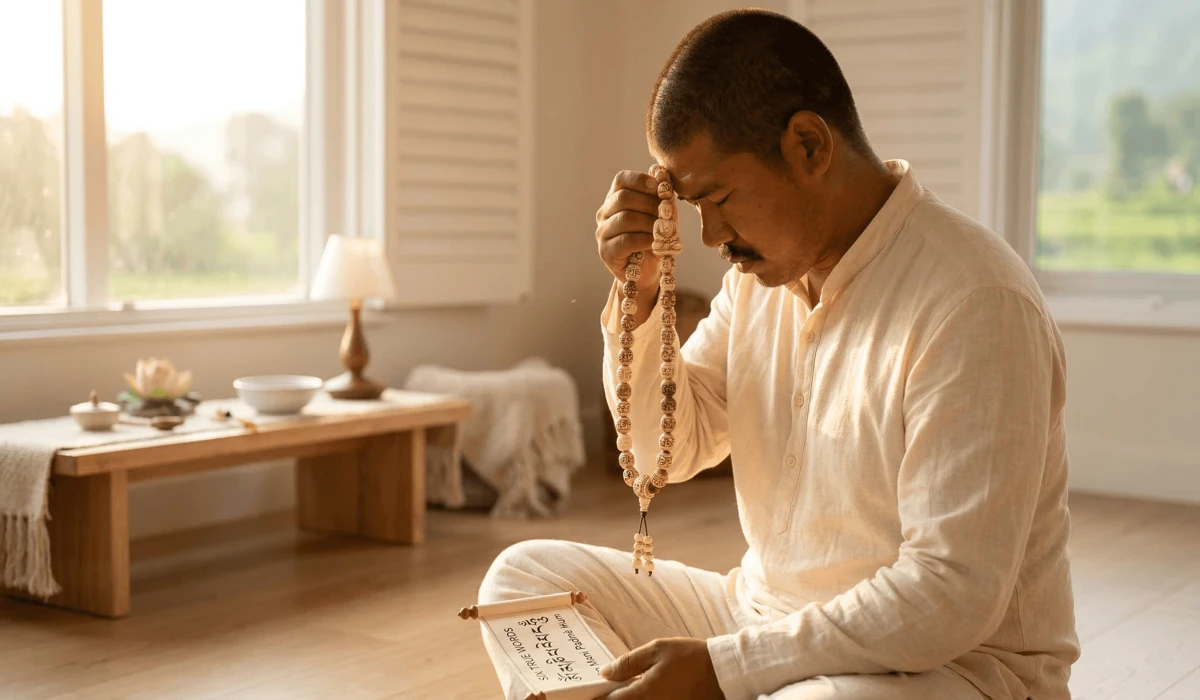
Q: What is the significance of the Six True Words mantra often found on these necklaces?
A: This is the powerful Tibetan mantra "Om Mani Padme Hum." It is believed to purify the ego, cultivate wisdom, and protect the wearer from negative influences in the environment.
Q: Can I hang my Buddha necklace on a wall instead of placing it in a box?
A: Yes, hanging it on a high wall is an excellent way to keep it in a "high-vibration" state. Just ensure the wall is clean and the necklace is not hanging near a bathroom or laundry area.
Conclusion and Mindful Intentions
Respect for the Buddha image is ultimately a reflection of respect for your own inner path toward enlightenment. By taking the time to remove your necklace and store it properly, you are practicing a form of daily meditation. These small habits help you maintain a state of "Gao" (高), or high vibration, in all areas of your life.
We believe that cultivating these nightly rituals transforms a simple piece of jewelry into a powerful tool for spiritual discipline. Whether you are seeking external protection or an inner reminder to stay calm, the way you handle your amulet matters. You can find many beautiful examples of these sacred tools in our Protection Talismans Collection to support your journey.
Following traditional advice from sources like Imperial Feng Shui can help you feel more grounded and connected. Remember that your spiritual practice is a personal journey, and these rules are here to support your growth. Treat your necklace with love, and it will continue to serve as a beacon of light in your daily life.

Longyi Luck
Longyi Luck is a Feng Shui practitioner and spiritual researcher who blends traditional year-based wisdom with modern lifestyle insights, specializing in Feng Shui, spirituality, meditation, and mindfulness. With years of dedicated study and practice, Longyi explores cultural symbolism and the practical application of ancient wisdom to help individuals cultivate balance, clarity, and harmony in everyday life. Since 2020, Longyi has been committed to translating timeless traditions into accessible guidance for the modern world.
longyi@auraandluck.com


.webp?w=800&h=800)
.webp?w=800&h=800)