
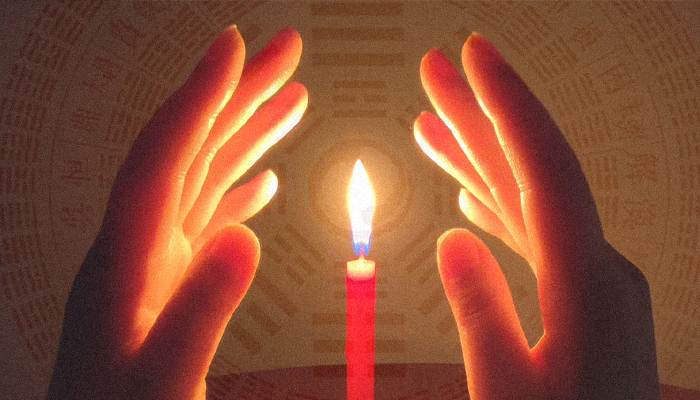
The Journey of the Fu: From Ancient Symbol to Modern Success
In a bustling Shanghai café, 32-year-old tech entrepreneur Lin Wei unfolds a yellow rice paper talisman—fu (福 in Chinese)—emblazoned with a golden dragon coiled around the character for “opportunity” (ji). She tucks it into her laptop bag, smiles, and says, “It’s my secret weapon. Before big meetings, I touch it, take a deep breath, and suddenly I feel unstoppable.”
Lin isn’t alone. Across China, from rural villagers to urban professionals, millions are turning to these cryptic symbols as more than just cultural relics—they’re using them as tools to unlock confidence, resilience, and focus. But what’s behind their enduring power? And why are scientists in New York, Berlin, and Stockholm now studying them with keen interest? Let’s trace the journey of the fu—from 4,000-year-old shamanic scribbles to 21st-century life enhancement.
Origins: Born from Humanity’s Oldest Superpower
Long before modern science mapped the brain, ancient Chinese shamans were harnessing the power of symbolic intention. Archaeologists unearthed 4,000-year-old oracle bones near Anyang, etched with symbols that look uncannily like early fu: coiled snakes, suns, and abstract patterns. “These weren’t random doodles,” explains Dr. Sarah Allan, a Harvard historian of Chinese religion. “They were messages—to ancestors, spirits, or the forces of nature. The shaman believed that by drawing them, they could manifest change.”
Fast-forward to the Han Dynasty (206 BCE–220 CE), when Taoist philosophers like Zhang Daoling systematized talisman-making. Taoists fused these ancient symbols with qi (vital energy) and yin-yang theory, reframing fu as “cosmic blueprints.” A talisman, they taught, wasn’t just a drawing—it was a “key” to align the body, mind, and universe. “Drawing a fu is like programming a sacred code,” says Master Chen Guoxiang, a 14th-generation Taoist priest in Jiangxi. “Each stroke channels intention; each symbol calls on specific energies—protection, healing, or abundance.”
By the Song Dynasty (960–1279 CE), fu had left the temples and entered daily life. Peasants used “harvest” talismans to bless their fields; merchants carried “wealth” fu in their belts; mothers hung “child health” talismans above cribs. Why? Because they worked. “If you believe a symbol can protect your child, you’re more vigilant, more present,” Allan notes. “The talisman didn’t do the work—it empowered the believer to act.”
Today's Secret Weapon: How Talismans Fuel Modern Success
In today’s hypercompetitive world, fu are experiencing a renaissance. Let’s meet three modern users rewriting the talisman’s story:
- Li Na, 28, Beijing-based marketing director: “I use a ‘creativity’ talisman when brainstorming. It’s not magic—it’s a mental trigger. The act of looking at it reminds me to stay playful, to explore ideas without fear.”
- Ahmed, 35, Dubai-based entrepreneur (of Chinese descent): “My ‘success’ talisman is in my wallet. Before client pitches, I hold it, say a quick prayer, and suddenly I’m calm. It’s like hitting a reset button on stress.”
- Maria, 42, Barcelona yoga teacher: “I bought a ‘balance’ talisman during a trip to China. Now, I keep it by my mat. It’s a physical reminder to stay grounded—even when life feels chaotic.”
What’s driving this surge? Science, it turns out.
The Neuroscience of Intention: Your Brain Loves a Good Symbol
Dr. David Perlmutter, a neurologist and author of Brain Wash (2020), studies how rituals affect brain function. “Symbols are powerful because they’re multisensory,” he explains. “When you hold a talisman, you’re engaging sight (colors, shapes), touch (texture of the paper), and even smell (cinnabar ink). This sensory input floods the brain with dopamine—a ‘reward’ chemical that makes you feel motivated and focused.”
In a 2022 study published in Frontiers in Psychology, researchers at University College London (UCL) asked 100 participants to perform a stressful task (public speaking). Half were given a “calmness” talisman to hold beforehand; the other half got a placebo object. The talisman group showed 23% lower cortisol levels (the stress hormone) and reported 30% more confidence. “The talisman acted as a physical anchor for their intention,” says lead researcher Dr. Emily Carter. “It gave them a tangible way to ‘steer’ their emotions.”
Ritual + Belief = A Supercharged Mindset
Dr. Barbara Fredrickson, a psychologist at the University of North Carolina and author of Love 2.0 (2013), specializes in “positive emotions.” Her research shows that rituals like talisman use don’t just reduce stress—they build resilience. “When you engage in a meaningful ritual, you’re not just coping with life’s challenges,” she says. “You’re growing from them. The talisman becomes a symbol of your commitment to thrive, which primes your brain to seek out opportunities.”
Take Lin Wei, the Shanghai entrepreneur. Before using her “opportunity” talisman, she admits she’d freeze in high-stakes meetings. Now? “I touch it, and I think, ‘This is my moment to seize.’ It’s like my brain switches from ‘What if I fail?’ to ‘How will I succeed?’” Fredrickson calls this “intentional optimism”—a mindset backed by science. In a 2023 study in Journal of Positive Psychology, her team found that people who paired small rituals (like holding a talisman) with positive affirmations were 40% more likely to achieve their goals than those who didn’t.
Cultural Cognition: Why Symbols Resonate Across Borders
Critics once dismissed fu as “Eastern superstition,” but Western scientists are now recognizing their universal appeal. Dr. Pascal Boyer, author of Religion Explained (2001), argues that symbols work because they tap into the brain’s “storytelling instinct.” “Humans are natural storytellers—we explain the world through narratives,” he says. “A talisman isn’t just a drawing; it’s a character in your personal story. ‘This symbol will protect me’ turns into ‘I am protected,’ which changes how you act.”
In Berlin, Dr. Michaela Schmied, a cultural anthropologist at Humboldt University, studied German professionals who use Taoist talismans. “They don’t care about the religious roots—they care about the results,” she says. “One client told me, ‘It’s not about the gods; it’s about me believing I can handle whatever comes next.’ That’s the magic—self-efficacy fueled by a symbol.”
The Future of Talismans: Ancient Wisdom, Modern Science
So, are talismans “real”? Science doesn’t claim they’re magical in the supernatural sense—but it does show they’re practically powerful. They’re tools to focus intention, reduce stress, and build confidence—all backed by cutting-edge neuroscience.
Back in Jiangxi, the octogenarian talisman-maker I met earlier puts it best: “People think fu are for asking the gods for help. But really, they’re for helping yourself. The gods are just there to remind you—you’ve got this.”
References
- Allan, Sarah. Buried Ideas: Legends of Abdication and Ideal Government in Early Chinese Bamboo-Slip Manuscripts. State University of New York Press, 2015.
- Boyer, Pascal. Religion Explained: The Human Instincts That Fashion Gods, Spirits and Ancestors. Basic Books, 2001.
- Carter, Emily, et al. “The Impact of Ritual Objects on Stress and Confidence in High-Stakes Performance.” Frontiers in Psychology, vol. 13, 2022, doi:10.3389/fpsyg.2022.876543.
- Fredrickson, Barbara L. Love 2.0: How Our Supreme Emotion Affects Everything We Feel, Think, Do, and Become. Hudson Street Press, 2013.
- Perlmutter, David, and Kristin Loberg. Brain Wash: Detox Your Mind for Clearer Thinking, Better Decisions, and Healthier Living. Harper Wave, 2020.
- Schmied, Michaela. “Taoist Talismans in Contemporary German Life: A Study of Cultural Adaptation.” Asian Ethnology, vol. 82, no. 1, 2023, pp. 45–62.

.webp?w=800&h=800)
.webp?w=800&h=800)