
.webp?w=1200&h=700)
DIY wood mala restringing is a practical home practice that restores broken sacred necklaces while refreshing your personal energy field. Learning how to restring your prayer beads at home allows you to preserve valuable sandalwood, rosewood, or cedar beads while maintaining a strong spiritual connection. At Aura & Luck, we believe that maintaining your own sacred tools deepens your mindfulness journey and creates a lasting energetic bond.
When a sacred strand snaps, it can feel disappointing or concerning at first glance. However, our experienced workshop team views cord breakage as a natural invitation for spiritual renewal. Through careful handling, proper cord selection, and calm focus, you can transform a simple repair task into an empowering meditation ritual.
Restringing your beads at home ensures your prayer necklace remains structurally sound for daily mantra recitation. By selecting a durable braided cord for prayer beads and mastering key assembly methods, you ensure your mala remains a reliable companion for years to come.
Quick Guide Overview:
- Learn how to perform diy wood mala restringing at home with simple hand tools.
- Discover the spiritual symbolism behind cord breakage and energetic renewal.
- Select high-strength materials like durable braided cord for prayer beads or traditional silk.
- Master the guru bead stringing technique using flexible wire tools.
- Incorporate a sacred sankalpa intention setting ritual during your assembly process.
- Maintain your wood beads with proper oil conditioning and gentle energetic cleansing.
What Is Wood Mala Bead Restringing?
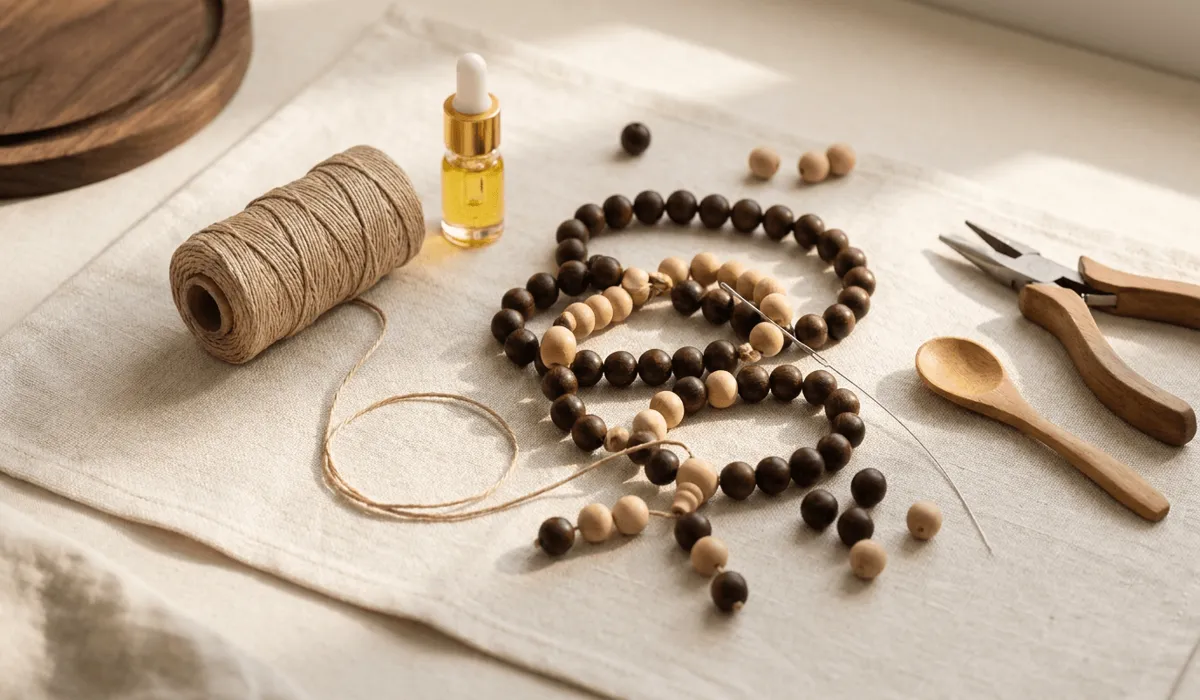
Wood mala bead restringing is the intentional process of disassembling, inspecting, and re-threading a 108-bead wooden prayer necklace. Over time, friction from daily movement and skin oils can weaken the internal cord of your necklace. Restringing replaces worn threads before complete breakage occurs, preserving your precious wooden counters.
Definition and Practical Purpose
At its core, restringing combines practical craftsmanship with personal energetic care. It involves cleaning individual beads, evaluating internal hole drillings, and threading them onto a new, durable cord. This process restores structural strength while allowing practitioners to customize string tension and spacer bead arrangements.
Whether you need a full sandalwood mala restringing tutorial or a quick rosewood mala bead repair, the fundamental techniques remain identical. Proper restringing prevents bead loss and ensures smooth handling during repetitive meditation counting.
Traditional Materials and Craft Tools
Traditional prayer beads rely on natural fibers or high-tensile modern synthetic cords. Choosing an authentic 108 wood mala beads cord requires balancing historic aesthetics with modern durability. Practitioners often select between twisted nylon, braided polyester, or traditional silk thread for malas.
Essential crafting tools include a flexible wire needle, sharp craft scissors, and natural botanical oils for bead conditioning. Having these materials organized creates a smooth assembly environment for your home workshop.
Distinct Characteristics of Wooden Beads
Unlike semi-precious gemstones or glass, organic wooden beads are porous and lighter in total weight. They react directly to ambient humidity, natural skin oils, and atmospheric changes. Because wooden bead drill holes can expand slightly with long-term use, selecting the correct cord thickness is essential for longevity.
Wooden beads also retain delicate floral or earthy aromas, especially fragrant species like sandalwood and cedarwood. Gentle handling during restringing preserves these natural aromatic qualities and protects the soft wood grain from accidental scratches.
Spiritual Meaning and Sacred Symbolism
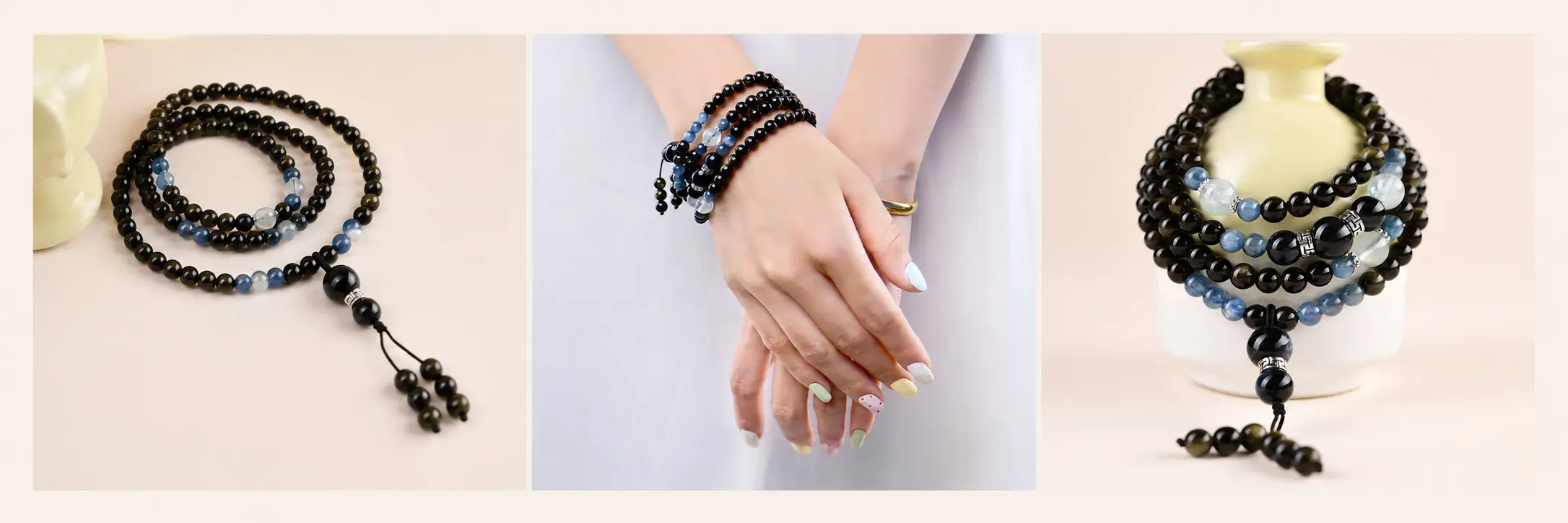
In many eastern spiritual traditions, prayer beads are considered dynamic containers of personal devotion. Restringing a mala is far more than a simple repair job; it is a sacred act of renewal. It honors the historical journey of your spiritual practice while preparing your tools for future growth.
Energetic Cycles and Cord Breakage
When a prayer cord breaks, ancient teachings suggest that a major energetic cycle or karmic lesson has concluded. Rather than viewing cord failure as bad luck, practitioners view it as a moment of energetic release. The internal thread, historically called the sutra, represents the unbroken thread of universal consciousness connecting every experience.
By restringing broken prayer beads, you consciously rebuild your spiritual container. This mindful act acknowledges past growth and welcomes new clarity into your daily meditation routine. Historical background on sacred prayer beads can be explored in this Global Knowledge Base.
Chakra Alignment and Rooted Grounding
Wooden beads carry direct energetic connections to the Root Chakra (Muladhara), promoting physical stability, security, and earth connection. Organic woods ground subtle energy fields, helping overactive minds settle during deep meditation. The rhythmic flow of subtle life force energy, known as Chi(气), moves smoothly through natural materials during practice.
When using fragrant woods like sandalwood or rosewood, the experience also gently stimulates the Heart Chakra (Anahata). The combination of tactile wood grain and soothing natural scent encourages emotional balance during mantra repetition.
Historical Monastic Traditions
For centuries, monks and spiritual practitioners assembled their own prayer tools as a form of active spiritual discipline. Assembling beads by hand cultivates concentration, patience, and precise physical awareness. Repeating sacred chants during bead assembly transforms manual work into a continuous meditation exercise.
Maintaining your own prayer tools honors this timeless heritage. It fosters a direct personal bond between you and your spiritual instruments, enhancing their energetic resonance during practice.
Benefits and Intentions Associated with Restringing
Taking time out of a busy modern schedule to repair a sacred necklace brings numerous mental and emotional benefits. The slow, rhythmic nature of knotting cord calms the central nervous system and sharpens concentration.
Cultivating Mindful Presence
Engaging in a sacred DIY mindfulness ritual offers a refreshing break from digital screens and daily stress. Threading individual beads requires quiet focus, forcing your mind into the present moment. Each completed knot acts as a tactile anchor for mental stillness.
Many practitioners find that the focused attention required for mala bead cord knotting creates a state of flow. This quiet absorption reduces anxiety and leaves you feeling grounded long after the repair is complete.
Setting Intentions with Sankalpa Rituals
Restringing provides an ideal setting for a sankalpa intention setting ritual. A sankalpa is a short, positive statement of truth or spiritual intention expressed in the present tense. As you thread each wooden bead, you can silently repeat your chosen intention to imbue the cord with purpose.
Integrating personal affirmations into the physical assembly process anchors your goals into tangible form. For further inspiration on sacred traditions and practice guides, browse our dedicated Crystal Healing Sacred Guides.
Step-by-Step DIY Wood Mala Restringing Tutorial
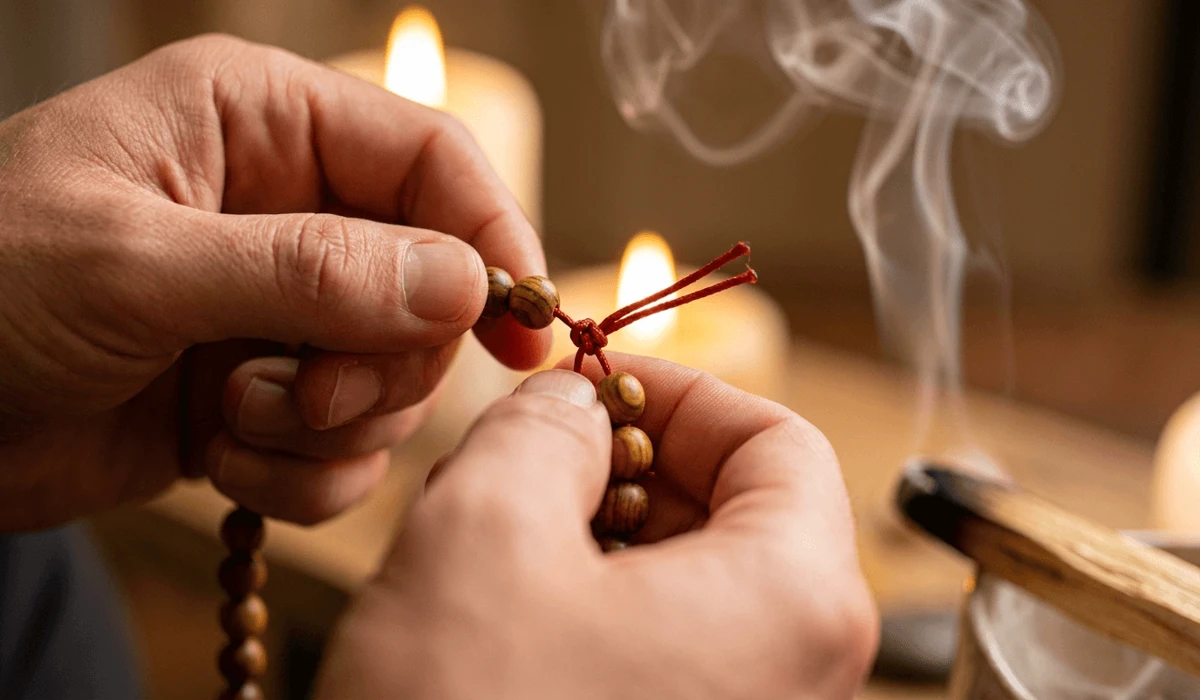
Restringing your mala necklace at home requires preparation, patience, and clear sequential steps. Setting aside an hour of quiet time ensures a calm, uninterrupted practice.
Before starting your project, gather all necessary tools on a soft, clean work surface. A felt bead mat prevents loose wooden beads from rolling away during assembly.
- One set of 108 wooden mala beads, plus 3 marker beads and 1 guru bead.
- High-durability cord (0.8mm to 1.0mm thickness) measuring approximately 1.5 meters.
- A flexible fine-wire collapsible needle or stringing wire.
- Sharp craft scissors and a small drop of craft glue or clear varnish.
- Natural botanical oil, such as sandalwood or jojoba oil, with a soft cloth.
Once your workspace is arranged, follow these step-by-step instructions to rebuild your prayer necklace.
Step 1: Inspect and cleanse disassembled beads. Carefully examine each wooden bead for cracks or sharp interior drill edges. Wipe away accumulated dust and apply a tiny drop of natural oil to hydrate the wood grain.
Step 2: Prepare your cord and stringing needle. Fold your 1.5-meter cord in half to create a strong double-strand foundation. Pass the folded loop through the eye of your flexible wire needle.
Step 3: Begin stringing in structured sets. Thread beads in counting groups according to your preferred tradition. Place a distinct marker bead at positions 27, 54, and 81 if utilizing a traditional marker beads placement mala design.
Step 4: Execute hand-knotting between individual beads. Tie a simple overhand knot firmly against each wooden bead. Hand-knotting prevents beads from rubbing together and ensures no beads are lost if the cord snaps in the future.
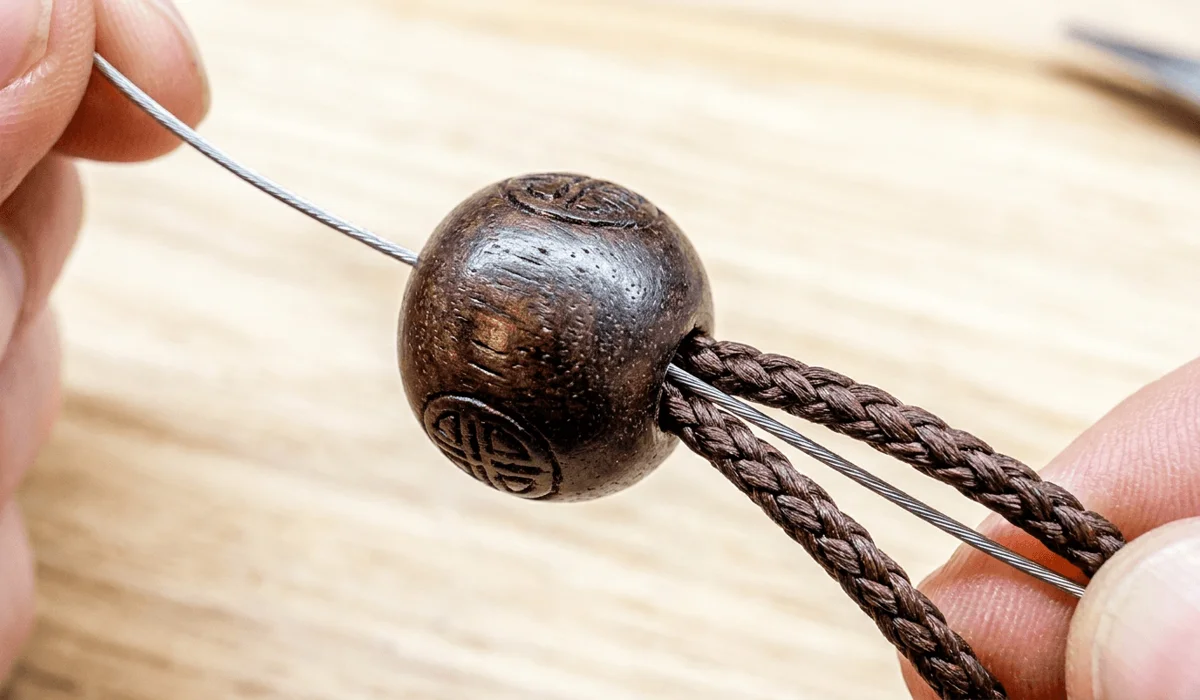
Step 5: Master the guru bead stringing technique. Thread both open cord tails through the main vertical hole of your three-holed guru bead. Use your wire needle to pull the cord ends out through the bottom center hole, securing the entire strand.
Step 6: Attach the tower bead (bindu) and finish with a secure knot. Slide the smaller cylindrical tower bead over both cords down to the guru bead. Tie a firm square knot at the base, applying a microscopic dab of craft glue to lock the knot in place before adding or wrapping a tassel.
Video source: YouTube
Author: Moksha Kusa Marquardt
Original video link: https://www.youtube.com/watch?v=ey1jSGWL6yw
Creating a peaceful environment around your workspace enhances focus during these intricate steps. You may also enjoy incorporating inspiring decor into your home space to support quiet meditation sessions.
How to Wear Wood Mala Beads
Wearing wooden mala beads keeps their grounding energy close to your body throughout the day. Traditional customs offer practical guidelines for wearing and holding your prayer necklace respectfully.
Left Hand vs Right Hand Principles
In classical energetic frameworks like Feng Shui, the left side of the body is considered the receptive side. Wearing your restrung wooden mala on the left wrist helps absorb protective, grounding energies from natural wood species during daily activities.
Conversely, the right hand is considered the active or expressive hand. Hold your mala in your right hand during active mantra recitation (japa) to project intentions outward. According to traditional customs, roll beads over the middle finger using the thumb, avoiding contact with the index finger which represents ego.
Daily Wear and Mindful Recitation
Many practitioners wear their prayer beads around the neck or wrapped several times around the wrist. When wrapped around the wrist, ensure the string is not stretched uncomfortably tight, as constant tension can prematurely wear out synthetic cords.
To explore how wooden malas differ in energy and weight compared to gemstone options, view our detailed guide on Wood Meditation Bead Insights.
Wood Mala Restringing vs Gemstone Mala Restringing
While the basic structure of a 108-bead necklace remains consistent across styles, restringing wooden beads requires different techniques than gemstone restringing. Understanding these key differences ensures long-lasting results for your repair project.
| Feature | Wood Mala Restringing | Gemstone Mala Restringing |
|---|---|---|
| Material Weight | Lightweight and comfortable for multi-wrap wrist wear. | Heavier mass requiring thicker support cords. |
| Cord Compatibility | Ideal for flexible cotton, silk, or soft braided polyester. | Requires heavy-duty nylon, flex-wire, or coated steel. |
| Pre-Stringing Preparation | Conditioning with natural botanical oils. | Cleansing with water, moonlight, or sound vibration. |
| Drill Hole Structure | Smooth interior walls that expand slightly over time. | Sharp interior edges that require abrasion-resistant thread. |
As documented by mineralogical standards at the Gemological Institute of America, gemstone materials possess higher hardness levels than organic fibers. Consequently, stone drill holes wear through cords faster if protective hand-knotting is omitted.
Who Is Wood Mala Restringing Suitable For?
Restringing wooden mala beads at home is an accessible, rewarding project for practitioners of all experience levels. It appeals to individuals seeking practical repair skills as well as those desiring deeper spiritual connection.
This DIY ritual is especially ideal for:
- Meditators looking to restore a broken sandalwood, rosewood, or agarwood strand.
- Crafting enthusiasts who value hand-assembling personal spiritual tools.
- Individuals seeking grounding, root-chakra aligned focus during quiet evenings.
- Earth signs (Taurus, Virgo, Capricorn) who resonate with natural botanical elements.
- Fire signs seeking a patient, methodical activity to cultivate inner tranquility.
If you enjoy pairing organic wooden beads with authentic mineral crystals, explore our full Spiritual Crystal Collection Online to find complementary items for your sacred space.
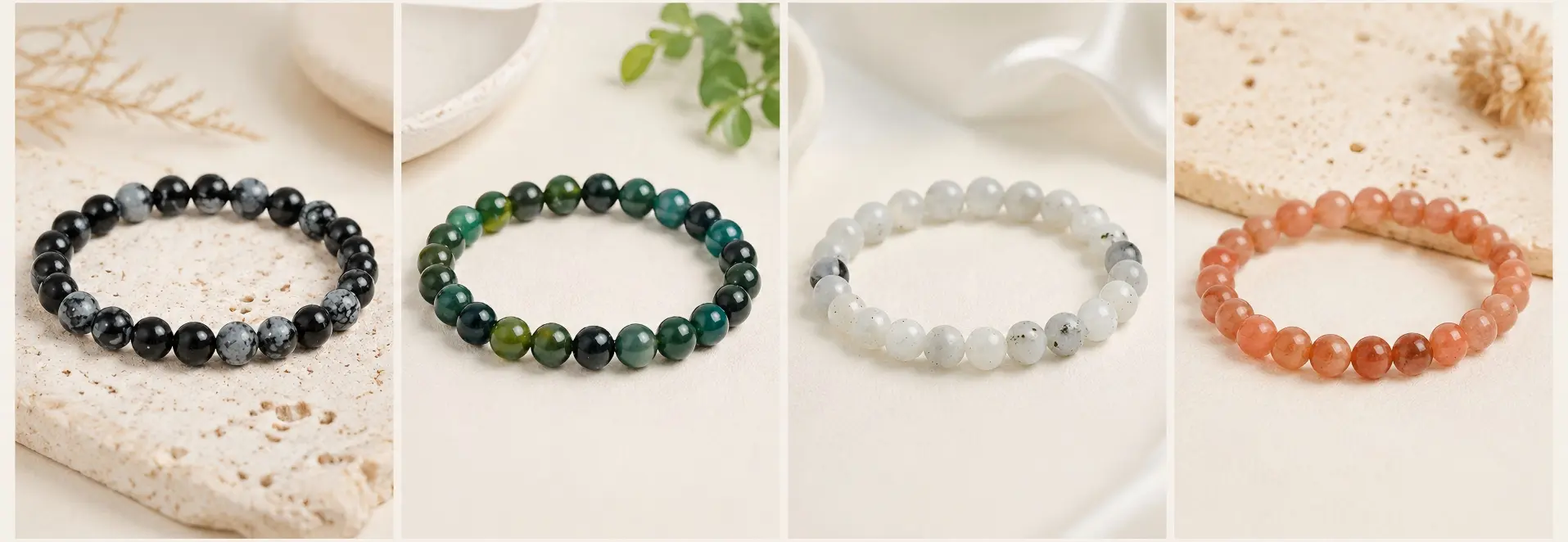
How to Cleanse, Charge, and Care for Wood Mala Beads
Proper care and ongoing maintenance preserve the structural integrity of your cord and the natural warmth of your wooden beads. Organic materials require gentle, moisture-free care methods.
Gentle Cleansing Methods
When performing cleansing wood mala beads, avoid submerging them in water or liquid cleaning solutions. Water causes natural wood to expand, warp, and potentially crack upon drying. Liquid exposure can also weaken organic cord fibers.
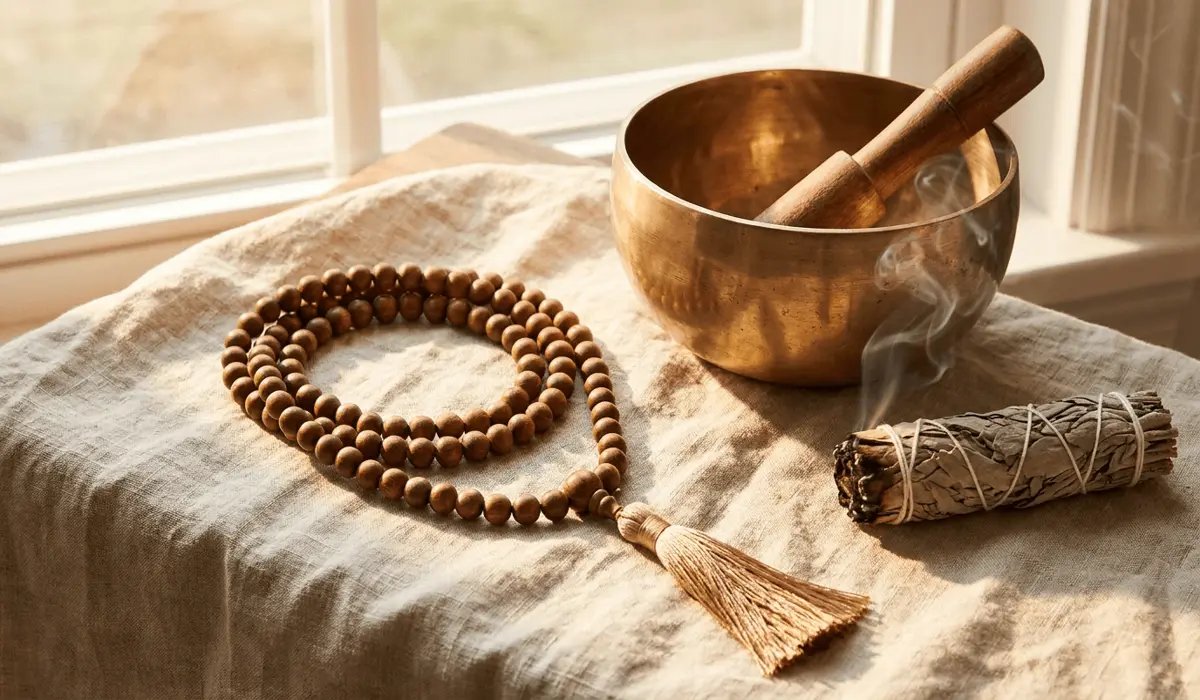
Instead, use herbal smudge smoke from burning white sage, palo santo, or incense to clear stagnant energy. Gently wipe each bead with a clean, dry microfiber cloth to remove skin oils and dust buildup.
Charging and Energy Refreshment
To refresh the subtle energetic qualities of your prayer beads, place them near sound healing instruments like brass Tibetan singing bowls or crystal chimes. Sound vibrations clear residual energy without causing physical wear to wood surfaces.
You may also leave your wooden mala resting under gentle moonlight overnight on a dry, natural linen fabric. Avoid leaving wooden beads in direct, harsh sunlight for extended periods, as intense heat can bleach wood colors and dry out natural oils.
Daily Care and Storage
Incorporate regular conditioning natural wood beads into your maintenance routine every few months. Massage a single drop of jojoba or sandalwood oil into your palms and roll the beads gently through your hands. This keeps the wood grain hydrated and enhances its natural luster.
Store your restrung mala necklace in a soft cotton or silk pouch when not in use. Following basic wood mala care and maintenance rules protects your cord from excess humidity and preserves its strength for years. Professional standards for organic gem materials are also reviewed by the Gemmological Association of Great Britain.
Frequently Asked Questions
Q: What type of cord is best for restringing wood mala beads?
A: A durable 0.8mm to 1.0mm braided nylon or polyester cord works best for long-lasting structural strength. High-tensile braided cords prevent fraying against internal wooden drill holes. Traditional silk thread offers an authentic, flexible option ideal for hand-knotting between each bead.
Q: How do I cleanse and oil wood mala beads before restringing?
A: Gently wipe disassembled beads with a soft, dry microfiber cloth to remove surface dirt and accumulated skin oils. Apply a microscopic drop of organic sandalwood, jojoba, or coconut oil to a clean cloth and massage individual beads. Allow beads to air-dry completely for several hours so excess oil does not weaken the new cord.
Q: How do I correctly string the 108 beads, markers, and Guru bead?
A: Lay out 108 main beads, 3 marker beads, and 1 guru bead on a soft felt bead mat before stringing. Thread beads in sequence, placing counter marker beads at positions 27, 54, and 81 for traditional layouts. Use a fine collapsible wire needle to pull both cord ends through the three-holed guru bead smoothly.
Q: What does it mean spiritually when your mala beads break?
A: Traditional spiritual beliefs view a broken prayer cord as a sign that a specific energetic cycle or karmic lesson has concluded. It indicates that the cord absorbed excess tension or energy, creating space for a fresh start. Restringing your broken necklace allows you to consciously redirect your focus for your next phase of personal growth.
Q: How do I set a sankalpa (intention) during the restringing ritual?
A: Prepare a clean workspace, ignite herbal smudge smoke, and sit in a comfortable seated position with a clear mind. State your short, positive intention in the present tense before tying the initial anchoring knot. Repeat your chosen intention mentally with every single knot tied during the restringing process.
Conclusion & Gentle Next Step
Restringing your wooden prayer beads at home bridges practical repair work with deep mindfulness practice. Cleansing your beads, choosing high-strength cord, and knotting with calm concentration creates a durable tool perfectly aligned with your personal journey.
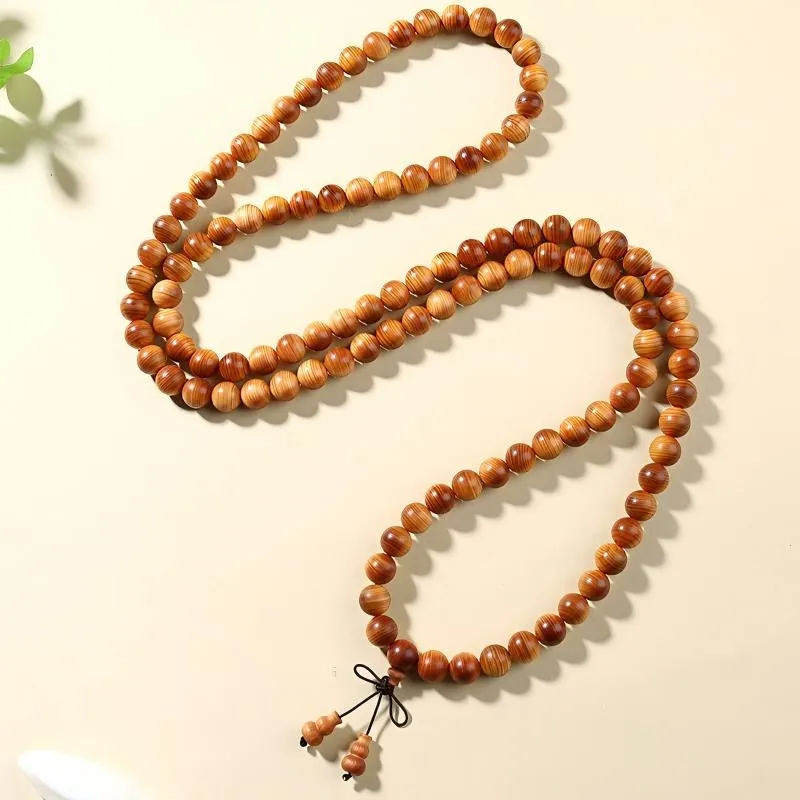
Natural Thuja Wood 108 Bead Mala with Gourd Tassel – Meditation Prayer Beads and Wrap Bracelet
Warm wood tones, flowing natural grain and a traditional 108-bead design come together in this Thuja wood mala. Each round bead is polished to highlight the material’s layered reddish-brown pattern, while the paired gourd-shaped dangles add a distinctive Chinese-inspired finishing detail.
Shop NowRegular oil conditioning, respectful handling, and proper storage ensure your restrung wood mala remains structurally sound and energetically vibrant. As you continue your meditation practice, feel welcome to explore our complete library of spiritual resources and handcrafted designs to support your path.
Mindful Reminder: Transforming tool repair into a personal meditation ritual strengthens your bond with your spiritual practice. Take your time with each knot, breathe deeply, and enjoy the process of energetic renewal.
Disclaimer: The contents of this article are provided strictly for educational, informational, and cultural exchange purposes. They do not constitute medical, legal, financial, or professional advice. Readers seeking professional guidance should consult qualified specialists in the appropriate fields.

Longyi Luck
Longyi Luck is a Feng Shui practitioner and spiritual researcher who blends traditional year-based wisdom with modern lifestyle insights, specializing in Feng Shui, spirituality, meditation, and mindfulness. With years of dedicated study and practice, Longyi explores cultural symbolism and the practical application of ancient wisdom to help individuals cultivate balance, clarity, and harmony in everyday life. Since 2020, Longyi has been committed to translating timeless traditions into accessible guidance for the modern world.
longyi@auraandluck.com



.webp?w=1280&h=1280)
.webp?w=800&h=800)