

Understanding Real vs. Fake Selenite: Satin Spar vs. True Selenite is essential for crystal lovers who want genuine mineral energy and aesthetic beauty in their collection. Many spiritual practitioners purchasing selenite towers or charging plates actually receive satin spar, while synthetic plastic or glass counterfeits flood online marketplaces. In this deep guide, our team at Aura & Luck breaks down the exact physical traits, energy profiles, and simple home tests so you can spot genuine gemstones with total confidence.
- Gypsum Twins: Both true selenite and satin spar belong to the gypsum mineral family and share identical chemical compositions.
- Visual Distinction: True selenite forms in clear, glass-like sheets, while satin spar grows in dense, silky, light-reflecting fibers.
- Market Reality: Over ninety percent of commercial "selenite" items sold today are naturally beautiful satin spar specimens.
- Counterfeit Warning: Fake glass and plastic imitations lack natural veil inclusions, feel unnaturally heavy or light, and resist nail scratching.
- Water Sensitivity: Genuine gypsum dissolves and dulls in water, making dry cleansing essential for both natural varieties.
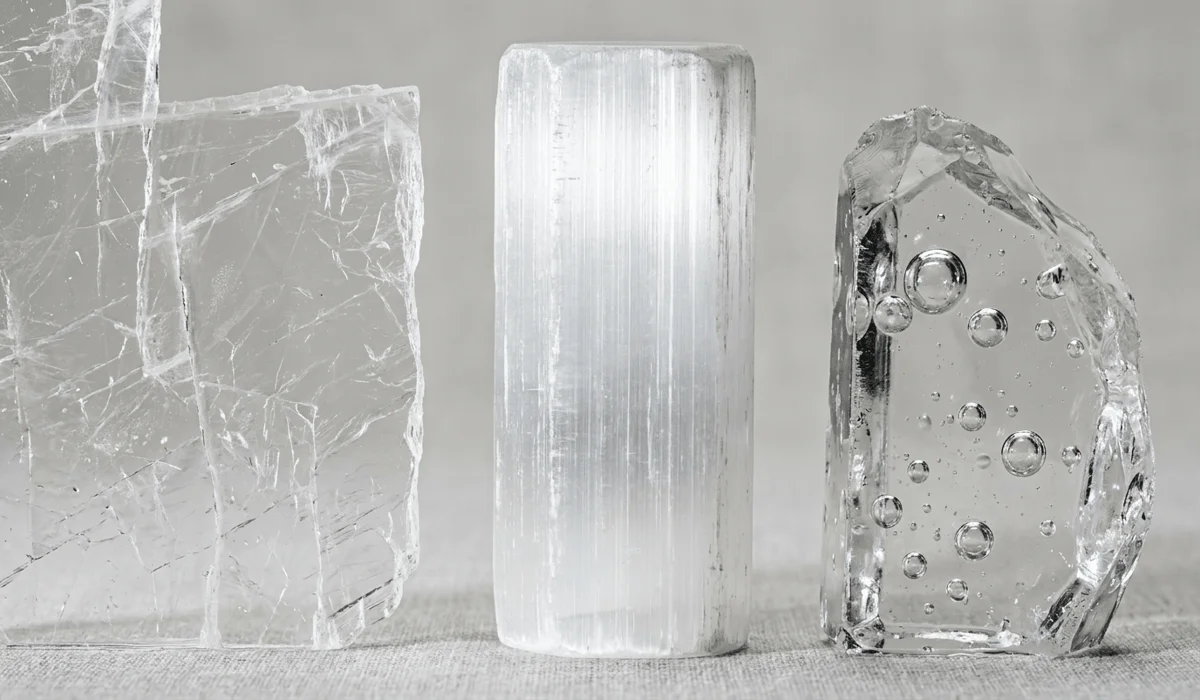
Real vs. Fake Selenite: Differences Between True Selenite and Satin Spar
Definition
Gypsum crystal mineralogy encompasses hydrous calcium sulfate minerals, forming four distinct structural varieties in nature: true selenite, satin spar, desert rose, and gypsum flower. Each variety possesses unique growth patterns, though all share the exact same soft chemical backbone. Understanding these differences helps collectors distinguish high-grade minerals from synthetic mass-market pieces.
True selenite specifically refers to windowpane-clear, large tabular crystals that allow light to pass directly through with minimal distortion. These rare, glassy formations were historically used as natural glass substitutes in ancient buildings. They exhibit smooth cleavage planes and clear sheet structures rather than fibrous strands.
Satin spar represents the fibrous variety of gypsum, characterized by closely packed parallel crystal fibers that channel light along their length. When polished into wands, towers, or bowls, it displays a distinct luminous shimmer. Artificial or fake imitations consist of molded glass, resin, or synthetic plastic created to replicate this silky sheen artificially.
Origin & Materials
Natural gypsum deposits form through the evaporation of ancient saltwater lakes and inland seas over millions of years. As water levels receded, calcium and sulfate ions concentrated into vast underground evaporite beds. These geological formations created ideal conditions for pure mineral crystallization.
Transparent true selenite develops in quiet, undisturbed evaporite basins, allowing massive, flat optical selenite sheet slabs to crystallize slowly. This uninterrupted growth process yields stunning optical transparency without internal stress lines or cloudiness. Mineralogists catalog these rare formations at research centers like the Gemological Research Institute to study crystal habit development.
Fibrous satin spar forms within sedimentary rock veins where intense pressure forces gypsum crystals to grow in tightly aligned, silky threads. These compact vertical fibers naturally channel ambient light, creating a silky pearlescent luster. Synthetic counterfeits are industrially manufactured using acrylic resins or molten glass poured into commercial molds shaped like polished towers or spherical spheres.
Basic Characteristics
When examined closely under bright direct light, satin spar exhibits a pronounced chatoyancy cat eye effect across its surface. This phenomenon creates a soft, shifting band of shimmering white light as you rotate the specimen in your hand. The optical effect occurs because light bounces off thousands of parallel mineral fibers.
Genuine true selenite displays glass-like clarity, smooth cleavage planes, and natural internal veil inclusions rather than fibrous directional lines. It feels cool to the touch and looks like a sheet of pure frozen ice or ancient window glass. Tiny internal fractures often create subtle rainbow flashes along natural fault lines.
A fake selenite plastic glass imitation item feels noticeably cold to the touch (glass) or surprisingly light and warm (plastic). Counterfeits often display artificial air bubbles, sharp mold lines, or unnatural perfect symmetry that never occurs in raw earth minerals. Performing a gentle selenite scratch test easily distinguishes soft gypsum from hard glass, as real gypsum yields easily under a human fingernail.
| Mineral Feature | True Selenite | Satin Spar | Fake Glass / Plastic |
|---|---|---|---|
| Mohs Hardness | 2.0 (Scratches with fingernail) | 2.0 (Scratches with fingernail) | 5.5 - 6.5 (Resists fingernail) |
| Visual Structure | Flat, clear, optical sheets | Dense, fibrous parallel columns | Uniform molded body, air bubbles |
| Light Effect | High glass clarity, light transmission | Silky chatoyancy cat-eye sheen | Dull reflection or glassy glare |
| Water Reaction | Slowly dissolves / loses polish | Splits fibers / dulls surface | Completely waterproof |
Spiritual Meaning & Symbolism
Traditional Symbolism
Named after Selene, the Greek goddess of the moon, this mineral traditionally symbolizes lunar serenity, purity, and intuitive reflection. Ancient cultures associated its ethereal glow with moonlight trapped within solid earth formations. This historical heritage makes it a popular stone for quiet contemplation and bedtime rituals.
The translucent nature of genuine gypsum reflects the concept of unclouded perception, mental clarity, and shedding emotional heavy energy. When placed in a living space, its bright appearance serves as a visual reminder to let go of daily worries. Our team often recommends it for individuals establishing peaceful home sanctuaries.
Ancient traditions revere the stone as a bridge between spiritual light and physical grounding, encouraging stillness during daily meditation. Its calming visual presence helps reduce visual clutter in modern interiors. Exploring traditional practices reveals timeless wisdom regarding environmental harmony and personal mindfulness, which we detail further in our Crystal Healing Insights article.
Chakra Associations
Highly regarded for its resonance with upper energy centers, this stone facilitates crown chakra crystal energy expansion and mental opening. It helps practitioners create a clean atmosphere for visualization exercises and quiet breathwork. Modern energy workers utilize both varieties to foster a sense of spaciousness around the head.
It encourages harmony between the third eye chakra and crown chakra to support mental focus and peaceful meditative states. By soothing hyperactive thoughts, it allows practitioners to drop deeper into stillness during daily mindfulness sessions. This gentle alignment helps maintain emotional balance during hectic work weeks.
We recommend using gypsum pieces during subtle energy clearing to sweep away lingering stress from your energetic field. Here are key energetic focal points supported by genuine gypsum minerals:
- Crown Center: Expands higher awareness, mental clarity, and spiritual reflection.
- Third Eye: Calms overactive mental chatter and encourages intuitive visual clarity.
- Soul Star: Promotes connection with universal light and uplifting subtle energies.
- Auric Field: Acts as an energetic broom to sweep away stagnant personal stress.
By clearing blockages throughout the entire subtle energy system, these crystals create an open channel for positive daily intentions.
Cultural or Historical Context
Historically, large sheets of clear gypsum were utilized as window panes in ancient Roman architecture and European chapels prior to widespread glass manufacturing. These translucent windows allowed soft, diffused sunlight to filter into sacred spaces without exposing interiors to harsh outdoor weather elements. Historical archives document these architectural uses extensively.
Valued across centuries by healers and mystics, gypsum served as a protective boundary stone for quiet sanctuaries and reflective spaces. Ancient records show that carved gypsum bowls were prized for holding sacred items and ceremonial offerings. The stone's gentle radiance made it a cherished decorative element in historical temples.
Traditional practices incorporated wide flat plates of clear gypsum as reflective surfaces for inward focus and spiritual observation. Practitioners believed that staring quietly into a polished sheet helped still the active mind. Today, modern crystal enthusiasts maintain these centuries-old traditions in contemporary home wellness spaces.
Benefits & Intentions
Commonly Associated Intentions
Embraced in personal spaces as an aura cleansing crystal tool, gypsum supports a serene, harmonious atmospheric feeling throughout your living areas. Placing a raw wand or polished tower on a windowsill creates an inviting focal point that catches natural daylight. Many clients report that its presence brings a subtle sense of order to busy rooms.
It is frequently integrated into daily wellness routines to help dissolve feelings of mental clutter and lingering emotional tension. When workday demands feel overwhelming, taking a moment to gaze at its shimmering surface offers a soothing pause. To build a balanced home atmosphere, explore our Lifestyle Inspiration Guide for practical wellness tips.
Leveraged during personal reflection, these minerals cultivate high vibration selenite benefits that promote emotional balance and peaceful thoughts. When comparing selenite vs satin spar metaphysical energy, practitioners agree that both varieties share equivalent subtle qualities because their chemical composition is identical. Synthetic plastic or glass counterfeits, however, lack these natural vibrational characteristics entirely.
Mindfulness & Personal Practices
Placed nearby during meditation sessions, a gypsum stone helps anchor focus and fosters an environment conducive to quiet breathing exercises. Holding a smooth stone in your lap provides a gentle physical tactile point that brings your mind back to the present moment. This grounding habit prevents mind-wandering during longer practice sessions.
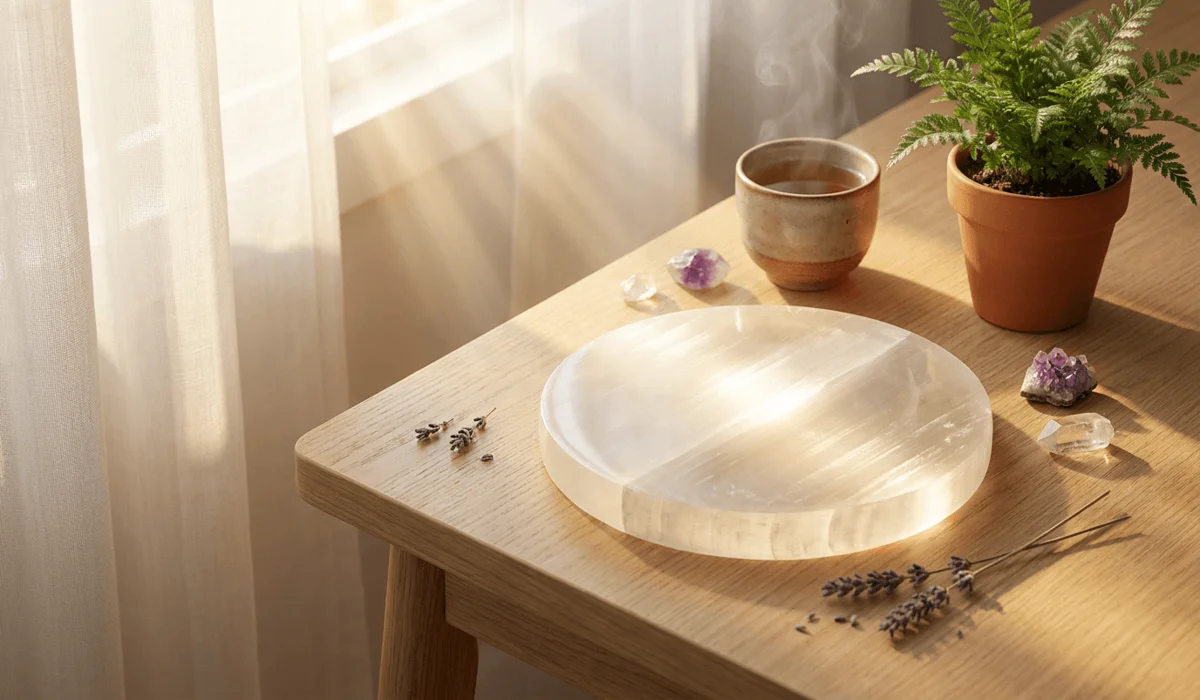
Utilized in space-clearing rituals, placing a selenite charging plate near entryways or workstation areas keeps your daily environment feeling fresh. Resting your favorite gemstone jewelry on a flat plate overnight offers a delightful ritual for resetting your intentions. This simple habit keeps your sacred items organized and visually serene.
Paired alongside other natural gemstones, gypsum supports clean, organized energetic grids and mindful collection management. Its neutral, translucent appearance complements colorful crystals like amethyst, rose quartz, or black tourmaline beautifully. Building mindful displays allows collectors to showcase earth's natural artistry in any room.
How to Wear Selenite?
Left Hand vs Right Hand (Feng Shui Logic)
In traditional crystal practice and Feng Shui philosophy, choosing which hand wears your gemstone bracelet depends on your personal energy goals. The left wrist is traditionally considered the receptive side, while the right wrist represents the projective side. Understanding this balance helps you wear your accessories with clear intention.
Wearing selenite jewelry on the left wrist is traditionally practiced to encourage inner stillness, energetic absorption, and intuitive balance. On this receptive side, the soft mineral energy helps calm internal restlessness and absorbs soothing light vibes. It is ideal when you need emotional comfort during stressful periods.
Wearing bracelets on the right wrist aligns with projective intentions, helping release mental fatigue and setting clear boundaries in chaotic environments. On the projective side, the stone acts as an active clearing tool to push away outer chaos and environmental noise. Choosing which side to wear depends on whether your daily focus is internal calm or environmental boundary-setting.
When People Choose to Wear It
Many individuals select natural gypsum bracelets during busy workdays or stressful travel to maintain a personal sense of composure. Having a physical gemstone against your wrist serves as a gentle reminder to take slow, grounding breaths throughout the day. The smooth beads feel comfortable during long hours at a computer keyboard.
Worn during yoga classes, sound baths, or quiet morning routine practices, these bracelets enhance your personal connection to mindfulness. The shimmering sheen of natural satin spar beads adds an elegant, peaceful touch to comfortable leisure clothing. Practitioners appreciate how the natural mineral stays light and delicate on the skin.
Gemstone bracelets are also chosen as subtle daily accessories by individuals who are particularly sensitive to overwhelming crowds or noisy surroundings. For reliable insights into mineral authenticity, enthusiasts consult resources like Crystal Council Resources when selecting wearable stones. Wearing a genuine piece provides a personal sanctuary of calm wherever you go.

Intention-Setting Practices
Hold your gemstone gently during morning quiet time to set personal boundaries and cultivate mental clarity for the day ahead. Visualize soft white light flowing through the mineral fibers to clear away lingering morning grogginess. Repeating a positive affirmation while holding the stone anchors your mental focus effectively.
Cleanse your mental space by taking three deep breaths while focusing on the natural light reflecting through the polished surface. Notice how light shifts across the fibrous texture as you gently move the stone in your palm. This quick sensory exercise grounds your attention immediately.
Discover authentic gemstone pieces crafted to enhance your daily reflection practices in our curated Spiritual Crystal Collection. Adding genuine minerals to your everyday routine supports a mindful, intention-driven lifestyle.
Selenite vs Similar Stones
Selenite and Satin Spar vs Clear Quartz
Clear quartz consists of silicon dioxide with a hexagonal crystal system, whereas selenite is a hydrous calcium sulfate belonging to the monoclinic system. While both present bright white or transparent visual appeal, their mineral chemistry and durability could not be more different. Recognizing these distinctions prevents accidental damage to your stones.
Clear quartz measures a robust 7 on the Mohs scale, while selenite measures a very soft 2, making quartz far more resistant to daily wear. Quartz can easily scratch metal, glass, and softer stones without sustaining any surface damage itself. In contrast, gypsum can be scratched easily with a simple fingernail or copper coin.
Quartz features a bright, vitreous glass shine and cold surface density, while satin spar features a silky fibrous luster and true selenite has a soft, pearly sheen. Quartz is completely water-safe and durable for daily immersion, whereas gypsum dissolves over time when wet. Understanding these physical traits helps collectors care for each mineral properly.
Below is a stunning clear quartz specimen designed for clarity and deep meditation focus during daily personal rituals:

Selenite and Satin Spar vs Optical Calcite
Optical calcite, also known as Iceland spar, is a calcium carbonate mineral famed for its strong double refraction optical effect. When placed over printed text, optical calcite splits light rays, causing text underneath to appear doubled. True selenite breaks into clean flat sheets but does not produce this double-image effect.
Selenite breaks easily along flat cleavage planes in thin individual sheets without producing the rhombohedral double imaging characteristic of calcite. True selenite sheets look like window glass, while optical calcite crystals resemble slanted, clear rhombohedral blocks. Their structural geometry differs significantly under close visual examination.
Calcite registers a 3 on the Mohs hardness scale and reacts vigorously with mild acid, whereas selenite measures a softer 2 and does not effervesce in household vinegar. If you place a drop of vinegar on calcite, it fizzes gently due to carbonate gas release. Gypsum remains inert in mild acid, confirming its sulfate chemistry.
To see real physical comparisons between optical selenite sheets, fibrous satin spar, and common imitations, watch this detailed demonstration video:
Video source: YouTube
Author: satincrystals
Original video link: https://www.youtube.com/watch?v=1cfiEOjw9Kc
Who Is Selenite Suitable For?
Chakra or Energy Alignment
This mineral is ideal for individuals seeking to open and balance their higher energy centers, particularly those focusing on crown chakra reflection. Its luminous appearance helps quiet distracting mental noise during evening relaxation. Anyone building a quiet corner for contemplation will appreciate its visual clarity.
It is exceptionally well-suited for practitioners who feel easily weighed down by dense, chaotic environments and seek uplifting sensory focal points. Placing a bright tower on your desk provides an immediate visual breather during intense work hours. The stone's gentle white light adds a clean, calming aesthetic to any room.
Beneficial for anyone cultivating mindfulness practices aimed at mental clarity, patience, and peaceful presence, gypsum fits seamlessly into modern wellness routines. Its soft texture invites gentle handling and conscious touch. Working with soft natural minerals encourages a slower, more deliberate approach to crystal care.
Zodiac or Astrological Associations
Gypsum is commonly connected to the sign of Cancer due to its historical association with lunar energy, intuition, and emotional fluidness. Cancerians often appreciate interior decor elements that evoke soothing water reflections and moonlight glow. The stone's soft aesthetic aligns beautifully with Cancer's reflective nature.
It is also frequently favored by Taurus individuals seeking soft grounding accompanied by mental relief and calm environmental organization. Taurus appreciates tangible beauty and solid earth textures in their personal living quarters. A polished satin spar bowl satisfies both aesthetic elegance and tactile comfort.
Universally adaptable for all zodiac signs, gypsum energy is traditionally considered neutral, soft, and universally welcoming to every practitioner. You do not need to follow astrology to enjoy the serene aesthetic presence of these genuine earth formations. Anyone seeking visual harmony in their living space can benefit from their beauty.
Lifestyle & Personal Intentions
These crystals are perfect for home office setups, study spaces, or bedside tables where calm, focused thinking is desirable. Having a bright mineral nearby reduces visual monotony during long reading sessions. It creates an organized, clean atmosphere that inspires clear thought.
They are highly favored by crystal collectors who appreciate the mineralogical beauty of chatoyant fibrous structures and natural optical clarity. Examining the directional growth lines of raw satin spar under magnification offers endless fascinating details for mineral enthusiasts. Natural variations ensure that every carved piece remains entirely unique.
Suitable for minimalists seeking simple, natural interior decor elements, white gypsum pieces convey light and clean aesthetics without cluttering visual space. A simple polished wand or bowl fits seamlessly into contemporary, Scandinavian, or zen interior design schemes. Its neutral tone blends effortlessly with wooden furniture and leafy houseplants.
How to Cleanse, Charge, and Care for Selenite
Cleansing Methods
Always prioritize waterless crystal care, as hydrous calcium sulfate is water-soluble and will slowly dissolve or lose its polish when submerged. Even brief exposure to running tap water can dull the shiny finish of polished satin spar or cause fibrous strands to split apart. Never soak your gypsum specimens in salt water bath solutions.
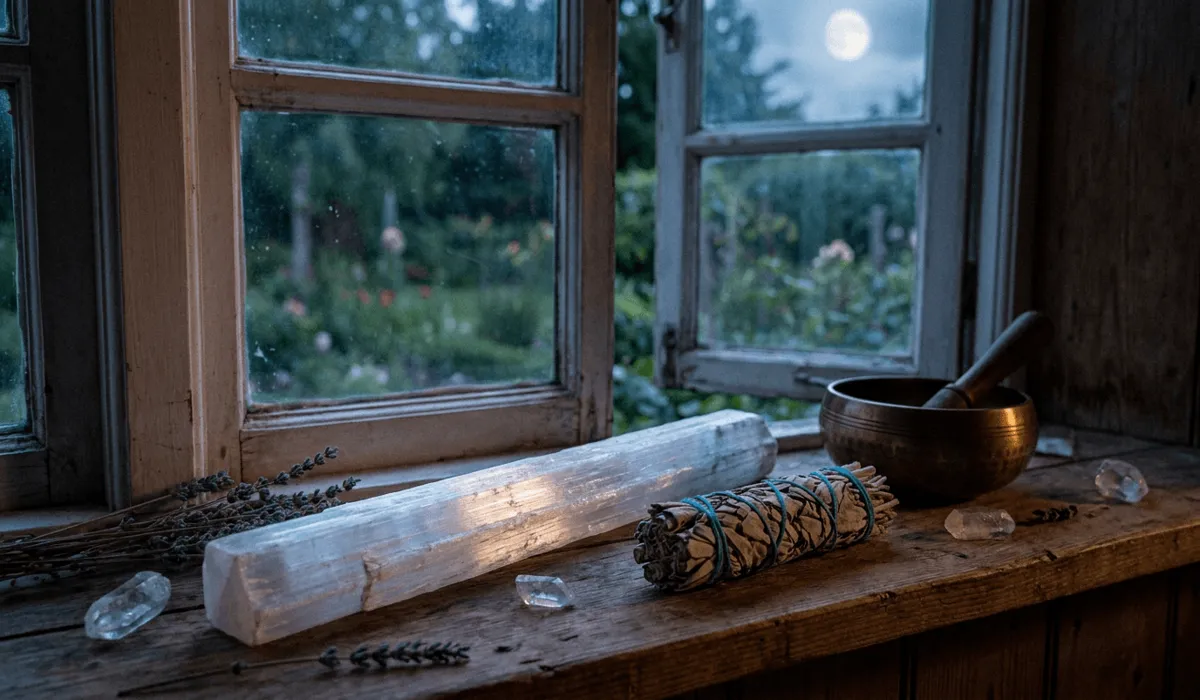
Utilize dry smoke cleansing by passing natural botanical bundles like sage, palo santo, or incense gently around the mineral. The cleansing smoke washes over the surface without causing any physical or chemical harm to the delicate stone structure. This method is safe, traditional, and visually rewarding for evening rituals.
Apply sound frequency cleansing using singing bowls, tuning forks, or soft bells to clear stagnant vibrations without physically touching the stone. Acoustic vibrations resonate through the room, refreshing the atmospheric feel around your mineral collection instantly. Additional mineral care guides can be explored through Healing Crystal Directories online.
Charging Practices
Place your stone under gentle indirect moonlight overnight, particularly during a full moon phase, to restore its clean aesthetic feeling. Resting your minerals on a clean wooden windowsill allows them to bathe in silvery moonlight safely away from outdoor moisture. Moonlit charging is a peaceful monthly ritual enjoyed by many collectors.
Rest smaller gemstones directly upon a flat plate or bowl for several hours to support routine crystal clearing practices. The smooth, bright surface of the plate keeps your rings and palm stones neatly organized in one designated space. It creates a serene display table for your favorite everyday crystals.
Utilize natural daylight for short periods, avoiding intense direct sunlight for extended hours to prevent heat stress or surface dulling. Early morning sunlight provides a soft glow that highlights the silky chatoyancy of satin spar beautifully. Always bring indoor minerals inside before afternoon heat peaks.
Daily Care & Storage
Be mindful of the Mohs hardness rating of 2; a standard fingernail or copper coin can easily leave permanent scratch marks on polished surfaces. Handle your towers and bowls by their base, using two hands to prevent accidental drops on hard tiled floors. Treat soft minerals with the same care as delicate glass crystalware.
Store soft gypsum separately from harder gemstones such as quartz, amethyst, or garnet in a soft cloth pouch or lined jewelry box. Allowing hard stones to rub against soft gypsum will quickly scratch the smooth polish of your favorite pieces. Dedicated compartments keep your collection looking brand new for years.
Dust gently using a dry, clean microfiber cloth, avoiding liquid chemical cleaners, soaps, or abrasive brushes entirely. A soft-bristled makeup brush works wonderfully for sweeping dust out of intricate carved crevices or raw fibrous grooves. Simple dry wiping maintains the pristine shine of your natural minerals effortlessly.
Frequently Asked Questions
Q: Is Satin Spar considered fake Selenite?
A: No, Satin Spar is not fake Selenite; both are natural, authentic varieties of the exact same mineral family (gypsum). While trade labels frequently use the word "Selenite" to sell fibrous Satin Spar, both share identical chemical compositions and metaphysical properties. Satin Spar forms in silky, fibrous columns exhibiting chatoyancy, while true Selenite forms in clear, window-like transparent sheets.
Q: How can I test if my Selenite is real or made of glass/plastic?
A: Perform a gentle scratch test on an inconspicuous spot; genuine gypsum scores a 2 on the Mohs scale and scratches easily with a fingernail, whereas glass or hard plastic will not. Inspect the physical appearance; natural gypsum contains subtle internal veil inclusions and growth lines, whereas plastic or glass counterfeits often feature trapped air bubbles or uniform clarity. Check thermal conductivity; glass feels noticeably cold to the initial touch, while plastic melts under hot point testing, unlike natural mineral specimens.
Q: Does Satin Spar have the same energy and metaphysical benefits as True Selenite?
A: Yes, from a mineralogical and subtle energy perspective, Satin Spar and True Selenite share identical hydrous calcium sulfate chemistry. Practitioners view both varieties as possessing equivalent high-vibration, clearing, and crown-chakra-aligning qualities. The choice between the two usually comes down to visual preference for Satin Spar's silky sheen versus True Selenite's glassy transparency.
Q: Can I wash or cleanse my Selenite crystal in water?
A: No, you should never wash or soak Selenite or Satin Spar crystals in water. Gypsum is a water-soluble mineral that can dissolve, lose its polished sheen, splinter, or become structurally weakened when exposed to liquids. Stick exclusively to dry clearing methods, such as sound baths, incense smoke, moonlight, or gentle wiping with a dry cloth.
Q: Which chakra is Selenite associated with?
A: Selenite and Satin Spar are predominantly associated with the Crown Chakra, located at the top of the head. This mineral is also used to balance the Third Eye Chakra and the Soul Star Chakra (located above the physical head). Its clear light and subtle vibration are traditionally believed to support overall energetic alignment across all human energy centers.
Conclusion & Gentle Next Step
Genuine selenite and satin spar are both authentic, beautiful forms of natural gypsum, distinguished primarily by their crystal habits and visual appearance. Whether you adore the windowpane clarity of optical sheets or the shimmering cat-eye sheen of fibrous towers, both bring timeless earth beauty into your home space.
Spotting artificial glass or plastic imitations is straightforward once you know what to look for. By applying a gentle fingernail scratch test and checking for natural internal veil inclusions, you can quickly filter out synthetic counterfeits from genuine mineral specimens.
Remember that caring for natural gypsum requires waterless cleansing methods, gentle handling, and separate storage away from harder gemstones. Protecting your soft minerals from liquid immersion ensures that their silky sheen and bright polish remain luminous for years to come.
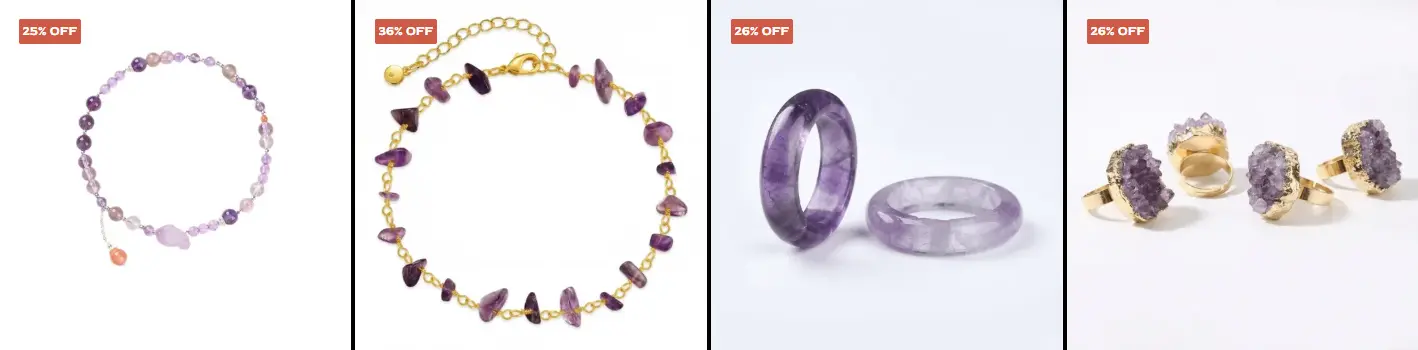
Feel empowered to choose the gypsum variety that speaks most to your personal intuition and home decor style. Explore our naturally sourced mineral pieces and mindful intention tools in our Spiritual Crystal Collection to find the item that best aligns with your space.
Disclaimer: The information provided in this article is for educational, cultural, and informational purposes only. It is not intended as medical, legal, financial, or professional advice. Readers seeking health or wellness treatments should consult qualified professional healthcare providers.

Longyi Luck
Longyi Luck is a Feng Shui practitioner and spiritual researcher who blends traditional year-based wisdom with modern lifestyle insights, specializing in Feng Shui, spirituality, meditation, and mindfulness. With years of dedicated study and practice, Longyi explores cultural symbolism and the practical application of ancient wisdom to help individuals cultivate balance, clarity, and harmony in everyday life. Since 2020, Longyi has been committed to translating timeless traditions into accessible guidance for the modern world.
longyi@auraandluck.com



.webp?w=800&h=800)
.webp?w=800&h=800)