
Cinnabar spots on Dzi beads are microscopic reddish mineral speckles that develop naturally inside chalcedony and agate. Collectors often call them blood spots dzi beads, and seekers look for them to experience grounding stability. In this guide, our team at Aura & Luck shares insights into their mineral roots, spiritual meaning, and how to care for these ancient treasures.
- 💎 True Mineral Identity: These red dots are harmless iron oxide inclusions agate rather than toxic mercury sulfide.
- 🌿 Sacred Himalayan Lore: Traditional cultures view these markings as signs of vitality, maturity, and spiritual merit.
- 🔮 Root Chakra Balance: The crimson hue grounds scattered thoughts and helps anchor personal intentions.
- ✨ Collector Rarity: Authentic spots appear deep within the stone rather than on the polished surface glaze.
What Are Cinnabar Spots (Red Dots) on Dzi Beads?
Many collectors wonder what causes the crimson specks seen inside precious Himalayan stones. Understanding these unique marks helps you appreciate both their physical geology and their cultural value.
Definition and Physical Appearance
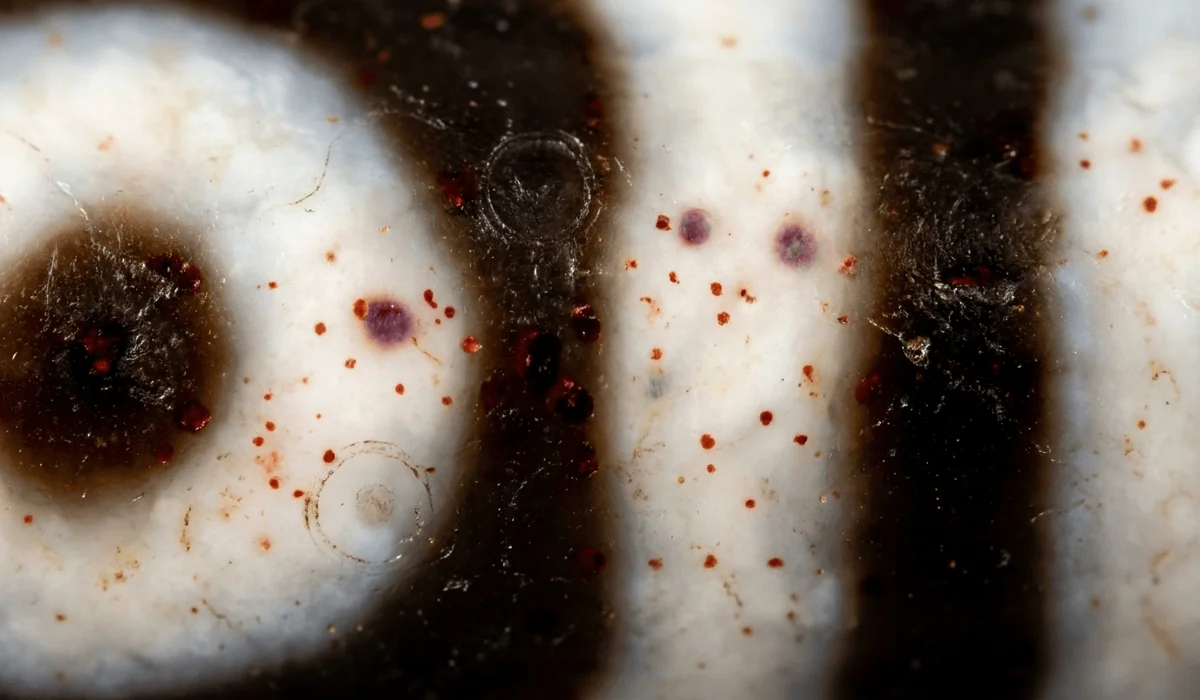
Cinnabar spots appear as tiny pinprick dots beneath the waxy surface of Tibetan agate. They range in color from soft rust to deep burgundy and vermilion red. When examining these stones, we see that the specks sit suspended at different depths inside the translucent chalcedony matrix.
Mineral Origin and Agate Chemistry
While historically named after the mercury ore cinnabar due to their rich red color, modern testing shows a very different story. Mineral studies from organizations like the Gemological Institute of America reveal that quartz inclusions often consist of harmless iron oxides. Over deep geological time, trace amounts of iron and hematite oxidize naturally within the microcrystalline quartz structure.
As explained in mineralogy entries on Online Free Encyclopedia, chalcedony forms with various microscopic mineral clusters that react to environmental changes. Natural temperature shifts and gentle mineral oxidation cause these microscopic pockets to turn red. They remain safely sealed inside the rock, creating non-toxic red dots on dzi beads.
Video source: YouTube
Author: Creative Arts
Original video link: https://www.youtube.com/watch?v=8COGy2sA0JM
Authentic Dzi Bead Characteristics and Weathering Marks
True antique tibetan beads display distinctive surface features alongside their internal red spots. You will often see circular indentations called dzi bead weathering marks scattered across the stone. These natural signs of age confirm that the chalcedony matured through centuries of dedicated handling.
Spiritual Meaning & Symbolism of Cinnabar Spots
Beyond their physical beauty, these crimson speckles hold deep significance in Himalayan spiritual traditions. Sacred art and meditation practices honor them as potent talismans of life force and lineage.
Traditional Himalayan and Tibetan Symbolism
In Himalayan culture, elders poetically refer to these marks as the living blood of the bead. They believe that a bead develops these specks after absorbing sacred prayers and recitations over generations. When these spots emerge, custodians celebrate them as signs of rising vitality and accumulated spiritual merit.
Root Chakra and Energetic Grounding
The rich crimson hue resonates deeply with the root chakra, known traditionally as Muladhara. By working with root chakra agate beads, you can steady restless feelings and support healthy physical awareness. In traditional energetic teachings, grounding stones support the free movement of Chi (气) through the body meridians.
Cultural Lore: The Living Stone Concept
Himalayan stories often describe Dzi beads as responsive entities that mirror their owner's devotion. Some keepers report that their stone's internal red speckles become clearer over decades of mindful wear. While modern science attributes this to body warmth and polished luster, cultural lore celebrates this intimate bond between person and stone.
| Feature | Cinnabar Spotted Dzi Bead | Standard Agate Dzi Bead | Raw Cinnabar Ore |
|---|---|---|---|
| Primary Mineral | Chalcedony with Iron Inclusions | Banded Chalcedony Quartz | Mercury Sulfide (HgS) |
| Safety Level | 100% Safe for Daily Wear | 100% Safe for Daily Wear | Toxic; Unsafe for Raw Skin |
| Chakra Alignment | Root Chakra (Muladhara) | Third Eye & Solar Plexus | Base Root Energy |
| Hardness (Mohs) | 6.5 to 7.0 | 6.5 to 7.0 | 2.0 to 2.5 |

Benefits & Intentions Associated with Cinnabar Dzi Beads
People across the globe wear these beads to cultivate steady mindfulness and balanced thoughts. Setting conscious intentions with your bead transforms it into a daily touchstone for personal growth.
Grounding and Centering Intentions
Holding a bead during seated meditation helps quiet a racing mind. Its smooth, cool surface acts as an anchor whenever daily stress pulls your focus away. Many practitioners use this physical texture to remind themselves to breathe slowly and release tension.
Protective Talisman Energy
Centuries of tradition celebrate the bead's protective talisman energy in shielding against draining atmospheres. When navigating crowded spaces or high-pressure meetings, wearing a grounding stone helps protect your emotional boundaries. To learn more about subtle energetic balancing, explore articles on Holistic Crystal Practice.

Mindful Longevity and Vitality Practices
The bright crimson flecks inspire habits centered on long-term wellness and daily resilience. Wearers often pair their beads with mindful breathwork, outdoor walks, and purposeful rest routines. Reflecting on the enduring nature of agate encourages you to build steady strength over time.
How to Wear Dzi Beads with Cinnabar Spots
Wearing your talisman mindfully allows you to align its physical presence with your personal goals. The way you wear your stone can reinforce whether you seek internal calm or outward resilience.
Left Hand vs. Right Hand (Energetic Flow)
In traditional Eastern philosophies, your hands manage different energetic currents throughout your day. Choosing which wrist carries your bracelet helps direct your daily focus:
- 💎 Left Wrist (Receptive Energy): Wear the bead here to absorb calming, grounding balance and quiet contemplation.
- 🌿 Right Wrist (Projective Energy): Wear the bead here to establish clear personal boundaries and deflect draining external pressures.
- 🔮 Mindful Alternation: Switch sides depending on whether your day calls for peaceful inner rest or confident outward action.
Mindful Styling and Pulse Point Placement
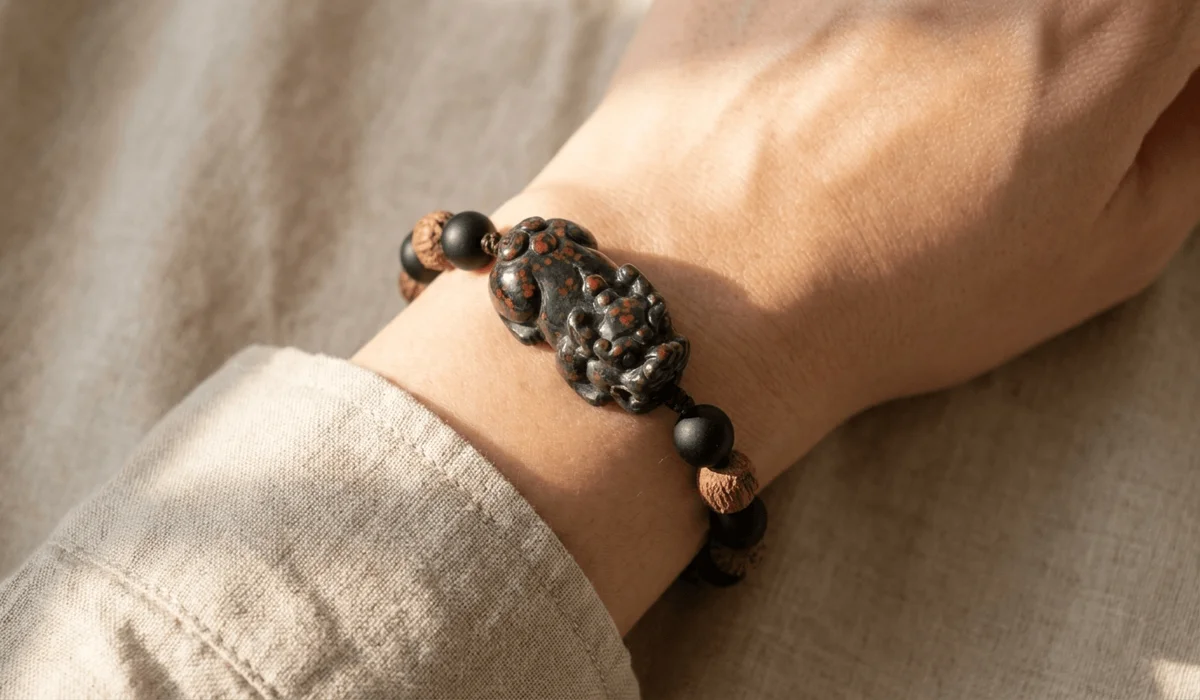
Wearing your bead over the radial pulse point on your wrist keeps its natural weight close to your awareness. Many people combine their focal bead with matte black tourmaline, smoky quartz, or fragrant sandalwood. If you wish to build an intentional wrist stack, browse our handmade Protection Talismans designed for balance.

Intention-Setting and Preparation Practices
Before putting on your bead, take a quiet moment to sit comfortably with both feet flat on the floor. Hold the stone between your hands, close your eyes, and take three long, deliberate breaths. State a simple intention, such as steady presence or calm clarity, to guide your daily actions.
Cinnabar Spots on Dzi Beads vs. Similar Protective Stones
It is helpful to compare these rare inclusions with other stones in the gemstone community. Knowing the mineral differences helps you make informed choices for your collection.
Standard Dzi beads feature etched sacred motifs on smooth chalcedony without any internal crimson speckling. In contrast, cinnabar-marked beads display naturally embedded iron inclusions alongside their classic patterns. Research shared by Gemmological Association Heritage shows that internal mineral growths require specific geological conditions, which explains why spotted beads remain much rarer.
Natural inclusions within agate are ancient snapshots of the earth, proving that true beauty often lies in organic irregularity.
Do not confuse these chalcedony inclusions with raw cinnabar crystal rock. Raw cinnabar is composed of soft mercury sulfide, which is hazardous and unsuitable for unsealed skin jewelry. In a Dzi bead, the red specks are completely safe iron oxides locked permanently inside tough quartz stone.
Who Are Dzi Beads with Cinnabar Spots Suitable For?
Anyone who appreciates natural history, sacred artifacts, and mindful self-care can enjoy wearing these beads. Certain individuals often feel an immediate affinity for their distinct presence.
Energy and Chakra Alignment
These beads are wonderful for people who feel ungrounded, flighty, or mentally overwhelmed by fast-paced routines. Holistic practitioners and caregivers also turn to them to maintain personal energy reserves while supporting others. Placing the stone on your lower body during relaxation helps stabilize your root center.
Astrological and Elemental Resonance
Earth signs like Taurus, Virgo, and Capricorn appreciate the ancient geological roots of agate. Fire signs like Aries, Leo, and Sagittarius can use its steady energy to balance their passionate nature. If you love natural treasures, you can also explore our wider range of Sacred Gemstone Pieces to match your birth chart.
Heritage Collectors and Mindful Observers
Enthusiasts of Himalayan material culture admire these beads for their timeless artistry and organic details. Collectors value authentic wear marks and mineral variations that modern synthetic beads cannot replicate. Wearing a heritage bead connects you directly to centuries of craftsmanship and mindful contemplation.
How to Cleanse, Charge, and Care for Cinnabar Dzi Beads
Proper physical care and mindful cleansing keep your bead looking beautiful for years to come. Here are our recommended practices for regular maintenance.
Energetic Cleansing Methods
Regular cleansing refreshes the energetic presence of your stone after busy weeks. Use these simple, gentle methods whenever your bead feels heavy:
- 💎 Herbal Smoke Cleansing: Gently pass your bead through aromatic smoke of high-altitude juniper, cedar, or natural white sage.
- 🌿 Harmonic Sound Vibration: Place the bead beside a singing bowl or bell while sounding smooth, resonant tones.
- 🔮 Mindful Breath Release: Hold the bead in your hands and exhale three slow breaths while visualizing tension leaving the stone.
Charging and Re-centering Practices
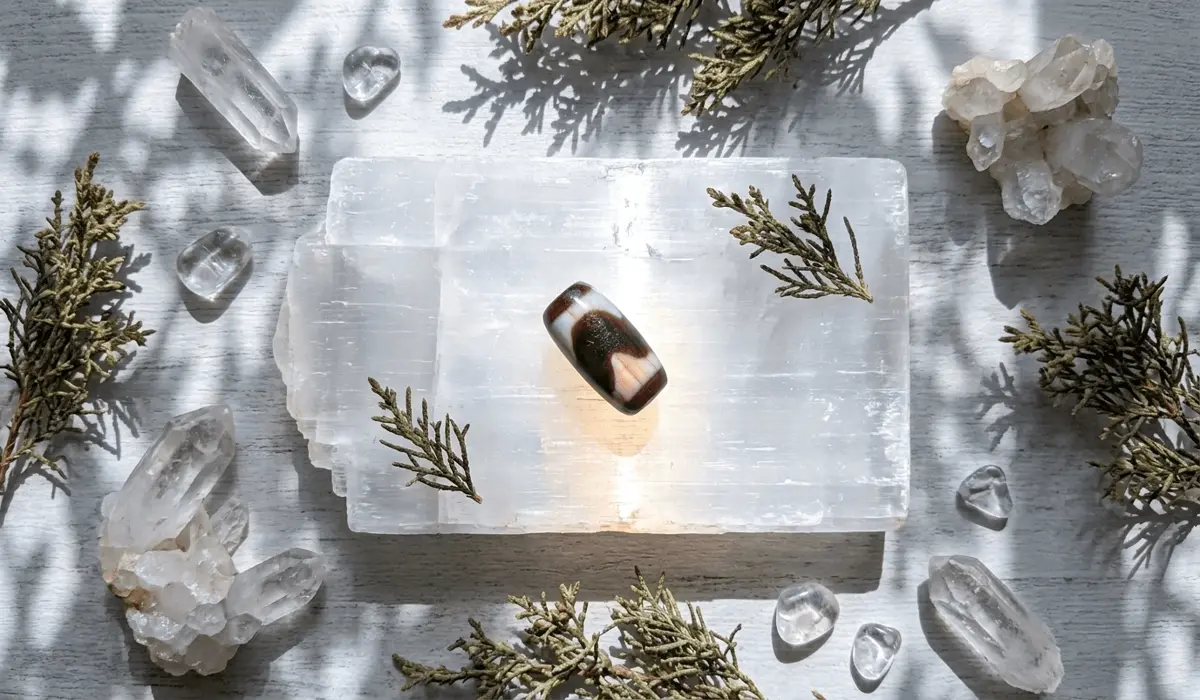
To refresh your bead, leave it under the soft light of a waxing or full moon on a natural wooden tray. You can also rest it on a raw selenite plate overnight for quiet energetic clearing. Placing the bead on clean dry sand or soil reconnects the stone with terrestrial earth energy.
Physical Care, Daily Wear, and Safe Handling
Never clean antique agate beads with harsh chemical detergents, boiling water, or ultrasonic machines. These aggressive methods can damage delicate surface glazes and dry out the stone matrix. Simply wipe your bead with a soft microfiber cloth to remove daily skin oils and preserve its natural waxy glow.
Our Studio Observation: When handling authentic vintage beads, we notice that regular skin contact deepens their luster. Natural skin oils gently condition the chalcedony, making the embedded crimson specks appear richer over time.
Frequently Asked Questions
Q: Are cinnabar spots on dzi beads toxic or safe?
A: Cinnabar spots inside genuine agate Dzi beads are completely non-toxic and safe for continuous skin wear. While the traditional name references mercury sulfide, the internal spots are harmless iron oxide minerals sealed inside solid quartz chalcedony.
Q: Why do red cinnabar spots appear on dzi beads over time?
A: Red spots become more visible due to slow mineral oxidation when trace iron reacts to warmth, ambient oxygen, and natural body oils. Decades of gentle wear also polish the surface stone, allowing deeper internal mineral colors to show through clearly.
Q: Do real dzi beads always have cinnabar dots?
A: Genuine Dzi beads do not always have cinnabar dots. They are an uncommon natural mineral inclusion, and many authentic antique museum beads feature smooth, unmarked agate surfaces.
Q: How to tell if cinnabar spots on dzi beads are authentic?
A: Authentic cinnabar spots sit suspended at various depths inside the translucent stone and show irregular shapes under a jeweler loupe. Fake spots are often painted or printed flat on the outer surface with uniform spacing and identical bright red color.
Q: Which hand to wear dzi bead bracelet with cinnabar dots?
A: Wear your bracelet on the left wrist to receive calm, grounding stability and peaceful internal balance. Wear it on the right wrist to set firm personal boundaries and protect against everyday environmental stress.
Conclusion
Cinnabar spots on Dzi beads show how remarkable geology blends with rich Himalayan spiritual tradition. These crimson flecks of iron oxide inclusions agate turn each stone into a unique symbol of life energy and grounding strength. Whether you wear yours as a meditation anchor or collect it for its cultural heritage, let your bead inspire steady presence and calm focus in daily life.
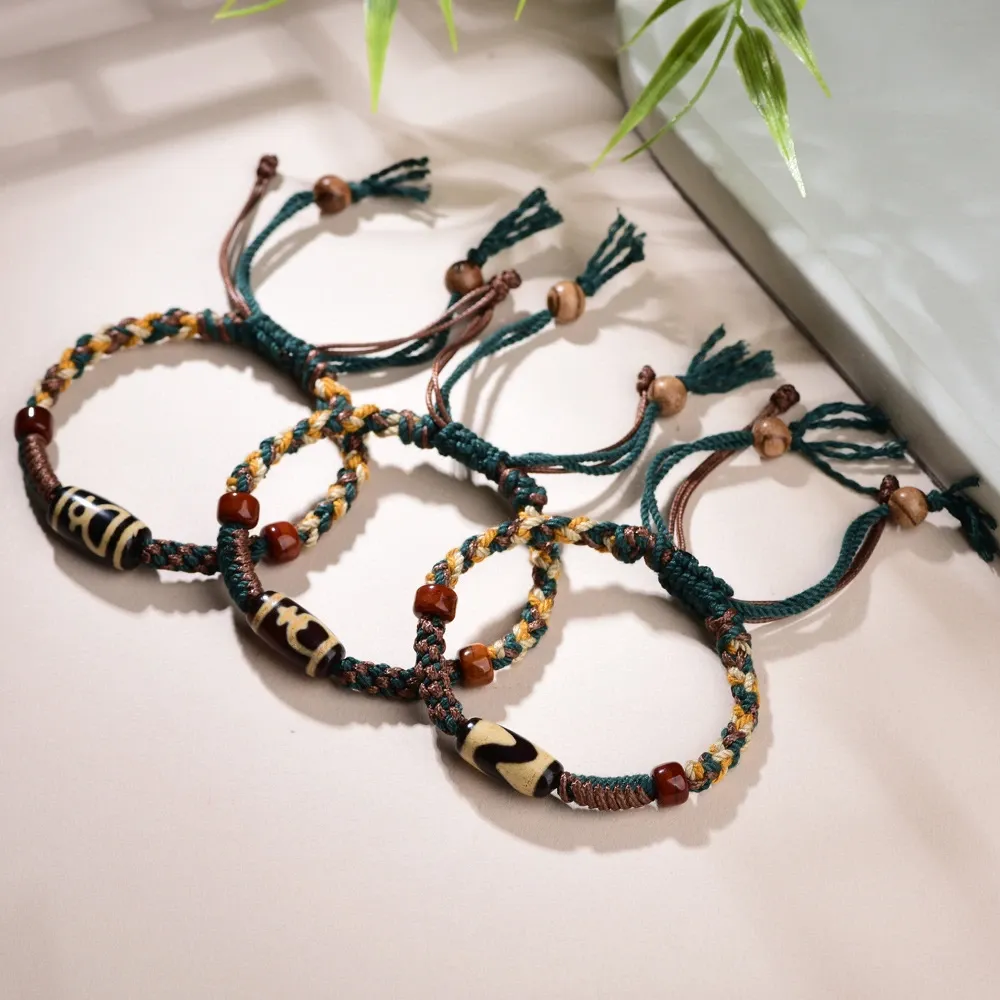
Tibetan-Style Agate Treasure Vase Dzi Bead Bracelet – Abundance, Wisdom & Spiritual Protection
This Tibetan-style bracelet features a cylindrical agate Dzi bead decorated with a black-and-ivory Treasure Vase motif. Multicolor woven cord and complementary agate beads create an earthy, handcrafted composition, while an adjustable sliding closure provides a flexible fit.
Shop NowThis content is provided for informational and cultural exchange purposes only. It does not constitute medical, legal, financial, or other professional advice. Readers should consult qualified professionals regarding personal health concerns or spiritual practices.

Longyi Luck
Longyi Luck is a Feng Shui practitioner and spiritual researcher who blends traditional year-based wisdom with modern lifestyle insights, specializing in Feng Shui, spirituality, meditation, and mindfulness. With years of dedicated study and practice, Longyi explores cultural symbolism and the practical application of ancient wisdom to help individuals cultivate balance, clarity, and harmony in everyday life. Since 2020, Longyi has been committed to translating timeless traditions into accessible guidance for the modern world.
longyi@auraandluck.com