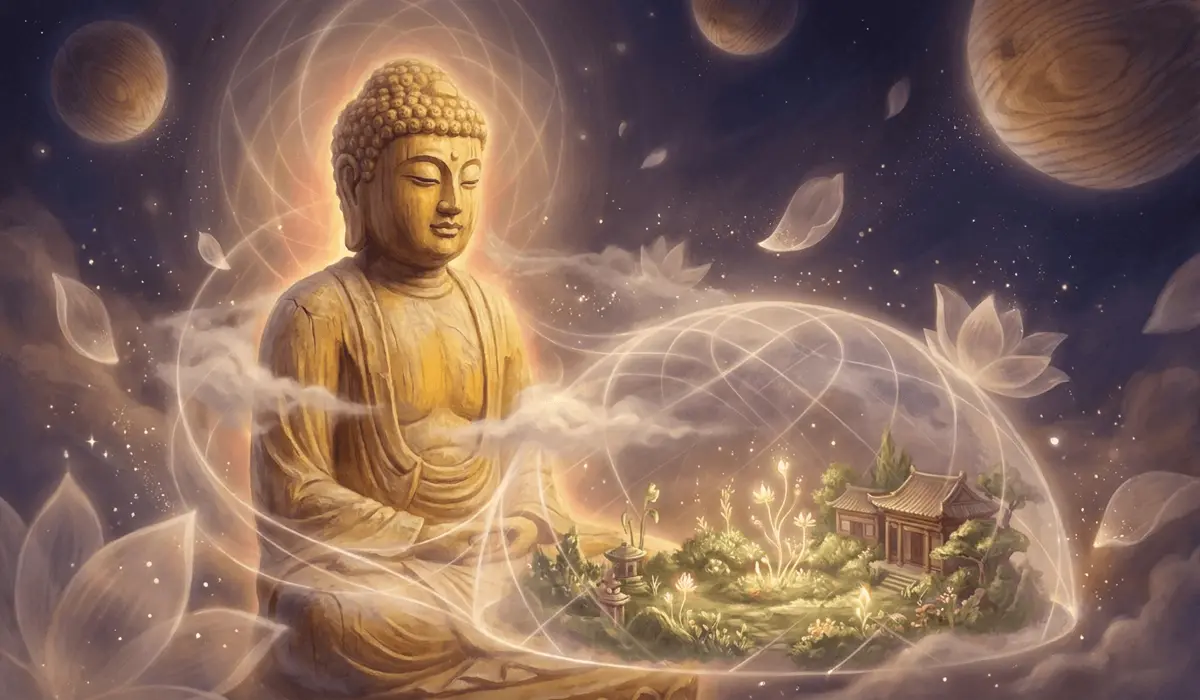
The boxwood Buddha statue meaning: protecting the home sanctuary centers on creating quiet energetic boundaries, inviting grounded peace, and filtering restless Chi (气) from your living space. Many people welcome this sacred wooden carving to soften tension and bring lasting stillness to busy households. In this comprehensive guide, our Aura & Luck team shares the deep symbolism, placement practices, and mindful rituals that make yellow boxwood an enduring domestic guardian.
A hand-carved wooden figure does more than decorate a shelf. It serves as a visual compass that calls wandering thoughts back to compassionate awareness. When carved from dense timber, the Buddha form unifies the strength of the living earth with timeless spiritual teachings.
Daily life can feel fast and demanding. Placing a calm representation of the Buddha in your room creates an intentional pause whenever you step past it. It holds space for your personal growth while protecting the emotional atmosphere of your loved ones.
Here are the core takeaways regarding this sacred home guardian:
- 🌿 Natural Earth Energy: Dense yellow boxwood brings stable grounding to spaces filled with mental fatigue.
- ✨ Silent Protective Boundary: The serene posture deflects harsh emotional friction and calms chaotic room energy.
- 🧘 Daily Contemplative Anchor: The statue provides an immediate focal point for breathwork and mindful reflection.
- 💎 Maturing Organic Beauty: Natural handling creates a lustrous amber finish that deepens across generations.
- 🏡 Elevated Placement Harmony: Respectful eye-level display maintains noble energetic balance across the house.
What Is Boxwood Buddha Statue Meaning: Protecting the Home Sanctuary?
Definition
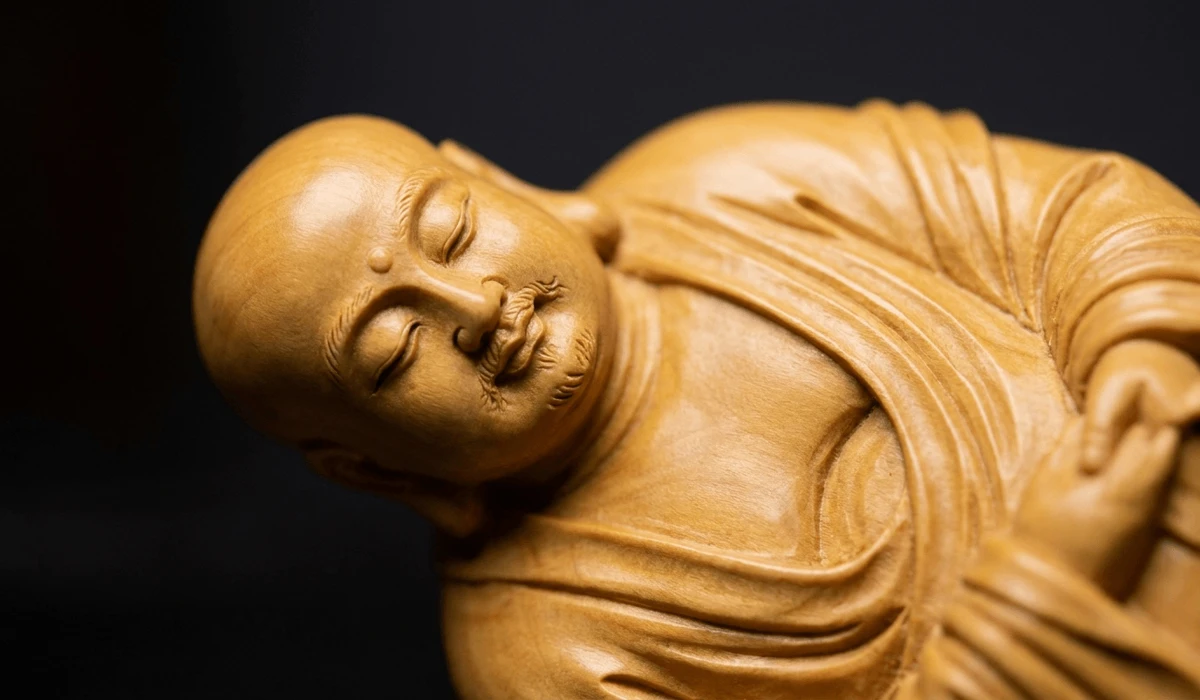
A boxwood Buddha statue is a sacred contemplative sculpture carved from the fine-grained wood of slow-growing yellow boxwood (*Buxus sinica*). It represents the historical Buddha’s awakening, radiating non-attachment, patience, and boundless compassion within everyday rooms. When brought into a living space, the carving acts as an energetic shield that preserves family peace.
The figure does not force power onto a room. Instead, it offers a steady, quiet frequency that reminds everyone to speak gently and act with wisdom. Over time, residents often notice an unmistakable shift toward relaxed patience and clearer thinking.
Origin & Materials
Boxwood has enjoyed a sacred reputation across East Asian craft traditions for over one thousand years. Monastic carvers selected this timber because its grain is unusually tight, smooth, and free of coarse pores. Unlike soft craft woods, yellow boxwood grows at a remarkably slow rate, often taking decades to produce even modest trunk widths.
Because it matures so slowly, master carvers associate the tree with noble perseverance and spiritual patience. Our studio often notes that working with boxwood requires the same patient care as evaluating fine minerals under Gemological Institute Standards. The wood carves cleanly without splintering, allowing artisans to shape hair-thin robe folds and gentle facial features.
This artisanal heritage links modern home guardians directly to historic temple studios. Each finished sculpture carries the focused meditation of the carver who uncovered the peaceful figure from the raw timber. As a result, the finished piece holds an authentic vibration of purposeful mindfulness.
Basic Characteristics
Yellow boxwood possesses unique physical traits that distinguish it from common decorative timbers. When newly finished, it shows a warm honey-gold color that absorbs room illumination softly without harsh glare. This radiant warmth reinforces classical yellow boxwood symbolism associated with solar clarity and inner illumination.
The natural density of the wood gives the carving a surprising, reassuring weight in your hands. It feels solid and substantial, offering an immediate sensory connection to steady earth energy. Furthermore, the wood responds to human touch by developing a glossy, amber-toned patina that becomes more radiant with age.
Artisans treasure this medium because it captures minute emotional expressions. A genuine hand-carved wooden buddha displays serene closed eyes, relaxed shoulders, and natural, fluid robe lines. These smooth surfaces invite gentle admiration and create an immediate sense of emotional ease.
Spiritual Meaning & Symbolism
Traditional Symbolism
The core buddha statue spiritual meaning revolves around unshakeable peace (*upekkha*) and freedom from mental turbulence. The Buddha sits in complete composure, reminding us that external storms cannot disturb a guarded mind. Within domestic life, this steady posture serves as a visual antidote to daily overwhelm.
Traditional wisdom links the golden tone of the timber to the grounding earth element. Earth energy provides stability, physical nourishment, and practical common sense. By introducing this warm element to your rooms, you counteract the hyperactive, fire-driven stress common in modern living.
The slow-growing nature of the tree adds another layer of symbolic power. Boxwood survives on rocky hillsides through harsh weather without twisting or breaking. Displaying it celebrates inner endurance, teaching us that true spiritual resilience develops through quiet consistency rather than force.
Cultural or Historical Context
For centuries, classical scholar-practitioners commissioned boxwood carvings for their private study alcoves and tea rooms. They believed that surrounding their workspace with tranquil natural art calmed the racing intellect. These figures stood beside inkstones and classics to sanctify creative labor and philosophical contemplation.
In classical spatial design, an organic wooden statue bridges natural outdoor vitality with indoor architecture. Wood softens sharp drywall corners, synthetic finishes, and rigid glass surfaces. In this manner, an authentic figure works alongside Holistic Crystal Healing Methods to cleanse stagnant environmental vibrations.
Every authentic carving represents a lineage of devotional meditation through manual labor. The artisan does not simply carve wood; they practice single-pointed awareness with every chisel cut. This deliberate devotion infuses the object with a grounded harmony that permeates any room it inhabits.
Dhyana Mudra and Sacred Gestures
Many protective boxwood statues feature the iconic dhyana mudra symbolism. In this hand gesture, the hands rest gently in the lap, right hand over left, with the thumbs lightly touching to form an energetic triangle. This sacred posture reflects total balance, meditative absorption, and the union of clear insight with loving action.
When placed in central family gathering areas, the Dhyana gesture silently encourages residents to pause before speaking or reacting. The touching thumbs represent the delicate balance of the mind, which breaks whenever anger takes over. Watching this silent gesture reminds us to restore self-control during emotional moments.
Other traditional sculptures display the Abhaya mudra, where the right hand is raised facing outward at chest level. This gesture signals fearless protection and benevolent blessing, actively dispelling anxiety from the entrance of your sanctuary. Both postures deliver profound non-verbal guardianship, reminding the entire family that peace begins within.
Benefits & Intentions Associated with Boxwood Buddha Statue
Commonly Associated Intentions
Many homeowners seek out this sacred carving to reinforce energetic boundaries against chaotic outside influences. Placing the statue near living areas helps dissolve heavy, lingering atmospheric tension brought home from demanding workdays. It acts as an energetic filter, allowing only peaceful, restorative Chi (气) to circulate through the hallways.
Here are several practical intentions you can nurture around your domestic carving:
- 🏡 Home Sanctuary Protection: Building an impenetrable atmosphere of quiet reverence, gentleness, and security.
- 🌸 Restoring Household Harmony: Encouraging respectful speech, emotional softness, and patient resolution between family members.
- 🧘 Personal Grounding: Anchoring personal routines in steady discipline, silent contemplation, and emotional clarity.
- 🕯️ Clearing Mental Fatigue: Dispersing mental clutter caused by excessive digital screen exposure and modern multitasking.
Setting clear intentions gives your sacred decor a definite spiritual purpose. Whenever you glance toward the quiet figure, your mind naturally reconnects with your initial vow to maintain domestic tranquility.
Mindfulness & Personal Practices
A hand-carved figure serves as an irreplaceable focal anchor during seated meditation and breathwork. When eyes wander during silent practice, resting your gaze on the relaxed curve of the carving settles the nervous system. The gentle honey-gold timber offers a soothing sight that does not stimulate or agitate the optic senses.
Many practitioners integrate their sculpture into a dedicated morning altar alongside items from our Spiritual Crystal Collection. Pairing smooth timber with natural gemstones balances dense earth vibrations with high-vibrational mineral clarity. This supportive altar space becomes an inspiring refuge where you start each day with calm purpose.
You can also use the statue to support simple gratitude pauses. Taking three conscious, deep breaths before the figure whenever you enter or exit your front door establishes an energetic buffer. This tiny pause helps leave workplace stress outside while keeping the inner sanctuary completely sacred.
How to Place and Honor Boxwood Buddha Statue
Facing Directions and Feng Shui Logic
Proper spatial orientation ensures the carving radiates protective energy throughout your floor plan. Ideally, position the Buddha facing toward the main entrance of your room or home. This facing direction allows the figure to greet all incoming energy, transmuting restless vibrations into calm awareness before they enter deeper spaces.
Elevation is another vital consideration in classical placement lore. Always place the statue at or above seated eye level on a sturdy, clean shelf, sideboard, or altar console. Looking upward toward the figure reinforces respect, whereas placing it low on the floor generates subconscious disrespect and energetic stagnation.
Ensure that no heavy architectural beams hang directly over the top of the sculpture. Heavy beams exert downward pressure that can compress the flow of spatial Chi (气). Give the carving ample visual breathing room so its peaceful field can expand without obstruction.

Room Considerations and Sacred Boundaries
The most favorable locations for your wooden guardian include formal living rooms, quiet home libraries, home offices, and dedicated meditation spaces. In these rooms, the figure inspires elevated conversation, disciplined focus, and deep physical relaxation. Its grounding presence naturally softens arguments and brings a composed mood to family gatherings.
Certain areas of the home require careful boundaries. To understand how sacred boundaries apply across your private quarters, review our guide to Sacred Home Placement Rules before setting up your altar. Avoiding noisy, utilitarian spots like laundry rooms, utility closets, and bathrooms keeps the spiritual connection pure and honorable.
Following respected Feng Shui Society Guidelines helps you maintain an orderly, clutter-free environment around the statue. Never clutter the surrounding table with car keys, piles of unopened mail, or tangled charging cords. Clutter chokes the energetic circulation, preventing the sculpture from radiating its natural protective influence.
Intention-Setting and Display Practices
Before placing your statue on its permanent stand, perform a mindful space cleansing. Wipe the surface clean with a damp, fragrant cloth, and allow the area to dry thoroughly. Approaching placement with deliberate care transforms an ordinary piece of furniture into an intentional domestic sanctuary.
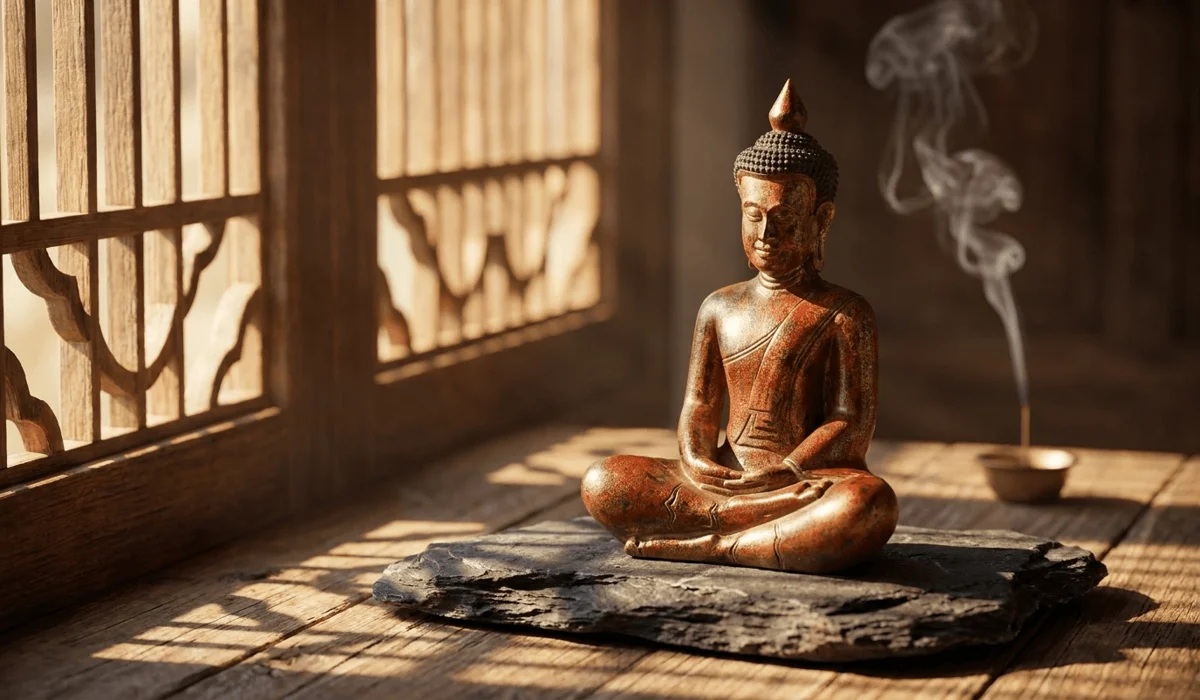
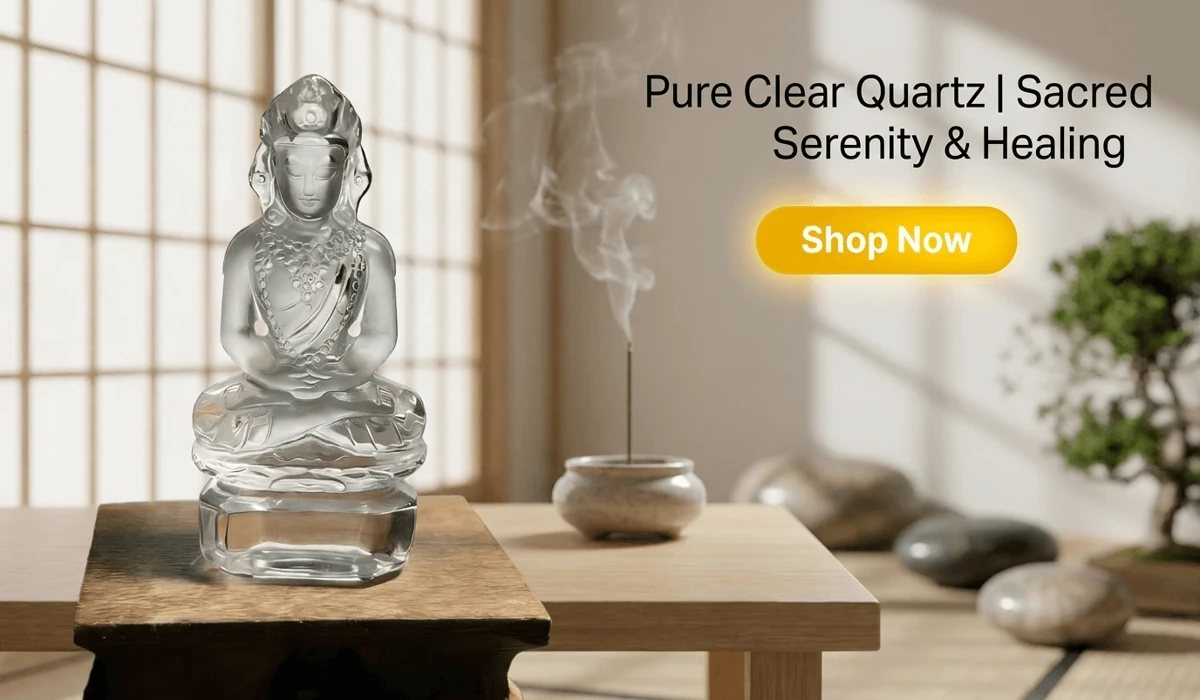
You can enhance the sacred display with understated natural accents. Consider placing the figure on a clean slate base or pairing it with a small, healthy indoor plant and a ceramic incense burner. Simple, natural elements reflect Buddhist principles of modesty, natural harmony, and organic beauty.
Remember that the carving does not function as an idol that grants arbitrary wishes. It stands as an honored symbol of awakened human virtue and ethical balance. Honoring the statue means honoring your own commitment to speak honestly, act kindly, and cultivate peace within your household.
Boxwood Buddha Statue vs Similar Sacred Woods
Boxwood vs Sandalwood Statues
Sandalwood is renowned for its intoxicating natural fragrance, making it a beloved choice for temple incense and prayer beads. However, sandalwood is relatively soft, open-pored, and vulnerable to climate fluctuations. Its intense natural scent can also overwhelm individuals who are sensitive to airborne aromas in closed bedrooms.
Yellow boxwood, by contrast, offers a dense, closed grain with virtually no natural scent. This lack of fragrance makes it perfect for scent-neutral study areas and shared living spaces. While sandalwood slowly loses its scent over years, boxwood gains beauty by developing a radiant, glass-like boxwood natural patina.
From an energetic perspective, sandalwood cools sudden emotional fever and stimulates the third eye. Boxwood acts directly upon the root and heart spaces, supplying the deep physical stability required for long-term domestic grounding. Both hold sacred value, but boxwood provides unmatched durability for daily household environments.
Boxwood vs Rosewood or Cypress Statues
Rosewood features rich, deep red and dark chocolate tones that carry an undeniable sense of stately dignity. However, its dark aesthetic can feel heavy or somber in smaller modern rooms. Furthermore, rosewood’s coarse fiber makes microscopic facial detailing much more challenging for artisanal sculptors.
Cypress (*Hinoki*) is very light in both weight and cream-colored tone, frequently chosen for monumental Japanese temple columns and large statues. Yet cypress is surprisingly soft and easily bruised by accidental fingernail contact. Boxwood surpasses both by offering stone-like hardness alongside bright golden warmth.
| Wood Type | Grain & Hardness | Color & Visual Tone | Primary Energetic Focus | Aroma Profile |
|---|---|---|---|---|
| Yellow Boxwood | Ultra-dense, micro-fine, extremely durable | Honey-gold, matures to rich amber | Grounded earth energy & home protection | Unscented (ideal for sensitive spaces) |
| Sandalwood | Medium density, porous, easily scratched | Tan to reddish-brown, matte finish | Spiritual opening & ritual devotions | Strong sweet woody natural fragrance |
| Rosewood | Heavy, fibrous, prone to splintering | Deep reddish-purple to dark brown | Stately authority & structural weight | Faint spicy aroma when freshly cut |
| Cypress (Hinoki) | Soft, lightweight, easily dented | Pale ivory to light beige | Purity, cleansing, temple architecture | Crisp, medicinal citrus-pine aroma |
Who Is Boxwood Buddha Statue Suitable For?
Energy and Spiritual Alignment
This grounding wooden guardian is ideal for anyone feeling overwhelmed by modern urban living. High-rise apartments and bustling cities often suffer from an excess of chaotic fire and air energy. The dense, slow-matured grain of boxwood anchors flighty thoughts, restoring deep somatic calmness to tired bodies.
It also speaks directly to individuals who appreciate spiritual philosophy without dogmatic rules. The serene face of the Buddha offers universal guidance on empathy, balance, and mindful breathing. It welcomes every visitor into your living room with unconditional kindness, regardless of their personal belief system.
Those working to balance their heart and mind will find steady support in this statue. The harmonious proportions reflect inner composure, helping practitioners release emotional resentment. Over time, sitting in the presence of this figure gently aligns your personal intentions with compassionate living.
Meditation Practitioners and Altar Keepers
If you practice daily breath meditation, having a dedicated physical anchor changes everything. The peaceful curve of the Buddha’s seated form gives wandering eyes a steady resting place. This visual anchor calms rapid brain waves, making it much easier to drop into deep stillness during morning sittings.
Altar curators also value boxwood for its artisan pedigree and organic warmth. In an era dominated by mass-produced plastic ornaments, an authentic hand-carved wooden sculpture stands apart. It brings authentic human dedication and natural timber resonance into your sacred space.
Wellness instructors and bodyworkers frequently place a small boxwood statue in their treatment rooms. Its silent, non-intrusive composure puts nervous clients at immediate ease. The carving silently communicates that the room is a safe haven dedicated to restoration and gentle care.
Video source: YouTube
Author: AstroVed
Original video link: https://www.youtube.com/watch?v=DpYc0H9TxQc
Lifestyle & Home Sanctuary Intentions
Families experiencing frequent household squabbles or transition stress benefit immensely from this peaceful guardian. Placing the statue in the living room changes the energetic climate of everyday interactions. It serves as an unspoken gentle reminder to lower voices, listen carefully, and resolve disagreements with mutual respect.
Minimalist interior lovers will appreciate how effortlessly yellow boxwood fits contemporary Japandi and Scandinavian aesthetics. Its organic texture and warm honey-gold color bring vital life into neutral color palettes. It proves that spiritual decor can be refined, tasteful, and quietly understated.
Finally, anyone moving into a new home or launching a home-based business should consider welcoming this protective figure. Setting up the statue anchors foundational peace across the new floor plan from the very first day. It marks your space as a true domestic sanctuary dedicated to clarity, warmth, and enduring protection.
How to Cleanse, Charge, and Care for Boxwood Buddha Statue
Cleansing Methods
Because wood is a porous, living organic material, you must never wash your boxwood carving with chemical sprays or running water. Liquid moisture can seep into microscopic fibers, causing the wood to expand, crack, or lose its lustrous polish. Instead, use dry energetic cleansing methods to refresh its subtle field.
Wafering gentle herbal incense smoke—such as white sage, agarwood, or natural sandalwood—around the carving quickly clears stagnant Chi (气). Let the soothing smoke dance over the curves while holding a clear intention of domestic renewal. This smoke ritual purifies the surrounding air without dampening the wood.
Sound cleansing offers another wonderful way to refresh your sacred carving. Ringing a Tibetan singing bowl or striking a brass tingsha bell nearby breaks up heavy, stagnant energy through pure acoustic vibration. The sound waves revitalize the room while keeping the natural timber completely safe from physical harm.
Charging and Re-Centering Practices
Just like living plants, your wooden guardian benefits from occasional energetic recharging. Place your statue near a window where it can receive gentle, indirect morning sunlight. Avoid harsh, scorching afternoon rays, as intense heat can bake the natural moisture out of the wood.
You can also recharge the sculpture through intentional recitation and mantra practice. Sitting quietly before the figure while repeating a loving-kindness prayer charges the surrounding space with positive mental impressions. Over the months, the statue becomes deeply tuned to your personal spiritual rhythm.
According to Traditional Feng Shui Wisdom, keeping a small bowl of clean water or fresh flowers nearby keeps environmental energy vibrant. Refresh these simple offerings regularly to celebrate the natural cycle of life. This simple daily mindfulness practice reinforces your home’s shield of peace.
Daily Care and Patina Preservation
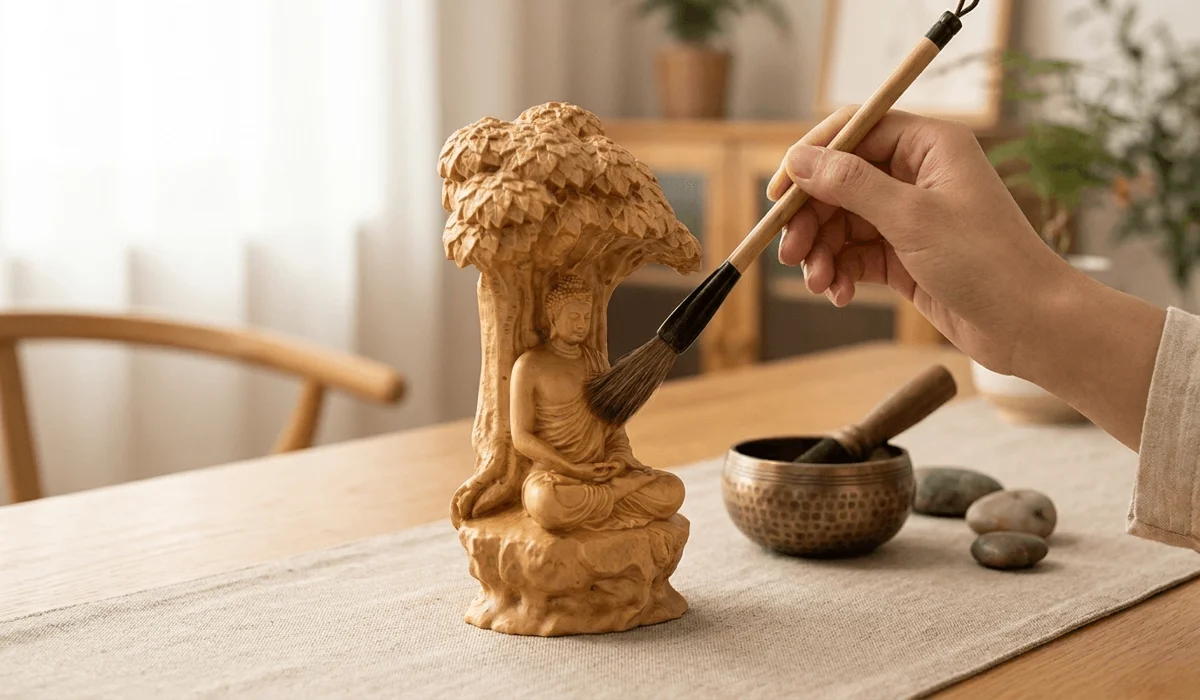
Dusting your hand-carved piece should be approached as a mindful ritual rather than a chore. Use a dedicated, ultra-soft cosmetic brush or natural horsehair calligraphy brush to sweep away dust from intricate carved folds. Never use rough paper towels or abrasive scrubbers that could scratch the delicate details.
To maintain timber health, observe these foundational storage habits:
- 🚫 Avoid Direct Climate Drafts: Keep the carving away from direct air conditioning blasts and heating vents.
- ☀️ Shield from Harsh Sunlight: Protect the statue from intense UV rays that can bleach the golden color.
- 💧 Control Room Humidity: Maintain steady indoor humidity to prevent the dense wood from developing hairline checks.
- ✨ Gentle Cloth Buffing: Buff lightly once a year with a dry silk or microfiber cloth to enhance the golden gleam.
Handling your statue with clean, dry hands is actually beneficial for long-term preservation. The microscopic trace of natural oils from your palms slowly nourishes the wood, creating a stunning, glass-smooth antique finish over the decades. This evolving patina serves as a visual record of your family's enduring devotion to peace.
Frequently Asked Questions
Q: What does a boxwood buddha statue mean?
A: It represents awakened awareness, grounded stability, and protective energetic harmony within the household. The yellow timber embodies the earth element, signifying rootedness, patient growth, and radiant inner wisdom. Historically, it serves as a visual compass guiding residents toward non-attachment, stillness, and empathy.
Q: Where should the Buddha statue be placed?
A: Position the statue elevated in a clean, uncluttered living room, quiet home library, or dedicated meditation space. Ensure it faces outward toward the main entrance of the room to greet incoming spatial energy with serene composure. Always place it at or above seated eye level to show traditional spiritual respect.
Q: Where not to place Buddha statue?
A: Never place the statue directly on bare floors, under staircases, or beneath heavy ceiling beams. Avoid utilitarian locations such as bathrooms, laundry rooms, utility closets, or unfinished storage basements. Traditional guidelines also advise against placing active statues in chaotic kitchens or busy children playrooms.
Q: How to care for boxwood carving patina?
A: Dust the delicate folds regularly using an ultra-soft calligraphy or cosmetic brush. Keep the carving away from harsh direct sunlight, heat vents, and damp drafts to prevent timber cracking. Handle the figure with clean, dry hands, allowing your natural skin contact to slowly build a rich, amber luster over time.
Q: Is it good to have a Buddha statue at home?
A: Traditional spatial wisdom and mindfulness philosophy consider a respectfully displayed Buddha statue highly auspicious for household peace. It serves as an emotional and energetic anchor that inspires mindful speech, reduced stress, and patient communication. Its quiet presence transforms ordinary living rooms into peaceful sanctuaries.
Conclusion & Gentle Next Step
A boxwood Buddha statue is both a masterpiece of traditional woodcraft and an enduring domestic guardian. By anchoring dense earth energy and filtering restless Chi (气), it protects your home sanctuary against the hurried demands of modern life. Mindful placement and gentle care allow the golden timber to mature gracefully, deepening in character alongside your household’s spiritual journey.
Take a quiet moment today to evaluate your home's energetic flow. Select a clean, elevated shelf in your main living space, clear away lingering clutter, and welcome the steady presence of a hand-carved Buddha. Let its silent posture remind you every day that peace is not somewhere outside—it is cultivated right within your own sacred walls.

Longyi Luck
Longyi Luck is a Feng Shui practitioner and spiritual researcher who blends traditional year-based wisdom with modern lifestyle insights, specializing in Feng Shui, spirituality, meditation, and mindfulness. With years of dedicated study and practice, Longyi explores cultural symbolism and the practical application of ancient wisdom to help individuals cultivate balance, clarity, and harmony in everyday life. Since 2020, Longyi has been committed to translating timeless traditions into accessible guidance for the modern world.
longyi@auraandluck.com