
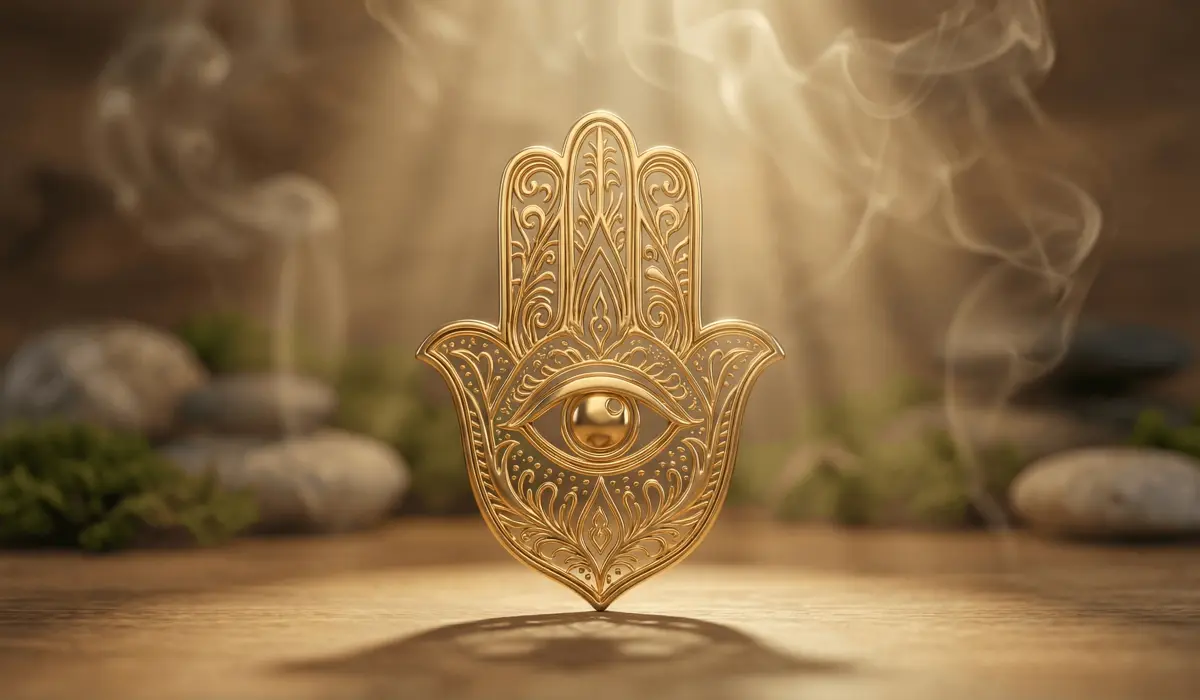
The Hamsa Hand is an ancient Middle Eastern talisman symbolizing the Hand of God. Across Jewish, Islamic, and Christian traditions, it serves as a powerful shield against the Evil Eye. By integrating the five senses, it helps people achieve spiritual mindfulness and divine protection while attracting luck and prosperity.

Beyond the Aesthetic: The Hamsa Hand as a Multi-Sensory Shield
At its core, we see the Hamsa as a tool for Reflective Shielding. This concept suggests that the five fingers represent the integration of our five senses. When we balance these senses, we reach a state of mindfulness that naturally repels external negativity.
The open palm is a universal gesture that says "stop" to evil and "welcome" to divine grace. This duality makes it a favorite for those seeking both safety and success in their daily lives. By focusing on the palm, we can learn to filter the energy we let into our personal space.
Historically, this symbol was used as an apotropaic tool to turn away harm. Whether carved in stone or worn on the skin, its purpose remains the same. It serves as a constant reminder that we are supported by a power greater than ourselves.
The Ancient Origins: From Ishtar’s Palm to the Hand of Fatima
The story of the Hamsa begins in ancient Mesopotamia as the Hand of Ishtar. Ishtar was a goddess of love and war, and her hand represented divine authority and feminine protection. Over thousands of years, this symbol moved through many cultures and religions.
In Jewish tradition, it is known as the Hand of Miriam (米利暗之手), the sister of Moses. It represents the five books of the Torah and reminds the faithful to use their five senses to praise God. It is a deeply rooted part of Jewish history and home protection.
In the Islamic world, many call it the Hand of Fatima (法蒂玛之手) after the daughter of the Prophet Muhammad. It symbolizes the Five Pillars of Islam and embodies faith, patience, and loyalty. For Levantine Christians, it is the Hand of Mary, offering maternal care and grace.
The Hidden Philosophy: Decoding Symbolic Anatomy
The anatomy of the Hamsa is rarely biological; it is often symmetrical with two thumbs. This symmetry represents a balance between masculine and feminine energies. It also shows the harmony between giving and receiving, which is vital for a healthy life.
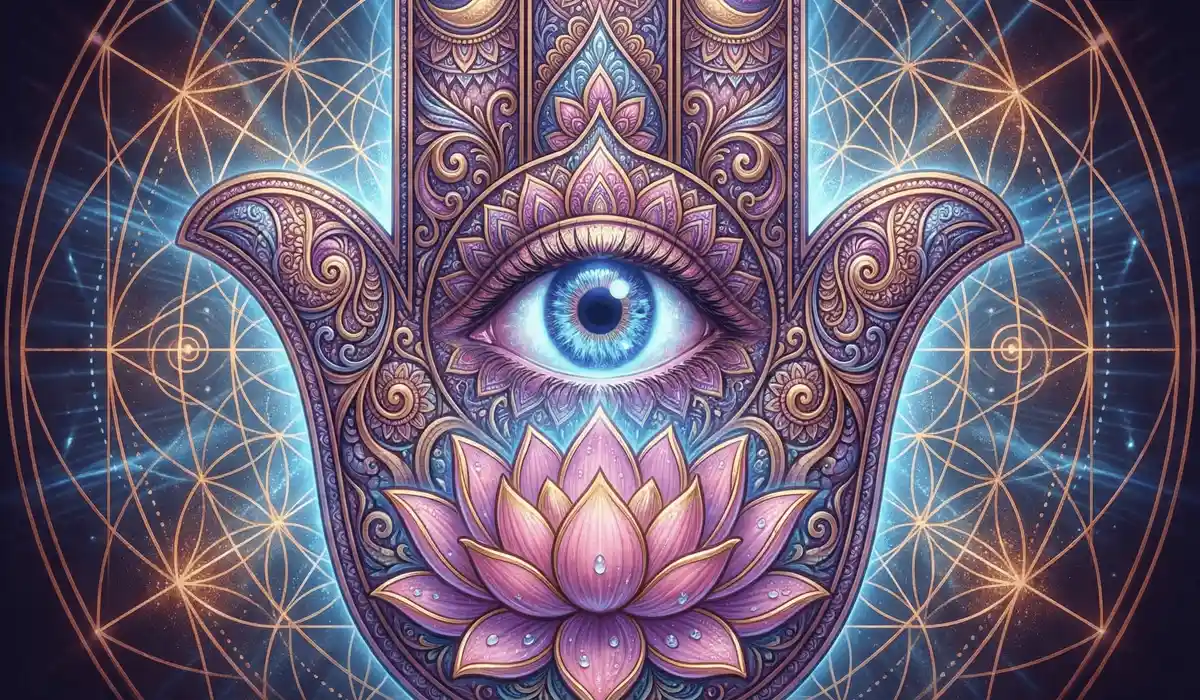
Many modern designs include an eight-petal lotus at the base of the palm. This flower represents the heart chakra and the blooming of consciousness. It suggests that true protection comes when our hearts are open and our minds are clear.
The Hamsa acts as an energy alchemist for the wearer. According to Wikipedia, ancient symbols often carry deep layers of meaning that evolve with the people who use them. Its sacred geometry transforms the heavy energy of envy into harmless light.
Hamsa Hand Tattoo Meaning: The Commitment to Permanent Protection
Choosing a Hamsa tattoo is a major spiritual decision in 2026. Unlike jewelry, ink is blood-bound and becomes a permanent part of your physical vessel. It signifies a lifelong commitment to staying spiritually awake and protected from harm.
The karmic difference between a tattoo and a silver charm lies in the sacrifice. Getting a tattoo is a rite of passage that embeds the symbol's frequency into your skin. It is a constant shield that you can never lose or take off.
Many people choose tattoos to stabilize their spirit over the long term. It acts as a subconscious anchor that keeps them grounded. To learn more about how symbols affect our path, you might check Hamsa Protection Meaning for deeper insights into these ancient talismans.
Tattoo Placement Guide: Aligning the Hamsa with your Body's Energy Centers
Where you place your Hamsa tattoo changes how it interacts with your energy. Each part of the body serves a different protective purpose. Choosing the right spot is just as important as the design itself.
Common placements for the Hamsa include:
- The Upper Back: This guards you against "backbiting" and envy that you cannot see coming.
- The Inner Forearm: This allows you to see the symbol constantly as a focal point for meditation.
- The Sternum: This placement protects the heart chakra and your emotional well-being.
- The Back of the Neck: This acts as a shield for your nervous system and higher intuition.
Each location helps the symbol's energy flow through your body more effectively. A tattoo on the arm might help with outward actions, while one on the chest focuses on internal peace.
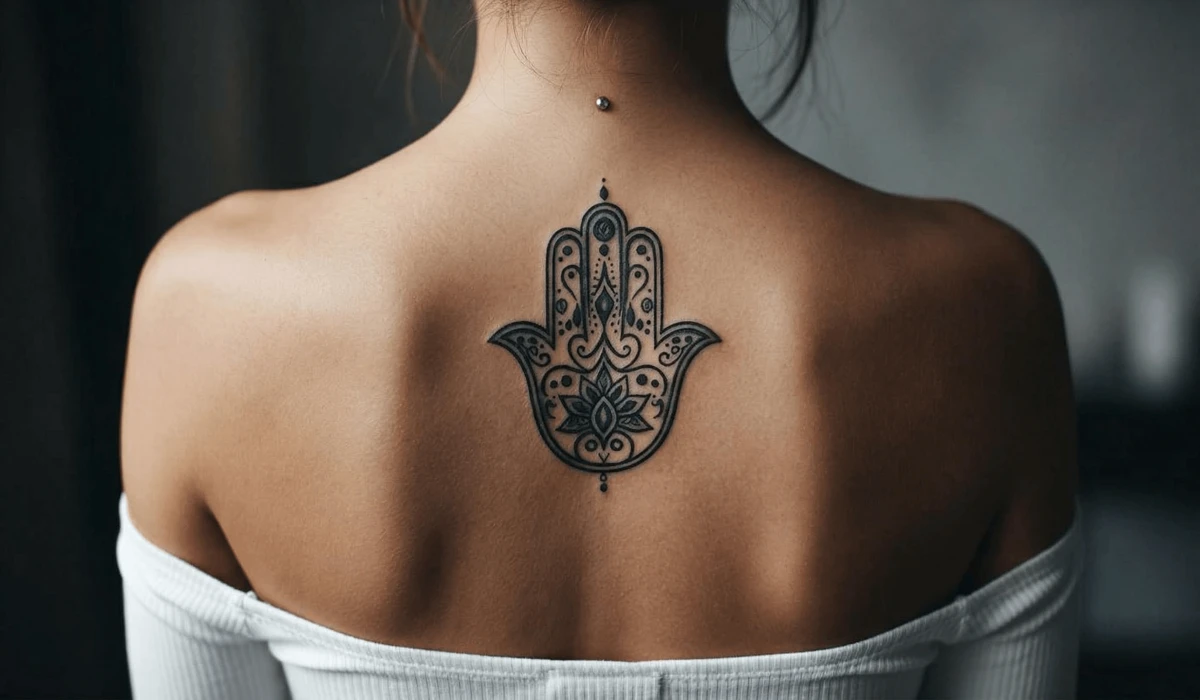
This permanent mark serves as a bridge between the physical and spiritual worlds. It ensures that the wearer is always aligned with the frequency of divine providence.
Jewelry Symbolism: The Power of Intentional Adornment and Removability
Hamsa jewelry offers a different kind of magic through intentional adornment. Because you can put it on and take it off, it allows you to set specific intentions for the day. It is a flexible tool for modern living and spiritual practice.
Touching a Hamsa necklace or ring during a stressful meeting acts as a tactile reminder. It pulls you back to the present moment and helps you re-center your five senses. This physical contact can lower anxiety and improve your focus instantly.
Precious metals like gold and silver also play a role in this protection. These materials are believed to interact with your personal bio-field and stabilize your energetic frequency. Just as explored in our article Garnet Jewelry Meaning and Feng Shui Benefits for the 2026 Fire Horse Year, the meaning and effect of gemstone jewelry can shift depending on the stone’s elemental energy and astrological timing. In the same way, the metal of the Hamsa helps anchor and balance your aura.
Upward vs. Downward: Decoding the Energetic Direction of your Hamsa
The direction the fingers point significantly changes the energy of the symbol. Neither way is "wrong," but they serve different spiritual goals. You should choose the orientation that matches your current needs in life.
Facing Up: The Protective Shield
When the fingers point upward, the Hamsa acts as a powerful shield. It is the most common orientation for warding off the Evil Eye and jealousy. It tells the world that your boundaries are firm and that negativity is not welcome.
Facing Down: The Cup of Blessings
When the fingers point downward, the Hamsa becomes a vessel for receiving. It is often associated with fertility, abundance, and the manifestation of dreams. This orientation is perfect for those who feel safe and want to focus on inviting luck into their lives.
The Central Eye: Psychological Warding in a High-Stress Digital Era
The eye in the center of the palm is not the "Evil Eye" itself. Instead, it is a watchful guardian that looks out for you. It acts as a psychological anchor that reminds you that you are seen and protected by the Divine.
In our modern world, this eye serves as a shield against digital burnout. We are often drained by the envy and anxiety found on social media. The Hamsa eye acts as a firewall for the soul, neutralizing the "heat" of digital interactions.
According to the Encyclopaedia Britannica, the "watchful eye" is a theme found in many ancient civilizations. It triggers a feeling of being observed, which can actually help us act with more integrity. It encourages us to use our "conscious sight" in every situation.
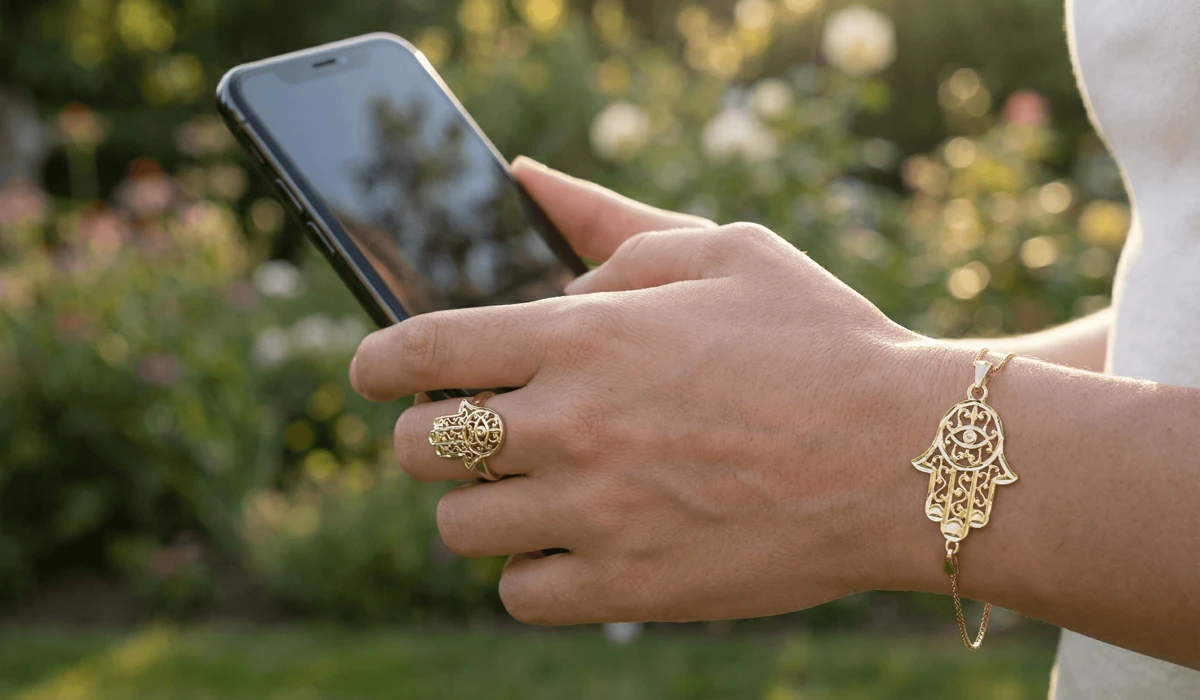
This central feature turns the Hamsa into more than just a hand. It becomes a living eye that monitors your environment even when you are not paying attention. It provides a sense of security in an increasingly chaotic world.
Cultural Convergence: How Jewish, Islamic, and Christian Traditions View the Hand
The Hamsa is a rare "bridge" symbol that belongs to many people. In the Middle East and North Africa, it is often a collective symbol. People hang it on doorways or in cars to protect the whole family from shared misfortune.
In the West, it has evolved into a symbol of personal empowerment and self-care. It marks a "spiritual but not religious" identity for many modern seekers. It is also linked to the Abhaya Mudra in Eastern traditions, which is the gesture of "no fear."
| Tradition | Name | Primary Meaning |
|---|---|---|
| Jewish | Hand of Miriam | Five books of Torah / Praising God |
| Islamic | Hand of Fatima | Five Pillars / Faith & Loyalty |
| Christian | Hand of Mary | Maternal Protection / Grace |
| Mesopotamian | Hand of Ishtar | Divine Feminine / Warding Evil |
This table shows how the same physical shape carries different stories across the globe. Despite the different names, the core desire for safety and divine connection remains identical. It is a testament to our shared human experience.
Why Wear Hamsa Jewelry? The Benefits of Sacred Metals and Gemstones
Modern energy workers believe that Hamsa jewelry interacts with the wearer's personal bio-field. When made of gold or silver, the symbol helps stabilize the aura against environmental stressors. It is like wearing a portable sanctuary around your neck.
Beyond protection, the Hamsa is believed to attract financial abundance. By clearing the "energy of lack," it opens the wearer to receive new opportunities. It shifts your focus from being afraid of loss to being ready for growth.
Adding gemstones can further enhance the Hamsa's power. For example, pairing it with sacred symbols like Ganesha—as explored in our article The Spiritual Meaning of Ganesh Statues: Symbolism, Poses, and Placement—can amplify the energy of obstacle removal and attract greater luck and wisdom. This combination creates a customized energetic tool tailored to your specific life path.
Meditating with the Hamsa: Visualizing the Shield of Five
You can use the Hamsa as a focal point for your daily mindfulness practice. It is not just a piece of metal or ink; it is a map for your consciousness. Meditation with the Hamsa can help quiet the mind and strengthen your inner light.
We recommend following these four steps to integrate the Hamsa into your life:
- The Five Senses Alignment: Visualize the five fingers as your five senses, folding them inward to silence the world's noise.
- Anxiety Visualization: Imagine the central eye absorbing your stress and turning it into a cool, blue light that fills your heart.
- Digital De-cluttering: Place your Hamsa jewelry on your phone at night to "neutralize" the lingering energy of the internet.
- Setting Intentions: Each morning, hold your Hamsa and state one thing you wish to protect and one thing you wish to receive.
Regular practice with the symbol helps you maintain a high vibrational frequency. It turns the Hamsa from a passive charm into an active participant in your spiritual growth. This ritual creates a stronger bond between you and the ancient wisdom it represents.
Taboos & Respect: Navigating Cultural Sensitivity and Sacredness
When using the Hamsa, it is important to practice appreciation over appropriation. You do not need to be religious to wear it, but you should honor its deep history. It is a symbol that has protected millions of people for thousands of years.
One major taboo is placing the Hamsa on footwear or things that touch the ground. Since it represents the Hand of God, it should always be kept in an elevated position. Treating the symbol with respect ensures that its protective energy remains pure and effective.
While the Bible does not mention the Hamsa by name, many see it as a symbol of Divine Providence. It aligns with the idea of the "Hand of the Lord" that guides the faithful. Organizations like the Feng Shui Society often discuss how such symbols affect the energy of a space and a person.
FAQ: Navigating the Hamsa’s Power
Q: Is a Hamsa tattoo or jewelry more effective for anxiety protection?
A: Jewelry provides a tactile grounding tool that you can touch during acute anxiety, while a tattoo acts as a subconscious, long-term stabilizer of your spirit.
Q: Does the Hamsa hand orientation change its effect on digital burnout?
A: Yes, an upward-facing Hamsa is better for "blocking" the draining energy of the digital world, acting like a firewall for your soul.
Q: Can wearing Hamsa jewelry attract financial abundance?
A: By shifting your focus from "protection from loss" to "readiness to receive," the Hamsa helps align your frequency with abundance, especially when worn facing down.
Q: How to cleanse Hamsa jewelry from absorbed negative energy?
A: You can use moonlight, sound baths with singing bowls, or sacred smoke like sage to reset the vibrational frequency of the metal.
Q: Is it disrespectful to get a Hamsa tattoo if you are not religious?
A: No, as long as you treat it as an anchor of mindfulness and respect its origins rather than seeing it as just a fashion trend.
Conclusion: Integrating the Hamsa’s Wisdom
The Hamsa Hand is more than a relic; it is a living technology for the modern soul. Whether through the permanent ink of a tattoo or the high-vibration resonance of gold jewelry, it offers a sanctuary of protection. By balancing our senses and guarding our energy, we can walk through the world with the confidence of the Divine.

Longyi Luck
Longyi Luck is a Feng Shui practitioner and spiritual researcher who blends traditional year-based wisdom with modern lifestyle insights, specializing inFeng Shui, spirituality, meditation, and mindfulness. With years of dedicated study and practice, Longyi explores cultural symbolism and the practical application of ancient wisdom to help individuals cultivate balance, clarity, and harmony in everyday life. Since 2020, Longyi has been committed to translating timeless traditions into accessible guidance for the modern world.
longyi@auraandluck.com


.webp?w=1280&h=1280)
.webp?w=800&h=800)