
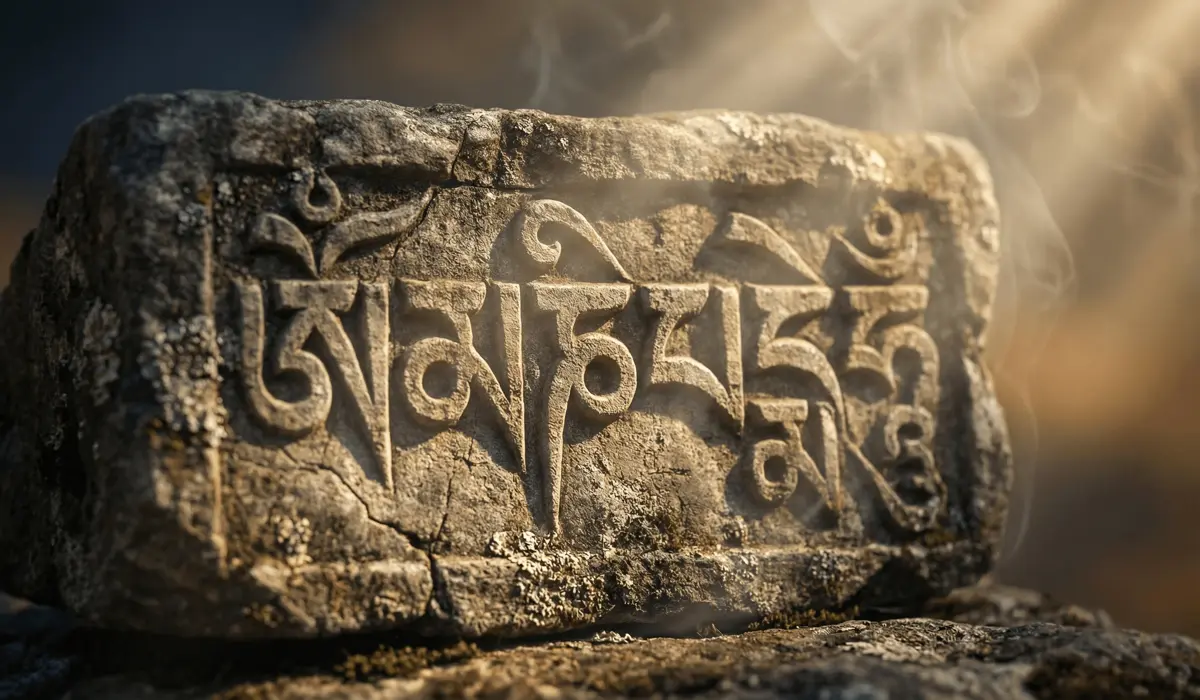
We believe that symbols are more than just art; they are living maps of the human soul and its journey toward light. The six-syllable mantra, Om Mani Padme Hum, stands as the most famous and powerful chant in the world of spiritual practice. It is not just a string of sounds, but a vibrational tool used to unlock the deepest parts of our compassion and wisdom.
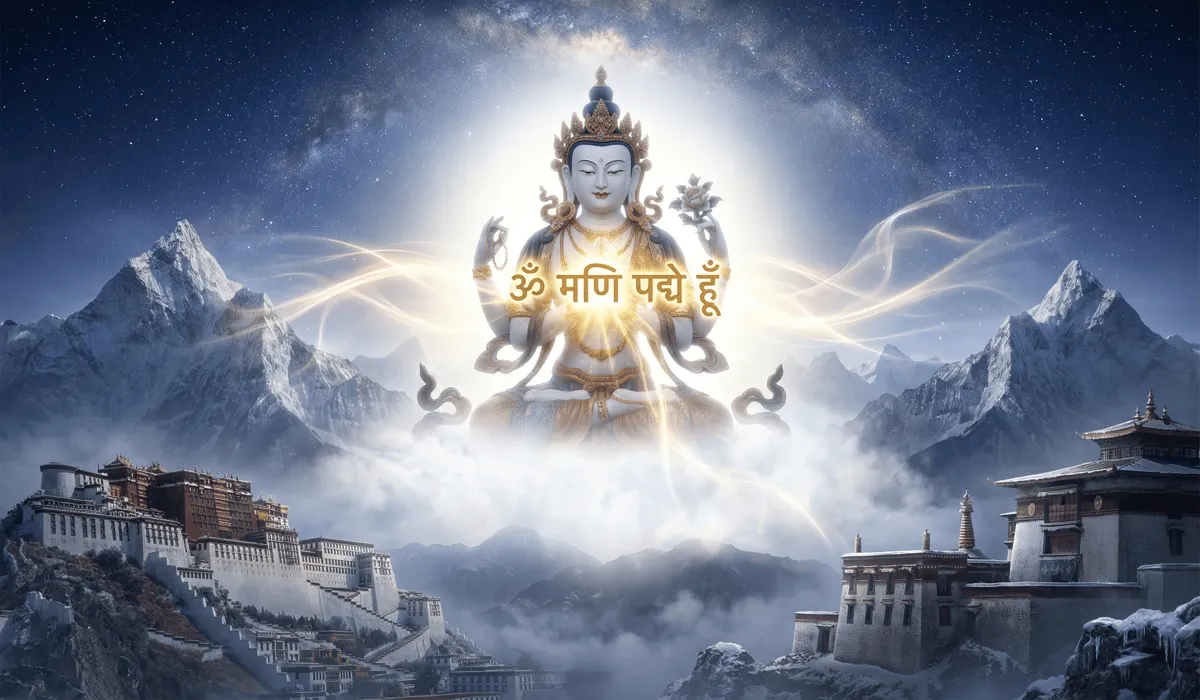
This sacred phrase serves as the spiritual heart of the Bodhisattva of Compassion, acting as a bridge between our messy daily lives and a state of pure peace. For over a thousand years, it has helped people cross the ocean of suffering by connecting them to the divine energy of the universe. In our modern world of constant noise, this symbol offers a grounding force that helps us find our center and heal our collective spirit.
Ancient Origins and Sacred Legends
The story of this mantra begins with a deep vow of love for all living things. Legend says the mantra came from the heart of Avalokiteshvara, known in Tibetan Buddhism as Chenrezig. He promised to stay in the world until every single soul was free from the cycle of rebirth and suffering.
The task was so heavy that his head once shattered from the weight of human grief. From this moment of intense care and sacrifice, the six syllables emerged as a gift to help him finish his mission. This story teaches us that true power comes from a heart that is willing to feel the pain of others and act to heal it.
In the Encyclopaedia Britannica, we find that these traditions date back many centuries, showing how the mantra has stayed strong through history. It first appeared in the Karandavyuha Sutra around the 4th century, where it was called the essence of all spiritual truth. Today, you can see it carved into rocks called Mani stones and spinning inside prayer wheels all across the Himalayas.
The Hidden Philosophy: Decoding the Symbolism
To understand the mantra, we must look at its most famous metaphor: the "Jewel in the Lotus." This image explains how something perfect can exist right in the middle of something imperfect. It is a lesson for our lives, showing that we can find peace even when things around us are difficult.
The Metaphor of the Jewel and the Lotus
The Lotus (Padme) represents wisdom, specifically the realization of how things truly are. Just as a lotus flower grows in muddy water but stays clean and beautiful, wisdom allows us to live in the world without being stained by confusion. It is the container for our spiritual growth.
The Jewel (Mani) represents the "Method," which is the active side of our spiritual path. This includes the love and the wish to help others reach enlightenment. Just as a jewel can take away the pain of poverty, this spiritual jewel removes the emptiness of a life lived without purpose or kindness.
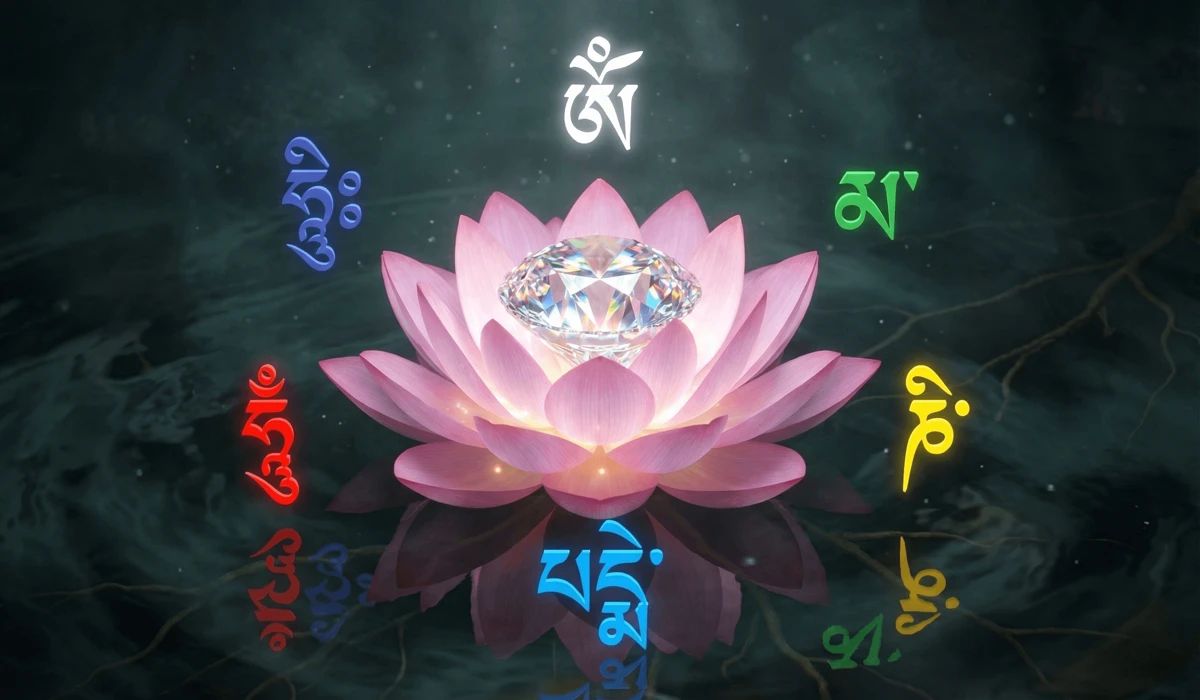
When these two come together, we find the "Indivisible Union." This means that we cannot have true wisdom without love, and we cannot have true love without wisdom. They are two sides of the same coin, working together to change our body and mind into something better.
The Six Syllables and the Transformation of the Six Realms
Each of the six sounds focuses on a specific problem in our mind and a specific place where souls are reborn. By chanting them, we "close the doors" to these places of suffering. This process is like a deep cleaning for our karma, washing away the habits that keep us stuck.
The following list explains how each syllable works to help us grow:
- OM (White): Purifies pride and stops us from entering the realm of the gods where we might become too self-centered.
- MA (Green): Purifies jealousy and closes the door to the realm of warring beings who are always fighting.
- NI (Yellow): Purifies human desire and passion, helping us find content in the human realm.
- PAD (Blue): Purifies ignorance and prejudice, which are the main struggles of the animal realm.
- ME (Red): Purifies greed and the feeling of never having enough, which defines the hungry ghost realm.
- HUM (Black/Blue): Purifies aggression and hatred, keeping us away from the hell realm.
By using these sounds, we slowly transform negative emotions into positive energy. This is why many people turn to the Compassion Mantra, especially the sacred chant Om Mani Padme Hum, when they feel overwhelmed by their emotions or the chaos of the world. To explore its deeper symbolism and spiritual benefits, you can read The Meaning and Benefits of Om Mani Padme Hum: A Guide to the Six-Syllable Mantra.
| Syllable | Color | Purifies | Realm Closed |
|---|---|---|---|
| Om | White | Pride / Ego | God Realm |
| Ma | Green | Jealousy / Entertainment | Asura Realm |
| Ni | Yellow | Passion / Desire | Human Realm |
| Pad | Blue | Ignorance / Prejudice | Animal Realm |
| Me | Red | Poverty / Greed | Hungry Ghost Realm |
| Hum | Dark Blue | Hatred / Aggression | Hell Realm |
Each sound offers a specific cure for a specific mental poison. This detailed system shows how ancient teachers understood the human mind long before modern psychology.
Cultural Evolution: Eastern and Western Perspectives
As the mantra moved across the globe, different cultures added their own flavor to its meaning. In East Asia, the mantra is closely linked to the Laughing Buddha and Guanyin, the female form of the Bodhisattva of Compassion. Here, it is often chanted for protection and to invite "silent wisdom" into the home.
In the West, people have adopted the mantra as a tool for mindfulness and stress relief. It acts as a psychological anchor that pulls us away from the pressures of digital life and back to a state of kindness. Many use it to combat the feelings of comparison and ego that come from social media.
Even in practices like Feng Shui Society, the mantra is used to clear the energy of a room. It is believed that the sound can break up "stuck" energy and bring a sense of harmony to any space.
Wearing the Sacred: Why Jewelry Matters Today
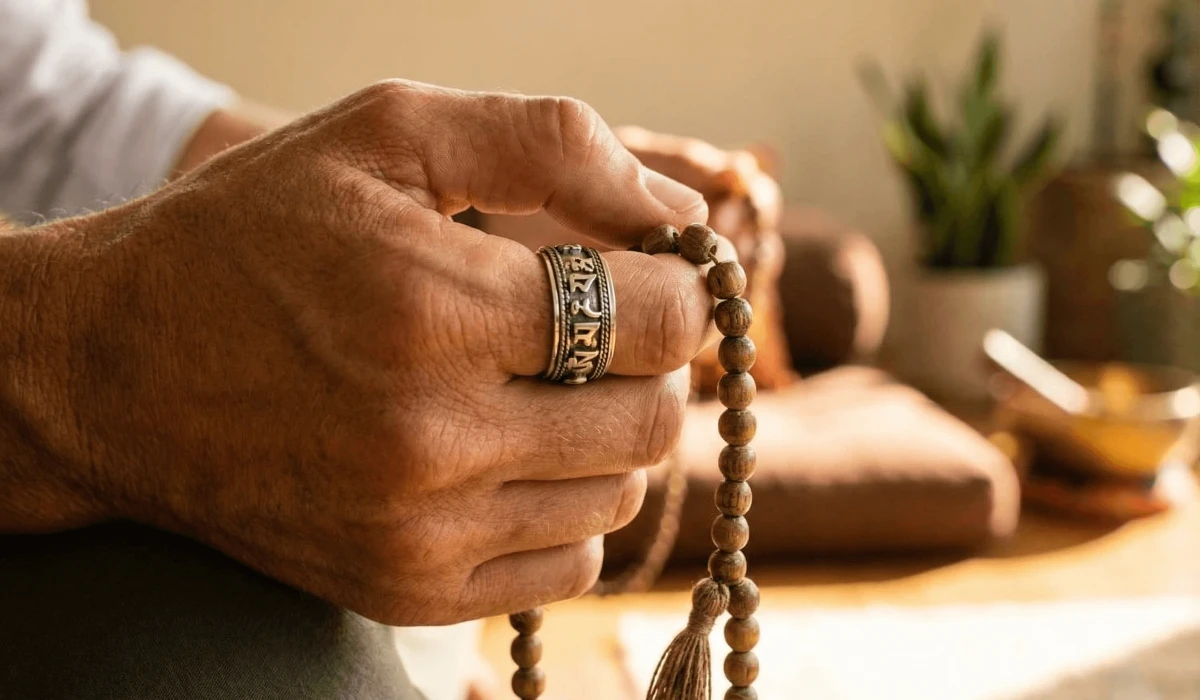
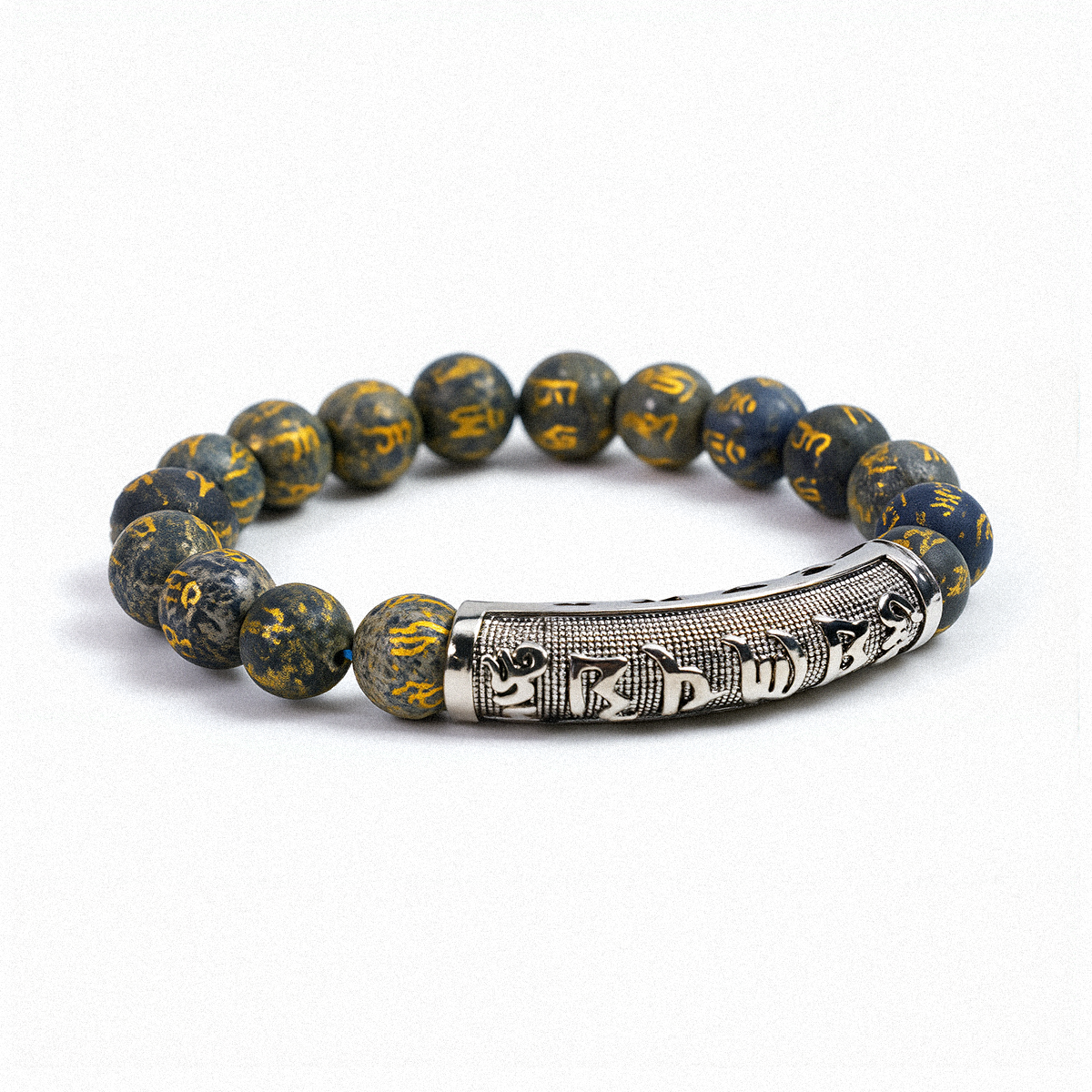
In our research at Aura & Luck, we have found that wearing sacred symbols like the mantra provides a physical "shield" for the wearer. It is a tactile reminder to stay kind and present during a busy day. When you feel the weight of a ring or a pendant, it pulls your mind back to your spiritual goals.
A Spiritual Shield in the Digital Age
Modern life can be very draining for our spirit because of constant digital noise. Wearing an Om Mani Padme Hum amulet acts as a barrier against negative energy and the "ego-pride" that often grows in online spaces. It helps you remember your Bodhisattva Vow—the promise to be a source of peace for others.
The Symbol as a Mindfulness Anchor
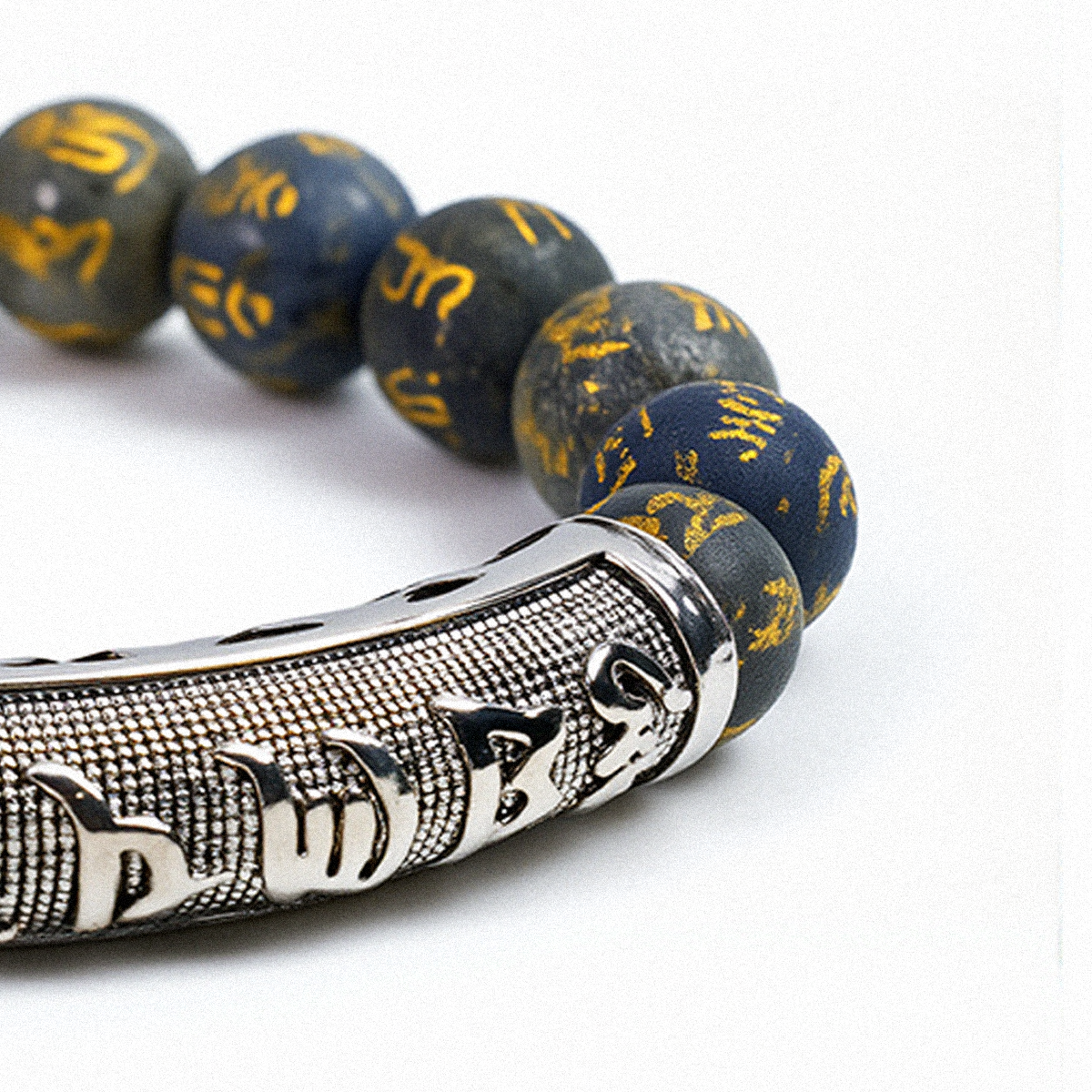
Just as a ship needs an anchor to stay in one place, our minds need anchors to stay in the present. The visual form of the mantra on your jewelry serves as a "Chi" (energy) focal point. Every time you see the Tibetan script, it is like a small bell ringing in your mind, reminding you to breathe and be compassionate.
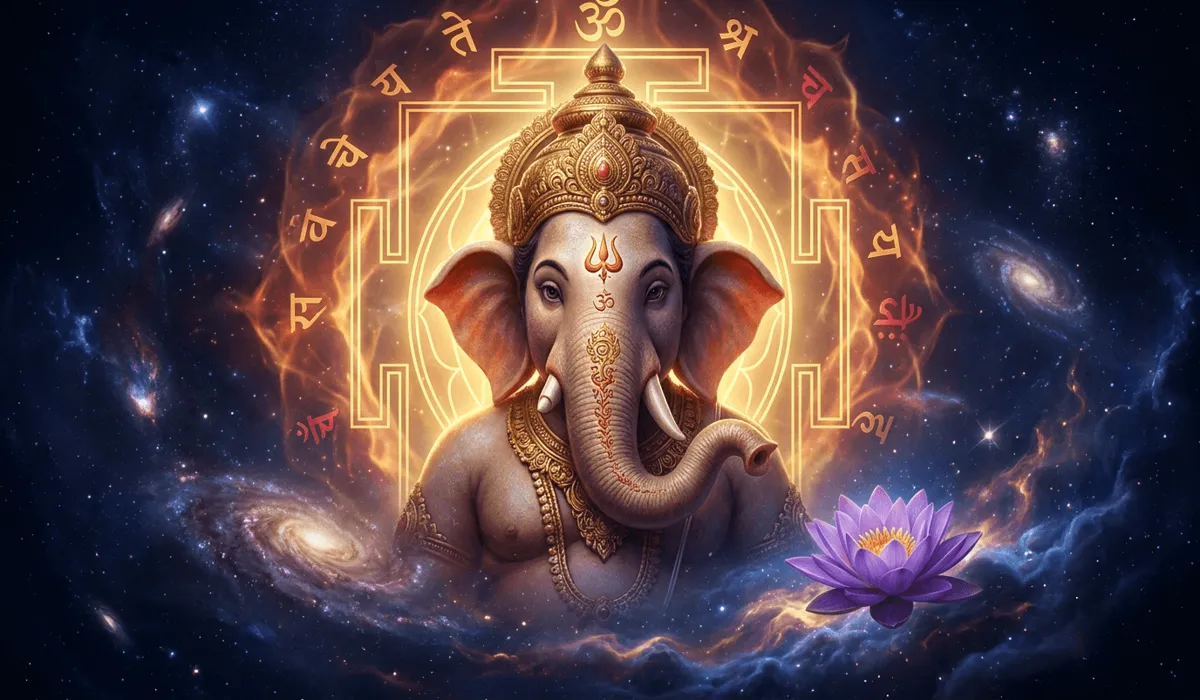
Ancient traditions tell us that even just looking at the written form of the mantra has the same power as saying it out loud. This makes sacred jewelry a powerful tool for constant spiritual practice, even when you are not in a quiet meditation room. For those looking for balance, the Ganesha Symbolism can also offer similar paths to removing obstacles.
Ritual and Practice: Meditating with the Mantra
There are many ways to bring this energy into your life. The most common is chanting, but visualization is also very important. Practitioners often imagine light flowing out of each syllable in its specific color to heal their body and the world around them.
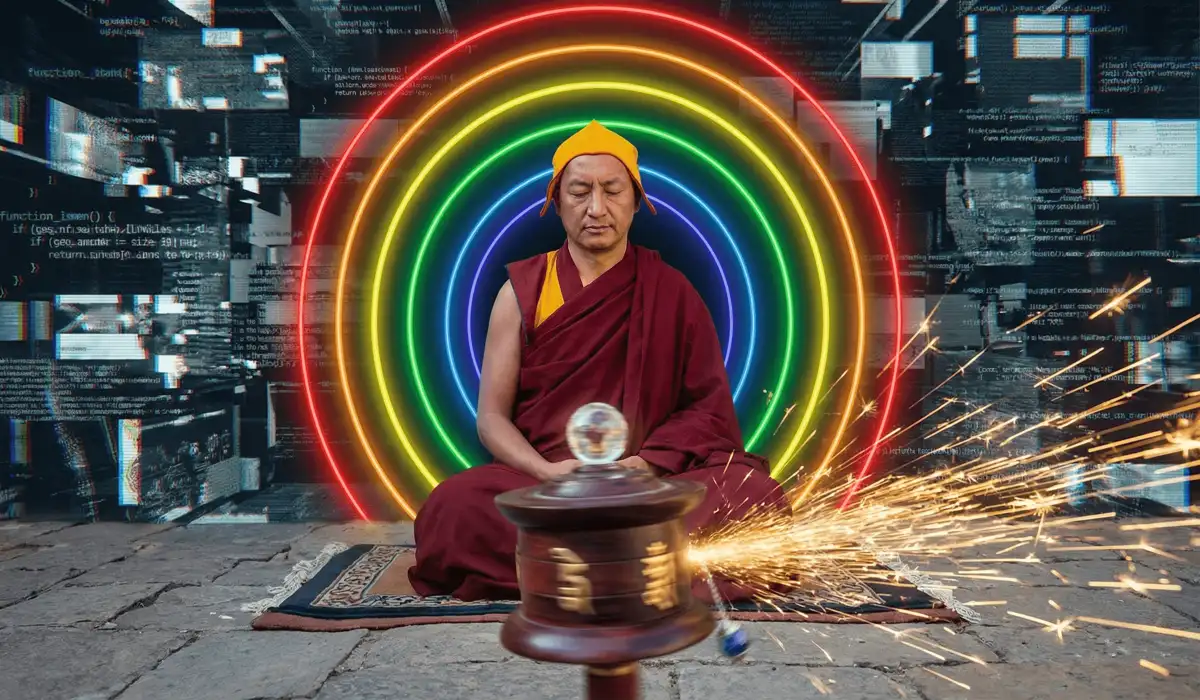
Using a prayer wheel is another beautiful way to practice. Inside the wheel are thousands of copies of the mantra. When you spin it, it is believed that you are releasing the energy of all those prayers into the air, blessing everyone around you. This makes the practice not just about your own peace, but about the peace of the whole world.
Focusing on the transition from the "OM" sound to the "HUM" sound helps align your inner energy. This shift from an open sound to a deep, grounded sound mirrors the journey from pure awareness to practical, loving action in the world.
How to Integrate the Mantra Into Your Life
Actionable Rituals for Daily Peace
- Mindfulness Visualization: Spend five minutes each morning picturing a glowing lotus in your heart, seeing each syllable shine in its specific color.
- Set a Daily Intention: Touch your mantra jewelry before you start work and set a goal to respond to challenges with patience instead of anger.
- Gentle Recitation: Chant the syllables quietly 108 times during your commute or a walk to clear your mind of daily stress and worry.
- Sacred Space: Place a card with the mantra script near your computer to act as a "spiritual shield" while you navigate the digital world.
These simple steps help you move from being a student of the mantra to a living example of its wisdom. By making it part of your routine, you keep the energy of compassion active in everything you do.
Frequently Asked Questions (FAQ)
Q: What is the literal vs. symbolic translation of Om Mani Padme Hum?
A: Literally, it is often translated as "The Jewel in the Lotus." Symbolically, it represents the journey of turning an ordinary, "impure" state of mind into the "pure" state of a Buddha through the combined power of love and wisdom.
Q: How do the six syllables correlate to the six realms of rebirth?
A: Each syllable targets a specific mental poison that leads to rebirth in one of the six realms: Om for the God realm (Pride), Ma for the Asura realm (Jealousy), Ni for the Human realm (Desire), Pad for the Animal realm (Ignorance), Me for the Hungry Ghost realm (Greed), and Hum for the Hell realm (Hatred).
Q: What is the difference between the Sanskrit Hum and Tibetan Hung pronunciation?
A: The difference comes from how language changed as it moved into Tibet. Sanskrit "Hum" is the original root sound, while "Hung" is how it sounds in the Tibetan plateau. Both are considered equally powerful and effective in spiritual practice.
Q: Why wear Om Mani Padme Hum jewelry as a spiritual shield?
A: It serves as a physical reminder of the protection of Avalokiteshvara. It helps to keep away negative emotions and distractions, acting as a constant anchor for your mindfulness and intentions throughout the day.
Q: How does the Jewel in the Lotus metaphor apply to modern self-actualization?
A: It suggests that our true potential—the Jewel—already exists inside the messy reality of our daily lives—the Lotus. Self-actualization is not about escaping the world, but about finding our inner purity while staying right where we are.
Conclusion: Integrating the Wisdom of the Six Syllables
The mantra Om Mani Padme Hum is much more than a prayer; it is a profound metaphysical technology for the human heart. By understanding its origins, its deep philosophy, and how to use it daily, we move from being visual admirers to active parts of a long tradition of compassion. Whether you chant it, visualize it, or wear it on a sacred piece of jewelry, let the vibration of these six syllables guide you toward a life filled with wisdom and kind action.

Longyi Luck
Longyi Luck is a Feng Shui practitioner and spiritual researcher who blends traditional year-based wisdom with modern lifestyle insights, specializing inFeng Shui, spirituality, meditation, and mindfulness. With years of dedicated study and practice, Longyi explores cultural symbolism and the practical application of ancient wisdom to help individuals cultivate balance, clarity, and harmony in everyday life. Since 2020, Longyi has been committed to translating timeless traditions into accessible guidance for the modern world.
longyi@auraandluck.com




.webp?w=1280&h=1280)
.webp?w=800&h=800)