
Can lapis lazuli go in water? The direct answer is no, you should never submerge this delicate celestial stone in water. Water causes severe physical degradation, dissolves internal calcite veins, and triggers irreversible rust within the golden pyrite flecks.
Many crystal lovers make the honest mistake of washing their favorite jewelry pieces under running tap water. Over time, that habit strips the stone of its brilliant royal luster and causes permanent micro-fractures. In this guide, our team at Aura & Luck shares practical mineral insights and safe dry cleansing techniques to protect your treasured pieces.
Key Takeaways at a Glance:
- 💎 Submersion Danger: Water weakens the natural calcite binder and causes microscopic surface cracking.
- 💎 Pyrite Rust Warning: Moisture reacts with iron sulfide flecks, turning bright gold into dull brown rust.
- 💎 Safe Cleansing: Use dry microfiber cloths, moonlight, sound baths, or selenite charging plates instead.
- 💎 Daily Wear: Always remove your bracelets before showers, hot tubs, ocean swims, and strenuous workouts.
- 💎 Luster Preservation: Keep the stone away from acidic solutions, soaps, perfumes, and chemical cleaners.
What Is Lapis Lazuli?
Lapis lazuli is one of the oldest and most celebrated gemstones in human history. Prized for millennia by pharaohs and artisans, this vivid blue gem stands apart from simple quartz crystals. Understanding its physical identity explains exactly why moisture is its greatest enemy.
Definition
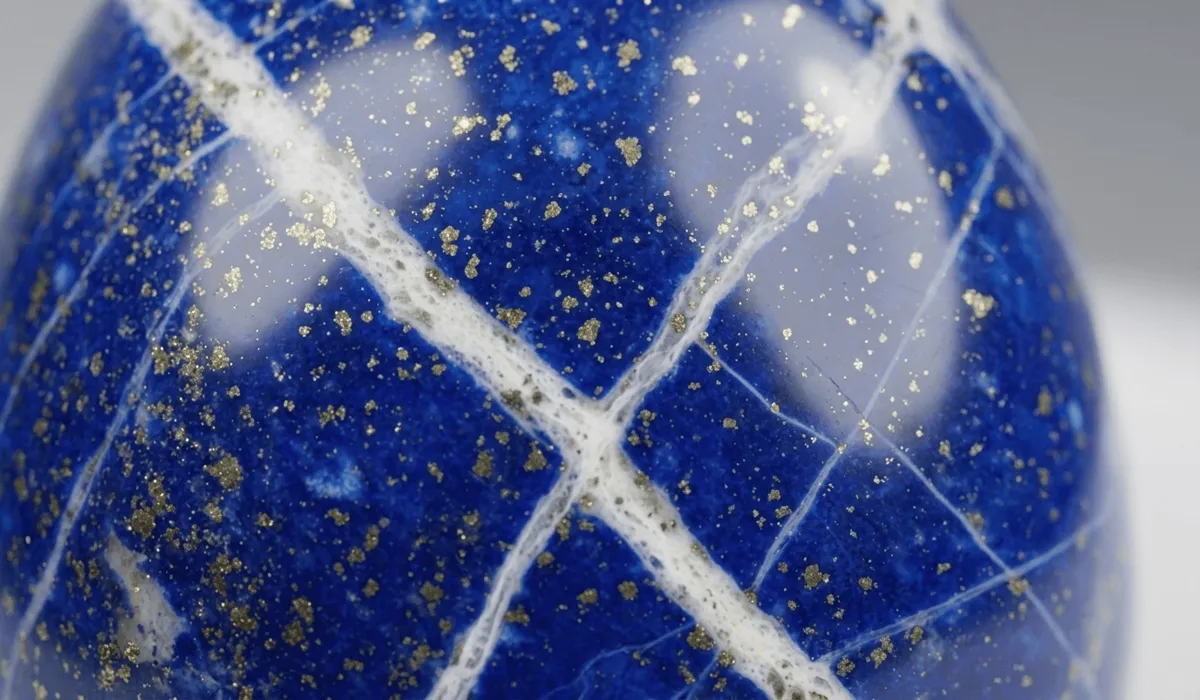
Unlike single-crystal gems such as amethyst or clear quartz, lapis lazuli is a composite metamorphic rock. It consists of an aggregate blend of multiple distinct minerals that fused together deep within the Earth. The deep celestial blue comes from lazurite, while sparkling gold specks are pyrite and cloudy white bands are porous calcite.
Because aggregate stones contain tiny gaps between different mineral grains, they behave like micro-sponges. When exposed to liquids, moisture seeps into these internal boundaries. Independent research documented by Gemological Institute Standards highlights how aggregate rocks react much more sensitively to environmental moisture than uniform single crystals.
When water enters these microscopic pores, it dissolves softer components and creates microscopic cavities. Over time, internal structural softening occurs. This reaction leads to dull patches and eventual stone breakage.
Origin & Materials
Lapis lazuli forms through contact metamorphism, where intense heat alters crystalline limestones over millions of years. This ancient geological process yields a rich tapestry of interwoven minerals. The world's most renowned historical deposits reside in the rugged Badakhshan province of northeastern Afghanistan.
Other authentic deposits are found high in the Chilean Andes and near the cold waters of Lake Baikal in Russia. When we inspect raw stones in our workshop, we look closely at the balance of its constituent parts. High-grade specimens feature uniform lazurite balanced by delicate splashes of golden pyrite.
The brassy, metallic flecks scattered throughout the stone are natural iron pyrite ($FeS_2$). Pyrite adds stunning visual contrast, but it is an iron sulfide compound. When exposed to liquid and oxygen, this compound reacts just like any raw iron mineral.
Basic Characteristics
On the Mohs hardness scale, lapis lazuli registers between 5 and 5.5. This rating places it in a moderate softness category compared to harder gems like quartz or sapphire. Its relatively soft texture makes it especially susceptible to surface scratches and liquid erosion.
The brilliant blue matrix is preserved through the unique molecular lattice of lazurite, which contains rich sulfur radical anions. Unfortunately, natural porosity levels leave this delicate lattice vulnerable to rapid chemical etching. Even mild tap water carries minerals and chlorine that degrade the polished wax finish applied to jewelry.
When the high-shine finish erodes, the stone takes on a chalky, washed-out appearance. Preserving that deep celestial shine requires keeping moisture far away from the surface. A simple dry routine protects its vibrant beauty for years to come.
Spiritual Meaning & Symbolism
Beyond its complex geology, lapis lazuli carries a profound spiritual pedigree that spans multiple continents. For thousands of years, mystics and healers have viewed this midnight-blue treasure as a bridge between the conscious mind and higher realms of awareness. Its deep colors encourage peaceful introspection and emotional clarity.
Traditional Symbolism
Ancient civilizations revered lapis lazuli as an enduring symbol of celestial truth, royalty, and universal wisdom. The golden flecks dancing against royal blue reminded ancient sky-watchers of the star-filled night sky. Metaphysically, it represents the light of divine truth shining through the depths of mystery.
In metaphysical traditions, the stone is viewed as a mirror for authentic self-expression. It encourages honest dialogue with yourself and gives you the courage to live without compromise. By clearing mental static, it allows genuine discernment to rise naturally.
Many mindful practitioners integrate the stone into their daily contemplative routines. When exploring traditional Crystal Healing Wisdom, you quickly discover that stones representing truth and mental clarity require gentle, deliberate care. Its symbolic harmony relies upon honoring the stone's physical integrity.
Chakra Associations
In energetic systems, lapis lazuli works primarily with two vital energy centers: the Third Eye (Ajna) and Throat (Vishuddha) chakras. By stimulating the Third Eye, it supports meditation, dream recall, and deep intuitive discernment. It helps quiet mental chatter so your inner guidance can emerge.
At the Throat chakra, lapis lazuli acts as a catalyst for confident, articulate communication. It supports people who struggle to speak up or who feel anxious when voicing boundaries. Aligning these two centers ensures that your speech reflects your authentic inner values.
When these upper energy portals are open and balanced, personal expression feels effortless and true. Practitioners use polished palm stones during breathwork to anchor this energetic alignment. Keeping the stone vibrant and dry ensures its subtle energetic resonance remains crisp and unclouded.
Cultural or Historical Context
Ancient Egyptians considered lapis lazuli among their most sacred materials. They carved it into protective scarabs, burial amulets, and ceremonial eye ornaments associated with the goddess Isis. Royal pharaohs wore heavy pectorals inlaid with blue stones to symbolize cosmic authority.
During the European Renaissance, master painters paid exorbitant prices for raw lapis lazuli imported from distant eastern mines. They ground the stone into an ultra-fine, luminous powder to create natural ultramarine paint. This precious pigment was reserved exclusively for the sacred robes of angels and the Virgin Mary.
In classical Feng Shui, deep blue stones channel the calm, reflective vitality of the Water element. Interestingly, the Water element in Chinese metaphysics represents wisdom, flow, and stillness. You cultivate this peaceful energy through the stone's symbolic color, never by soaking the stone in physical water.
Benefits & Intentions Associated with Lapis Lazuli
Working with lapis lazuli is all about conscious intention. Because the stone resonates with inner truth and intellectual expansion, it serves as a tactile companion for modern personal growth. Many of our studio clients share how holding the stone helps them navigate stressful work projects and important life transitions.
Commonly Associated Intentions
People turn to lapis lazuli to anchor several deeply empowering lifestyle intentions. Depending on your personal goals, you can program your piece to support specific mental and emotional milestones.
The most common intentions associated with this royal blue gemstone include the following:
- 🌿 Articulate Communication: Finding the right words during high-stakes presentations, interviews, or difficult interpersonal talks.
- 🌿 Mental Clarity: Cutting through analysis paralysis and brain fog to make well-grounded, logical choices.
- 🌿 Emotional Poise: Releasing buried emotional tension and unspoken frustrations in a calm, constructive manner.
- 🌿 Intuitive Awareness: Cultivating deeper trust in your instinctual feelings during creative projects or meditation.
- 🌿 Academic Focus: Enhancing memory retention, study habits, and analytical comprehension during long research hours.
Mindfulness & Personal Practices
Integrating lapis lazuli into your daily mindfulness rituals does not require complex ceremonies. You can use a smooth palm stone or beaded bracelet as an anchor for focused breathing. When your mind wanders, gently touching the cool surface brings your awareness back to the present moment.
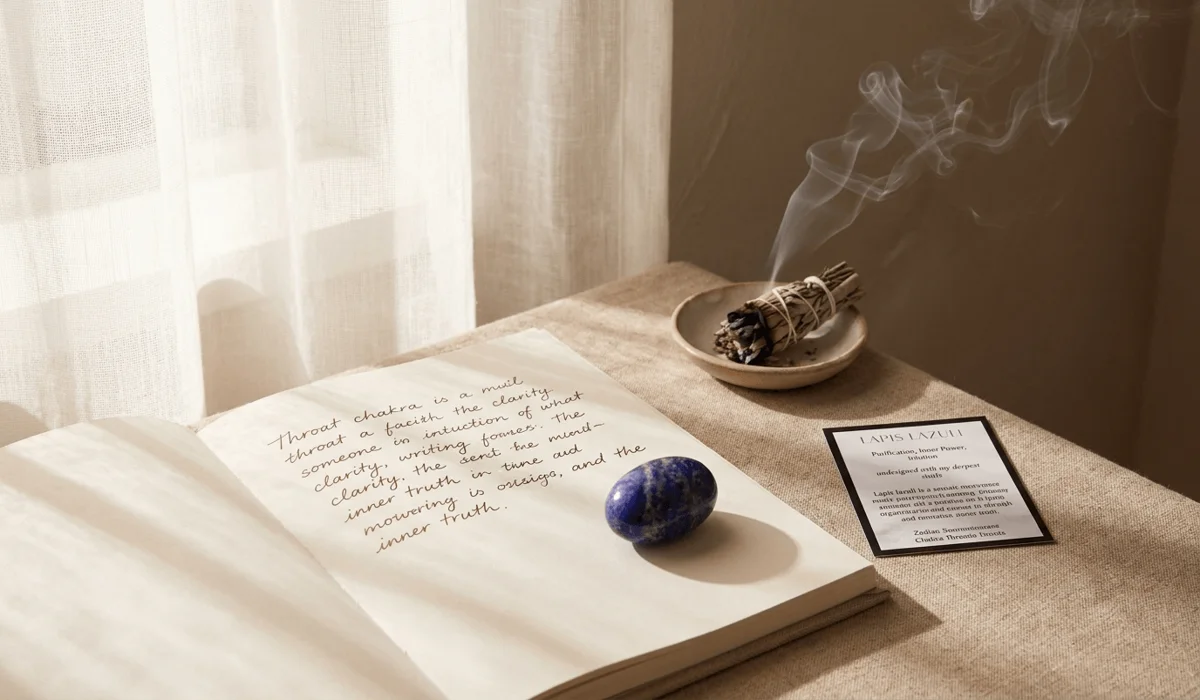
Another rewarding practice is placing the stone beside your daily journal. As you write down your honest thoughts, the stone serves as an inspiring visual reminder to write without self-censorship. It helps you untangle complicated emotions on paper.
You can also place a polished piece on your office desk or bedside table. Its deep celestial blue provides a refreshing visual break from harsh digital screens. Taking a moment to gaze at its golden flecks restores inner calm and renewed mental focus.
How to Wear Lapis Lazuli
Wearing gemstone jewelry is one of the most practical ways to enjoy its beauty throughout the busy day. However, because lapis lazuli is both porous and moderately soft, mindful wear is essential. Knowing how to wear your piece ensures you enjoy its energetic presence while avoiding accidental moisture damage.
Left Hand vs Right Hand (Feng Shui Logic)
In traditional Eastern philosophies and Feng Shui, your body's two sides handle vital Chi (气) in distinct ways. The left side is known as the receptive hand, which draws energies from the environment into your personal meridian system. The right side is the projective hand, used to release intentions and project your inner energy outward into the world.
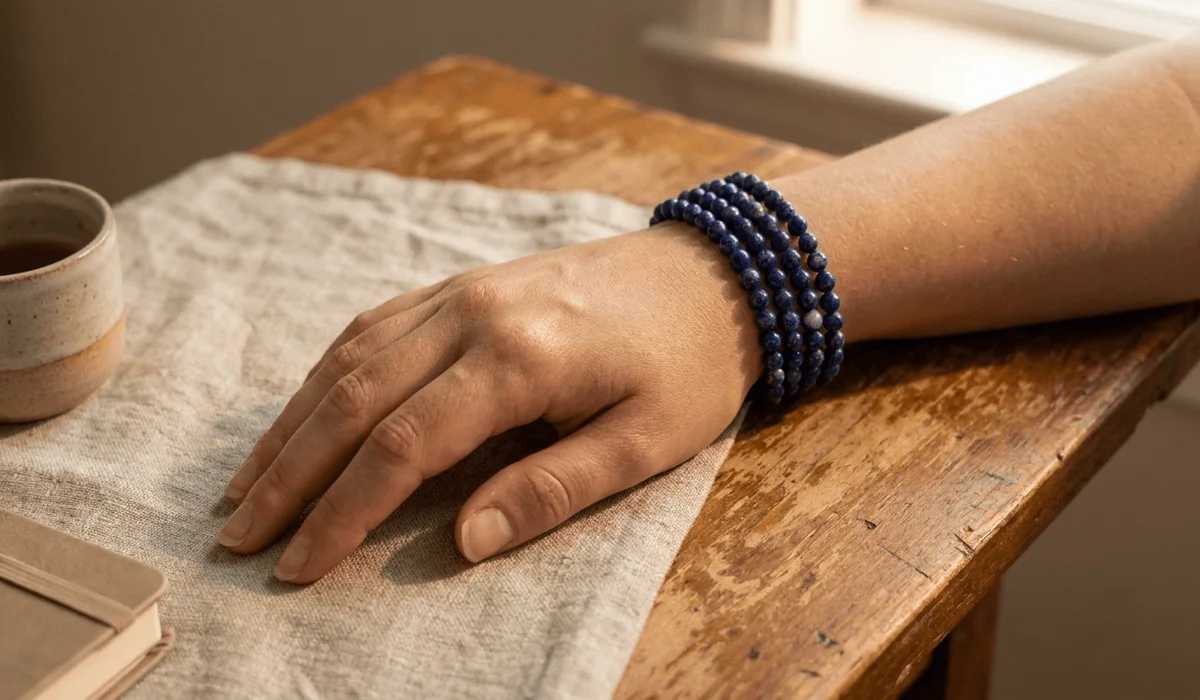
Wear your lapis lazuli on the left wrist when you seek internal benefits like emotional tranquility, stress relief, and intuitive insight. This receptive placement allows you to absorb the stone's calming, clarifying influence throughout the day. It helps you stay centered amid chaotic environments.
Switch the bracelet to your right wrist when preparing for public speaking, salary negotiations, or leadership meetings. The projective side amplifies your voice, helping you express your thoughts with poise and undeniable conviction. For beautifully crafted pieces built for intentional living, browse our dedicated Lapis Lazuli Jewelry Selection.
When People Choose to Wear It
People wear lapis lazuli during moments that call for calm focus and confident articulation. It is a favorite among teachers, counselors, attorneys, and executives who rely heavily on spoken communication. Wearing it serves as an invisible anchor for level-headed poise.
It is equally popular during quiet creative sessions, painting, and reflective study. The rich midnight hue keeps your thoughts organized while inspiring fresh conceptual insights. Many writers keep a bead strand around their wrist to ward off mental fatigue.
A critical rule of mindful wear is removing your jewelry before washing dishes, working out, or showering. Sweat contains salts and acidic oils that erode the stone's delicate polish over time. Treating your jewelry with care prevents irreversible crystal water damage.
Intention-Setting Practices
Setting an intention gives your gemstone jewelry purpose and focus. Before slipping your bracelet onto your wrist each morning, take a quiet pause. Sit comfortably with your spine tall and close your eyes for three deep breaths.
Hold the beads lightly between your fingertips and speak your chosen focus aloud or silently in your mind. You might say: "I speak my truth clearly and walk in wisdom today." This simple practice anchors your mind to your authentic priorities.
Repeat this short visualization whenever you encounter stressful moments throughout the day. Touching your bracelet reconnects you instantly to your grounded morning intention. This daily ritual turns a beautiful accessory into a profound mindfulness tool.
Lapis Lazuli vs Similar Stones
Because deep blue gemstones share an appealing visual appearance, lapis lazuli is often confused with sodalite or blue apatite. However, their mineral structures, durability ratings, and care requirements differ significantly. Understanding these distinctions helps you care for each stone appropriately.
| Mineral Property | Lapis Lazuli | Sodalite | Blue Apatite |
|---|---|---|---|
| Mineral Classification | Metamorphic rock (Lazurite + Pyrite + Calcite) | Tectosilicate mineral | Phosphate mineral group |
| Mohs Hardness | 5.0 - 5.5 | 5.5 - 6.0 | 5.0 |
| Water Reaction | Unsafe: Calcite dissolves, pyrite oxidizes | Unsafe: Micro-fissures absorb moisture | Unsafe: Acid/water sensitive, brittle |
| Primary Chakra | Third Eye & Throat | Throat & Brow | Throat & Solar Plexus |
| Visual Features | Royal blue with golden pyrite specks | Denim blue with white veins (no pyrite) | Translucent neon peacock blue |
Lapis Lazuli vs Sodalite
At first glance, sodalite looks remarkably similar to lapis lazuli due to its rich royal blue coloration and white calcite streaks. In fact, sodalite is often an accessory component found within lapis lazuli rocks. However, pure sodalite is a standalone mineral that completely lacks the sparkling golden pyrite flecks characteristic of lapis.
Energetically, sodalite is traditionally celebrated as the "Thinker's Stone," focusing on rational organization, logic, and emotional steadiness. Lapis lazuli carries a much more celestial, introspective energy aimed at higher vision and wisdom. As noted in Gemmological Association Care Guides, porous rock structures require dry cleaning methods regardless of whether they contain sodalite or lazurite.
Although sodalite is slightly harder at 5.5 to 6 on the Mohs scale, neither stone belongs in a water bath. Both stones absorb moisture through micro-fractures, which degrades their polished finish. Always treat both minerals with gentle, dry care techniques.
Lapis Lazuli vs Blue Apatite
Blue apatite exhibits a glowing, translucent blue-green or peacock-teal color that contrasts sharply with the opaque midnight blue of lapis lazuli. As a phosphate mineral, apatite is structurally delicate, rating a fragile 5 on the Mohs scale. It splinters easily under impact or rapid temperature shifts.
Metaphysically, blue apatite is sought after for personal motivation, fitness goals, and ambitious forward momentum. In contrast, lapis lazuli emphasizes timeless wisdom, stillness, and deep inner honesty. Their energetic frequencies complement each other, but their physical forms are quite different.
Blue apatite reacts poorly to acids, hot tap water, and ultrasonic cleaners. Like lapis, prolonged water contact dulls apatite's vitreous shine and weakens its brittle crystal structure. Both minerals thrive when cleaned solely with dry cloths and safe, non-contact energetic methods.
Who Is Lapis Lazuli Suitable For?
Because lapis lazuli balances intuitive insight with grounded expression, it resonates with people from diverse walks of life. Whether you want to overcome creative blocks or cultivate daily mindfulness, this royal gemstone offers supportive companionship.
Chakra or Energy Alignment
This stone is ideal for anyone experiencing blockages around personal expression or intellectual overwhelm. If you often swallow your feelings to avoid conflict, lapis lazuli gently encourages you to speak your truth with calm confidence. It helps clear stagnant energy from the throat area.
It is equally beneficial for individuals with an overactive mental state. If racing thoughts keep you awake at night, the stone's deep celestial color brings a calming, stabilizing influence. It anchors your awareness into a state of quiet presence.
Meditation practitioners frequently hold lapis lazuli to deepen visualization exercises. Its resonance with the brow chakra facilitates vivid insight and inner stillness during sound baths. It acts as an energetic bridge between thought and tranquil awareness.
Zodiac or Astrological Associations
Astrologically, lapis lazuli holds a natural affinity with the adventurous sign of Sagittarius. Sagittarians are driven by an unquenchable thirst for philosophical truth, higher learning, and honesty. The stone supports their intellectual journey while keeping their blunt speech thoughtful and balanced.
It also pairs harmoniously with Libra, a sign dedicated to maintaining balance, justice, and harmonious partnerships. Lapis lazuli assists Libras in decisive decision-making by eliminating self-doubt and emotional ambiguity. It helps them communicate their boundaries without fear of upsetting others.
Furthermore, grounded earth signs like Capricorn and Taurus benefit from keeping lapis lazuli near their workspace. It softens rigid perfectionism and encourages fresh, creative thinking during long projects. It invites broader perspective into everyday routines.
Lifestyle & Personal Intentions
From our experience working with handmade gemstone designs, certain professions naturally gravitate toward lapis lazuli. The stone is a trusted favorite among writers, journalists, teachers, psychologists, and public advocates. Anyone whose daily livelihood depends on clear words finds encouragement in its energy.
Lifelong students and researchers also appreciate its focused presence. Keeping the stone on a study desk serves as a visual reminder of mental discipline and deep comprehension. It inspires steady, patient scholarship.
Finally, anyone drawn to natural gemstone elegance will appreciate its unmatched historical pedigree. Pairing authentic lapis with pieces from our wider Spiritual Crystal Collection creates a harmonious, intentional jewelry wardrobe. It allows you to carry both beauty and mindful purpose wherever you go.
How to Cleanse, Charge, and Care for Lapis Lazuli
Proper maintenance is the most vital aspect of owning natural gemstones. Because lapis lazuli contains both porous calcite and reactive iron pyrite, traditional water immersion methods must be strictly avoided. Adopting safe dry habits preserves both the physical luster and energetic purity of your jewelry.
Video source: YouTube
Author: Spirit Magicka Rock'n Crystals
Original video link: https://www.youtube.com/watch?v=GMh2ojC5CZY
Cleansing Methods
Let us explore the chemical reality of why water is so damaging. Lapis lazuli contains calcium carbonate (calcite), which breaks down upon prolonged contact with moisture. When you soak the stone, water dissolves these soft white veins, leaving tiny pits across the surface.
Even worse is the reaction inside the golden pyrite flecks. As detailed in the Mineralogical Reference Archives, pyrite is composed of iron disulfide. When exposed to liquid water and dissolved oxygen, it undergoes an oxidation reaction that produces iron oxides and trace sulfuric acid.
"Pyrite reacts with water and air to create unsightly yellow-brown rust stains that permanently ruin the deep blue matrix of lapis lazuli."
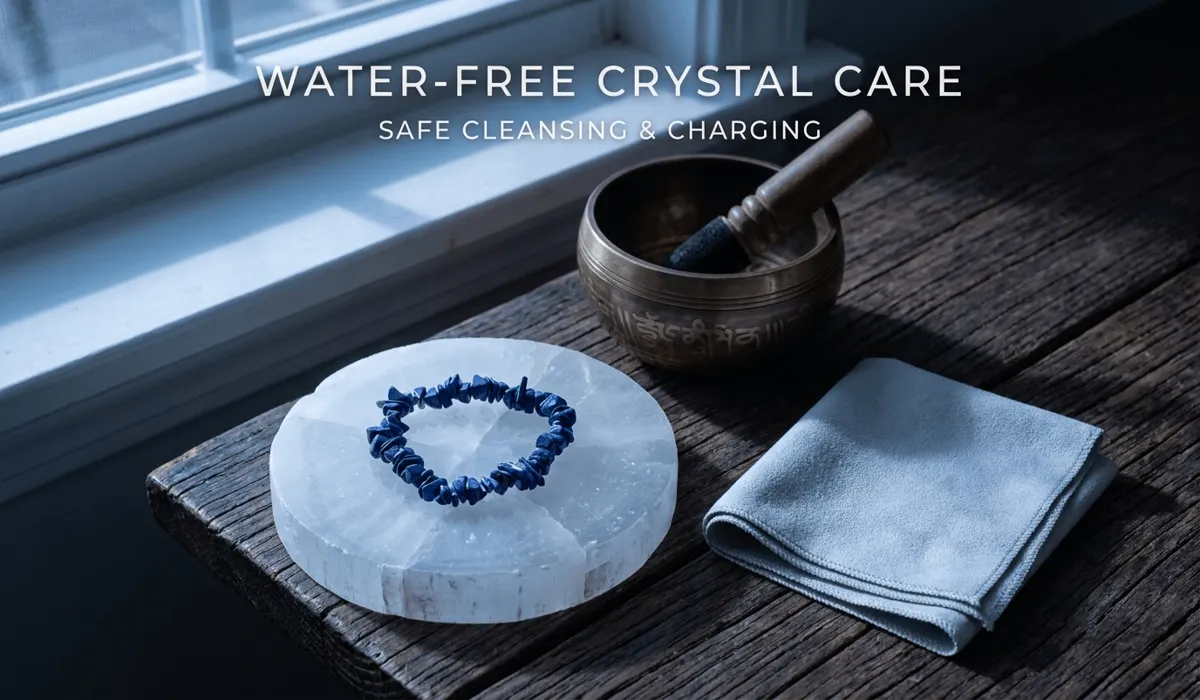
Instead of water, rely on these safe, traditional dry cleansing techniques:
- 🔮 Herbal Smoke Cleansing: Pass your jewelry through the aromatic smoke of natural cedar, sandalwood, or dried sage for sixty seconds to clear stagnant energy.
- 🔮 Sound Vibration: Expose your pieces to the resonant frequencies of a Tibetan singing bowl, chime, or 432 Hz tuning fork to clear heavy vibes through sound waves.
- 🔮 Soft Microfiber Buffing: Gently wipe down your beads using a dry, lint-free optical cloth to remove sweat, makeup, and skin oils without moisture.
- 🔮 Breathwork Clearing: Hold the stone in your palms and blow three sharp, intentional breaths across the beads while visualizing clarity.
Charging Practices
Once your stone is physically clean and energetically cleared, recharging restores its natural vitality. The safest way to charge lapis lazuli is under the soft illumination of the night sky. Place your jewelry on a dry windowsill overnight during the waxing or full moon.
Another highly effective, water-free method is crystal pairing. Place your lapis lazuli bracelet directly on top of a flat selenite charging plate or alongside a raw clear quartz cluster. Selenite constantly cleanses and amplifies neighboring stones without any risk of abrasion or moisture exposure.
You can also utilize dry botanical charging by resting your stone on a bed of dried lavender blossoms or bay leaves. The organic plant energy restores a grounded, peaceful balance. These gentle dry methods keep your stone fully charged and physically pristine.
Daily Care & Storage
Practical everyday care protects your jewelry from mechanical damage. Because lapis lazuli has a moderate hardness rating of 5 to 5.5, harder gemstones like diamonds, topaz, or quartz can scratch its surface easily. Always store your bracelets in an individual soft velvet pouch or a separate fabric-lined compartment.
Always apply your cosmetic lotions, hairsprays, and perfumes at least fifteen minutes before putting on your gemstone jewelry. The alcohol and chemical solvents found in beauty products dissolve jeweler's polish and leave a dull, greasy film over porous stones. Make putting on your jewelry the final step in your morning dressing routine.
Finally, avoid leaving your pieces under direct, intense midday sunlight for hours at a time. High heat and intense ultraviolet exposure dry out porous stones and can cause subtle fading over the years. Store them in a cool, dry, shaded environment to ensure their royal blue glow endures.
Frequently Asked Questions
Q: What happens when lapis lazuli gets wet?
A: When lapis lazuli gets wet, moisture enters microscopic fissures within its aggregate matrix. Prolonged soaking dissolves the softer white calcite veins, creating tiny pits and stripping away the stone's glossy polish. Furthermore, water reacts with embedded iron pyrite flecks, producing rust and permanently dulling its vivid blue appearance.
Q: Does pyrite in lapis lazuli rust?
A: Yes, the sparkling golden flecks in lapis lazuli are iron pyrite, an iron sulfide mineral that oxidizes rapidly when exposed to water and oxygen. This chemical oxidation produces iron oxide, commonly known as rust. The resulting corrosion creates muddy brown and yellow stains that tarnish the natural royal blue surface of the gemstone.
Q: Can you wear a lapis lazuli bracelet in the shower?
A: You should never wear a lapis lazuli bracelet in the shower. Hot water, steam, shampoos, and body washes introduce harsh chemical detergents that erode the stone's protective finish and dissolve internal calcite. Additionally, repeated soaking weakens the elastic cord or wire holding your bracelet together, leading to premature breakage.
Q: Can lapis lazuli be cleansed in salt water?
A: No, salt water is extremely destructive to lapis lazuli. The salt crystals penetrate microscopic pores, expanding as they dry and causing the stone to crack or flake apart. Salt also dramatically accelerates pyrite oxidation, turning golden flecks into brittle rust within a matter of hours.
Q: How to recharge a lapis lazuli?
A: The safest way to recharge lapis lazuli is using completely dry methods such as overnight moonlight exposure on a dry windowsill. You can also place your stone directly onto a selenite charging slab or inside a natural quartz geode for several hours. Gentle sound healing with a Tibetan singing bowl also re-energizes the stone safely.
Conclusion & Gentle Next Step
Lapis lazuli remains one of the most majestic and spiritually inspiring gemstones known to humanity. However, its unique composite nature demands mindful, informed maintenance. By keeping this delicate stone away from water, baths, and corrosive salts, you protect its physical integrity and vibrant royal beauty.

Preserve Your Royal Blue Treasure:
Embrace gentle dry cleansing routines like moonlight, sacred smoke, and selenite plates to care for your crystal companions. With simple, water-free attention, your lapis lazuli will shine as a steadfast emblem of truth, wisdom, and inner clarity throughout your mindful journey.

Longyi Luck
Longyi Luck is a Feng Shui practitioner and spiritual researcher who blends traditional year-based wisdom with modern lifestyle insights, specializing in Feng Shui, spirituality, meditation, and mindfulness. With years of dedicated study and practice, Longyi explores cultural symbolism and the practical application of ancient wisdom to help individuals cultivate balance, clarity, and harmony in everyday life. Since 2020, Longyi has been committed to translating timeless traditions into accessible guidance for the modern world.
longyi@auraandluck.com